PRESENTED BY:
Kristie Rauter
Wisocnsin Farm to School Summit | La Crosse
June 27th, 2013
Local Perspective on Implementing F2S Language in
School Wellness Polices
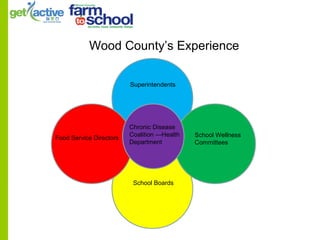
Wood County’s Experience
Superintendents
Food Service Directors
School Boards
School Wellness
Committees
Chronic Disease
Coalition —Health
Department
Leadership--Superintendents
• Met with Superintendents
• Formal contract in place
• Funds dispersed
• Explained evaluation plan
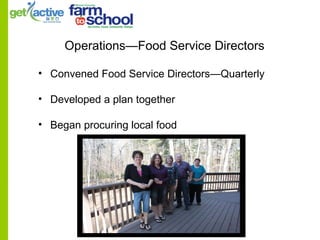
Operations—Food Service Directors
• Convened Food Service Directors—Quarterly
• Developed a plan together
• Began procuring local food
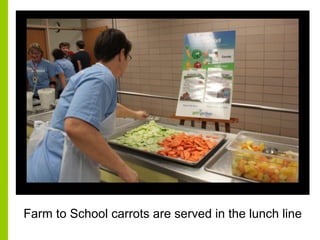
Farm to School carrots are served in the lunch line
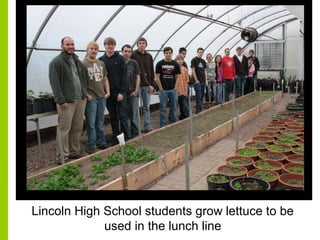
Lincoln High School students grow lettuce to be
used in the lunch line
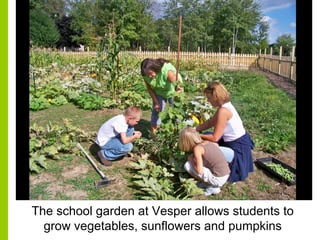
The school garden at Vesper allows students to
grow vegetables, sunflowers and pumpkins
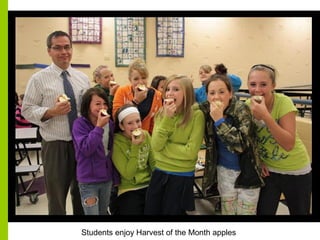
Students enjoy Harvest of the Month apples
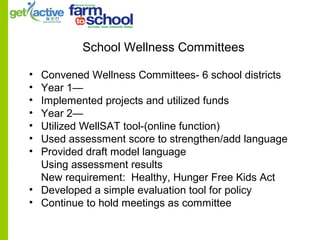
School Wellness Committees
• Convened Wellness Committees- 6 school districts
• Year 1—
• Implemented projects and utilized funds
• Year 2—
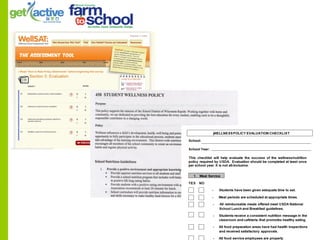
• Utilized WellSAT tool-(online function)
• Used assessment score to strengthen/add language
• Provided draft model language
Using assessment results
New requirement: Healthy, Hunger Free Kids Act
• Developed a simple evaluation tool for policy
• Continue to hold meetings as committee
Infrastructure—School Boards
•Met with school boards
•Provided education
•Policy revision on school board agendas
•Brought forward by Superintendents
•Few changes were made by board
•Provided evaluation data
•Showed community support for F2S
•Importance of nutrition with education
14
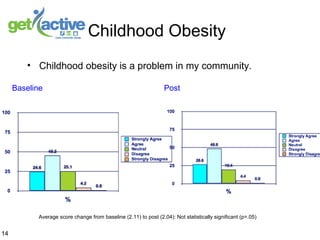
Childhood Obesity
• Childhood obesity is a problem in my community.
Baseline Post
Average score change from baseline (2.11) to post (2.04): Not statistically significant (p=.05)
15
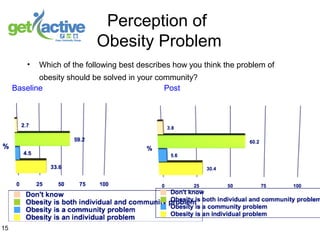
Perception of
Obesity Problem
• Which of the following best describes how you think the problem of
obesity should be solved in your community?
Baseline Post
16
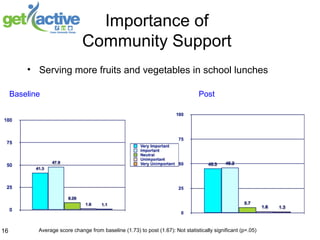
Importance of
Community Support
• Serving more fruits and vegetables in school lunches
Baseline Post
Average score change from baseline (1.73) to post (1.67): Not statistically significant (p=.05)
Lessons Learned
• Policy work is not for everyone
• Strong language is a tough sell
• Various levels of comfort with committee’s
developing/updating policies for districts
More Work To Do
• Few schools policies still need updating
• Goal to update policies with stronger language in the
future
• Wellness Policy was a great low hanging fruit to build
relationships
• Procurement policy a possible next step
Success
• Superintendent and Principal - Nekoosa School District
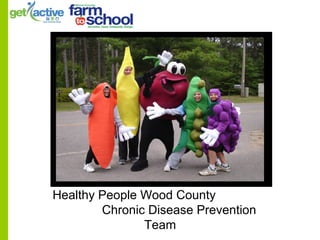
Healthy People Wood County
Chronic Disease Prevention
Team
Thank you for your time!
------------------
Questions
------------------
Kristie Rauter
krauter@co.wood.wi.us
715-421-8915
getactivewoodcounty.org
Facebook.com/getactivewoodcounty

Wellness policies

  • 1.
    PRESENTED BY: Kristie Rauter WisocnsinFarm to School Summit | La Crosse June 27th, 2013
  • 2.
    Local Perspective onImplementing F2S Language in School Wellness Polices
  • 3.
    Wood County’s Experience Superintendents FoodService Directors School Boards School Wellness Committees Chronic Disease Coalition —Health Department
  • 4.
    Leadership--Superintendents • Met withSuperintendents • Formal contract in place • Funds dispersed • Explained evaluation plan
  • 5.
    Operations—Food Service Directors •Convened Food Service Directors—Quarterly • Developed a plan together • Began procuring local food
  • 6.
    Farm to Schoolcarrots are served in the lunch line
  • 8.
    Lincoln High Schoolstudents grow lettuce to be used in the lunch line
  • 9.
    The school gardenat Vesper allows students to grow vegetables, sunflowers and pumpkins
  • 10.
    Students enjoy Harvestof the Month apples
  • 11.
    School Wellness Committees •Convened Wellness Committees- 6 school districts • Year 1— • Implemented projects and utilized funds • Year 2— • Utilized WellSAT tool-(online function) • Used assessment score to strengthen/add language • Provided draft model language Using assessment results New requirement: Healthy, Hunger Free Kids Act • Developed a simple evaluation tool for policy • Continue to hold meetings as committee
  • 13.
    Infrastructure—School Boards •Met withschool boards •Provided education •Policy revision on school board agendas •Brought forward by Superintendents •Few changes were made by board •Provided evaluation data •Showed community support for F2S •Importance of nutrition with education
  • 14.
    14 Childhood Obesity • Childhoodobesity is a problem in my community. Baseline Post Average score change from baseline (2.11) to post (2.04): Not statistically significant (p=.05)
  • 15.
    15 Perception of Obesity Problem •Which of the following best describes how you think the problem of obesity should be solved in your community? Baseline Post
  • 16.
    16 Importance of Community Support •Serving more fruits and vegetables in school lunches Baseline Post Average score change from baseline (1.73) to post (1.67): Not statistically significant (p=.05)
  • 17.
    Lessons Learned • Policywork is not for everyone • Strong language is a tough sell • Various levels of comfort with committee’s developing/updating policies for districts
  • 18.
    More Work ToDo • Few schools policies still need updating • Goal to update policies with stronger language in the future • Wellness Policy was a great low hanging fruit to build relationships • Procurement policy a possible next step
  • 19.
    Success • Superintendent andPrincipal - Nekoosa School District
  • 20.
    Healthy People WoodCounty Chronic Disease Prevention Team
  • 21.
    Thank you foryour time! ------------------ Questions ------------------ Kristie Rauter krauter@co.wood.wi.us 715-421-8915 getactivewoodcounty.org Facebook.com/getactivewoodcounty