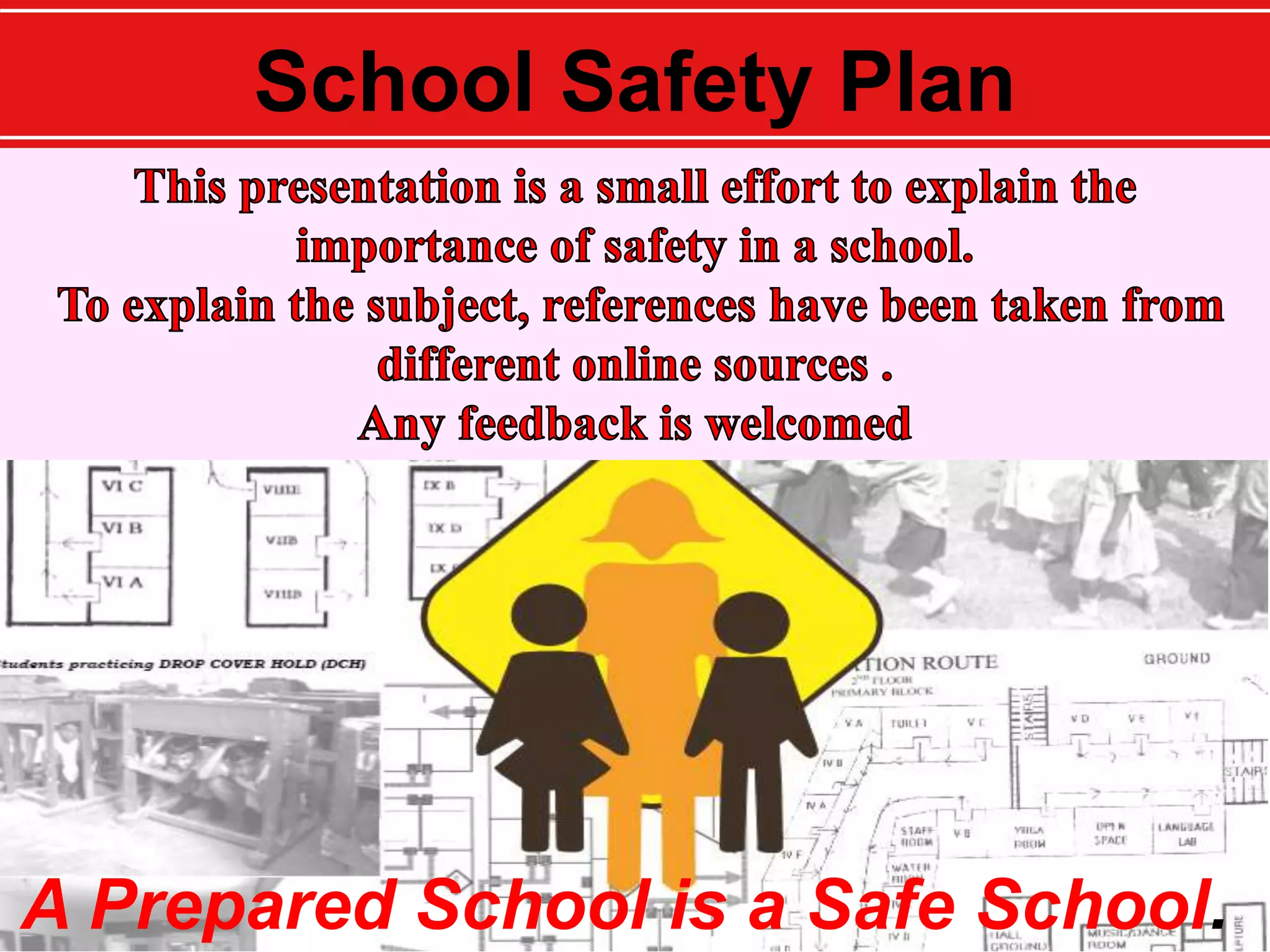
School Safety Plan
A Prepared School is a Safe School.
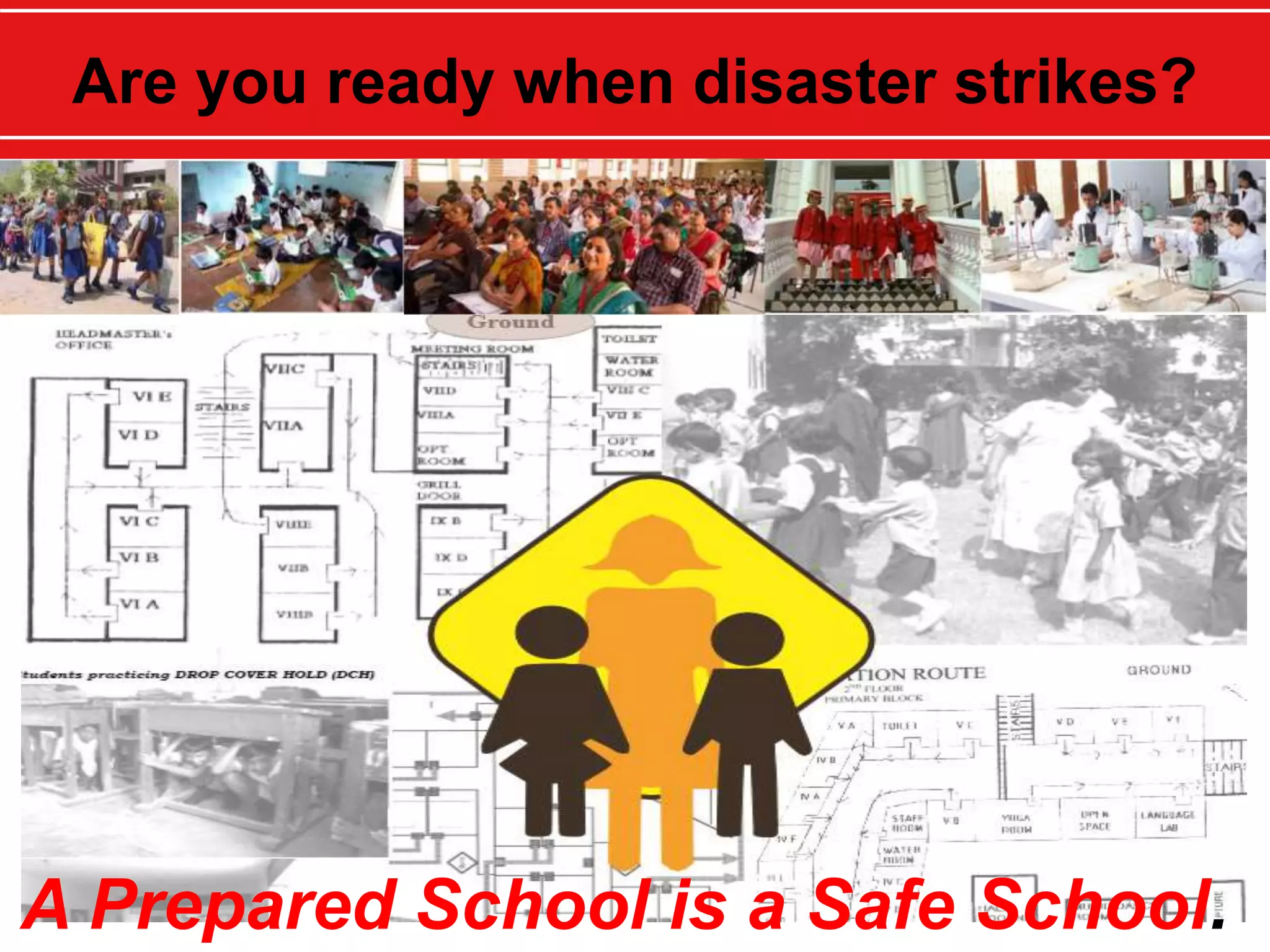
Are you ready when disaster strikes?
A Prepared School is a Safe School.
Important terms
• Hazard
Natural Hazard
Technological or Man made Hazard
• Vulnerability
Tangible and Intangible vulnerability
• Capacity: Resources available to community
• Disaster- happens when hazard exceeds people capacity
to cope to devastating effect
• Risk : Disaster Risk = (Hazard X Vulnerability)
Capacity of Societal System
Type of Hazards
1. Natural Disasters
( Earthquake, cyclone, floods)
2. Fire
3. Chemical Accident
4. Stampede/ Crowd Incident
5. Civil Disturbance
6. Medical Emergencies
7. Explosive/Bomb Threat
8. School Bus Accident
9. Act of Terror
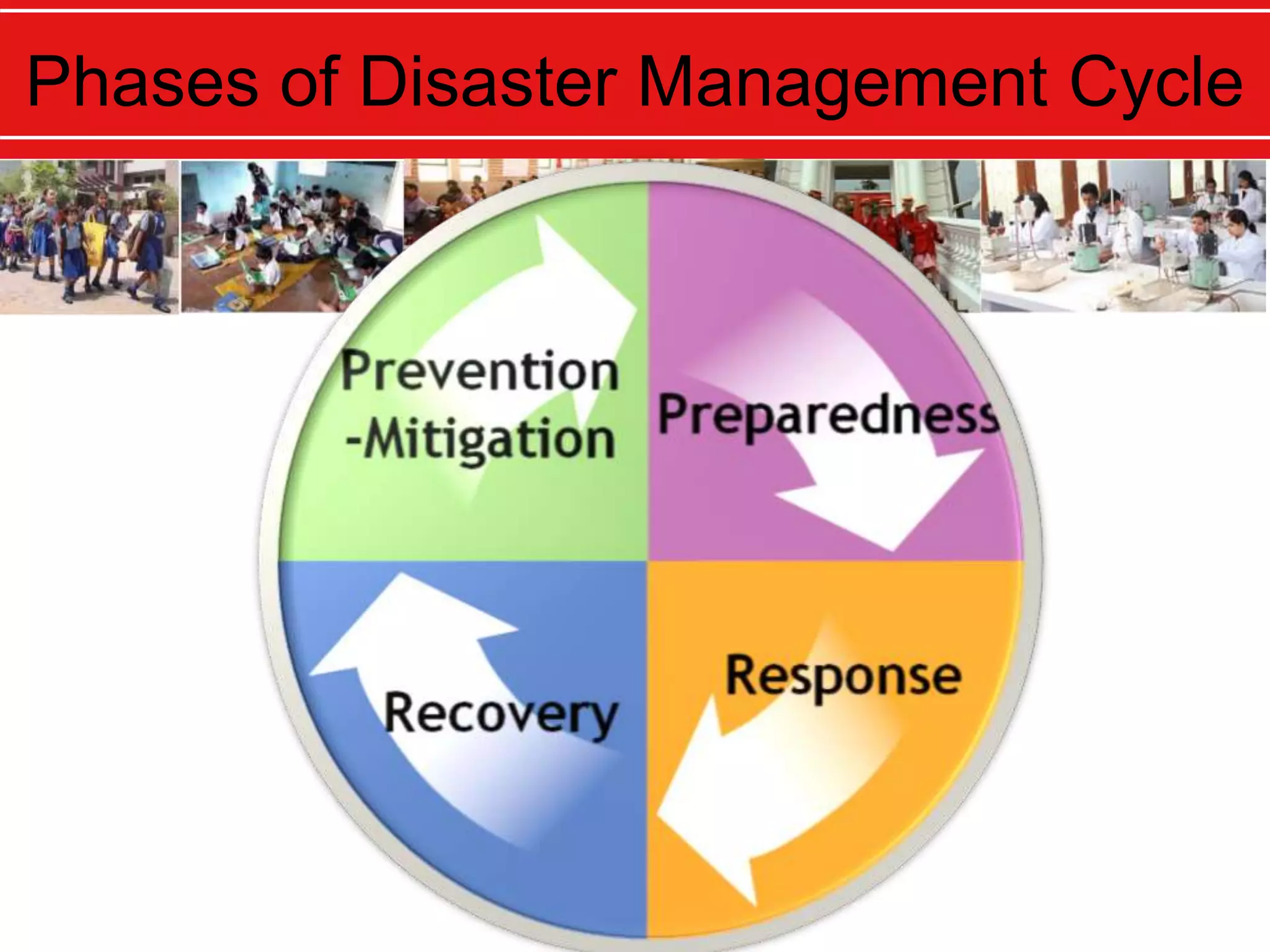
Phases of Disaster Management Cycle
I. Prevention and Mitigation(pre-disaster): addresses
what can be done to reduce or eliminate risk of life
and property
II. Preparedness(pre-disaster): focuses on the
process of planning for the worst case –scenario
III. Response(During & post disaster): is devoted to
steps to be taken during an emergency
IV. Recovery(post-disaster): deals with how to restore
learning & teaching environment after a crisis
PRIMARY STRATEGIES
• Place School Safety as part of education
• School building level emergency
preparedness and response plan
• School Coordination Committee
• Trained Teachers, Volunteers
• Parents Teachers Association
• Disaster Club
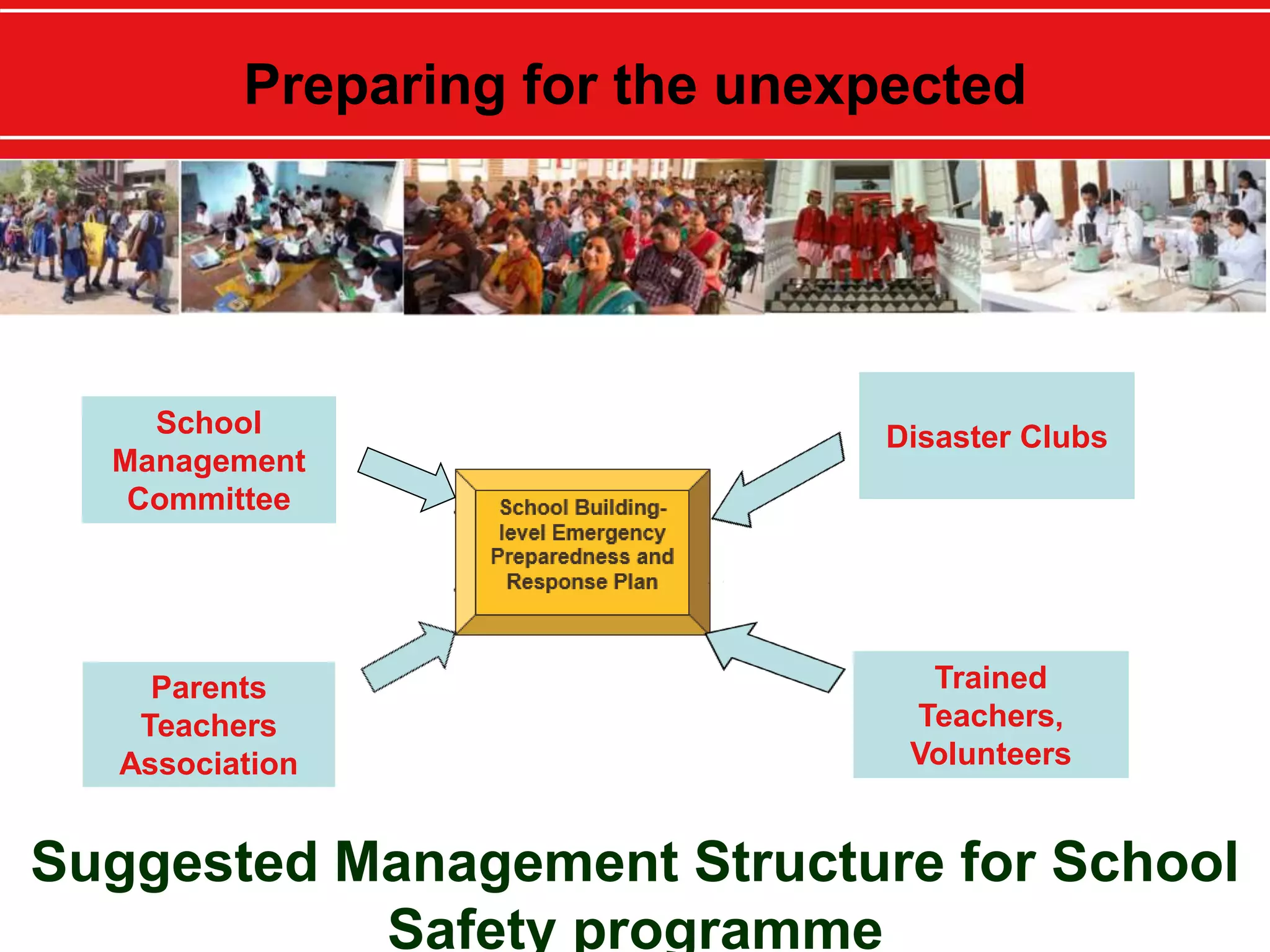
Suggested Management Structure for School
Safety programme
Preparing for the unexpected
Parents
Teachers
Association
Disaster Clubs
Trained
Teachers,
Volunteers
School
Management
Committee
Identification of the School Team
• Coordination Committee
• School Security Team
• Evacuation Team
• Rescue and Search team
• Temporary Shelter Team
• First Aid Team
• Fire Safety Team
• Transportation Team
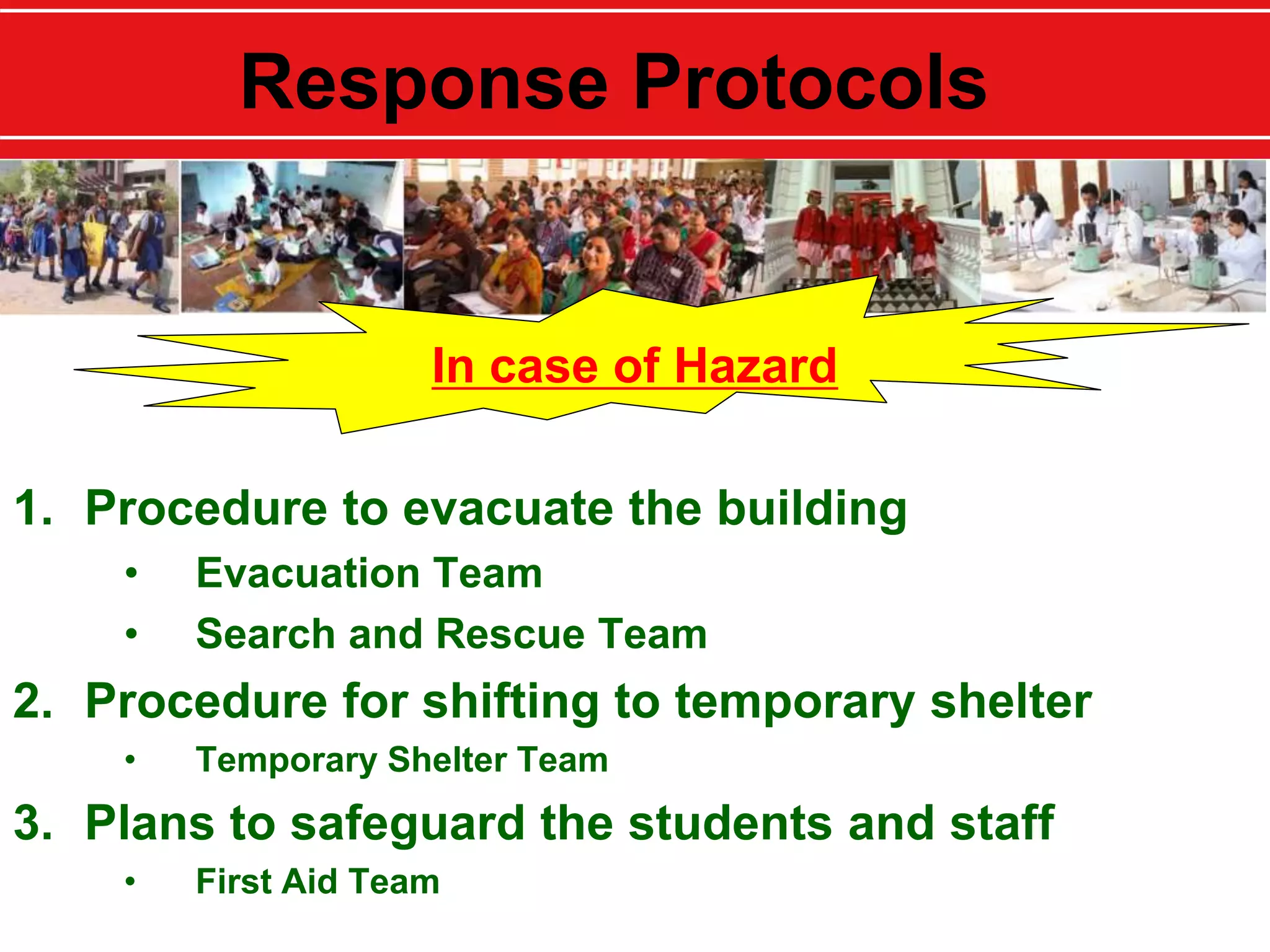
Response Protocols
In case of Hazard
1. Procedure to evacuate the building
• Evacuation Team
• Search and Rescue Team
2. Procedure for shifting to temporary shelter
• Temporary Shelter Team
3. Plans to safeguard the students and staff
• First Aid Team
Response Protocols
5. Procedure to evacuate the premises
• Transportation Team
6. Procedure to notify parents
• Parents Teachers Association
7. Procedure to notify media
• Media committee
8. De-briefing procedures
• Coordination Committee
Preparing for the Unexpected…
DROP COVER HOLD(DCH) in case of
Evacuation Priorities
1st •Protection of life
2nd •Prevent spreading of Hazard
3rd
•Save Assets in the Affected Area
4th
• Minimize the effect of Hazard
Do Not Use Lift
Follow Exit Signs
In Staircase
 Move in Single File
 Keep on Either Side
 Do not Overtake
 Help the Needy
Preparing for the Unexpected…
EVACUATION
PLAN
EXECUTION
Preparing for the Unexpected…
Be Informed
Health & Safety Training
• Prepare your administration & staff
• Prepare your faculty
• Prepare your students
• Reach out to the broader school
community to help families prepare
Thank You

School safety plan

  • 1.
    School Safety Plan APrepared School is a Safe School.
  • 2.
    Are you readywhen disaster strikes? A Prepared School is a Safe School.
  • 3.
    Important terms • Hazard NaturalHazard Technological or Man made Hazard • Vulnerability Tangible and Intangible vulnerability • Capacity: Resources available to community • Disaster- happens when hazard exceeds people capacity to cope to devastating effect • Risk : Disaster Risk = (Hazard X Vulnerability) Capacity of Societal System
  • 4.
    Type of Hazards 1.Natural Disasters ( Earthquake, cyclone, floods) 2. Fire 3. Chemical Accident 4. Stampede/ Crowd Incident 5. Civil Disturbance 6. Medical Emergencies 7. Explosive/Bomb Threat 8. School Bus Accident 9. Act of Terror
  • 5.
    Phases of DisasterManagement Cycle
  • 6.
    Phases of DisasterManagement Cycle I. Prevention and Mitigation(pre-disaster): addresses what can be done to reduce or eliminate risk of life and property II. Preparedness(pre-disaster): focuses on the process of planning for the worst case –scenario III. Response(During & post disaster): is devoted to steps to be taken during an emergency IV. Recovery(post-disaster): deals with how to restore learning & teaching environment after a crisis
  • 7.
    PRIMARY STRATEGIES • PlaceSchool Safety as part of education • School building level emergency preparedness and response plan • School Coordination Committee • Trained Teachers, Volunteers • Parents Teachers Association • Disaster Club
  • 8.
    Suggested Management Structurefor School Safety programme Preparing for the unexpected Parents Teachers Association Disaster Clubs Trained Teachers, Volunteers School Management Committee
  • 9.
    Identification of theSchool Team • Coordination Committee • School Security Team • Evacuation Team • Rescue and Search team • Temporary Shelter Team • First Aid Team • Fire Safety Team • Transportation Team
  • 10.
    Response Protocols In caseof Hazard 1. Procedure to evacuate the building • Evacuation Team • Search and Rescue Team 2. Procedure for shifting to temporary shelter • Temporary Shelter Team 3. Plans to safeguard the students and staff • First Aid Team
  • 11.
    Response Protocols 5. Procedureto evacuate the premises • Transportation Team 6. Procedure to notify parents • Parents Teachers Association 7. Procedure to notify media • Media committee 8. De-briefing procedures • Coordination Committee
  • 12.
    Preparing for theUnexpected… DROP COVER HOLD(DCH) in case of
  • 13.
    Evacuation Priorities 1st •Protectionof life 2nd •Prevent spreading of Hazard 3rd •Save Assets in the Affected Area 4th • Minimize the effect of Hazard
  • 14.
  • 15.
  • 16.
    In Staircase  Movein Single File  Keep on Either Side  Do not Overtake  Help the Needy
  • 17.
    Preparing for theUnexpected… EVACUATION PLAN EXECUTION
  • 18.
    Preparing for theUnexpected…
  • 19.
    Preparing for theUnexpected…
  • 20.
    Be Informed Health &Safety Training • Prepare your administration & staff • Prepare your faculty • Prepare your students • Reach out to the broader school community to help families prepare
  • 21.