Scala 
The good, the bad and the very ugly
Vanity slide 
● Senior software engineer @ TomTom 
● Using scala for more than a year 
● Stackoverflow (couldn’t miss that) 
● http://techblog.bozho.net 
● @bozhobg 
● (Yes, I’m making presentations about programming 
languages in PowerPoint with screenshots of code)
The good 
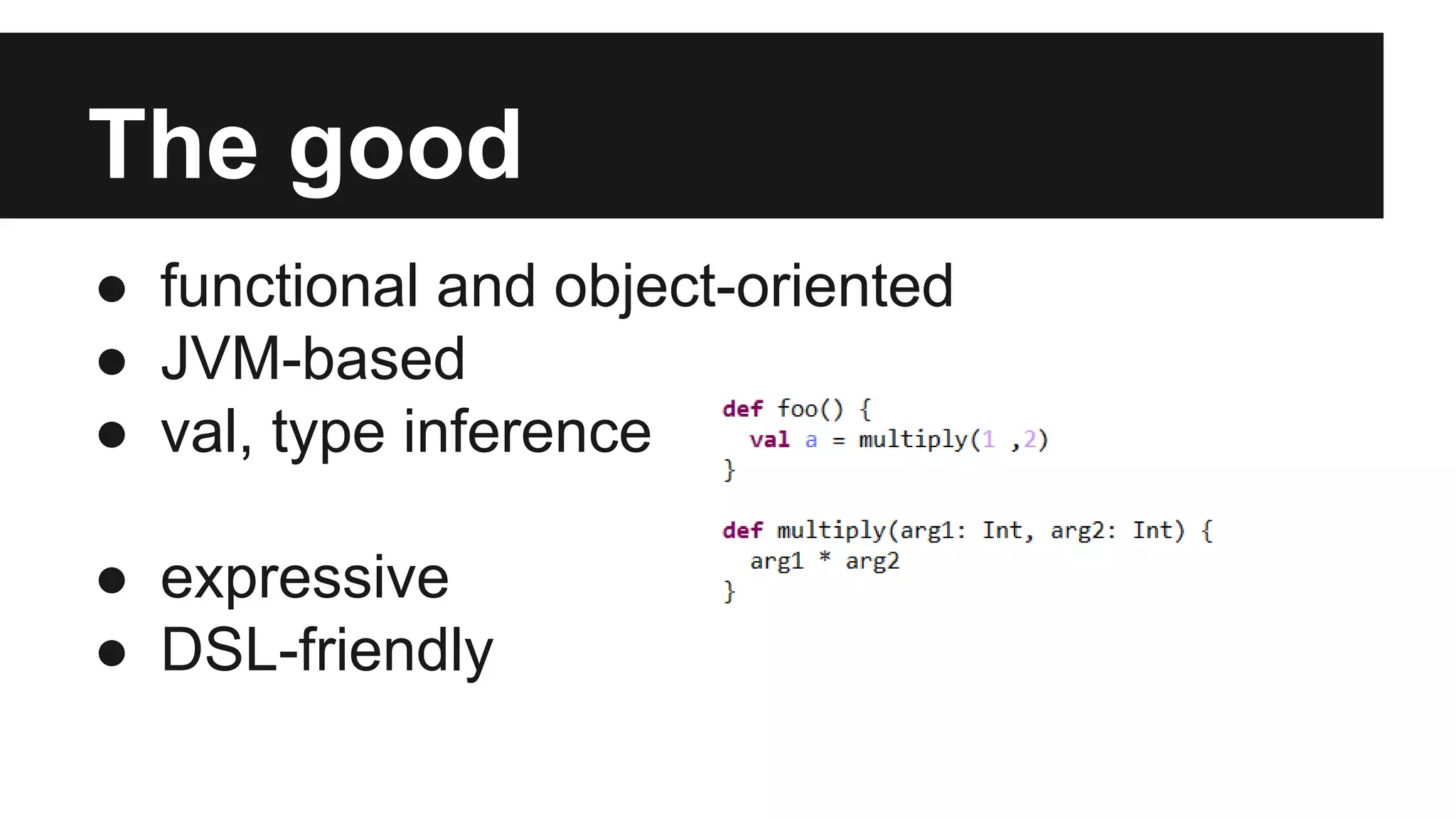
● functional and object-oriented 
● JVM-based 
● val, type inference 
● expressive 
● DSL-friendly
The good 
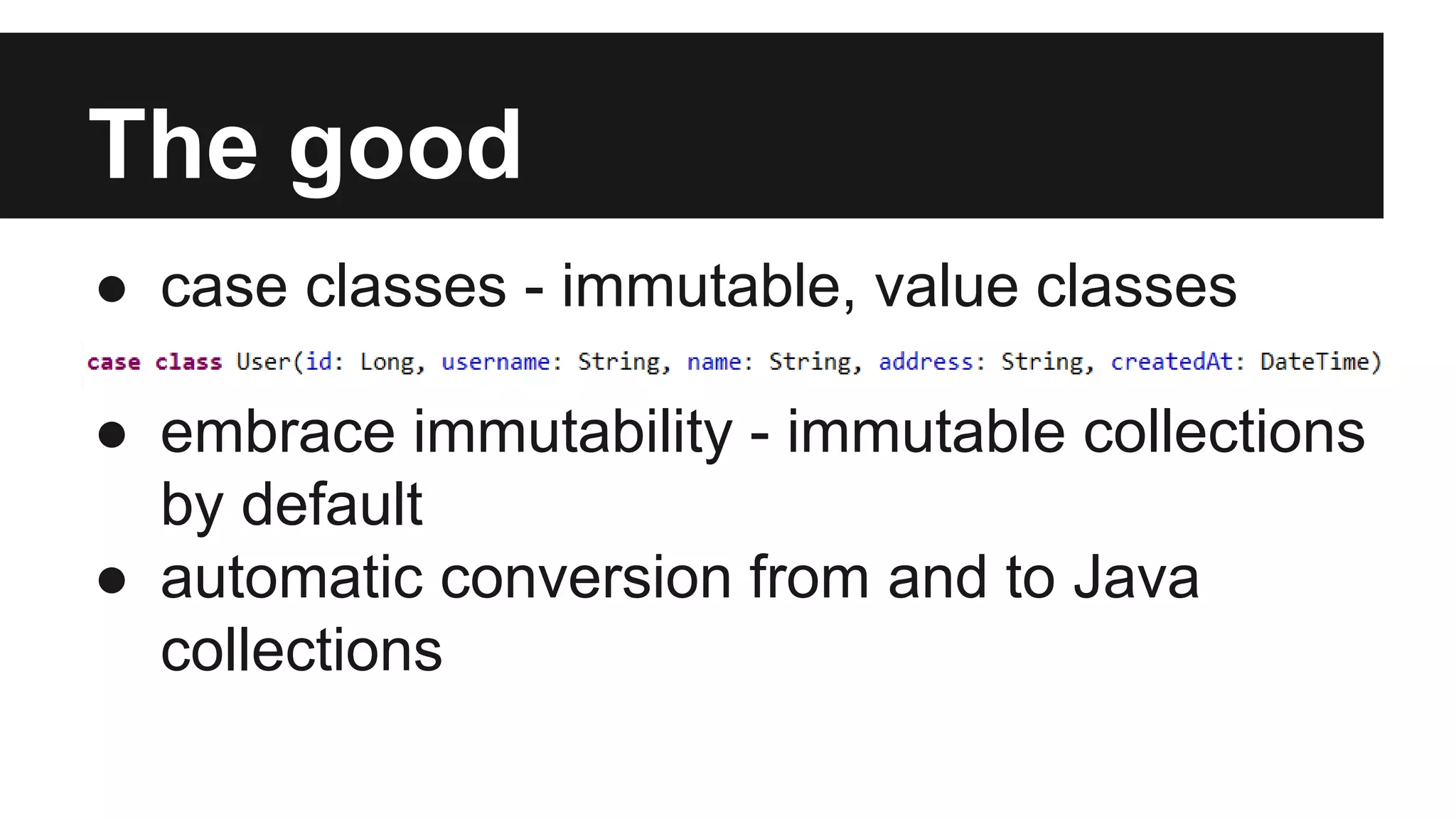
● case classes - immutable, value classes 
● embrace immutability - immutable collections 
by default 
● automatic conversion from and to Java 
collections
The good 
● no null - Option[Foo] 
● Reusing java instruments (e.g. guava, slf4j, 
even spring and hibernate) 
● goodies – e.g. instantiating collections 
without unnecessary brackets or type 
declarations
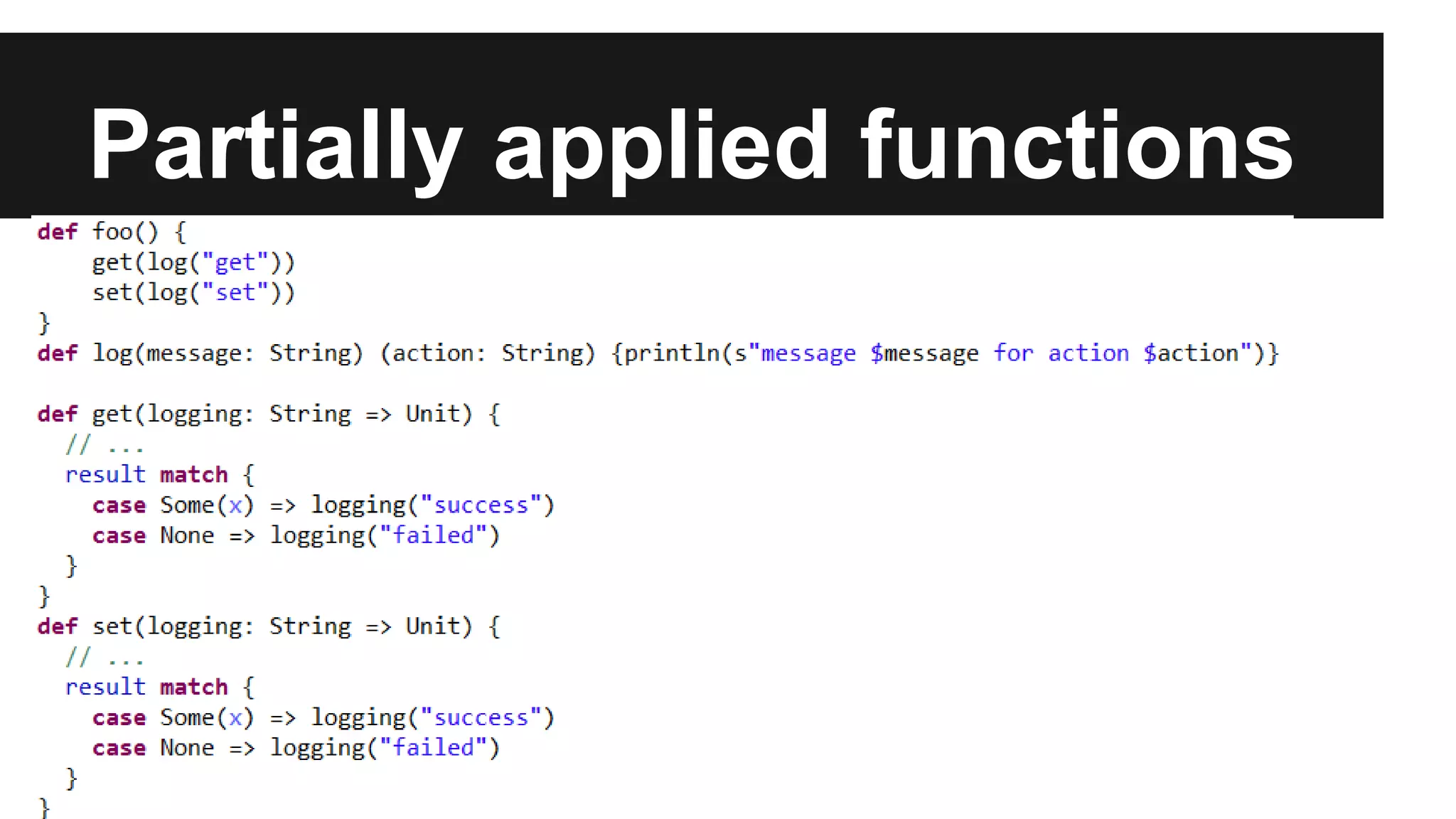
Partially applied functions
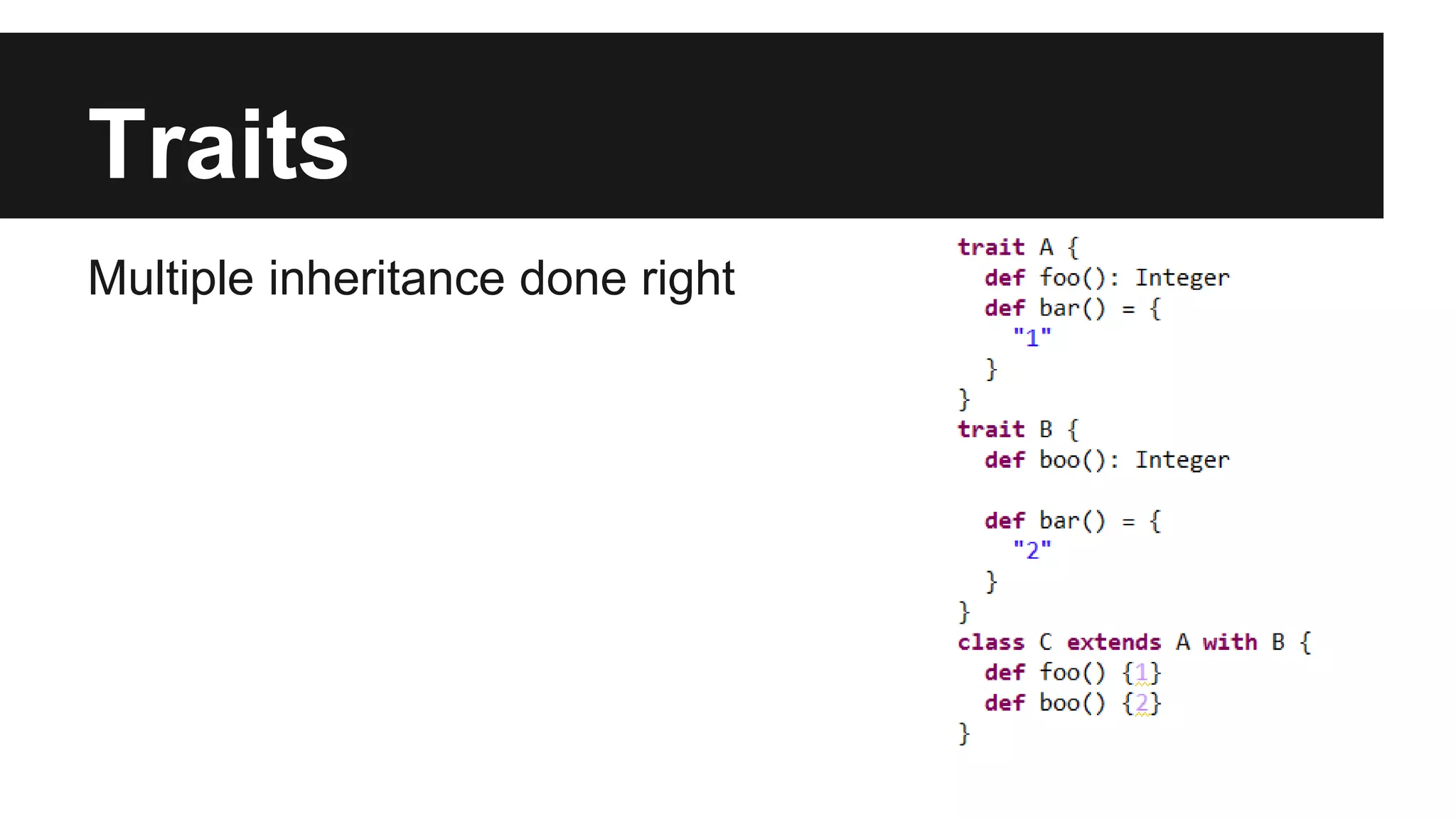
Traits 
Multiple inheritance done right
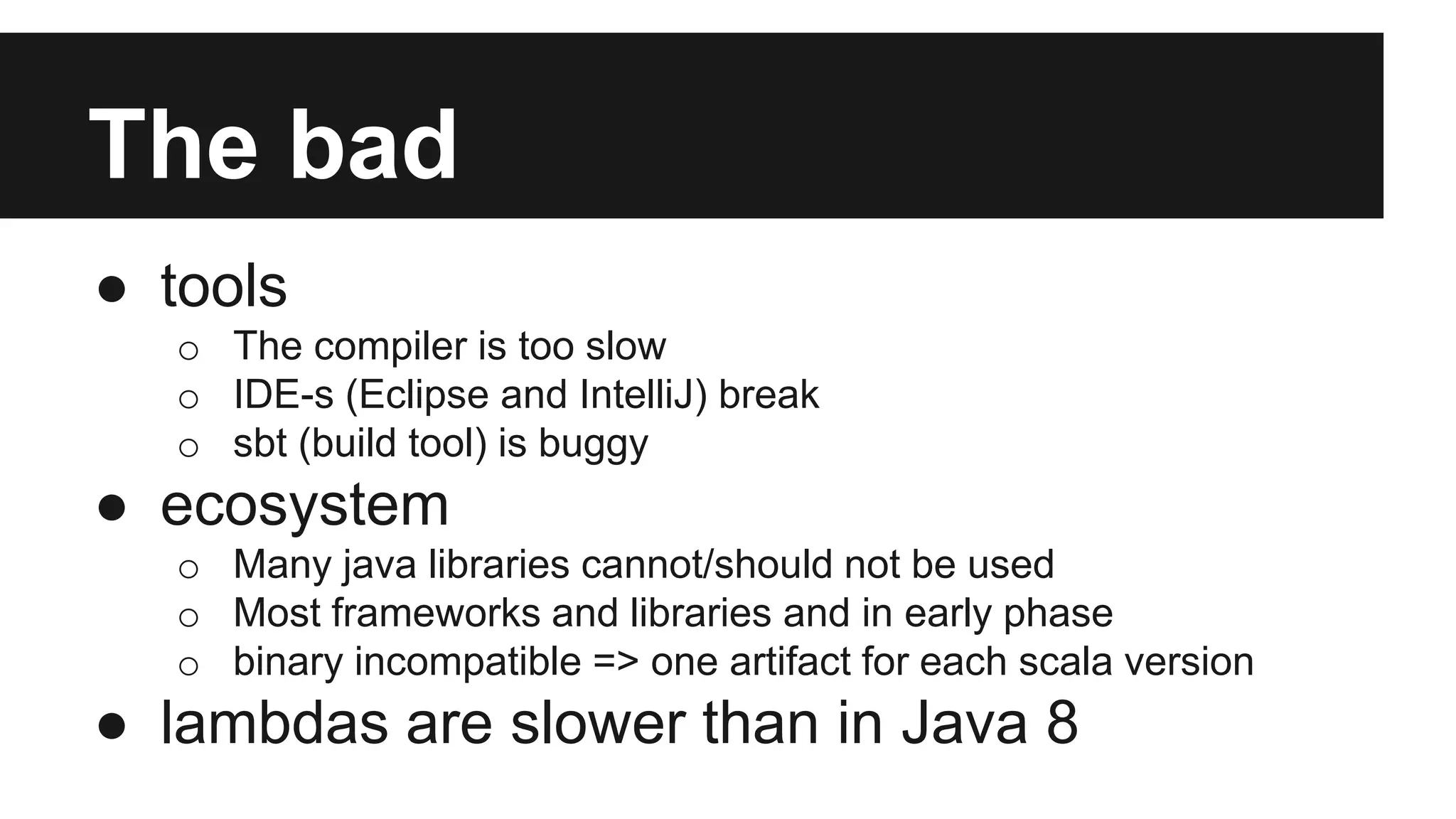
The bad 
● tools 
o The compiler is too slow 
o IDE-s (Eclipse and IntelliJ) break 
o sbt (build tool) is buggy 
● ecosystem 
o Many java libraries cannot/should not be used 
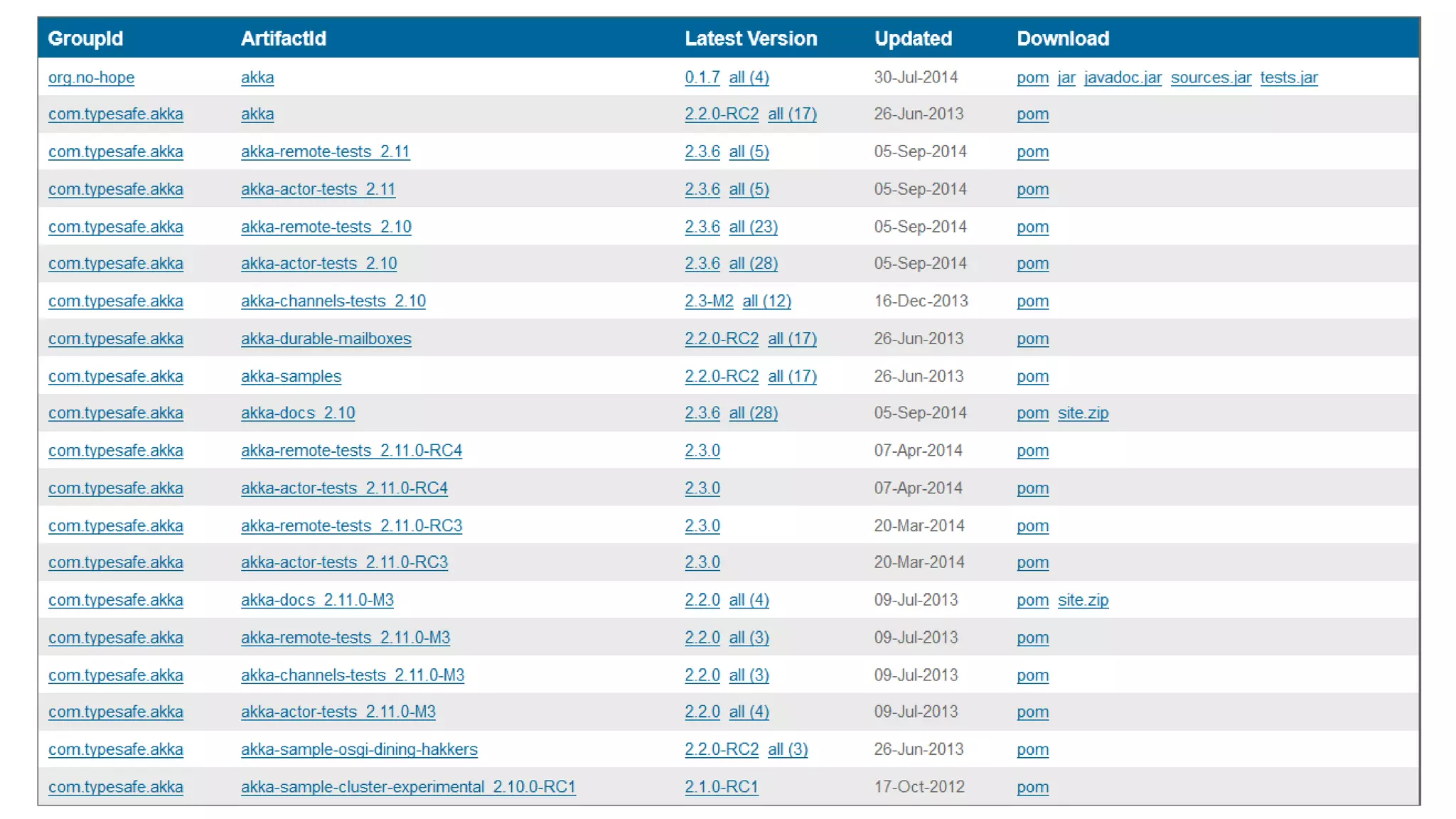
o Most frameworks and libraries and in early phase 
o binary incompatible => one artifact for each scala version 
● lambdas are slower than in Java 8
The bad 
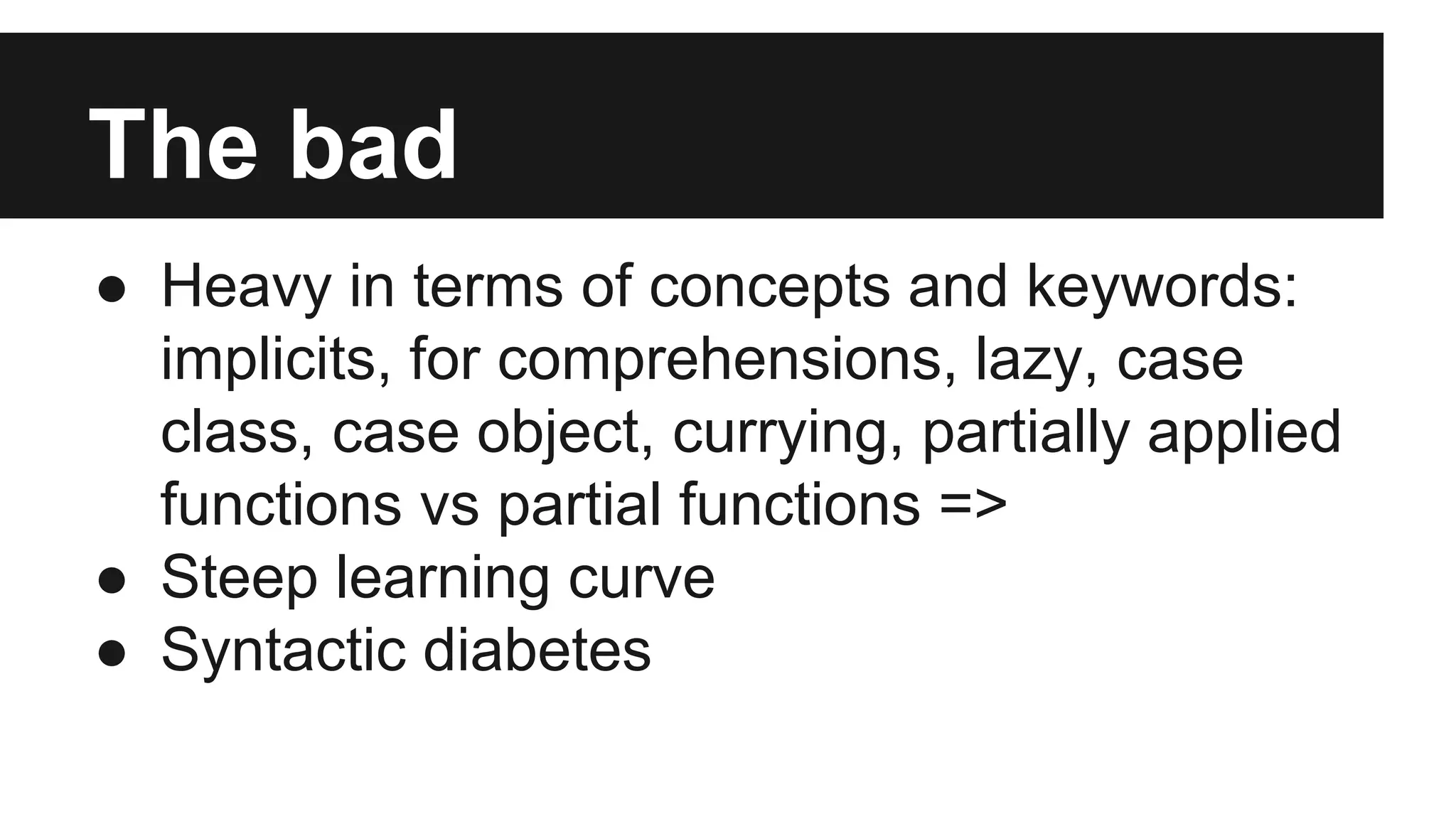
● Heavy in terms of concepts and keywords: 
implicits, for comprehensions, lazy, case 
class, case object, currying, partially applied 
functions vs partial functions => 
● Steep learning curve 
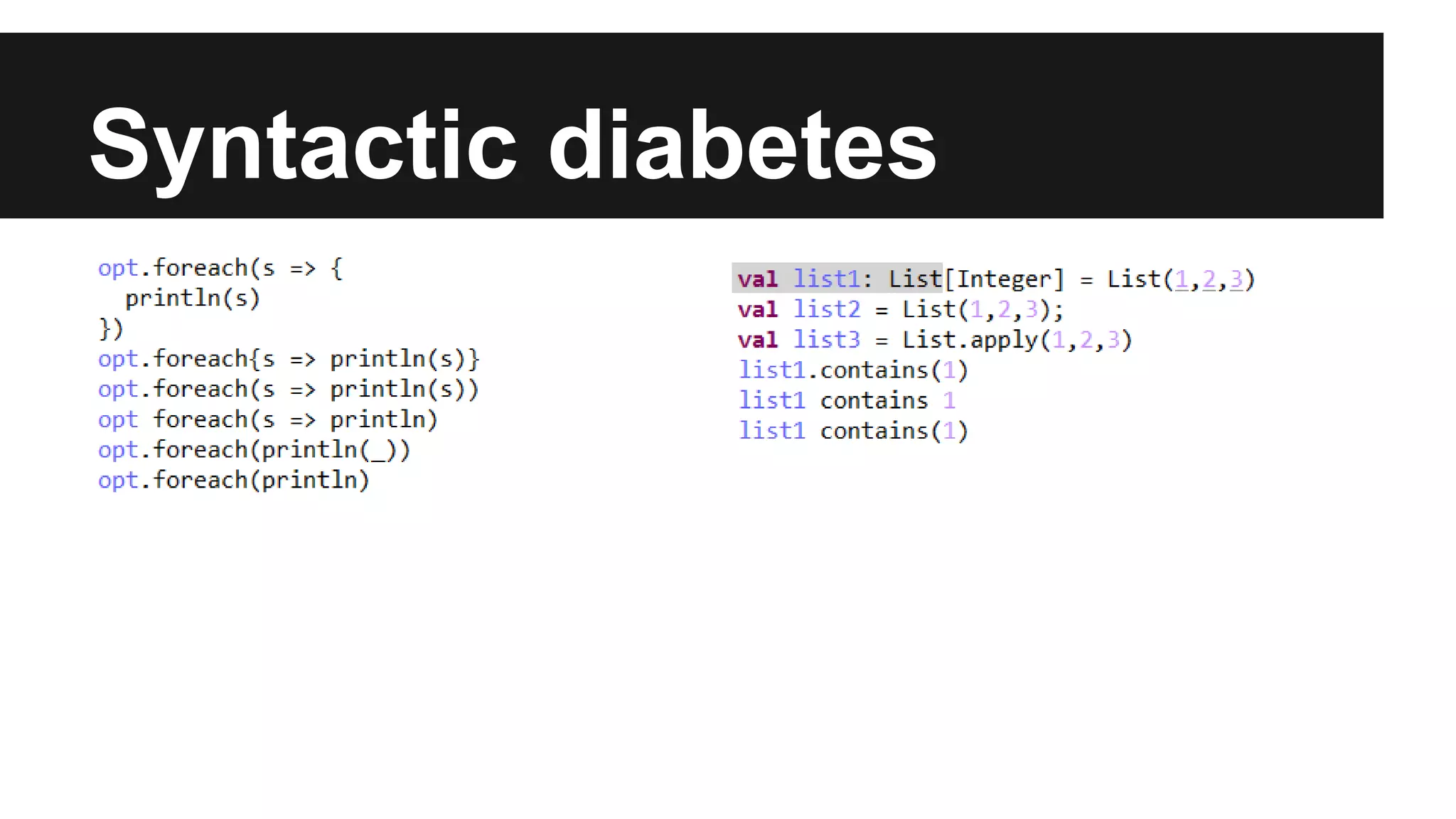
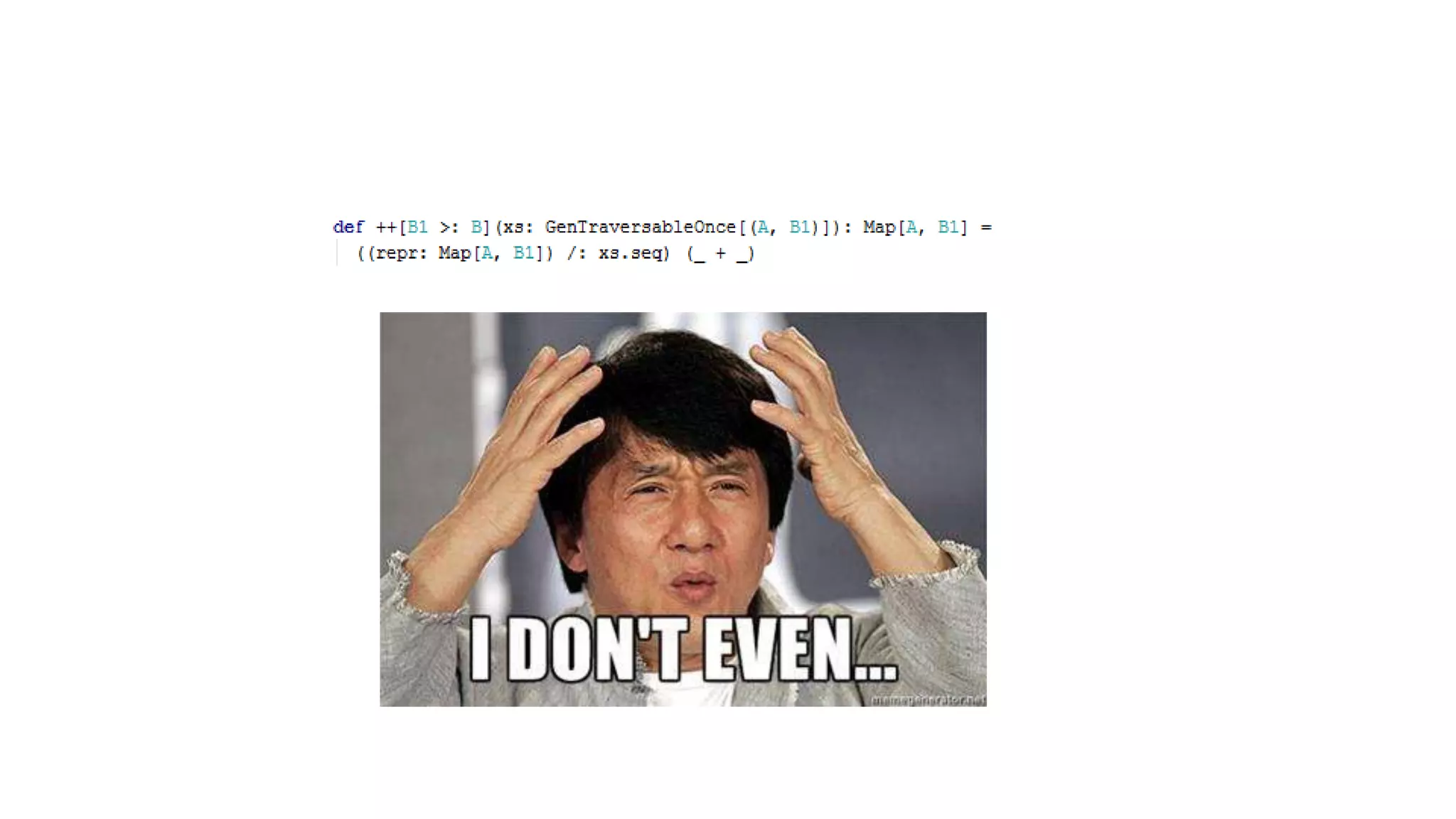
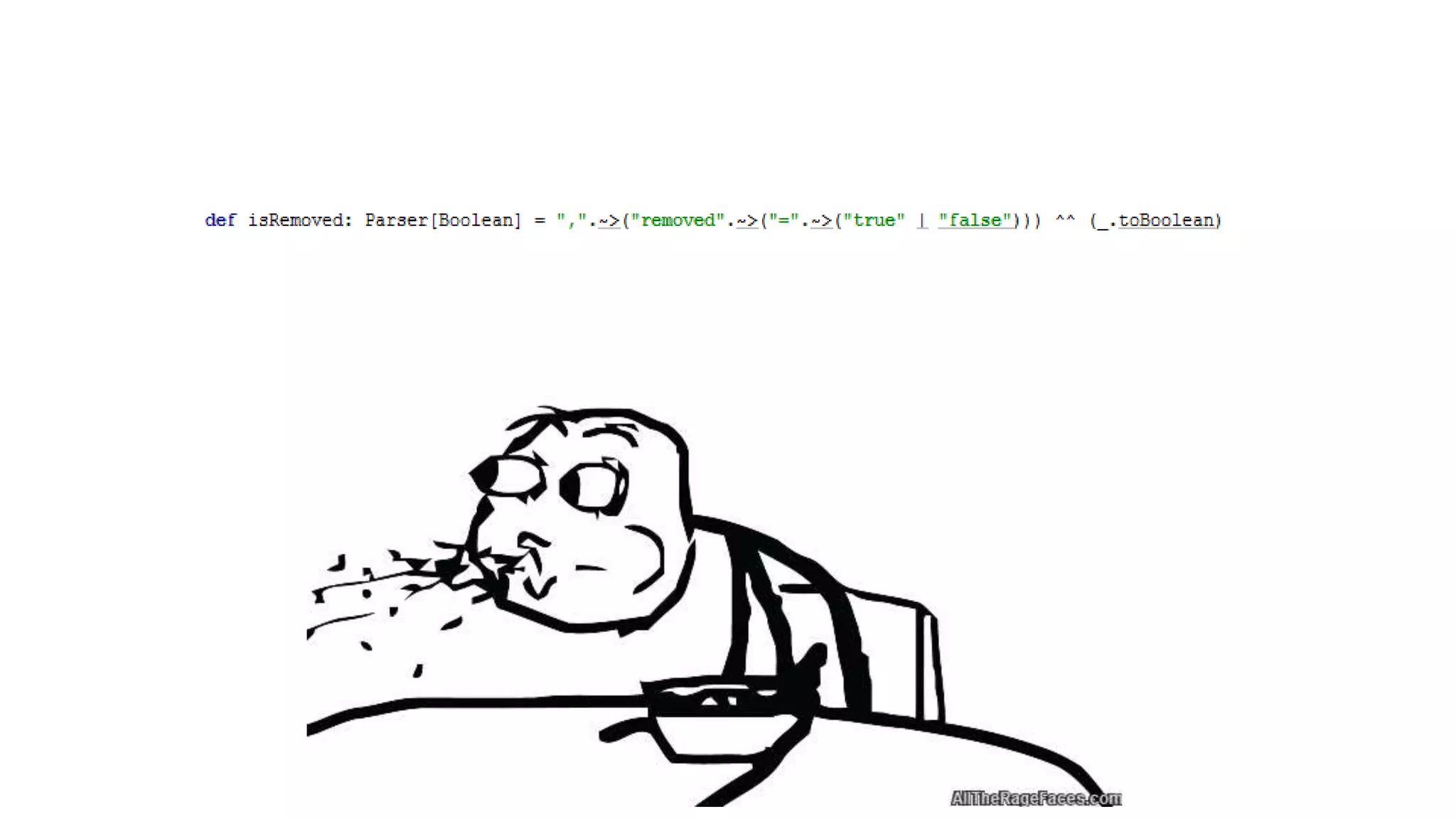
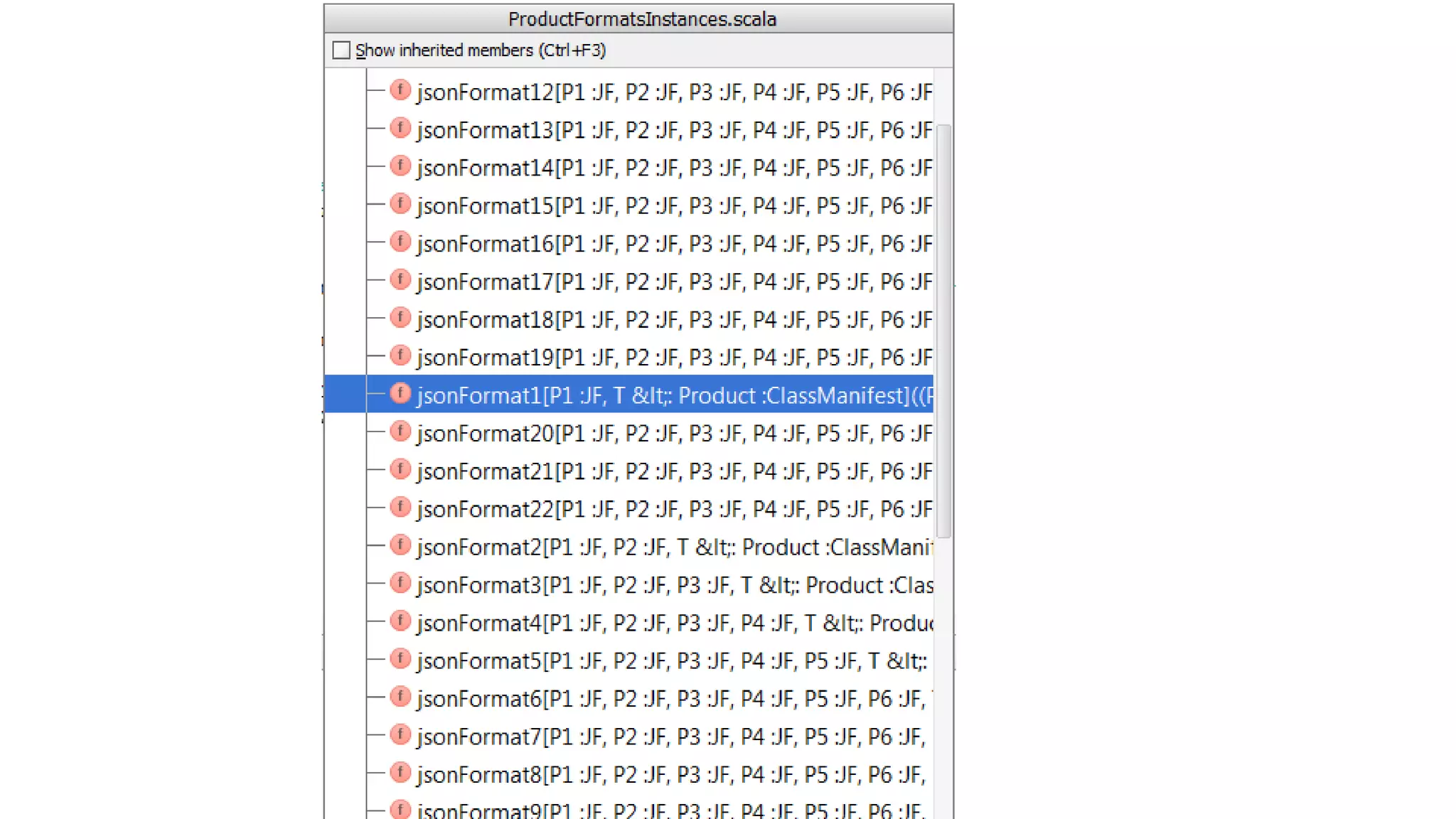
● Syntactic diabetes
Syntactic diabetes
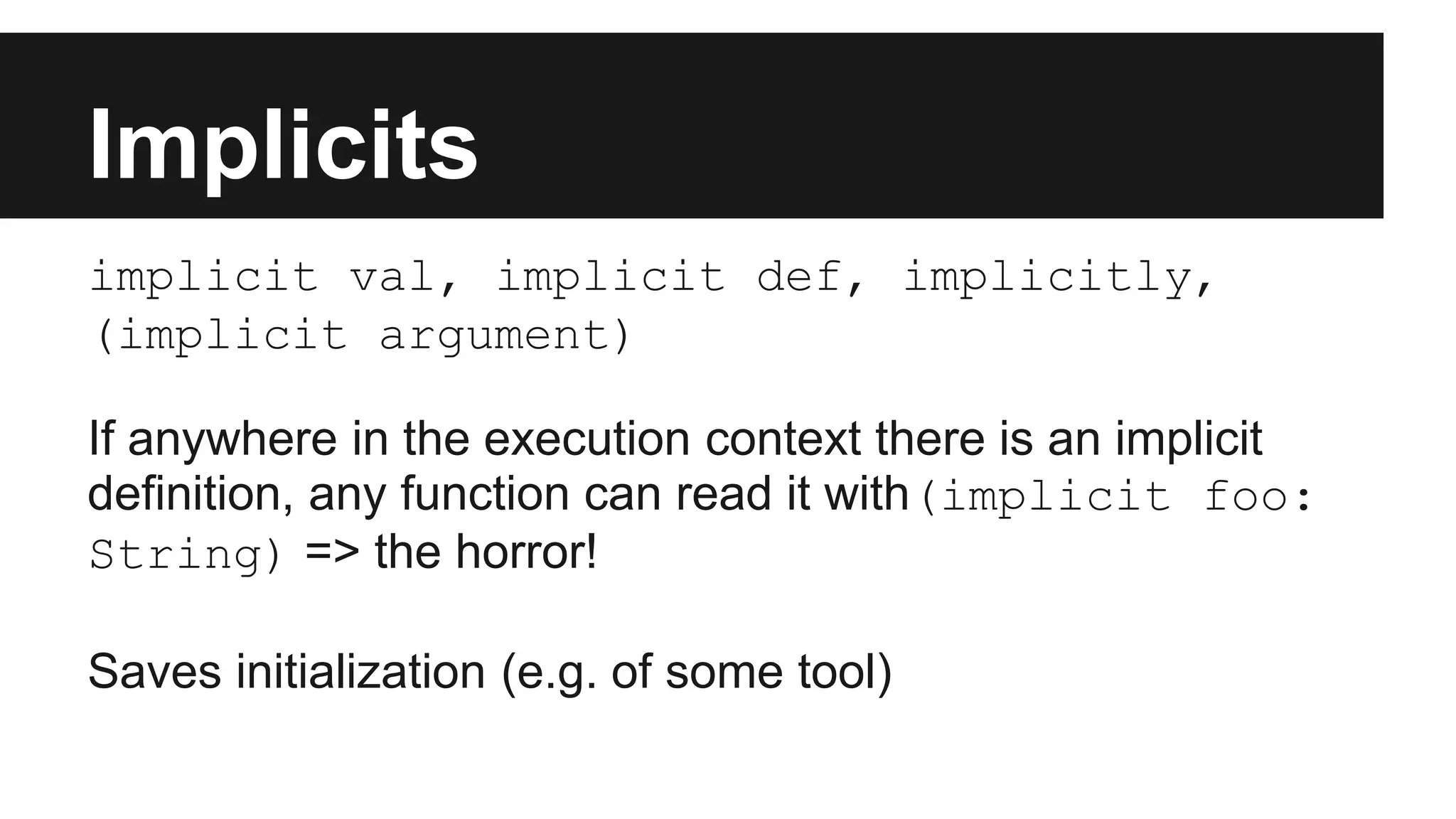
Implicits 
implicit val, implicit def, implicitly, 
(implicit argument) 
If anywhere in the execution context there is an implicit 
definition, any function can read it with(implicit foo: 
String) => the horror! 
Saves initialization (e.g. of some tool)
The bad 
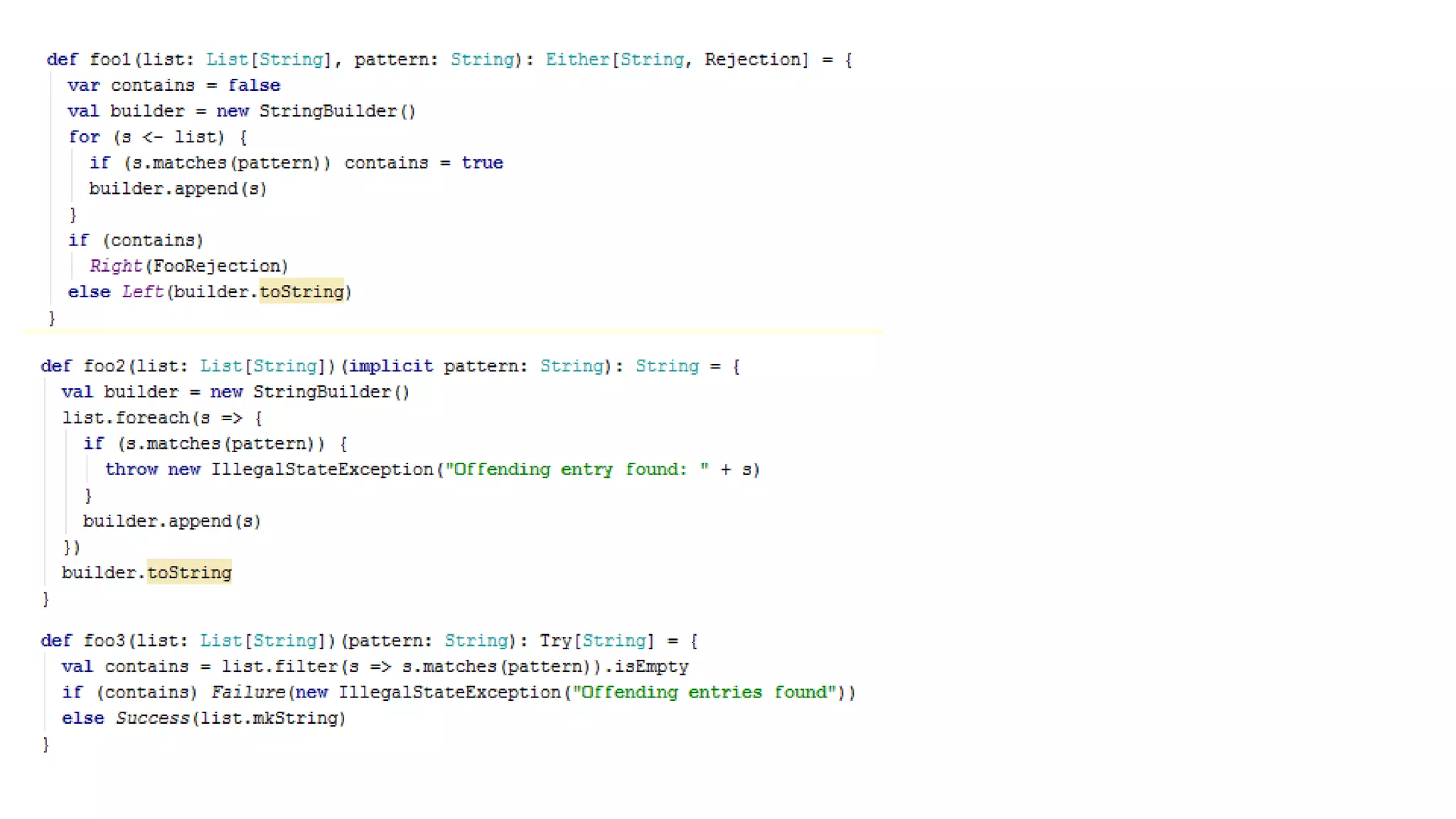
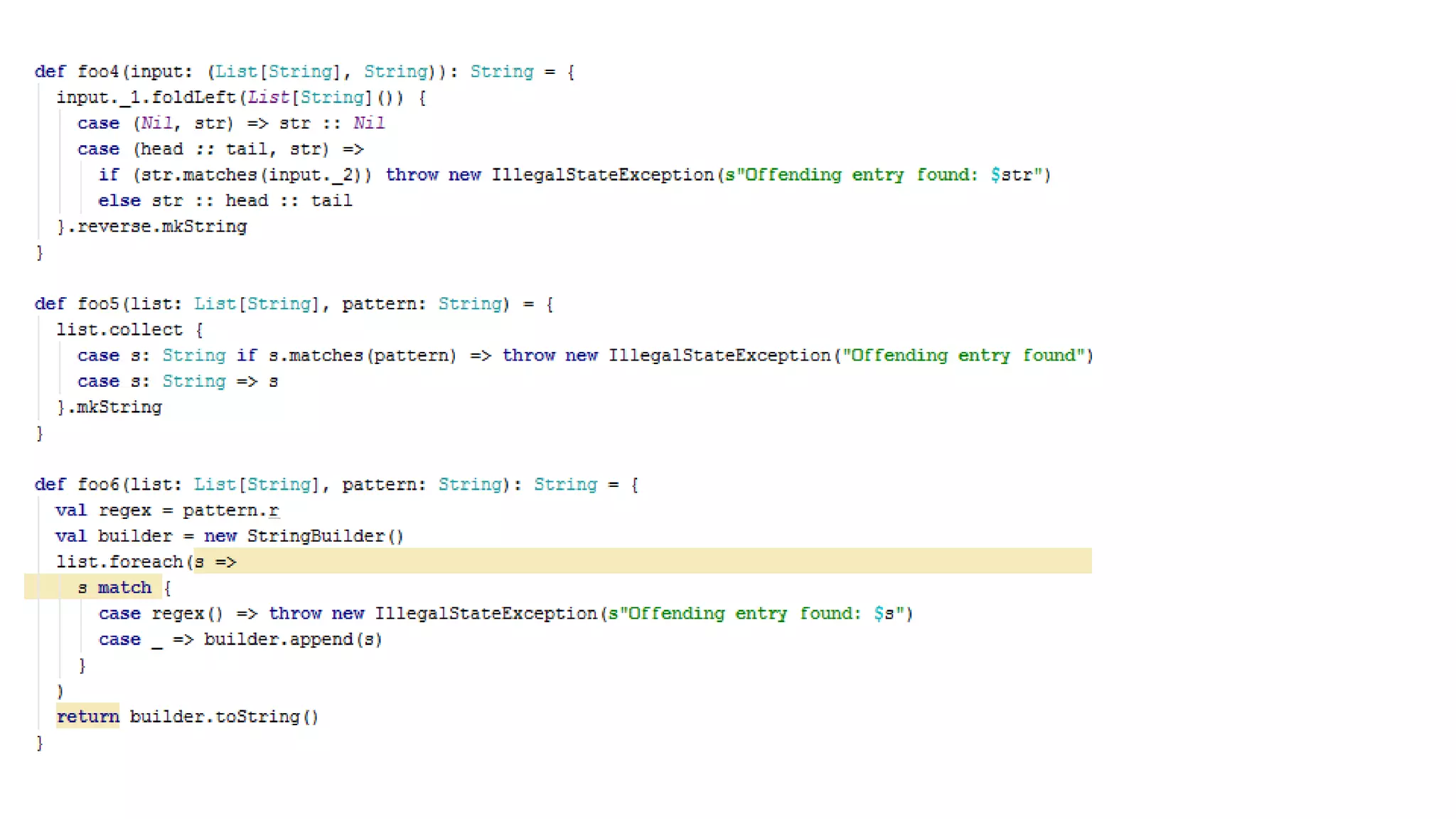
One thing can be written in many ways and 
there is no “right” way.
The bad 
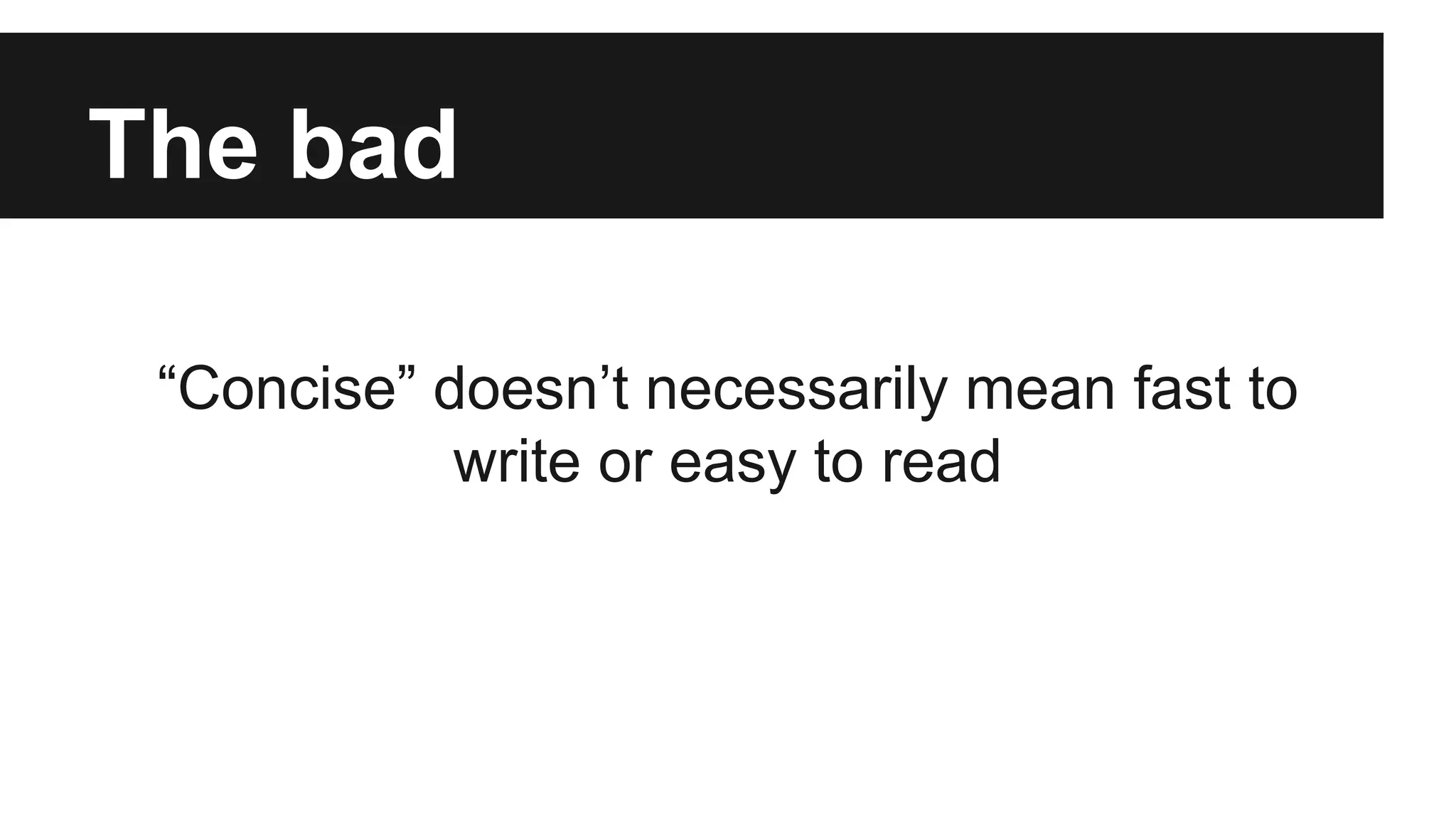
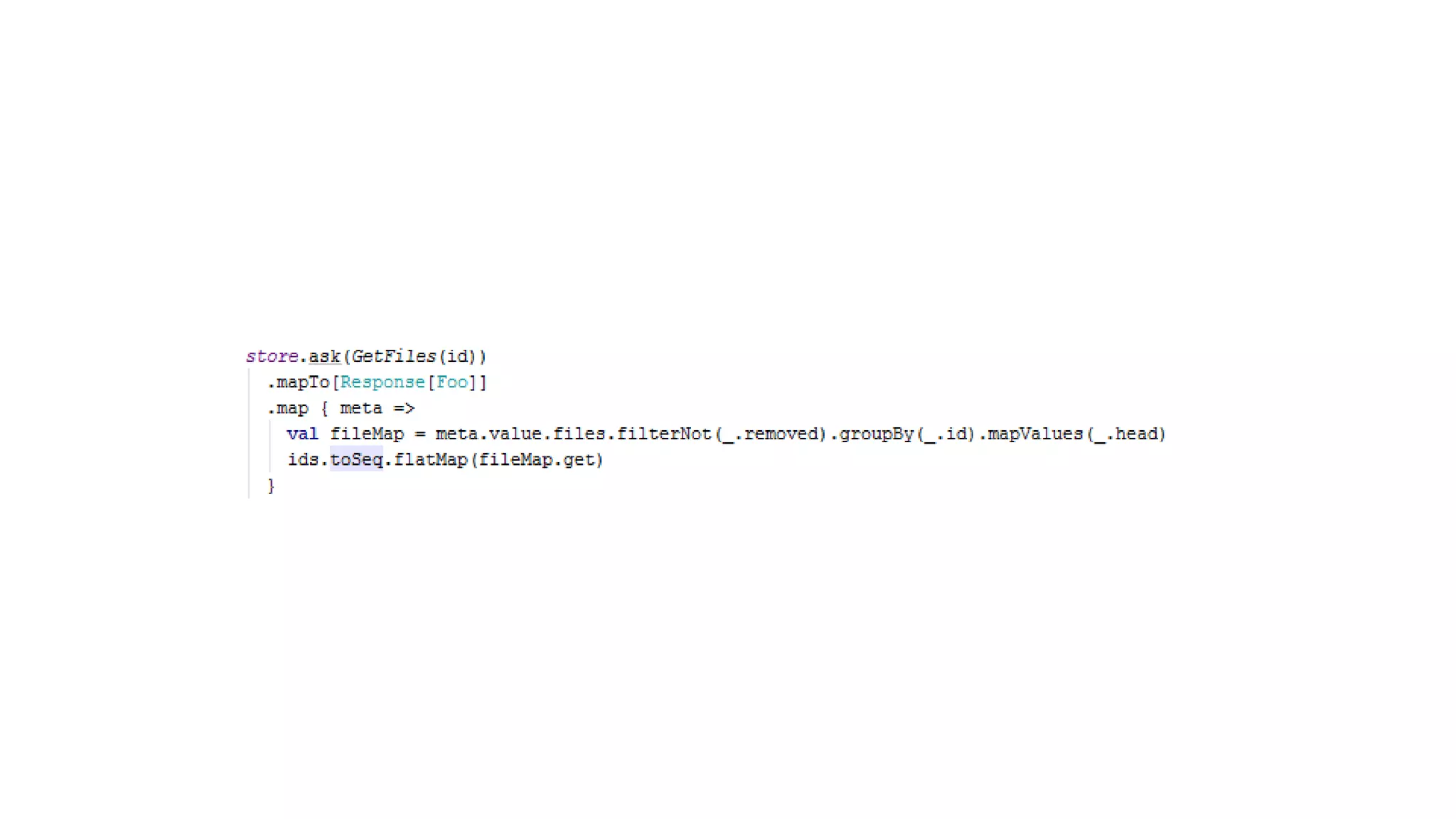
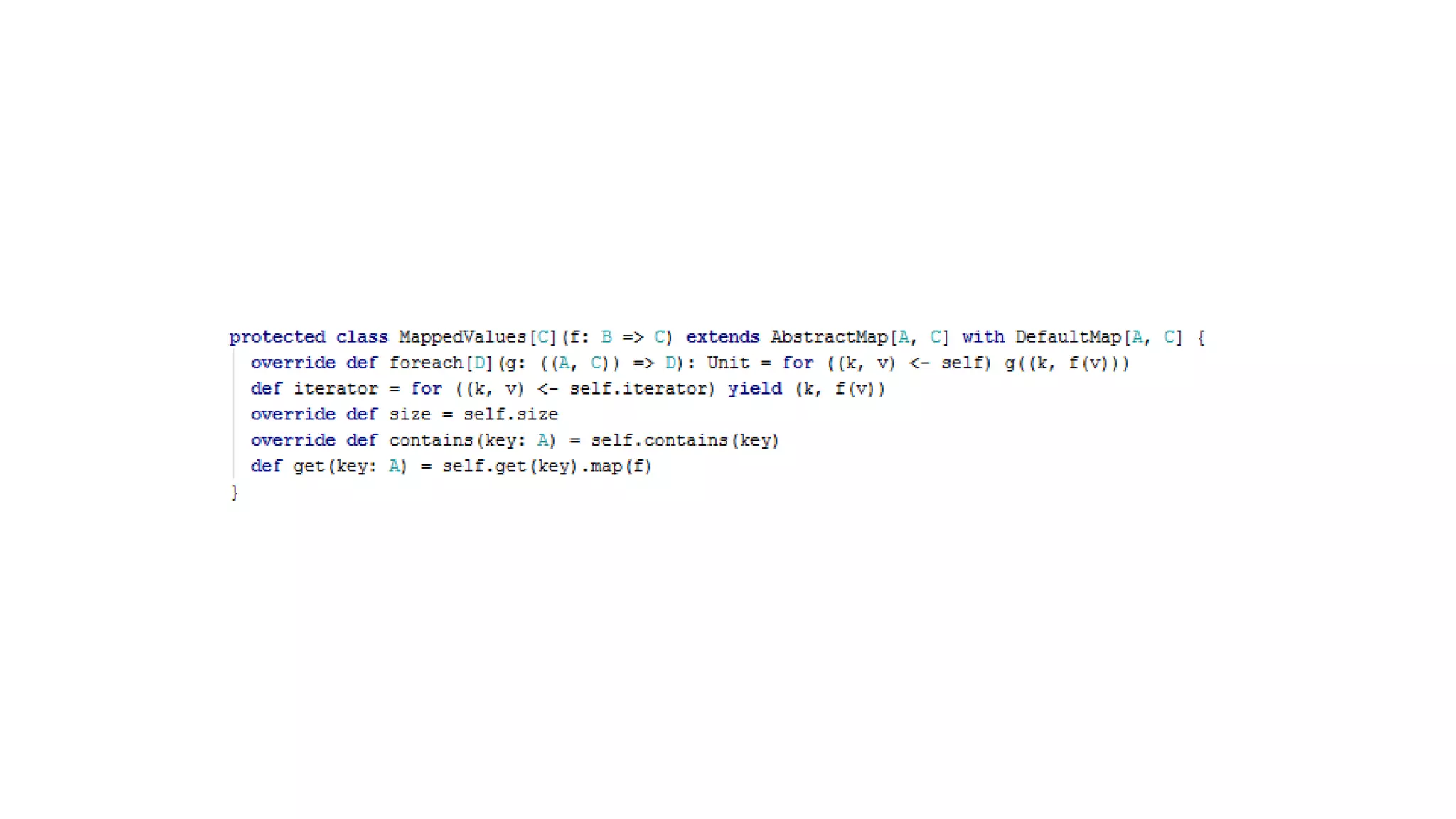
“Concise” doesn’t necessarily mean fast to 
write or easy to read
The bad 
Productivity – do we gain or lose?
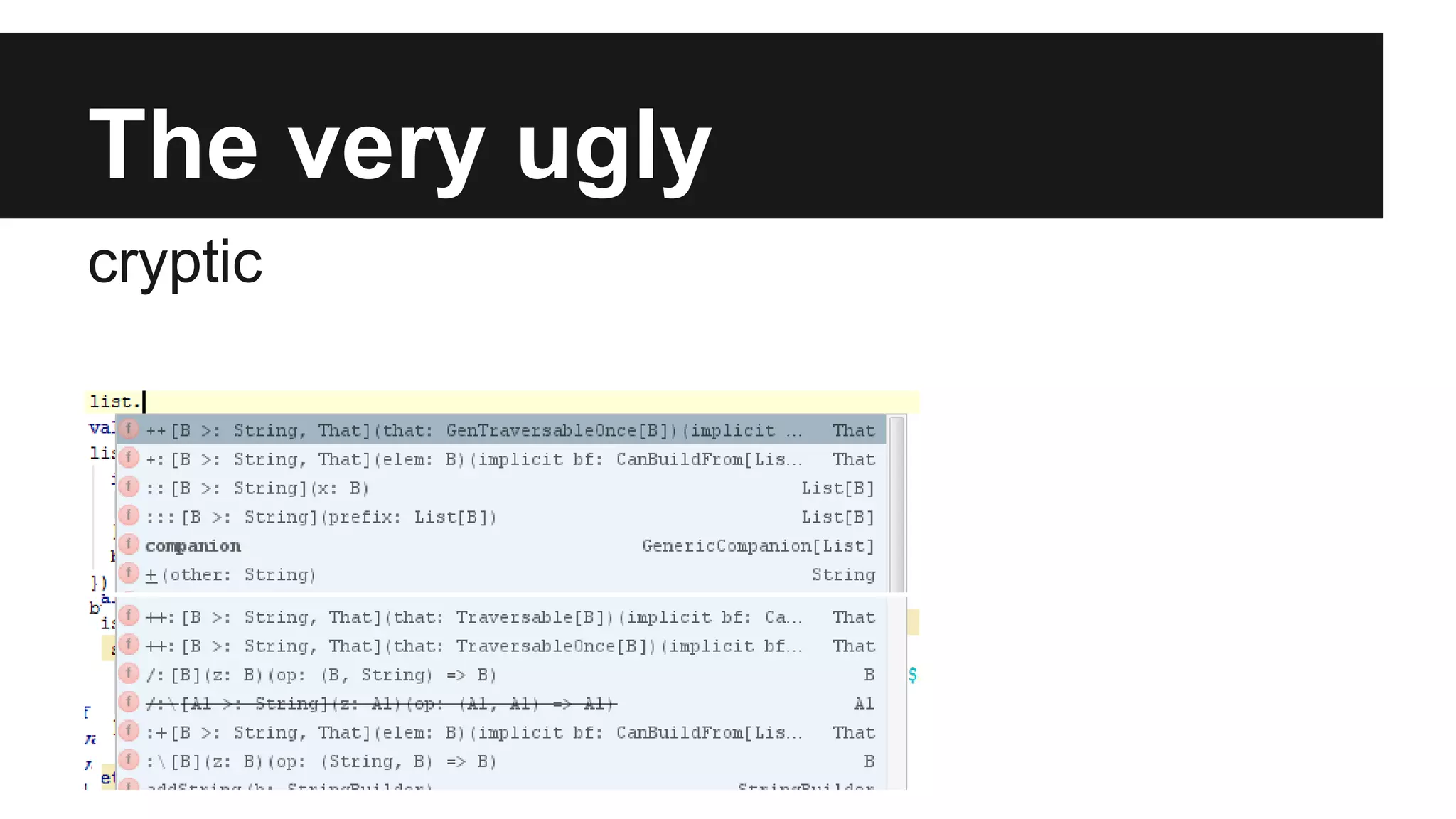
The very ugly 
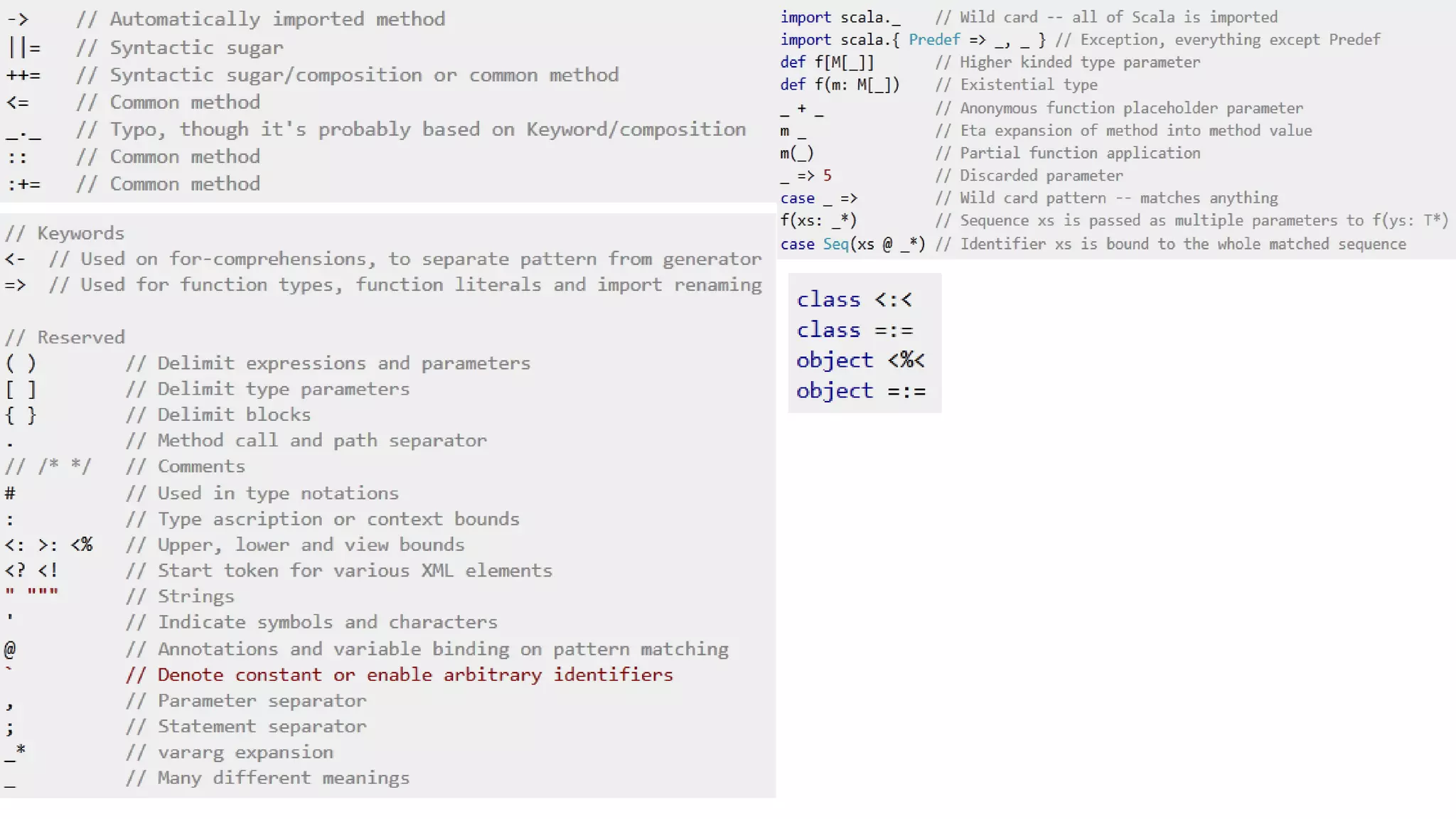
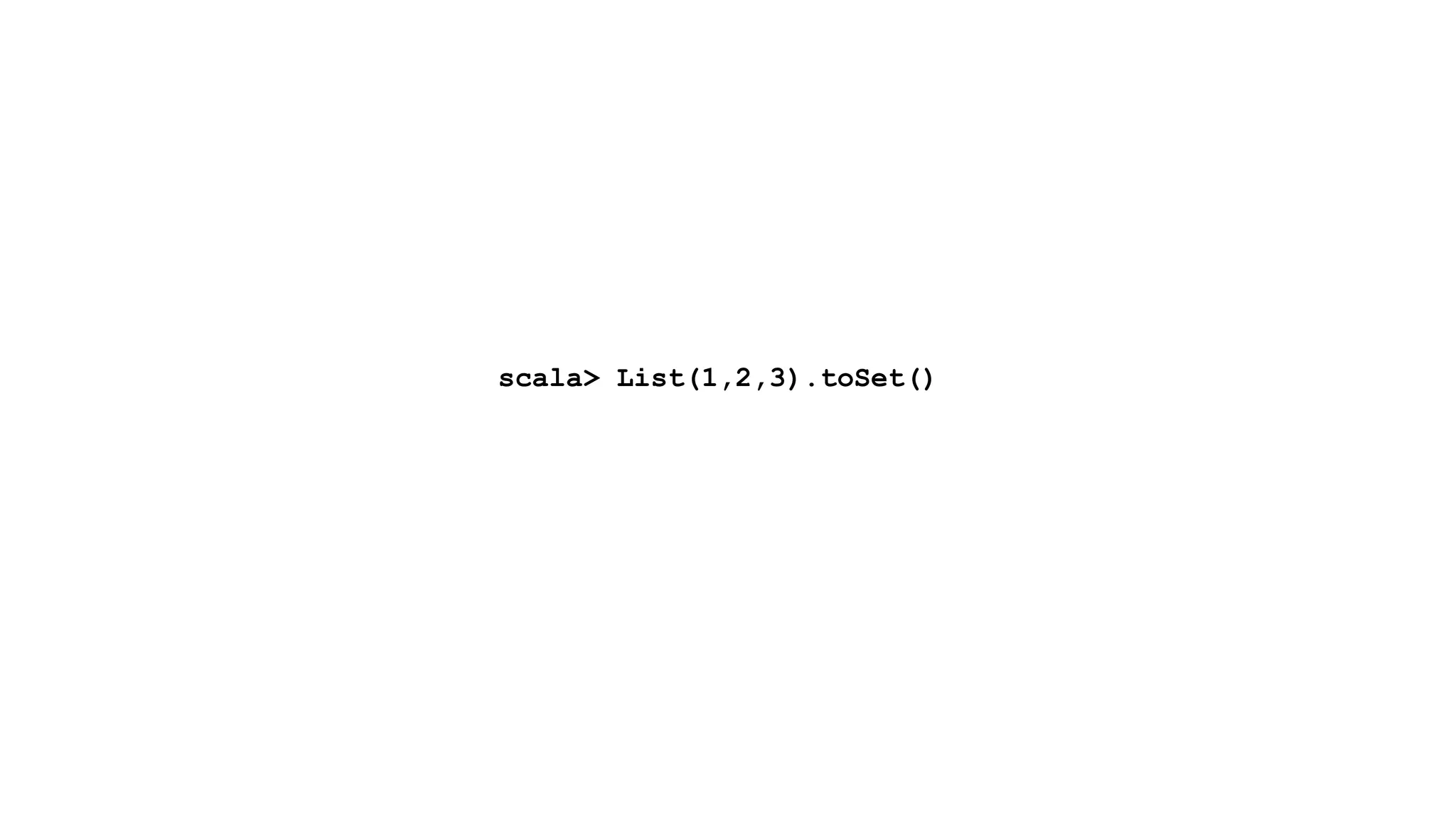
cryptic
scala> List(1,2,3).toSet()
res0: Boolean = false 
List(1,2,3).toSet 
res0: s.c.immutable.Set[Int] = Set(1, 2, 3)
Philosophy 
● Should the language stop us from shooting 
ourselves in the foot? 
● Should this be at the expense of its 
expressiveness? 
● Where is the balance? 
● Who is scala suitable for?
Optimistic 
● IDEs are getting better 
● Frameworks are getting mature 
● Twitter and the language author are 
releasing guidelines and best practices 
(scala – the good parts) 
● invokeDynamic (SI-8359)
Conclusion 
● I wouldn’t recommend scala for a general-purpose new 
project 
● In an actual project most of the defficiencies are 
relatively easy to overcome 
● I would recommend scala for a small, side module 
● It’s interesting to work with, due to the functional aspect 
● Don’t give the users of your language, API or product all 
of the possible options – they will misuse them.
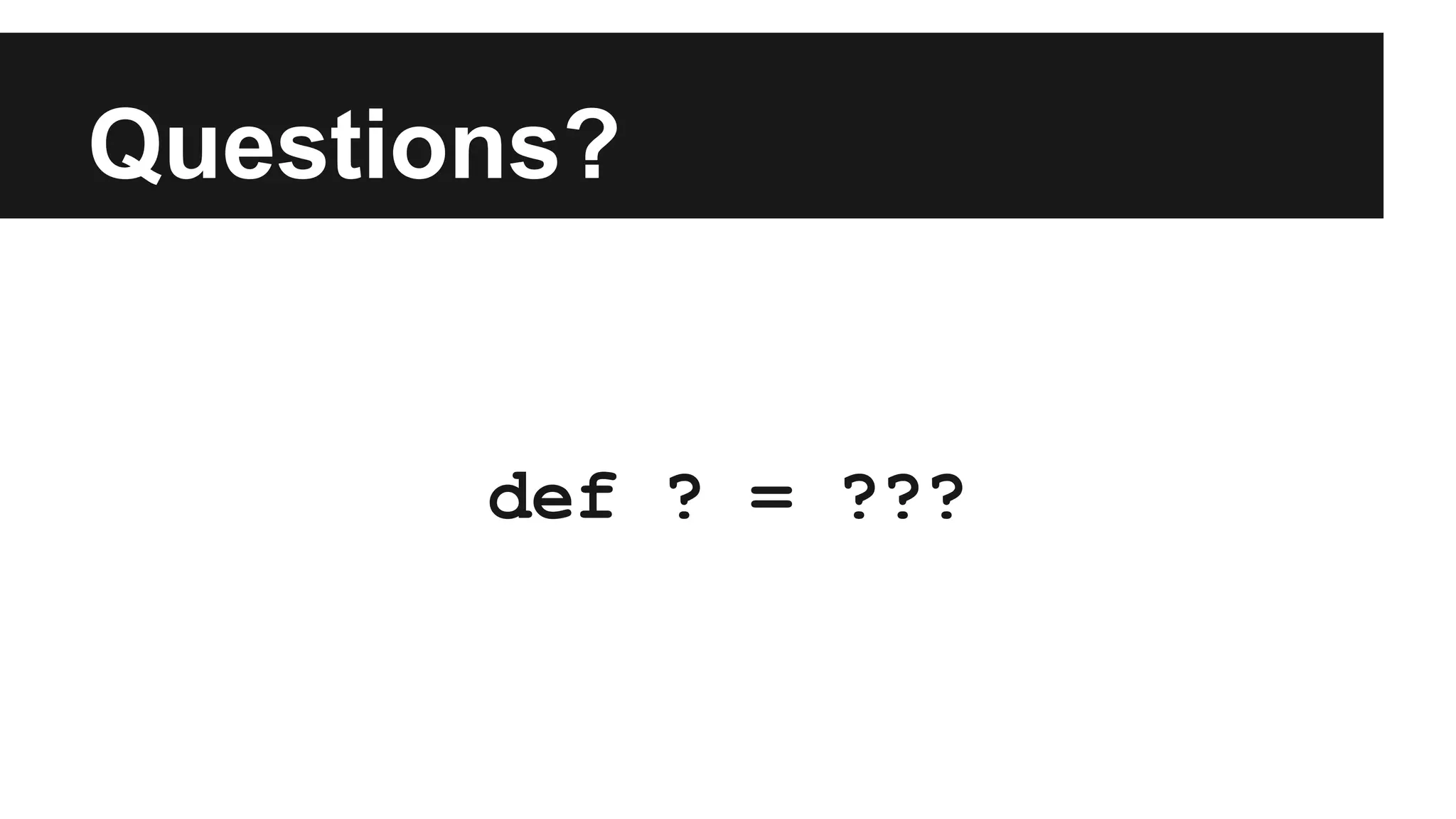
Questions? 
def ? = ???

Scala - the good, the bad and the very ugly

  • 1.
    Scala The good,the bad and the very ugly
  • 2.
    Vanity slide ●Senior software engineer @ TomTom ● Using scala for more than a year ● Stackoverflow (couldn’t miss that) ● http://techblog.bozho.net ● @bozhobg ● (Yes, I’m making presentations about programming languages in PowerPoint with screenshots of code)
  • 3.
    The good ●functional and object-oriented ● JVM-based ● val, type inference ● expressive ● DSL-friendly
  • 4.
    The good ●case classes - immutable, value classes ● embrace immutability - immutable collections by default ● automatic conversion from and to Java collections
  • 5.
    The good ●no null - Option[Foo] ● Reusing java instruments (e.g. guava, slf4j, even spring and hibernate) ● goodies – e.g. instantiating collections without unnecessary brackets or type declarations
  • 6.
  • 7.
  • 8.
    The bad ●tools o The compiler is too slow o IDE-s (Eclipse and IntelliJ) break o sbt (build tool) is buggy ● ecosystem o Many java libraries cannot/should not be used o Most frameworks and libraries and in early phase o binary incompatible => one artifact for each scala version ● lambdas are slower than in Java 8
  • 10.
    The bad ●Heavy in terms of concepts and keywords: implicits, for comprehensions, lazy, case class, case object, currying, partially applied functions vs partial functions => ● Steep learning curve ● Syntactic diabetes
  • 11.
  • 12.
    Implicits implicit val,implicit def, implicitly, (implicit argument) If anywhere in the execution context there is an implicit definition, any function can read it with(implicit foo: String) => the horror! Saves initialization (e.g. of some tool)
  • 13.
    The bad Onething can be written in many ways and there is no “right” way.
  • 16.
    The bad “Concise”doesn’t necessarily mean fast to write or easy to read
  • 18.
    The bad Productivity– do we gain or lose?
  • 19.
    The very ugly cryptic
  • 25.
  • 26.
    res0: Boolean =false List(1,2,3).toSet res0: s.c.immutable.Set[Int] = Set(1, 2, 3)
  • 27.
    Philosophy ● Shouldthe language stop us from shooting ourselves in the foot? ● Should this be at the expense of its expressiveness? ● Where is the balance? ● Who is scala suitable for?
  • 28.
    Optimistic ● IDEsare getting better ● Frameworks are getting mature ● Twitter and the language author are releasing guidelines and best practices (scala – the good parts) ● invokeDynamic (SI-8359)
  • 29.
    Conclusion ● Iwouldn’t recommend scala for a general-purpose new project ● In an actual project most of the defficiencies are relatively easy to overcome ● I would recommend scala for a small, side module ● It’s interesting to work with, due to the functional aspect ● Don’t give the users of your language, API or product all of the possible options – they will misuse them.
  • 30.