Nothing is secure
Bozhidar Bozhanov
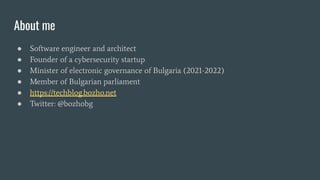
About me
● Software engineer and architect
● Founder of a cybersecurity startup
● Minister of electronic governance of Bulgaria (2021-2022)
● Member of Bulgarian parliament
● https://techblog.bozho.net
● Twitter: @bozhobg
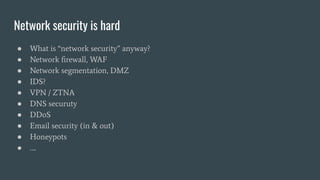
Network security is hard
● What is “network security” anyway?
● Network firewall, WAF
● Network segmentation, DMZ
● IDS?
● VPN / ZTNA
● DNS securuty
● DDoS
● Email security (in & out)
● Honeypots
● ….
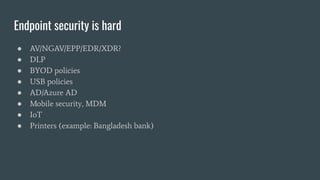
Endpoint security is hard
● AV/NGAV/EPP/EDR/XDR?
● DLP
● BYOD policies
● USB policies
● AD/Azure AD
● Mobile security, MDM
● IoT
● Printers (example: Bangladesh bank)
Cloud security is hard
● IaaS configurations
● IAM, API access
● Container management
● Cloud monitoring, security centers, agents
● SaaS - MFA
● SaaS - “trust us”
● SaaS - shadow IT
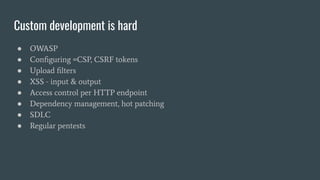
Custom development is hard
● OWASP
● Configuring =CSP, CSRF tokens
● Upload filters
● XSS - input & output
● Access control per HTTP endpoint
● Dependency management, hot patching
● SDLC
● Regular pentests
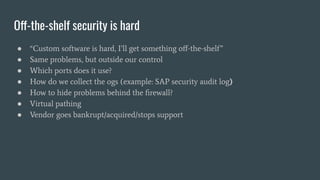
Off-the-shelf security is hard
● “Custom software is hard, I’ll get something off-the-shelf”
● Same problems, but outside our control
● Which ports does it use?
● How do we collect the ogs (example: SAP security audit log)
● How to hide problems behind the firewall?
● Virtual pathing
● Vendor goes bankrupt/acquired/stops support
"No problem, we’ll get the best security tools
and that will fix things"
Security tools are hard
● Sometimes missing exactly the thing that we need
● Blocks normal usage, but lets the bad guys in (example: downloading binaries as
base64 text files)
● Expensive
● Allegedly integrated, but you need many tools which hardly talk to each other
● Data sheet (only) functionality
● False positives
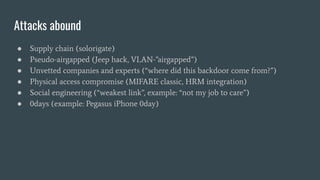
Attacks abound
● Supply chain (solorigate)
● Pseudo-airgapped (Jeep hack, VLAN-”airgapped”)
● Unvetted companies and experts (“where did this backdoor come from?”)
● Physical access compromise (MIFARE classic, HRM integration)
● Social engineering (“weakest link”, example: “not my job to care”)
● 0days (example: Pegasus iPhone 0day)
All of that is hard
even if we have qualified people
Many organizations don’t have them.
The public sector doesn’t have them.
We’ve built something overly complex on a
bunch of silicon, “mirrors” in a tube and 0s
and 1s. There’s no built-in security, it’s
always added later.
That makes things very, very hard.
Nothing is secure…
...but we have to manage risk
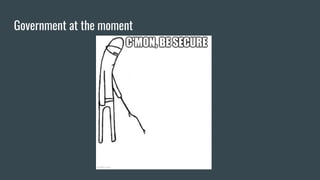
Government at the moment
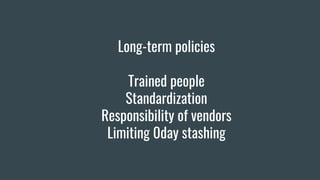
Long-term policies
Trained people
Standardization
Responsibility of vendors
Limiting 0day stashing
Nothing is secure…
…but it has to become less and less insecure.
Thank you!

Nothing is secure.pdf

  • 1.
  • 2.
    About me ● Softwareengineer and architect ● Founder of a cybersecurity startup ● Minister of electronic governance of Bulgaria (2021-2022) ● Member of Bulgarian parliament ● https://techblog.bozho.net ● Twitter: @bozhobg
  • 3.
    Network security ishard ● What is “network security” anyway? ● Network firewall, WAF ● Network segmentation, DMZ ● IDS? ● VPN / ZTNA ● DNS securuty ● DDoS ● Email security (in & out) ● Honeypots ● ….
  • 4.
    Endpoint security ishard ● AV/NGAV/EPP/EDR/XDR? ● DLP ● BYOD policies ● USB policies ● AD/Azure AD ● Mobile security, MDM ● IoT ● Printers (example: Bangladesh bank)
  • 5.
    Cloud security ishard ● IaaS configurations ● IAM, API access ● Container management ● Cloud monitoring, security centers, agents ● SaaS - MFA ● SaaS - “trust us” ● SaaS - shadow IT
  • 6.
    Custom development ishard ● OWASP ● Configuring =CSP, CSRF tokens ● Upload filters ● XSS - input & output ● Access control per HTTP endpoint ● Dependency management, hot patching ● SDLC ● Regular pentests
  • 7.
    Off-the-shelf security ishard ● “Custom software is hard, I’ll get something off-the-shelf” ● Same problems, but outside our control ● Which ports does it use? ● How do we collect the ogs (example: SAP security audit log) ● How to hide problems behind the firewall? ● Virtual pathing ● Vendor goes bankrupt/acquired/stops support
  • 8.
    "No problem, we’llget the best security tools and that will fix things"
  • 9.
    Security tools arehard ● Sometimes missing exactly the thing that we need ● Blocks normal usage, but lets the bad guys in (example: downloading binaries as base64 text files) ● Expensive ● Allegedly integrated, but you need many tools which hardly talk to each other ● Data sheet (only) functionality ● False positives
  • 10.
    Attacks abound ● Supplychain (solorigate) ● Pseudo-airgapped (Jeep hack, VLAN-”airgapped”) ● Unvetted companies and experts (“where did this backdoor come from?”) ● Physical access compromise (MIFARE classic, HRM integration) ● Social engineering (“weakest link”, example: “not my job to care”) ● 0days (example: Pegasus iPhone 0day)
  • 11.
    All of thatis hard even if we have qualified people
  • 12.
    Many organizations don’thave them. The public sector doesn’t have them.
  • 13.
    We’ve built somethingoverly complex on a bunch of silicon, “mirrors” in a tube and 0s and 1s. There’s no built-in security, it’s always added later. That makes things very, very hard.
  • 14.
    Nothing is secure… ...butwe have to manage risk
  • 15.
  • 16.
  • 17.
    Nothing is secure… …butit has to become less and less insecure.
  • 18.