Alternative for
copyright
protection
online
Bozhidar Bozhanov
Key aspects
● Effects on freedom of expression
● Cost for small companies
○ Ambiguous interpretations and legal uncertainty
● Distribution of content by rightholders
● Efficiency of content recognition technology
● Actual protection and monetization of copyright
Issues with proposed filters
● Legal uncertainty and increased cost for small companies
● Uncertainty how will content databases for filters be provided
● The content recognition technology is far from perfect
○ False positives
○ Context
○ Exceptions and limitations (or fair use)
● => automatic filtering is a risk for freedom of speech
● Filtering IS NOT monetization
● We risk creating a ContentID-as-a-Service monopoly
Proposal
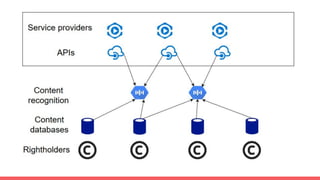
Getting content recognition sytems outside
of service providers
Obligations for service providers
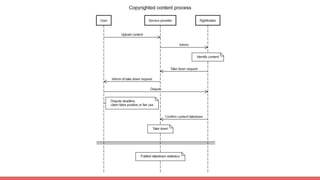
● APIs
○ Notification for new published content
○ Pulling the newly published content
○ Request for blocking or monetization
● Appeals procedure
● Transparency
○ Number of blocked works
○ Number of monetized works
○ Number of appeals
○ Results from appeals
● Easier for applying specific rules
○ “Block for a certain period (Х days after premier), monetize after that”
● Will it scale?
○ 300 hours of video are uploaded to YouTube every minute
○ Will require consolidation of rightholders
● Different rules:
○ For service providers in dominant market position - an obligation to implement filters internally
● Protection of repositories of copyrighted works
● Annotating all works with metadata, including rights for reuse, exceptions of
copyright, etc.
● Right of uploaders to claim exceptions
● “Verified uploader” - eID (anonymous credentials)
The devil is in the details
● The choice is not binary - there’s more than just “with” or “without” filters
● The appeals process is key
○ Filtering with delay
● We need more information in order to take decisions
○ More transparency from service providers and rightholders
● Can we solve the fundamental problem - users are used to free content
○ YouTube, Spotify, SoundCloud are barely break-even or even losing money
○ Rightholders claim that they don’t get enough money
○ The advertising industry (that is the main source of money) will be affected by GDPR and the
ePrivacy Regulation
○ Where will the money come from?
There is no simple solution
My recommendation:
back to the drawing board
Thank you

Alternatives for copyright protection online

  • 1.
  • 2.
    Key aspects ● Effectson freedom of expression ● Cost for small companies ○ Ambiguous interpretations and legal uncertainty ● Distribution of content by rightholders ● Efficiency of content recognition technology ● Actual protection and monetization of copyright
  • 3.
    Issues with proposedfilters ● Legal uncertainty and increased cost for small companies ● Uncertainty how will content databases for filters be provided ● The content recognition technology is far from perfect ○ False positives ○ Context ○ Exceptions and limitations (or fair use) ● => automatic filtering is a risk for freedom of speech ● Filtering IS NOT monetization ● We risk creating a ContentID-as-a-Service monopoly
  • 4.
    Proposal Getting content recognitionsytems outside of service providers
  • 6.
    Obligations for serviceproviders ● APIs ○ Notification for new published content ○ Pulling the newly published content ○ Request for blocking or monetization ● Appeals procedure ● Transparency ○ Number of blocked works ○ Number of monetized works ○ Number of appeals ○ Results from appeals
  • 8.
    ● Easier forapplying specific rules ○ “Block for a certain period (Х days after premier), monetize after that” ● Will it scale? ○ 300 hours of video are uploaded to YouTube every minute ○ Will require consolidation of rightholders ● Different rules: ○ For service providers in dominant market position - an obligation to implement filters internally ● Protection of repositories of copyrighted works ● Annotating all works with metadata, including rights for reuse, exceptions of copyright, etc. ● Right of uploaders to claim exceptions ● “Verified uploader” - eID (anonymous credentials) The devil is in the details
  • 9.
    ● The choiceis not binary - there’s more than just “with” or “without” filters ● The appeals process is key ○ Filtering with delay ● We need more information in order to take decisions ○ More transparency from service providers and rightholders ● Can we solve the fundamental problem - users are used to free content ○ YouTube, Spotify, SoundCloud are barely break-even or even losing money ○ Rightholders claim that they don’t get enough money ○ The advertising industry (that is the main source of money) will be affected by GDPR and the ePrivacy Regulation ○ Where will the money come from? There is no simple solution
  • 10.
    My recommendation: back tothe drawing board
  • 11.