Sampling methods or Sampling
Techniques
Shubhi Taneja
PhD Coursework,
LNIPE, Gwalior
In Statistics, the sampling
method or sampling technique is the
process of studying the population by
gathering information and analyzing that
data. It is the basis of the data where the
sample space is enormous.
These techniques can be subdivided into
two groups.
Types of Sampling Method
The two types of sampling methods
are:
• Probability Sampling
• Non-probability Sampling
What is Probability Sampling?
The probability sampling method uses random
selection. In this method, all the eligible
individuals have a chance of selecting the
sample from the whole sample space.
• This method is more time consuming and
expensive than the non-probability sampling
method.
• The benefit of using these methods is that it
guarantees the sample that should be the
representative of the population.
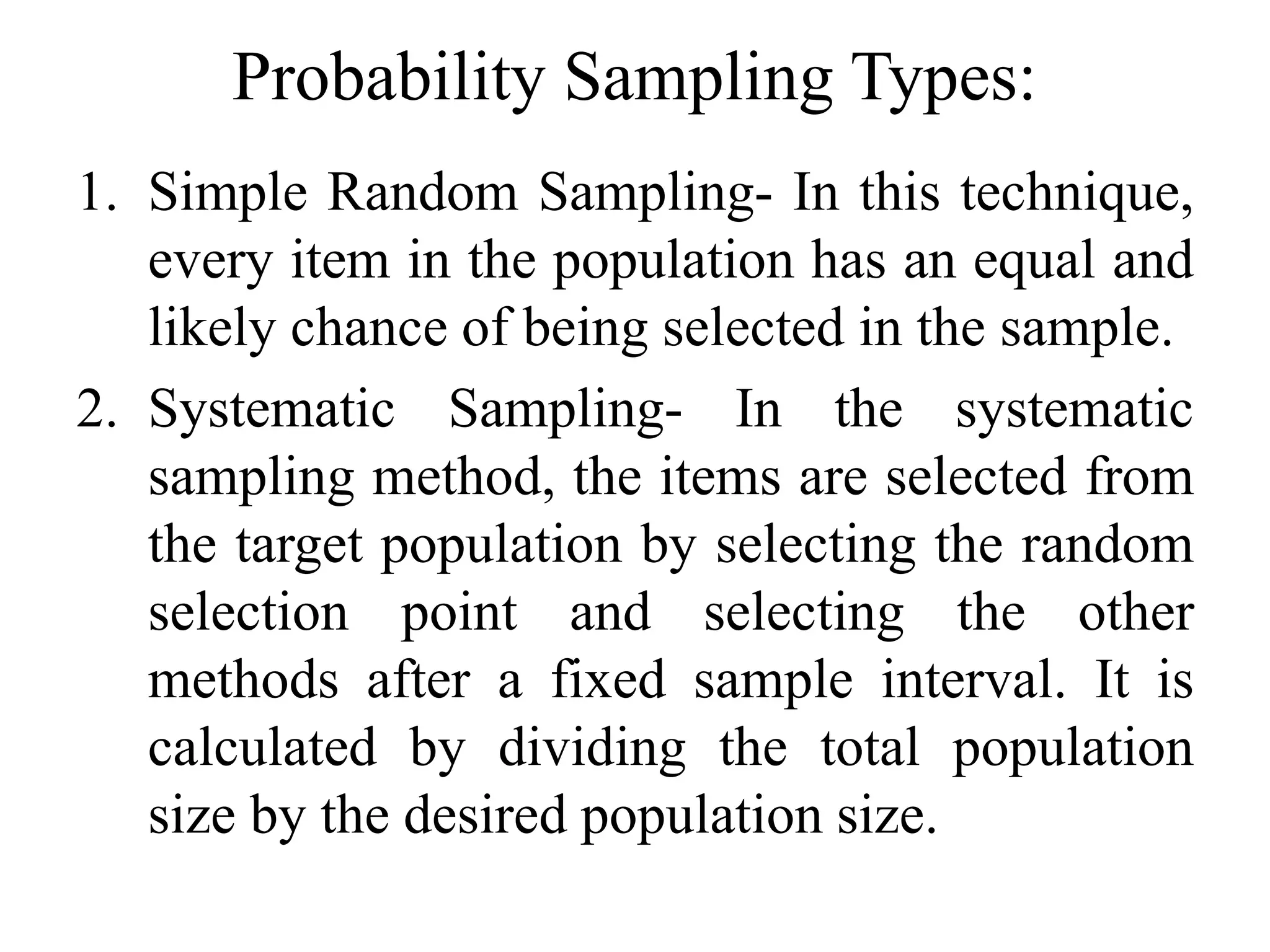
1. Simple Random Sampling- In this technique,
every item in the population has an equal and
likely chance of being selected in the sample.
2. Systematic Sampling- In the systematic
sampling method, the items are selected from
the target population by selecting the random
selection point and selecting the other
methods after a fixed sample interval. It is
calculated by dividing the total population
size by the desired population size.
Probability Sampling Types:
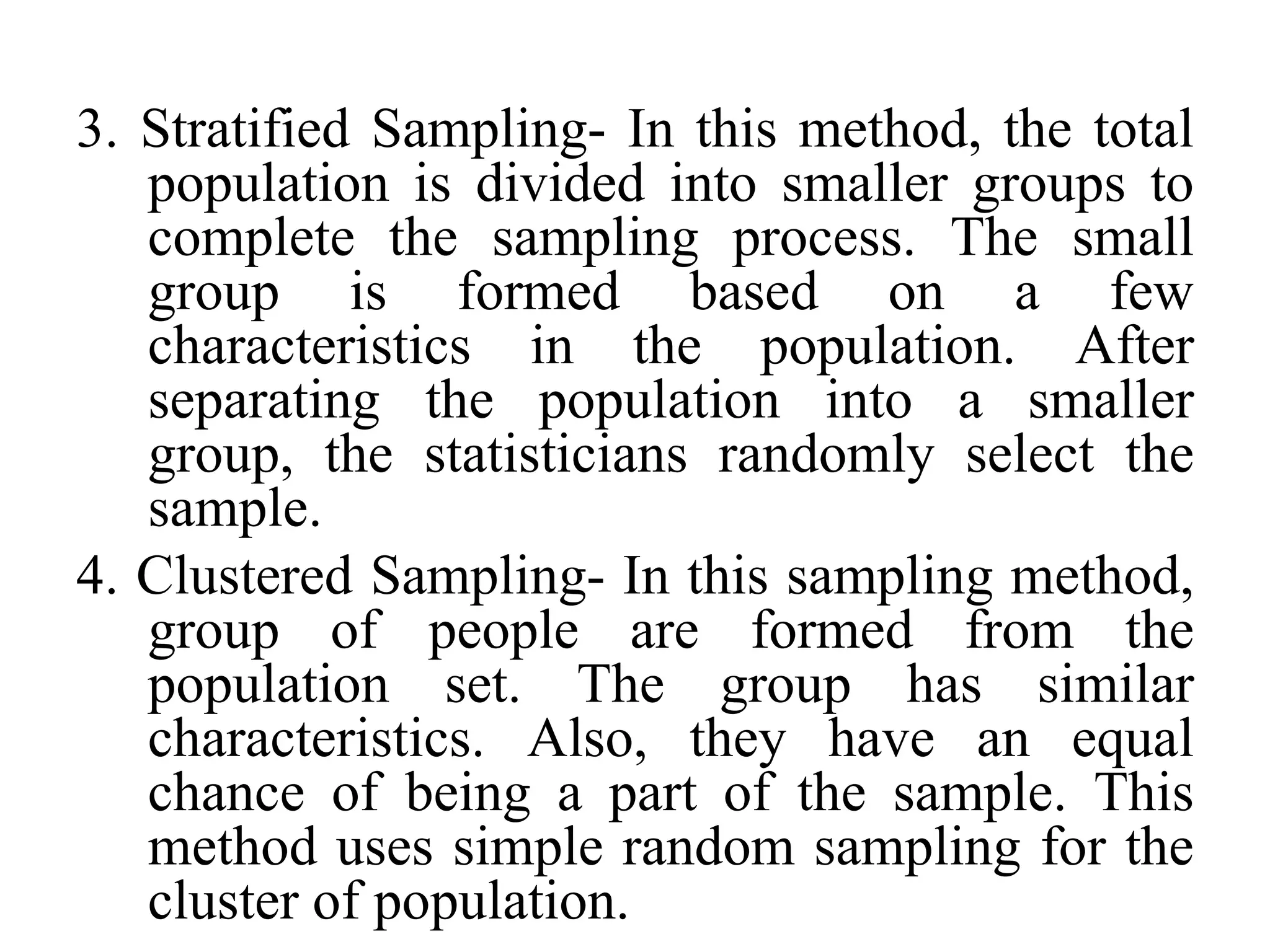
3. Stratified Sampling- In this method, the total
population is divided into smaller groups to
complete the sampling process. The small
group is formed based on a few
characteristics in the population. After
separating the population into a smaller
group, the statisticians randomly select the
sample.
4. Clustered Sampling- In this sampling method,
group of people are formed from the
population set. The group has similar
characteristics. Also, they have an equal
chance of being a part of the sample. This
method uses simple random sampling for the
cluster of population.
Non-Probability Sampling
The non-probability sampling method is a
technique where researcher selects the sample
based on subjective judgment rather than the
random selection.
In this method, not all the members of the
population have a chance to participate in the
study.
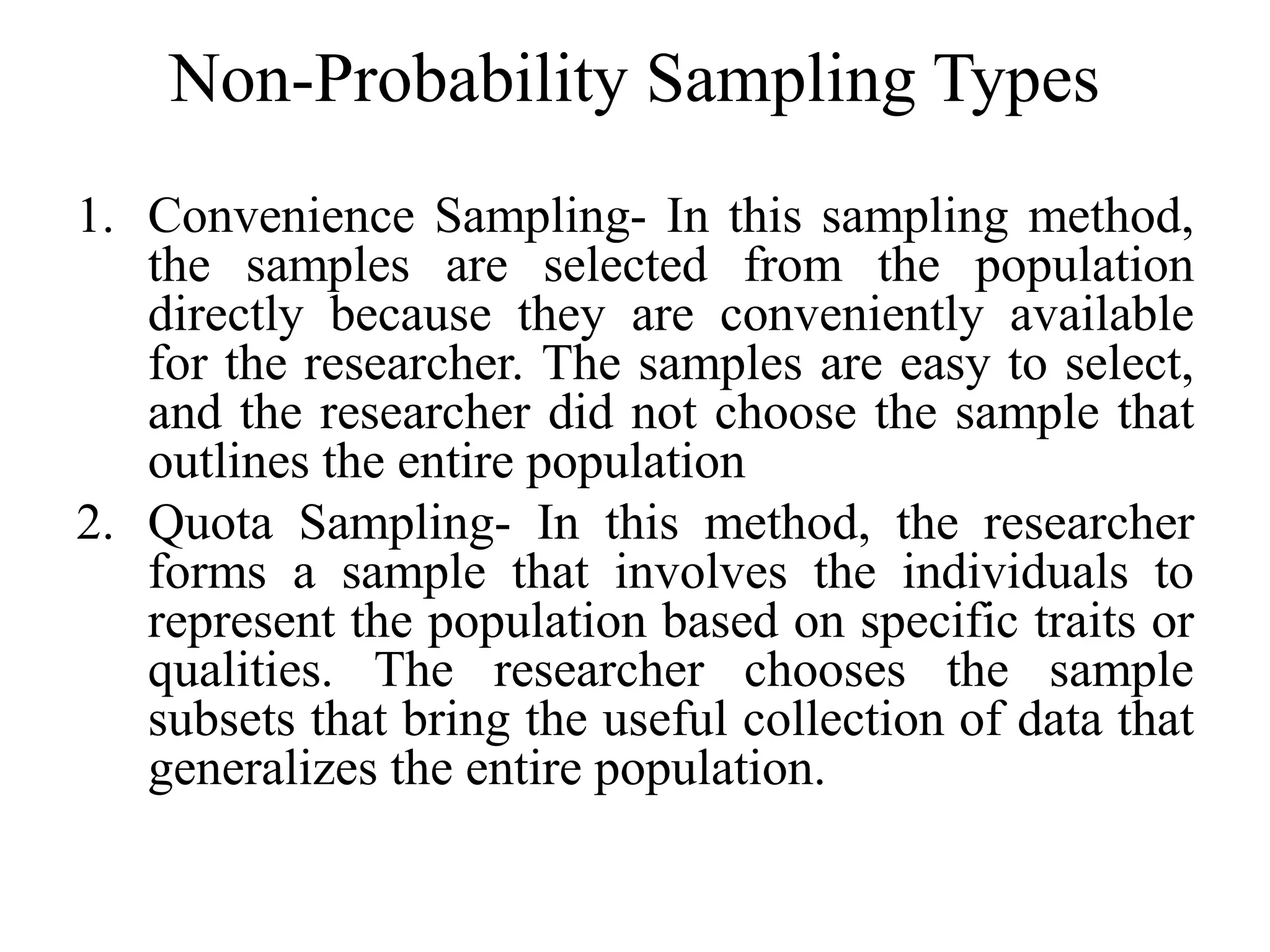
Non-Probability Sampling Types
1. Convenience Sampling- In this sampling method,
the samples are selected from the population
directly because they are conveniently available
for the researcher. The samples are easy to select,
and the researcher did not choose the sample that
outlines the entire population
2. Quota Sampling- In this method, the researcher
forms a sample that involves the individuals to
represent the population based on specific traits or
qualities. The researcher chooses the sample
subsets that bring the useful collection of data that
generalizes the entire population.
3. Purposive or Judgmental Sampling- In purposive
sampling, the samples are selected only based on
the researcher’s knowledge. As their knowledge is
instrumental in creating the samples, there are the
chances of obtaining highly accurate answers with a
minimum marginal error. It is also known as
judgmental sampling or authoritative sampling.
4. Snowball Sampling- Snowball sampling is also
known as a chain-referral sampling technique. In
this method, the samples have traits that are difficult
to find. So, each identified member of a population
is asked to find the other sampling units. Those
sampling units also belong to the same targeted
population.
Thank you.

Sampling methods.pptx

  • 1.
    Sampling methods orSampling Techniques Shubhi Taneja PhD Coursework, LNIPE, Gwalior
  • 2.
    In Statistics, thesampling method or sampling technique is the process of studying the population by gathering information and analyzing that data. It is the basis of the data where the sample space is enormous. These techniques can be subdivided into two groups.
  • 3.
    Types of SamplingMethod The two types of sampling methods are: • Probability Sampling • Non-probability Sampling
  • 4.
    What is ProbabilitySampling? The probability sampling method uses random selection. In this method, all the eligible individuals have a chance of selecting the sample from the whole sample space. • This method is more time consuming and expensive than the non-probability sampling method. • The benefit of using these methods is that it guarantees the sample that should be the representative of the population.
  • 5.
    1. Simple RandomSampling- In this technique, every item in the population has an equal and likely chance of being selected in the sample. 2. Systematic Sampling- In the systematic sampling method, the items are selected from the target population by selecting the random selection point and selecting the other methods after a fixed sample interval. It is calculated by dividing the total population size by the desired population size. Probability Sampling Types:
  • 6.
    3. Stratified Sampling-In this method, the total population is divided into smaller groups to complete the sampling process. The small group is formed based on a few characteristics in the population. After separating the population into a smaller group, the statisticians randomly select the sample. 4. Clustered Sampling- In this sampling method, group of people are formed from the population set. The group has similar characteristics. Also, they have an equal chance of being a part of the sample. This method uses simple random sampling for the cluster of population.
  • 7.
    Non-Probability Sampling The non-probabilitysampling method is a technique where researcher selects the sample based on subjective judgment rather than the random selection. In this method, not all the members of the population have a chance to participate in the study.
  • 8.
    Non-Probability Sampling Types 1.Convenience Sampling- In this sampling method, the samples are selected from the population directly because they are conveniently available for the researcher. The samples are easy to select, and the researcher did not choose the sample that outlines the entire population 2. Quota Sampling- In this method, the researcher forms a sample that involves the individuals to represent the population based on specific traits or qualities. The researcher chooses the sample subsets that bring the useful collection of data that generalizes the entire population.
  • 9.
    3. Purposive orJudgmental Sampling- In purposive sampling, the samples are selected only based on the researcher’s knowledge. As their knowledge is instrumental in creating the samples, there are the chances of obtaining highly accurate answers with a minimum marginal error. It is also known as judgmental sampling or authoritative sampling. 4. Snowball Sampling- Snowball sampling is also known as a chain-referral sampling technique. In this method, the samples have traits that are difficult to find. So, each identified member of a population is asked to find the other sampling units. Those sampling units also belong to the same targeted population.
  • 10.