RISHI
PATANJALI YOGA SUTRA
SADHANA PADA
BY
MONOJIT GOPE
RESEARCH SCHOLAR
SADHANA PADA
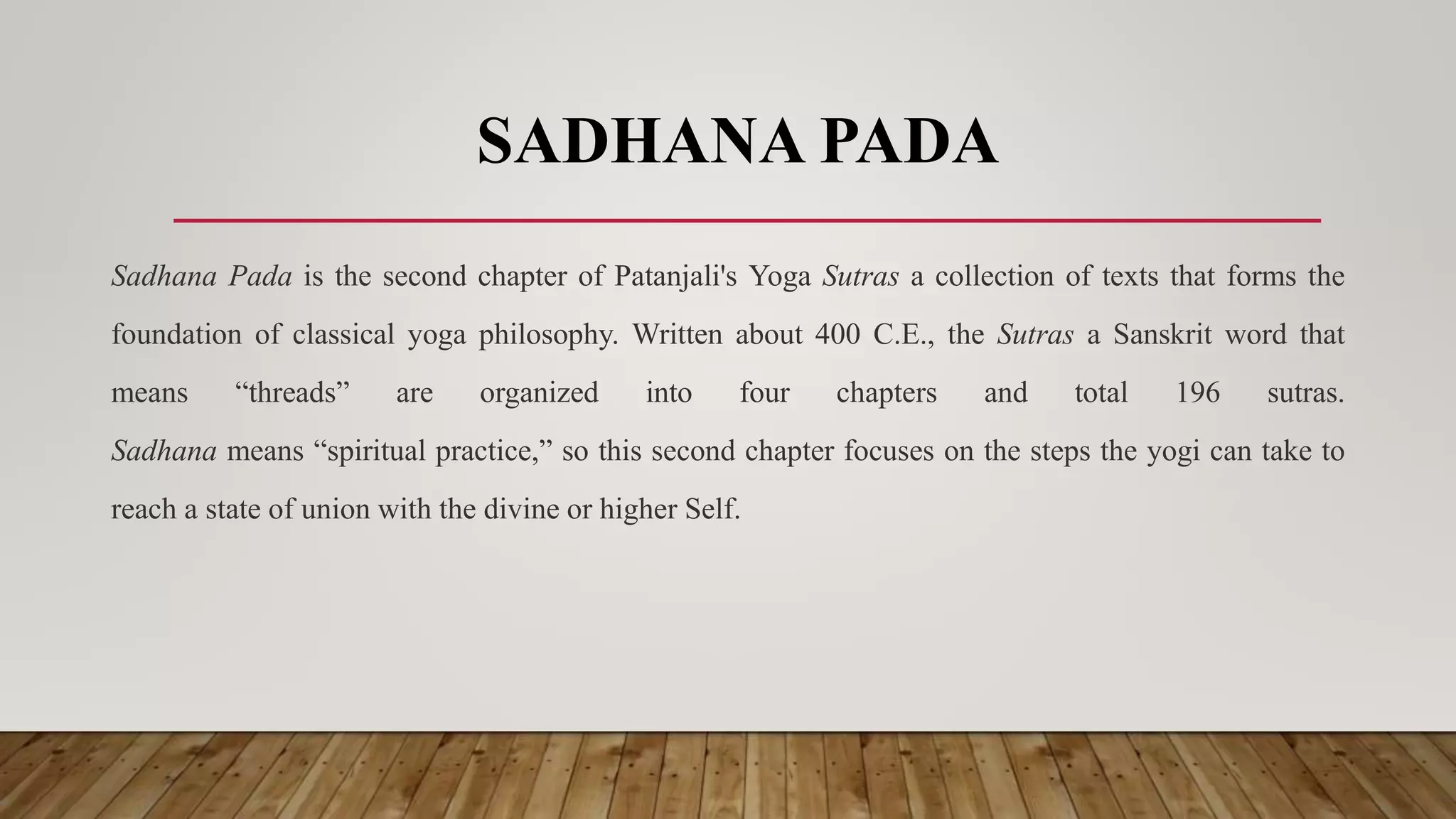
Sadhana Pada is the second chapter of Patanjali's Yoga Sutras a collection of texts that forms the
foundation of classical yoga philosophy. Written about 400 C.E., the Sutras a Sanskrit word that
means “threads” are organized into four chapters and total 196 sutras.
Sadhana means “spiritual practice,” so this second chapter focuses on the steps the yogi can take to
reach a state of union with the divine or higher Self.
SADHANA PADA
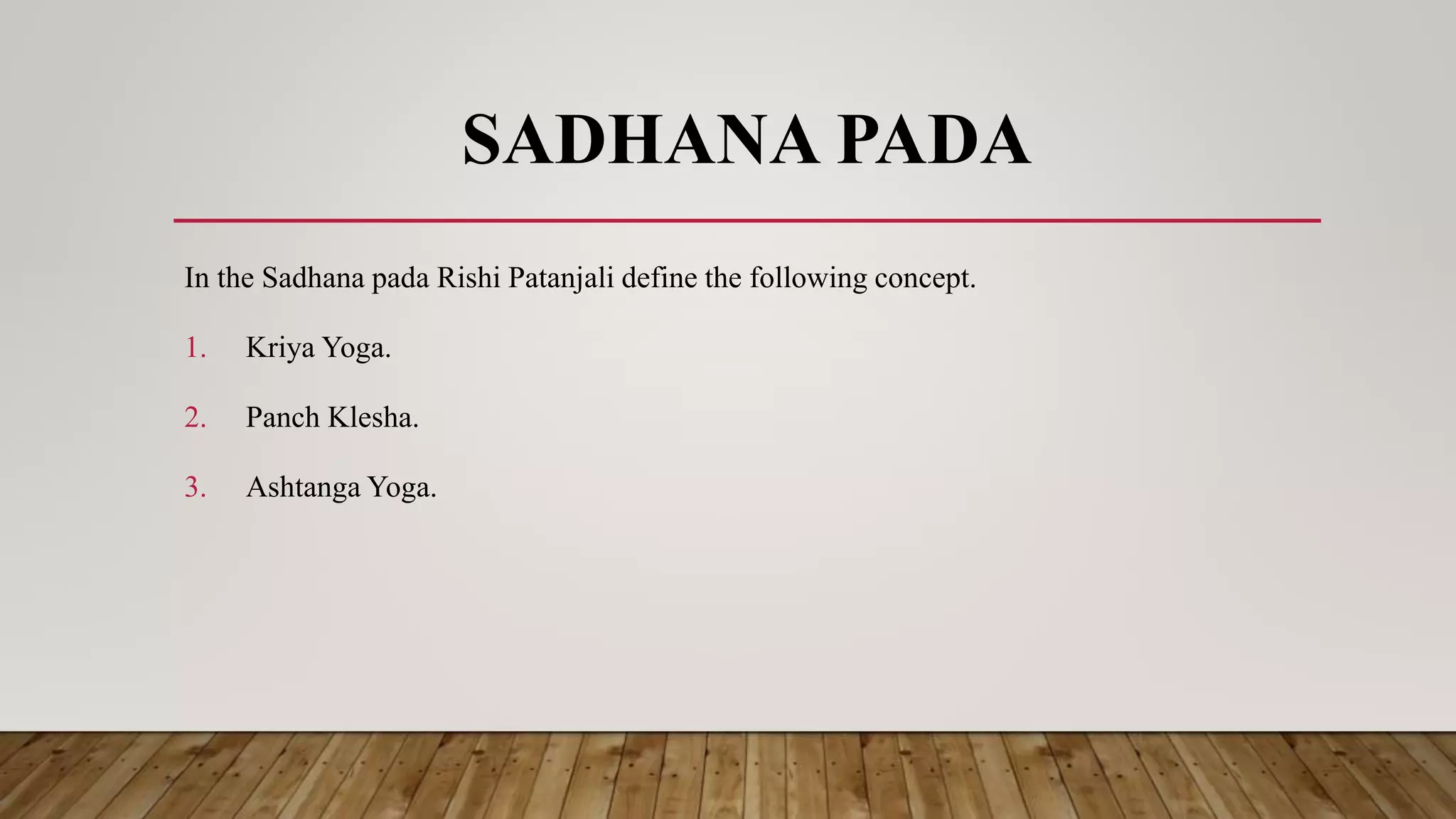
In the Sadhana pada Rishi Patanjali define the following concept.
1. Kriya Yoga.
2. Panch Klesha.
3. Ashtanga Yoga.
KRIYA YOGA
In the Kriya Yoga Rishi Patanjali define with the practice of three thing we can perform kriya Yoga. Those Practice are
following-
1. Tapa (self discipline):- The word Tapas is derive from the root Sanskrit verb ‘Tap’ which means ‘To Burn’ and evokes a
sense of fiery discipline or Passion.
2. Svadhyaya (Self-Study):- Svadhyaya is a Sanskrit word that is used in Hinduism to signify the study of one's self. The
term comes from the Sanskrit roots sva, meaning "self" or "own,“ and adhyaya, meaning "lesson," "reading" or "lecture.
3. Ishvara pranidhana(Devotion to God):- Ishvara pranidhana is the practice of fully surrendering the self to God, chosen
personal god, or Life Force. In surrendering the ego to the Supreme Being in humility, it is thought that the character of
the divine can be attained. In Patanjali’s Yoga Sutras, it means committing one’s life and one’s yoga practice to the Lord
PANCH KLESHA
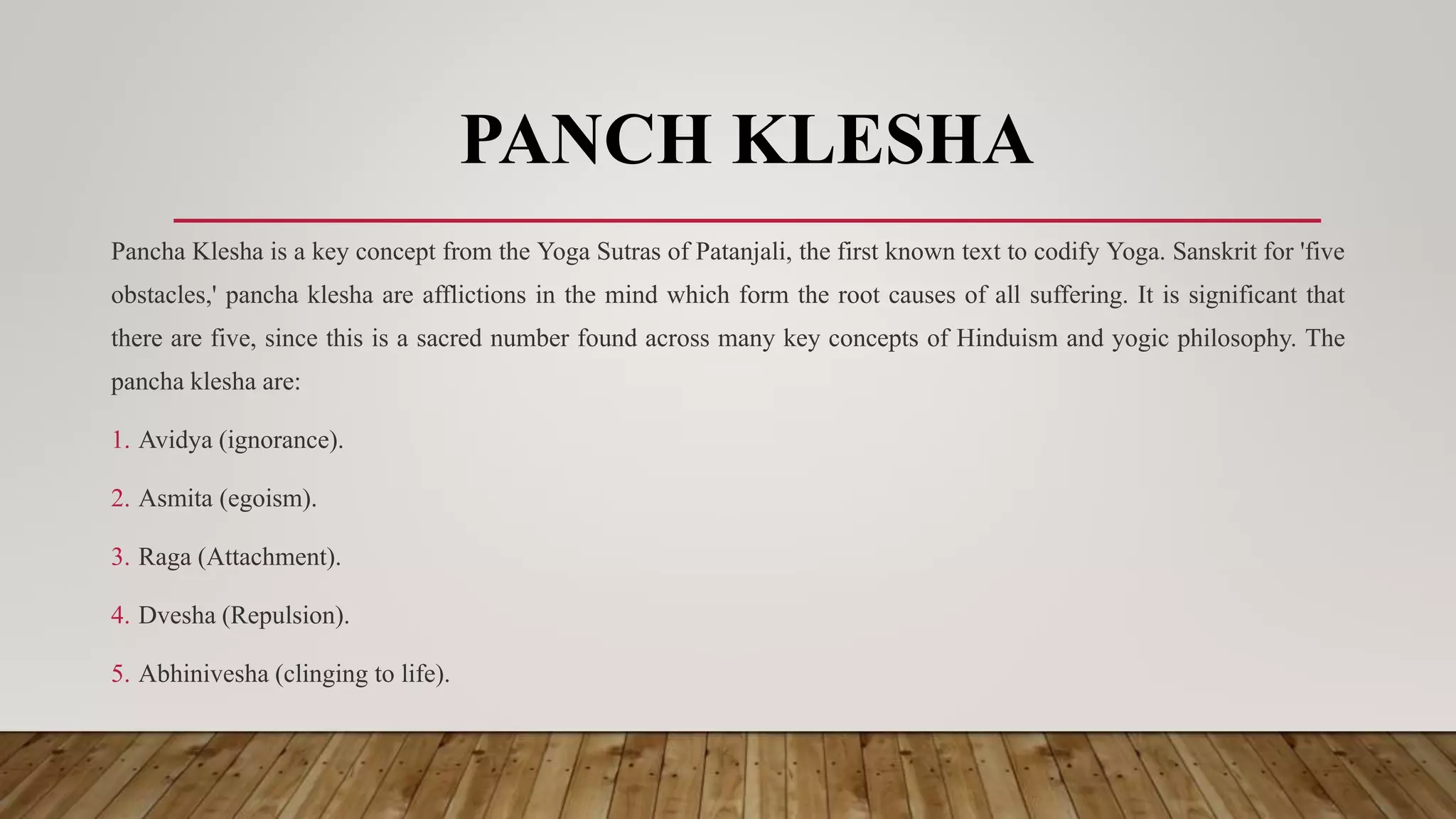
Pancha Klesha is a key concept from the Yoga Sutras of Patanjali, the first known text to codify Yoga. Sanskrit for 'five
obstacles,' pancha klesha are afflictions in the mind which form the root causes of all suffering. It is significant that
there are five, since this is a sacred number found across many key concepts of Hinduism and yogic philosophy. The
pancha klesha are:
1. Avidya (ignorance).
2. Asmita (egoism).
3. Raga (Attachment).
4. Dvesha (Repulsion).
5. Abhinivesha (clinging to life).
ASHTANGA YOGA
The eight fold path of Patanjali’s Yoga consists of a set of prescriptions for a morally disciplined and purposeful life.
This eight fold path called Ashtanga Yoga. Those are following
1. Yamas
i. Ahimsa(Non-Violence).
ii. Satya (Truthfulness).
iii. Asteya (Non-Stealing).
iv. Brahmacharya (Chastity).
v. Aparigraha (Non-Possessiveness).
ASHTANGA YOGA
2. Niyamas
i. Shaucha.
ii. Santosha.
iii. Tapas.
iv. Svadhyaya.
v. Ishvarapranidhana.
3. Asana 4. Pranayama. 5. Pratyahara. 6. Dharana. 7. Dhyana. 8. Samadhi.
THANKING YOU

Sadhana Pada.pptx

  • 1.
    RISHI PATANJALI YOGA SUTRA SADHANAPADA BY MONOJIT GOPE RESEARCH SCHOLAR
  • 2.
    SADHANA PADA Sadhana Padais the second chapter of Patanjali's Yoga Sutras a collection of texts that forms the foundation of classical yoga philosophy. Written about 400 C.E., the Sutras a Sanskrit word that means “threads” are organized into four chapters and total 196 sutras. Sadhana means “spiritual practice,” so this second chapter focuses on the steps the yogi can take to reach a state of union with the divine or higher Self.
  • 3.
    SADHANA PADA In theSadhana pada Rishi Patanjali define the following concept. 1. Kriya Yoga. 2. Panch Klesha. 3. Ashtanga Yoga.
  • 4.
    KRIYA YOGA In theKriya Yoga Rishi Patanjali define with the practice of three thing we can perform kriya Yoga. Those Practice are following- 1. Tapa (self discipline):- The word Tapas is derive from the root Sanskrit verb ‘Tap’ which means ‘To Burn’ and evokes a sense of fiery discipline or Passion. 2. Svadhyaya (Self-Study):- Svadhyaya is a Sanskrit word that is used in Hinduism to signify the study of one's self. The term comes from the Sanskrit roots sva, meaning "self" or "own,“ and adhyaya, meaning "lesson," "reading" or "lecture. 3. Ishvara pranidhana(Devotion to God):- Ishvara pranidhana is the practice of fully surrendering the self to God, chosen personal god, or Life Force. In surrendering the ego to the Supreme Being in humility, it is thought that the character of the divine can be attained. In Patanjali’s Yoga Sutras, it means committing one’s life and one’s yoga practice to the Lord
  • 5.
    PANCH KLESHA Pancha Kleshais a key concept from the Yoga Sutras of Patanjali, the first known text to codify Yoga. Sanskrit for 'five obstacles,' pancha klesha are afflictions in the mind which form the root causes of all suffering. It is significant that there are five, since this is a sacred number found across many key concepts of Hinduism and yogic philosophy. The pancha klesha are: 1. Avidya (ignorance). 2. Asmita (egoism). 3. Raga (Attachment). 4. Dvesha (Repulsion). 5. Abhinivesha (clinging to life).
  • 6.
    ASHTANGA YOGA The eightfold path of Patanjali’s Yoga consists of a set of prescriptions for a morally disciplined and purposeful life. This eight fold path called Ashtanga Yoga. Those are following 1. Yamas i. Ahimsa(Non-Violence). ii. Satya (Truthfulness). iii. Asteya (Non-Stealing). iv. Brahmacharya (Chastity). v. Aparigraha (Non-Possessiveness).
  • 7.
    ASHTANGA YOGA 2. Niyamas i.Shaucha. ii. Santosha. iii. Tapas. iv. Svadhyaya. v. Ishvarapranidhana. 3. Asana 4. Pranayama. 5. Pratyahara. 6. Dharana. 7. Dhyana. 8. Samadhi.
  • 8.