This Darshana was written by Kanaada.
Kanaada was the son of Aulukya Maharshi of
Kashyapa Gotra.
Hence Kanaada was called ‘Aulukya’, so also the
Vaisheshika Darshana is also known as Aulukya
Darshana.
Kanaada :- As Kanaada satisfied Maheshwara by
eating Kanas (Paramanus/Atoms), he was popularly
known as Kanaada.
Aulukya Darshana:- All can recognize all the
Padarthas in the Daylight and differentiate between the
things. But owl or Uluka recognizes and differentiates
the Padarthas in the Night or Darkness. Hence it is also
known as Aulukya Darshana.
Vaisheshika Darshana :- Vishesha Padartha was
described specially and specifically. Hence it is called
Vaisheshika Darshana.
Prashasta Paada wrote a commentary.
Jagadisha Bhattacharya has written a Vartika,
Vaisheshika Darshana contains 10 Adhyayas, 20
Ahnikas and 370 Sutras are present.
Vaisheshika Darshana accepts Two Pramanas, viz.
Pratyaksha and Anumana.
Kanaada describes 6 Padarthas, i.e. Dravya
(substance), Guna (attribute/quality), Karma (action),
Samanya (generality), Vishesha (variability) and
Samavaya (inseperable factor).
Later on Abhava (Non-existence) was added as the
seventh Padartha.
In Vaisheshika Darshana it is proposed that the entire
universe was created with atoms or Paramanus.
When Paramanus intended to create universe, with his
intension action took place in the atoms themselves.
When 2 atoms are combined then a Dwyanuka is formed.
Such 3 Dwyanukas combine to form Tryanuka or Trasarenu,
is manifested which is visible. From Tryanukas,
Chaturanuka, from Chaturanukas Panchanuka, from
Panchanuka Mahanuka are created. From Mahanukas
Sthulatara Dravyas and Sthulatama Dravyas are manifested
respectively.
Each Atom has some special properties and the properties
of a substance which is constituted of these atoms would
develop the same properties as contained in the Atoms.
There are two theories, i.e.
Peelupaka Vaada
Pitharapaka Vaada
Peelupaaka Vaada (Chemical Theory):-
Peelu means an atom (Paramaanu). Paku means
transformation in the objects due to application of specific
temperature of heat. According to Peelupaka
transformation takes place at the Paramanu level also, when
specific temperature of heat is applied.
Pittharapaaka (Physical change):-
Transformation takes place in the Pithara (molecule) only.
Vaisheshika Darshana accepted the Peelupaka Vaada
(Paramanu Vaada).
Nyaya Darshana accepted the Pitharapaka Vaada.
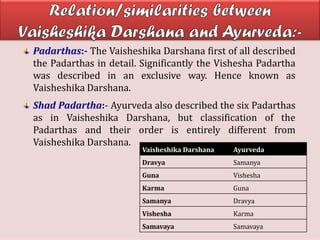
Padarthas:- The Vaisheshika Darshana first of all described
the Padarthas in detail. Significantly the Vishesha Padartha
was described in an exclusive way. Hence known as
Vaisheshika Darshana.
Shad Padartha:- Ayurveda also described the six Padarthas
as in Vaisheshika Darshana, but classification of the
Padarthas and their order is entirely different from
Vaisheshika Darshana.
Vaisheshika Darshana Ayurveda
Dravya Samanya
Guna Vishesha
Karma Guna
Samanya Dravya
Vishesha Karma
Samavaya Samavaya
Paramanu Vaada (Atomic Theory):-
It is one of the eminent theories of Vaisheshika Darshana.
According to this theory the component or constituent part
of every Padartha exists with invariable concomitance.
Charaka also accepted the existence of ‘Paramanus’ in the
body. He stated that the minute parts of body are
innumerable and invisible, as they are in Paramanu form.
Atma:- Both Ayurveda and Vaisheshika Darshana believe
the existence of Atma.
Gunas:- Though Gunas or attributes are taken from
Vaisheshika Darshana, Charaka added 17 more Gunas and
mentioned them as 41 Gunas.
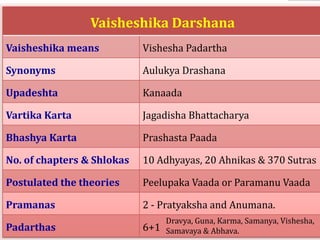
Vaisheshika Darshana
Vaisheshika means Vishesha Padartha
Synonyms Aulukya Drashana
Upadeshta Kanaada
Vartika Karta Jagadisha Bhattacharya
Bhashya Karta Prashasta Paada
No. of chapters & Shlokas 10 Adhyayas, 20 Ahnikas & 370 Sutras
Postulated the theories Peelupaka Vaada or Paramanu Vaada
Pramanas 2 - Pratyaksha and Anumana.
Padarthas 6+1
Dravya, Guna, Karma, Samanya, Vishesha,
Samavaya & Abhava.
umapati.baragi@gmail.com

Vaisheshika Darshana

  • 2.
    This Darshana waswritten by Kanaada. Kanaada was the son of Aulukya Maharshi of Kashyapa Gotra. Hence Kanaada was called ‘Aulukya’, so also the Vaisheshika Darshana is also known as Aulukya Darshana. Kanaada :- As Kanaada satisfied Maheshwara by eating Kanas (Paramanus/Atoms), he was popularly known as Kanaada.
  • 3.
    Aulukya Darshana:- Allcan recognize all the Padarthas in the Daylight and differentiate between the things. But owl or Uluka recognizes and differentiates the Padarthas in the Night or Darkness. Hence it is also known as Aulukya Darshana. Vaisheshika Darshana :- Vishesha Padartha was described specially and specifically. Hence it is called Vaisheshika Darshana. Prashasta Paada wrote a commentary. Jagadisha Bhattacharya has written a Vartika, Vaisheshika Darshana contains 10 Adhyayas, 20 Ahnikas and 370 Sutras are present. Vaisheshika Darshana accepts Two Pramanas, viz. Pratyaksha and Anumana.
  • 4.
    Kanaada describes 6Padarthas, i.e. Dravya (substance), Guna (attribute/quality), Karma (action), Samanya (generality), Vishesha (variability) and Samavaya (inseperable factor). Later on Abhava (Non-existence) was added as the seventh Padartha. In Vaisheshika Darshana it is proposed that the entire universe was created with atoms or Paramanus. When Paramanus intended to create universe, with his intension action took place in the atoms themselves.
  • 5.
    When 2 atomsare combined then a Dwyanuka is formed. Such 3 Dwyanukas combine to form Tryanuka or Trasarenu, is manifested which is visible. From Tryanukas, Chaturanuka, from Chaturanukas Panchanuka, from Panchanuka Mahanuka are created. From Mahanukas Sthulatara Dravyas and Sthulatama Dravyas are manifested respectively. Each Atom has some special properties and the properties of a substance which is constituted of these atoms would develop the same properties as contained in the Atoms. There are two theories, i.e. Peelupaka Vaada Pitharapaka Vaada
  • 6.
    Peelupaaka Vaada (ChemicalTheory):- Peelu means an atom (Paramaanu). Paku means transformation in the objects due to application of specific temperature of heat. According to Peelupaka transformation takes place at the Paramanu level also, when specific temperature of heat is applied. Pittharapaaka (Physical change):- Transformation takes place in the Pithara (molecule) only. Vaisheshika Darshana accepted the Peelupaka Vaada (Paramanu Vaada). Nyaya Darshana accepted the Pitharapaka Vaada.
  • 7.
    Padarthas:- The VaisheshikaDarshana first of all described the Padarthas in detail. Significantly the Vishesha Padartha was described in an exclusive way. Hence known as Vaisheshika Darshana. Shad Padartha:- Ayurveda also described the six Padarthas as in Vaisheshika Darshana, but classification of the Padarthas and their order is entirely different from Vaisheshika Darshana. Vaisheshika Darshana Ayurveda Dravya Samanya Guna Vishesha Karma Guna Samanya Dravya Vishesha Karma Samavaya Samavaya
  • 8.
    Paramanu Vaada (AtomicTheory):- It is one of the eminent theories of Vaisheshika Darshana. According to this theory the component or constituent part of every Padartha exists with invariable concomitance. Charaka also accepted the existence of ‘Paramanus’ in the body. He stated that the minute parts of body are innumerable and invisible, as they are in Paramanu form. Atma:- Both Ayurveda and Vaisheshika Darshana believe the existence of Atma. Gunas:- Though Gunas or attributes are taken from Vaisheshika Darshana, Charaka added 17 more Gunas and mentioned them as 41 Gunas.
  • 9.
    Vaisheshika Darshana Vaisheshika meansVishesha Padartha Synonyms Aulukya Drashana Upadeshta Kanaada Vartika Karta Jagadisha Bhattacharya Bhashya Karta Prashasta Paada No. of chapters & Shlokas 10 Adhyayas, 20 Ahnikas & 370 Sutras Postulated the theories Peelupaka Vaada or Paramanu Vaada Pramanas 2 - Pratyaksha and Anumana. Padarthas 6+1 Dravya, Guna, Karma, Samanya, Vishesha, Samavaya & Abhava.
  • 10.