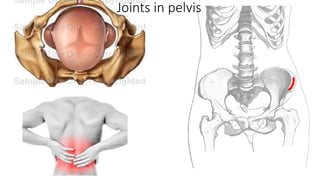
Joints in pelvis
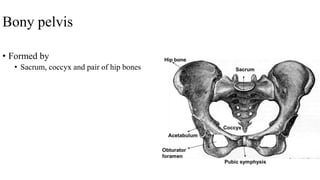
Bony pelvis
• Formed by
• Sacrum, coccyx and pair of hip bones
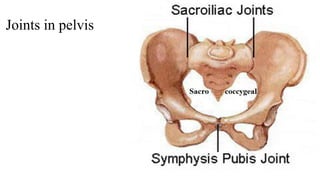
Joints in pelvis
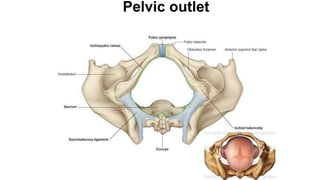
Pelvic outlet
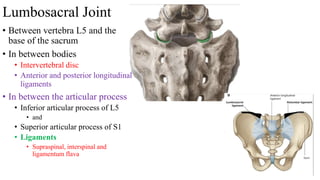
Lumbosacral Joint
• Between vertebra L5 and the
base of the sacrum
• In between bodies
• Intervertebral disc
• Anterior and posterior longitudinal
ligaments
• In between the articular process
• Inferior articular process of L5
• and
• Superior articular process of S1
• Ligaments
• Supraspinal, interspinal and
ligamentum flava
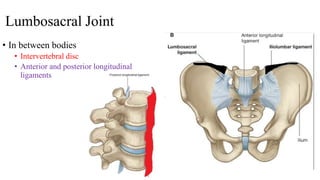
Lumbosacral Joint
• In between bodies
• Intervertebral disc
• Anterior and posterior longitudinal
ligaments
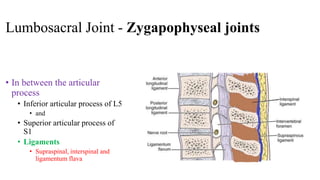
Lumbosacral Joint - Zygapophyseal joints
• In between the articular
process
• Inferior articular process of L5
• and
• Superior articular process of
S1
• Ligaments
• Supraspinal, interspinal and
ligamentum flava
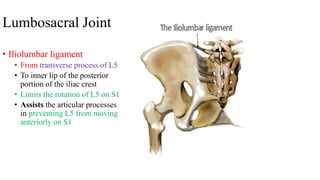
Lumbosacral Joint
• Iliolumbar ligament
• From transverse process of L5
• To inner lip of the posterior
portion of the iliac crest
• Limits the rotation of L5 on S1
• Assists the articular processes
in preventing L5 from moving
anteriorly on S1
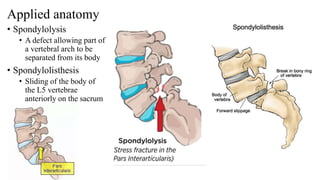
Applied anatomy
• Spondylolysis
• A defect allowing part of
a vertebral arch to be
separated from its body
• Spondylolisthesis
• Sliding of the body of
the L5 vertebrae
anteriorly on the sacrum
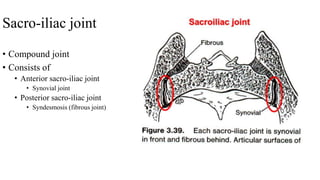
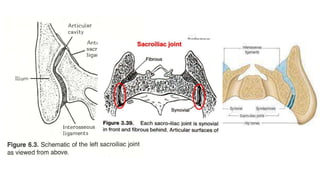
Sacro-iliac joint
• Compound joint
• Consists of
• Anterior sacro-iliac joint
• Synovial joint
• Posterior sacro-iliac joint
• Syndesmosis (fibrous joint)
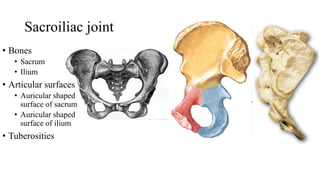
Sacroiliac joint
• Bones
• Sacrum
• Ilium
• Articular surfaces
• Auricular shaped
surface of sacrum
• Auricular shaped
surface of ilium
• Tuberosities
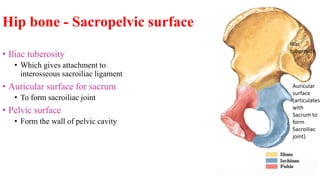
Hip bone - Sacropelvic surface
• Iliac tuberosity
• Which gives attachment to
interosseous sacroiliac ligament
• Auricular surface for sacrum
• To form sacroiliac joint
• Pelvic surface
• Form the wall of pelvic cavity
Auricular
surface
(articulates
with
Sacrum to
form
Sacroiliac
joint)
Iliac
tuberosity
Sacrum
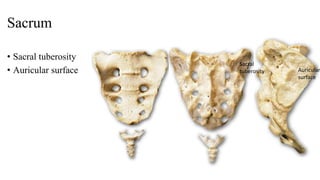
• Sacral tuberosity
• Auricular surface Auricular
surface
Sacral
tuberosity
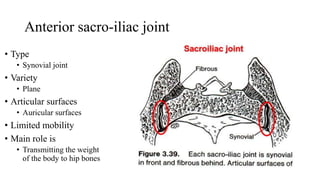
Anterior sacro-iliac joint
• Type
• Synovial joint
• Variety
• Plane
• Articular surfaces
• Auricular surfaces
• Limited mobility
• Main role is
• Transmitting the weight
of the body to hip bones
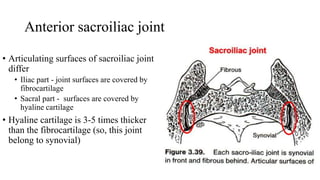
Anterior sacroiliac joint
• Articulating surfaces of sacroiliac joint
differ
• Iliac part - joint surfaces are covered by
fibrocartilage
• Sacral part - surfaces are covered by
hyaline cartilage
• Hyaline cartilage is 3-5 times thicker
than the fibrocartilage (so, this joint
belong to synovial)
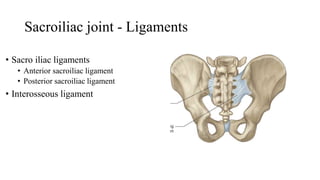
Sacroiliac joint - Ligaments
• Sacro iliac ligaments
• Anterior sacroiliac ligament
• Posterior sacroiliac ligament
• Interosseous ligament
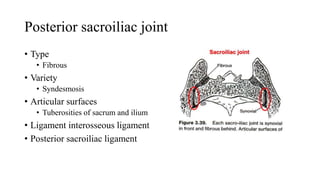
Posterior sacroiliac joint
• Type
• Fibrous
• Variety
• Syndesmosis
• Articular surfaces
• Tuberosities of sacrum and ilium
• Ligament interosseous ligament
• Posterior sacroiliac ligament
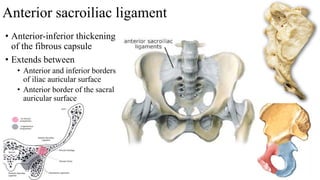
Anterior sacroiliac ligament
• Anterior-inferior thickening
of the fibrous capsule
• Extends between
• Anterior and inferior borders
of iliac auricular surface
• Anterior border of the sacral
auricular surface
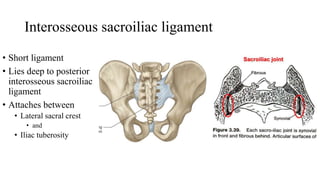
Interosseous sacroiliac ligament
• Short ligament
• Lies deep to posterior
interosseous sacroiliac
ligament
• Attaches between
• Lateral sacral crest
• and
• Iliac tuberosity
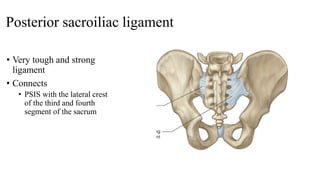
Posterior sacroiliac ligament
• Very tough and strong
ligament
• Connects
• PSIS with the lateral crest
of the third and fourth
segment of the sacrum
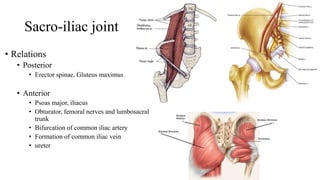
Sacro-iliac joint
• Relations
• Posterior
• Erector spinae, Gluteus maximus
• Anterior
• Psoas major, iliacus
• Obturator, femoral nerves and lumbosacral
trunk
• Bifurcation of common iliac artery
• Formation of common iliac vein
• ureter
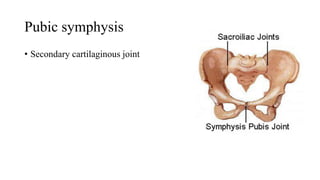
Pubic symphysis
• Secondary cartilaginous joint
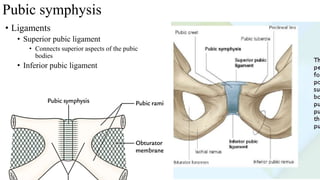
Pubic symphysis
• Ligaments
• Superior pubic ligament
• Connects superior aspects of the pubic
bodies
• Inferior pubic ligament
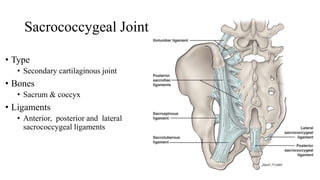
Sacrococcygeal Joint
• Type
• Secondary cartilaginous joint
• Bones
• Sacrum & coccyx
• Ligaments
• Anterior, posterior and lateral
sacrococcygeal ligaments
sacroiliac .pptx

sacroiliac .pptx

  • 1.
  • 2.
    Bony pelvis • Formedby • Sacrum, coccyx and pair of hip bones
  • 3.
  • 4.
  • 5.
    Lumbosacral Joint • Betweenvertebra L5 and the base of the sacrum • In between bodies • Intervertebral disc • Anterior and posterior longitudinal ligaments • In between the articular process • Inferior articular process of L5 • and • Superior articular process of S1 • Ligaments • Supraspinal, interspinal and ligamentum flava
  • 6.
    Lumbosacral Joint • Inbetween bodies • Intervertebral disc • Anterior and posterior longitudinal ligaments
  • 7.
    Lumbosacral Joint -Zygapophyseal joints • In between the articular process • Inferior articular process of L5 • and • Superior articular process of S1 • Ligaments • Supraspinal, interspinal and ligamentum flava
  • 8.
    Lumbosacral Joint • Iliolumbarligament • From transverse process of L5 • To inner lip of the posterior portion of the iliac crest • Limits the rotation of L5 on S1 • Assists the articular processes in preventing L5 from moving anteriorly on S1
  • 9.
    Applied anatomy • Spondylolysis •A defect allowing part of a vertebral arch to be separated from its body • Spondylolisthesis • Sliding of the body of the L5 vertebrae anteriorly on the sacrum
  • 10.
    Sacro-iliac joint • Compoundjoint • Consists of • Anterior sacro-iliac joint • Synovial joint • Posterior sacro-iliac joint • Syndesmosis (fibrous joint)
  • 11.
    Sacroiliac joint • Bones •Sacrum • Ilium • Articular surfaces • Auricular shaped surface of sacrum • Auricular shaped surface of ilium • Tuberosities
  • 12.
    Hip bone -Sacropelvic surface • Iliac tuberosity • Which gives attachment to interosseous sacroiliac ligament • Auricular surface for sacrum • To form sacroiliac joint • Pelvic surface • Form the wall of pelvic cavity Auricular surface (articulates with Sacrum to form Sacroiliac joint) Iliac tuberosity
  • 13.
    Sacrum • Sacral tuberosity •Auricular surface Auricular surface Sacral tuberosity
  • 14.
    Anterior sacro-iliac joint •Type • Synovial joint • Variety • Plane • Articular surfaces • Auricular surfaces • Limited mobility • Main role is • Transmitting the weight of the body to hip bones
  • 15.
    Anterior sacroiliac joint •Articulating surfaces of sacroiliac joint differ • Iliac part - joint surfaces are covered by fibrocartilage • Sacral part - surfaces are covered by hyaline cartilage • Hyaline cartilage is 3-5 times thicker than the fibrocartilage (so, this joint belong to synovial)
  • 16.
    Sacroiliac joint -Ligaments • Sacro iliac ligaments • Anterior sacroiliac ligament • Posterior sacroiliac ligament • Interosseous ligament
  • 17.
    Posterior sacroiliac joint •Type • Fibrous • Variety • Syndesmosis • Articular surfaces • Tuberosities of sacrum and ilium • Ligament interosseous ligament • Posterior sacroiliac ligament
  • 18.
    Anterior sacroiliac ligament •Anterior-inferior thickening of the fibrous capsule • Extends between • Anterior and inferior borders of iliac auricular surface • Anterior border of the sacral auricular surface
  • 19.
    Interosseous sacroiliac ligament •Short ligament • Lies deep to posterior interosseous sacroiliac ligament • Attaches between • Lateral sacral crest • and • Iliac tuberosity
  • 20.
    Posterior sacroiliac ligament •Very tough and strong ligament • Connects • PSIS with the lateral crest of the third and fourth segment of the sacrum
  • 21.
    Sacro-iliac joint • Relations •Posterior • Erector spinae, Gluteus maximus • Anterior • Psoas major, iliacus • Obturator, femoral nerves and lumbosacral trunk • Bifurcation of common iliac artery • Formation of common iliac vein • ureter
  • 22.
    Pubic symphysis • Secondarycartilaginous joint
  • 23.
    Pubic symphysis • Ligaments •Superior pubic ligament • Connects superior aspects of the pubic bodies • Inferior pubic ligament
  • 24.
    Sacrococcygeal Joint • Type •Secondary cartilaginous joint • Bones • Sacrum & coccyx • Ligaments • Anterior, posterior and lateral sacrococcygeal ligaments