S-215

S-215
Fire Operations in the
Wildland/Urban Interface
Unit 3
Pre-Incident Planning

Unit 3 – Pre-Incident Planning

Slide 3-1
S-215

Unit Objectives
• Identify three resources for pre-incident
planning.
• List items to consider in pre-incident
planning.
• Describe some of the factors to be
considered with the public before an
interface incident occurs.

Unit 3 – Pre-Incident Planning

Slide 3-2
S-215

Introduction
Pre-incident planning:

• Should be in place before the season or
incident
• May be formal or informal
• Is jointly prepared by all potentially involved
parties
• May contain special considerations or
restrictions
Unit 3 – Pre-Incident Planning

Slide 3-3
S-215

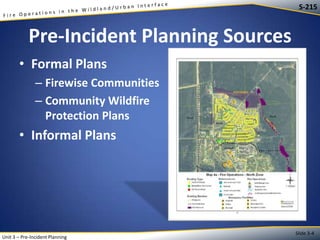
Pre-Incident Planning Sources
• Formal Plans
– Firewise Communities
– Community Wildfire
Protection Plans

• Informal Plans

Unit 3 – Pre-Incident Planning

Slide 3-4
S-215

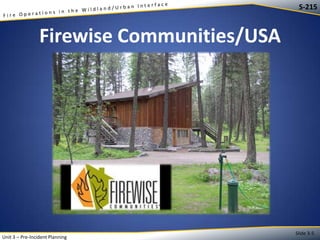
Firewise Communities/USA

Unit 3 – Pre-Incident Planning

Slide 3-5
S-215

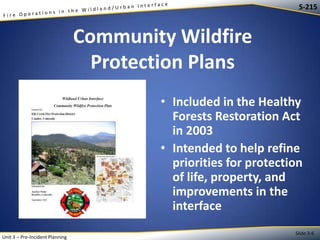
Community Wildfire
Protection Plans
• Included in the Healthy
Forests Restoration Act
in 2003
• Intended to help refine
priorities for protection
of life, property, and
improvements in the
interface
Unit 3 – Pre-Incident Planning

Slide 3-6
S-215

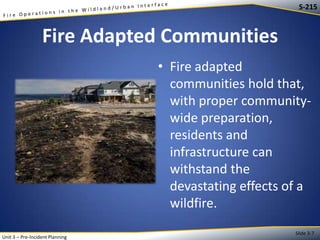
Fire Adapted Communities
• Fire adapted
communities hold that,
with proper communitywide preparation,
residents and
infrastructure can
withstand the
devastating effects of a
wildfire.
Unit 3 – Pre-Incident Planning

Slide 3-7
S-215

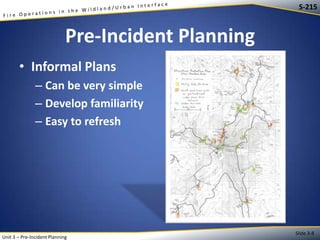
Pre-Incident Planning
• Informal Plans
– Can be very simple
– Develop familiarity
– Easy to refresh

Unit 3 – Pre-Incident Planning

Slide 3-8
S-215

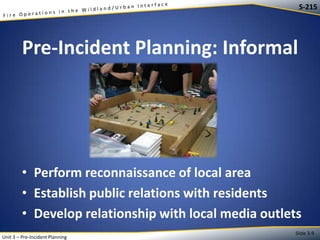
Pre-Incident Planning: Informal

• Perform reconnaissance of local area
• Establish public relations with residents
• Develop relationship with local media outlets
Unit 3 – Pre-Incident Planning

Slide 3-9
S-215

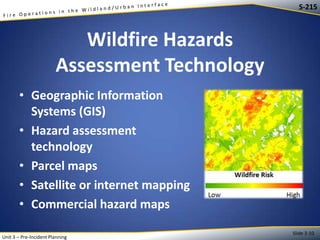
Wildfire Hazards
Assessment Technology
• Geographic Information
Systems (GIS)
• Hazard assessment
technology
• Parcel maps
• Satellite or internet mapping
• Commercial hazard maps
Unit 3 – Pre-Incident Planning

Slide 3-10
S-215

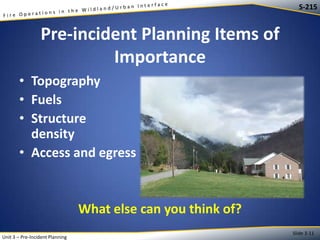
Pre-incident Planning Items of
Importance
• Topography
• Fuels
• Structure
density
• Access and egress

What else can you think of?
Unit 3 – Pre-Incident Planning

Slide 3-11
S-215

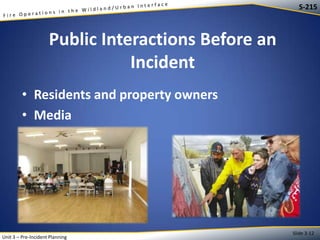
Public Interactions Before an
Incident
• Residents and property owners
• Media

Unit 3 – Pre-Incident Planning

Slide 3-12
S-215

Conclusion
Having a plan before an incident occurs, with
relationships already established, will make
your efforts safer and more effective.

Unit 3 – Pre-Incident Planning

Slide 3-13
S-215

Review Unit Objectives
• Identify three resources for pre-incident
planning.
• List items to consider in pre-incident
planning.
• Describe some of the factors to be
considered with the public before an
interface incident occurs.

Unit 3 – Pre-Incident Planning

Slide 3-14

S215 unit 3

  • 1.
    S-215 S-215 Fire Operations inthe Wildland/Urban Interface Unit 3 Pre-Incident Planning Unit 3 – Pre-Incident Planning Slide 3-1
  • 2.
    S-215 Unit Objectives • Identifythree resources for pre-incident planning. • List items to consider in pre-incident planning. • Describe some of the factors to be considered with the public before an interface incident occurs. Unit 3 – Pre-Incident Planning Slide 3-2
  • 3.
    S-215 Introduction Pre-incident planning: • Shouldbe in place before the season or incident • May be formal or informal • Is jointly prepared by all potentially involved parties • May contain special considerations or restrictions Unit 3 – Pre-Incident Planning Slide 3-3
  • 4.
    S-215 Pre-Incident Planning Sources •Formal Plans – Firewise Communities – Community Wildfire Protection Plans • Informal Plans Unit 3 – Pre-Incident Planning Slide 3-4
  • 5.
    S-215 Firewise Communities/USA Unit 3– Pre-Incident Planning Slide 3-5
  • 6.
    S-215 Community Wildfire Protection Plans •Included in the Healthy Forests Restoration Act in 2003 • Intended to help refine priorities for protection of life, property, and improvements in the interface Unit 3 – Pre-Incident Planning Slide 3-6
  • 7.
    S-215 Fire Adapted Communities •Fire adapted communities hold that, with proper communitywide preparation, residents and infrastructure can withstand the devastating effects of a wildfire. Unit 3 – Pre-Incident Planning Slide 3-7
  • 8.
    S-215 Pre-Incident Planning • InformalPlans – Can be very simple – Develop familiarity – Easy to refresh Unit 3 – Pre-Incident Planning Slide 3-8
  • 9.
    S-215 Pre-Incident Planning: Informal •Perform reconnaissance of local area • Establish public relations with residents • Develop relationship with local media outlets Unit 3 – Pre-Incident Planning Slide 3-9
  • 10.
    S-215 Wildfire Hazards Assessment Technology •Geographic Information Systems (GIS) • Hazard assessment technology • Parcel maps • Satellite or internet mapping • Commercial hazard maps Unit 3 – Pre-Incident Planning Slide 3-10
  • 11.
    S-215 Pre-incident Planning Itemsof Importance • Topography • Fuels • Structure density • Access and egress What else can you think of? Unit 3 – Pre-Incident Planning Slide 3-11
  • 12.
    S-215 Public Interactions Beforean Incident • Residents and property owners • Media Unit 3 – Pre-Incident Planning Slide 3-12
  • 13.
    S-215 Conclusion Having a planbefore an incident occurs, with relationships already established, will make your efforts safer and more effective. Unit 3 – Pre-Incident Planning Slide 3-13
  • 14.
    S-215 Review Unit Objectives •Identify three resources for pre-incident planning. • List items to consider in pre-incident planning. • Describe some of the factors to be considered with the public before an interface incident occurs. Unit 3 – Pre-Incident Planning Slide 3-14