1-1-S290-EPUnit 1 The Fire Environment
Unit 1
The Fire Environment
1-2-S290-EPUnit 1 The Fire Environment
Unit 1 Objectives
1. Describe the three components of the
wildland fire environment.
2. List and give examples of the three
methods of heat transfer.
3. List three methods of mass transport of
firebrands on wildland fire.
4. Explain the relationship between flame
height/length and its relationship to the
fireline intensity.
1-3-S290-EPUnit 1 The Fire Environment
5. Describe primary environmental factors
affecting ignition, fire intensity, and rate of
spread of wildland fires.
6. Discuss the relationship of wildland fires of
different intensities to their environments.
7. Describe the behavior of wildland fires
using standard fire behavior terminology.
Unit 1 Objectives
1-4-S290-EPUnit 1 The Fire Environment
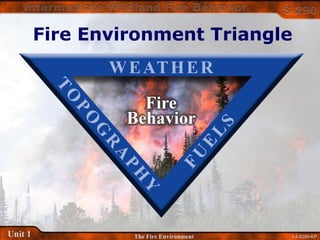
Fire Environment Triangle
1-5-S290-EPUnit 1 The Fire Environment
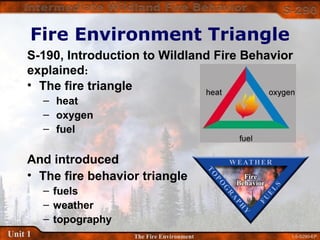
Fire Environment Triangle
• The fire triangle
– heat
– oxygen
– fuel
And introduced
• The fire behavior triangle
– fuels
– weather
– topography
S-190, Introduction to Wildland Fire Behavior
explained:
1-6-S290-EPUnit 1 The Fire Environment
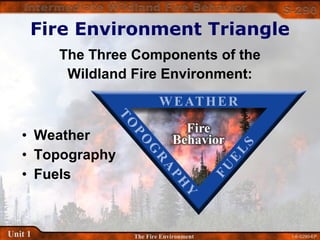
Fire Environment Triangle
• Weather
• Topography
• Fuels
The Three Components of the
Wildland Fire Environment:
1-7-S290-EPUnit 1 The Fire Environment
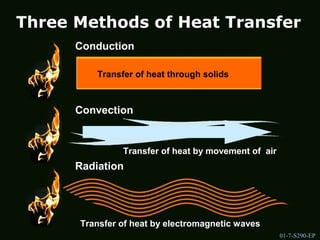
Three Methods of Heat Transfer
Conduction
Convection
Radiation
Transfer of heat through solids
Transfer of heat by movement of air
Transfer of heat by electromagnetic waves
01-7-S290-EP
1-8-S290-EPUnit 1 The Fire Environment
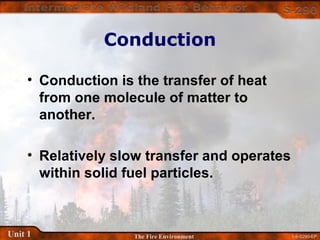
Conduction
• Conduction is the transfer of heat
from one molecule of matter to
another.
• Relatively slow transfer and operates
within solid fuel particles.
1-9-S290-EPUnit 1 The Fire Environment
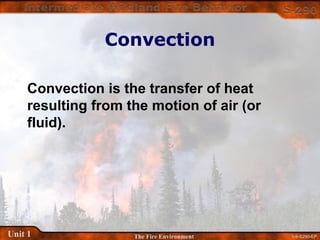
Convection
Convection is the transfer of heat
resulting from the motion of air (or
fluid).
1-10-S290-EPUnit 1 The Fire Environment
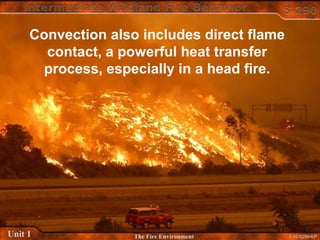
Convection also includes direct flame
contact, a powerful heat transfer
process, especially in a head fire.
1-11-S290-EPUnit 1 The Fire Environment
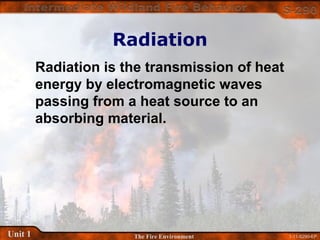
Radiation
Radiation is the transmission of heat
energy by electromagnetic waves
passing from a heat source to an
absorbing material.
1-12-S290-EPUnit 1 The Fire Environment
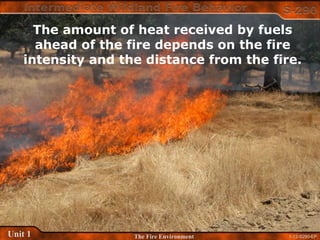
The amount of heat received by fuels
ahead of the fire depends on the fire
intensity and the distance from the fire.
1-13-S290-EPUnit 1 The Fire Environment
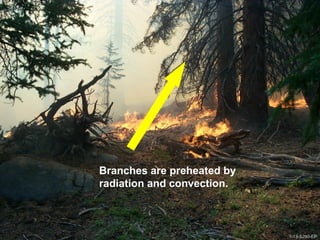
Branches are preheated by
radiation and convection.
1-13-S290-EP
1-14-S290-EPUnit 1 The Fire Environment
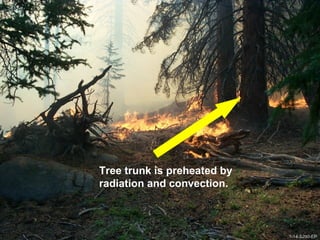
Tree trunk is preheated by
radiation and convection.
1-14-S290-EP
1-15-S290-EPUnit 1 The Fire Environment
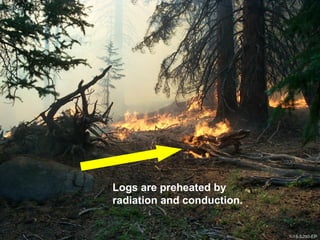
Logs are preheated by
radiation and conduction.
1-15-S290-EP
1-16-S290-EPUnit 1 The Fire Environment
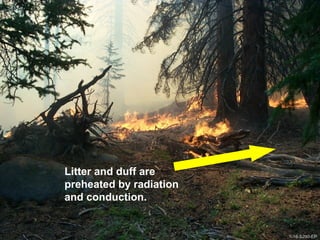
Litter and duff are
preheated by radiation
and conduction.
1-16-S290-EP
1-17-S290-EPUnit 1 The Fire Environment
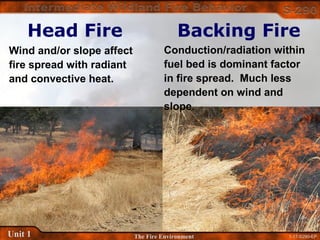
Head Fire Backing Fire
Wind and/or slope affect
fire spread with radiant
and convective heat.
Conduction/radiation within
fuel bed is dominant factor
in fire spread. Much less
dependent on wind and
slope.
1-18-S290-EPUnit 1 The Fire Environment
Three Methods of Mass
Transport of Firebrands
on Wildland Fire
1-19-S290-EPUnit 1 The Fire Environment
Watch Out #16
Getting frequent spot fires across line.
The primary cause of spot fires is
firebrands.
1-20-S290-EPUnit 1 The Fire Environment
Transfer of firebrands by convection.
1-21-S290-EPUnit 1 The Fire Environment
Transfer of firebrands by wind.
1-22-S290-EPUnit 1 The Fire Environment
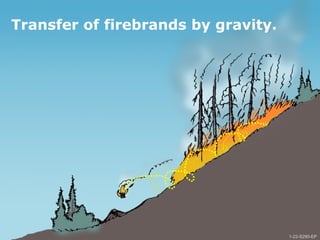
Transfer of firebrands by gravity.
1-22-S290-EP
1-23-S290-EPUnit 1 The Fire Environment
Flame Height/Flame Length
and its Relationship to
Fireline Intensity
1-24-S290-EPUnit 1 The Fire Environment
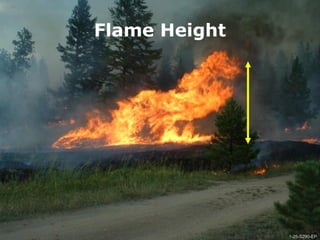
Flame height is the
average height of flames
as measured on
a vertical axis.
It may be less than
flame length if flames
are angled.
1-25-S290-EPUnit 1 The Fire Environment
Flame Height
1-25-S290-EP
1-26-S290-EPUnit 1 The Fire Environment
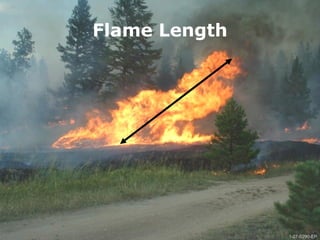
Flame length is the
distance measured from
the average flame tip to
the middle of the flaming
zone at the base.
1-27-S290-EPUnit 1 The Fire Environment
Flame Length
1-27-S290-EP
1-28-S290-EPUnit 1 The Fire Environment
The Primary
Environmental Factors
Affecting the Ignition,
Fire Intensity, and Rate of
Spread of Wildland Fires
1-29-S290-EPUnit 1 The Fire Environment
Ignition
• Size and shape of fuels
• Compactness or arrangement
of fuels
• Fuel moisture content
• Fuel temperature
1-30-S290-EPUnit 1 The Fire Environment
Fireline Intensity =
The rate of heat released per
foot of fire front per second.
1-31-S290-EPUnit 1 The Fire Environment
Fire intensity is primarily
affected by:
• Fuel loading
• Compactness or
arrangement of fuels
• Fuel moisture content
• The rate of spread
1-32-S290-EPUnit 1 The Fire Environment
Rate of Spread (ROS)
The activity of fire in extending
its horizontal dimensions.
1-33-S290-EPUnit 1 The Fire Environment
Primary Factors that
Affect Rate of Spread
• Wind speed
• Steepness of slope
• Changes in fuel type
1-34-S290-EPUnit 1 The Fire Environment
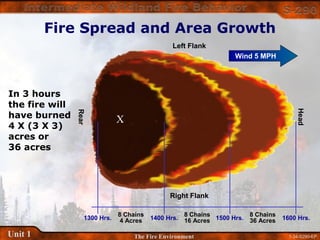
Left Flank
Right Flank
Head
Rear
Wind 5 MPH
1300 Hrs. 1400 Hrs. 1500 Hrs. 1600 Hrs.
8 Chains
4 Acres
8 Chains
16 Acres
8 Chains
36 Acres
Fire Spread and Area Growth
In 3 hours
the fire will
have burned
4 X (3 X 3)
acres or
36 acres
X
1-35-S290-EPUnit 1 The Fire Environment
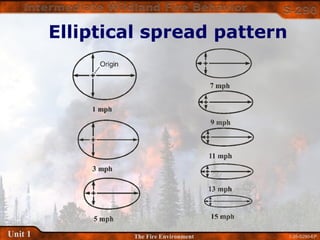
Elliptical spread pattern
1-36-S290-EPUnit 1 The Fire Environment
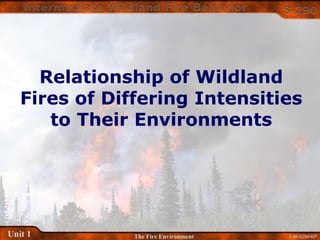
Relationship of Wildland
Fires of Differing Intensities
to Their Environments
1-37-S290-EPUnit 1 The Fire Environment
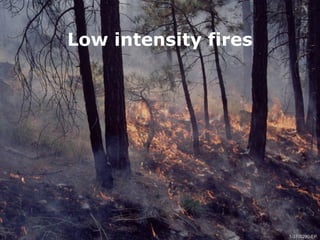
Low intensity fires
1-37-S290-EP
1-38-S290-EPUnit 1 The Fire Environment
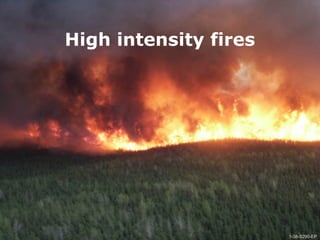
High intensity fires
1-38-S290-EP
1-39-S290-EPUnit 1 The Fire Environment
Stability of the Lower
Atmosphere
1-40-S290-EPUnit 1 The Fire Environment
Atmospheric Stability
A state of the atmosphere in
which the vertical distribution
of temperature is such that an
air particle will resist vertical
displacement from its level.
1-41-S290-EPUnit 1 The Fire Environment
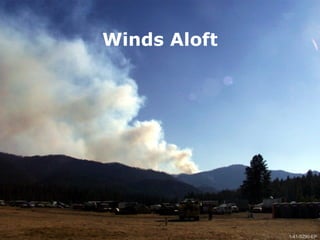
Winds Aloft
1-41-S290-EP
1-42-S290-EPUnit 1 The Fire Environment
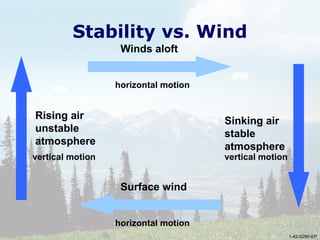
Stability vs. Wind
Winds aloft
horizontal motion
Surface wind
horizontal motion
Rising air
unstable
atmosphere
vertical motion
Sinking air
stable
atmosphere
vertical motion
1-42-S290-EP
1-43-S290-EPUnit 1 The Fire Environment
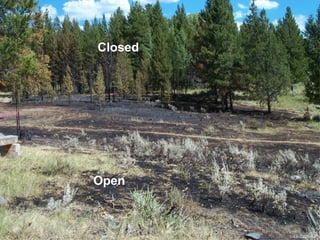
Open
Closed
1-43-S290-EP
1-44-S290-EPUnit 1 The Fire Environment
The Behavior of Wildland
Fires in Standard Fire
Behavior Terminology
1-45-S290-EPUnit 1 The Fire Environment
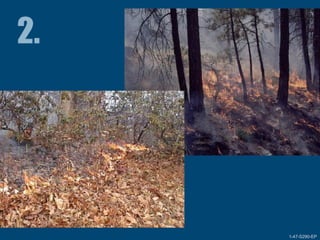
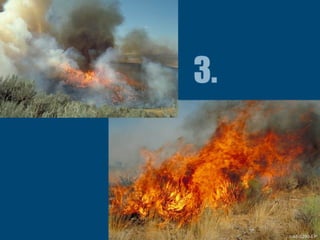
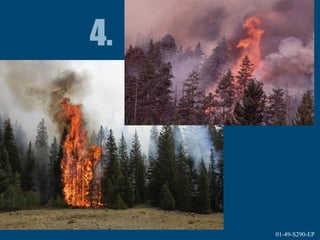
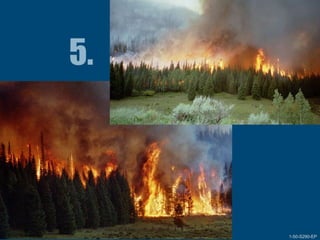
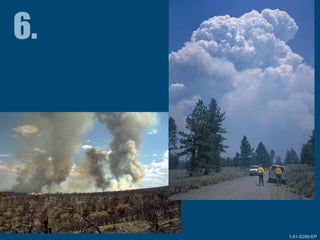
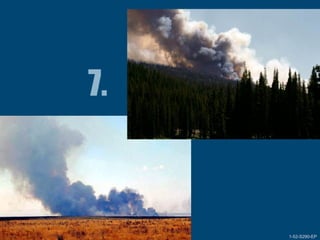
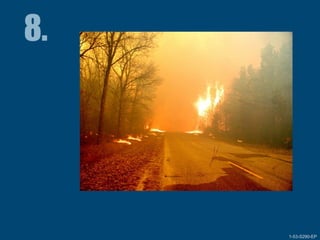
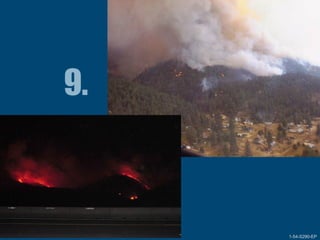
Exercise
1-46-S290-EPUnit 1 The Fire Environment 01-46-S290-EP1-46-S290-EP
1-47-S290-EPUnit 1 The Fire Environment 1-47-S290-EP
1-48-S290-EPUnit 1 The Fire Environment 1-48-S290-EP
1-49-S290-EPUnit 1 The Fire Environment 01-49-S290-EP
1-50-S290-EPUnit 1 The Fire Environment 1-50-S290-EP
1-51-S290-EPUnit 1 The Fire Environment 1-51-S290-EP
1-52-S290-EPUnit 1 The Fire Environment 1-52-S290-EP
1-53-S290-EPUnit 1 The Fire Environment 1-53-S290-EP
1-54-S290-EPUnit 1 The Fire Environment 1-54-S290-EP
1-55-S290-EPUnit 1 The Fire Environment 1-55-S290-EP
1-56-S290-EPUnit 1 The Fire Environment 1-56-S290-EP
1-57-S290-EPUnit 1 The Fire Environment
Unit 1 Objectives
1. Describe the three components of the
wildland fire environment.
2. List and give examples of the three
methods of heat transfer.
3. List three methods of mass transport of
firebrands on wildland fire.
4. Explain the relationship between flame
height/length and its relationship to the
fireline intensity.
1-58-S290-EPUnit 1 The Fire Environment
5. Describe primary environmental factors
affecting ignition, fire intensity, and rate of
spread of wildland fires.
6. Discuss the relationship of wildland fires of
different intensities to their environments.
7. Describe the behavior of wildland fires
using standard fire behavior terminology.
Unit 1 Objectives

S290 Unit 1

  • 1.
    1-1-S290-EPUnit 1 TheFire Environment Unit 1 The Fire Environment
  • 2.
    1-2-S290-EPUnit 1 TheFire Environment Unit 1 Objectives 1. Describe the three components of the wildland fire environment. 2. List and give examples of the three methods of heat transfer. 3. List three methods of mass transport of firebrands on wildland fire. 4. Explain the relationship between flame height/length and its relationship to the fireline intensity.
  • 3.
    1-3-S290-EPUnit 1 TheFire Environment 5. Describe primary environmental factors affecting ignition, fire intensity, and rate of spread of wildland fires. 6. Discuss the relationship of wildland fires of different intensities to their environments. 7. Describe the behavior of wildland fires using standard fire behavior terminology. Unit 1 Objectives
  • 4.
    1-4-S290-EPUnit 1 TheFire Environment Fire Environment Triangle
  • 5.
    1-5-S290-EPUnit 1 TheFire Environment Fire Environment Triangle • The fire triangle – heat – oxygen – fuel And introduced • The fire behavior triangle – fuels – weather – topography S-190, Introduction to Wildland Fire Behavior explained:
  • 6.
    1-6-S290-EPUnit 1 TheFire Environment Fire Environment Triangle • Weather • Topography • Fuels The Three Components of the Wildland Fire Environment:
  • 7.
    1-7-S290-EPUnit 1 TheFire Environment Three Methods of Heat Transfer Conduction Convection Radiation Transfer of heat through solids Transfer of heat by movement of air Transfer of heat by electromagnetic waves 01-7-S290-EP
  • 8.
    1-8-S290-EPUnit 1 TheFire Environment Conduction • Conduction is the transfer of heat from one molecule of matter to another. • Relatively slow transfer and operates within solid fuel particles.
  • 9.
    1-9-S290-EPUnit 1 TheFire Environment Convection Convection is the transfer of heat resulting from the motion of air (or fluid).
  • 10.
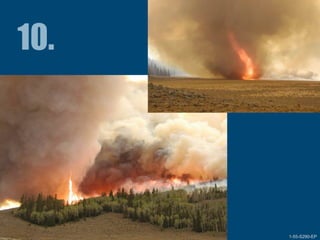
    1-10-S290-EPUnit 1 TheFire Environment Convection also includes direct flame contact, a powerful heat transfer process, especially in a head fire.
  • 11.
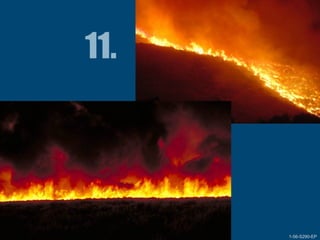
    1-11-S290-EPUnit 1 TheFire Environment Radiation Radiation is the transmission of heat energy by electromagnetic waves passing from a heat source to an absorbing material.
  • 12.
    1-12-S290-EPUnit 1 TheFire Environment The amount of heat received by fuels ahead of the fire depends on the fire intensity and the distance from the fire.
  • 13.
    1-13-S290-EPUnit 1 TheFire Environment Branches are preheated by radiation and convection. 1-13-S290-EP
  • 14.
    1-14-S290-EPUnit 1 TheFire Environment Tree trunk is preheated by radiation and convection. 1-14-S290-EP
  • 15.
    1-15-S290-EPUnit 1 TheFire Environment Logs are preheated by radiation and conduction. 1-15-S290-EP
  • 16.
    1-16-S290-EPUnit 1 TheFire Environment Litter and duff are preheated by radiation and conduction. 1-16-S290-EP
  • 17.
    1-17-S290-EPUnit 1 TheFire Environment Head Fire Backing Fire Wind and/or slope affect fire spread with radiant and convective heat. Conduction/radiation within fuel bed is dominant factor in fire spread. Much less dependent on wind and slope.
  • 18.
    1-18-S290-EPUnit 1 TheFire Environment Three Methods of Mass Transport of Firebrands on Wildland Fire
  • 19.
    1-19-S290-EPUnit 1 TheFire Environment Watch Out #16 Getting frequent spot fires across line. The primary cause of spot fires is firebrands.
  • 20.
    1-20-S290-EPUnit 1 TheFire Environment Transfer of firebrands by convection.
  • 21.
    1-21-S290-EPUnit 1 TheFire Environment Transfer of firebrands by wind.
  • 22.
    1-22-S290-EPUnit 1 TheFire Environment Transfer of firebrands by gravity. 1-22-S290-EP
  • 23.
    1-23-S290-EPUnit 1 TheFire Environment Flame Height/Flame Length and its Relationship to Fireline Intensity
  • 24.
    1-24-S290-EPUnit 1 TheFire Environment Flame height is the average height of flames as measured on a vertical axis. It may be less than flame length if flames are angled.
  • 25.
    1-25-S290-EPUnit 1 TheFire Environment Flame Height 1-25-S290-EP
  • 26.
    1-26-S290-EPUnit 1 TheFire Environment Flame length is the distance measured from the average flame tip to the middle of the flaming zone at the base.
  • 27.
    1-27-S290-EPUnit 1 TheFire Environment Flame Length 1-27-S290-EP
  • 28.
    1-28-S290-EPUnit 1 TheFire Environment The Primary Environmental Factors Affecting the Ignition, Fire Intensity, and Rate of Spread of Wildland Fires
  • 29.
    1-29-S290-EPUnit 1 TheFire Environment Ignition • Size and shape of fuels • Compactness or arrangement of fuels • Fuel moisture content • Fuel temperature
  • 30.
    1-30-S290-EPUnit 1 TheFire Environment Fireline Intensity = The rate of heat released per foot of fire front per second.
  • 31.
    1-31-S290-EPUnit 1 TheFire Environment Fire intensity is primarily affected by: • Fuel loading • Compactness or arrangement of fuels • Fuel moisture content • The rate of spread
  • 32.
    1-32-S290-EPUnit 1 TheFire Environment Rate of Spread (ROS) The activity of fire in extending its horizontal dimensions.
  • 33.
    1-33-S290-EPUnit 1 TheFire Environment Primary Factors that Affect Rate of Spread • Wind speed • Steepness of slope • Changes in fuel type
  • 34.
    1-34-S290-EPUnit 1 TheFire Environment Left Flank Right Flank Head Rear Wind 5 MPH 1300 Hrs. 1400 Hrs. 1500 Hrs. 1600 Hrs. 8 Chains 4 Acres 8 Chains 16 Acres 8 Chains 36 Acres Fire Spread and Area Growth In 3 hours the fire will have burned 4 X (3 X 3) acres or 36 acres X
  • 35.
    1-35-S290-EPUnit 1 TheFire Environment Elliptical spread pattern
  • 36.
    1-36-S290-EPUnit 1 TheFire Environment Relationship of Wildland Fires of Differing Intensities to Their Environments
  • 37.
    1-37-S290-EPUnit 1 TheFire Environment Low intensity fires 1-37-S290-EP
  • 38.
    1-38-S290-EPUnit 1 TheFire Environment High intensity fires 1-38-S290-EP
  • 39.
    1-39-S290-EPUnit 1 TheFire Environment Stability of the Lower Atmosphere
  • 40.
    1-40-S290-EPUnit 1 TheFire Environment Atmospheric Stability A state of the atmosphere in which the vertical distribution of temperature is such that an air particle will resist vertical displacement from its level.
  • 41.
    1-41-S290-EPUnit 1 TheFire Environment Winds Aloft 1-41-S290-EP
  • 42.
    1-42-S290-EPUnit 1 TheFire Environment Stability vs. Wind Winds aloft horizontal motion Surface wind horizontal motion Rising air unstable atmosphere vertical motion Sinking air stable atmosphere vertical motion 1-42-S290-EP
  • 43.
    1-43-S290-EPUnit 1 TheFire Environment Open Closed 1-43-S290-EP
  • 44.
    1-44-S290-EPUnit 1 TheFire Environment The Behavior of Wildland Fires in Standard Fire Behavior Terminology
  • 45.
    1-45-S290-EPUnit 1 TheFire Environment Exercise
  • 46.
    1-46-S290-EPUnit 1 TheFire Environment 01-46-S290-EP1-46-S290-EP
  • 47.
    1-47-S290-EPUnit 1 TheFire Environment 1-47-S290-EP
  • 48.
    1-48-S290-EPUnit 1 TheFire Environment 1-48-S290-EP
  • 49.
    1-49-S290-EPUnit 1 TheFire Environment 01-49-S290-EP
  • 50.
    1-50-S290-EPUnit 1 TheFire Environment 1-50-S290-EP
  • 51.
    1-51-S290-EPUnit 1 TheFire Environment 1-51-S290-EP
  • 52.
    1-52-S290-EPUnit 1 TheFire Environment 1-52-S290-EP
  • 53.
    1-53-S290-EPUnit 1 TheFire Environment 1-53-S290-EP
  • 54.
    1-54-S290-EPUnit 1 TheFire Environment 1-54-S290-EP
  • 55.
    1-55-S290-EPUnit 1 TheFire Environment 1-55-S290-EP
  • 56.
    1-56-S290-EPUnit 1 TheFire Environment 1-56-S290-EP
  • 57.
    1-57-S290-EPUnit 1 TheFire Environment Unit 1 Objectives 1. Describe the three components of the wildland fire environment. 2. List and give examples of the three methods of heat transfer. 3. List three methods of mass transport of firebrands on wildland fire. 4. Explain the relationship between flame height/length and its relationship to the fireline intensity.
  • 58.
    1-58-S290-EPUnit 1 TheFire Environment 5. Describe primary environmental factors affecting ignition, fire intensity, and rate of spread of wildland fires. 6. Discuss the relationship of wildland fires of different intensities to their environments. 7. Describe the behavior of wildland fires using standard fire behavior terminology. Unit 1 Objectives