S-215

S-215
Fire Operations in the
Wildland/Urban Interface
Unit 2
Managing Human Factors
in the Interface
Unit 2 - Managing Human Factors in the Interface

Slide 2-1
S-215

Unit Objectives
• Discuss how preparing for and responding to
interface fires is a shared responsibility as
outlined in the Federal Wildland Fire Policy.
• Describe some human factors encountered in
the interface that affect critical decisionmaking
for firefighter and public safety.
• Discuss the value of the Incident Command
System (ICS) and mutual aid situations as they
apply to an interface incident.
Unit 2 - Managing Human Factors in the Interface

Slide 2-2
S-215

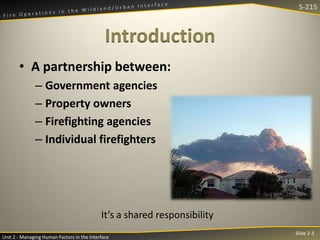
Introduction
• A partnership between:
– Government agencies
– Property owners
– Firefighting agencies
– Individual firefighters

It’s a shared responsibility
Unit 2 - Managing Human Factors in the Interface

Slide 2-3
S-215

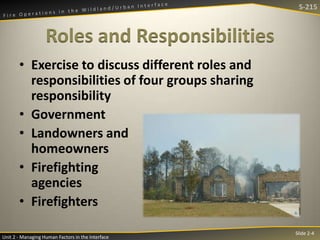
Roles and Responsibilities
• Exercise to discuss different roles and
responsibilities of four groups sharing
responsibility
• Government
• Landowners and
homeowners
• Firefighting
agencies
• Firefighters
Unit 2 - Managing Human Factors in the Interface

Slide 2-4
S-215

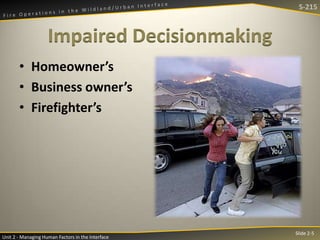
Impaired Decisionmaking
• Homeowner’s
• Business owner’s
• Firefighter’s

Unit 2 - Managing Human Factors in the Interface

Slide 2-5
S-215

Impaired Decision Making
Alabaugh Fire
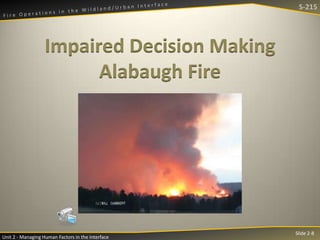
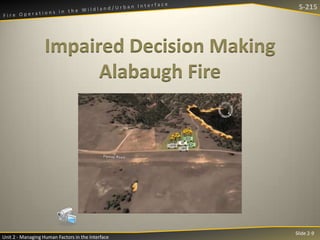
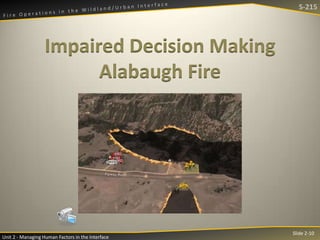
On July 8, 2007 at about 0020 two Black Hills
National Forest firefighters assigned to the
Alabaugh Canyon Fire were entrapped by the
fire and deployed a single fire shelter. At the
time of the accident the firefighters were
conducting burn out operations around a
residence in the wildland urban interface.

Unit 2 - Managing Human Factors in the Interface

Slide 2-6
S-215

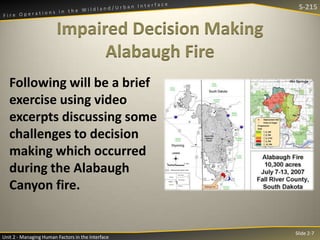
Impaired Decision Making
Alabaugh Fire
Following will be a brief
exercise using video
excerpts discussing some
challenges to decision
making which occurred
during the Alabaugh
Canyon fire.

Unit 2 - Managing Human Factors in the Interface

Slide 2-7
S-215

Impaired Decision Making
Alabaugh Fire

Unit 2 - Managing Human Factors in the Interface

Slide 2-8
S-215

Impaired Decision Making
Alabaugh Fire

Unit 2 - Managing Human Factors in the Interface

Slide 2-9
S-215

Impaired Decision Making
Alabaugh Fire

Unit 2 - Managing Human Factors in the Interface

Slide 2-10
S-215

Impaired Decision Making
Alabaugh Fire

Unit 2 - Managing Human Factors in the Interface

Slide 2-11
S-215

Unique Interface Pressures on
Decision Making
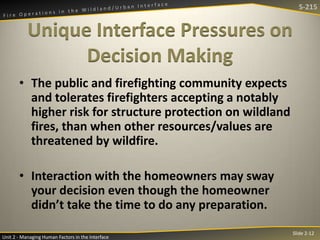
• The public and firefighting community expects
and tolerates firefighters accepting a notably
higher risk for structure protection on wildland
fires, than when other resources/values are
threatened by wildfire.
• Interaction with the homeowners may sway
your decision even though the homeowner
didn’t take the time to do any preparation.
Unit 2 - Managing Human Factors in the Interface

Slide 2-12
S-215

Managing Public Interactions
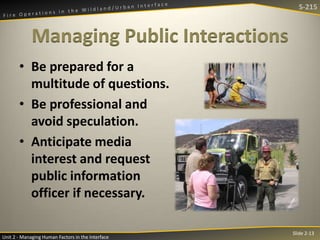
• Be prepared for a
multitude of questions.
• Be professional and
avoid speculation.
• Anticipate media
interest and request
public information
officer if necessary.
Unit 2 - Managing Human Factors in the Interface

Slide 2-13
S-215

Managing Public Interactions
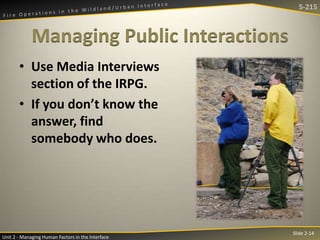
• Use Media Interviews
section of the IRPG.
• If you don’t know the
answer, find
somebody who does.

Unit 2 - Managing Human Factors in the Interface

Slide 2-14
S-215

Incident Command System in
the Interface
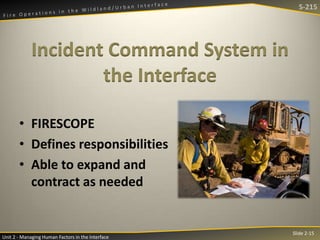
• FIRESCOPE
• Defines responsibilities
• Able to expand and
contract as needed

Unit 2 - Managing Human Factors in the Interface

Slide 2-15
S-215

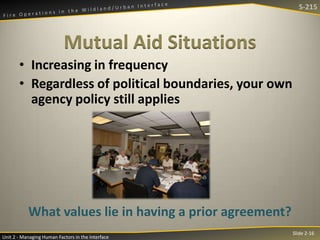
Mutual Aid Situations
• Increasing in frequency
• Regardless of political boundaries, your own
agency policy still applies

What values lie in having a prior agreement?
Unit 2 - Managing Human Factors in the Interface

Slide 2-16
S-215

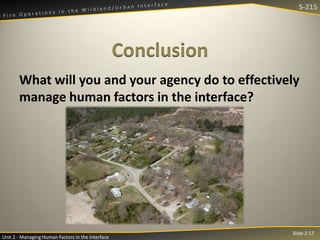
Conclusion
What will you and your agency do to effectively
manage human factors in the interface?

Unit 2 - Managing Human Factors in the Interface

Slide 2-17
S-215

Review Unit Objectives
• Discuss how preparing for and responding to
interface fires is a shared responsibility as
outlined in the Federal Wildland Fire Policy.
• Describe some human factors encountered in
the interface that affect critical decisionmaking
for firefighter and public safety.
• Discuss the value of the Incident Command
System (ICS) and mutual aid situations as they
apply to an interface incident.
Unit 2 - Managing Human Factors in the Interface

Slide 2-18

S215 unit 2

  • 1.
    S-215 S-215 Fire Operations inthe Wildland/Urban Interface Unit 2 Managing Human Factors in the Interface Unit 2 - Managing Human Factors in the Interface Slide 2-1
  • 2.
    S-215 Unit Objectives • Discusshow preparing for and responding to interface fires is a shared responsibility as outlined in the Federal Wildland Fire Policy. • Describe some human factors encountered in the interface that affect critical decisionmaking for firefighter and public safety. • Discuss the value of the Incident Command System (ICS) and mutual aid situations as they apply to an interface incident. Unit 2 - Managing Human Factors in the Interface Slide 2-2
  • 3.
    S-215 Introduction • A partnershipbetween: – Government agencies – Property owners – Firefighting agencies – Individual firefighters It’s a shared responsibility Unit 2 - Managing Human Factors in the Interface Slide 2-3
  • 4.
    S-215 Roles and Responsibilities •Exercise to discuss different roles and responsibilities of four groups sharing responsibility • Government • Landowners and homeowners • Firefighting agencies • Firefighters Unit 2 - Managing Human Factors in the Interface Slide 2-4
  • 5.
    S-215 Impaired Decisionmaking • Homeowner’s •Business owner’s • Firefighter’s Unit 2 - Managing Human Factors in the Interface Slide 2-5
  • 6.
    S-215 Impaired Decision Making AlabaughFire On July 8, 2007 at about 0020 two Black Hills National Forest firefighters assigned to the Alabaugh Canyon Fire were entrapped by the fire and deployed a single fire shelter. At the time of the accident the firefighters were conducting burn out operations around a residence in the wildland urban interface. Unit 2 - Managing Human Factors in the Interface Slide 2-6
  • 7.
    S-215 Impaired Decision Making AlabaughFire Following will be a brief exercise using video excerpts discussing some challenges to decision making which occurred during the Alabaugh Canyon fire. Unit 2 - Managing Human Factors in the Interface Slide 2-7
  • 8.
    S-215 Impaired Decision Making AlabaughFire Unit 2 - Managing Human Factors in the Interface Slide 2-8
  • 9.
    S-215 Impaired Decision Making AlabaughFire Unit 2 - Managing Human Factors in the Interface Slide 2-9
  • 10.
    S-215 Impaired Decision Making AlabaughFire Unit 2 - Managing Human Factors in the Interface Slide 2-10
  • 11.
    S-215 Impaired Decision Making AlabaughFire Unit 2 - Managing Human Factors in the Interface Slide 2-11
  • 12.
    S-215 Unique Interface Pressureson Decision Making • The public and firefighting community expects and tolerates firefighters accepting a notably higher risk for structure protection on wildland fires, than when other resources/values are threatened by wildfire. • Interaction with the homeowners may sway your decision even though the homeowner didn’t take the time to do any preparation. Unit 2 - Managing Human Factors in the Interface Slide 2-12
  • 13.
    S-215 Managing Public Interactions •Be prepared for a multitude of questions. • Be professional and avoid speculation. • Anticipate media interest and request public information officer if necessary. Unit 2 - Managing Human Factors in the Interface Slide 2-13
  • 14.
    S-215 Managing Public Interactions •Use Media Interviews section of the IRPG. • If you don’t know the answer, find somebody who does. Unit 2 - Managing Human Factors in the Interface Slide 2-14
  • 15.
    S-215 Incident Command Systemin the Interface • FIRESCOPE • Defines responsibilities • Able to expand and contract as needed Unit 2 - Managing Human Factors in the Interface Slide 2-15
  • 16.
    S-215 Mutual Aid Situations •Increasing in frequency • Regardless of political boundaries, your own agency policy still applies What values lie in having a prior agreement? Unit 2 - Managing Human Factors in the Interface Slide 2-16
  • 17.
    S-215 Conclusion What will youand your agency do to effectively manage human factors in the interface? Unit 2 - Managing Human Factors in the Interface Slide 2-17
  • 18.
    S-215 Review Unit Objectives •Discuss how preparing for and responding to interface fires is a shared responsibility as outlined in the Federal Wildland Fire Policy. • Describe some human factors encountered in the interface that affect critical decisionmaking for firefighter and public safety. • Discuss the value of the Incident Command System (ICS) and mutual aid situations as they apply to an interface incident. Unit 2 - Managing Human Factors in the Interface Slide 2-18