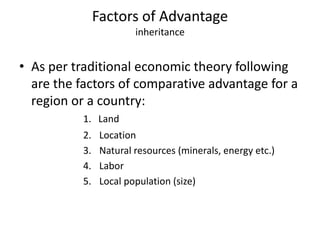
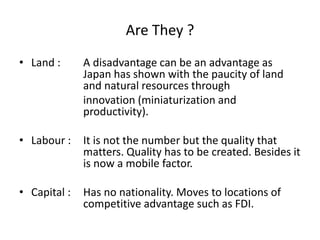
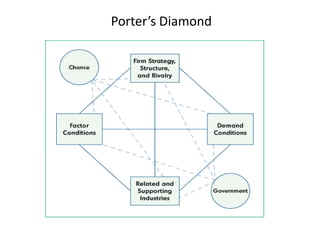
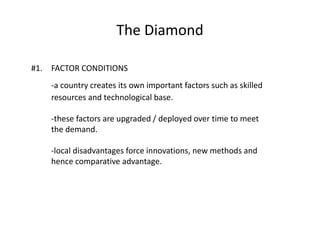
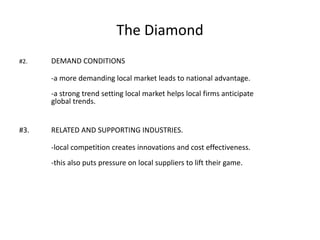
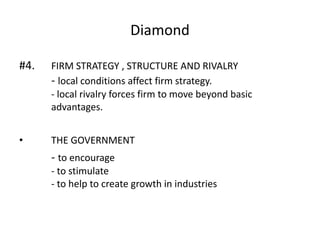
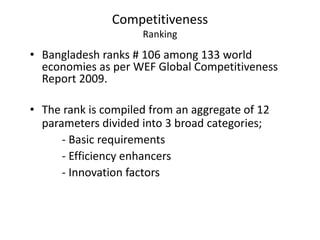
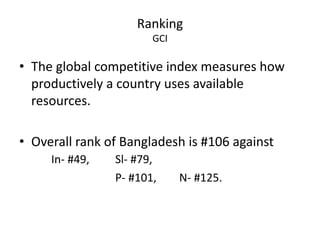
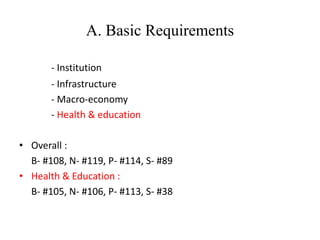
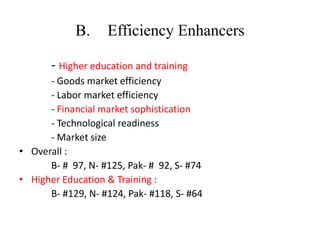
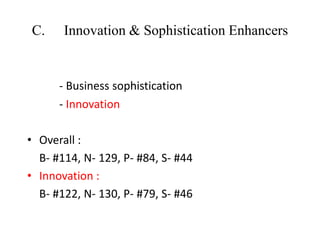
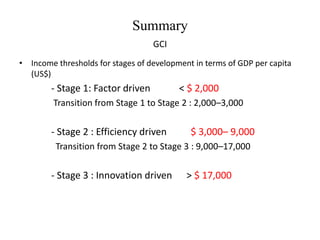
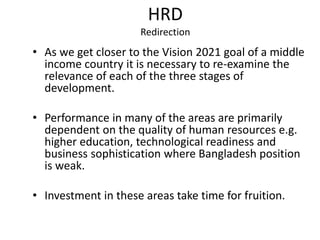
Porter argues that a nation's competitive advantage comes from 4 interlinked factors: factor conditions, demand conditions, related and supporting industries, and firm strategy/rivalry. Together these form a "diamond" shape that represents the national environment that influences industry success. Bangladesh ranks 106 out of 133 countries in global competitiveness due to weaknesses in basic requirements like infrastructure/education, and efficiency/innovation factors like higher education and technological readiness. To achieve higher income levels, Bangladesh needs to redirect investment towards these areas, though it will take time to realize returns, requiring long-term strategic planning over short-term gains.