INDUSTRY ANALYSIS IV
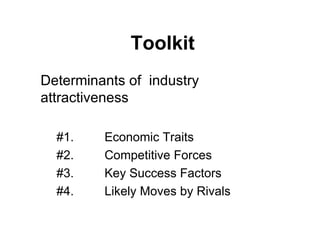
Toolkit Determinants of  industry attractiveness  #1. Economic Traits #2. Competitive Forces #3. Key Success Factors #4. Likely Moves by Rivals
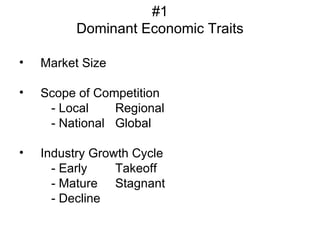
#1 Dominant Economic Traits Market Size Scope of Competition - Local  Regional - National  Global Industry Growth Cycle  - Early  Takeoff - Mature  Stagnant - Decline
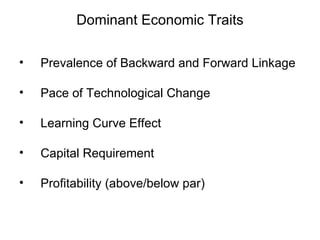
Dominant Economic Traits Prevalence of Backward and Forward Linkage Pace of Technological Change Learning Curve Effect Capital Requirement Profitability (above/below par)
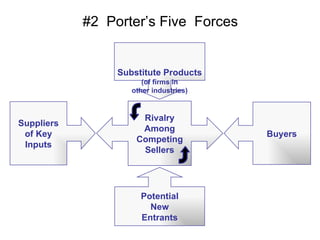
#2  Porter’s Five  Forces Substitute Products (of firms in other industries) Suppliers of Key Inputs Buyers Potential New Entrants Rivalry Among Competing Sellers
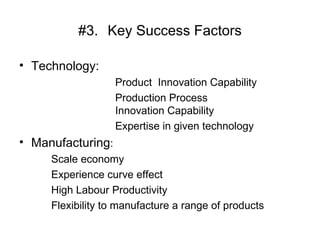
#3. Key Success Factors Technology: Product  Innovation Capability Production Process  Innovation Capability Expertise in given technology Manufacturing : Scale economy Experience curve effect High Labour Productivity Flexibility to manufacture a range of products
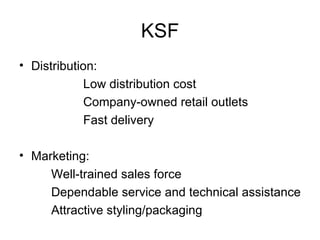
KSF Distribution: Low distribution cost Company-owned retail outlets Fast delivery Marketing: Well-trained sales force Dependable service and technical assistance Attractive styling/packaging
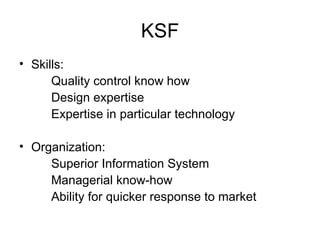
KSF Skills: Quality control know how Design expertise Expertise in particular technology Organization: Superior Information System Managerial know-how Ability for quicker response to market
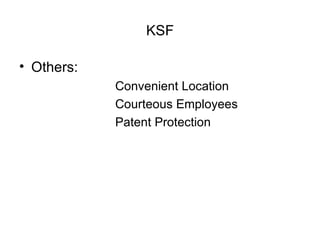
KSF Others: Convenient Location Courteous Employees Patent Protection
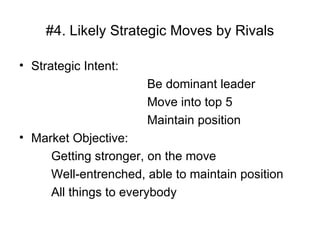
#4. Likely Strategic Moves by Rivals Strategic Intent: Be dominant leader Move into top 5 Maintain position Market Objective:  Getting stronger, on the move Well-entrenched, able to maintain position All things to everybody
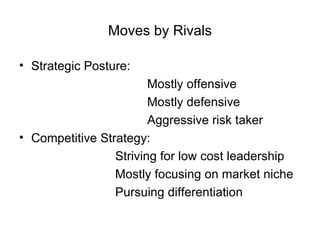
Moves by Rivals Strategic Posture: Mostly offensive Mostly defensive Aggressive risk taker Competitive Strategy: Striving for low cost leadership Mostly focusing on market niche Pursuing differentiation

Industry analysis 4

  • 1.
  • 2.
    Toolkit Determinants of industry attractiveness #1. Economic Traits #2. Competitive Forces #3. Key Success Factors #4. Likely Moves by Rivals
  • 3.
    #1 Dominant EconomicTraits Market Size Scope of Competition - Local Regional - National Global Industry Growth Cycle - Early Takeoff - Mature Stagnant - Decline
  • 4.
    Dominant Economic TraitsPrevalence of Backward and Forward Linkage Pace of Technological Change Learning Curve Effect Capital Requirement Profitability (above/below par)
  • 5.
    #2 Porter’sFive Forces Substitute Products (of firms in other industries) Suppliers of Key Inputs Buyers Potential New Entrants Rivalry Among Competing Sellers
  • 6.
    #3. Key SuccessFactors Technology: Product Innovation Capability Production Process Innovation Capability Expertise in given technology Manufacturing : Scale economy Experience curve effect High Labour Productivity Flexibility to manufacture a range of products
  • 7.
    KSF Distribution: Lowdistribution cost Company-owned retail outlets Fast delivery Marketing: Well-trained sales force Dependable service and technical assistance Attractive styling/packaging
  • 8.
    KSF Skills: Qualitycontrol know how Design expertise Expertise in particular technology Organization: Superior Information System Managerial know-how Ability for quicker response to market
  • 9.
    KSF Others: ConvenientLocation Courteous Employees Patent Protection
  • 10.
    #4. Likely StrategicMoves by Rivals Strategic Intent: Be dominant leader Move into top 5 Maintain position Market Objective: Getting stronger, on the move Well-entrenched, able to maintain position All things to everybody
  • 11.
    Moves by RivalsStrategic Posture: Mostly offensive Mostly defensive Aggressive risk taker Competitive Strategy: Striving for low cost leadership Mostly focusing on market niche Pursuing differentiation