Lean Enterprise Academy 2006
Running
Rapid Improvement Events
Ian Glenday
Rapid Improvement Events
Or
Kaisen workshops
Definition of LEAN
• Creating flow in the value stream
• Eliminating waste (=muda)
Rapid Improvement Events
• Point Kaisen
– Focussed on eliminating waste
– “Islands” of improvement
– Can have negative impact on overall
system
Rapid Improvement Events
• Point Kaisen
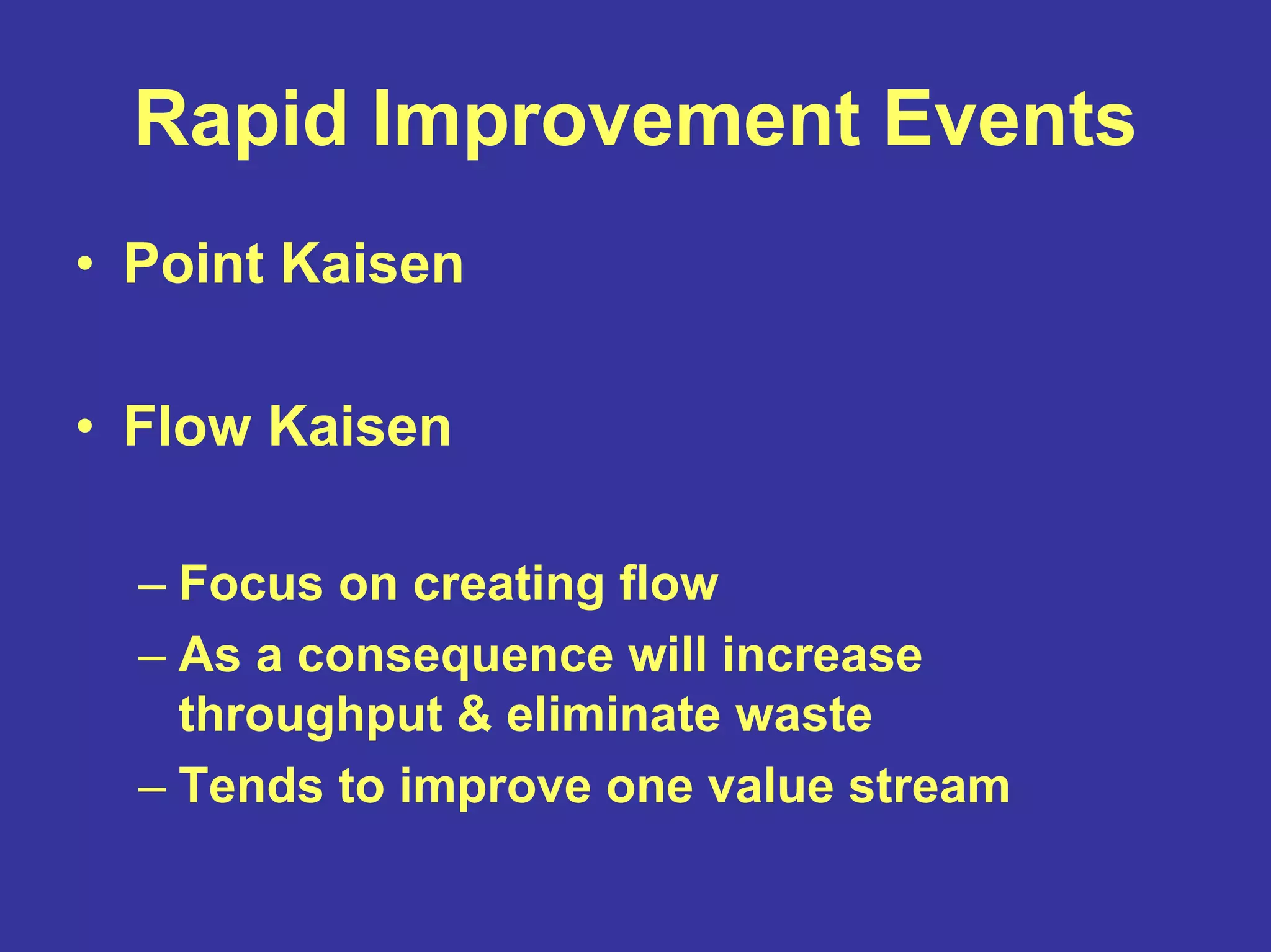
• Flow Kaisen
– Focus on creating flow
– As a consequence will increase
throughput & eliminate waste
– Tends to improve one value stream
Rapid Improvement Events
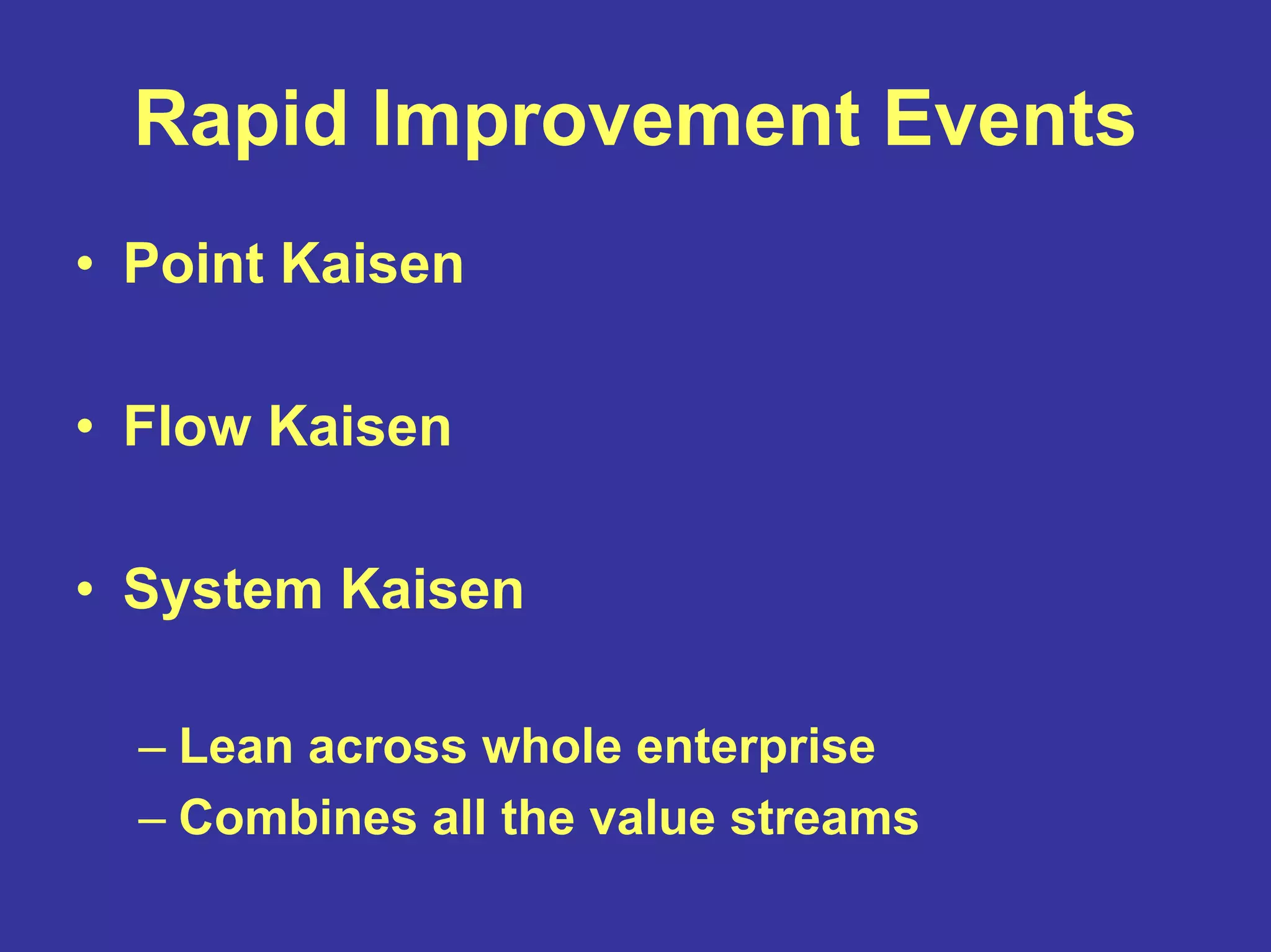
• Point Kaisen
• Flow Kaisen
• System Kaisen
– Lean across whole enterprise
– Combines all the value streams
Rapid Improvement Events
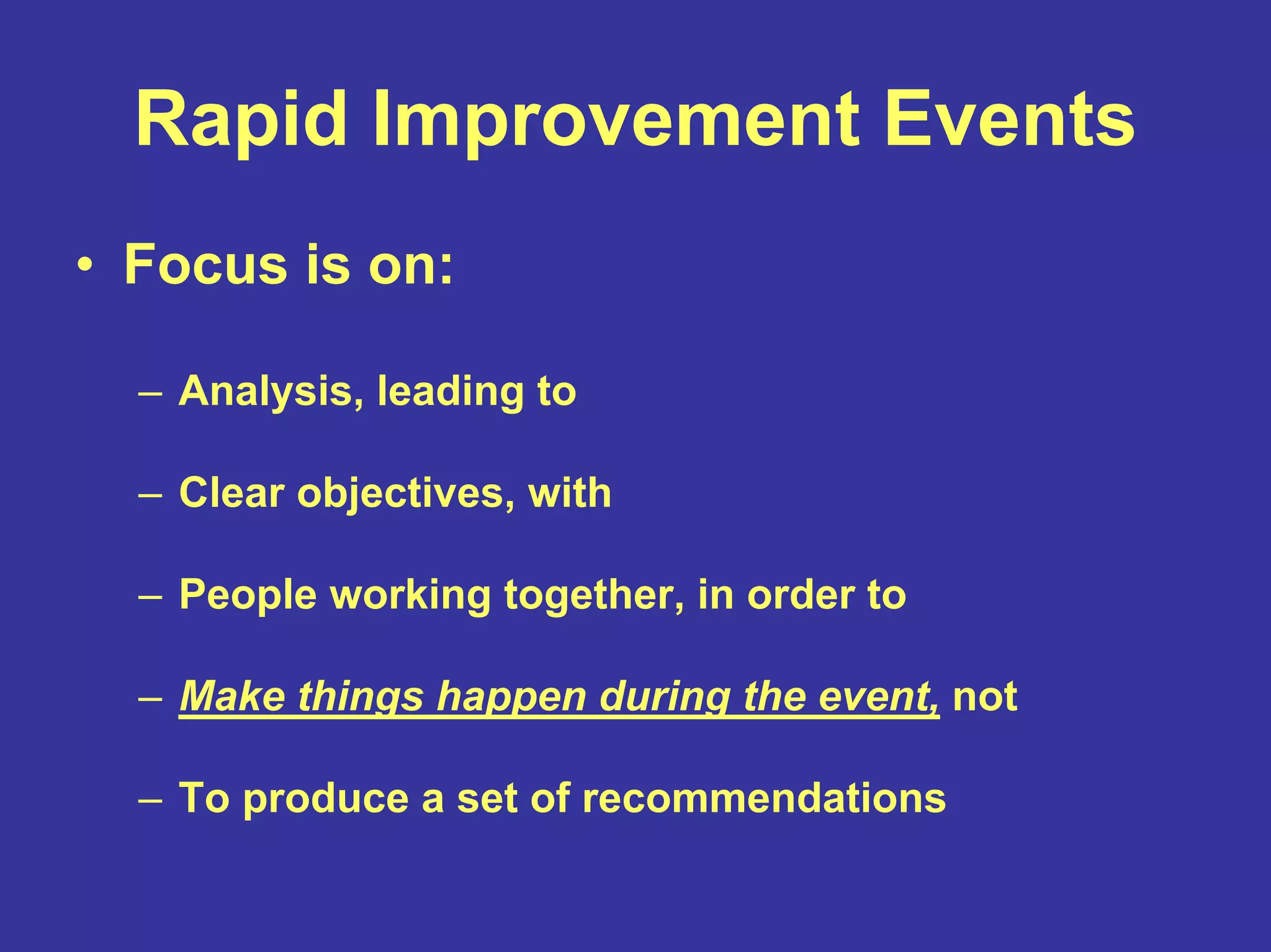
• Focus is on:
– Analysis, leading to
– Clear objectives, with
– People working together, in order to
– Make things happen during the event, not
– To produce a set of recommendations
Overview
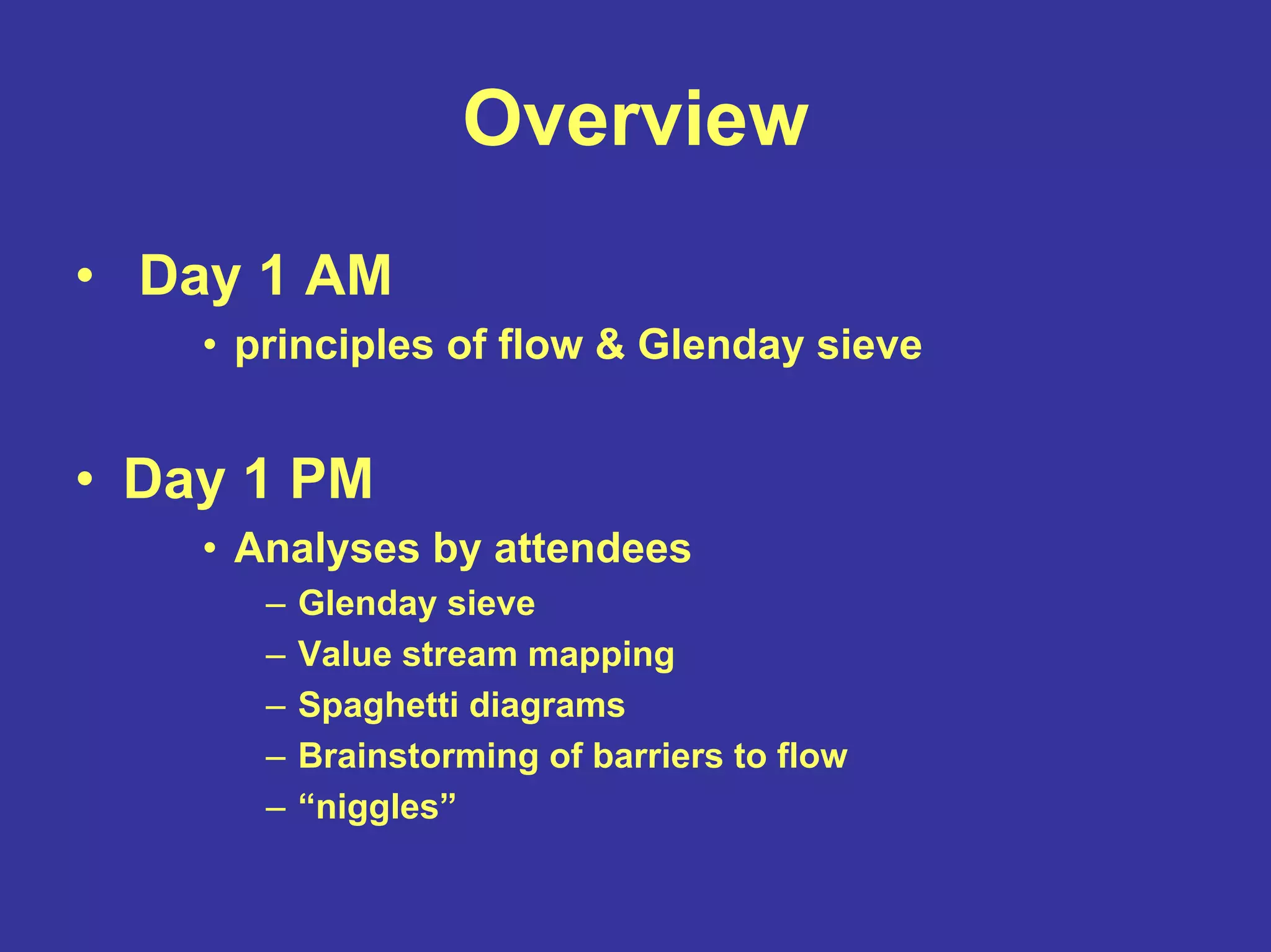
• Day 1 AM
• principles of flow & Glenday sieve
• Day 1 PM
• Analyses by attendees
– Glenday sieve
– Value stream mapping
– Spaghetti diagrams
– Brainstorming of barriers to flow
– “niggles”
Overview
• Day 2 AM
• Analyses continued
• Setting of specific objectives
• “Rules” for Rapid Improvement
• Day 2 PM
• Teams start on specific objectives
• Further analysis
Overview
• Day 3
• Improvements made to existing “methods”
• Day 4
• “Black holes” occur
• Teams make breakthrough improvements
• Teams work late!
Overview
• Day 5
• Finish off changes
• Write up new procedures
• Develop action plan & communication material
• Set up ongoing monitoring
• Present results
Rapid Improvement Events
Results are ALWAYS far greater than
people thought possible
WHY?
Results always greater – why?
• Specific topics & targets are not pre-set
– These come from DATA analysis
• Mixed delegates
– Every function involved
• Time & effort
– Never had so many people for so much time
– Leads to breakthroughs
• Make physical changes
– happen within the week by the attendees
• Focussed on making the “Greens” flow
The “Greens”
come from
Glenday sieve analysis
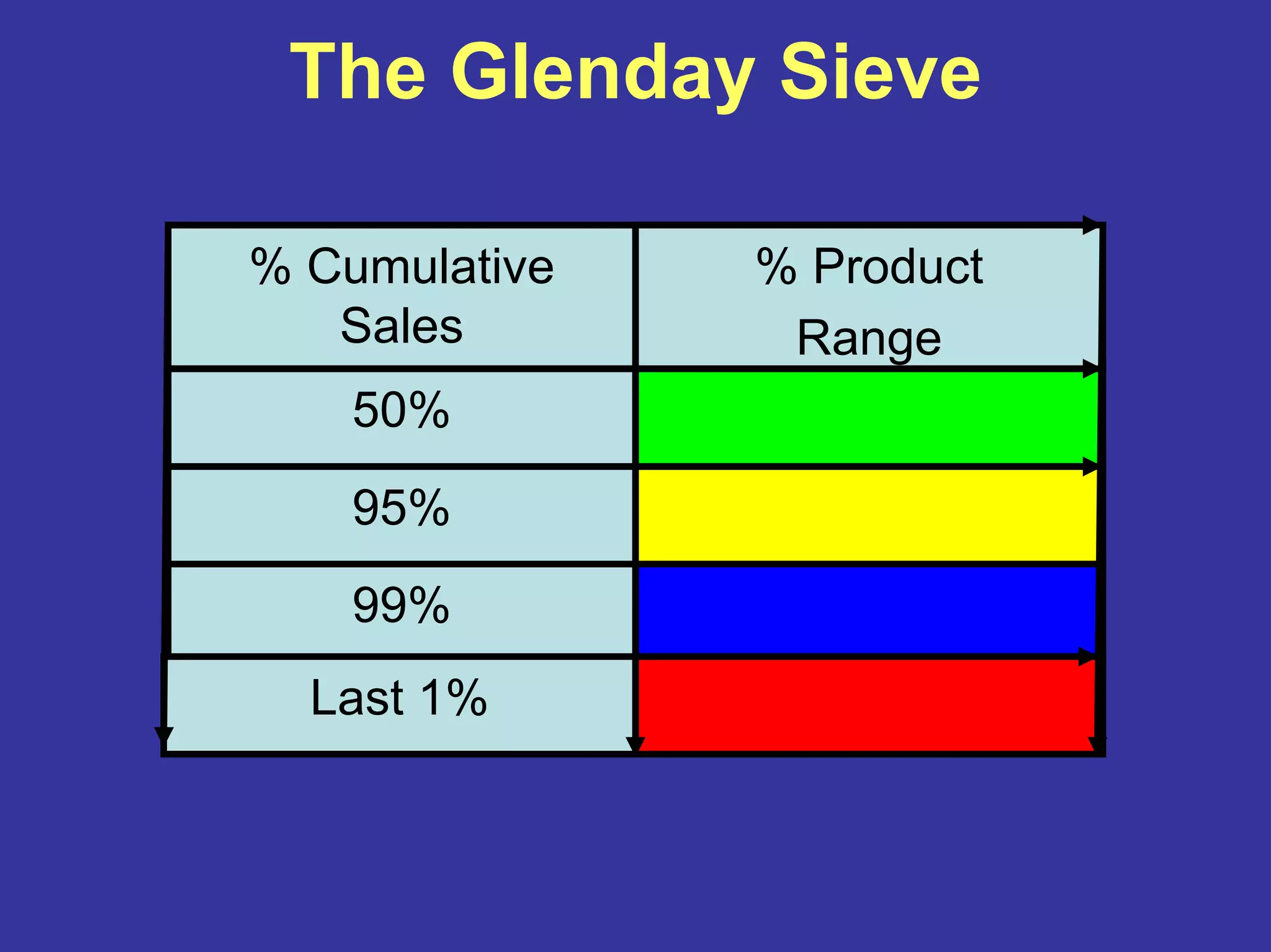
The Glenday Sieve
99%
95%
50%
% Product
Range
% Cumulative
Sales
Last 1%
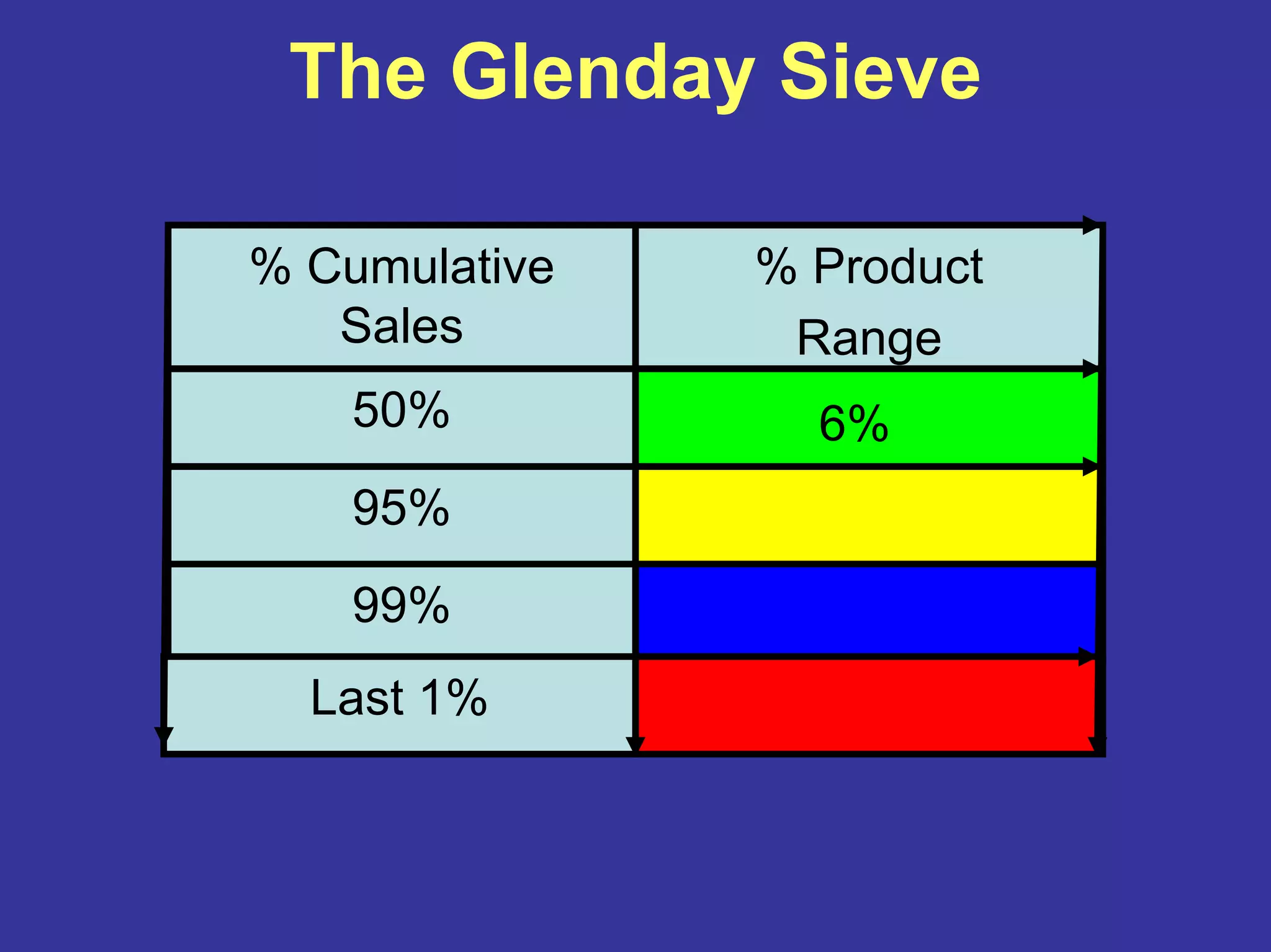
The Glenday Sieve
99%
95%
50%
% Product
Range
% Cumulative
Sales
Last 1%
6%
Central limit theory =
Greater the aggregate
less the variability
The Glenday Sieve
and
Value Stream Mapping
What do you map first?
The Glenday Sieve
and
Value Stream Mapping
To make the “greens” flow
to a drumbeat and remove
unnecessary variability
The Glenday Sieve
and
Value Stream Mapping
which will
as a consequence
reduce non-value added waste
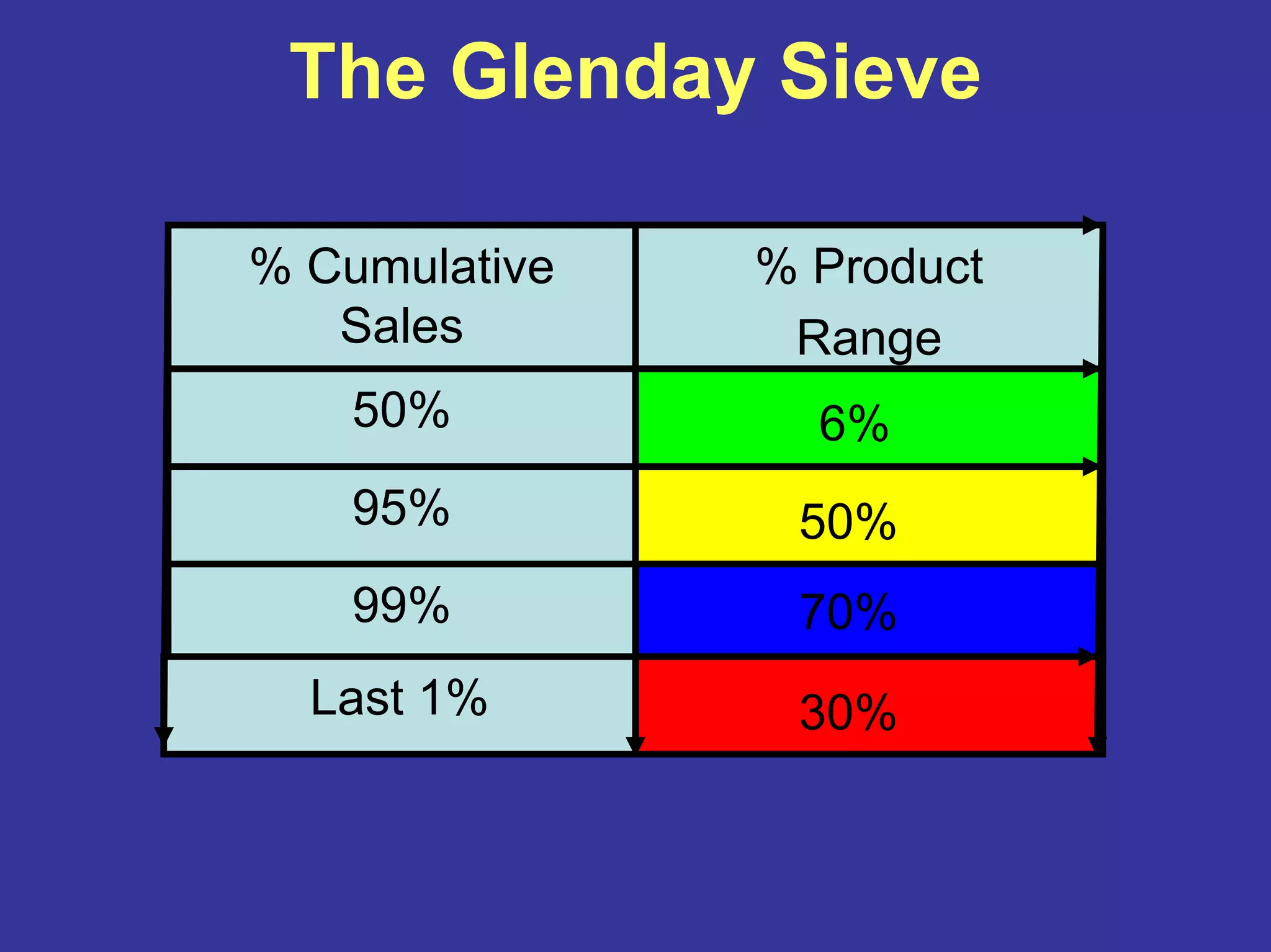
The Glenday Sieve
99%
95%
50%
% Product
Range
% Cumulative
Sales
Last 1%
6%
50%
70%
30%
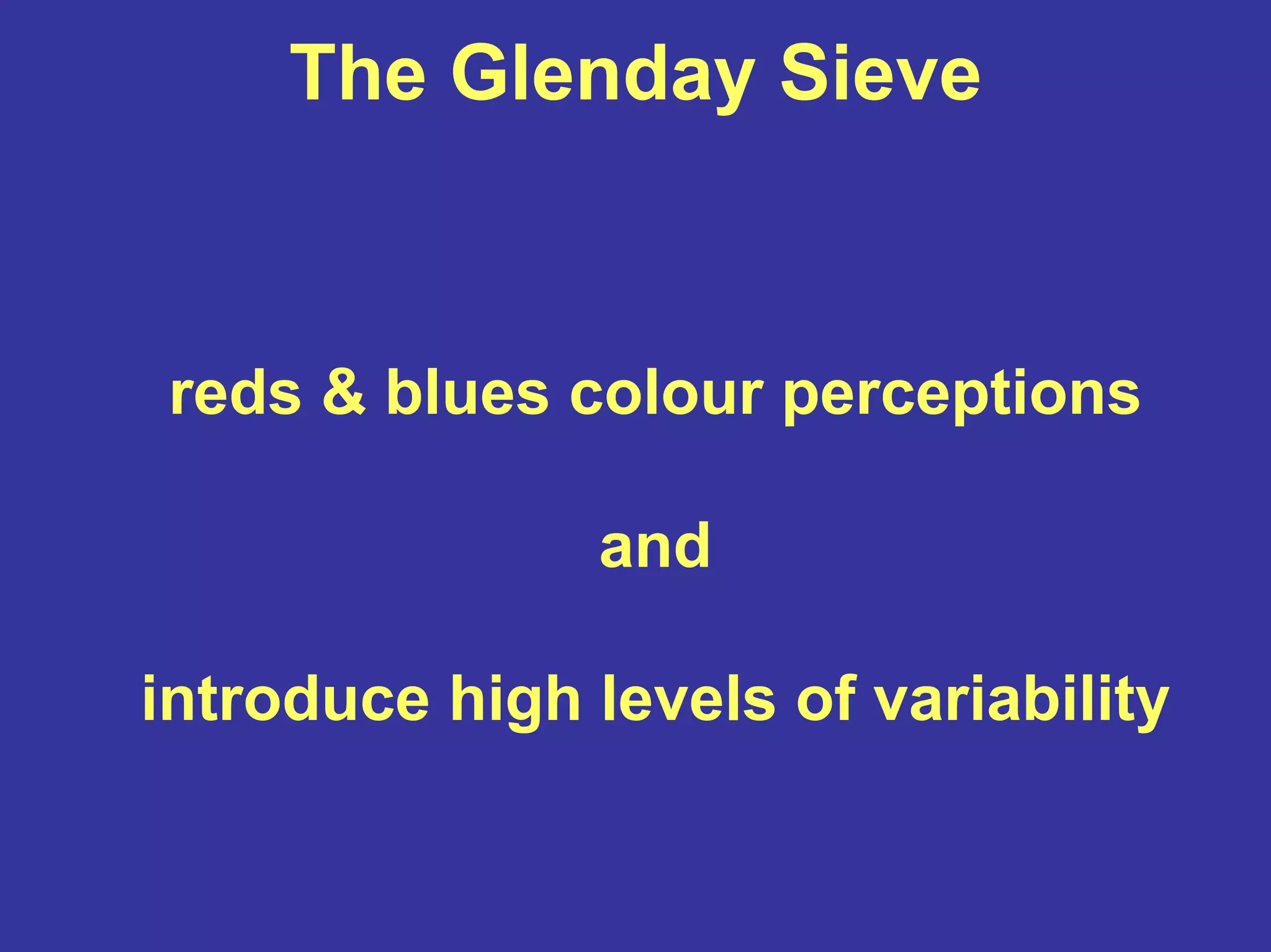
The Glenday Sieve
reds & blues colour perceptions
and
introduce high levels of variability
The Glenday Sieve
Don’t mix reds
With greens
Rapid Improvement Events
• Flow Kaisen
– Focussed on identifying the greens and
making them FLOW
Rapid Improvement Events
• Preparation
– Communication Communication Communication
• Never enough
– Selecting attendees
• Mixed
• Role of “outsiders”
– Admin.
• Invites
• rooms
Rapid Improvement Events
• Day 1 AM
• principles of flow & Glenday sieve
• Day 1 PM
• Analyses by attendees
– Glenday sieve
– Value stream mapping
– Brainstorming of barriers to flow
– Spaghetti diagrams
– “niggles”
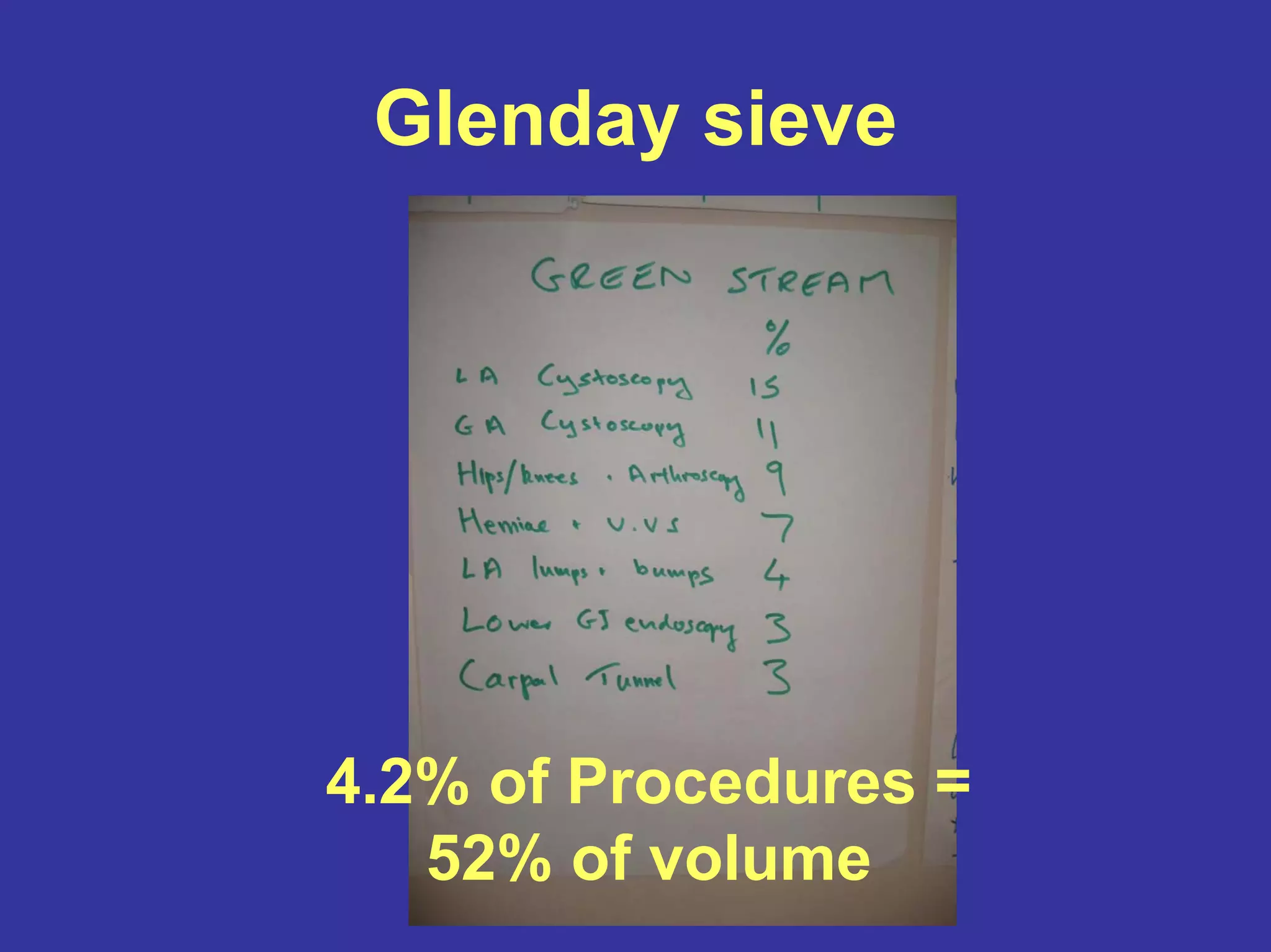
Glenday sieve
4.2% of Procedures =
52% of volume
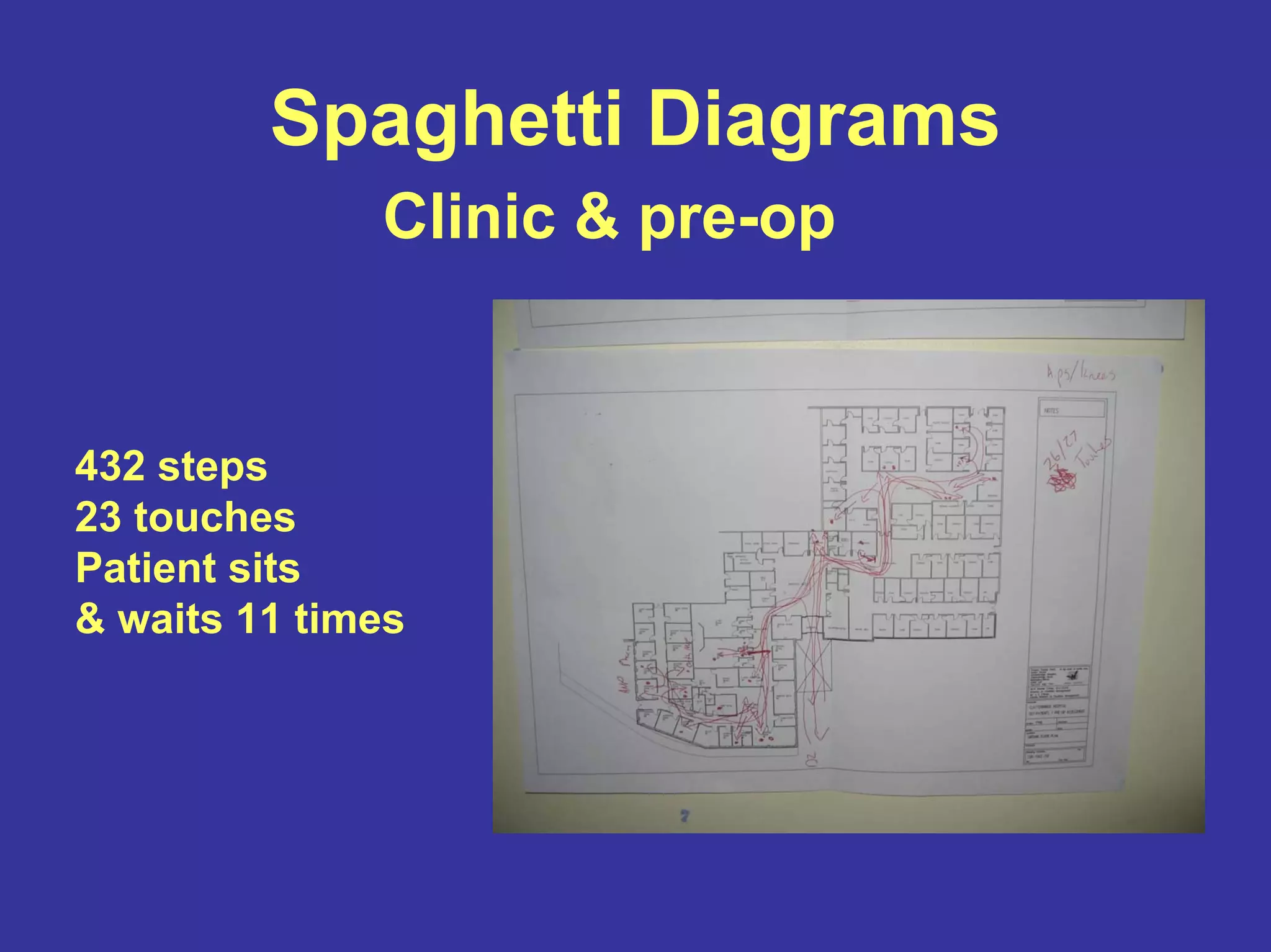
Spaghetti Diagrams
Clinic & pre-op
432 steps
23 touches
Patient sits
& waits 11 times
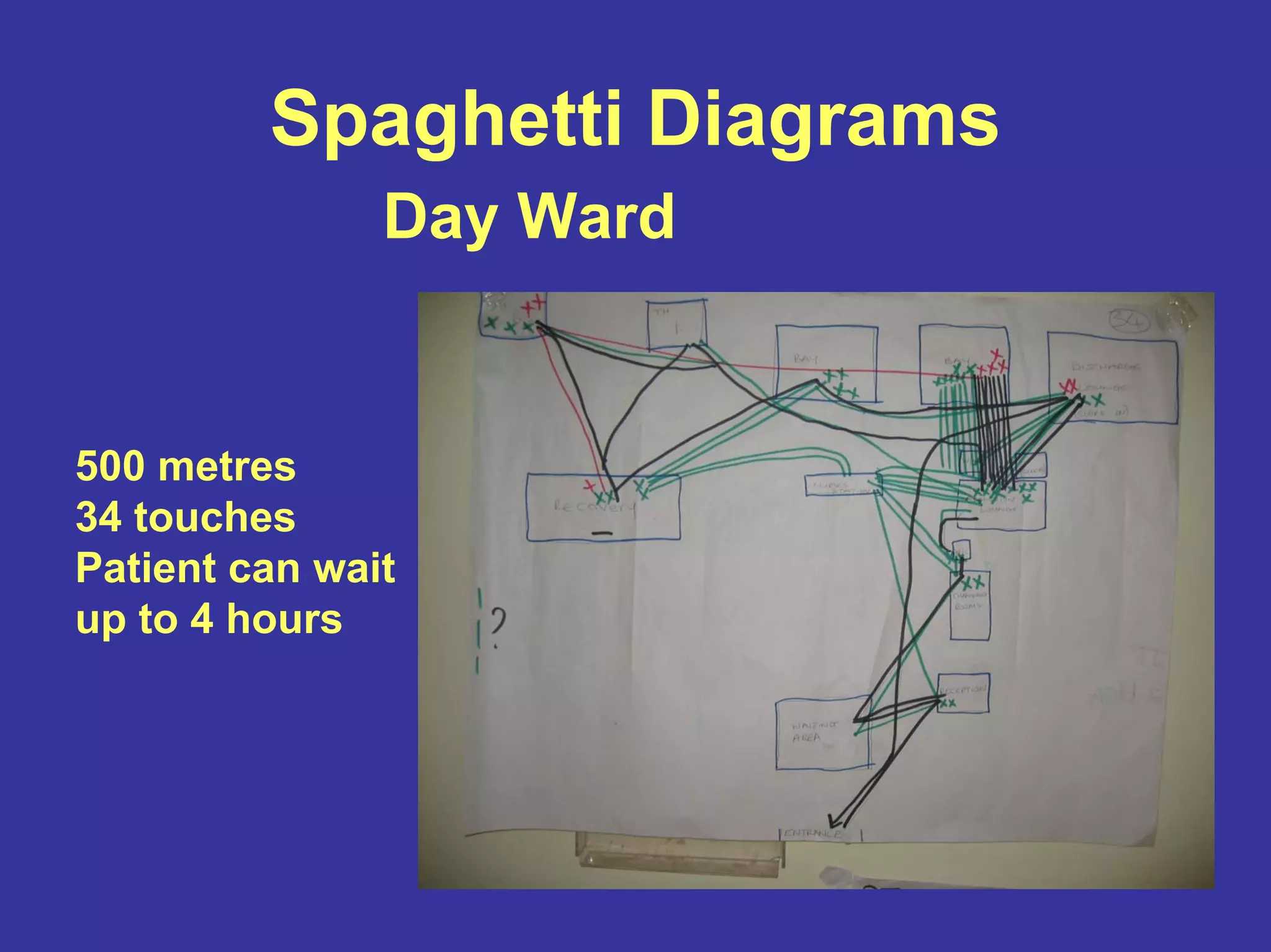
Spaghetti Diagrams
Day Ward
500 metres
34 touches
Patient can wait
up to 4 hours
Niggles
- Small irritating
things for staff
- Helps to get people
“on board”
- Impacts overall
effectiveness
Setting Objectives
• Comes from analysis
• MUST be specific and quantified
• Don’t need to know “how”
• Invite people to sign up
Rules for the RIW
• Start by jointly analysing & understanding current practices
• Don’t spend time in lengthy debates
• Work as a team & use your resources to cover all the tasks
• Think of how to do it, not why it can’t be done
• Create & assess alternative solutions
• Seek wisdom of 10 rather than knowledge of 1
• Do not seek perfection, do it only for part of the target
• Wisdom is brought out by hardship
– First improve, then change
• Raise any (perceived) roadblocks with IFG
• When the analysis shows a way forward,
IMPLEMENT IT !!
Unfreeze
then re-freeze
Daily review
• 17.00 hrs
• Not all the team
• Key points is action plan forward, not what
has happened
• Any issues/barriers/things stopping the team
achieving what they want to do
Teams decide own
start/finish times,
who does what, etc.
Less = more
Give people chance to
work on common issues
Day 3
• ACTIONS
– Teams work on “existing”
– Don’t get tied up with road blocks
– Green stream team has many
discussions!!
Day 4
• “Black holes” occur
• Teams change the existing
• Teams work late!
Day 5
• Finish off changes
• Write up new procedures
• Develop action plan & communication material
• Set up ongoing monitoring
• Present results
Unfreeze/refreeze
• Does it ruffles feathers?
– communicate communicate communicate
– But still won’t be enough
• Creates excitement (niggles help)
• (Most) People want to get involved
• Treat attendees as responsible & sensible
(‘cos they are!!)
Results from Clatterbridge
• Communication “brief” produced
during workshop
– Use as presentation
– Print off as posters to put up in hospital

Running Rapid Improvement Events

  • 1.
    Lean Enterprise Academy2006 Running Rapid Improvement Events Ian Glenday
  • 2.
  • 3.
    Definition of LEAN •Creating flow in the value stream • Eliminating waste (=muda)
  • 4.
    Rapid Improvement Events •Point Kaisen – Focussed on eliminating waste – “Islands” of improvement – Can have negative impact on overall system
  • 5.
    Rapid Improvement Events •Point Kaisen • Flow Kaisen – Focus on creating flow – As a consequence will increase throughput & eliminate waste – Tends to improve one value stream
  • 6.
    Rapid Improvement Events •Point Kaisen • Flow Kaisen • System Kaisen – Lean across whole enterprise – Combines all the value streams
  • 7.
    Rapid Improvement Events •Focus is on: – Analysis, leading to – Clear objectives, with – People working together, in order to – Make things happen during the event, not – To produce a set of recommendations
  • 8.
    Overview • Day 1AM • principles of flow & Glenday sieve • Day 1 PM • Analyses by attendees – Glenday sieve – Value stream mapping – Spaghetti diagrams – Brainstorming of barriers to flow – “niggles”
  • 9.
    Overview • Day 2AM • Analyses continued • Setting of specific objectives • “Rules” for Rapid Improvement • Day 2 PM • Teams start on specific objectives • Further analysis
  • 10.
    Overview • Day 3 •Improvements made to existing “methods” • Day 4 • “Black holes” occur • Teams make breakthrough improvements • Teams work late!
  • 11.
    Overview • Day 5 •Finish off changes • Write up new procedures • Develop action plan & communication material • Set up ongoing monitoring • Present results
  • 12.
    Rapid Improvement Events Resultsare ALWAYS far greater than people thought possible WHY?
  • 13.
    Results always greater– why? • Specific topics & targets are not pre-set – These come from DATA analysis • Mixed delegates – Every function involved • Time & effort – Never had so many people for so much time – Leads to breakthroughs • Make physical changes – happen within the week by the attendees • Focussed on making the “Greens” flow
  • 14.
  • 15.
    The Glenday Sieve 99% 95% 50% %Product Range % Cumulative Sales Last 1%
  • 16.
    The Glenday Sieve 99% 95% 50% %Product Range % Cumulative Sales Last 1% 6%
  • 17.
    Central limit theory= Greater the aggregate less the variability
  • 18.
    The Glenday Sieve and ValueStream Mapping What do you map first?
  • 19.
    The Glenday Sieve and ValueStream Mapping To make the “greens” flow to a drumbeat and remove unnecessary variability
  • 20.
    The Glenday Sieve and ValueStream Mapping which will as a consequence reduce non-value added waste
  • 21.
    The Glenday Sieve 99% 95% 50% %Product Range % Cumulative Sales Last 1% 6% 50% 70% 30%
  • 22.
    The Glenday Sieve reds& blues colour perceptions and introduce high levels of variability
  • 23.
    The Glenday Sieve Don’tmix reds With greens
  • 24.
    Rapid Improvement Events •Flow Kaisen – Focussed on identifying the greens and making them FLOW
  • 25.
    Rapid Improvement Events •Preparation – Communication Communication Communication • Never enough – Selecting attendees • Mixed • Role of “outsiders” – Admin. • Invites • rooms
  • 26.
    Rapid Improvement Events •Day 1 AM • principles of flow & Glenday sieve • Day 1 PM • Analyses by attendees – Glenday sieve – Value stream mapping – Brainstorming of barriers to flow – Spaghetti diagrams – “niggles”
  • 27.
    Glenday sieve 4.2% ofProcedures = 52% of volume
  • 28.
    Spaghetti Diagrams Clinic &pre-op 432 steps 23 touches Patient sits & waits 11 times
  • 29.
    Spaghetti Diagrams Day Ward 500metres 34 touches Patient can wait up to 4 hours
  • 30.
    Niggles - Small irritating thingsfor staff - Helps to get people “on board” - Impacts overall effectiveness
  • 31.
    Setting Objectives • Comesfrom analysis • MUST be specific and quantified • Don’t need to know “how” • Invite people to sign up
  • 32.
    Rules for theRIW • Start by jointly analysing & understanding current practices • Don’t spend time in lengthy debates • Work as a team & use your resources to cover all the tasks • Think of how to do it, not why it can’t be done • Create & assess alternative solutions • Seek wisdom of 10 rather than knowledge of 1 • Do not seek perfection, do it only for part of the target • Wisdom is brought out by hardship – First improve, then change • Raise any (perceived) roadblocks with IFG • When the analysis shows a way forward, IMPLEMENT IT !!
  • 33.
  • 34.
    Daily review • 17.00hrs • Not all the team • Key points is action plan forward, not what has happened • Any issues/barriers/things stopping the team achieving what they want to do
  • 35.
    Teams decide own start/finishtimes, who does what, etc. Less = more Give people chance to work on common issues
  • 36.
    Day 3 • ACTIONS –Teams work on “existing” – Don’t get tied up with road blocks – Green stream team has many discussions!!
  • 37.
    Day 4 • “Blackholes” occur • Teams change the existing • Teams work late!
  • 38.
    Day 5 • Finishoff changes • Write up new procedures • Develop action plan & communication material • Set up ongoing monitoring • Present results
  • 39.
    Unfreeze/refreeze • Does itruffles feathers? – communicate communicate communicate – But still won’t be enough • Creates excitement (niggles help) • (Most) People want to get involved • Treat attendees as responsible & sensible (‘cos they are!!)
  • 40.
    Results from Clatterbridge •Communication “brief” produced during workshop – Use as presentation – Print off as posters to put up in hospital