UNESCO/COL/ICDE
Chair in OER: Is open
online learning
sustainable?
Rory McGreal
Athabasca University
Some images are fair dealing/fair use
x
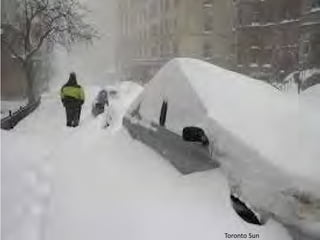
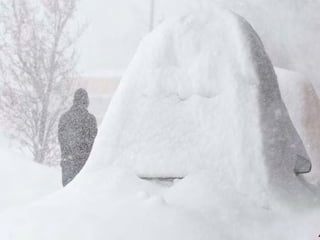
Toronto Sun
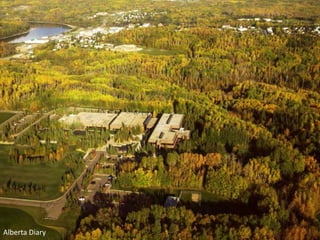
Alberta Diary
Sponsors
Focus
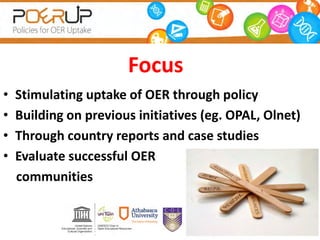
• Stimulating uptake of OER through policy
• Building on previous initiatives (eg. OPAL, Olnet)
• Through country reports and case studies
• Evaluate successful OER
communities
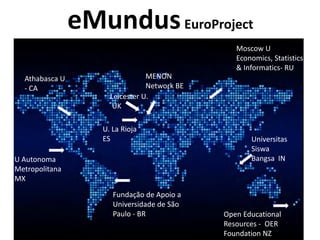
eMundusEuroProject
MENON
Network BE
Leicester U.
UK
U. La Rioja
ES
Fundação de Apoio a
Universidade de São
Paulo - BR
U Autonoma
Metropolitana
MX
Open Educational
Resources - OER
Foundation NZ
Athabasca U
- CA
Universitas
Siswa
Bangsa IN
Moscow U
Economics, Statistics
& Informatics- RU
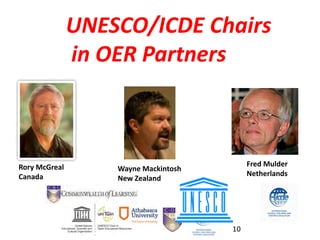
Rory McGreal
Canada
Fred Mulder
Netherlands
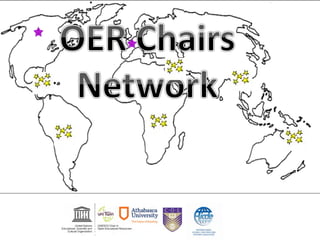
UNESCO/ICDE Chairs
in OER Partners
Wayne Mackintosh
New Zealand
10
The best way to
predict the future
is to invent it now
Arthur L. Costa
(Creating the Future)
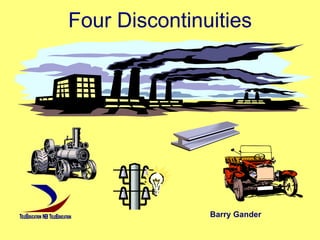
Four Discontinuities
Barry Gander
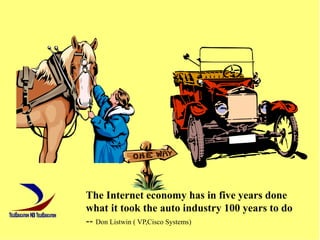
The Internet economy has in five years done
what it took the auto industry 100 years to do
-- Don Listwin ( VP,Cisco Systems)
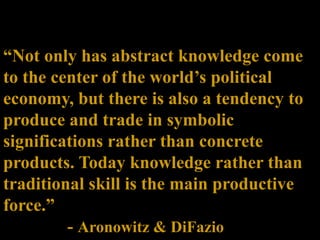
“Not only has abstract knowledge come
to the center of the world’s political
economy, but there is also a tendency to
produce and trade in symbolic
significations rather than concrete
products. Today knowledge rather than
traditional skill is the main productive
force.”
- Aronowitz & DiFazio
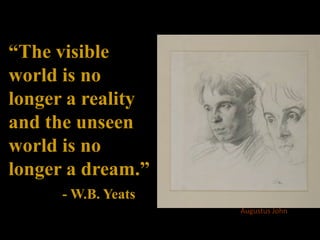
“The visible
world is no
longer a reality
and the unseen
world is no
longer a dream.”
- W.B. Yeats
Augustus John
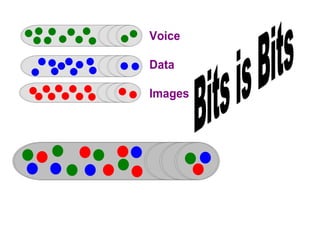
Bits
is
Bits
Voice Voice
Data
Images
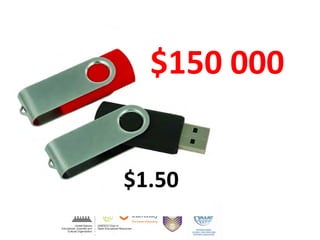
$150 000
$1.50
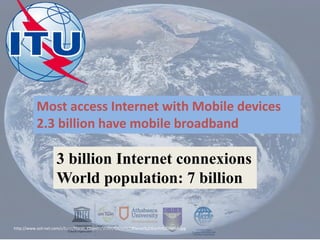
3 billion Internet connexions
World population: 7 billion
40% of the world’s population
http://www.soil-net.com/album/Places_Objects/slides/Globe%20Planet%20Earth%20NASA.jpg
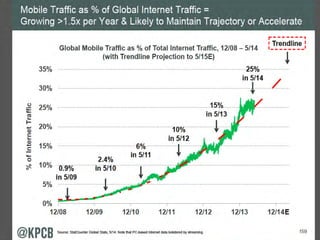
Most access Internet with Mobile devices
2.3 billion have mobile broadband
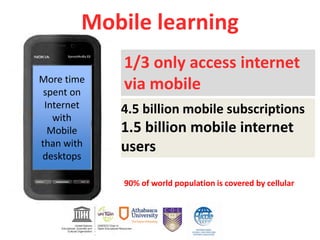
Mobile learning
4.5 billion mobile subscriptions
1.5 billion mobile internet
users
1/3 only access internet
via mobile
90% of world population is covered by cellular
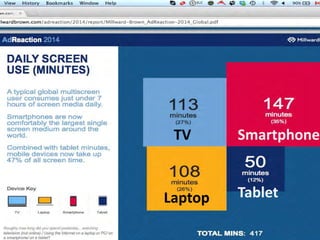
More time
spent on
Internet
with
Mobile
than with
desktops
Smartphone
TabletLaptop
TV
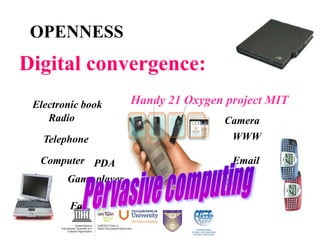
OPENNESS
Digital convergence:
TV
Email
Electronic book
Computer
Telephone
Radio
WWW
Fax
Clock
Camera
Handy 21 Oxygen project MIT
PDA
Nokia
5510
Game player
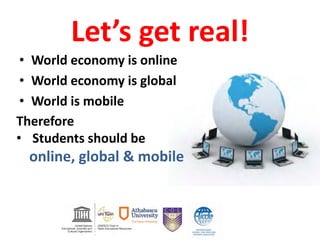
Let’s get real!
• World economy is online
• World economy is global
• World is mobile
Therefore
• Students should be
online, global & mobile
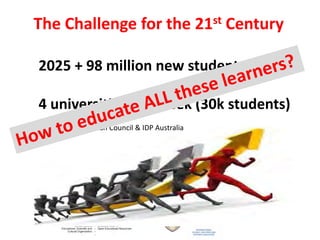
2025 + 98 million new students
4 universities per week (30k students)
British Council & IDP Australia
The Challenge for the 21st Century
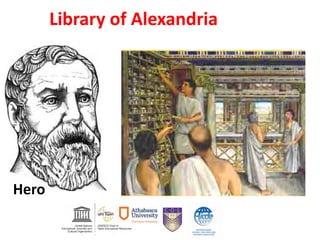
Library of Alexandria
Hero
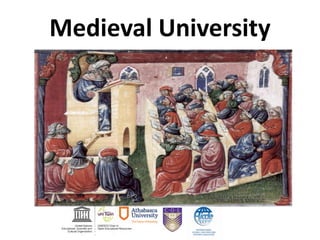
Medieval University
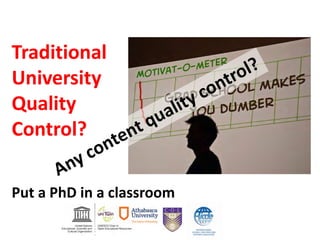
Traditional
University
Quality
Control?
Put a PhD in a classroom
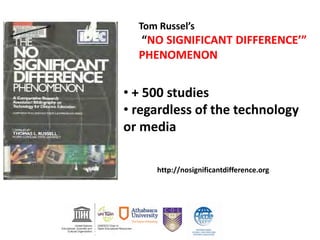
Tom Russel’s
“NO SIGNIFICANT DIFFERENCE’”
PHENOMENON
• + 500 studies
• regardless of the technology
or media
http://nosignificantdifference.org
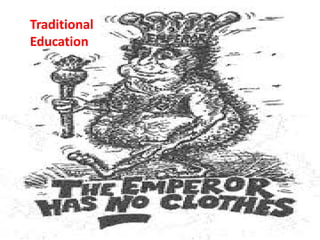
Traditional
Education
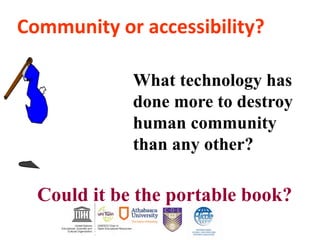
What technology has
done more to destroy
human community
than any other?
Could it be the portable book?
Community or accessibility?
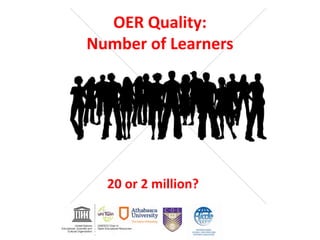
OER Quality:
Number of Learners
20 or 2 million?
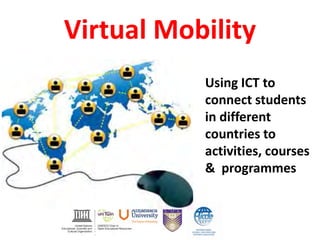
Virtual Mobility
Using ICT to
connect students
in different
countries to
activities, courses
& programmes
Virtual Mobility
Online learning
replaces travel
even within
cities
http://www.virtual-mobility.com/
“Global competition in telecommunications
is an overwhelming and irreversible tide. We
can neither go against, alter nor shut out
this tide. We will simply be bypassed and
rendered irrelevant.”
- Singapore government
Globe & Mail Aug 6, 1994
46
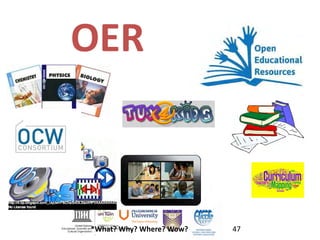
OER
*What? Why? Where? Wow? 47
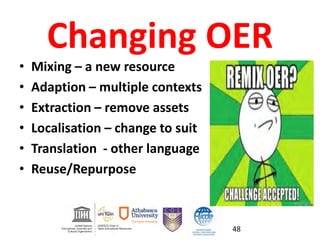
Changing OER
• Mixing – a new resource
• Adaption – multiple contexts
• Extraction – remove assets
• Localisation – change to suit
• Translation - other language
• Reuse/Repurpose
48
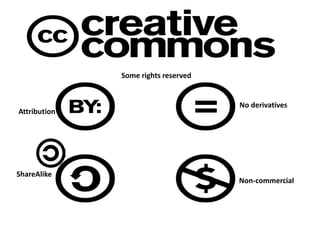
Some rights reserved
Attribution
ShareAlike
Non-commercial
No derivatives
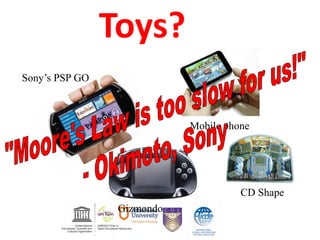
Toys?
Sony’s PSP GO
Mobile phone
CD Shape
Gizmondo
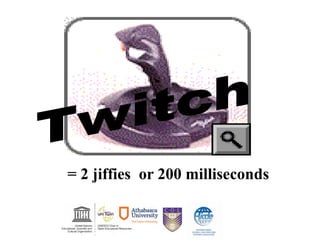
= 2 jiffies or 200 milliseconds
Why OER?
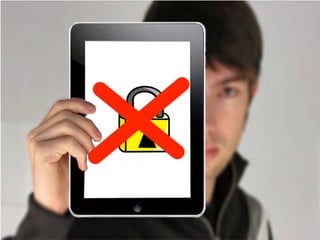
• DRM (digital rights management)
• Digital licenses
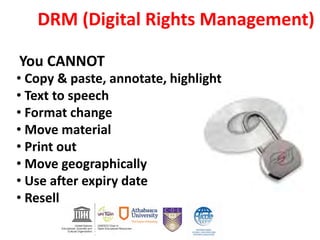
DRM (Digital Rights Management)
You CANNOT
• Copy & paste, annotate, highlight
• Text to speech
• Format change
• Move material
• Print out
• Move geographically
• Use after expiry date
• Resell
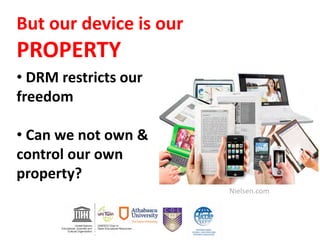
• DRM restricts our
freedom
• Can we not own &
control our own
property?
But our device is our
PROPERTY
Nielsen.com
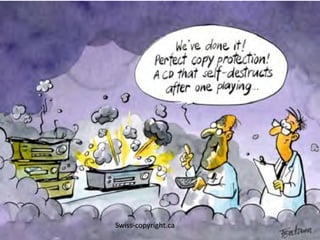
Swiss-copyright.ca
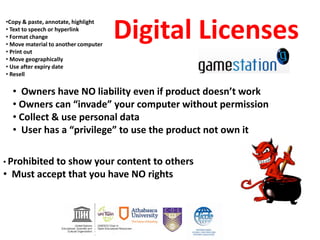
Digital Licenses
•Copy & paste, annotate, highlight
• Text to speech or hyperlink
• Format change
• Move material to another computer
• Print out
• Move geographically
• Use after expiry date
• Resell
• Prohibited to show your content to others
• Must accept that you have NO rights
• Owners have NO liability even if product doesn’t work
• Owners can “invade” your computer without permission
• Collect & use personal data
• User has a “privilege” to use the product not own it
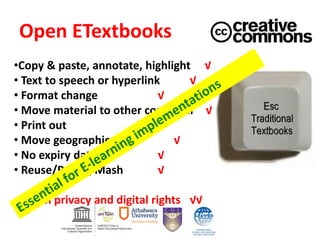
Open ETextbooks
•Copy & paste, annotate, highlight √
• Text to speech or hyperlink √
• Format change √
• Move material to other computer √
• Print out √
• Move geographically √
• No expiry date √
• Reuse/Remix/Mash √
•Retain privacy and digital rights √√
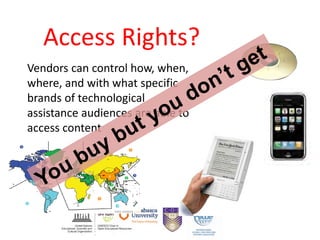
Access Rights?
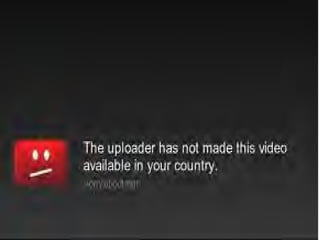
Vendors can control how, when,
where, and with what specific
brands of technological
assistance audiences are able to
access content
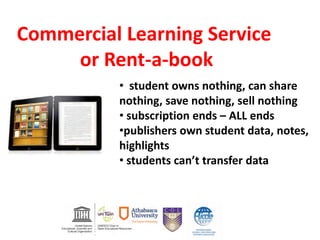
• student owns nothing, can share
nothing, save nothing, sell nothing
• subscription ends – ALL ends
•publishers own student data, notes,
highlights
• students can’t transfer data
Commercial Learning Service
or Rent-a-book
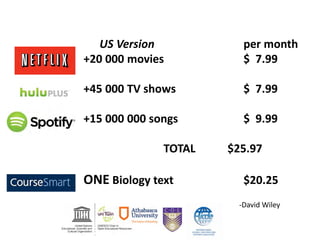
US Version per month
+20 000 movies $ 7.99
+45 000 TV shows $ 7.99
+15 000 000 songs $ 9.99
TOTAL $25.97
ONE Biology text $20.25
-David Wiley
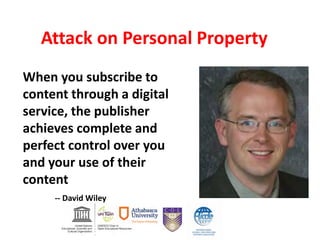
When you subscribe to
content through a digital
service, the publisher
achieves complete and
perfect control over you
and your use of their
content
-- David Wiley
Attack on Personal Property
Openness is the
skeleton key that
unlocks every
attempt at vendor
control and lock in
D. Wiley
https://oerknowledgecloud.com/
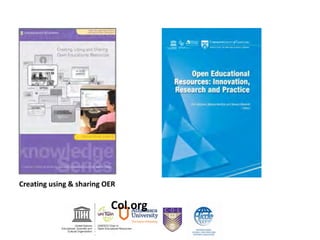
Col.org
Creating using & sharing OER
Col.org
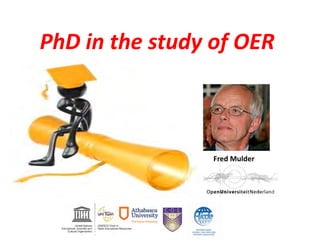
Fred Mulder
PhD in the study of OER
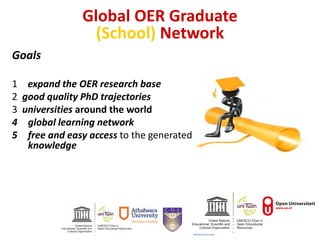
Global OER Graduate
(School) Network
Goals
1 expand the OER research base
2 good quality PhD trajectories
3 universities around the world
4 global learning network
5 free and easy access to the generated
knowledge
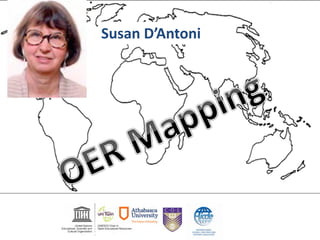
Susan D’Antoni
•Massive
•Open
•Online
•Course
76
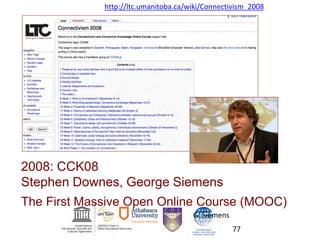
2008: CCK08
Stephen Downes, George Siemens
The First Massive Open Online Course (MOOC)
http://ltc.umanitoba.ca/wiki/Connectivism_2008
G. Siemens
77
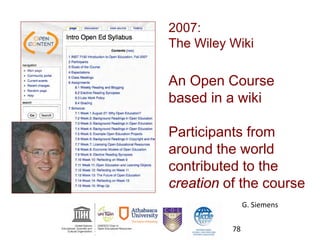
2007:
The Wiley Wiki
An Open Course
based in a wiki
Participants from
around the world
contributed to the
creation of the course
G. Siemens
78
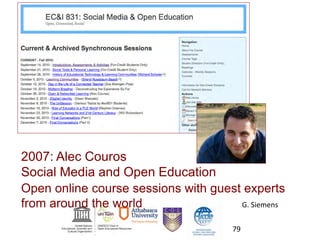
2007: Alec Couros
Social Media and Open Education
Open online course sessions with guest experts
from around the world G. Siemens
79
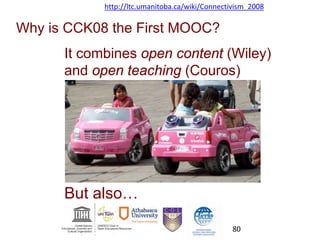
Why is CCK08 the First MOOC?
It combines open content (Wiley)
and open teaching (Couros)
But also…
http://ltc.umanitoba.ca/wiki/Connectivism_2008
80
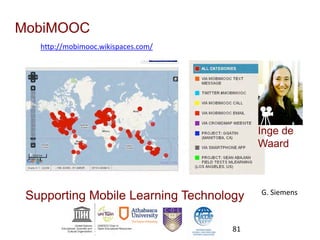
MobiMOOC
http://mobimooc.wikispaces.com/
Supporting Mobile Learning Technology
Inge de
Waard
G. Siemens
81
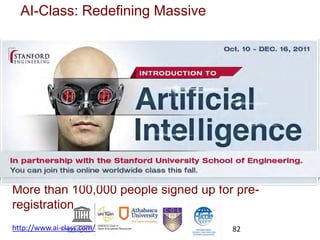
AI-Class: Redefining Massive
More than 100,000 people signed up for pre-
registration
http://www.ai-class.com/ 82
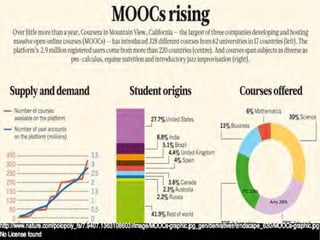
ITC 23%
Arts 28%
83
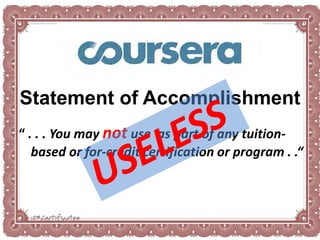
Statement of Accomplishment
“ . . . You may not use as part of any tuition-
based or for-credit certification or program . .“
• “the real squeeze
exerted by MOOCs may
not be on the campus
F2F learning format,
but rather on the paid-
for online formats”
Haggard, S. (2013, September). Maturing of the
MOOC Vol. Research Paper number 130.
Retrieved from www.gov.uk/bis
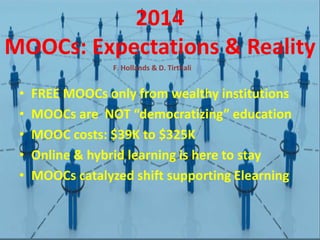
2014
MOOCs: Expectations & Reality
• FREE MOOCs only from wealthy institutions
• MOOCs are NOT “democratizing” education
• MOOC costs: $39K to $325K
• Online & hybrid learning is here to stay
• MOOCs catalyzed shift supporting Elearning
F. Hollands & D. Tirthali
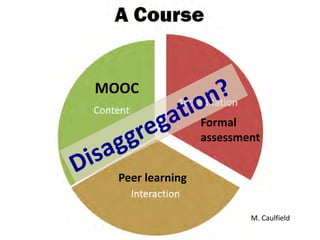
M. Caulfield
MOOC
Peer learning
Formal
assessment
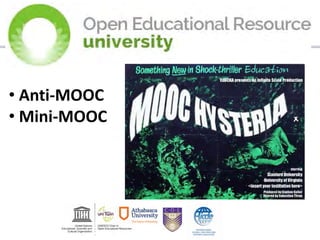
• Anti-MOOC
• Mini-MOOC
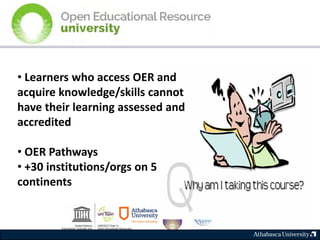
• Learners who access OER and
acquire knowledge/skills cannot
have their learning assessed and
accredited
• OER Pathways
• +30 institutions/orgs on 5
continents
Anti-MOOC:
• Public universities
• Open enrollment & OPEN
CONTENT
• Education 1st not profit
• Useful credential
Mini-MOOC model?
• OER first lessons
• Assessment/accreditation for $50
• Award 1 credit? (3 credits = 1 semester
course)
• Recruit students to pay fee for final two
credits
•Present systems
• are unsustainable
• are not scalable
•NEED: cost-effective learning systems with quality
•MOOCs are part of any solution
• How many learners??
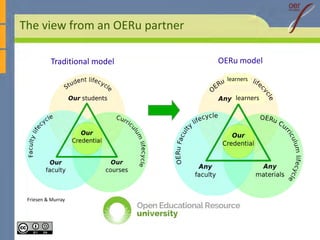
The view from an OERu partner
Traditional modelTraditional model OERu model
learners
Friesen & Murray
learners
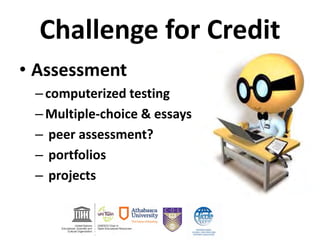
Challenge for Credit
• Assessment
–computerized testing
–Multiple-choice & essays
– peer assessment?
– portfolios
– projects
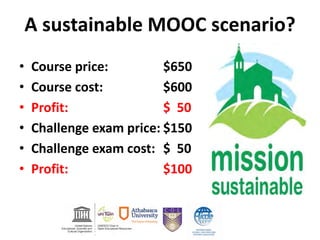
A sustainable MOOC scenario?
• Course price: $650
• Course cost: $600
• Profit: $ 50
• Challenge exam price: $150
• Challenge exam cost: $ 50
• Profit: $100
What’s wrong with
cost-effectiveness?
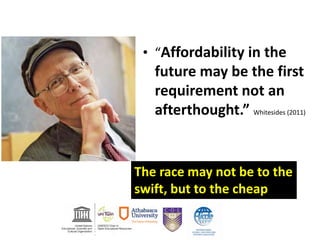
• “Affordability in the
future may be the first
requirement not an
afterthought.” Whitesides (2011)
The race may not be to the
swift, but to the cheap
The restriction of the
commons by patents,
copyright, and databases is not
in the interests of society and
unduly hampers scientific
endeavour.
“On the part of rich countries
there is excessive zeal for
protecting knowledge
through an unduly rigid
assertion of the right to
intellectual property . . .”
- Pope Benedict XVI
“On the part of rich countries
there is excessive zeal for
protecting knowledge through
an unduly rigid assertion of the
right to intellectual property . .
.”
- Pope Benedict XVI
"Let's put all this hype about change and
transformation in perspective. It's underhyped."
"There's something
coming after us, and I
imagine it is something
wonderful.” "
Danny Hillis, Wired
Change
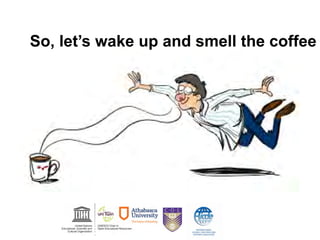
So, let’s wake up and smell the coffee

UNESCO/COL/ICDE Chair in OER: Is open online learning sustainable?