By: Ronnie Staton
Rock Classifications
 What are the three main types of rocks?
   Igneous
   Sedimentary
   Metamorphic
Igneous Rocks
 Can be a single mineral or an aggregate of many
  minerals
 Created by volcanic activity
 Can form on earth’s surface or below it
 Oldest Rocks on earth
Minerals
 Composed of one substance
 Can be a single element

 Examples:
   Halite (salt)
   Sulfur
   Quartz
   Calcite
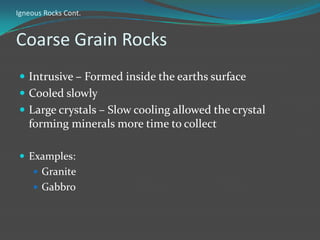
Igneous Rocks Cont.


Coarse Grain Rocks
 Intrusive – Formed inside the earths surface
 Cooled slowly
 Large crystals – Slow cooling allowed the crystal
   forming minerals more time to collect

 Examples:
     Granite
     Gabbro
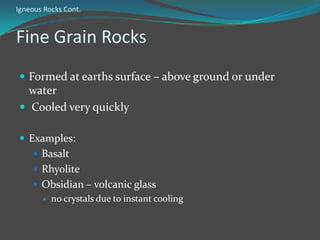
Igneous Rocks Cont.


Fine Grain Rocks
 Formed at earths surface – above ground or under
  water
 Cooled very quickly

 Examples:
     Basalt
     Rhyolite
     Obsidian – volcanic glass
          no crystals due to instant cooling
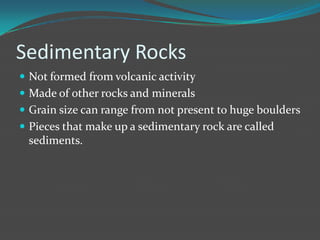
Sedimentary Rocks
 Not formed from volcanic activity
 Made of other rocks and minerals
 Grain size can range from not present to huge boulders
 Pieces that make up a sedimentary rock are called
 sediments.
Sedimentary Rocks
 The two types of sedimentary rocks
 are:
  Clastic
  Non-Clastic
Clastic Sedimentary Rocks
 Made up of rock fragments, shells, or other sediments
  cemented together
 Can often see or feel the different sediments in the
  rock

 Examples
   Sandstone
   Conglomerate
   Breccia
Non-Clastic Sedimentary rocks
 Usually made of one chemical
 Can be composed of:
    Precipitated minerals in water
    Once living plants or organisms


 Examples:
   Coal
   Gypsum
   Limestone
Metamorphic Rocks
 Rocks that have undergone change due to extreme
  heat and pressure
 The rocks and minerals contained in them do not melt
  during this process.
Metamorphic Rocks
 There are two main types of metamorphic rocks, what
 are they?
   Stratified
   Non-stratified
Stratified Rocks
 Rocks that have visible bands of minerals
 Bands run in lines that resemble layering
 Has had extreme pressure applied to two opposite
  sides
 The bands are minerals that grouped together during
  the extreme pressure
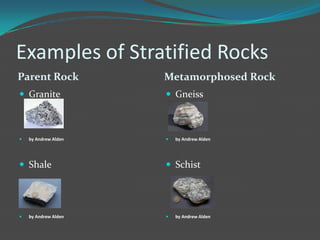
Examples of Stratified Rocks
Parent Rock           Metamorphosed Rock
 Granite              Gneiss


   by Andrew Alden      by Andrew Alden


 Shale                Schist


   by Andrew Alden      by Andrew Alden
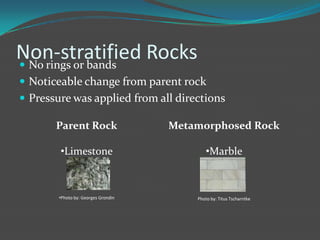
Non-stratified Rocks
 No rings or bands
 Noticeable change from parent rock
 Pressure was applied from all directions

       Parent Rock                   Metamorphosed Rock

        •Limestone                          •Marble


        •Photo by: Georges Grondin       Photo by: Titus Tscharntke
Bibliography
   Levin, Harold L. The Earth through Time. Hoboken, NJ: J. Wiley, 2010. Print.

   "Marble Blocks Public Domain Image Picture." Marble Blocks Public Domain Image Picture. N.p., n.d. Web.
    15 Oct. 2012. <http://www.public-domain-image.com/textures-and-patterns-public-domain-images-
    pictures/rock-stone-texture-public-domain-images-pictures/marble-blocks.jpg.html>.

   "Non-Clastic Sedimentary Rocks." Non-Clastic Sedimentary Rocks. N.p., n.d. Web. 12 Oct. 2012.
    <http://www.edhelper.com/ReadingComprehension_54_4350.html>.

   "Rock Picture Index." About.com Geology. N.p., n.d. Web. 15 Oct. 2012.
    <http://geology.about.com/od/rocks/a/Rock-Picture-Index.htm>.

   "Wetstone Pattern Public Domain Image Picture." Wetstone Pattern Public Domain Image Picture. N.p., n.d.
    Web. 15 Oct. 2012. <http://www.public-domain-image.com/textures-and-patterns-public-domain-images-
    pictures/rock-stone-texture-public-domain-images-pictures/wetstone-pattern.jpg.html>.

   "Wildaboutrocks." Sedimentary Rocks -. N.p., n.d. Web. 12 Oct. 2012. <http://wildaboutrocks.com/Mineral-
    Information/Sedimentary-Rocks>.

Ronnie's powerpoint 1

  • 1.
  • 2.
    Rock Classifications  Whatare the three main types of rocks?  Igneous  Sedimentary  Metamorphic
  • 3.
    Igneous Rocks  Canbe a single mineral or an aggregate of many minerals  Created by volcanic activity  Can form on earth’s surface or below it  Oldest Rocks on earth
  • 4.
    Minerals  Composed ofone substance  Can be a single element  Examples:  Halite (salt)  Sulfur  Quartz  Calcite
  • 5.
    Igneous Rocks Cont. CoarseGrain Rocks  Intrusive – Formed inside the earths surface  Cooled slowly  Large crystals – Slow cooling allowed the crystal forming minerals more time to collect  Examples:  Granite  Gabbro
  • 6.
    Igneous Rocks Cont. FineGrain Rocks  Formed at earths surface – above ground or under water  Cooled very quickly  Examples:  Basalt  Rhyolite  Obsidian – volcanic glass  no crystals due to instant cooling
  • 7.
    Sedimentary Rocks  Notformed from volcanic activity  Made of other rocks and minerals  Grain size can range from not present to huge boulders  Pieces that make up a sedimentary rock are called sediments.
  • 8.
    Sedimentary Rocks  Thetwo types of sedimentary rocks are:  Clastic  Non-Clastic
  • 9.
    Clastic Sedimentary Rocks Made up of rock fragments, shells, or other sediments cemented together  Can often see or feel the different sediments in the rock  Examples  Sandstone  Conglomerate  Breccia
  • 10.
    Non-Clastic Sedimentary rocks Usually made of one chemical  Can be composed of:  Precipitated minerals in water  Once living plants or organisms  Examples:  Coal  Gypsum  Limestone
  • 11.
    Metamorphic Rocks  Rocksthat have undergone change due to extreme heat and pressure  The rocks and minerals contained in them do not melt during this process.
  • 12.
    Metamorphic Rocks  Thereare two main types of metamorphic rocks, what are they?  Stratified  Non-stratified
  • 13.
    Stratified Rocks  Rocksthat have visible bands of minerals  Bands run in lines that resemble layering  Has had extreme pressure applied to two opposite sides  The bands are minerals that grouped together during the extreme pressure
  • 14.
    Examples of StratifiedRocks Parent Rock Metamorphosed Rock  Granite  Gneiss  by Andrew Alden  by Andrew Alden  Shale  Schist  by Andrew Alden  by Andrew Alden
  • 15.
    Non-stratified Rocks  Norings or bands  Noticeable change from parent rock  Pressure was applied from all directions Parent Rock Metamorphosed Rock •Limestone •Marble •Photo by: Georges Grondin Photo by: Titus Tscharntke
  • 16.
    Bibliography  Levin, Harold L. The Earth through Time. Hoboken, NJ: J. Wiley, 2010. Print.  "Marble Blocks Public Domain Image Picture." Marble Blocks Public Domain Image Picture. N.p., n.d. Web. 15 Oct. 2012. <http://www.public-domain-image.com/textures-and-patterns-public-domain-images- pictures/rock-stone-texture-public-domain-images-pictures/marble-blocks.jpg.html>.  "Non-Clastic Sedimentary Rocks." Non-Clastic Sedimentary Rocks. N.p., n.d. Web. 12 Oct. 2012. <http://www.edhelper.com/ReadingComprehension_54_4350.html>.  "Rock Picture Index." About.com Geology. N.p., n.d. Web. 15 Oct. 2012. <http://geology.about.com/od/rocks/a/Rock-Picture-Index.htm>.  "Wetstone Pattern Public Domain Image Picture." Wetstone Pattern Public Domain Image Picture. N.p., n.d. Web. 15 Oct. 2012. <http://www.public-domain-image.com/textures-and-patterns-public-domain-images- pictures/rock-stone-texture-public-domain-images-pictures/wetstone-pattern.jpg.html>.  "Wildaboutrocks." Sedimentary Rocks -. N.p., n.d. Web. 12 Oct. 2012. <http://wildaboutrocks.com/Mineral- Information/Sedimentary-Rocks>.