INDUCTION PROGRAM
     Occupational Health & Safety
              (OH&S)
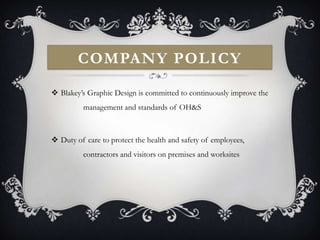
COMPANY POLICY

 Blakey’s Graphic Design is committed to continuously improve the
          management and standards of OH&S


 Duty of care to protect the health and safety of employees,
          contractors and visitors on premises and worksites
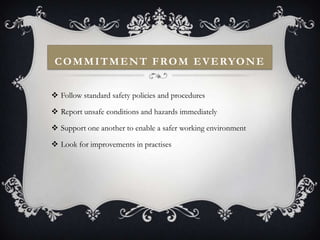
C O M M I T M E N T F R O M E V E RYO N E


 Follow standard safety policies and procedures

 Report unsafe conditions and hazards immediately

 Support one another to enable a safer working environment

 Look for improvements in practises
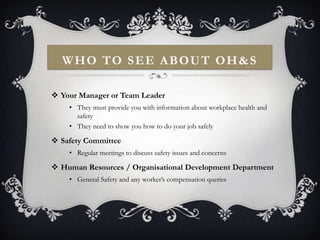
W H O TO S E E A B O U T O H & S

 Your Manager or Team Leader
    • They must provide you with information about workplace health and
      safety
    • They need to show you how to do your job safely

 Safety Committee
    • Regular meetings to discuss safety issues and concerns

 Human Resources / Organisational Development Department
    • General Safety and any worker’s compensation queries
WHAT TO DO IN AN EMERGENCY


 Medical Emergency

    • Call an ambulance on 000

    • Notify the Manager and designated first aid officer immediately

    • The Manager will arrange assistance to the injured party and will
      coordinate emergency services personnel
EMERGENCIES CONT’D

 Fire/Explosion
    • If minor fire, use fire extinguisher within training limits to safely
      extinguish fire
    • If too large, call the Fire Brigade on 000
    • Notify the Manager or Fire Wardens immediately
    • Raise alarm and evacuate other personnel from vicinity
    • The Manager or Fire Warden directs all staff and visitors to
      designated emergency evacuation points
    • The Manger/Fire Warden is to coordinate emergency services
      personnel to the location
EMERGENCIES CONT’D

 Spills of diesel or other liquids
     • In the event of a product spill, the source of the spill should be
       deactivated immediately (if safe to do so)

     • Stop further loss of product (liquid or solid) from areas i.e. contain and
       protect from drains, roadways or nearby nature areas. Use portable
       bunting and/or material from the Spill Kit as required (spill kit to be
       maintained at all sites where practicable)

     • Immediately advise your Manager
PERSONAL PROTECTIVE
           EQUIPMENT (PPE)


 PPE is a necessary protective measure to safeguard our employees.

 Required PPE items will be supplied by Blakey’s Graphic Design
         and replaced as required upon request or in accordance
         with the replacement schedule

 All PPE is to be used, maintained and stored in accordance with
         instructions from the manufacturer/supplier
H I G H R I S K WO R K – J O B S A F E T Y
             A N A LY S I S ( J S A )


 All high risk and non-routine work (not covered by a SOP) with
          greater than moderate risk is covered by the JSA process


 All contractor work on the organisations work sites and premises
          must be approved via a JSA
ERGONOMICS

 Office based employees receive instruction on setup of their
          workstation during the induction process


 Employees may request an ergonomic assessment by contacting the
          HR Department


 The assessment will be undertaken by a qualified occupational
          therapist
MANUAL HANDLING

 Blakey’s Graphic Design provides training in safe manual practices
          for staff on a regular basis


 Where practicable equipment is provided to help reduce the risk
          of manual handling injuries in the workplace
FIRST AID

 There are designated First Aid Officers in the workplace


 First Aid Kits are available at the workplace and in all company vehicles


 All kits get inspected by St John Ambulance every two years to
          ensure items are still in date and kits restocked
REPORTING HAZARDS AND
            INCIDENTS


 Incident, issue and hazard reporting, investigation and corrective
          action are a critical element of Blakey’s Graphic Design
          safety program. Typical examples of problems include:
          •   Equipment failures or problems
          •   Training issues
          •   Hazards requiring attention
          •   Safety or environmental incidents
          •   Injuries/illnesses
          •   Suggestions for improve
          •   Non-compliance to policies and procedures
IF YOU SPOT A HAZARD…

 Take immediate action to minimise the risk to yourself and others, if
          safe to do so

 Tell your Supervisor or Manager immediately

 Fill in a Hazard Report form and give it to your Supervisor or Manager

 Monitor progress

 If you aren’t satisfied with what has been done to improve safety or
          the time taken, tell the Manager
INCIDENT REPORTS

 These reports need to be raised WITHIN 24 hours of an incident
          (including near misses that had the potential to result in an
          injury, property damage or environmental harm)

 Incidents should be reported on the incident report form

 Serious injuries and incidents are to be reported immediately to the
          Supervisor or Departmental Manager
SERIOUS INCIDENTS AND
          A DV I C E T O WO R K C OV E R

 Any serious injuries or near misses must be reported to WorkCover in writing
            within 24 hours


 There is to be no interference with the scene of the incident until
            permission is received from a WorkCover Inspector unless to save life,
            relieve suffering or to prevent damage to property or injury to persons


 Works are not to continue on the activity involving the incident/accident until
            authority is received from the Departmental Manager
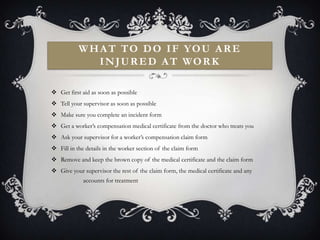
W H A T T O D O I F YO U A R E
               I N J U R E D A T WO R K

 Get first aid as soon as possible
 Tell your supervisor as soon as possible
 Make sure you complete an incident form
 Get a worker’s compensation medical certificate from the doctor who treats you
 Ask your supervisor for a worker’s compensation claim form
 Fill in the details in the worker section of the claim form
 Remove and keep the brown copy of the medical certificate and the claim form
 Give your supervisor the rest of the claim form, the medical certificate and any
             accounts for treatment

Role Play - Induction Process for new employees

  • 1.
    INDUCTION PROGRAM Occupational Health & Safety (OH&S)
  • 2.
    COMPANY POLICY  Blakey’sGraphic Design is committed to continuously improve the management and standards of OH&S  Duty of care to protect the health and safety of employees, contractors and visitors on premises and worksites
  • 3.
    C O MM I T M E N T F R O M E V E RYO N E  Follow standard safety policies and procedures  Report unsafe conditions and hazards immediately  Support one another to enable a safer working environment  Look for improvements in practises
  • 4.
    W H OTO S E E A B O U T O H & S  Your Manager or Team Leader • They must provide you with information about workplace health and safety • They need to show you how to do your job safely  Safety Committee • Regular meetings to discuss safety issues and concerns  Human Resources / Organisational Development Department • General Safety and any worker’s compensation queries
  • 5.
    WHAT TO DOIN AN EMERGENCY  Medical Emergency • Call an ambulance on 000 • Notify the Manager and designated first aid officer immediately • The Manager will arrange assistance to the injured party and will coordinate emergency services personnel
  • 6.
    EMERGENCIES CONT’D  Fire/Explosion • If minor fire, use fire extinguisher within training limits to safely extinguish fire • If too large, call the Fire Brigade on 000 • Notify the Manager or Fire Wardens immediately • Raise alarm and evacuate other personnel from vicinity • The Manager or Fire Warden directs all staff and visitors to designated emergency evacuation points • The Manger/Fire Warden is to coordinate emergency services personnel to the location
  • 7.
    EMERGENCIES CONT’D  Spillsof diesel or other liquids • In the event of a product spill, the source of the spill should be deactivated immediately (if safe to do so) • Stop further loss of product (liquid or solid) from areas i.e. contain and protect from drains, roadways or nearby nature areas. Use portable bunting and/or material from the Spill Kit as required (spill kit to be maintained at all sites where practicable) • Immediately advise your Manager
  • 8.
    PERSONAL PROTECTIVE EQUIPMENT (PPE)  PPE is a necessary protective measure to safeguard our employees.  Required PPE items will be supplied by Blakey’s Graphic Design and replaced as required upon request or in accordance with the replacement schedule  All PPE is to be used, maintained and stored in accordance with instructions from the manufacturer/supplier
  • 9.
    H I GH R I S K WO R K – J O B S A F E T Y A N A LY S I S ( J S A )  All high risk and non-routine work (not covered by a SOP) with greater than moderate risk is covered by the JSA process  All contractor work on the organisations work sites and premises must be approved via a JSA
  • 10.
    ERGONOMICS  Office basedemployees receive instruction on setup of their workstation during the induction process  Employees may request an ergonomic assessment by contacting the HR Department  The assessment will be undertaken by a qualified occupational therapist
  • 11.
    MANUAL HANDLING  Blakey’sGraphic Design provides training in safe manual practices for staff on a regular basis  Where practicable equipment is provided to help reduce the risk of manual handling injuries in the workplace
  • 12.
    FIRST AID  Thereare designated First Aid Officers in the workplace  First Aid Kits are available at the workplace and in all company vehicles  All kits get inspected by St John Ambulance every two years to ensure items are still in date and kits restocked
  • 13.
    REPORTING HAZARDS AND INCIDENTS  Incident, issue and hazard reporting, investigation and corrective action are a critical element of Blakey’s Graphic Design safety program. Typical examples of problems include: • Equipment failures or problems • Training issues • Hazards requiring attention • Safety or environmental incidents • Injuries/illnesses • Suggestions for improve • Non-compliance to policies and procedures
  • 14.
    IF YOU SPOTA HAZARD…  Take immediate action to minimise the risk to yourself and others, if safe to do so  Tell your Supervisor or Manager immediately  Fill in a Hazard Report form and give it to your Supervisor or Manager  Monitor progress  If you aren’t satisfied with what has been done to improve safety or the time taken, tell the Manager
  • 15.
    INCIDENT REPORTS  Thesereports need to be raised WITHIN 24 hours of an incident (including near misses that had the potential to result in an injury, property damage or environmental harm)  Incidents should be reported on the incident report form  Serious injuries and incidents are to be reported immediately to the Supervisor or Departmental Manager
  • 16.
    SERIOUS INCIDENTS AND A DV I C E T O WO R K C OV E R  Any serious injuries or near misses must be reported to WorkCover in writing within 24 hours  There is to be no interference with the scene of the incident until permission is received from a WorkCover Inspector unless to save life, relieve suffering or to prevent damage to property or injury to persons  Works are not to continue on the activity involving the incident/accident until authority is received from the Departmental Manager
  • 17.
    W H AT T O D O I F YO U A R E I N J U R E D A T WO R K  Get first aid as soon as possible  Tell your supervisor as soon as possible  Make sure you complete an incident form  Get a worker’s compensation medical certificate from the doctor who treats you  Ask your supervisor for a worker’s compensation claim form  Fill in the details in the worker section of the claim form  Remove and keep the brown copy of the medical certificate and the claim form  Give your supervisor the rest of the claim form, the medical certificate and any accounts for treatment