By:  Mihir Pandya Monis Khan
Data are facts, figures, enumerations, charts or graphs which serve the basis of analysis. There are mainly two types of data 1.Primary data 2.Secondary data
Observation method: Structured – Unstructured observation Participative - Non participative Disguised – Undisguised Controlled – Uncontrolled
Enables to record natural behavior. More reliable.
Emotional Participation Problem of Observation Control Check on only current Scenario
Face to face interview Telephonic interview Computer assisted interviews (CAI)
“ A questionnaire is a pre formulated set of questions to which respondents record their answers.”
Questionnaires can be: Personally administered.  Mail questionnaires: Covers large geographical area. Respondents can fill according to  their convenience.
Merits: Low Cost Free from Interviewers Bias Adequate Time to Respond Accessibility More dependable and reliable results
Demerits: Low rate of return Depends on type of respondents No Control over the questionnaire Ambiguous  or Omission of replies True & Fairness of Replies Slow Pace
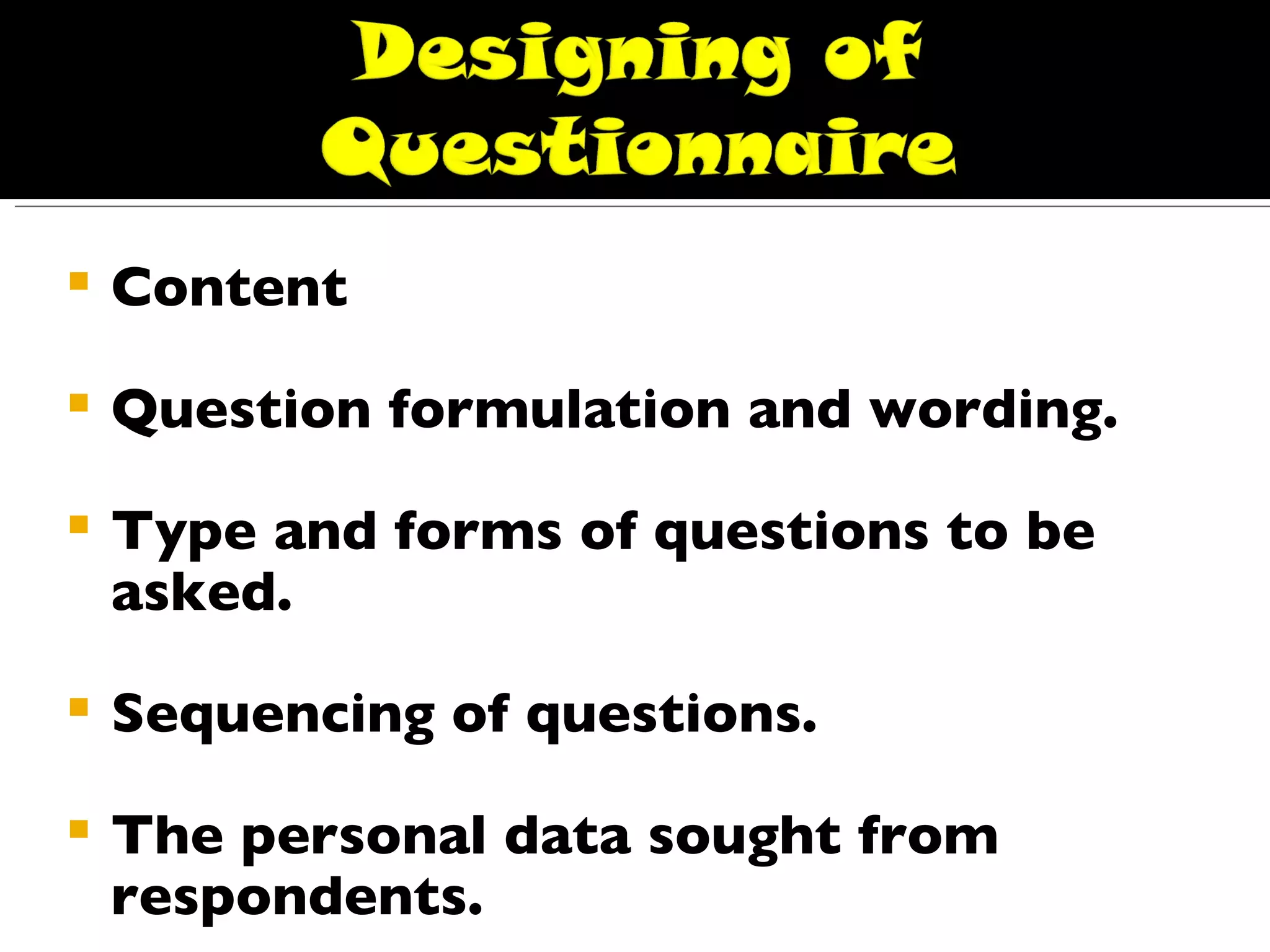
Content  Question formulation and wording. Type and forms of questions to be asked. Sequencing of questions. The personal data sought from respondents.
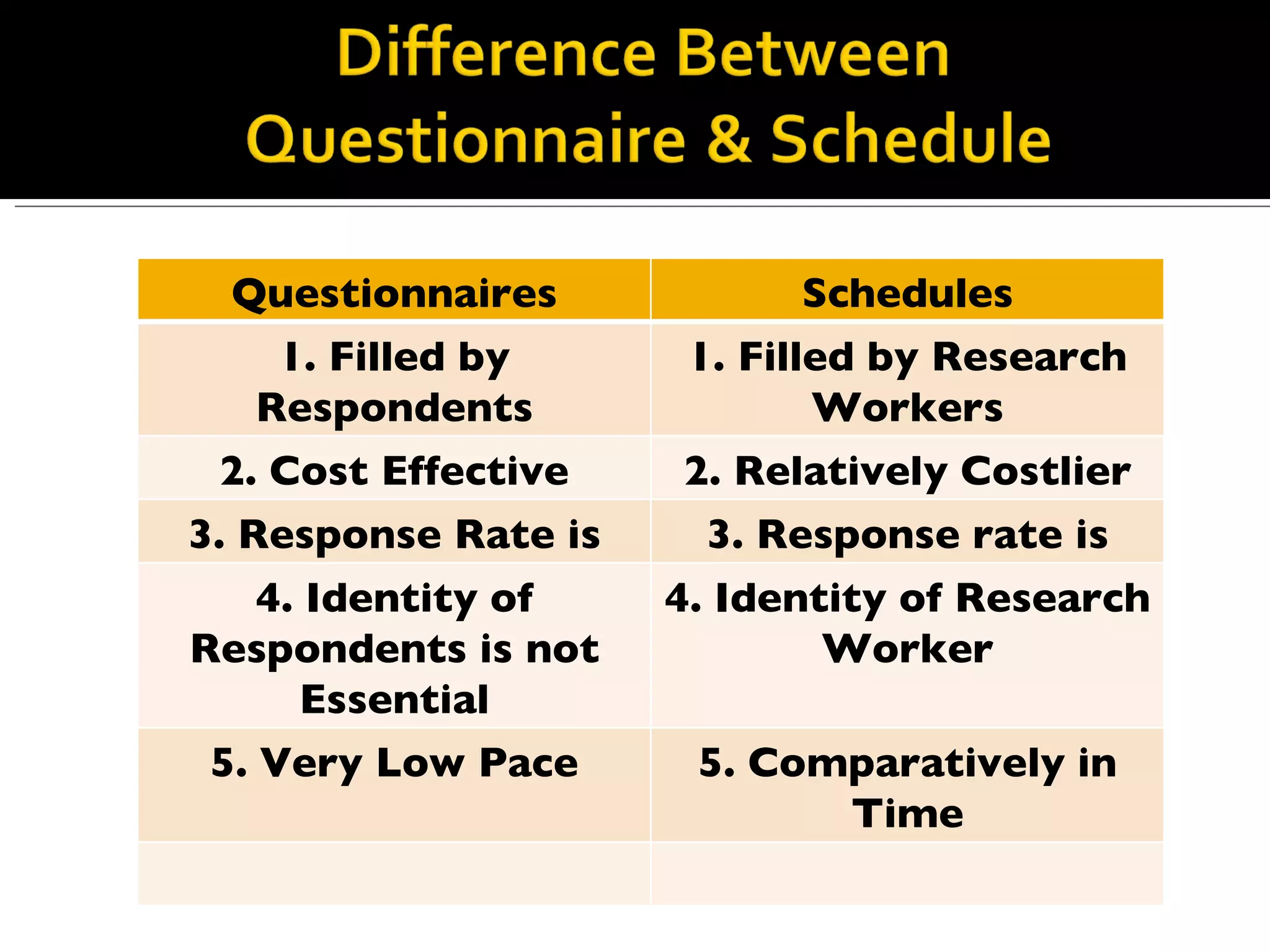
Questionnaires Schedules 1. Filled by Respondents 1. Filled by Research Workers 2. Cost Effective 2. Relatively Costlier 3. Response Rate is High 3. Response rate is Low 4. Identity of Respondents is not Essential 4. Identity of Research Worker 5. Very Low Pace 5. Comparatively in Time
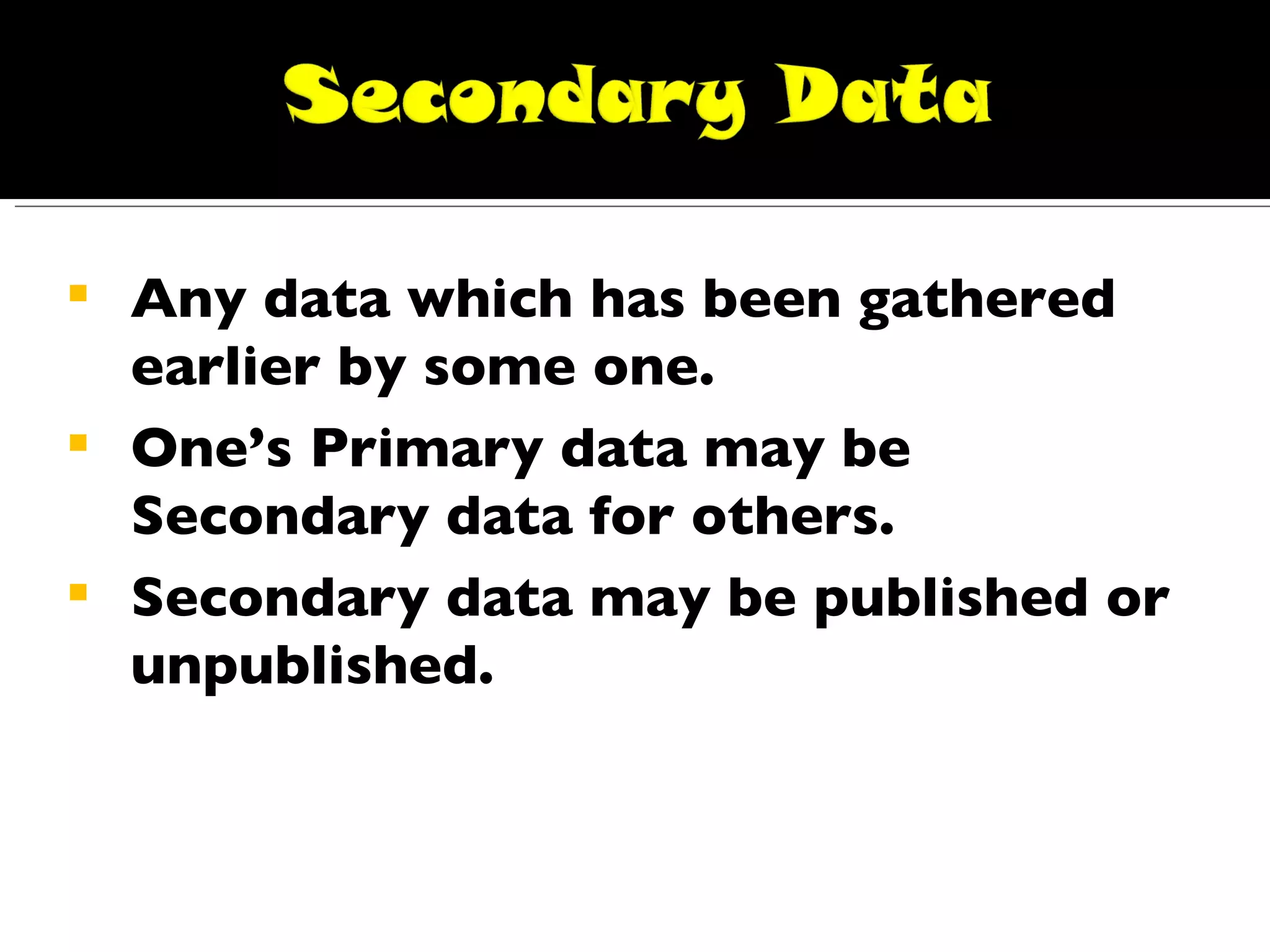
Any data which has been gathered earlier by some one. One’s Primary data may be Secondary data for others. Secondary data may be published or unpublished.
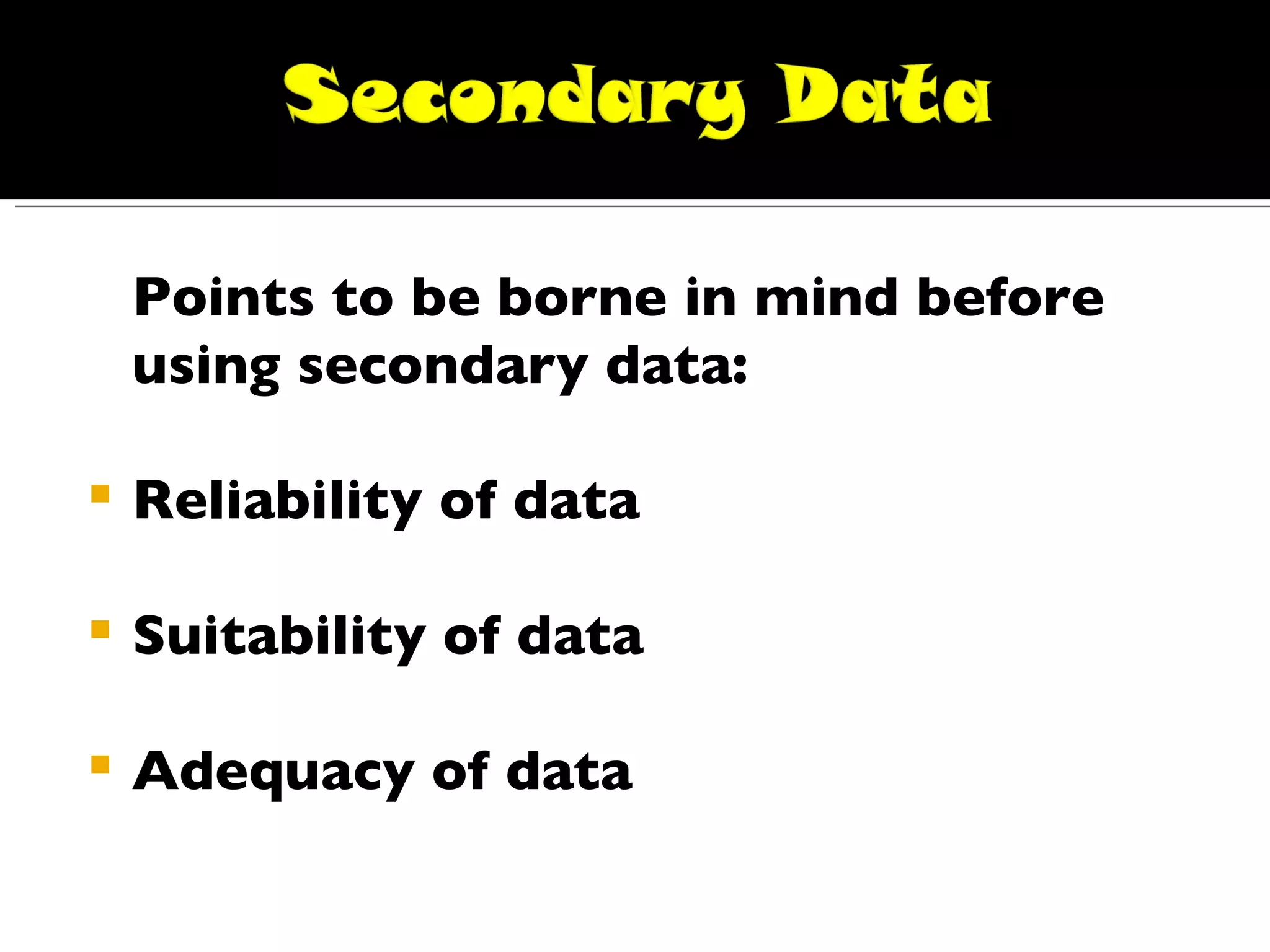
Points to be borne in mind before using secondary data: Reliability of data Suitability of data Adequacy of data
Merits Cost effective Less time consuming  Can be used for comparative analysis Demerits  Less reliable Threat of data becoming obsolete
Q THAN

Rm

  • 1.
    By: MihirPandya Monis Khan
  • 2.
    Data are facts,figures, enumerations, charts or graphs which serve the basis of analysis. There are mainly two types of data 1.Primary data 2.Secondary data
  • 3.
    Observation method: Structured– Unstructured observation Participative - Non participative Disguised – Undisguised Controlled – Uncontrolled
  • 4.
    Enables to recordnatural behavior. More reliable.
  • 5.
    Emotional Participation Problemof Observation Control Check on only current Scenario
  • 6.
    Face to faceinterview Telephonic interview Computer assisted interviews (CAI)
  • 7.
    “ A questionnaireis a pre formulated set of questions to which respondents record their answers.”
  • 8.
    Questionnaires can be:Personally administered. Mail questionnaires: Covers large geographical area. Respondents can fill according to their convenience.
  • 9.
    Merits: Low CostFree from Interviewers Bias Adequate Time to Respond Accessibility More dependable and reliable results
  • 10.
    Demerits: Low rateof return Depends on type of respondents No Control over the questionnaire Ambiguous or Omission of replies True & Fairness of Replies Slow Pace
  • 11.
    Content Questionformulation and wording. Type and forms of questions to be asked. Sequencing of questions. The personal data sought from respondents.
  • 12.
    Questionnaires Schedules 1.Filled by Respondents 1. Filled by Research Workers 2. Cost Effective 2. Relatively Costlier 3. Response Rate is High 3. Response rate is Low 4. Identity of Respondents is not Essential 4. Identity of Research Worker 5. Very Low Pace 5. Comparatively in Time
  • 13.
    Any data whichhas been gathered earlier by some one. One’s Primary data may be Secondary data for others. Secondary data may be published or unpublished.
  • 14.
    Points to beborne in mind before using secondary data: Reliability of data Suitability of data Adequacy of data
  • 15.
    Merits Cost effectiveLess time consuming Can be used for comparative analysis Demerits Less reliable Threat of data becoming obsolete
  • 16.