Requirement Elicitation
technique
“one on one interview”
Contents
 Definition of interview
 Explanation
 Purpose
 Components
 Rules
 Types
 Advantages
 Disadvantages
 Situation
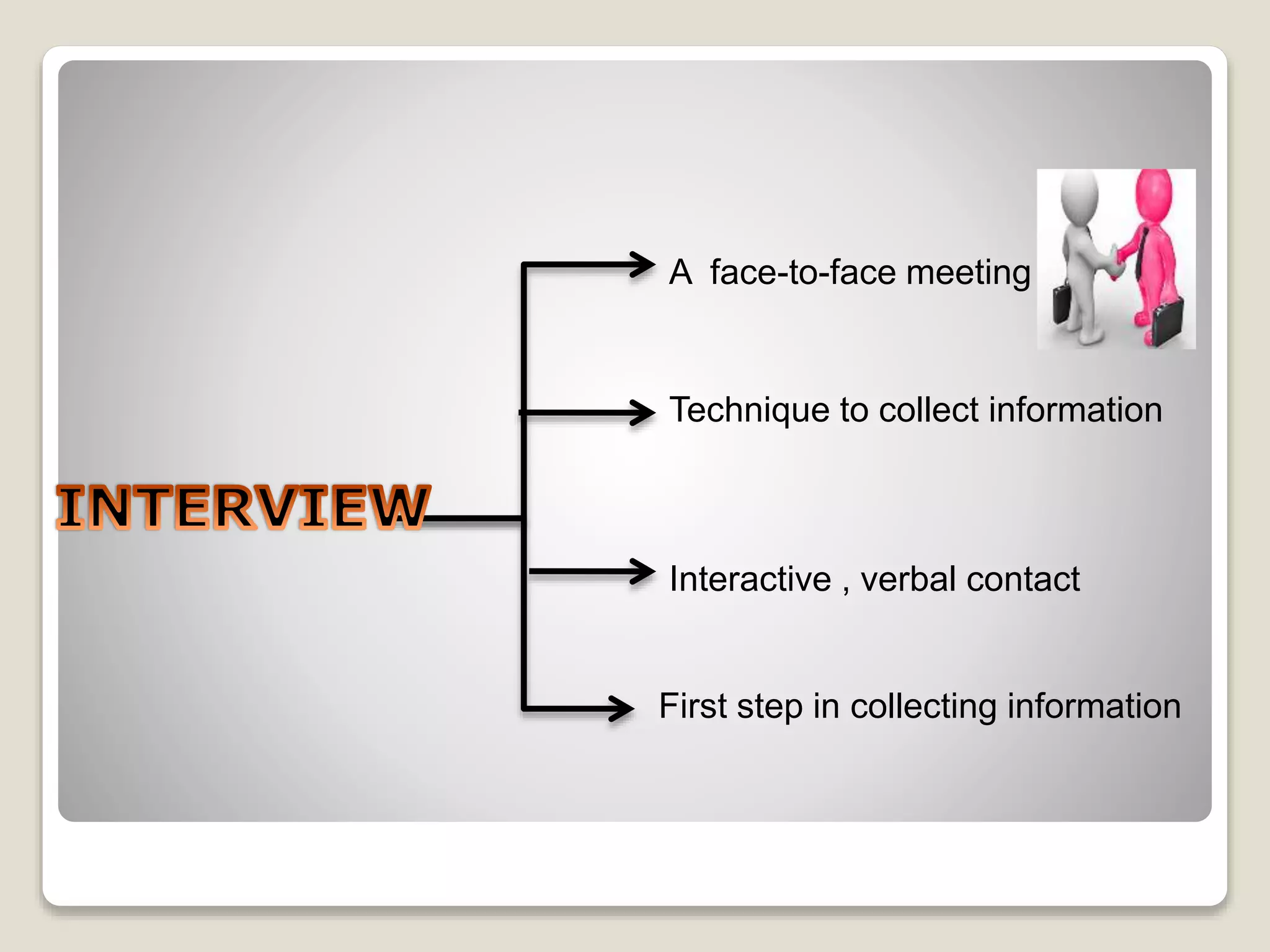
A face-to-face meeting
Technique to collect information
Interactive , verbal contact
First step in collecting information
The interview is the primary technique for
information gathering during the systems
analysis phases of a development project.
The interviewing skills of the analyst
determine what information is gathered,
and the quality and depth of that
information.
Explanation
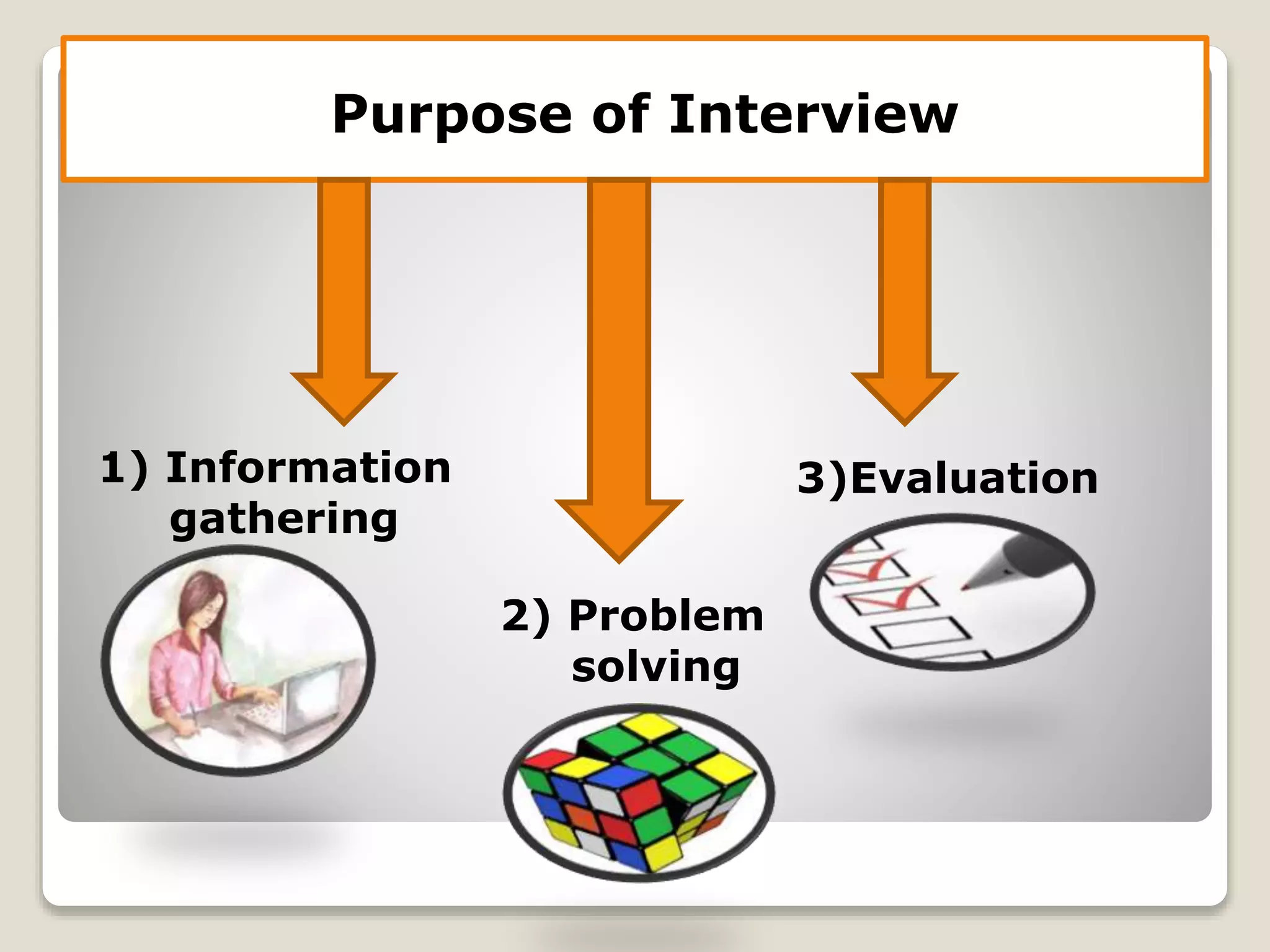
Purpose of Interview
2) Problem
solving
3)Evaluation1) Information
gathering
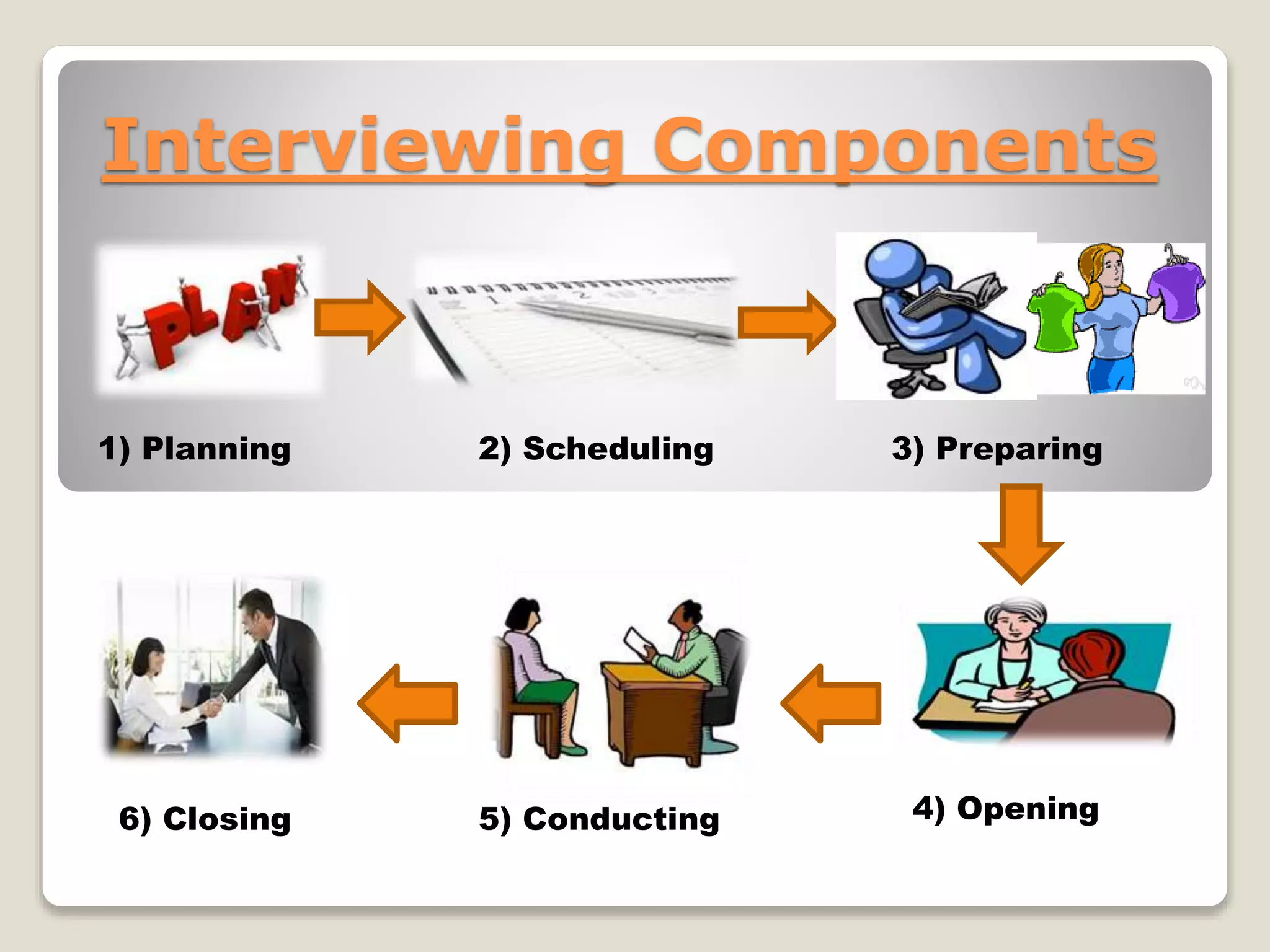
Interviewing Components
1) Planning 2) Scheduling 3) Preparing
4) Opening5) Conducting6) Closing
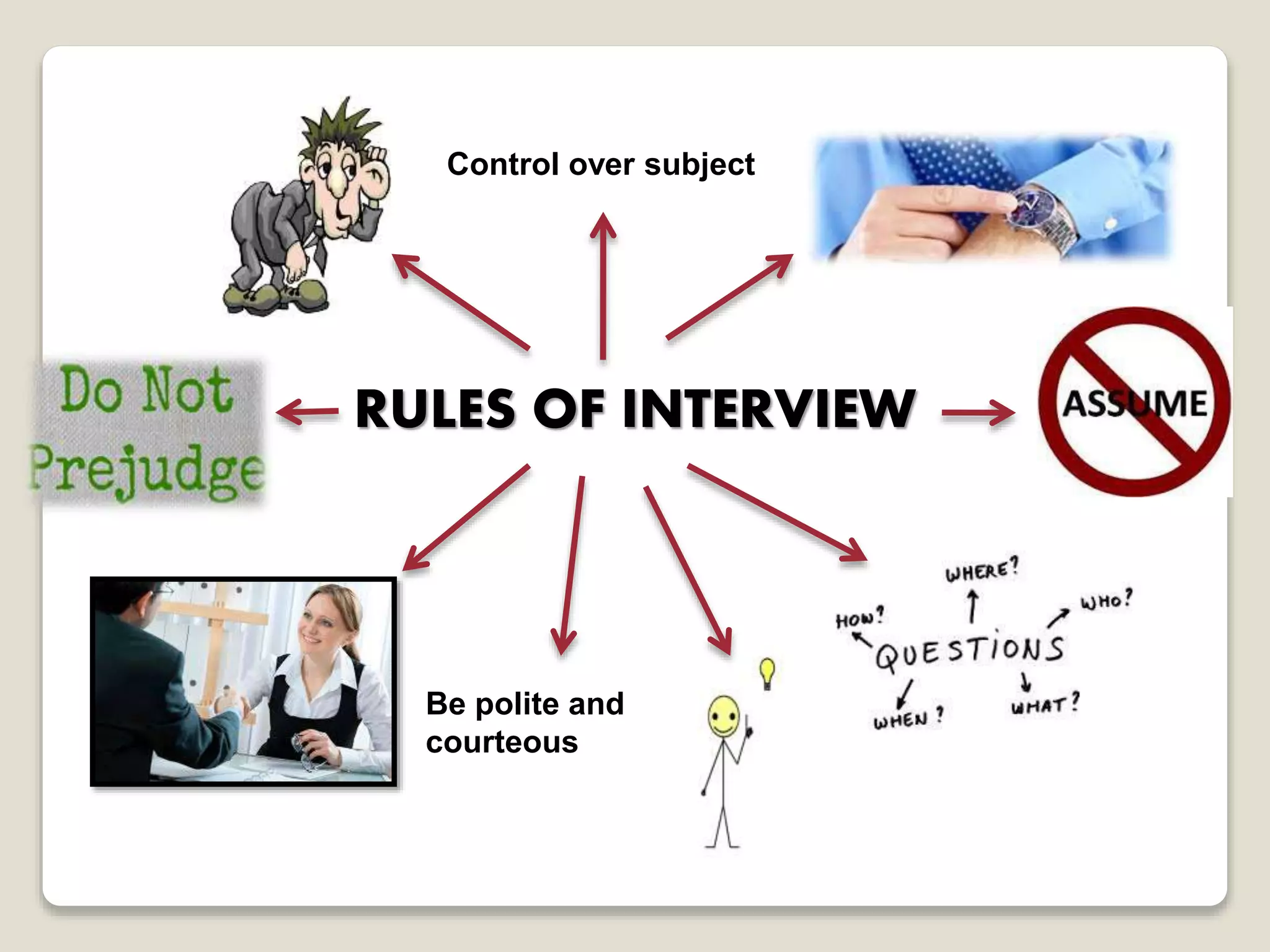
RULES OF INTERVIEW
Control over subject
Be polite and
courteous
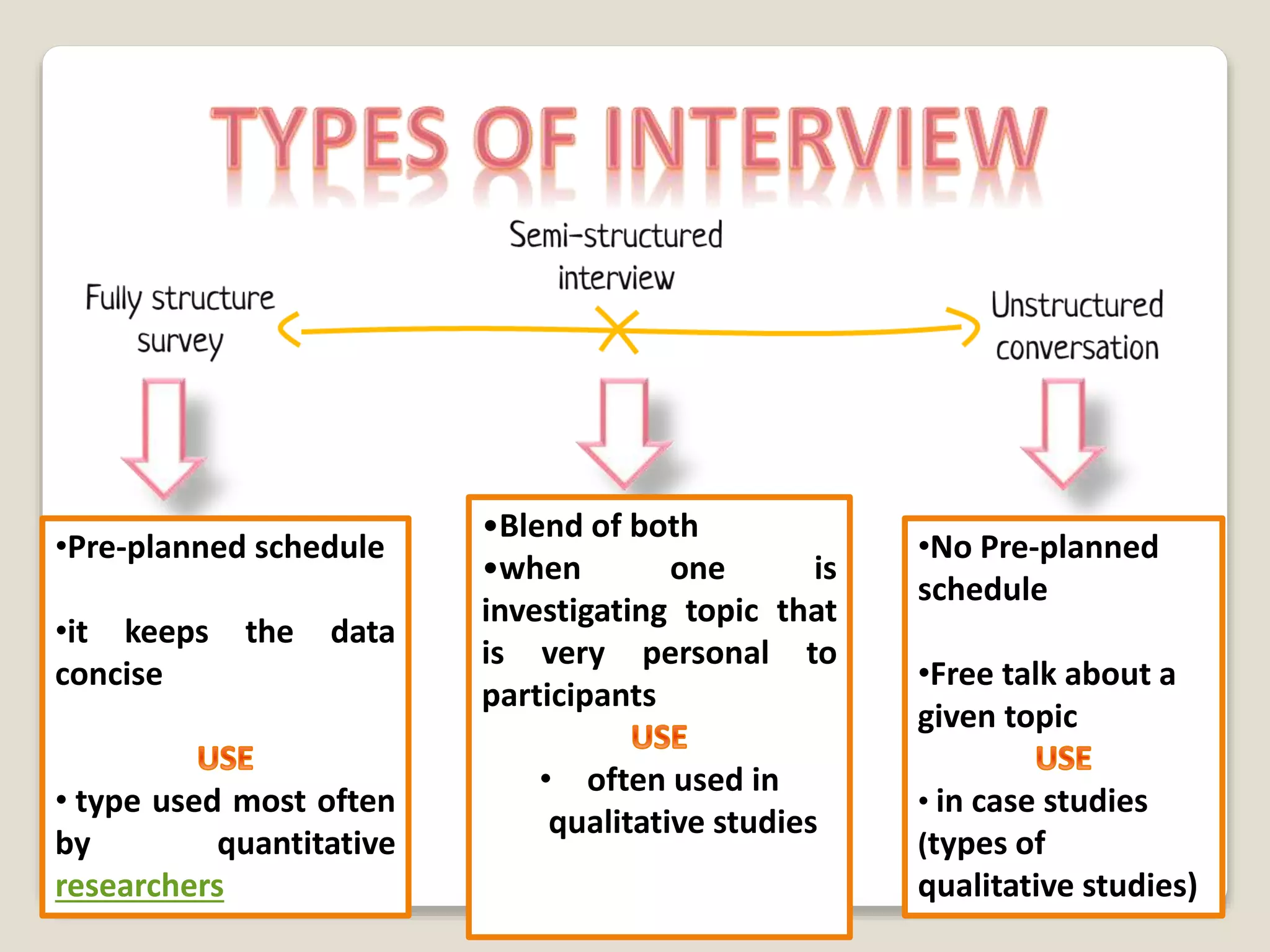
•Pre-planned schedule
•it keeps the data
concise
• type used most often
by quantitative
researchers
•No Pre-planned
schedule
•Free talk about a
given topic
• in case studies
(types of
qualitative studies)
•Blend of both
•when one is
investigating topic that
is very personal to
participants
• often used in
qualitative studies
•Simple, direct technique
•enable observation of non-verbal behavior
•useful before developing a questionnaire
•flexible and adaptable to individual situation
•Allows the participant and interviewer to have full discussion
•Large amount of qualitative data hard to analyze
•training is required to conduct effective interview
•interview is costly in terms of money and time
•the interview results are often affected by interviewer's mode
of asking question
•documentation depends on interviewer's interpretation
Survey on television viewing
"What television program do you watch between 6pm and 7pm on
weeknights."
 Police accident report
"In your opinion, do you think the blue car or red car caused the
accident?"
Job performance appraisal
"How happy are you in your current job position?“
A job witnin a small business
Part time work (Paid or unpaid)
Requirement elicitation technique “one on one interview“

Requirement elicitation technique “one on one interview“

  • 1.
  • 2.
    Contents  Definition ofinterview  Explanation  Purpose  Components  Rules  Types  Advantages  Disadvantages  Situation
  • 3.
    A face-to-face meeting Techniqueto collect information Interactive , verbal contact First step in collecting information
  • 4.
    The interview isthe primary technique for information gathering during the systems analysis phases of a development project. The interviewing skills of the analyst determine what information is gathered, and the quality and depth of that information. Explanation
  • 5.
    Purpose of Interview 2)Problem solving 3)Evaluation1) Information gathering
  • 6.
    Interviewing Components 1) Planning2) Scheduling 3) Preparing 4) Opening5) Conducting6) Closing
  • 7.
    RULES OF INTERVIEW Controlover subject Be polite and courteous
  • 8.
    •Pre-planned schedule •it keepsthe data concise • type used most often by quantitative researchers •No Pre-planned schedule •Free talk about a given topic • in case studies (types of qualitative studies) •Blend of both •when one is investigating topic that is very personal to participants • often used in qualitative studies
  • 9.
    •Simple, direct technique •enableobservation of non-verbal behavior •useful before developing a questionnaire •flexible and adaptable to individual situation •Allows the participant and interviewer to have full discussion
  • 10.
    •Large amount ofqualitative data hard to analyze •training is required to conduct effective interview •interview is costly in terms of money and time •the interview results are often affected by interviewer's mode of asking question •documentation depends on interviewer's interpretation
  • 11.
    Survey on televisionviewing "What television program do you watch between 6pm and 7pm on weeknights."  Police accident report "In your opinion, do you think the blue car or red car caused the accident?" Job performance appraisal "How happy are you in your current job position?“ A job witnin a small business Part time work (Paid or unpaid)