B Y
D R . M O H A M E D R . Y O U S E F
P A T I E N T S A F E T Y O F F I C E R
Q U A L I T Y & P A T I E N T S A F E T Y D E P A R T M E N T
M E E Q A T G E N E R A L H O S P I T A L
RISK MANAGEMENT
INTRUDUCTION
PART 1
27 JANUARY 2020
CONTENT
 What is RM ?
 Types of risk ?
 Why we need it ?
 How to do it ?
 Who will do it ?
‫املخاطر؟‬ ‫ة‬‫ر‬‫إدا‬ ‫ماهي‬
‫؟‬ ‫املخاطر‬‫أنواع‬ ‫هي‬ ‫ما‬
‫لها؟‬ ‫نحتاج‬ ‫ملاذا‬
‫معها؟‬ ‫التعامل‬ ‫كيفية‬
‫عنها؟‬ ‫ل‬‫املسئو‬‫من‬
What is Risk ? ‫؟‬‫الخطر‬ ‫ماهو‬
 Risk in Healthcare: The probability that something undesirable will
happen. It implies the need for avoidance.
.‫المخاطر‬‫الصحية‬ ‫الرعاية‬ ‫في‬:‫فيه‬ ‫مرغوب‬ ‫غير‬ ‫شيء‬ ‫حدوث‬ ‫احتمال‬.‫وهذا‬‫يعني‬(‫يست‬‫دعي‬
)‫تجنب‬ ‫إلى‬ ‫الحاجة‬.
What is Risk
Management?
 Is a whole process of initiation, risk identification ,evaluation,
response development, implementation ,continuous
monitoring and review to reduce the risk of injury to patients,
staff, and visitors and the risk of loss to the organization itself
‫املخاطر‬ ‫ة‬‫ر‬‫إدا‬
،‫املخاطر‬ ‫وتقييم‬ ‫تحديد‬،‫عملية‬ ‫عن‬ ‫ة‬‫ر‬‫عبا‬ ‫هي‬
‫وإعداد‬‫ستجابة‬ ‫اإل‬
‫والتنفيذ‬
‫والرصد‬‫املستمر‬
‫اجعة‬‫ر‬‫وامل‬‫نف‬ ‫املنظمة‬ ‫إلى‬ ‫ة‬‫ر‬‫الخسا‬ ‫ومخاطر‬ ‫ار‬‫و‬‫والز‬ ‫واملوظفين‬ ‫ى‬ ‫للمرض‬ ‫اإلصابة‬ ‫خطر‬‫من‬ ‫للحد‬‫سها‬.
1
Types of Risks ‫املخاطر‬ ‫أنواع‬
2
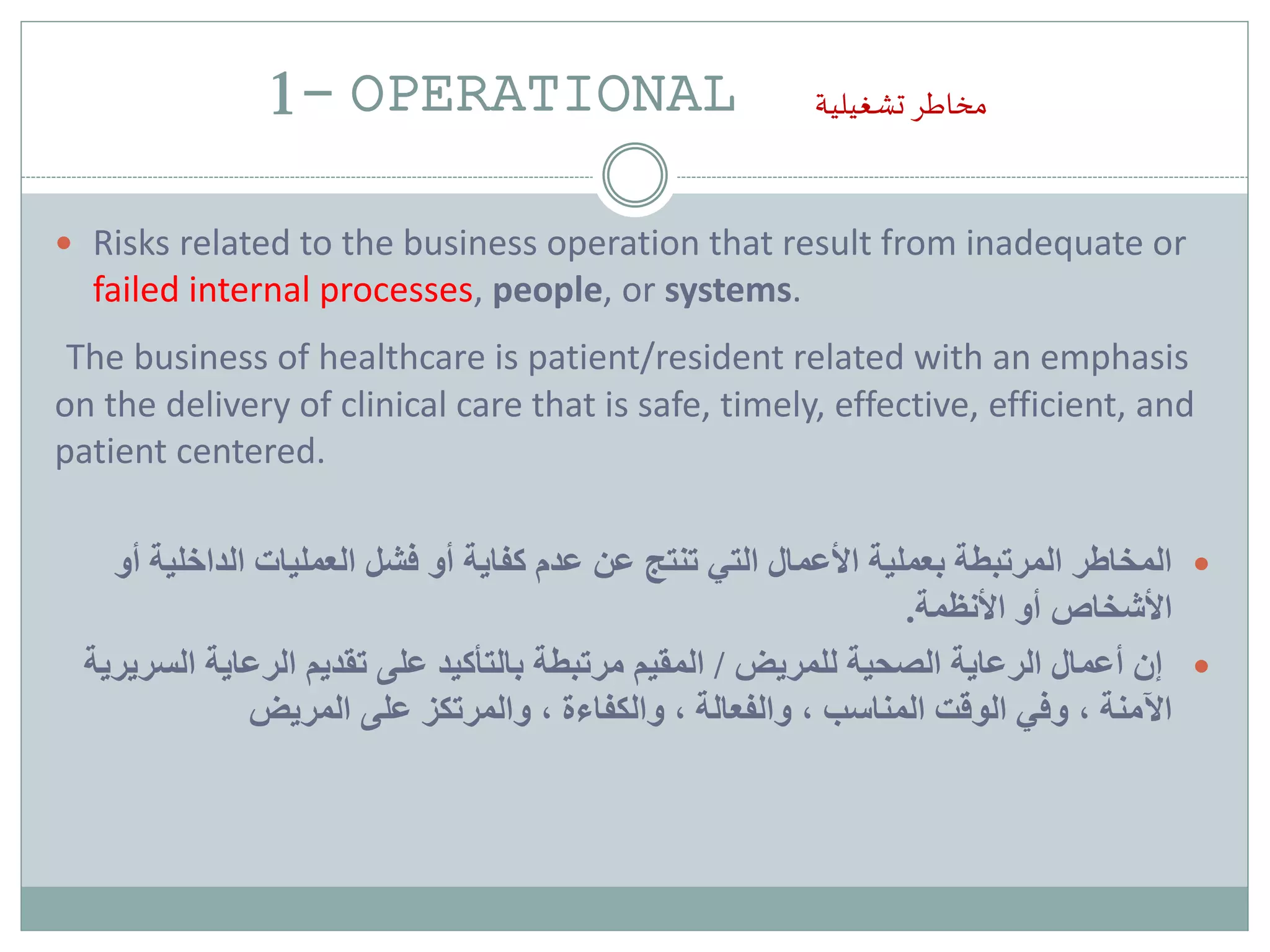
1- OPERATIONAL ‫تشغيلية‬ ‫مخاطر‬
 Risks related to the business operation that result from inadequate or
failed internal processes, people, or systems.
The business of healthcare is patient/resident related with an emphasis
on the delivery of clinical care that is safe, timely, effective, efficient, and
patient centered.
‫بعملية‬ ‫المرتبطة‬ ‫المخاطر‬‫التي‬ ‫األعمال‬‫أو‬ ‫كفاية‬ ‫عدم‬ ‫عن‬ ‫تنتج‬‫العمليات‬ ‫فشل‬‫الداخل‬‫أو‬ ‫ية‬
‫األشخاص‬‫األنظمة‬ ‫أو‬.
‫أعمال‬ ‫إن‬‫الصحية‬ ‫الرعاية‬‫للمريض‬/‫المقيم‬‫بالتأكيد‬ ‫مرتبطة‬‫تقديم‬ ‫على‬‫ال‬ ‫الرعاية‬‫سريرية‬
‫وفي‬ ، ‫اآلمنة‬‫المناسب‬ ‫الوقت‬‫والكفاءة‬ ، ‫والفعالة‬ ،‫والمرتكز‬ ،‫المريض‬ ‫على‬
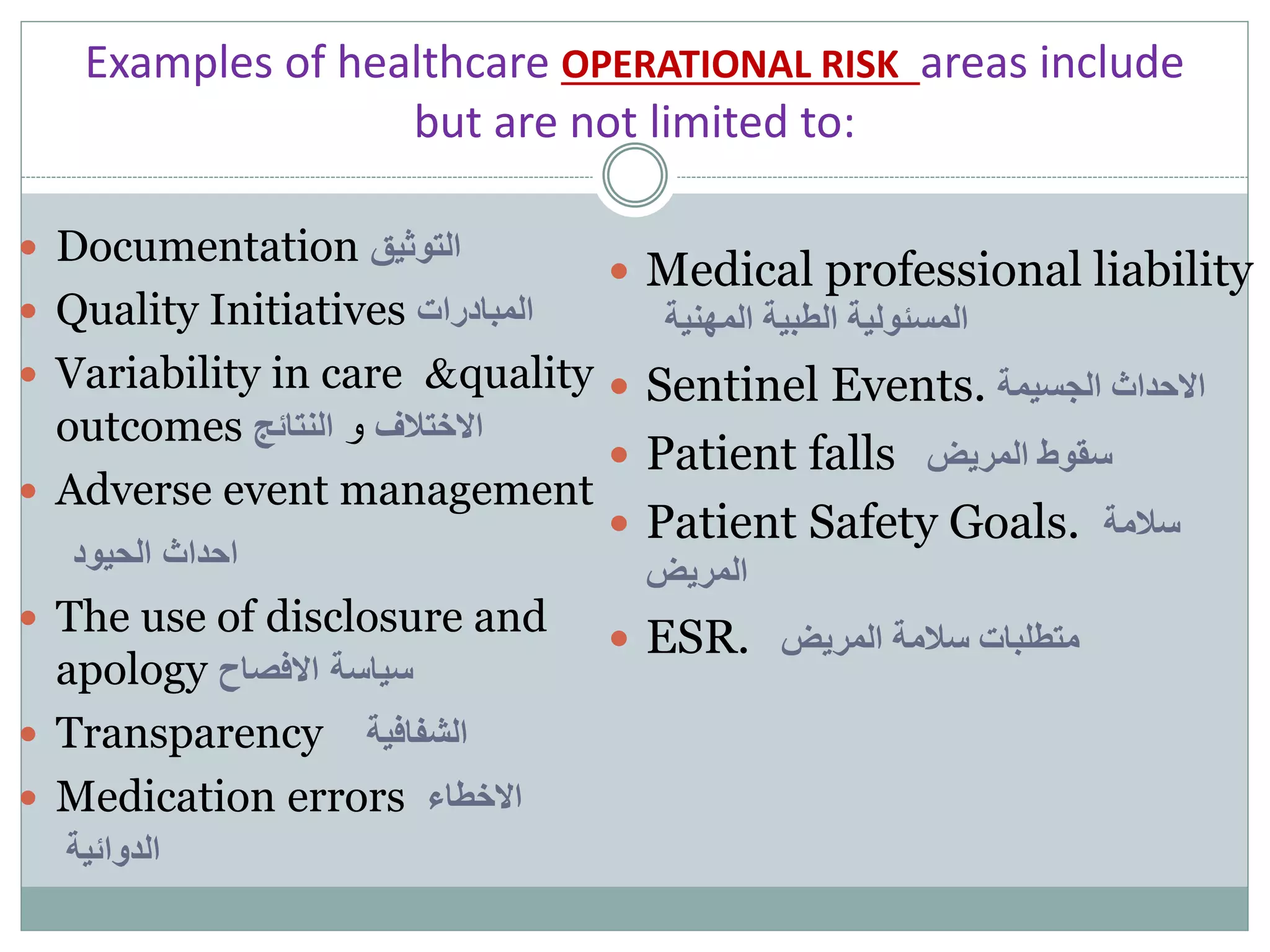
Examples of healthcare OPERATIONAL RISK areas include
but are not limited to:
 Documentation ‫التوثيق‬
 Quality Initiatives ‫المبادرات‬
 Variability in care &quality
outcomes ‫االختالف‬‫و‬‫النتائج‬
 Adverse event management
‫احداث‬‫الحيود‬
 The use of disclosure and
apology ‫سياسة‬‫االفصاح‬
 Transparency ‫الشفافية‬
 Medication errors ‫االخطاء‬
‫الدوائية‬
 Medical professional liability
‫المهنية‬ ‫الطبية‬ ‫المسئولية‬
 Sentinel Events. ‫الجسيمة‬ ‫االحداث‬
 Patient falls ‫المريض‬ ‫سقوط‬
 Patient Safety Goals. ‫سالمة‬
‫المريض‬
 ESR. ‫المريض‬ ‫سالمة‬ ‫متطلبات‬
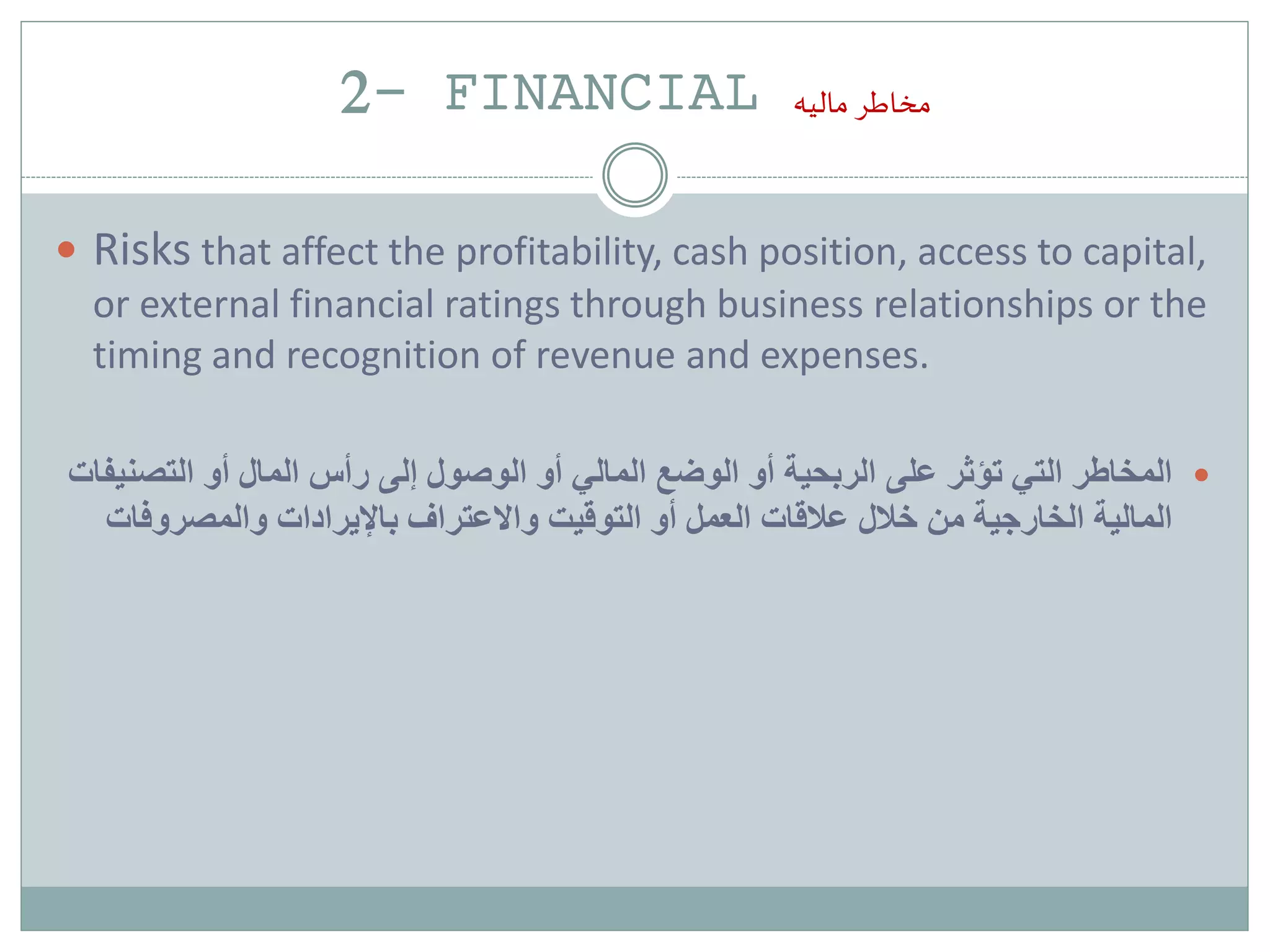
2- FINANCIAL ‫ماليه‬ ‫مخاطر‬
 Risks that affect the profitability, cash position, access to capital,
or external financial ratings through business relationships or the
timing and recognition of revenue and expenses.
‫التصن‬ ‫أو‬ ‫المال‬ ‫رأس‬ ‫إلى‬ ‫الوصول‬ ‫أو‬ ‫المالي‬ ‫الوضع‬ ‫أو‬ ‫الربحية‬ ‫على‬ ‫تؤثر‬ ‫التي‬ ‫المخاطر‬‫يفات‬
‫والمصروفا‬ ‫باإليرادات‬ ‫واالعتراف‬ ‫التوقيت‬ ‫أو‬ ‫العمل‬ ‫عالقات‬ ‫خالل‬ ‫من‬ ‫الخارجية‬ ‫المالية‬‫ت‬
2- FINANCIAL
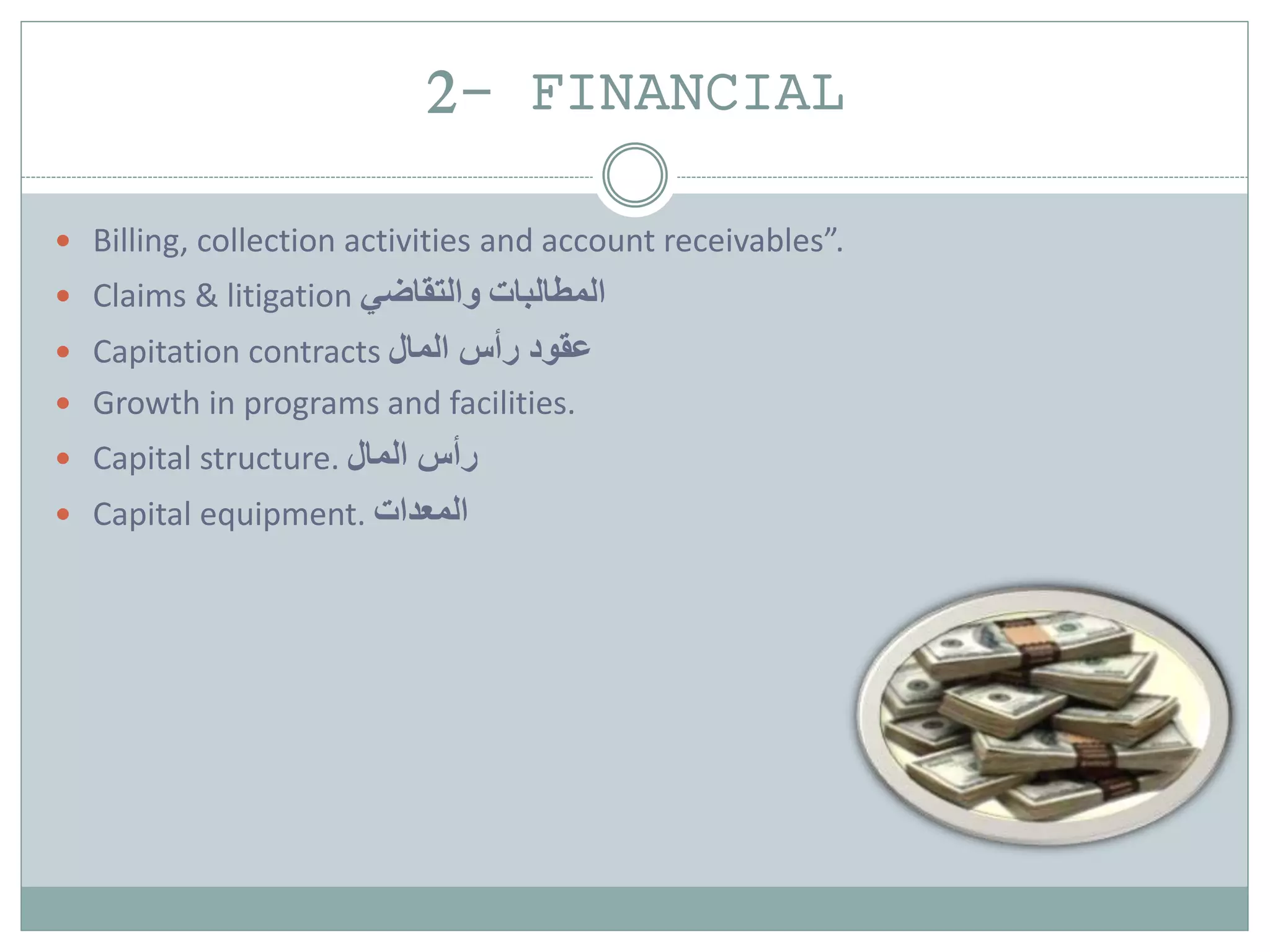
 Billing, collection activities and account receivables”.
 Claims & litigation ‫المطالبات‬‫والتقاضي‬
 Capitation contracts ‫المال‬ ‫رأس‬ ‫عقود‬
 Growth in programs and facilities.
 Capital structure. ‫رأس‬‫المال‬
 Capital equipment. ‫المعدات‬
3- HUMAN CAPITAL ‫د‬‫ر‬‫املوا‬‫البشريه‬
 Risks that relate to the organization’s most valuable asset, the
workforce. This is an explosive area of exposure in today’s tight labor
market including employee selection, retention and turnover,
absenteeism, and compensation.
‫العاملة‬ ‫القوة‬ ، ‫المنظمة‬ ‫أصول‬ ‫بأهم‬ ‫المتعلقة‬ ‫المخاطر‬.,‫في‬ ‫جدا‬ ‫هام‬ ‫محور‬ ‫تعتبر‬ ‫التي‬ ‫و‬‫العمل‬ ‫سوق‬
‫والت‬ ‫العمل‬ ‫عن‬ ‫والتغيب‬ ‫ودورانهم‬ ‫بهم‬ ‫واالحتفاظ‬ ‫الموظفين‬ ‫اختيار‬ ‫ذلك‬ ‫في‬ ‫بما‬ ‫الضيق‬ ‫اليوم‬‫عويض‬.
 Human capital risks have expanded and now may include risk
associated with:
 the recruitment, retention, and termination of members of the
medical staff.
 ‫الطبي‬ ‫الطاقم‬ ‫أعضاء‬ ‫وإنهاء‬ ‫واستبقاء‬ ‫توظيف‬.
3- HUMAN CAPITAL
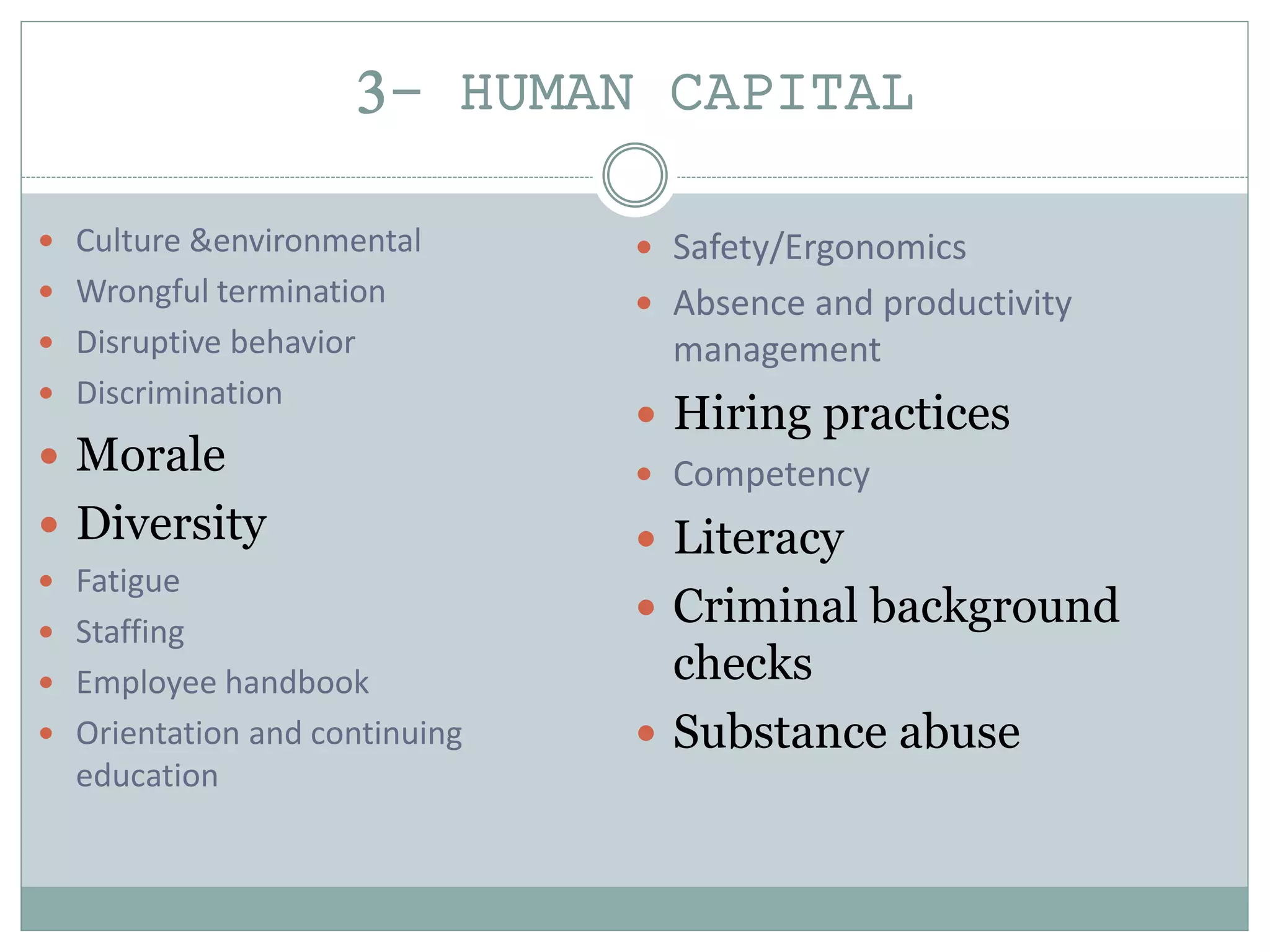
 Culture &environmental
 Wrongful termination
 Disruptive behavior
 Discrimination
 Morale
 Diversity
 Fatigue
 Staffing
 Employee handbook
 Orientation and continuing
education
 Safety/Ergonomics
 Absence and productivity
management
 Hiring practices
 Competency
 Literacy
 Criminal background
checks
 Substance abuse
4- STRATEGIC ‫اتيجية‬‫ر‬‫إست‬ ‫مخاطر‬
 Risks associated with brand and reputation and risks associated with
business strategy, failure to adapt to a changing healthcare
environment, changing customer priorities and competition
‫العم‬ ‫باستراتيجية‬ ‫المرتبطة‬ ‫والمخاطر‬ ‫والسمعة‬ ‫التجارية‬ ‫بالعالمة‬ ‫المرتبطة‬ ‫المخاطر‬، ‫ل‬
‫العمالء‬ ‫أولويات‬ ‫وتغيير‬ ، ‫المتغيرة‬ ‫الصحية‬ ‫الرعاية‬ ‫بيئة‬ ‫مع‬ ‫التكيف‬ ‫في‬ ‫والفشل‬‫والمنافسة‬
5- LEGAL, REGULATORY ‫قانونية‬ ‫مخاطر‬
 Incorporates risks arising out of licensure, accreditation, statutes,
standards and regulations, product liability, management liability, as
well as issues related to intellectual property.
‫و‬ ، ‫واللوائح‬ ‫والمعايير‬ ‫والقوانين‬ ‫واالعتماد‬ ‫الترخيص‬ ‫عن‬ ‫الناشئة‬ ‫المخاطر‬ ‫يتضمن‬‫مسؤولية‬
‫الفكرية‬ ‫بالملكية‬ ‫المتعلقة‬ ‫القضايا‬ ‫وكذلك‬ ، ‫اإلدارة‬ ‫ومسؤولية‬ ، ‫المنتج‬.
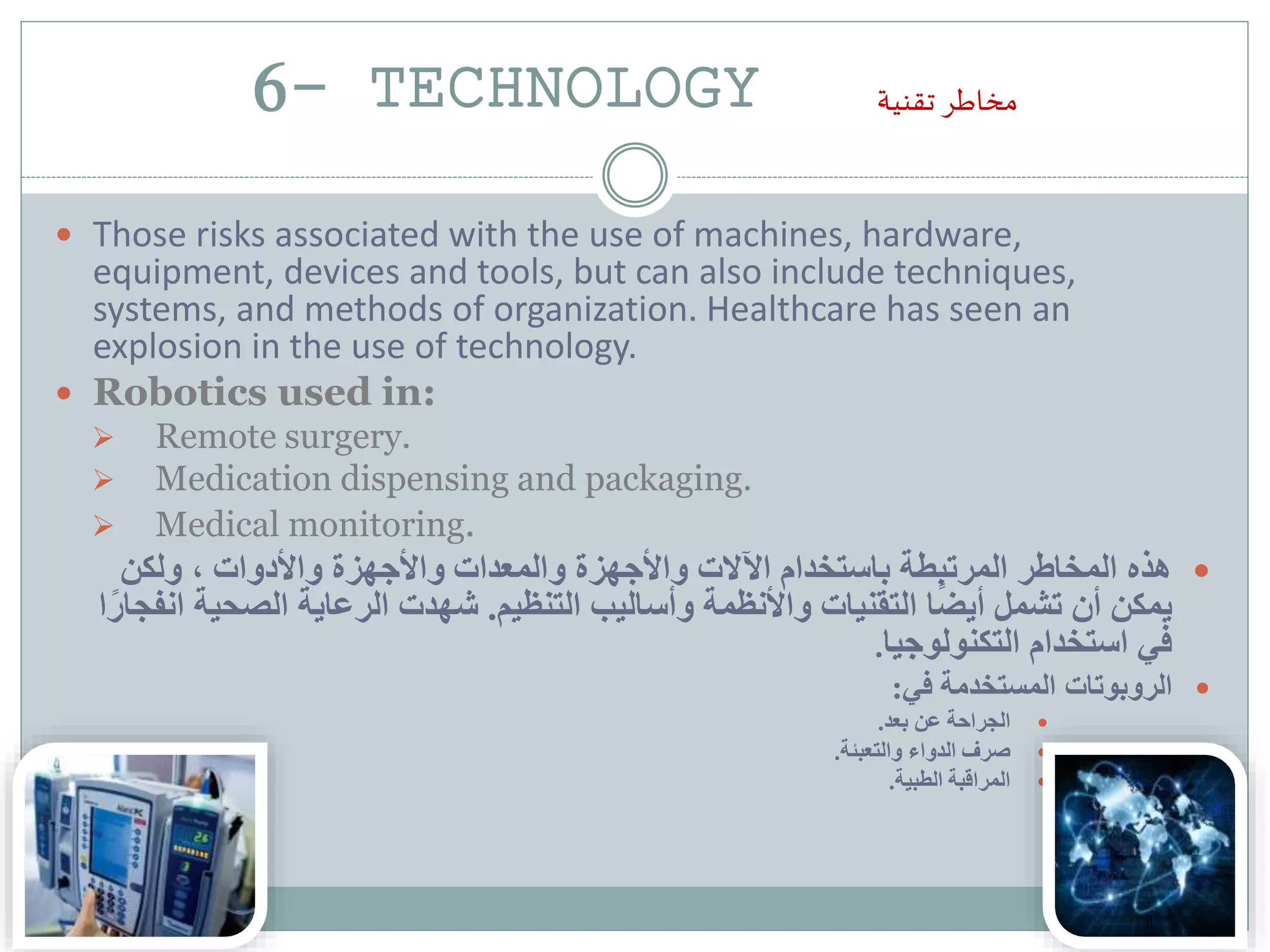
6- TECHNOLOGY ‫تقنية‬ ‫مخاطر‬
 Those risks associated with the use of machines, hardware,
equipment, devices and tools, but can also include techniques,
systems, and methods of organization. Healthcare has seen an
explosion in the use of technology.
 Robotics used in:
 Remote surgery.
 Medication dispensing and packaging.
 Medical monitoring.
‫ولكن‬ ، ‫واألدوات‬ ‫واألجهزة‬ ‫والمعدات‬ ‫واألجهزة‬ ‫اآلالت‬ ‫باستخدام‬ ‫المرتبطة‬ ‫المخاطر‬ ‫هذه‬
‫التنظيم‬ ‫وأساليب‬ ‫واألنظمة‬ ‫التقنيات‬ ‫ا‬ً‫ض‬‫أي‬ ‫تشمل‬ ‫أن‬ ‫يمكن‬.‫الصحي‬ ‫الرعاية‬ ‫شهدت‬‫ا‬ً‫انفجار‬ ‫ة‬
‫التكنولوجيا‬ ‫استخدام‬ ‫في‬.
‫في‬ ‫المستخدمة‬ ‫الروبوتات‬:
‫بعد‬ ‫عن‬ ‫الجراحة‬.
‫والتعبئة‬ ‫الدواء‬ ‫صرف‬.
‫الطبية‬ ‫المراقبة‬.
7- ENVIRONMENTAL HAZARD ‫بيئية‬ ‫مخاطر‬
 Risks attributable to physical loss of assets or a reduction in their
value. Traditionally insurable risk related to natural hazards and
business interruption.
 Areas that can create hazard Risk include:
 Facility management.
 Patient valuables.
 Plant age.
 Earthquakes.
 Windstorm.
 Tornadoes.
 Hurricanes.
 Fire.
Expected Outcomes
‫المتوقعة‬ ‫المخرجات‬
 Governance and Reporting
Structure for RM on all levels.
 Standardized polices and
procedures.
 Job descriptions.
 Comprehensive Scope.
 KPIs related to risks.
 Risk Register.
 Annual plans.
 Educational program.
 Safety Culture Program.
‫هيكل‬‫التقارير‬ ‫وإعداد‬ ‫الحوكمة‬‫إلدارة‬
‫المستويات‬ ‫جميع‬ ‫المخاطرعلى‬
‫موحدة‬ ‫وإجراءات‬ ‫سياسات‬.
‫الوظيفي‬ ‫الوصف‬.
‫شامل‬ ‫نطاق‬.
‫المتعلقة‬ ‫الرئيسية‬ ‫األداء‬ ‫مؤشرات‬
‫بالمخاطر‬.
‫المخاطر‬ ‫سجل‬.
‫السنوية‬ ‫الخطط‬.
‫التعليمي‬ ‫البرنامج‬.
‫السالمة‬ ‫ثقافة‬ ‫برنامج‬..
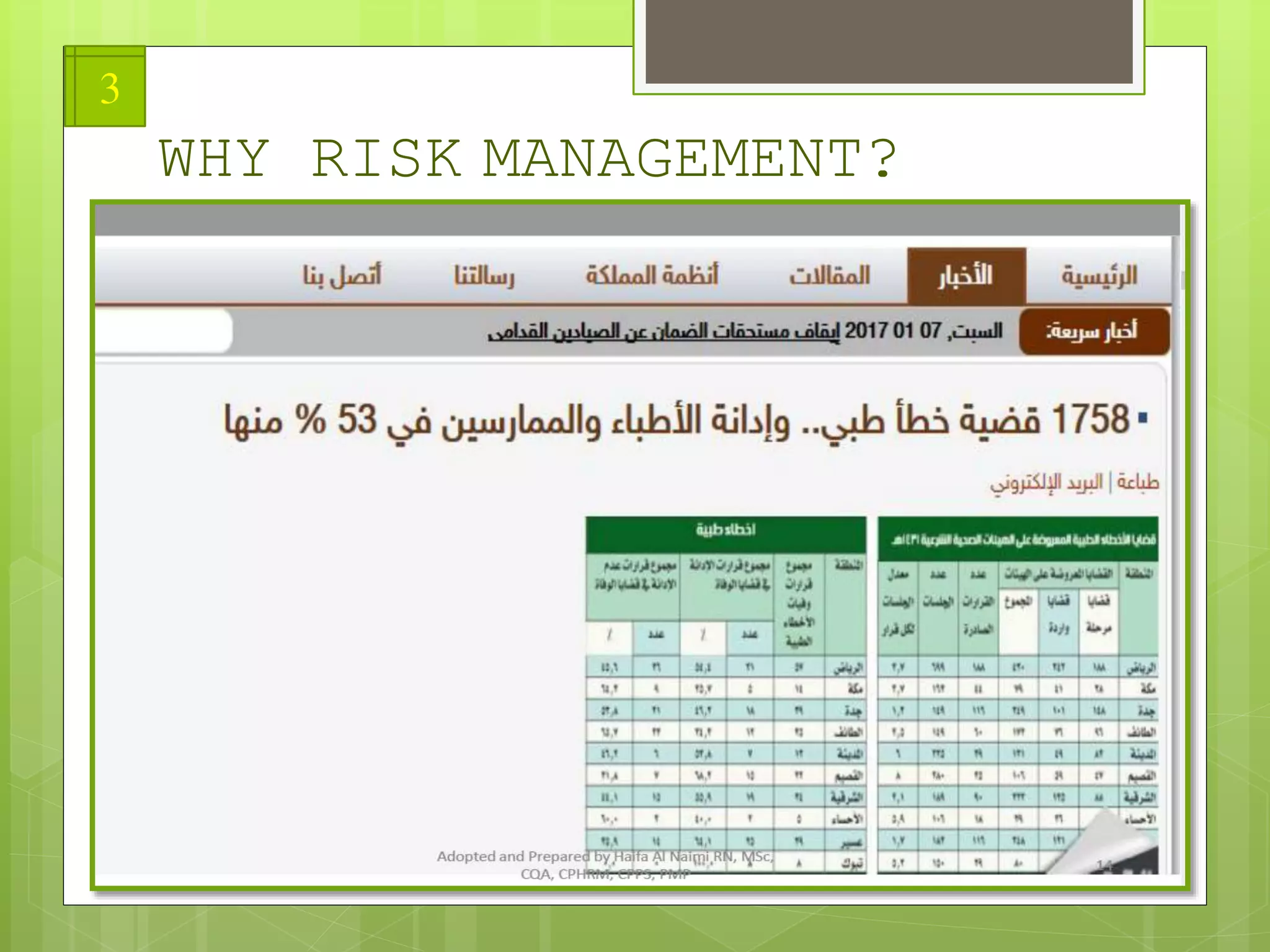
WHY RISK MANAGEMENT?
3
CHANGES IN HEALTHCARE
 Change in patient demographics.
 Diversity of patients, staff and physicians
 Aging of the population.
 Enhanced expectations by a variety of stakeholders.
 Increased use of the internet as a source for health knowledge and exchange.
 Movement to a paperless environment and the promotion of electronic
medical/health records
‫التركيبة‬ ‫في‬ ‫التغيير‬‫السكانية‬.
‫واألطباء‬ ‫والموظفين‬ ‫المرضى‬ ‫تنوع‬
‫السن‬ ‫كبار‬ ‫اعداد‬ ‫في‬ ‫زيادة‬.
‫المصلحة‬ ‫أصحاب‬ ‫من‬ ‫متنوعة‬ ‫مجموعة‬ ‫قبل‬ ‫من‬ ‫التوقعات‬ ‫تعزيز‬.
‫وتبادلها‬ ‫الصحية‬ ‫للمعرفة‬ ‫كمصدر‬ ‫اإلنترنت‬ ‫استخدام‬ ‫زيادة‬.
‫الطبية‬ ‫السجالت‬ ‫وتعزيز‬ ‫الورق‬ ‫من‬ ‫خالية‬ ‫بيئة‬ ‫إلى‬ ‫االنتقال‬/‫اإللكتروني‬ ‫الصحية‬‫ة‬
CHANGES IN HEALTHCARE
 Continuous need for and access to outcomes data.
 Emphasis on patient centered care and transparency.
 Increase in regulatory requirements, standards, and regulations
 Promotion of disclosure and apology programs.
‫إليها‬ ‫والوصول‬ ‫للبيانات‬ ‫المستمرة‬ ‫الحاجة‬.
‫المريض‬ ‫على‬ ‫المركزة‬ ‫الرعاية‬ ‫على‬ ‫التركيز‬‫الشفافية‬ ‫و‬.
‫والمعايير‬ ‫واللوائح‬ ‫والمعايير‬ ‫التنظيمية‬ ‫المتطلبات‬ ‫في‬ ‫زيادة‬.
‫واالعتذار‬ ‫الكشف‬ ‫برامج‬ ‫تعزيز‬
PURPOSE OF RISK MANAGEMENT
 To identify risks in a systematic multidisciplinary manner.
‫منهجيه‬ ‫بطريقه‬ ‫المخاطر‬ ‫لتحديد‬.
 To determine the most effective way to manage identified risks.
‫المخاطر‬ ‫إلدارة‬ ‫طريقه‬ ‫أفضل‬ ‫لتحديد‬.
HOW TO CONDUCT RISK
MANAGEMENT? ‫املخاطر‬‫ة‬‫ر‬‫إدا‬ ‫كيفية‬‫؟‬
4
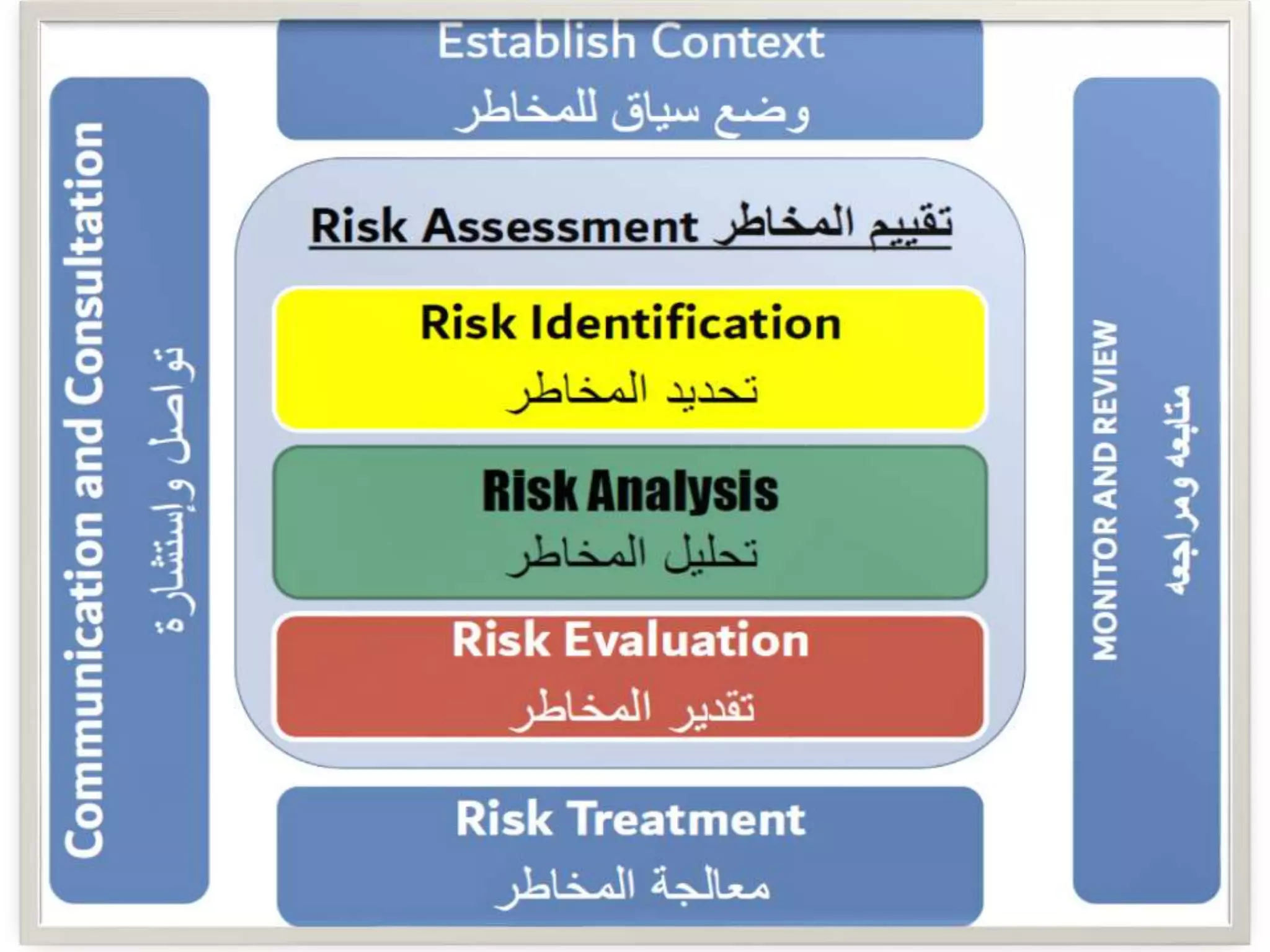
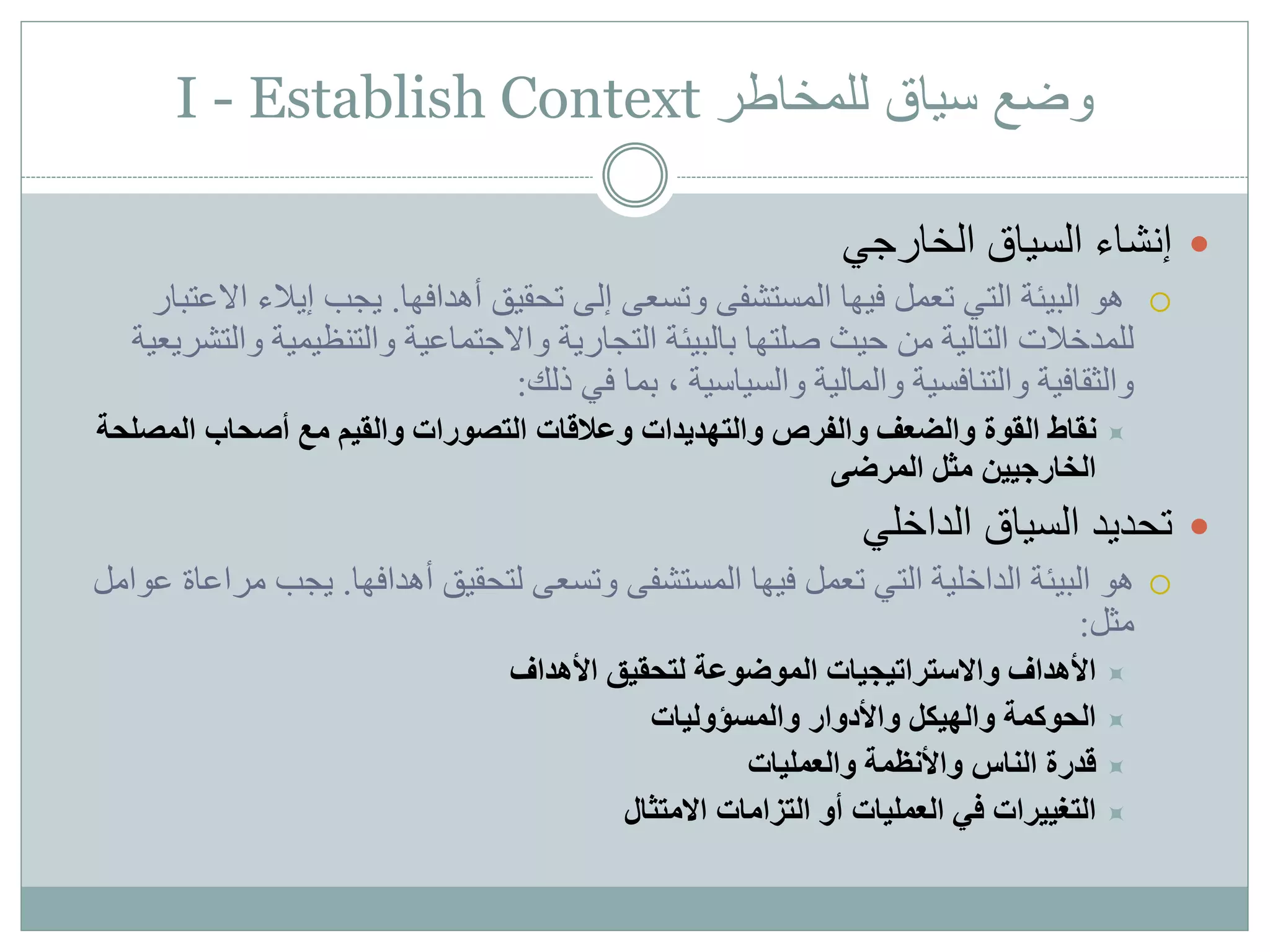
I - Establish Context ‫للمخاطر‬ ‫سياق‬ ‫وضع‬
‫السياق‬ ‫إنشاء‬‫الخارجي‬
‫المستشفى‬ ‫فيها‬ ‫تعمل‬ ‫التي‬ ‫البيئة‬ ‫هو‬‫إلى‬ ‫وتسعى‬‫أهدافها‬ ‫تحقيق‬.‫إيالء‬ ‫يجب‬‫االعتبار‬
‫صلتها‬ ‫حيث‬ ‫من‬ ‫التالية‬ ‫للمدخالت‬‫التجارية‬ ‫بالبيئة‬‫و‬ ‫والتنظيمية‬ ‫واالجتماعية‬‫التشريعية‬
‫والسياسية‬ ‫والمالية‬ ‫والتنافسية‬ ‫والثقافية‬‫بما‬ ،‫ذلك‬ ‫في‬:
‫المصل‬ ‫أصحاب‬ ‫مع‬ ‫والقيم‬ ‫التصورات‬ ‫وعالقات‬ ‫والتهديدات‬ ‫والفرص‬ ‫والضعف‬ ‫القوة‬ ‫نقاط‬‫حة‬
‫المرضى‬ ‫مثل‬ ‫الخارجيين‬
‫الداخلي‬ ‫السياق‬ ‫تحديد‬
‫هو‬‫تعمل‬ ‫التي‬ ‫الداخلية‬ ‫البيئة‬‫المستشفى‬ ‫فيها‬‫أهدافها‬ ‫لتحقيق‬ ‫وتسعى‬.‫يجب‬‫عوامل‬ ‫مراعاة‬
‫مثل‬:
‫األهداف‬ ‫لتحقيق‬ ‫الموضوعة‬ ‫واالستراتيجيات‬ ‫األهداف‬
‫والمسؤوليات‬ ‫واألدوار‬ ‫والهيكل‬ ‫الحوكمة‬
‫والعمليات‬ ‫واألنظمة‬ ‫الناس‬ ‫قدرة‬
‫االمتثال‬ ‫التزامات‬ ‫أو‬ ‫العمليات‬ ‫في‬ ‫التغييرات‬
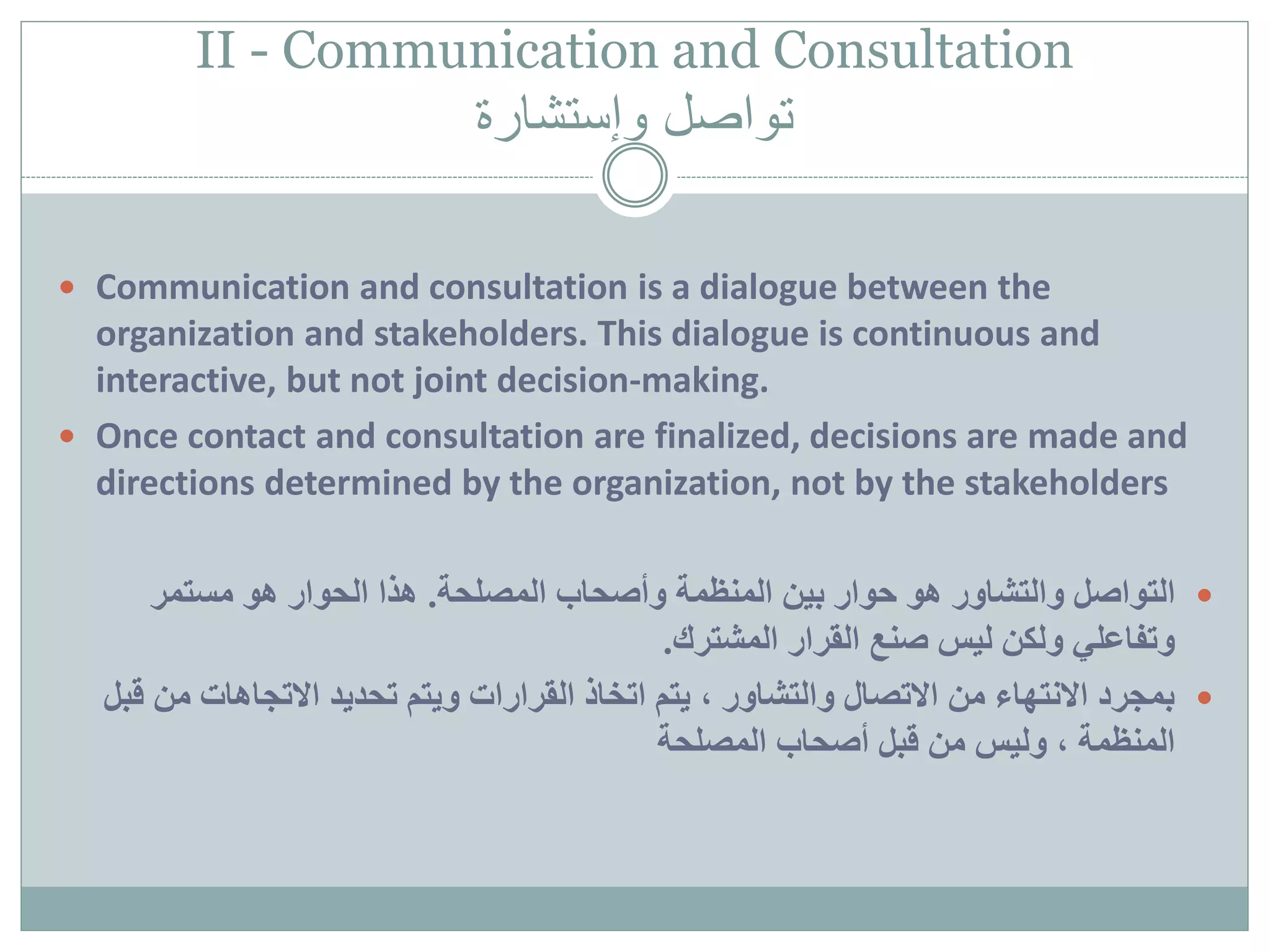
II - Communication and Consultation
‫وإستشارة‬ ‫تواصل‬
 Communication and consultation is a dialogue between the
organization and stakeholders. This dialogue is continuous and
interactive, but not joint decision-making.
 Once contact and consultation are finalized, decisions are made and
directions determined by the organization, not by the stakeholders
‫التواصل‬‫المصلحة‬ ‫وأصحاب‬ ‫المنظمة‬ ‫بين‬ ‫حوار‬ ‫هو‬ ‫والتشاور‬.‫مستمر‬ ‫هو‬ ‫الحوار‬ ‫هذا‬
‫المشترك‬ ‫القرار‬ ‫صنع‬ ‫ليس‬ ‫ولكن‬ ‫وتفاعلي‬.
‫من‬ ‫االتجاهات‬ ‫تحديد‬ ‫ويتم‬ ‫القرارات‬ ‫اتخاذ‬ ‫يتم‬ ، ‫والتشاور‬ ‫االتصال‬ ‫من‬ ‫االنتهاء‬ ‫بمجرد‬‫قبل‬
‫المصلحة‬ ‫أصحاب‬ ‫قبل‬ ‫من‬ ‫وليس‬ ، ‫المنظمة‬
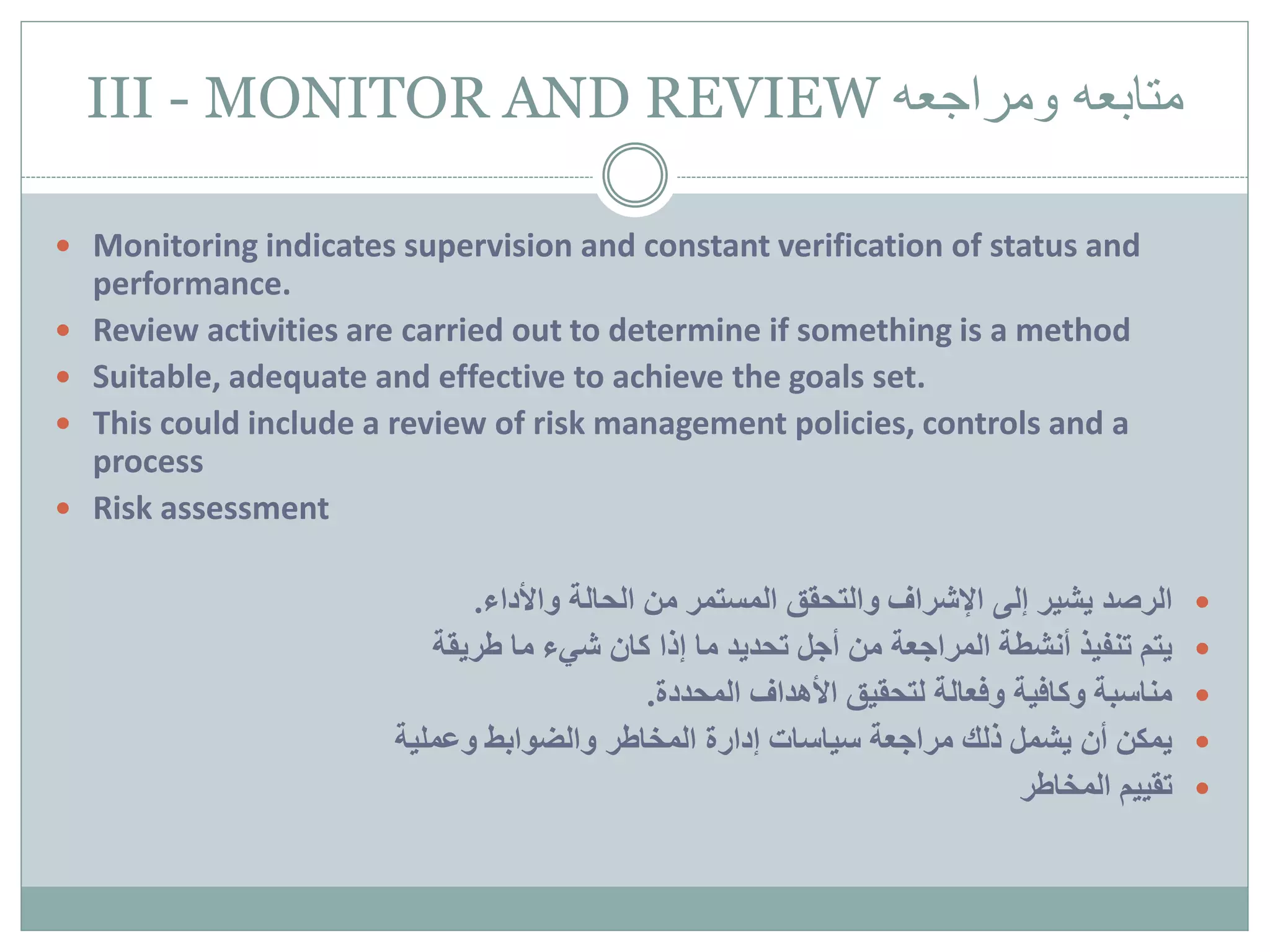
III - MONITOR AND REVIEW ‫متابعه‬‫ومراجعه‬
 Monitoring indicates supervision and constant verification of status and
performance.
 Review activities are carried out to determine if something is a method
 Suitable, adequate and effective to achieve the goals set.
 This could include a review of risk management policies, controls and a
process
 Risk assessment
‫الرصد‬‫واألداء‬ ‫الحالة‬ ‫من‬ ‫المستمر‬ ‫والتحقق‬ ‫اإلشراف‬ ‫إلى‬ ‫يشير‬.
‫طريقة‬ ‫ما‬ ‫شيء‬ ‫كان‬ ‫إذا‬ ‫ما‬ ‫تحديد‬ ‫أجل‬ ‫من‬ ‫المراجعة‬ ‫أنشطة‬ ‫تنفيذ‬ ‫يتم‬
‫المحددة‬ ‫األهداف‬ ‫لتحقيق‬ ‫وفعالة‬ ‫وكافية‬ ‫مناسبة‬.
‫وعملية‬ ‫والضوابط‬ ‫المخاطر‬ ‫إدارة‬ ‫سياسات‬ ‫مراجعة‬ ‫ذلك‬ ‫يشمل‬ ‫أن‬ ‫يمكن‬
‫المخاطر‬ ‫تقييم‬
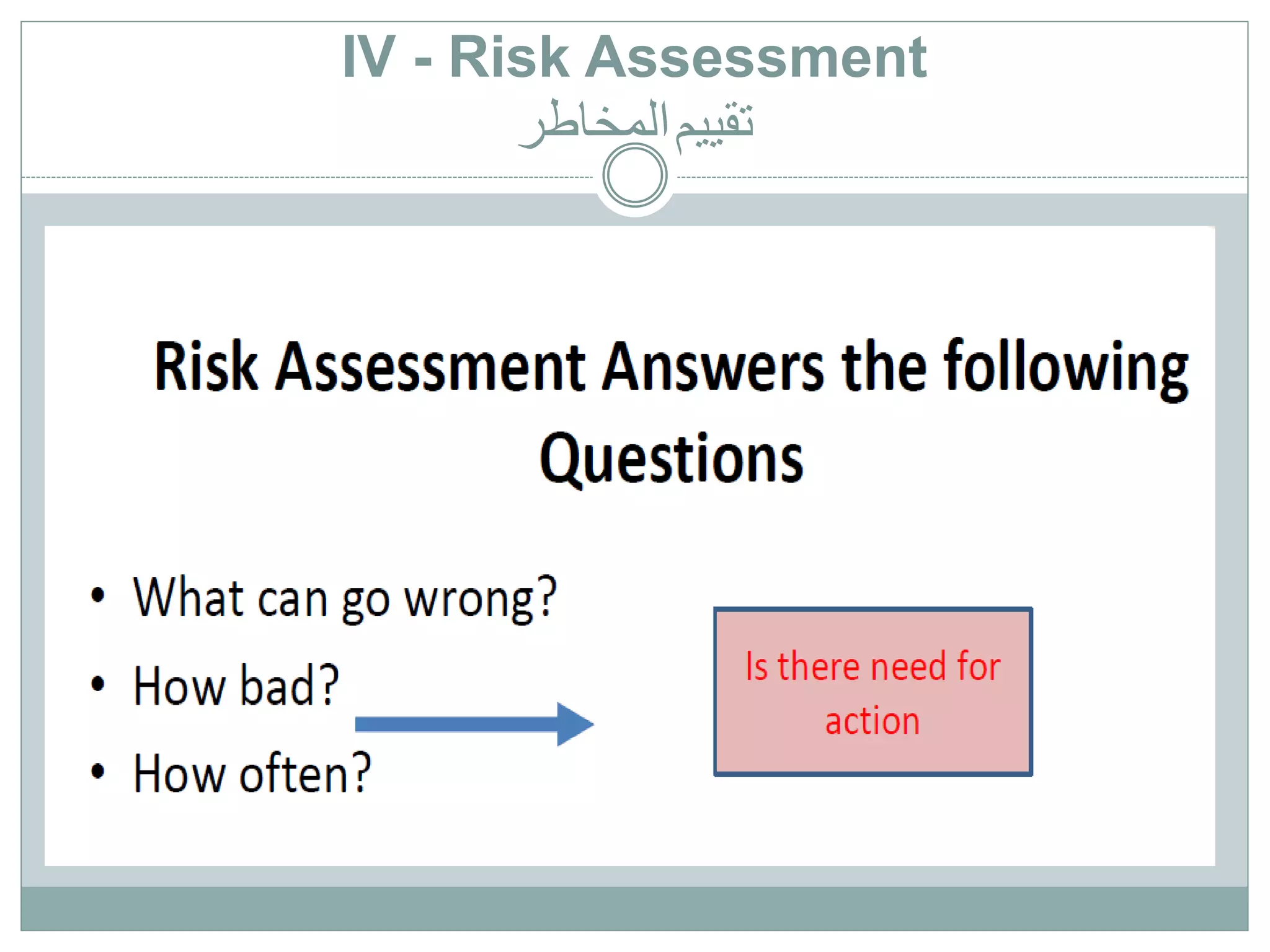
IV - Risk Assessment
‫تقييم‬‫المخاطر‬
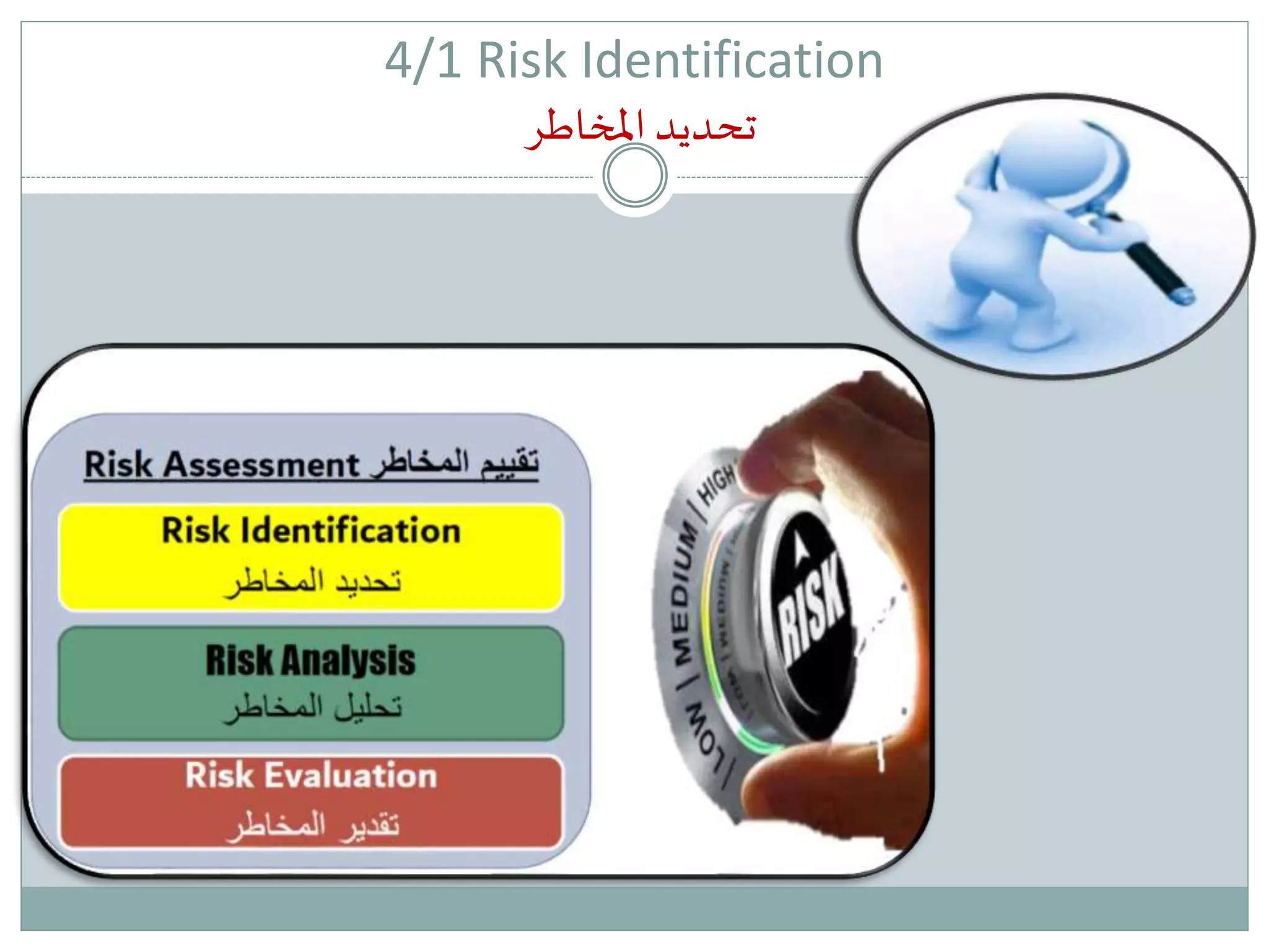
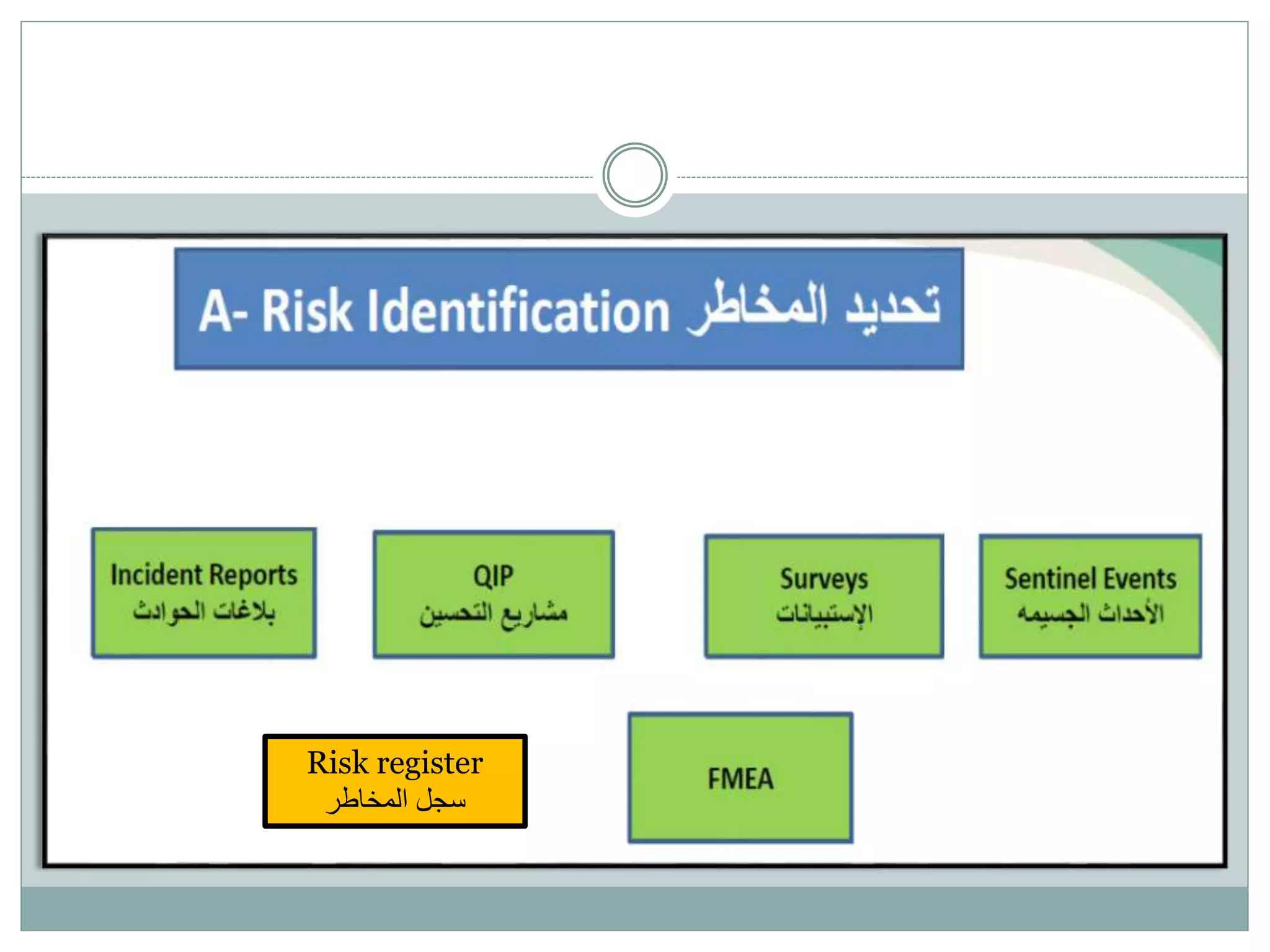
4/1 Risk Identification
‫تحديد‬‫املخاطر‬
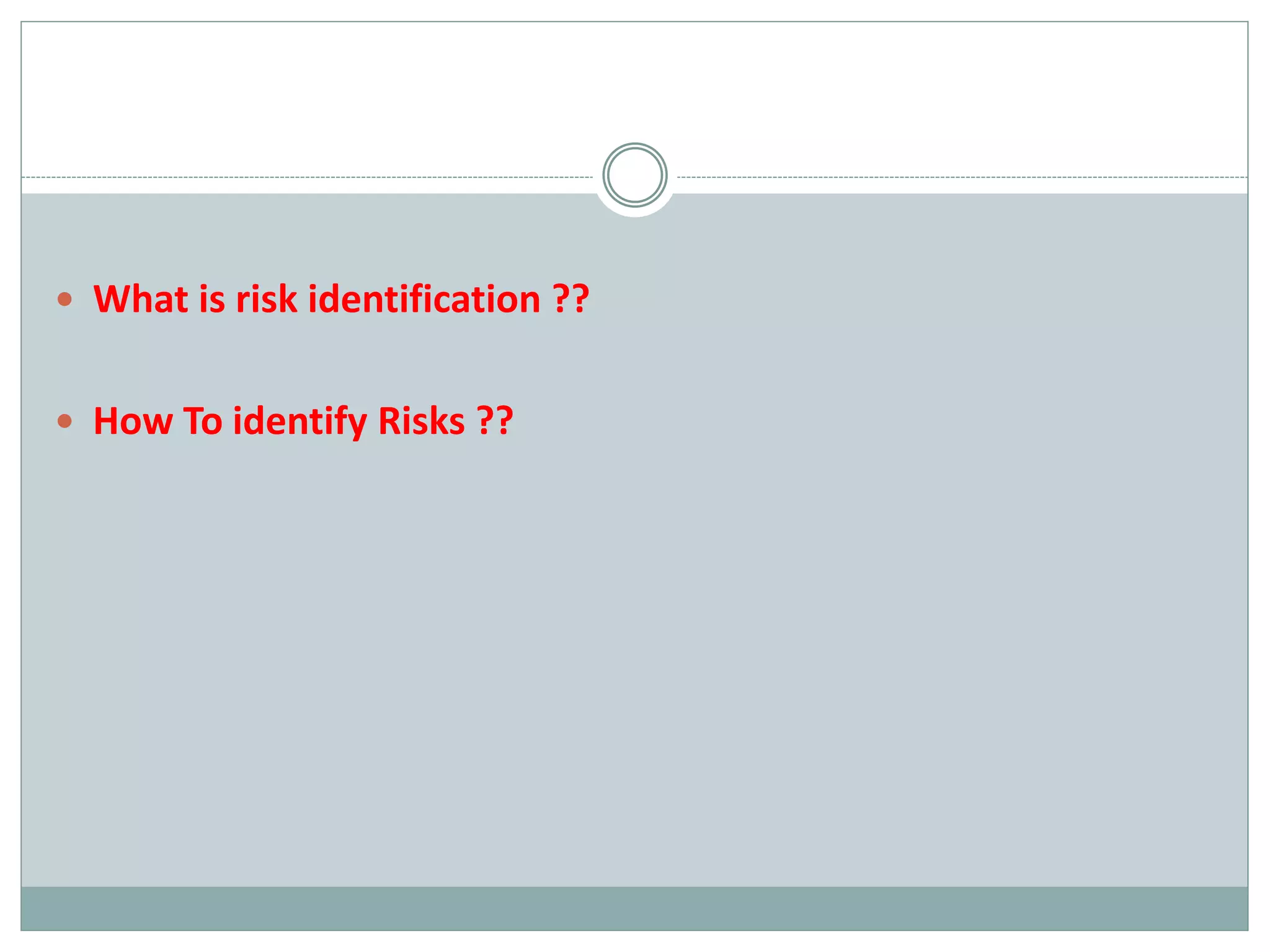
 What is risk identification ??
 How To identify Risks ??
Identify and Describe
‫املخاطر‬ ‫وصف‬ ‫و‬ ‫تحديد‬
 Risk identification is a process that involves finding, recognizing,
and describing the risks that could affect the achievement of an
organization s objectives
 It is used to identify possible sources of risk in addition to the events
and circumstances that could affect the achievement of objectives
 It also includes the identification of possible causes and potential
consequences
Risk register
‫المخاطر‬ ‫سجل‬
EXERCISE
 What makes a clinical area considered as high risk?
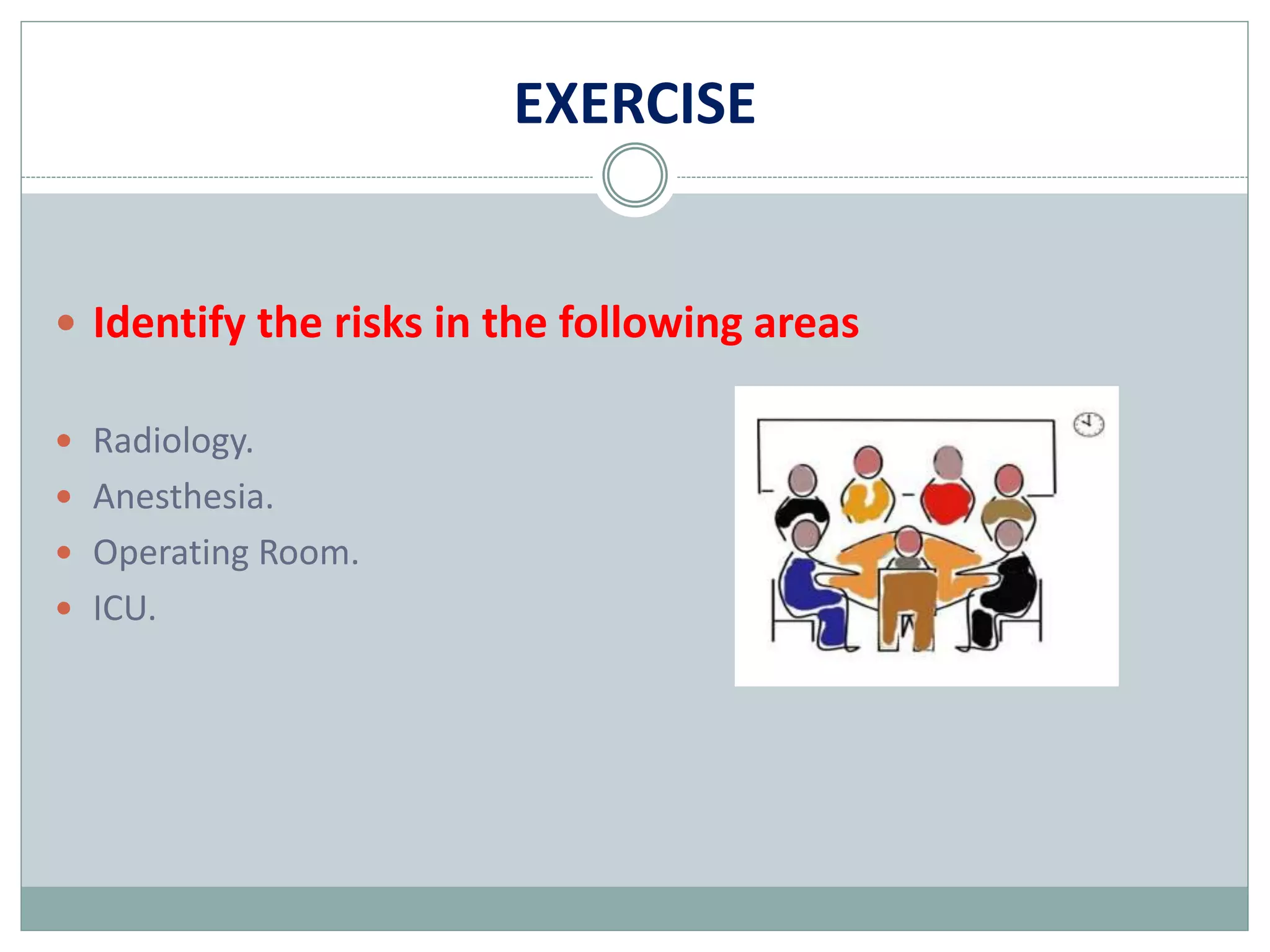
EXERCISE
 Identify the risks in the following areas
 Radiology.
 Anesthesia.
 Operating Room.
 ICU.
High Risk Settings
 Unstable Patients.
 Complexity of a setting.
 High level of skills required.
 Increased vigilance required.
 Small margin for error.
 When there is injury severity is high.
 High Volume.
 Volume can not be controlled.
 Multiple Handoff.
 High level of stress.
Surgical services
 Informed consent.
 Physical infrastructure :
 Dedicated elevators.
 Dedicated power sources.
 Dedicated gas and vacuum sources.
 Infection control practice are significant patient safety issue affecting
operating rooms directly:
 Infection control.
 Sterile processing
ALL PRESENTATION LINK
‫املحاضرات‬ ‫ابط‬‫ر‬

Risk management intruduction part 1

  • 1.
    B Y D R. M O H A M E D R . Y O U S E F P A T I E N T S A F E T Y O F F I C E R Q U A L I T Y & P A T I E N T S A F E T Y D E P A R T M E N T M E E Q A T G E N E R A L H O S P I T A L RISK MANAGEMENT INTRUDUCTION PART 1 27 JANUARY 2020
  • 2.
    CONTENT  What isRM ?  Types of risk ?  Why we need it ?  How to do it ?  Who will do it ? ‫املخاطر؟‬ ‫ة‬‫ر‬‫إدا‬ ‫ماهي‬ ‫؟‬ ‫املخاطر‬‫أنواع‬ ‫هي‬ ‫ما‬ ‫لها؟‬ ‫نحتاج‬ ‫ملاذا‬ ‫معها؟‬ ‫التعامل‬ ‫كيفية‬ ‫عنها؟‬ ‫ل‬‫املسئو‬‫من‬
  • 3.
    What is Risk? ‫؟‬‫الخطر‬ ‫ماهو‬  Risk in Healthcare: The probability that something undesirable will happen. It implies the need for avoidance. .‫المخاطر‬‫الصحية‬ ‫الرعاية‬ ‫في‬:‫فيه‬ ‫مرغوب‬ ‫غير‬ ‫شيء‬ ‫حدوث‬ ‫احتمال‬.‫وهذا‬‫يعني‬(‫يست‬‫دعي‬ )‫تجنب‬ ‫إلى‬ ‫الحاجة‬.
  • 4.
    What is Risk Management? Is a whole process of initiation, risk identification ,evaluation, response development, implementation ,continuous monitoring and review to reduce the risk of injury to patients, staff, and visitors and the risk of loss to the organization itself ‫املخاطر‬ ‫ة‬‫ر‬‫إدا‬ ،‫املخاطر‬ ‫وتقييم‬ ‫تحديد‬،‫عملية‬ ‫عن‬ ‫ة‬‫ر‬‫عبا‬ ‫هي‬ ‫وإعداد‬‫ستجابة‬ ‫اإل‬ ‫والتنفيذ‬ ‫والرصد‬‫املستمر‬ ‫اجعة‬‫ر‬‫وامل‬‫نف‬ ‫املنظمة‬ ‫إلى‬ ‫ة‬‫ر‬‫الخسا‬ ‫ومخاطر‬ ‫ار‬‫و‬‫والز‬ ‫واملوظفين‬ ‫ى‬ ‫للمرض‬ ‫اإلصابة‬ ‫خطر‬‫من‬ ‫للحد‬‫سها‬. 1
  • 5.
    Types of Risks‫املخاطر‬ ‫أنواع‬ 2
  • 6.
    1- OPERATIONAL ‫تشغيلية‬‫مخاطر‬  Risks related to the business operation that result from inadequate or failed internal processes, people, or systems. The business of healthcare is patient/resident related with an emphasis on the delivery of clinical care that is safe, timely, effective, efficient, and patient centered. ‫بعملية‬ ‫المرتبطة‬ ‫المخاطر‬‫التي‬ ‫األعمال‬‫أو‬ ‫كفاية‬ ‫عدم‬ ‫عن‬ ‫تنتج‬‫العمليات‬ ‫فشل‬‫الداخل‬‫أو‬ ‫ية‬ ‫األشخاص‬‫األنظمة‬ ‫أو‬. ‫أعمال‬ ‫إن‬‫الصحية‬ ‫الرعاية‬‫للمريض‬/‫المقيم‬‫بالتأكيد‬ ‫مرتبطة‬‫تقديم‬ ‫على‬‫ال‬ ‫الرعاية‬‫سريرية‬ ‫وفي‬ ، ‫اآلمنة‬‫المناسب‬ ‫الوقت‬‫والكفاءة‬ ، ‫والفعالة‬ ،‫والمرتكز‬ ،‫المريض‬ ‫على‬
  • 7.
    Examples of healthcareOPERATIONAL RISK areas include but are not limited to:  Documentation ‫التوثيق‬  Quality Initiatives ‫المبادرات‬  Variability in care &quality outcomes ‫االختالف‬‫و‬‫النتائج‬  Adverse event management ‫احداث‬‫الحيود‬  The use of disclosure and apology ‫سياسة‬‫االفصاح‬  Transparency ‫الشفافية‬  Medication errors ‫االخطاء‬ ‫الدوائية‬  Medical professional liability ‫المهنية‬ ‫الطبية‬ ‫المسئولية‬  Sentinel Events. ‫الجسيمة‬ ‫االحداث‬  Patient falls ‫المريض‬ ‫سقوط‬  Patient Safety Goals. ‫سالمة‬ ‫المريض‬  ESR. ‫المريض‬ ‫سالمة‬ ‫متطلبات‬
  • 8.
    2- FINANCIAL ‫ماليه‬‫مخاطر‬  Risks that affect the profitability, cash position, access to capital, or external financial ratings through business relationships or the timing and recognition of revenue and expenses. ‫التصن‬ ‫أو‬ ‫المال‬ ‫رأس‬ ‫إلى‬ ‫الوصول‬ ‫أو‬ ‫المالي‬ ‫الوضع‬ ‫أو‬ ‫الربحية‬ ‫على‬ ‫تؤثر‬ ‫التي‬ ‫المخاطر‬‫يفات‬ ‫والمصروفا‬ ‫باإليرادات‬ ‫واالعتراف‬ ‫التوقيت‬ ‫أو‬ ‫العمل‬ ‫عالقات‬ ‫خالل‬ ‫من‬ ‫الخارجية‬ ‫المالية‬‫ت‬
  • 9.
    2- FINANCIAL  Billing,collection activities and account receivables”.  Claims & litigation ‫المطالبات‬‫والتقاضي‬  Capitation contracts ‫المال‬ ‫رأس‬ ‫عقود‬  Growth in programs and facilities.  Capital structure. ‫رأس‬‫المال‬  Capital equipment. ‫المعدات‬
  • 10.
    3- HUMAN CAPITAL‫د‬‫ر‬‫املوا‬‫البشريه‬  Risks that relate to the organization’s most valuable asset, the workforce. This is an explosive area of exposure in today’s tight labor market including employee selection, retention and turnover, absenteeism, and compensation. ‫العاملة‬ ‫القوة‬ ، ‫المنظمة‬ ‫أصول‬ ‫بأهم‬ ‫المتعلقة‬ ‫المخاطر‬.,‫في‬ ‫جدا‬ ‫هام‬ ‫محور‬ ‫تعتبر‬ ‫التي‬ ‫و‬‫العمل‬ ‫سوق‬ ‫والت‬ ‫العمل‬ ‫عن‬ ‫والتغيب‬ ‫ودورانهم‬ ‫بهم‬ ‫واالحتفاظ‬ ‫الموظفين‬ ‫اختيار‬ ‫ذلك‬ ‫في‬ ‫بما‬ ‫الضيق‬ ‫اليوم‬‫عويض‬.  Human capital risks have expanded and now may include risk associated with:  the recruitment, retention, and termination of members of the medical staff.  ‫الطبي‬ ‫الطاقم‬ ‫أعضاء‬ ‫وإنهاء‬ ‫واستبقاء‬ ‫توظيف‬.
  • 11.
    3- HUMAN CAPITAL Culture &environmental  Wrongful termination  Disruptive behavior  Discrimination  Morale  Diversity  Fatigue  Staffing  Employee handbook  Orientation and continuing education  Safety/Ergonomics  Absence and productivity management  Hiring practices  Competency  Literacy  Criminal background checks  Substance abuse
  • 12.
    4- STRATEGIC ‫اتيجية‬‫ر‬‫إست‬‫مخاطر‬  Risks associated with brand and reputation and risks associated with business strategy, failure to adapt to a changing healthcare environment, changing customer priorities and competition ‫العم‬ ‫باستراتيجية‬ ‫المرتبطة‬ ‫والمخاطر‬ ‫والسمعة‬ ‫التجارية‬ ‫بالعالمة‬ ‫المرتبطة‬ ‫المخاطر‬، ‫ل‬ ‫العمالء‬ ‫أولويات‬ ‫وتغيير‬ ، ‫المتغيرة‬ ‫الصحية‬ ‫الرعاية‬ ‫بيئة‬ ‫مع‬ ‫التكيف‬ ‫في‬ ‫والفشل‬‫والمنافسة‬
  • 13.
    5- LEGAL, REGULATORY‫قانونية‬ ‫مخاطر‬  Incorporates risks arising out of licensure, accreditation, statutes, standards and regulations, product liability, management liability, as well as issues related to intellectual property. ‫و‬ ، ‫واللوائح‬ ‫والمعايير‬ ‫والقوانين‬ ‫واالعتماد‬ ‫الترخيص‬ ‫عن‬ ‫الناشئة‬ ‫المخاطر‬ ‫يتضمن‬‫مسؤولية‬ ‫الفكرية‬ ‫بالملكية‬ ‫المتعلقة‬ ‫القضايا‬ ‫وكذلك‬ ، ‫اإلدارة‬ ‫ومسؤولية‬ ، ‫المنتج‬.
  • 14.
    6- TECHNOLOGY ‫تقنية‬‫مخاطر‬  Those risks associated with the use of machines, hardware, equipment, devices and tools, but can also include techniques, systems, and methods of organization. Healthcare has seen an explosion in the use of technology.  Robotics used in:  Remote surgery.  Medication dispensing and packaging.  Medical monitoring. ‫ولكن‬ ، ‫واألدوات‬ ‫واألجهزة‬ ‫والمعدات‬ ‫واألجهزة‬ ‫اآلالت‬ ‫باستخدام‬ ‫المرتبطة‬ ‫المخاطر‬ ‫هذه‬ ‫التنظيم‬ ‫وأساليب‬ ‫واألنظمة‬ ‫التقنيات‬ ‫ا‬ً‫ض‬‫أي‬ ‫تشمل‬ ‫أن‬ ‫يمكن‬.‫الصحي‬ ‫الرعاية‬ ‫شهدت‬‫ا‬ً‫انفجار‬ ‫ة‬ ‫التكنولوجيا‬ ‫استخدام‬ ‫في‬. ‫في‬ ‫المستخدمة‬ ‫الروبوتات‬: ‫بعد‬ ‫عن‬ ‫الجراحة‬. ‫والتعبئة‬ ‫الدواء‬ ‫صرف‬. ‫الطبية‬ ‫المراقبة‬.
  • 15.
    7- ENVIRONMENTAL HAZARD‫بيئية‬ ‫مخاطر‬  Risks attributable to physical loss of assets or a reduction in their value. Traditionally insurable risk related to natural hazards and business interruption.  Areas that can create hazard Risk include:  Facility management.  Patient valuables.  Plant age.  Earthquakes.  Windstorm.  Tornadoes.  Hurricanes.  Fire.
  • 16.
    Expected Outcomes ‫المتوقعة‬ ‫المخرجات‬ Governance and Reporting Structure for RM on all levels.  Standardized polices and procedures.  Job descriptions.  Comprehensive Scope.  KPIs related to risks.  Risk Register.  Annual plans.  Educational program.  Safety Culture Program. ‫هيكل‬‫التقارير‬ ‫وإعداد‬ ‫الحوكمة‬‫إلدارة‬ ‫المستويات‬ ‫جميع‬ ‫المخاطرعلى‬ ‫موحدة‬ ‫وإجراءات‬ ‫سياسات‬. ‫الوظيفي‬ ‫الوصف‬. ‫شامل‬ ‫نطاق‬. ‫المتعلقة‬ ‫الرئيسية‬ ‫األداء‬ ‫مؤشرات‬ ‫بالمخاطر‬. ‫المخاطر‬ ‫سجل‬. ‫السنوية‬ ‫الخطط‬. ‫التعليمي‬ ‫البرنامج‬. ‫السالمة‬ ‫ثقافة‬ ‫برنامج‬..
  • 17.
  • 18.
    CHANGES IN HEALTHCARE Change in patient demographics.  Diversity of patients, staff and physicians  Aging of the population.  Enhanced expectations by a variety of stakeholders.  Increased use of the internet as a source for health knowledge and exchange.  Movement to a paperless environment and the promotion of electronic medical/health records ‫التركيبة‬ ‫في‬ ‫التغيير‬‫السكانية‬. ‫واألطباء‬ ‫والموظفين‬ ‫المرضى‬ ‫تنوع‬ ‫السن‬ ‫كبار‬ ‫اعداد‬ ‫في‬ ‫زيادة‬. ‫المصلحة‬ ‫أصحاب‬ ‫من‬ ‫متنوعة‬ ‫مجموعة‬ ‫قبل‬ ‫من‬ ‫التوقعات‬ ‫تعزيز‬. ‫وتبادلها‬ ‫الصحية‬ ‫للمعرفة‬ ‫كمصدر‬ ‫اإلنترنت‬ ‫استخدام‬ ‫زيادة‬. ‫الطبية‬ ‫السجالت‬ ‫وتعزيز‬ ‫الورق‬ ‫من‬ ‫خالية‬ ‫بيئة‬ ‫إلى‬ ‫االنتقال‬/‫اإللكتروني‬ ‫الصحية‬‫ة‬
  • 19.
    CHANGES IN HEALTHCARE Continuous need for and access to outcomes data.  Emphasis on patient centered care and transparency.  Increase in regulatory requirements, standards, and regulations  Promotion of disclosure and apology programs. ‫إليها‬ ‫والوصول‬ ‫للبيانات‬ ‫المستمرة‬ ‫الحاجة‬. ‫المريض‬ ‫على‬ ‫المركزة‬ ‫الرعاية‬ ‫على‬ ‫التركيز‬‫الشفافية‬ ‫و‬. ‫والمعايير‬ ‫واللوائح‬ ‫والمعايير‬ ‫التنظيمية‬ ‫المتطلبات‬ ‫في‬ ‫زيادة‬. ‫واالعتذار‬ ‫الكشف‬ ‫برامج‬ ‫تعزيز‬
  • 20.
    PURPOSE OF RISKMANAGEMENT  To identify risks in a systematic multidisciplinary manner. ‫منهجيه‬ ‫بطريقه‬ ‫المخاطر‬ ‫لتحديد‬.  To determine the most effective way to manage identified risks. ‫المخاطر‬ ‫إلدارة‬ ‫طريقه‬ ‫أفضل‬ ‫لتحديد‬.
  • 21.
    HOW TO CONDUCTRISK MANAGEMENT? ‫املخاطر‬‫ة‬‫ر‬‫إدا‬ ‫كيفية‬‫؟‬ 4
  • 23.
    I - EstablishContext ‫للمخاطر‬ ‫سياق‬ ‫وضع‬ ‫السياق‬ ‫إنشاء‬‫الخارجي‬ ‫المستشفى‬ ‫فيها‬ ‫تعمل‬ ‫التي‬ ‫البيئة‬ ‫هو‬‫إلى‬ ‫وتسعى‬‫أهدافها‬ ‫تحقيق‬.‫إيالء‬ ‫يجب‬‫االعتبار‬ ‫صلتها‬ ‫حيث‬ ‫من‬ ‫التالية‬ ‫للمدخالت‬‫التجارية‬ ‫بالبيئة‬‫و‬ ‫والتنظيمية‬ ‫واالجتماعية‬‫التشريعية‬ ‫والسياسية‬ ‫والمالية‬ ‫والتنافسية‬ ‫والثقافية‬‫بما‬ ،‫ذلك‬ ‫في‬: ‫المصل‬ ‫أصحاب‬ ‫مع‬ ‫والقيم‬ ‫التصورات‬ ‫وعالقات‬ ‫والتهديدات‬ ‫والفرص‬ ‫والضعف‬ ‫القوة‬ ‫نقاط‬‫حة‬ ‫المرضى‬ ‫مثل‬ ‫الخارجيين‬ ‫الداخلي‬ ‫السياق‬ ‫تحديد‬ ‫هو‬‫تعمل‬ ‫التي‬ ‫الداخلية‬ ‫البيئة‬‫المستشفى‬ ‫فيها‬‫أهدافها‬ ‫لتحقيق‬ ‫وتسعى‬.‫يجب‬‫عوامل‬ ‫مراعاة‬ ‫مثل‬: ‫األهداف‬ ‫لتحقيق‬ ‫الموضوعة‬ ‫واالستراتيجيات‬ ‫األهداف‬ ‫والمسؤوليات‬ ‫واألدوار‬ ‫والهيكل‬ ‫الحوكمة‬ ‫والعمليات‬ ‫واألنظمة‬ ‫الناس‬ ‫قدرة‬ ‫االمتثال‬ ‫التزامات‬ ‫أو‬ ‫العمليات‬ ‫في‬ ‫التغييرات‬
  • 24.
    II - Communicationand Consultation ‫وإستشارة‬ ‫تواصل‬  Communication and consultation is a dialogue between the organization and stakeholders. This dialogue is continuous and interactive, but not joint decision-making.  Once contact and consultation are finalized, decisions are made and directions determined by the organization, not by the stakeholders ‫التواصل‬‫المصلحة‬ ‫وأصحاب‬ ‫المنظمة‬ ‫بين‬ ‫حوار‬ ‫هو‬ ‫والتشاور‬.‫مستمر‬ ‫هو‬ ‫الحوار‬ ‫هذا‬ ‫المشترك‬ ‫القرار‬ ‫صنع‬ ‫ليس‬ ‫ولكن‬ ‫وتفاعلي‬. ‫من‬ ‫االتجاهات‬ ‫تحديد‬ ‫ويتم‬ ‫القرارات‬ ‫اتخاذ‬ ‫يتم‬ ، ‫والتشاور‬ ‫االتصال‬ ‫من‬ ‫االنتهاء‬ ‫بمجرد‬‫قبل‬ ‫المصلحة‬ ‫أصحاب‬ ‫قبل‬ ‫من‬ ‫وليس‬ ، ‫المنظمة‬
  • 25.
    III - MONITORAND REVIEW ‫متابعه‬‫ومراجعه‬  Monitoring indicates supervision and constant verification of status and performance.  Review activities are carried out to determine if something is a method  Suitable, adequate and effective to achieve the goals set.  This could include a review of risk management policies, controls and a process  Risk assessment ‫الرصد‬‫واألداء‬ ‫الحالة‬ ‫من‬ ‫المستمر‬ ‫والتحقق‬ ‫اإلشراف‬ ‫إلى‬ ‫يشير‬. ‫طريقة‬ ‫ما‬ ‫شيء‬ ‫كان‬ ‫إذا‬ ‫ما‬ ‫تحديد‬ ‫أجل‬ ‫من‬ ‫المراجعة‬ ‫أنشطة‬ ‫تنفيذ‬ ‫يتم‬ ‫المحددة‬ ‫األهداف‬ ‫لتحقيق‬ ‫وفعالة‬ ‫وكافية‬ ‫مناسبة‬. ‫وعملية‬ ‫والضوابط‬ ‫المخاطر‬ ‫إدارة‬ ‫سياسات‬ ‫مراجعة‬ ‫ذلك‬ ‫يشمل‬ ‫أن‬ ‫يمكن‬ ‫المخاطر‬ ‫تقييم‬
  • 26.
    IV - RiskAssessment ‫تقييم‬‫المخاطر‬
  • 27.
  • 28.
     What isrisk identification ??  How To identify Risks ??
  • 29.
    Identify and Describe ‫املخاطر‬‫وصف‬ ‫و‬ ‫تحديد‬  Risk identification is a process that involves finding, recognizing, and describing the risks that could affect the achievement of an organization s objectives  It is used to identify possible sources of risk in addition to the events and circumstances that could affect the achievement of objectives  It also includes the identification of possible causes and potential consequences
  • 30.
  • 31.
    EXERCISE  What makesa clinical area considered as high risk?
  • 32.
    EXERCISE  Identify therisks in the following areas  Radiology.  Anesthesia.  Operating Room.  ICU.
  • 33.
    High Risk Settings Unstable Patients.  Complexity of a setting.  High level of skills required.  Increased vigilance required.  Small margin for error.  When there is injury severity is high.  High Volume.  Volume can not be controlled.  Multiple Handoff.  High level of stress.
  • 34.
    Surgical services  Informedconsent.  Physical infrastructure :  Dedicated elevators.  Dedicated power sources.  Dedicated gas and vacuum sources.  Infection control practice are significant patient safety issue affecting operating rooms directly:  Infection control.  Sterile processing
  • 35.