Dr. Harris N Suharjono
  Department of O&G
                  SGH
primum non nocere
(firstly, do no harm)
“Risk management is not
primarily about avoiding or
mitigating claims; rather, it is
a tool for improving the
quality of care.”
“Risk management is actually the
business of all stakeholders in
the organisation, doctors,
nurses, allied health staff, non
clinical personnel.”
What is clinical risk management?

 Clinical risk management (CRM) is an approach to
  improving the quality and safe delivery of health
  care by:
  I.  placing special emphasis on identifying
      circumstances that put patients at risk of
      harm
  II. acting to prevent or control those risks.
Basic questions addressed by risk management:
 What could go wrong?       Risk identification
 What are the chances of    Risk analysis and
  it going wrong and what    evaluation
  would be the impact?
 What can we do to          Risk treatment. The cost
  minimise the chance of     of prevention is
  this happening or to       compared with the cost
  mitigate damage when it    of getting it wrong
  has gone wrong?
 What can we learn from
                             Risk control; sharing and
  things that have gone      learning
  wrong?
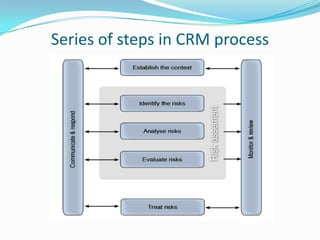
Series of steps in CRM process
What are my risk management
             responsibilities?
General staff’s responsibilities:
  1. Reporting incidents
  2. Identifying and assessing risks
  3. Providing additional information on a
     risk if requested
  4. Practicing risk management in day-to-
     day operations within their areas
What are my risk management responsibilities?
Manager’s responsibilities:
 Participating in the review and update of operational risk
  profiles;
 Ensuring that risks are identified, managed and monitored
  on an ongoing basis within their areas.
 Overseeing the coherent and consistent use of risk
  management techniques by those staff reporting to them;
 Practicing risk management in operational decision
  making and in day-to-day operations within their areas;
 Having risk management as a regular agenda item for team
  meetings; and
 Ensuring that risks are accurately and timely recorded in
  order to facilitate risk management reporting.
What is an incident?
 An incident is an event which could have or did
 lead to unintended or unnecessary harm to a
 person and/or a complaint, loss or damage.
 Incidents include near misses, adverse events,
 sentinel events and unsafe acts.
  1. The wrong dosage or route of medication administered to a
     patient
  2. A dosage of medication not given when prescribed to be
     given
  3. The wrong treatment / procedure
  4. A staff member injured in the course of their duties
  5. Injury to a visitor / patient e.g. fall on a wet floor in the
     hallway
How do I report an incident?
1. The incident should be entered into the incident
   reporting system as soon as practical, to ensure
   accurate recording of detail.

2. The staff member reporting the incident should
  also inform their manager of the incident.
What happens then?
1. The incident report will be forwarded via the system
   to your nominated manager and the
   appropriate quality manager.
2. If there are risk control activities that can be
   conducted at a local level then these should be
   commenced and the matter should be discussed at
   your team meeting.
3. Incidents or hazards that have a major or catastrophic
   potential or actual outcome will be formally
   investigated.
Inappropriate use of incident reporting

1.   To performance manage a staff member
2.   To allocate blame for an event
3.   For personal grievances
4.   For harassment or discrimination
What is a Sentinel Event?
 A sentinel event is a subset of adverse events specified
  by the MOH
 These events rarely occur but are more serious and are
  therefore reported to MOH and investigated
  immediately using a Root Cause Analysis process
 They commonly reflect hospital systems and process
  deficiencies and result in unnecessary outcomes for
  patients.

 For O&G: Maternal death from heart diseases and
  recurrent eclampsia
What is "Root Cause Analysis"?
 Root Cause Analysis (RCA) is a method of
  investigation.
 The purpose is to identify organisational
  deficiencies that may not be immediately apparent
  and which may have contributed to the cause of
  the event.
 A RCA report also includes risk reduction
 strategies to reduce the chance of a similar event
 occurring again.
What do I tell the patient and family?
 ‘Open disclosure' refers to the process of open
  communication with patients and their families
  following an adverse event
 A senior member of the managing team should be
  involved:
   1. Ward specialist/Specialist on-call
   2. CRM matron
   3. HOD if situation warrants it
 Several meetings/counseling may be necessary
 Offer support and assistance to patient and family
Safety & Security:
SAFETY:
 Think & practice risk management in operational
  decision making and in day-to-day operations in all
  areas
 Adhere to SOP and guidelines in the delivery of care


SECURITY:
 Adhere to all existing security procedures to ensure the
  safety of our patients and babies
The String Theory:
 We are all interconnected
 Effective communication reduces risks
 Develop relationships
 Teamwork makes us resilient
 We are as strong as the weakest link
 If one fails…the team fails..and the patient suffers!
Clinical Risk Management

Clinical Risk Management

  • 1.
    Dr. Harris NSuharjono Department of O&G SGH
  • 2.
  • 3.
    “Risk management isnot primarily about avoiding or mitigating claims; rather, it is a tool for improving the quality of care.”
  • 4.
    “Risk management isactually the business of all stakeholders in the organisation, doctors, nurses, allied health staff, non clinical personnel.”
  • 5.
    What is clinicalrisk management?  Clinical risk management (CRM) is an approach to improving the quality and safe delivery of health care by: I. placing special emphasis on identifying circumstances that put patients at risk of harm II. acting to prevent or control those risks.
  • 6.
    Basic questions addressedby risk management:  What could go wrong?  Risk identification  What are the chances of  Risk analysis and it going wrong and what evaluation would be the impact?  What can we do to  Risk treatment. The cost minimise the chance of of prevention is this happening or to compared with the cost mitigate damage when it of getting it wrong has gone wrong?  What can we learn from  Risk control; sharing and things that have gone learning wrong?
  • 7.
    Series of stepsin CRM process
  • 8.
    What are myrisk management responsibilities? General staff’s responsibilities: 1. Reporting incidents 2. Identifying and assessing risks 3. Providing additional information on a risk if requested 4. Practicing risk management in day-to- day operations within their areas
  • 9.
    What are myrisk management responsibilities? Manager’s responsibilities:  Participating in the review and update of operational risk profiles;  Ensuring that risks are identified, managed and monitored on an ongoing basis within their areas.  Overseeing the coherent and consistent use of risk management techniques by those staff reporting to them;  Practicing risk management in operational decision making and in day-to-day operations within their areas;  Having risk management as a regular agenda item for team meetings; and  Ensuring that risks are accurately and timely recorded in order to facilitate risk management reporting.
  • 10.
    What is anincident?  An incident is an event which could have or did lead to unintended or unnecessary harm to a person and/or a complaint, loss or damage. Incidents include near misses, adverse events, sentinel events and unsafe acts. 1. The wrong dosage or route of medication administered to a patient 2. A dosage of medication not given when prescribed to be given 3. The wrong treatment / procedure 4. A staff member injured in the course of their duties 5. Injury to a visitor / patient e.g. fall on a wet floor in the hallway
  • 11.
    How do Ireport an incident? 1. The incident should be entered into the incident reporting system as soon as practical, to ensure accurate recording of detail. 2. The staff member reporting the incident should also inform their manager of the incident.
  • 12.
    What happens then? 1.The incident report will be forwarded via the system to your nominated manager and the appropriate quality manager. 2. If there are risk control activities that can be conducted at a local level then these should be commenced and the matter should be discussed at your team meeting. 3. Incidents or hazards that have a major or catastrophic potential or actual outcome will be formally investigated.
  • 13.
    Inappropriate use ofincident reporting 1. To performance manage a staff member 2. To allocate blame for an event 3. For personal grievances 4. For harassment or discrimination
  • 14.
    What is aSentinel Event?  A sentinel event is a subset of adverse events specified by the MOH  These events rarely occur but are more serious and are therefore reported to MOH and investigated immediately using a Root Cause Analysis process  They commonly reflect hospital systems and process deficiencies and result in unnecessary outcomes for patients.  For O&G: Maternal death from heart diseases and recurrent eclampsia
  • 15.
    What is "RootCause Analysis"?  Root Cause Analysis (RCA) is a method of investigation.  The purpose is to identify organisational deficiencies that may not be immediately apparent and which may have contributed to the cause of the event.  A RCA report also includes risk reduction strategies to reduce the chance of a similar event occurring again.
  • 16.
    What do Itell the patient and family?  ‘Open disclosure' refers to the process of open communication with patients and their families following an adverse event  A senior member of the managing team should be involved: 1. Ward specialist/Specialist on-call 2. CRM matron 3. HOD if situation warrants it  Several meetings/counseling may be necessary  Offer support and assistance to patient and family
  • 17.
    Safety & Security: SAFETY: Think & practice risk management in operational decision making and in day-to-day operations in all areas  Adhere to SOP and guidelines in the delivery of care SECURITY:  Adhere to all existing security procedures to ensure the safety of our patients and babies
  • 18.
    The String Theory: We are all interconnected  Effective communication reduces risks  Develop relationships  Teamwork makes us resilient  We are as strong as the weakest link  If one fails…the team fails..and the patient suffers!