RiskIT Weeks
Be brave, be creative – try something
new with technology in your classroom
Before you start:
• To make sure your use of technology will have a
real impact on learning and teaching, test your
idea against the learning model on the next page
which was devised by Reuben Puentedura.
"Adding a digital device to the classroom without a
fundamental change in the culture of teaching and
learning will not lead to significant improvement.“
(November, 2013)
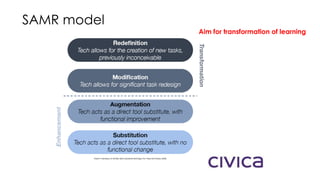
SAMR model
Aim for transformation of learning
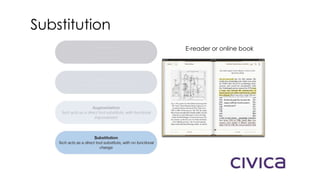
Substitution
E-reader or online book
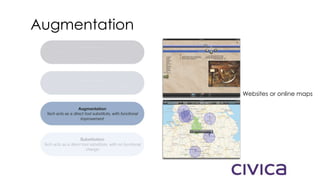
Augmentation
Websites or online maps
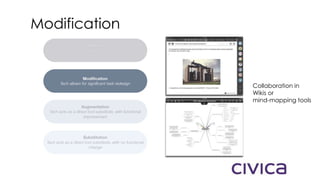
Modification
Collaboration in
Wikis or
mind-mapping tools
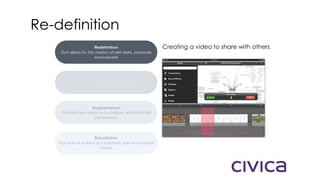
Re-definition
Creating a video to share with others
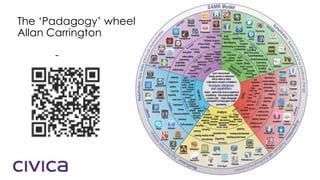
The ‘Padagogy’ wheel
Allan Carrington
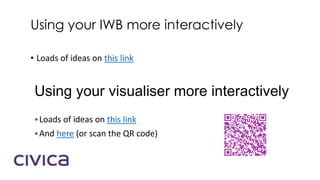
Using your visualiser more interactively
Using your IWB more interactively
• Loads of ideas on this link
Loads of ideas on this link
And here (or scan the QR code)
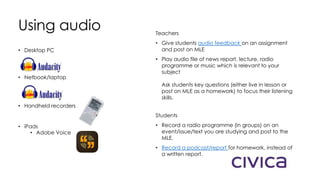
Using audio
• Desktop PC
• Netbook/laptop
• Handheld recorders
• iPads
• Adobe Voice
Teachers
• Give students audio feedback on an assignment
and post on MLE
• Play audio file of news report, lecture, radio
programme or music which is relevant to your
subject
Ask students key questions (either live in lesson or
post on MLE as a homework) to focus their listening
skills.
Students
• Record a radio programme (in groups) on an
event/issue/text you are studying and post to the
MLE.
• Record a podcast/report for homework, instead of
a written report.
Using audiovisual
• Laptop/PC/Flip camera
• Window Moviemaker
• Popplet web app
• Padlet
• A Web Whiteboard
• iPad
• Puppet Pals app
• ShowMe app
• Popplet app
• Padlet (Wallwisher app)
• Students record a presentation/TV report/playscript
• Students demonstrate a process e.g different
methods or solutions in Maths, Science, Food Tech
etc
• Students plan/brainstorm/structure a report or
piece of work.
• Collect class thoughts/pictures etc on a topic on
an online pinboard
• Teacher scaffolds lesson using a mind-mapping tool
and ties all resources to it.
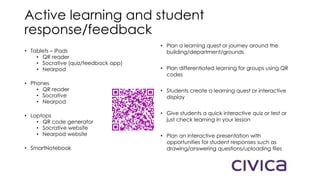
Active learning and student
response/feedback
• Tablets – iPads
• QR reader
• Socrative (quiz/feedback app)
• Nearpod
• Phones
• QR reader
• Socrative
• Nearpod
• Laptops
• QR code generator
• Socrative website
• Nearpod website
• SmartNotebook
• Plan a learning quest or journey around the
building/department/grounds
• Plan differentiated learning for groups using QR
codes
• Students create a learning quest or interactive
display
• Give students a quick interactive quiz or test or
just check learning in your lesson
• Plan an interactive presentation with
opportunities for student responses such as
drawing/answering questions/uploading files
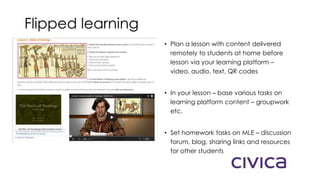
Flipped learning
• Plan a lesson with content delivered
remotely to students at home before
lesson via your learning platform –
video, audio, text, QR codes
• In your lesson – base various tasks on
learning platform content – groupwork
etc.
• Set homework tasks on MLE – discussion
forum, blog, sharing links and resources
for other students
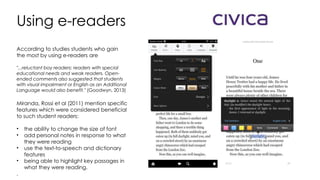
Using e-readers
According to studies students who gain
the most by using e-readers are
"...reluctant boy readers; readers with special
educational needs and weak readers. Open-
ended comments also suggested that students
with visual impairment or English as an Additional
Language would also benefit." (Goodwyn, 2013)
Miranda, Rossi et al (2011) mention specific
features which were considered beneficial
to such student readers:
• the ability to change the size of font
• add personal notes in response to what
they were reading
• use the text-to-speech and dictionary
features
• being able to highlight key passages in
what they were reading.
.
Getting started with e-readers
• Decide which group of students would benefit the most from using them - a targeted approach is key.
• Choose the right model of Kindle (if using a Kindle rather than the app) - not all Kindles have the text-to-speech feature for
example. If this is important for your students make sure you choose the audio-enabled models.
• If you are using the Kindle app on PC or iPad you will not have text-to-speech but the ipad itself has accessibility features that
can be used as a compromise.
• Buy a small selection of e-books initially, based on your chosen student group and their preferences. Research has shown that
reluctant readers like 'sharing' or reading the same book as their peers so that they can discuss it and get help with things
which puzzle them.
• Demonstrate the key features of the e-reader to your students - changing the size of the font, different backgrounds, the in-
book dictionary, highlighting and leaving comments/notes.
• Establish rules about leaving notes (remember it is the SAME book which all pupils are reading essentially) on books and how
other students can or should respond to comments.
• Set up a blog either on your Learning Platform (Sharepoint or other platform) and have students recommend books, leave
reviews etc. They can film their reviews, make podcasts or just write about it.
Digital storytelling
• Works well with ipads across a range of subjects
• Allows students to use technology to modify and redefine
(SAMR model) rather than just substitute or augment.
• Creative – reflective learning – re-create what you have
learnt into a narrative
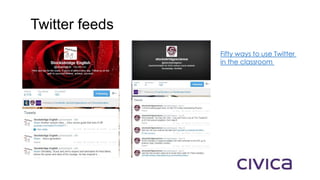
Twitter feeds
Fifty ways to use Twitter
in the classroom
Game-based learning
• Computing and coding
• Minecraft EDU
• Games Britannia
• Gamification
• World of Classcraft
• QR Codes
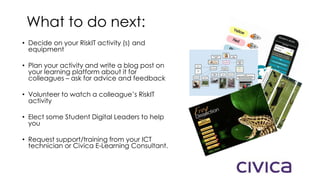
What to do next:
• Decide on your RiskIT activity (s) and
equipment
• Plan your activity and write a blog post on
your learning platform about it for
colleagues – ask for advice and feedback
• Volunteer to watch a colleague’s RiskIT
activity
• Elect some Student Digital Leaders to help
you
• Request support/training from your ICT
technician or Civica E-Learning Consultant.

Risk it

  • 1.
    RiskIT Weeks Be brave,be creative – try something new with technology in your classroom
  • 2.
    Before you start: •To make sure your use of technology will have a real impact on learning and teaching, test your idea against the learning model on the next page which was devised by Reuben Puentedura. "Adding a digital device to the classroom without a fundamental change in the culture of teaching and learning will not lead to significant improvement.“ (November, 2013)
  • 3.
    SAMR model Aim fortransformation of learning
  • 4.
  • 5.
  • 6.
  • 7.
    Re-definition Creating a videoto share with others
  • 8.
  • 9.
    Using your visualisermore interactively Using your IWB more interactively • Loads of ideas on this link Loads of ideas on this link And here (or scan the QR code)
  • 10.
    Using audio • DesktopPC • Netbook/laptop • Handheld recorders • iPads • Adobe Voice Teachers • Give students audio feedback on an assignment and post on MLE • Play audio file of news report, lecture, radio programme or music which is relevant to your subject Ask students key questions (either live in lesson or post on MLE as a homework) to focus their listening skills. Students • Record a radio programme (in groups) on an event/issue/text you are studying and post to the MLE. • Record a podcast/report for homework, instead of a written report.
  • 11.
    Using audiovisual • Laptop/PC/Flipcamera • Window Moviemaker • Popplet web app • Padlet • A Web Whiteboard • iPad • Puppet Pals app • ShowMe app • Popplet app • Padlet (Wallwisher app) • Students record a presentation/TV report/playscript • Students demonstrate a process e.g different methods or solutions in Maths, Science, Food Tech etc • Students plan/brainstorm/structure a report or piece of work. • Collect class thoughts/pictures etc on a topic on an online pinboard • Teacher scaffolds lesson using a mind-mapping tool and ties all resources to it.
  • 12.
    Active learning andstudent response/feedback • Tablets – iPads • QR reader • Socrative (quiz/feedback app) • Nearpod • Phones • QR reader • Socrative • Nearpod • Laptops • QR code generator • Socrative website • Nearpod website • SmartNotebook • Plan a learning quest or journey around the building/department/grounds • Plan differentiated learning for groups using QR codes • Students create a learning quest or interactive display • Give students a quick interactive quiz or test or just check learning in your lesson • Plan an interactive presentation with opportunities for student responses such as drawing/answering questions/uploading files
  • 13.
    Flipped learning • Plana lesson with content delivered remotely to students at home before lesson via your learning platform – video, audio, text, QR codes • In your lesson – base various tasks on learning platform content – groupwork etc. • Set homework tasks on MLE – discussion forum, blog, sharing links and resources for other students
  • 14.
    Using e-readers According tostudies students who gain the most by using e-readers are "...reluctant boy readers; readers with special educational needs and weak readers. Open- ended comments also suggested that students with visual impairment or English as an Additional Language would also benefit." (Goodwyn, 2013) Miranda, Rossi et al (2011) mention specific features which were considered beneficial to such student readers: • the ability to change the size of font • add personal notes in response to what they were reading • use the text-to-speech and dictionary features • being able to highlight key passages in what they were reading. .
  • 15.
    Getting started withe-readers • Decide which group of students would benefit the most from using them - a targeted approach is key. • Choose the right model of Kindle (if using a Kindle rather than the app) - not all Kindles have the text-to-speech feature for example. If this is important for your students make sure you choose the audio-enabled models. • If you are using the Kindle app on PC or iPad you will not have text-to-speech but the ipad itself has accessibility features that can be used as a compromise. • Buy a small selection of e-books initially, based on your chosen student group and their preferences. Research has shown that reluctant readers like 'sharing' or reading the same book as their peers so that they can discuss it and get help with things which puzzle them. • Demonstrate the key features of the e-reader to your students - changing the size of the font, different backgrounds, the in- book dictionary, highlighting and leaving comments/notes. • Establish rules about leaving notes (remember it is the SAME book which all pupils are reading essentially) on books and how other students can or should respond to comments. • Set up a blog either on your Learning Platform (Sharepoint or other platform) and have students recommend books, leave reviews etc. They can film their reviews, make podcasts or just write about it.
  • 16.
    Digital storytelling • Workswell with ipads across a range of subjects • Allows students to use technology to modify and redefine (SAMR model) rather than just substitute or augment. • Creative – reflective learning – re-create what you have learnt into a narrative
  • 17.
    Twitter feeds Fifty waysto use Twitter in the classroom
  • 18.
    Game-based learning • Computingand coding • Minecraft EDU • Games Britannia • Gamification • World of Classcraft • QR Codes
  • 19.
    What to donext: • Decide on your RiskIT activity (s) and equipment • Plan your activity and write a blog post on your learning platform about it for colleagues – ask for advice and feedback • Volunteer to watch a colleague’s RiskIT activity • Elect some Student Digital Leaders to help you • Request support/training from your ICT technician or Civica E-Learning Consultant.