

Yarn
The
twisted
from of
fiber is
called
yarn.
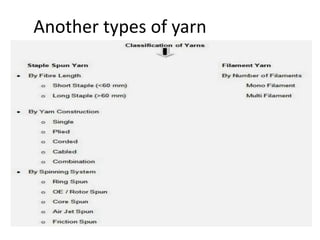
Another types of yarn
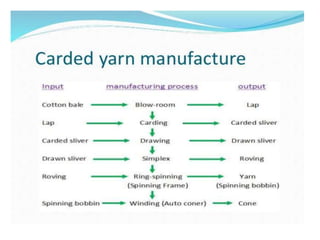
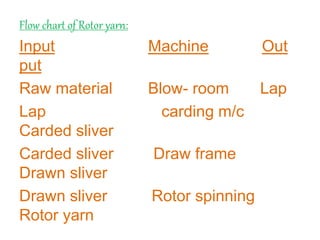
Flow chart of Rotor yarn:
Input Machine Out
put
Raw material Blow- room Lap
Lap carding m/c
Carded sliver
Carded sliver Draw frame
Drawn sliver
Drawn sliver Rotor spinning
Rotor yarn
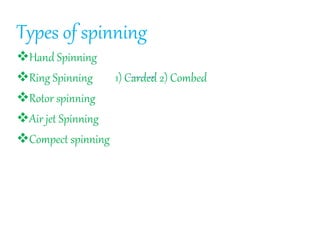
Types of spinning
Hand Spinning
Ring Spinning 1) Carded 2) Combed
Rotor spinning
Air jet Spinning
Compect spinning
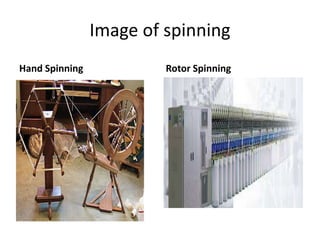
Image of spinning
Hand Spinning Rotor Spinning
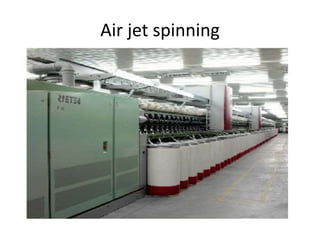
Air jet spinning
The following properties of cotton fibers are considered for
spinning.
oSpinning limit
oYarn strength
oYarn evenness
oYarn fullness
oDrop of the fiber product
oLuster
oHandle
oProductivity
oFibre fineness
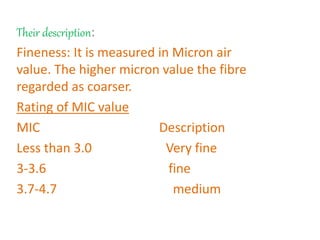
Their description:
Fineness: It is measured in Micron air
value. The higher micron value the fibre
regarded as coarser.
Rating of MIC value
MIC Description
Less than 3.0 Very fine
3-3.6 fine
3.7-4.7 medium
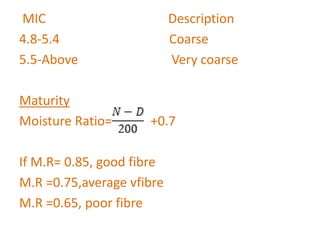
MIC Description
4.8-5.4 Coarse
5.5-Above Very coarse
Maturity
Moisture Ratio= +0.7
If M.R= 0.85, good fibre
M.R =0.75,average vfibre
M.R =0.65, poor fibre
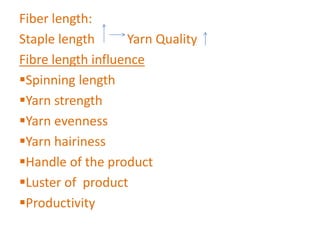
Fiber length:
Staple length Yarn Quality
Fibre length influence
Spinning length
Yarn strength
Yarn evenness
Yarn hairiness
Handle of the product
Luster of product
Productivity
Length uniformity:
Length uniformity influences on-
Yarn regularity
Ends down
High wastage in combing.
High liberation and machine
contamination in spinning,weaving and
knitting.
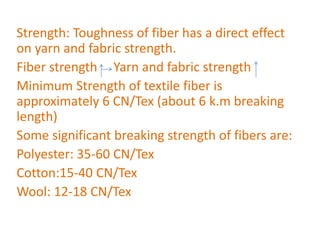
Strength: Toughness of fiber has a direct effect
on yarn and fabric strength.
Fiber strength Yarn and fabric strength
Minimum Strength of textile fiber is
approximately 6 CN/Tex (about 6 k.m breaking
length)
Some significant breaking strength of fibers are:
Polyester: 35-60 CN/Tex
Cotton:15-40 CN/Tex
Wool: 12-18 CN/Tex
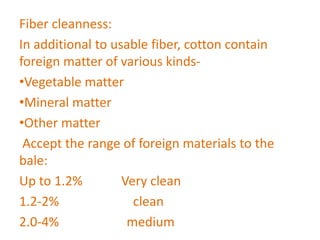
Fiber cleanness:
In additional to usable fiber, cotton contain
foreign matter of various kinds-
•Vegetable matter
•Mineral matter
•Other matter
Accept the range of foreign materials to the
bale:
Up to 1.2% Very clean
1.2-2% clean
2.0-4% medium
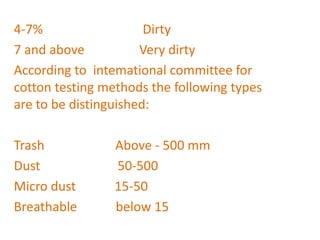
4-7% Dirty
7 and above Very dirty
According to intemational committee for
cotton testing methods the following types
are to be distinguished:
Trash Above - 500 mm
Dust 50-500
Micro dust 15-50
Breathable below 15
Bale management: Testing, sorting and
mixing bales according to properties of
fiber for producing specific good quality
yarn at minimum cost is called Bale
management.
Object of Bale management:
An evening out of the quality
characteristics .
A means of avoiding quality jumps.
A possibility of reducing costs. As a result
of improved of the fiber characteristics
Importance of bale management:
If bale management is absent-
Lot to lot variation is called fabric barre
effect.
In weaving, shade , variation.
In knitted yarn, color variation.
About Mixing and Blending:
Mixing: If different grade of same fibres are kept
together , then it is called mixing.
For example: 50% of 1 and 1/8 staple length of
cotton + 50% of 1 ¼ staple length of cotton.
Types of mixing:
1)Volume mixing
2)Wt mixing
3)Hand stock mixing
4) Bin mixing
5) Mixing by hopper
6)Lap mixing
7)Card mixing
8) Sliver mixing
9) Automatic mixing
Blending: When different fibres of same or
different grades are kept together, then it is
called blending.
Objects of blending:
 To achieve uniform quality.
To improve processing performance.
To reduce and control of production cost.
To meet function and end used requirement.
Aesthetic i.e Fashion, texture ,drop luster etc
To give the required characteristics to the end
product.
To achieve effects by carrying color, fibre
characteristics and so on.
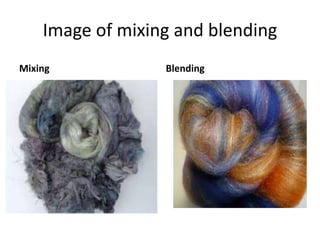
Image of mixing and blending
Mixing Blending
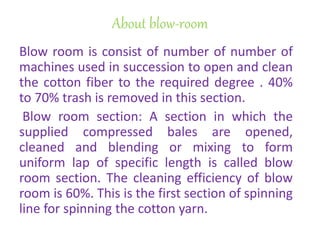
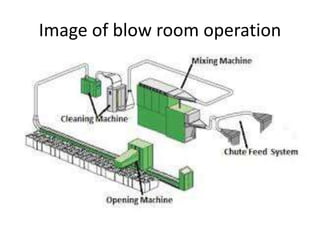
About blow-room
Blow room is consist of number of number of
machines used in succession to open and clean
the cotton fiber to the required degree . 40%
to 70% trash is removed in this section.
Blow room section: A section in which the
supplied compressed bales are opened,
cleaned and blending or mixing to form
uniform lap of specific length is called blow
room section. The cleaning efficiency of blow
room is 60%. This is the first section of spinning
line for spinning the cotton yarn.
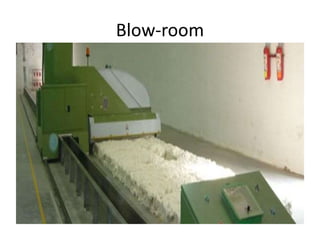
Blow-room
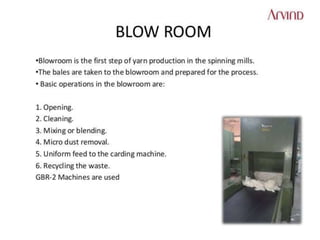
Operation in blow room
1) Opening
2) Cleaning: To remove the dirt, dust. Broken
seeds, broken leafs , stalks and another
materials from the fibers
3) Blending or mixing: To make good value
of yarn and to decrease the production
cost by mixing different grade of fibers.
4) Lap formation :a) To transfer the opened
and cleaned fibers in to a sheet from of
define width and uniform unit length which
is called
Lap.
b)To roll the lap of predetermined length is
cylindrical shape around a lap pin.
c) To transfer the lap from . The lap pin to a rod
to suitable handle and feed it to substance
processing carding machine.
Image of blow room operation
Rimon yarn

Rimon yarn

  • 2.
  • 4.
  • 7.
    Flow chart ofRotor yarn: Input Machine Out put Raw material Blow- room Lap Lap carding m/c Carded sliver Carded sliver Draw frame Drawn sliver Drawn sliver Rotor spinning Rotor yarn
  • 11.
    Types of spinning HandSpinning Ring Spinning 1) Carded 2) Combed Rotor spinning Air jet Spinning Compect spinning
  • 12.
    Image of spinning HandSpinning Rotor Spinning
  • 13.
  • 14.
    The following propertiesof cotton fibers are considered for spinning. oSpinning limit oYarn strength oYarn evenness oYarn fullness oDrop of the fiber product oLuster oHandle oProductivity oFibre fineness
  • 15.
    Their description: Fineness: Itis measured in Micron air value. The higher micron value the fibre regarded as coarser. Rating of MIC value MIC Description Less than 3.0 Very fine 3-3.6 fine 3.7-4.7 medium
  • 16.
    MIC Description 4.8-5.4 Coarse 5.5-AboveVery coarse Maturity Moisture Ratio= +0.7 If M.R= 0.85, good fibre M.R =0.75,average vfibre M.R =0.65, poor fibre
  • 17.
    Fiber length: Staple lengthYarn Quality Fibre length influence Spinning length Yarn strength Yarn evenness Yarn hairiness Handle of the product Luster of product Productivity
  • 18.
    Length uniformity: Length uniformityinfluences on- Yarn regularity Ends down High wastage in combing. High liberation and machine contamination in spinning,weaving and knitting.
  • 19.
    Strength: Toughness offiber has a direct effect on yarn and fabric strength. Fiber strength Yarn and fabric strength Minimum Strength of textile fiber is approximately 6 CN/Tex (about 6 k.m breaking length) Some significant breaking strength of fibers are: Polyester: 35-60 CN/Tex Cotton:15-40 CN/Tex Wool: 12-18 CN/Tex
  • 20.
    Fiber cleanness: In additionalto usable fiber, cotton contain foreign matter of various kinds- •Vegetable matter •Mineral matter •Other matter Accept the range of foreign materials to the bale: Up to 1.2% Very clean 1.2-2% clean 2.0-4% medium
  • 21.
    4-7% Dirty 7 andabove Very dirty According to intemational committee for cotton testing methods the following types are to be distinguished: Trash Above - 500 mm Dust 50-500 Micro dust 15-50 Breathable below 15
  • 22.
    Bale management: Testing,sorting and mixing bales according to properties of fiber for producing specific good quality yarn at minimum cost is called Bale management. Object of Bale management: An evening out of the quality characteristics . A means of avoiding quality jumps. A possibility of reducing costs. As a result of improved of the fiber characteristics
  • 23.
    Importance of balemanagement: If bale management is absent- Lot to lot variation is called fabric barre effect. In weaving, shade , variation. In knitted yarn, color variation.
  • 24.
    About Mixing andBlending: Mixing: If different grade of same fibres are kept together , then it is called mixing. For example: 50% of 1 and 1/8 staple length of cotton + 50% of 1 ¼ staple length of cotton. Types of mixing: 1)Volume mixing 2)Wt mixing 3)Hand stock mixing
  • 25.
    4) Bin mixing 5)Mixing by hopper 6)Lap mixing 7)Card mixing 8) Sliver mixing 9) Automatic mixing Blending: When different fibres of same or different grades are kept together, then it is called blending.
  • 26.
    Objects of blending: To achieve uniform quality. To improve processing performance. To reduce and control of production cost. To meet function and end used requirement. Aesthetic i.e Fashion, texture ,drop luster etc To give the required characteristics to the end product. To achieve effects by carrying color, fibre characteristics and so on.
  • 27.
    Image of mixingand blending Mixing Blending
  • 28.
    About blow-room Blow roomis consist of number of number of machines used in succession to open and clean the cotton fiber to the required degree . 40% to 70% trash is removed in this section. Blow room section: A section in which the supplied compressed bales are opened, cleaned and blending or mixing to form uniform lap of specific length is called blow room section. The cleaning efficiency of blow room is 60%. This is the first section of spinning line for spinning the cotton yarn.
  • 30.
  • 31.
    Operation in blowroom 1) Opening 2) Cleaning: To remove the dirt, dust. Broken seeds, broken leafs , stalks and another materials from the fibers 3) Blending or mixing: To make good value of yarn and to decrease the production cost by mixing different grade of fibers. 4) Lap formation :a) To transfer the opened and cleaned fibers in to a sheet from of define width and uniform unit length which is called
  • 32.
    Lap. b)To roll thelap of predetermined length is cylindrical shape around a lap pin. c) To transfer the lap from . The lap pin to a rod to suitable handle and feed it to substance processing carding machine.
  • 33.
    Image of blowroom operation