RHENIUM
Who discovered it? 
Ida tacke Noddack 
Walter Noddack 
Otto Berg 
In 1925 at Germany
Properties 
• Symbol: Re 
• Atomic number: 75 
• Atomic mass: 186.207 
• State: Solid 
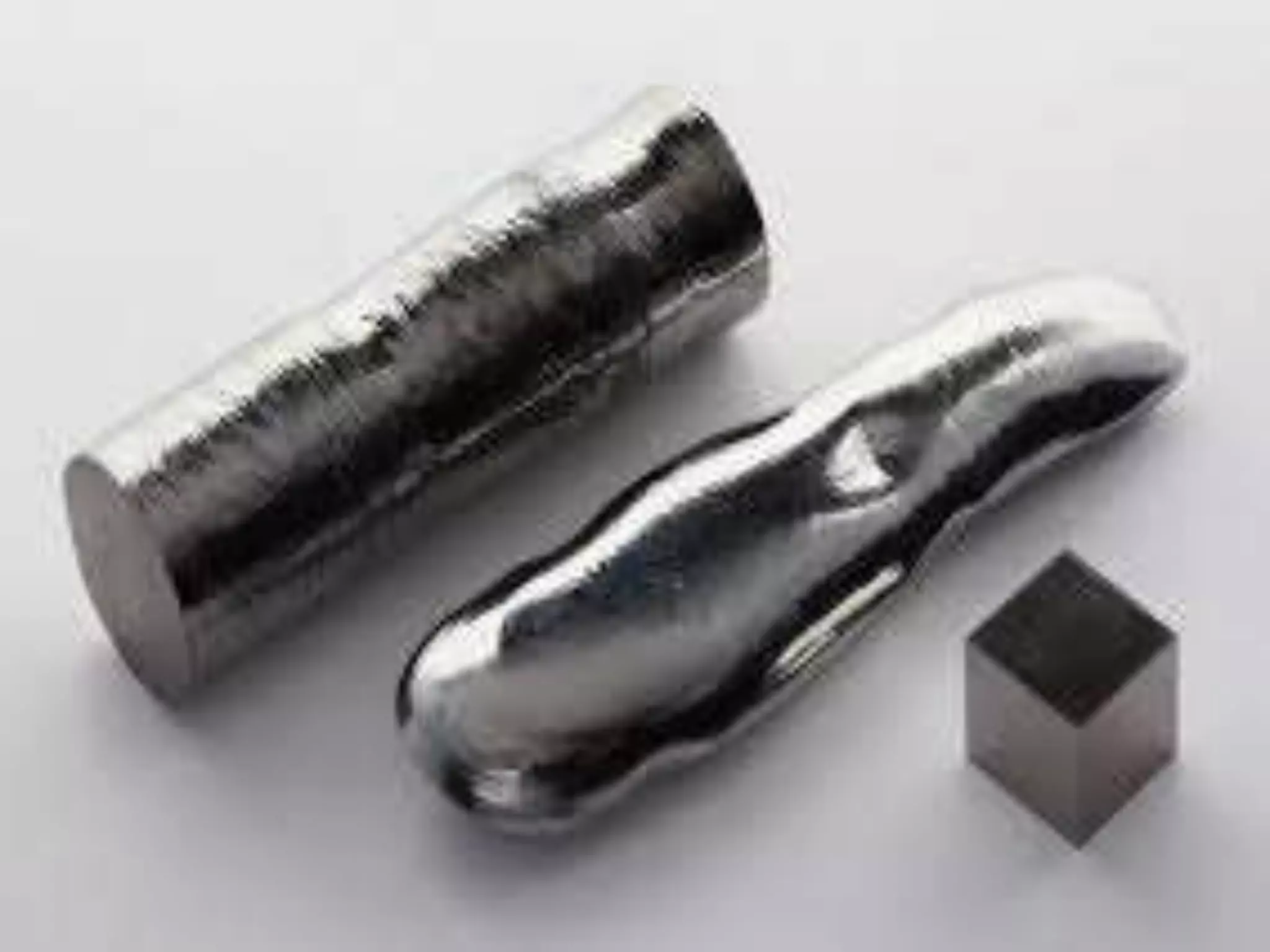
• Color: Greyish white 
• Melting point: 3186 oC 
• Boiling point: 5596 oC
• Rhenium is a ductile, malleable, silvery metal. 
Ductile means capable of being drawn into thin 
wires. Malleable means capable of being 
hammered into thin sheets. 
• Rhenium is a moderately stable metal. It does not 
react with oxygen and some acids very readily. 
But it does react with strong acids such as nitric 
acid (HNO 3 ) and sulfuric acid (H 2 SO 4 ).
Occure In nature 
• About a third of all rhenium used in the United 
States comes from copper and molybdenum ores 
in the Western states. It is obtained during the 
process of copper mining. Two-thirds are 
imported from other countries, primarily Chile, 
Germany, and the United Kingdom. The principal 
ores of rhenium are molybdenite, gadolinite, and 
columbite. 
• Rhenium is one of the rarest elements in the 
world. Its abundance is thought to be about one 
part per billion.
Compound 
• Fluorides 
• Rhenium hexafluoride: ReF6 
• Rhenium tetrafluoride: ReF4 
• Rhenium pentafluoride: ReF5 
• Rhenium heptafluoride: ReF7 
• Chlorides 
• Rhenium hexachloride: ReCl6 
• Rhenium tetrachloride: ReCl4 
• Rhenium pentachloride: ReCl5 
• Trirhenium nonachloride: [ReCl3]3 
• Bromides 
• Rhenium tetrabromide: ReBr4 
• Rhenium pentabromide: ReBr5 
• Trirhenium nonabromide: [ReBr3]3
• Iodides 
• Rhenium tetraiodide: ReI4 
• Trirhenium nonaiodide: [ReI3]3 
• Oxides 
• Rhenium dioxide: ReO2 
• Rhenium trioxide: ReO3 
• Dirhenium trioxide: Re2O3 
• Dirhenium heptoxide: Re2O7 
• Sulfides 
• Rhenium disulphide: ReS2 
• Dirhenium heptasulphide: Re2S7 
• Selenides 
• none listed 
• Tellurides 
• Rhenium ditelluride: ReTe2
Reaction 
• Reaction of rhenium with air 
4Re(s) + 7O2(g) → 2Re2O7(s) 
• Reaction of rhenium with water 
Rhenium does not react with water under 
normal conditions.
• Reaction of rhenium with the halogens 
• Re(s) + 3F2(g) → ReF6(s) 
• 2Re(s) + 7F2(g) → 2ReF7(s)
• Reaction of rhenium with acids 
• In similar fashion to technetium, immediately 
above rhenium in the periodic table, rhenium is 
insoluble in hydrochloric acid (HCl) and 
hydrofluoric acid (HF). It does dissolve in nitric 
acid, HNO3, or concentrated sulphuric acid, 
H2SO4, both of which are oxidizing, to form 
solutions of perrhenic acid, HReO4. In this form, 
the rhenium is in the formal +7 oxidation state.
WHAT IS IT USED FOR? 
motor 
Rhenium wire 
Oven 
Turbines engines
FACTS: 
May cause eye and skin 
irritation. Rhenium Liquid 
may cause burns to skin and 
eyes. May cause irritation of 
the digestive tract when 
ingested. 
The usual commercial 
Form of the elment is powder 
But it can also be found consolidated 
It can be bent, coiled or rolled.

Rhenium

  • 1.
  • 2.
    Who discovered it? Ida tacke Noddack Walter Noddack Otto Berg In 1925 at Germany
  • 3.
    Properties • Symbol:Re • Atomic number: 75 • Atomic mass: 186.207 • State: Solid • Color: Greyish white • Melting point: 3186 oC • Boiling point: 5596 oC
  • 4.
    • Rhenium isa ductile, malleable, silvery metal. Ductile means capable of being drawn into thin wires. Malleable means capable of being hammered into thin sheets. • Rhenium is a moderately stable metal. It does not react with oxygen and some acids very readily. But it does react with strong acids such as nitric acid (HNO 3 ) and sulfuric acid (H 2 SO 4 ).
  • 5.
    Occure In nature • About a third of all rhenium used in the United States comes from copper and molybdenum ores in the Western states. It is obtained during the process of copper mining. Two-thirds are imported from other countries, primarily Chile, Germany, and the United Kingdom. The principal ores of rhenium are molybdenite, gadolinite, and columbite. • Rhenium is one of the rarest elements in the world. Its abundance is thought to be about one part per billion.
  • 6.
    Compound • Fluorides • Rhenium hexafluoride: ReF6 • Rhenium tetrafluoride: ReF4 • Rhenium pentafluoride: ReF5 • Rhenium heptafluoride: ReF7 • Chlorides • Rhenium hexachloride: ReCl6 • Rhenium tetrachloride: ReCl4 • Rhenium pentachloride: ReCl5 • Trirhenium nonachloride: [ReCl3]3 • Bromides • Rhenium tetrabromide: ReBr4 • Rhenium pentabromide: ReBr5 • Trirhenium nonabromide: [ReBr3]3
  • 7.
    • Iodides •Rhenium tetraiodide: ReI4 • Trirhenium nonaiodide: [ReI3]3 • Oxides • Rhenium dioxide: ReO2 • Rhenium trioxide: ReO3 • Dirhenium trioxide: Re2O3 • Dirhenium heptoxide: Re2O7 • Sulfides • Rhenium disulphide: ReS2 • Dirhenium heptasulphide: Re2S7 • Selenides • none listed • Tellurides • Rhenium ditelluride: ReTe2
  • 8.
    Reaction • Reactionof rhenium with air 4Re(s) + 7O2(g) → 2Re2O7(s) • Reaction of rhenium with water Rhenium does not react with water under normal conditions.
  • 9.
    • Reaction ofrhenium with the halogens • Re(s) + 3F2(g) → ReF6(s) • 2Re(s) + 7F2(g) → 2ReF7(s)
  • 10.
    • Reaction ofrhenium with acids • In similar fashion to technetium, immediately above rhenium in the periodic table, rhenium is insoluble in hydrochloric acid (HCl) and hydrofluoric acid (HF). It does dissolve in nitric acid, HNO3, or concentrated sulphuric acid, H2SO4, both of which are oxidizing, to form solutions of perrhenic acid, HReO4. In this form, the rhenium is in the formal +7 oxidation state.
  • 12.
    WHAT IS ITUSED FOR? motor Rhenium wire Oven Turbines engines
  • 13.
    FACTS: May causeeye and skin irritation. Rhenium Liquid may cause burns to skin and eyes. May cause irritation of the digestive tract when ingested. The usual commercial Form of the elment is powder But it can also be found consolidated It can be bent, coiled or rolled.