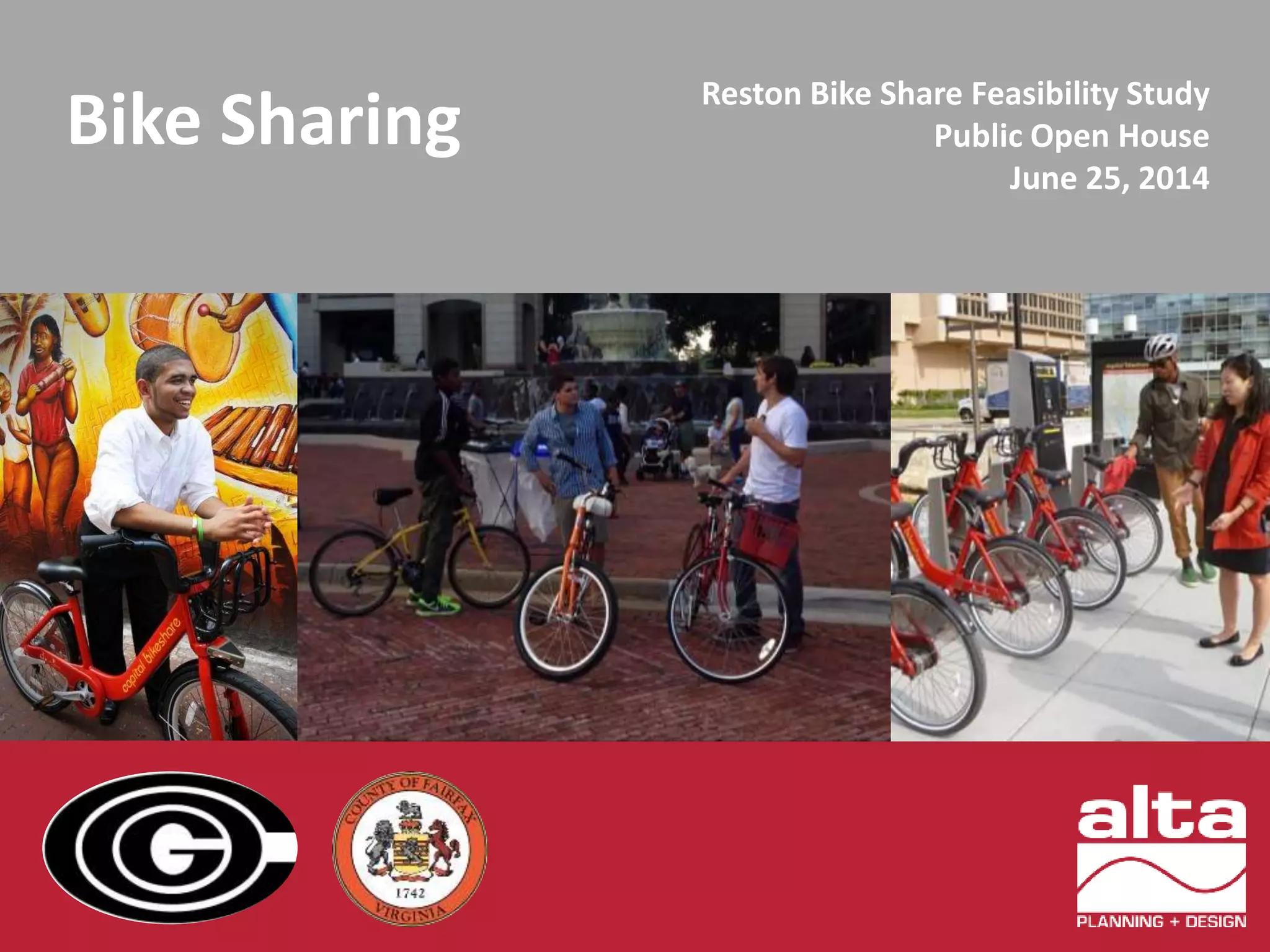
Bike Sharing Reston Bike Share Feasibility Study 
Public Open House 
June 25, 2014
Reston Bike Share Feasibility Study 
• Fairfax County Department of Transportation was 
awarded technical assistance to examine the 
feasibility of bike sharing for Reston 
• Project funded by the Transportation Planning 
Board (TPB) of the Metropolitan Washington 
Council of Governments (MWCOG) 
• Part of the Transportation/Land Use Connections 
(TLC) program
What is Bike Sharing? 
A network of bicycles 
distributed around an 
area that allow short, one-way 
trips from one 
location to another. 
A cost-effective mobility 
option for trips too far to 
walk, but not long enough 
to take transit or drive. 
Think of it as another form 
of transit 
A relatively inexpensive and 
quick implementation 
extension to local public 
transportation offerings
Open House Topics 
• Feasibility study process 
• Vision and goals 
• Proposed local system 
• Input information 
• Opportunities & challenges 
• Station locations and sizes 
• Station siting 
• Costs and funding 
• Implementation 
• Conclusions
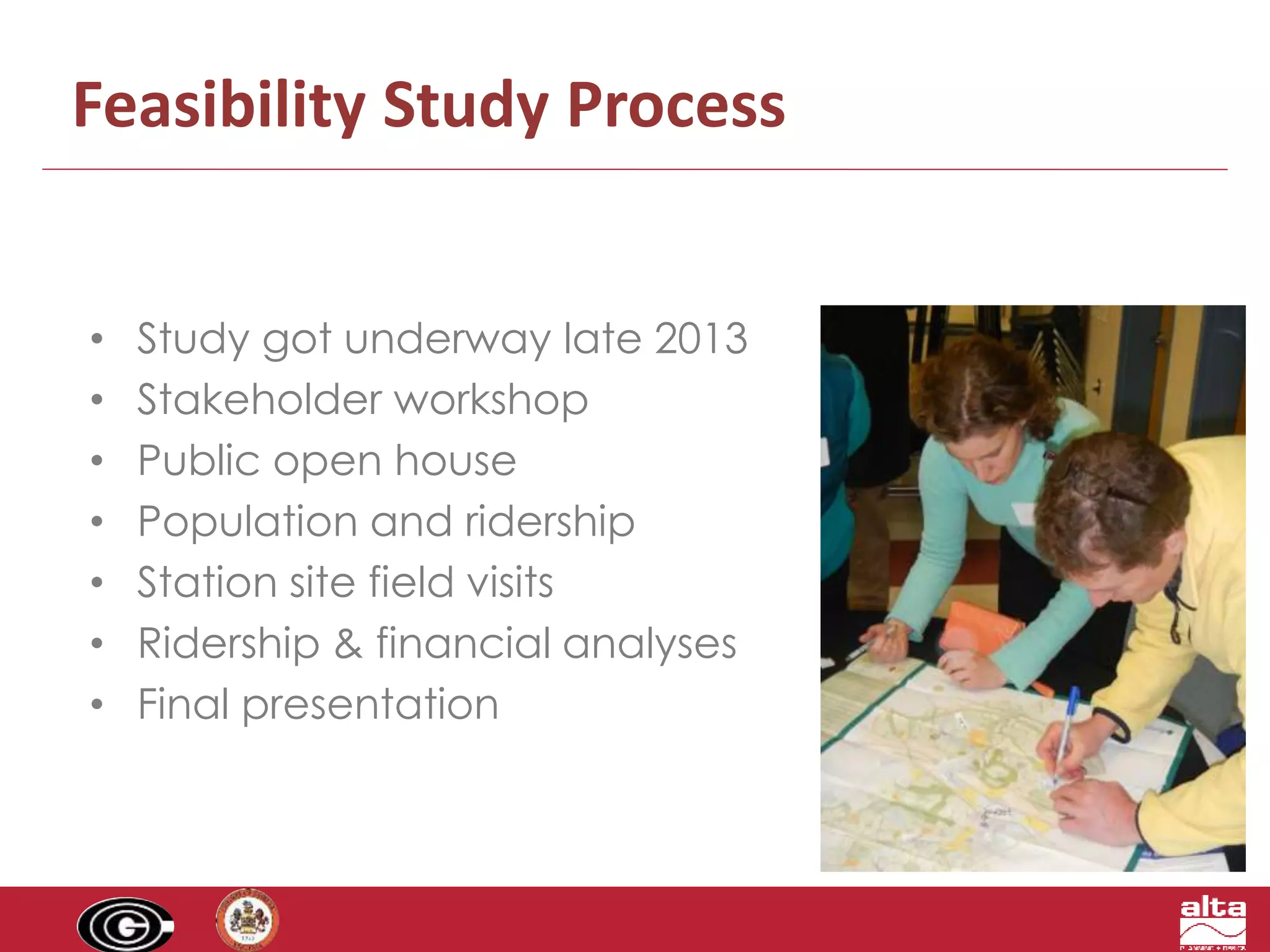
Feasibility Study Process 
• Study got underway late 2013 
• Stakeholder workshop 
• Public open house 
• Population and ridership 
• Station site field visits 
• Ridership & financial analyses 
• Final presentation
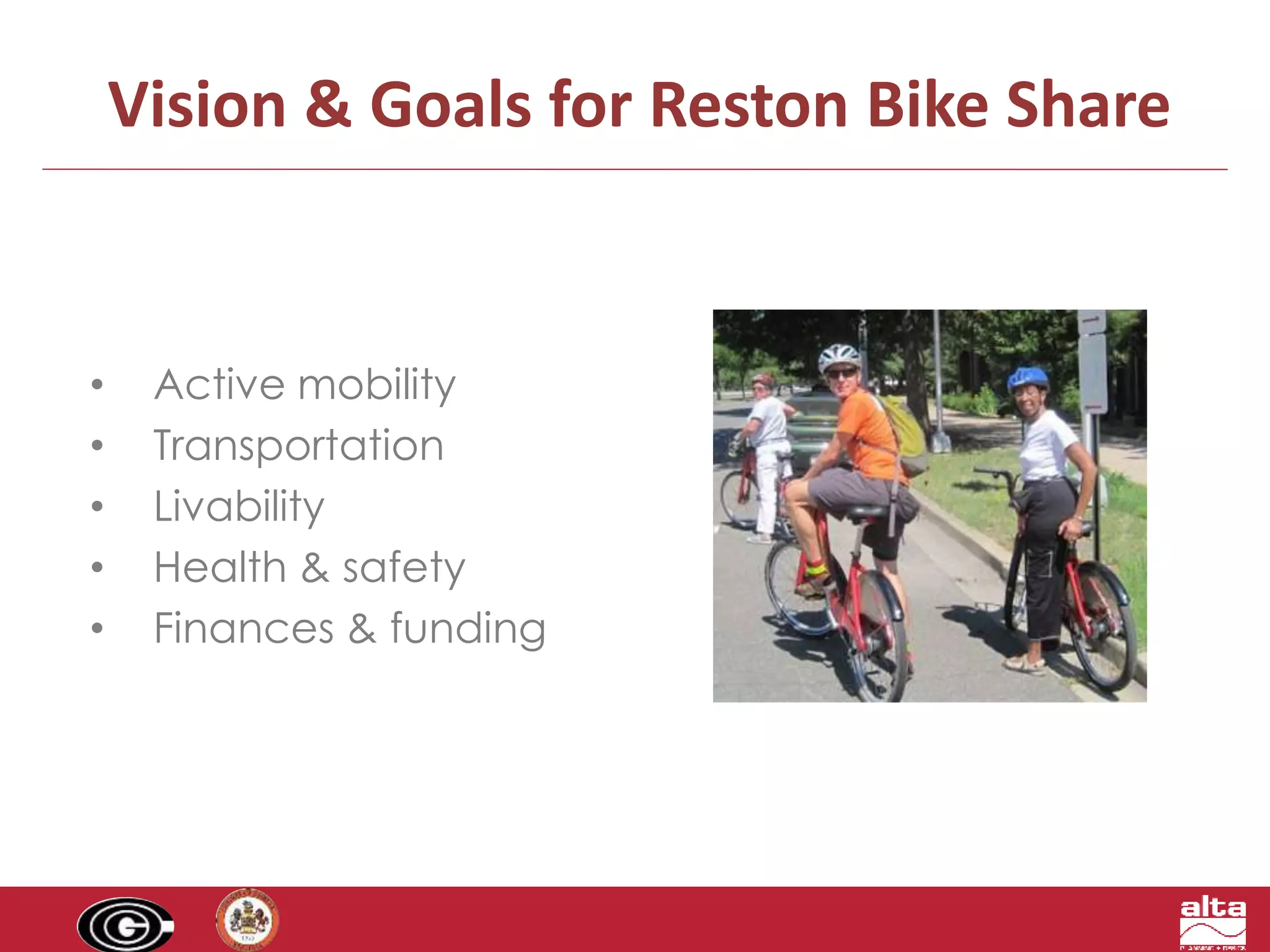
Vision & Goals for Reston Bike Share 
• Active mobility 
• Transportation 
• Livability 
• Health & safety 
• Finances & funding
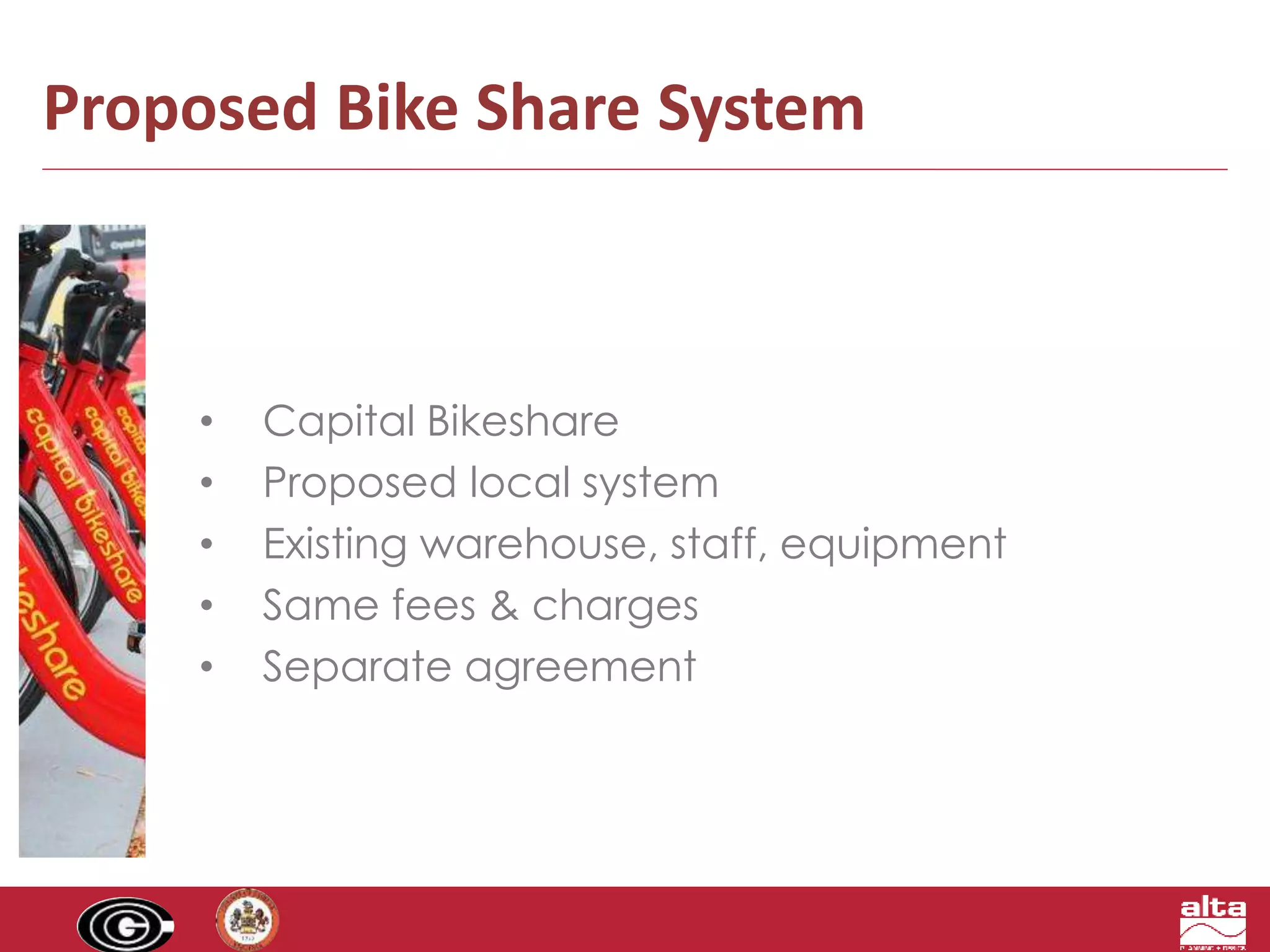
Proposed Bike Share System 
• Capital Bikeshare 
• Proposed local system 
• Existing warehouse, staff, equipment 
• Same fees & charges 
• Separate agreement
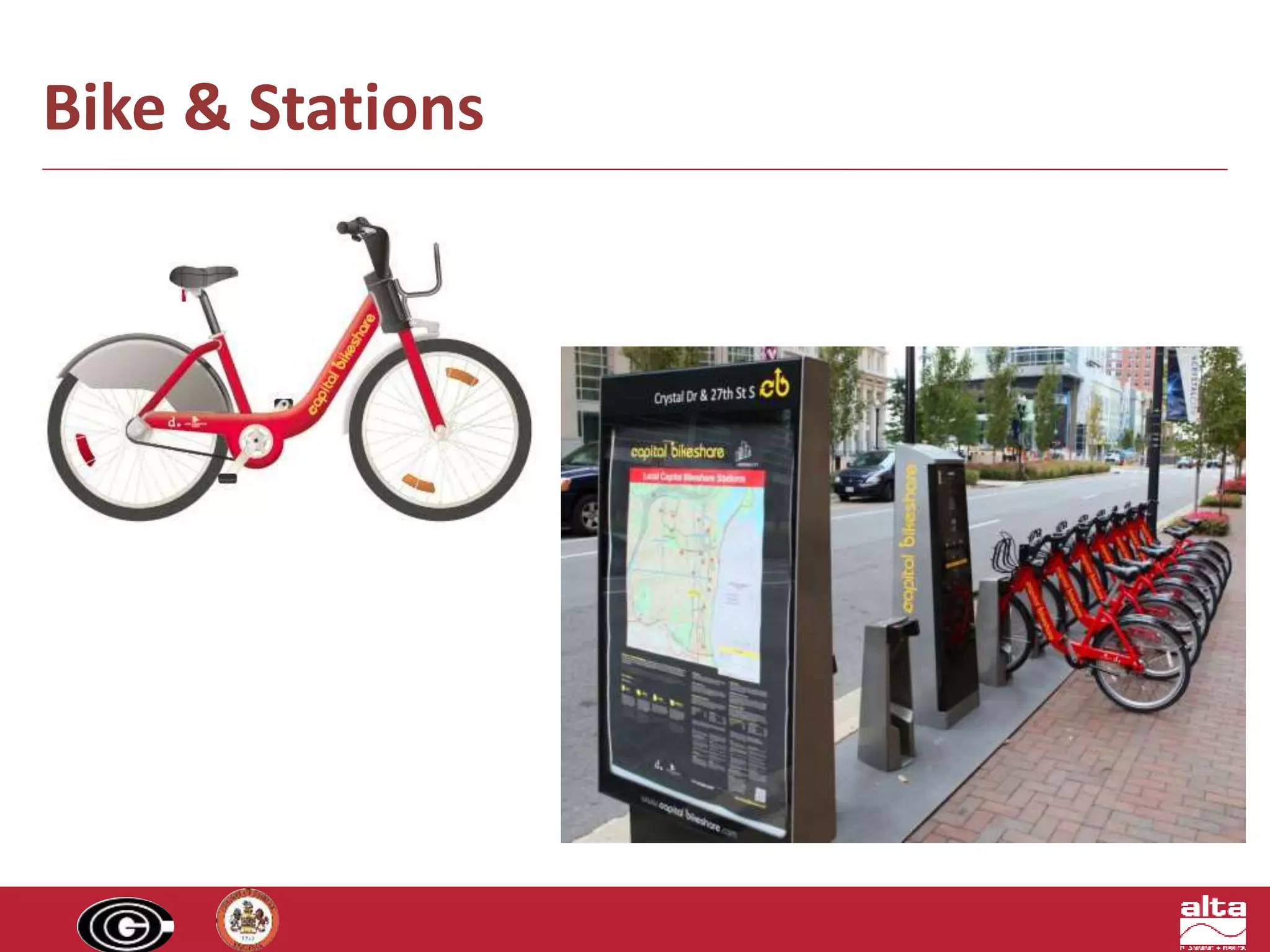
Bike & Stations
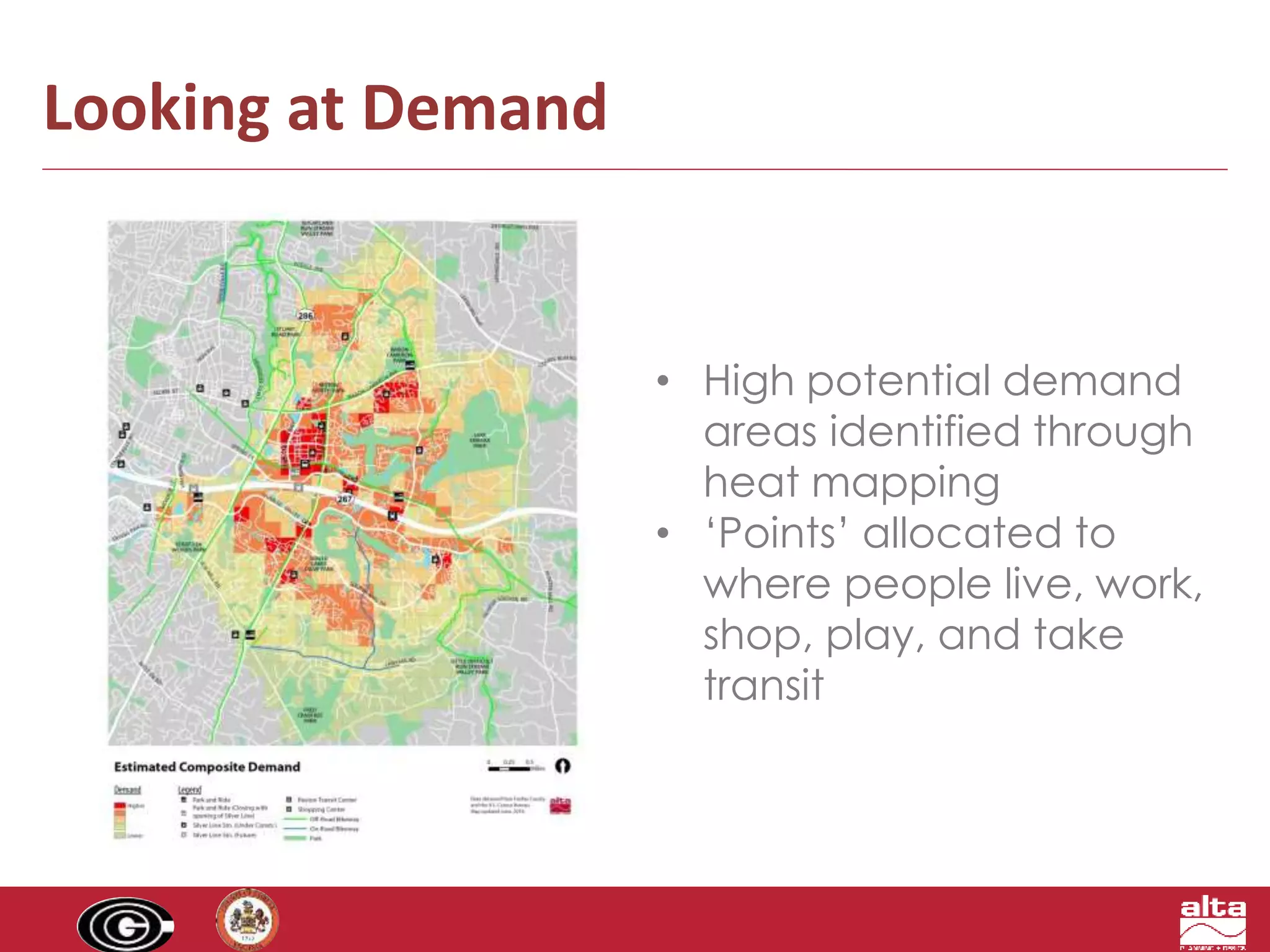
Looking at Demand 
• High potential demand 
areas identified through 
heat mapping 
• ‘Points’ allocated to 
where people live, work, 
shop, play, and take 
transit
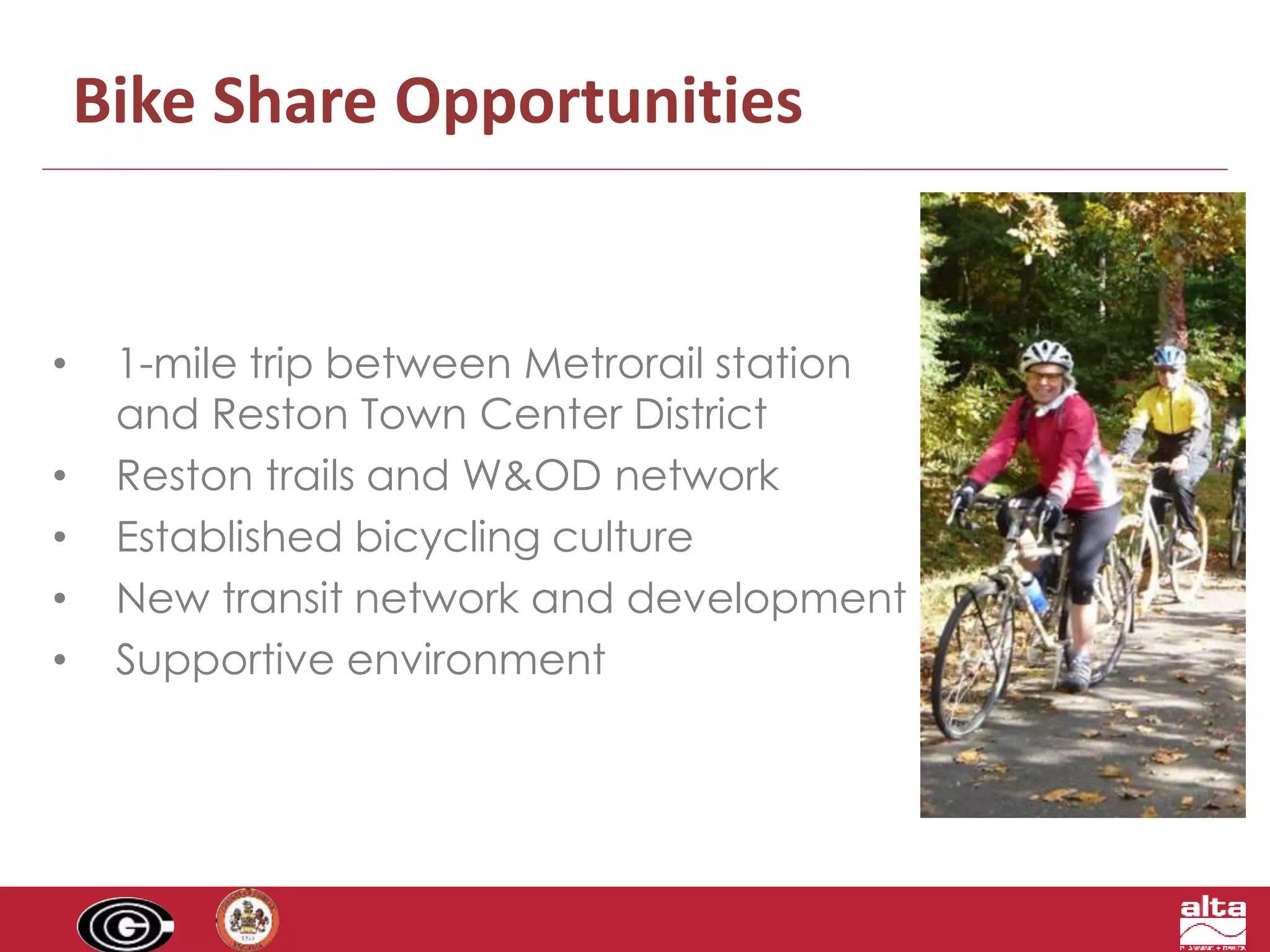
Bike Share Opportunities 
• 1-mile trip between Metrorail station 
and Reston Town Center District 
• Reston trails and W&OD network 
• Established bicycling culture 
• New transit network and development 
• Supportive environment
Bike Share Challenges 
• Community densities and trip generation 
• Locating stations on private property 
• Identifying funding for capital and operation 
• Access and proximity for low-income users 
• Trail snow removal, lighting and access hours 
• Route wayfinding and sign posting
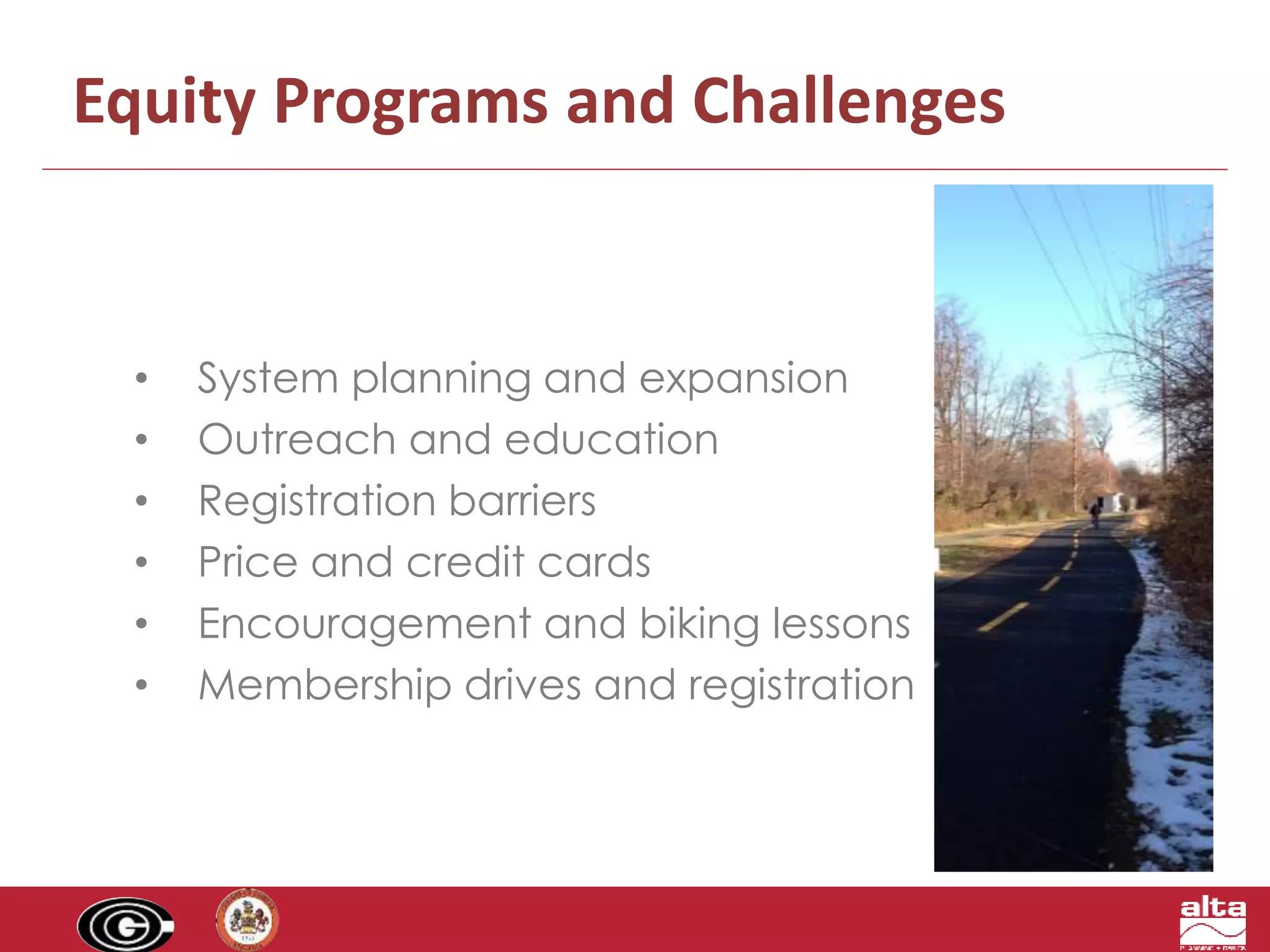
Equity Programs and Challenges 
• System planning and expansion 
• Outreach and education 
• Registration barriers 
• Price and credit cards 
• Encouragement and biking lessons 
• Membership drives and registration
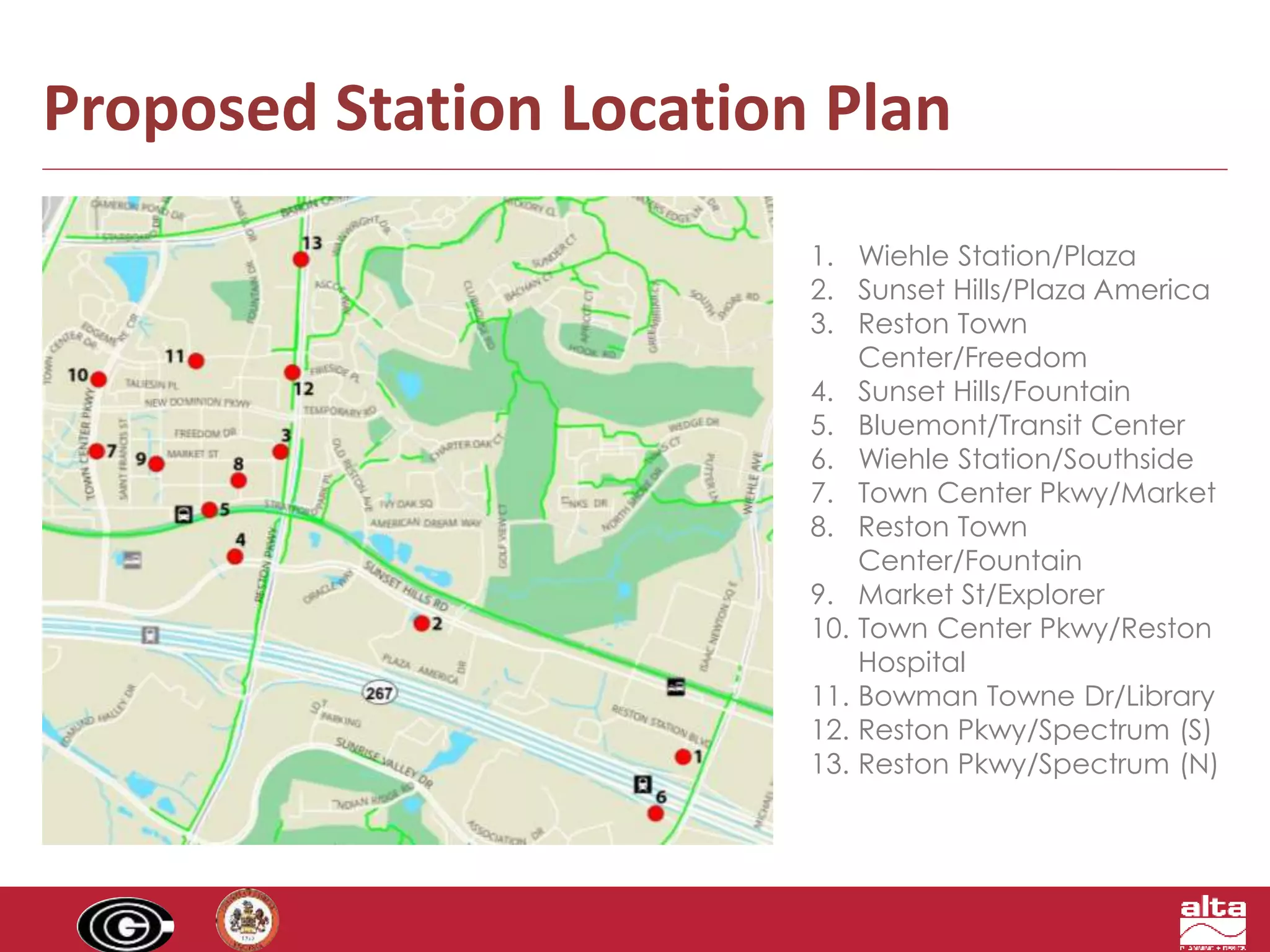
Proposed Station Location Plan 
1. Wiehle Station/Plaza 
2. Sunset Hills/Plaza America 
3. Reston Town 
Center/Freedom 
4. Sunset Hills/Fountain 
5. Bluemont/Transit Center 
6. Wiehle Station/Southside 
7. Town Center Pkwy/Market 
8. Reston Town 
Center/Fountain 
9. Market St/Explorer 
10. Town Center Pkwy/Reston 
Hospital 
11. Bowman Towne Dr/Library 
12. Reston Pkwy/Spectrum (S) 
13. Reston Pkwy/Spectrum (N)
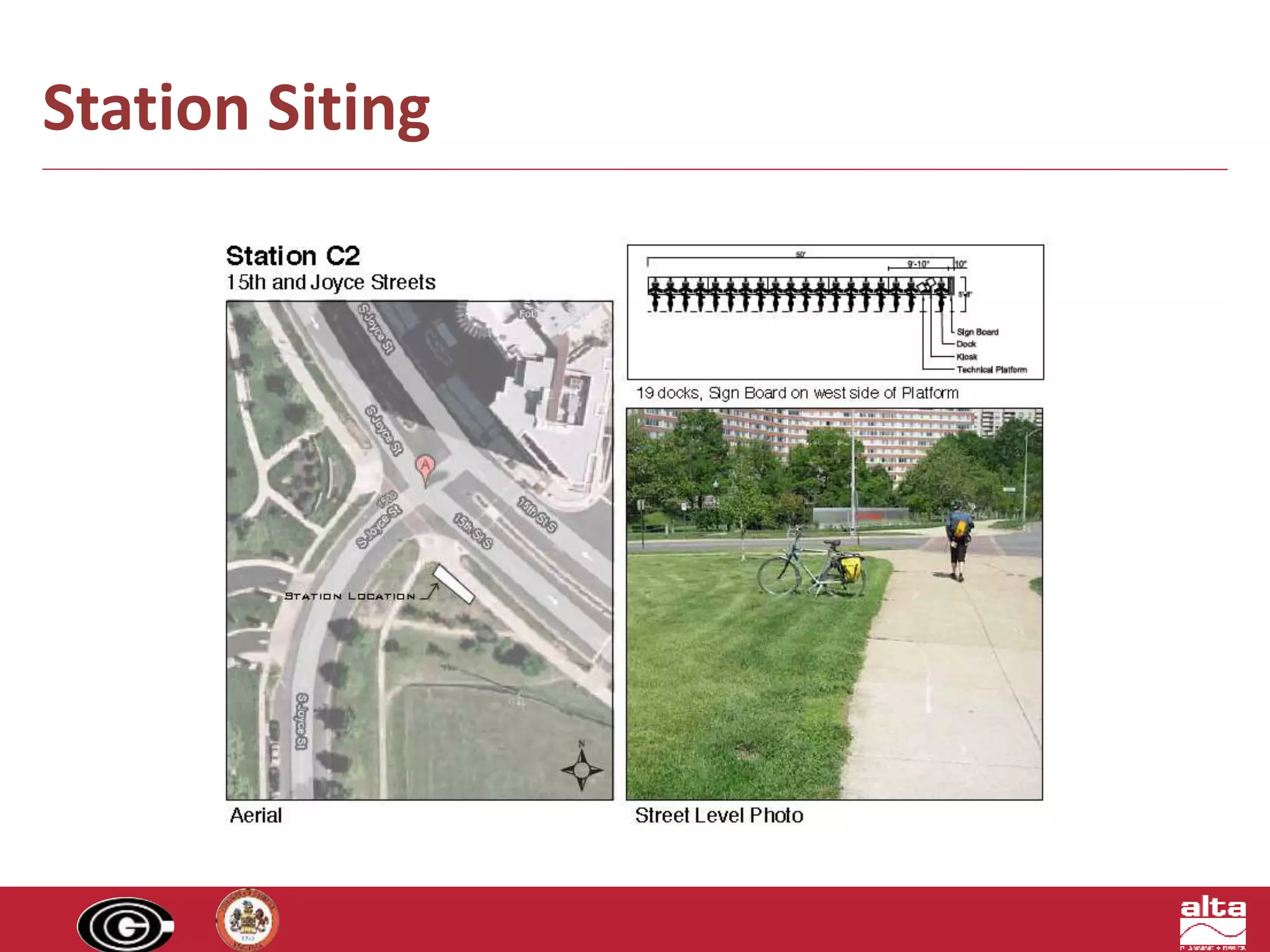
Station Siting
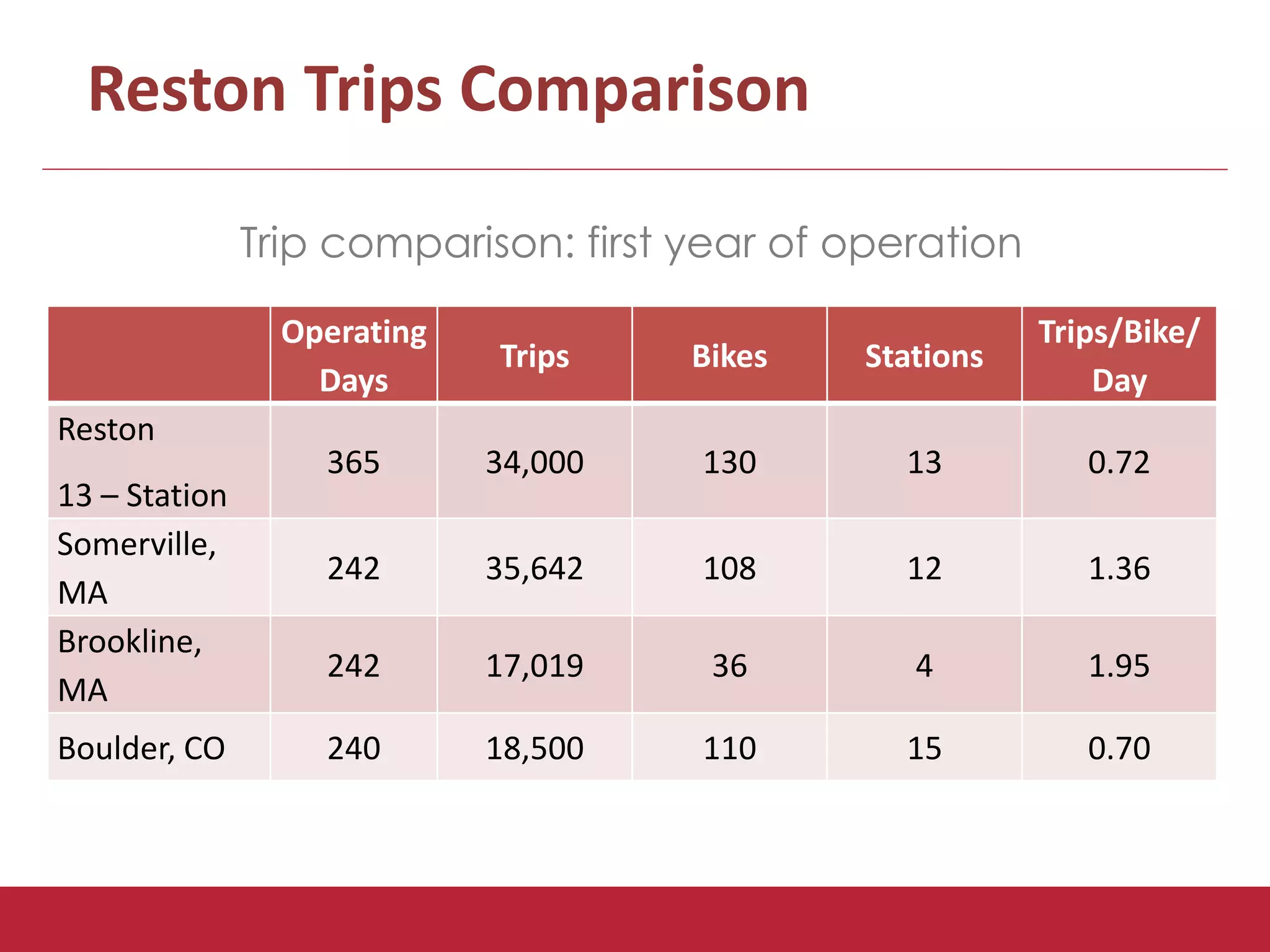
Reston Trips Comparison 
Trip comparison: first year of operation 
Operating 
Days 
Trips Bikes Stations 
Trips/Bike/ 
Day 
Reston 
13 – Station 
365 34,000 130 13 0.72 
Somerville, 
MA 
242 35,642 108 12 1.36 
Brookline, 
MA 
242 17,019 36 4 1.95 
Boulder, CO 240 18,500 110 15 0.70
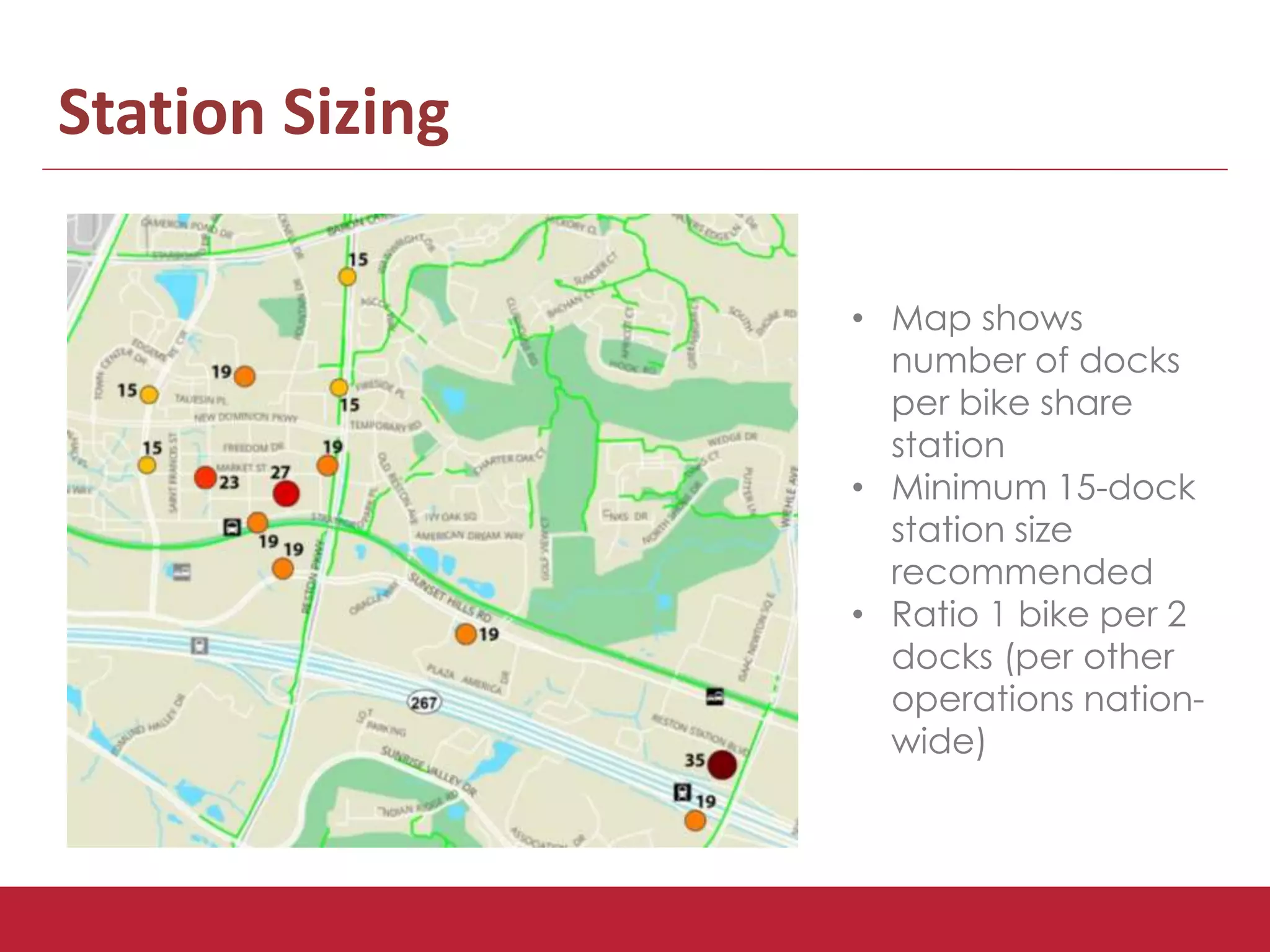
Station Sizing 
• Map shows 
number of docks 
per bike share 
station 
• Minimum 15-dock 
station size 
recommended 
• Ratio 1 bike per 2 
docks (per other 
operations nation-wide)
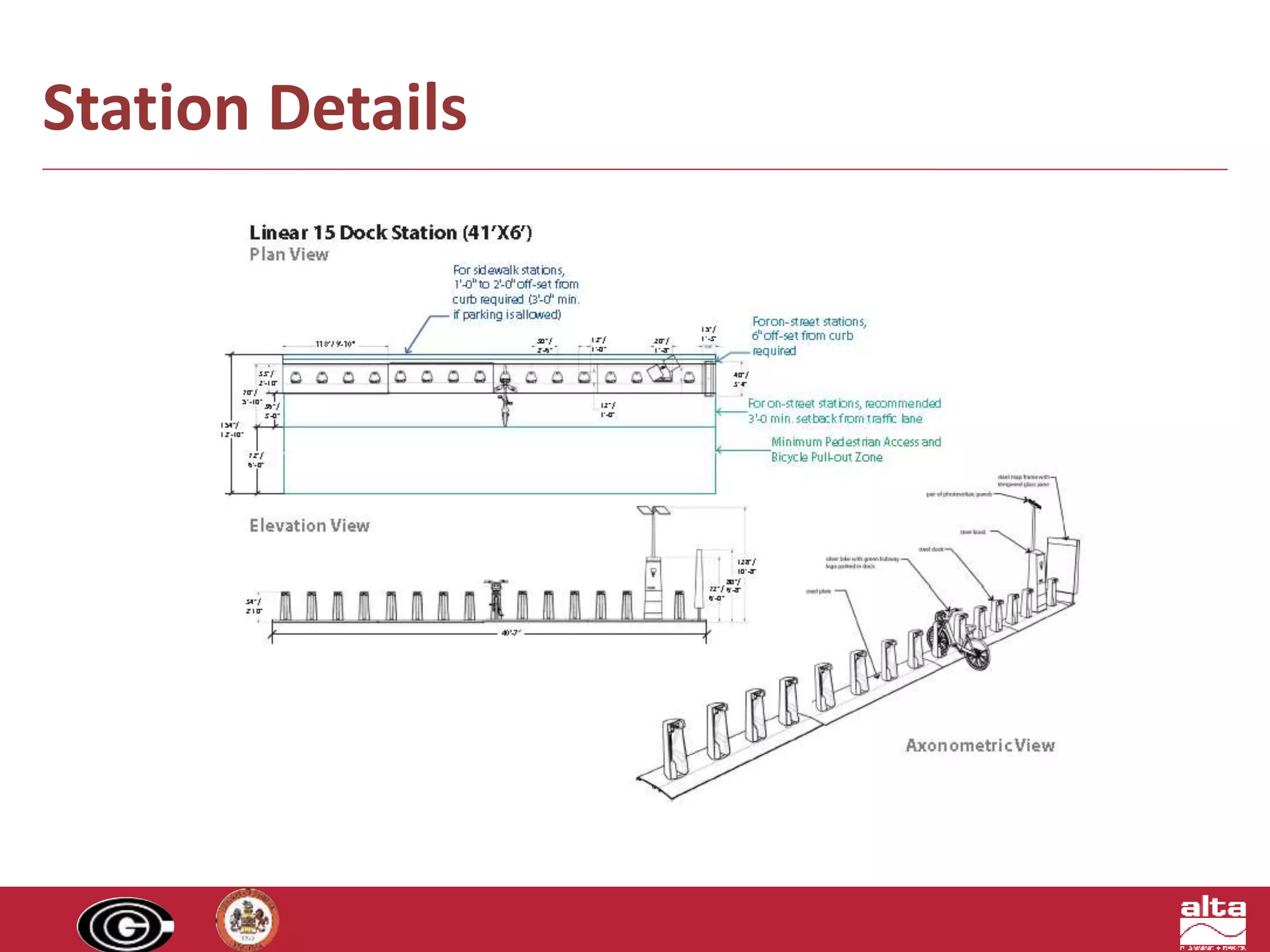
Station Details
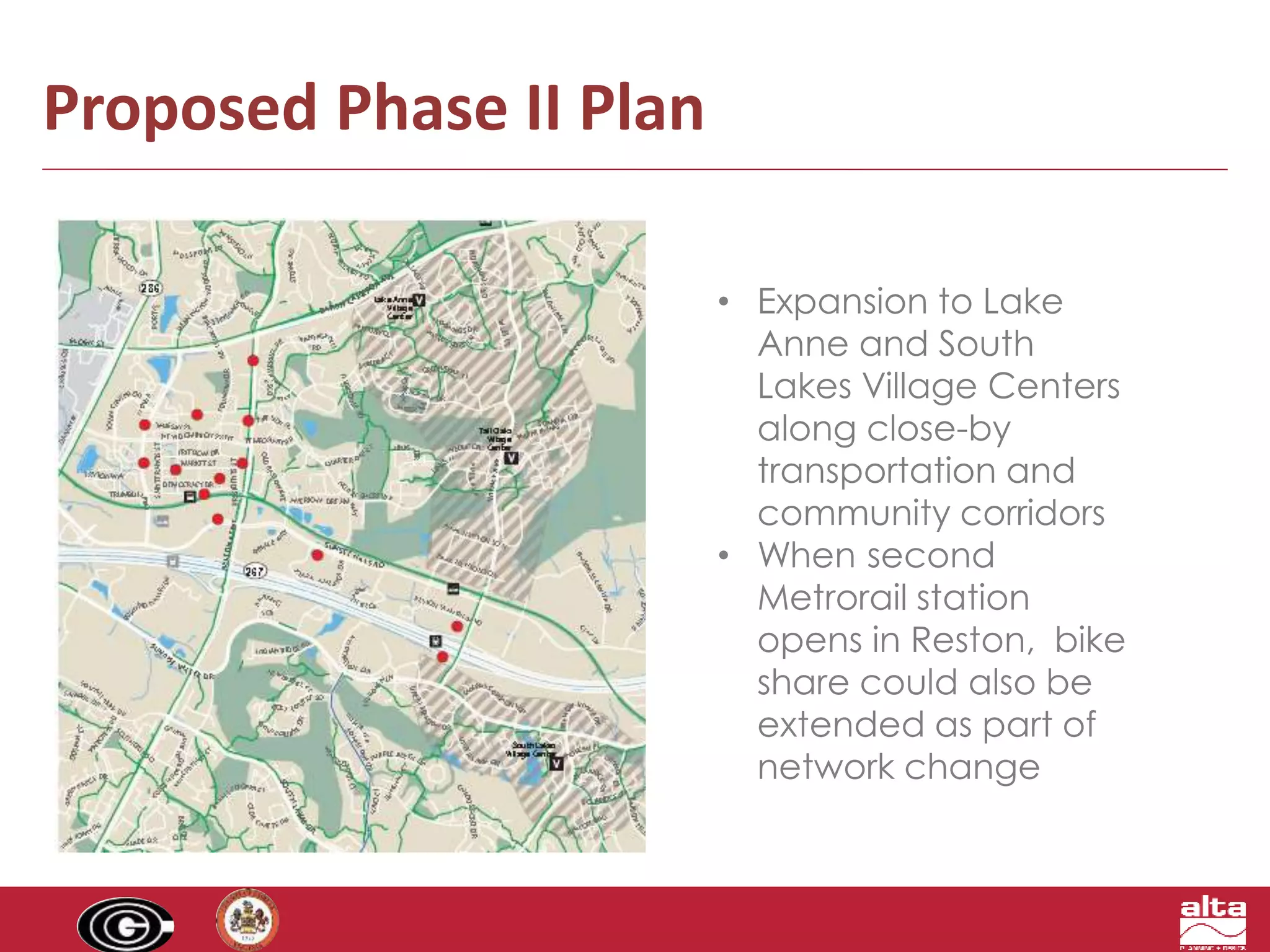
Proposed Phase II Plan 
• Expansion to Lake 
Anne and South 
Lakes Village Centers 
along close-by 
transportation and 
community corridors 
• When second 
Metrorail station 
opens in Reston, bike 
share could also be 
extended as part of 
network change
Funding Costs 
•Start-up costs 
•Capital: purchase of equipment 
•Launch: establishing system (hiring 
employees, website development, etc.) 
•Operating costs 
•Station & bike maintenance 
•Rebalancing 
•Customer service 
•Direct expenses
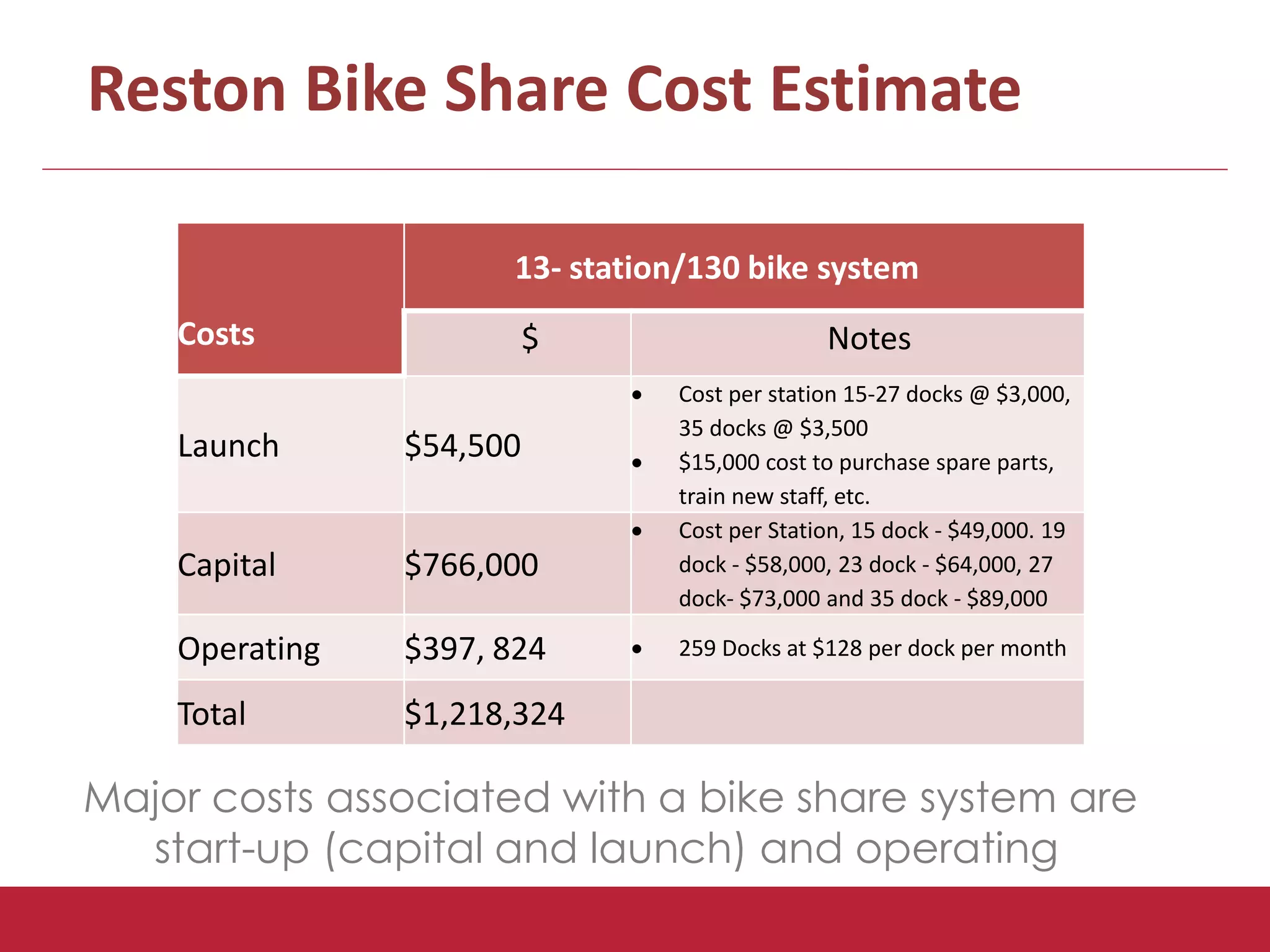
Reston Bike Share Cost Estimate 
Costs 
13- station/130 bike system 
$ Notes 
Launch $54,500 
 Cost per station 15-27 docks @$3,000, 
35 docks @ $3,500 
 $15,000 cost to purchase spare parts, 
train new staff, etc. 
Capital $766,000 
 Cost per Station, 15 dock - $49,000. 19 
dock - $58,000, 23 dock - $64,000, 27 
dock- $73,000 and 35 dock - $89,000 
Operating $397, 824  259 Docks at $128 per dock per month 
Total $1,218,324 
Major costs associated with a bike share system are 
start-up (capital and launch) and operating
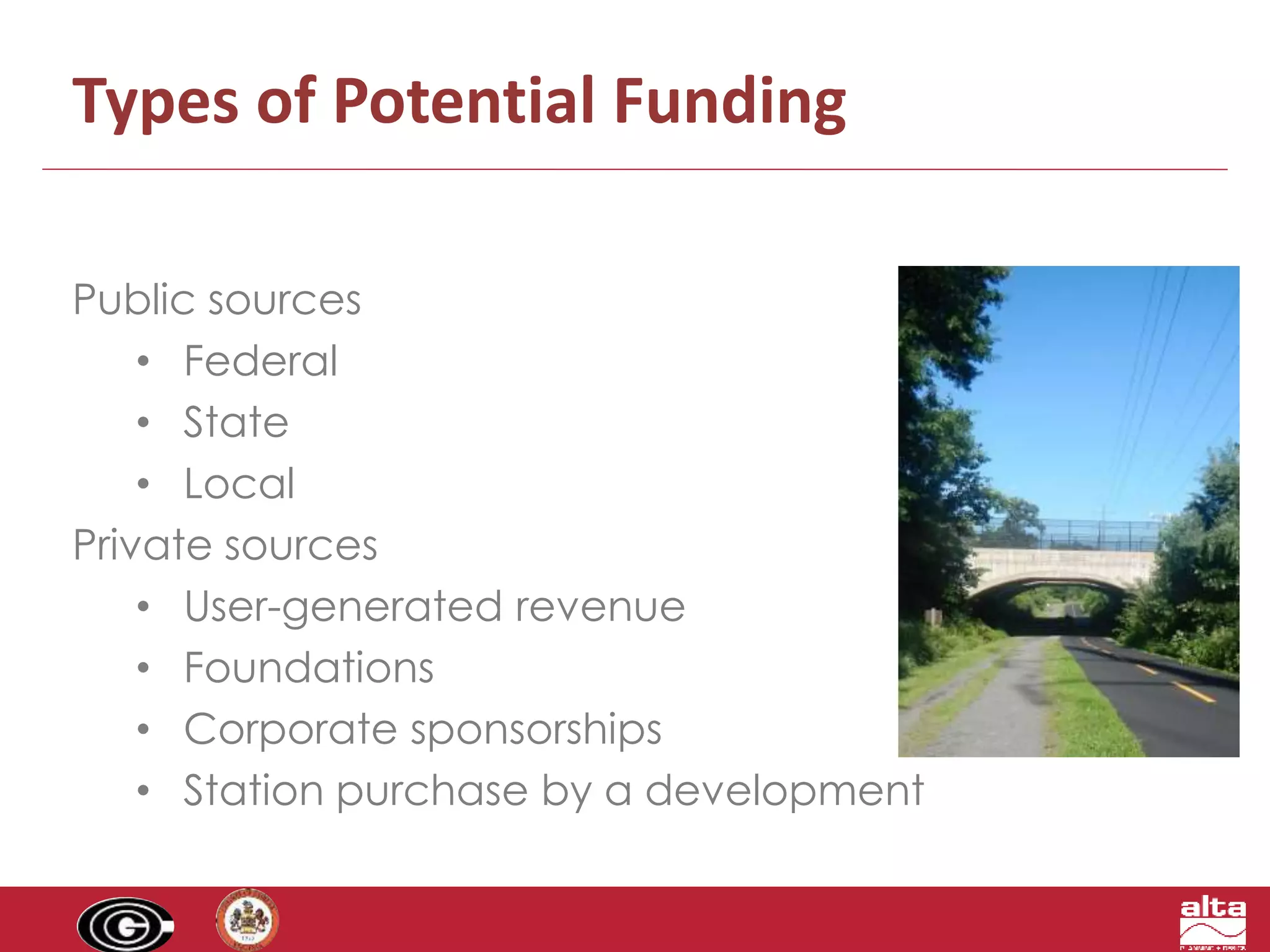
Types of Potential Funding 
Public sources 
• Federal 
• State 
• Local 
Private sources 
• User-generated revenue 
• Foundations 
• Corporate sponsorships 
• Station purchase by a development
Applying Funding Sources 
• Capital funding 
• Sponsorship 
• Private sector/foundation(s) 
• Direct station purchase 
• Regional, state, & federal funds 
• Operations funding 
• User revenue 
• Sponsorship 
• Other local public sources 
• Private sector/foundations
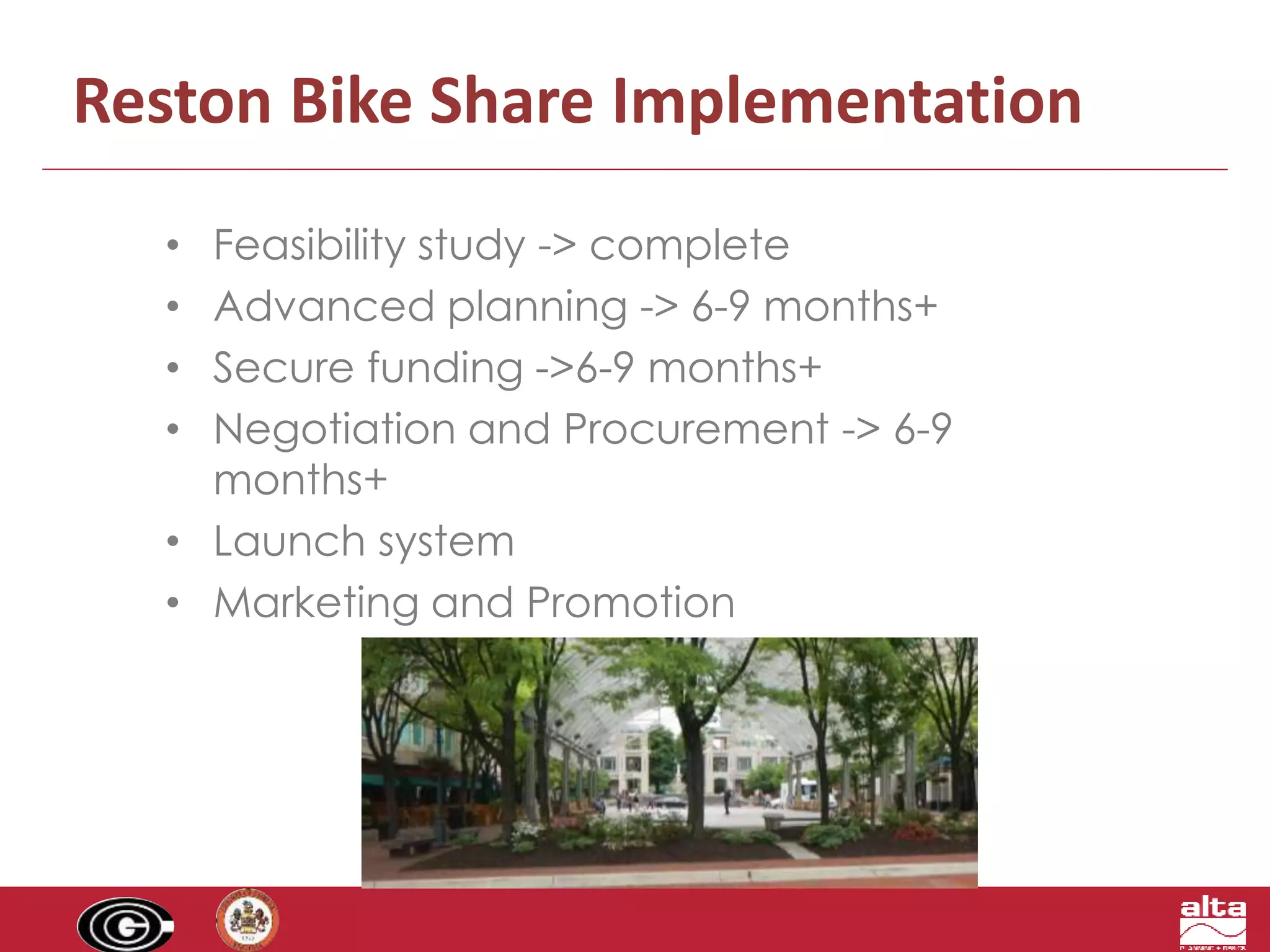
Reston Bike Share Implementation 
• Feasibility study -> complete 
• Advanced planning -> 6-9 months+ 
• Secure funding ->6-9 months+ 
• Negotiation and Procurement -> 6-9 
months+ 
• Launch system 
• Marketing and Promotion
Feasibility Study Conclusions 
• 13-station bike share system possible for Reston 
• Could enhance community mobility for residents, 
workers, visitors 
• Excellent option for first- and last-mile transit trips 
• Needs careful planning and management 
• Partnership opportunities for new programs to 
improve access 
• Address wayfinding and trail issues including 
access, snow and lighting 
• Funding for capital & on-going operations is key
Feasibility Study Conclusions 
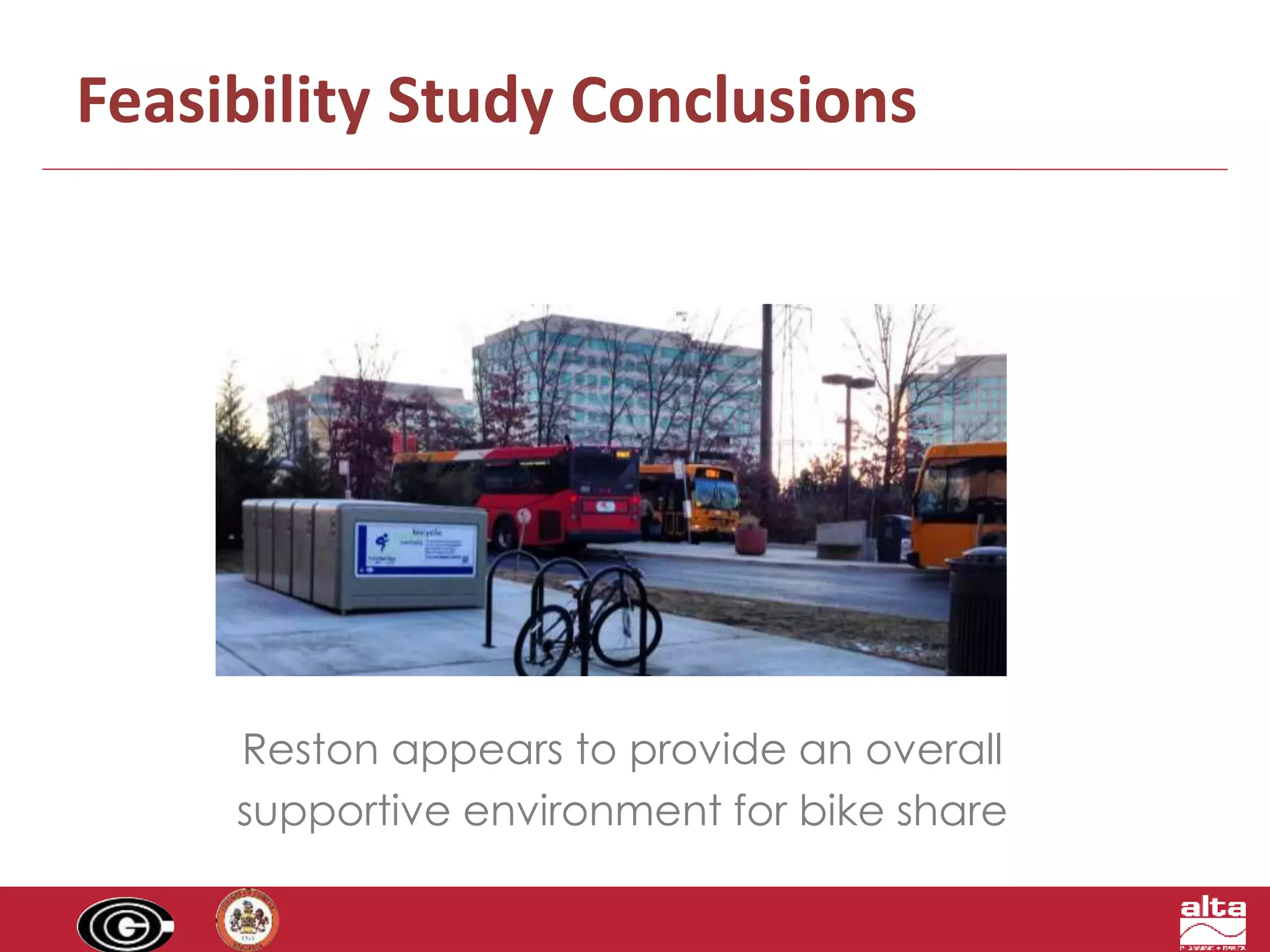
Reston appears to provide an overall 
supportive environment for bike share
Thank You 
QUESTIONS: 
Adam Lind 
Adam.Lind@fairfaxcounty.gov

Reston Bike Share Feasibility Study: Public Open House

  • 1.
    Bike Sharing RestonBike Share Feasibility Study Public Open House June 25, 2014
  • 2.
    Reston Bike ShareFeasibility Study • Fairfax County Department of Transportation was awarded technical assistance to examine the feasibility of bike sharing for Reston • Project funded by the Transportation Planning Board (TPB) of the Metropolitan Washington Council of Governments (MWCOG) • Part of the Transportation/Land Use Connections (TLC) program
  • 3.
    What is BikeSharing? A network of bicycles distributed around an area that allow short, one-way trips from one location to another. A cost-effective mobility option for trips too far to walk, but not long enough to take transit or drive. Think of it as another form of transit A relatively inexpensive and quick implementation extension to local public transportation offerings
  • 4.
    Open House Topics • Feasibility study process • Vision and goals • Proposed local system • Input information • Opportunities & challenges • Station locations and sizes • Station siting • Costs and funding • Implementation • Conclusions
  • 5.
    Feasibility Study Process • Study got underway late 2013 • Stakeholder workshop • Public open house • Population and ridership • Station site field visits • Ridership & financial analyses • Final presentation
  • 6.
    Vision & Goalsfor Reston Bike Share • Active mobility • Transportation • Livability • Health & safety • Finances & funding
  • 7.
    Proposed Bike ShareSystem • Capital Bikeshare • Proposed local system • Existing warehouse, staff, equipment • Same fees & charges • Separate agreement
  • 8.
  • 9.
    Looking at Demand • High potential demand areas identified through heat mapping • ‘Points’ allocated to where people live, work, shop, play, and take transit
  • 10.
    Bike Share Opportunities • 1-mile trip between Metrorail station and Reston Town Center District • Reston trails and W&OD network • Established bicycling culture • New transit network and development • Supportive environment
  • 11.
    Bike Share Challenges • Community densities and trip generation • Locating stations on private property • Identifying funding for capital and operation • Access and proximity for low-income users • Trail snow removal, lighting and access hours • Route wayfinding and sign posting
  • 12.
    Equity Programs andChallenges • System planning and expansion • Outreach and education • Registration barriers • Price and credit cards • Encouragement and biking lessons • Membership drives and registration
  • 13.
    Proposed Station LocationPlan 1. Wiehle Station/Plaza 2. Sunset Hills/Plaza America 3. Reston Town Center/Freedom 4. Sunset Hills/Fountain 5. Bluemont/Transit Center 6. Wiehle Station/Southside 7. Town Center Pkwy/Market 8. Reston Town Center/Fountain 9. Market St/Explorer 10. Town Center Pkwy/Reston Hospital 11. Bowman Towne Dr/Library 12. Reston Pkwy/Spectrum (S) 13. Reston Pkwy/Spectrum (N)
  • 14.
  • 15.
    Reston Trips Comparison Trip comparison: first year of operation Operating Days Trips Bikes Stations Trips/Bike/ Day Reston 13 – Station 365 34,000 130 13 0.72 Somerville, MA 242 35,642 108 12 1.36 Brookline, MA 242 17,019 36 4 1.95 Boulder, CO 240 18,500 110 15 0.70
  • 16.
    Station Sizing •Map shows number of docks per bike share station • Minimum 15-dock station size recommended • Ratio 1 bike per 2 docks (per other operations nation-wide)
  • 17.
  • 18.
    Proposed Phase IIPlan • Expansion to Lake Anne and South Lakes Village Centers along close-by transportation and community corridors • When second Metrorail station opens in Reston, bike share could also be extended as part of network change
  • 19.
    Funding Costs •Start-upcosts •Capital: purchase of equipment •Launch: establishing system (hiring employees, website development, etc.) •Operating costs •Station & bike maintenance •Rebalancing •Customer service •Direct expenses
  • 20.
    Reston Bike ShareCost Estimate Costs 13- station/130 bike system $ Notes Launch $54,500  Cost per station 15-27 docks @$3,000, 35 docks @ $3,500  $15,000 cost to purchase spare parts, train new staff, etc. Capital $766,000  Cost per Station, 15 dock - $49,000. 19 dock - $58,000, 23 dock - $64,000, 27 dock- $73,000 and 35 dock - $89,000 Operating $397, 824  259 Docks at $128 per dock per month Total $1,218,324 Major costs associated with a bike share system are start-up (capital and launch) and operating
  • 21.
    Types of PotentialFunding Public sources • Federal • State • Local Private sources • User-generated revenue • Foundations • Corporate sponsorships • Station purchase by a development
  • 22.
    Applying Funding Sources • Capital funding • Sponsorship • Private sector/foundation(s) • Direct station purchase • Regional, state, & federal funds • Operations funding • User revenue • Sponsorship • Other local public sources • Private sector/foundations
  • 23.
    Reston Bike ShareImplementation • Feasibility study -> complete • Advanced planning -> 6-9 months+ • Secure funding ->6-9 months+ • Negotiation and Procurement -> 6-9 months+ • Launch system • Marketing and Promotion
  • 24.
    Feasibility Study Conclusions • 13-station bike share system possible for Reston • Could enhance community mobility for residents, workers, visitors • Excellent option for first- and last-mile transit trips • Needs careful planning and management • Partnership opportunities for new programs to improve access • Address wayfinding and trail issues including access, snow and lighting • Funding for capital & on-going operations is key
  • 25.
    Feasibility Study Conclusions Reston appears to provide an overall supportive environment for bike share
  • 26.
    Thank You QUESTIONS: Adam Lind Adam.Lind@fairfaxcounty.gov