
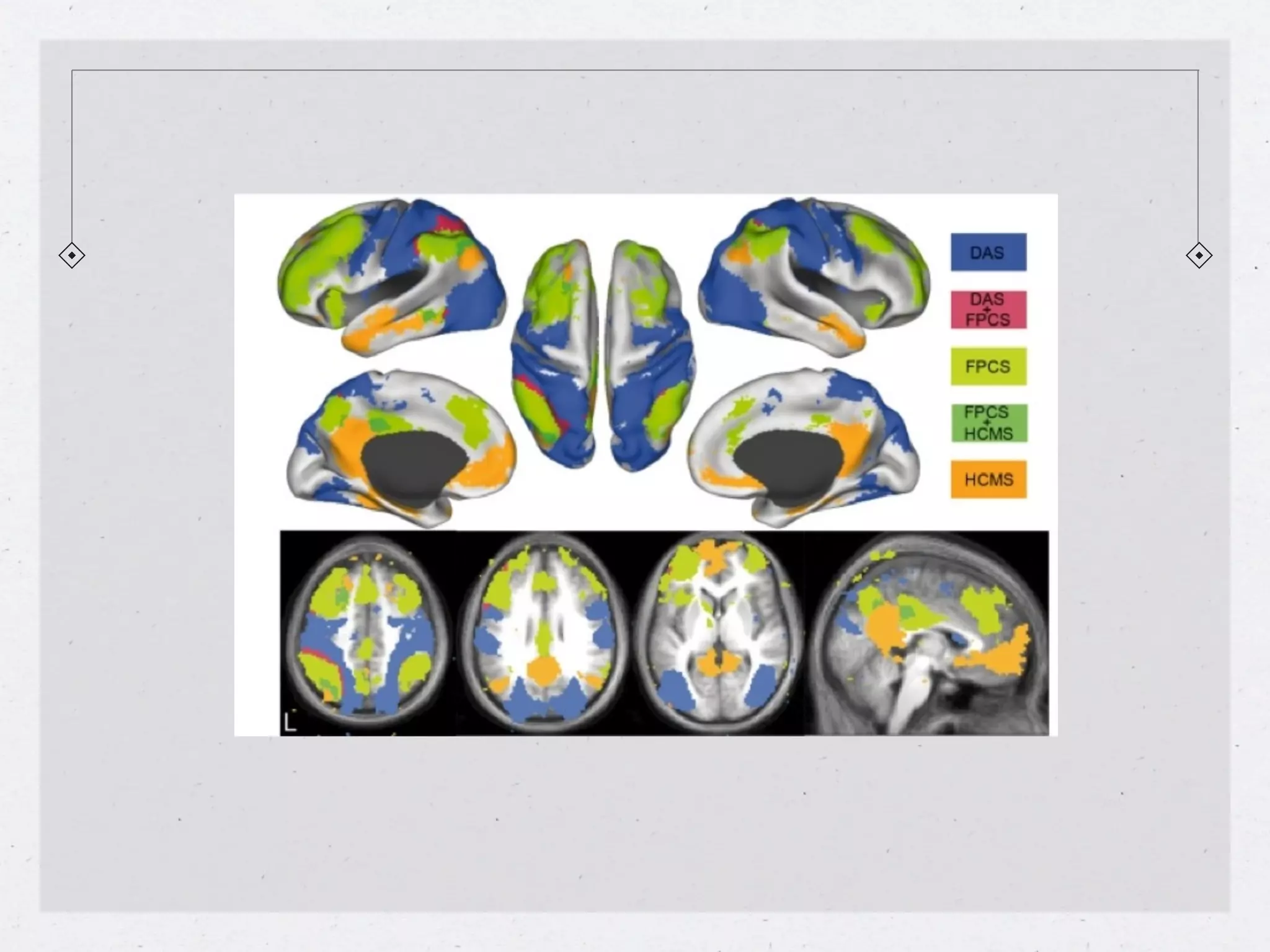







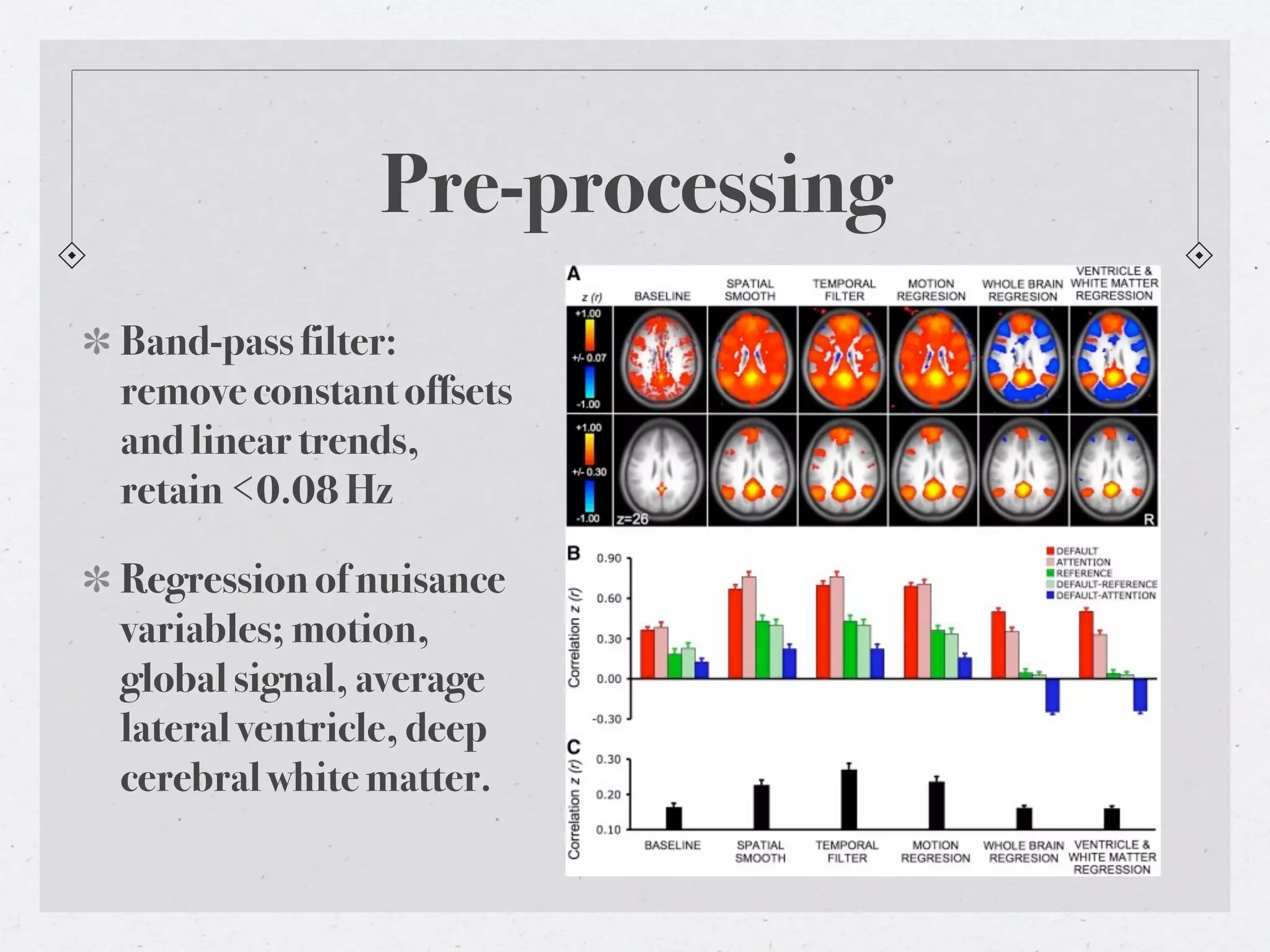
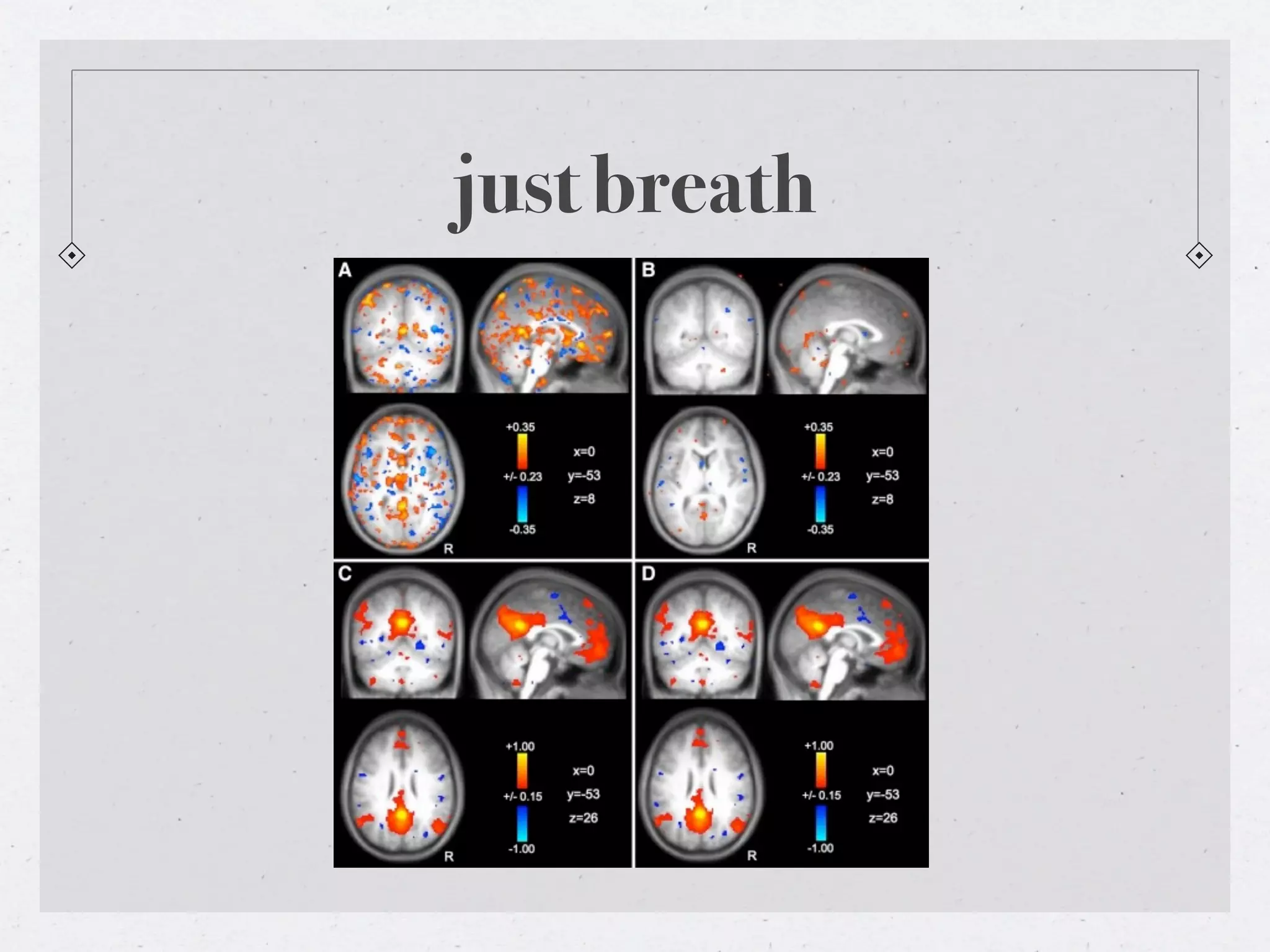
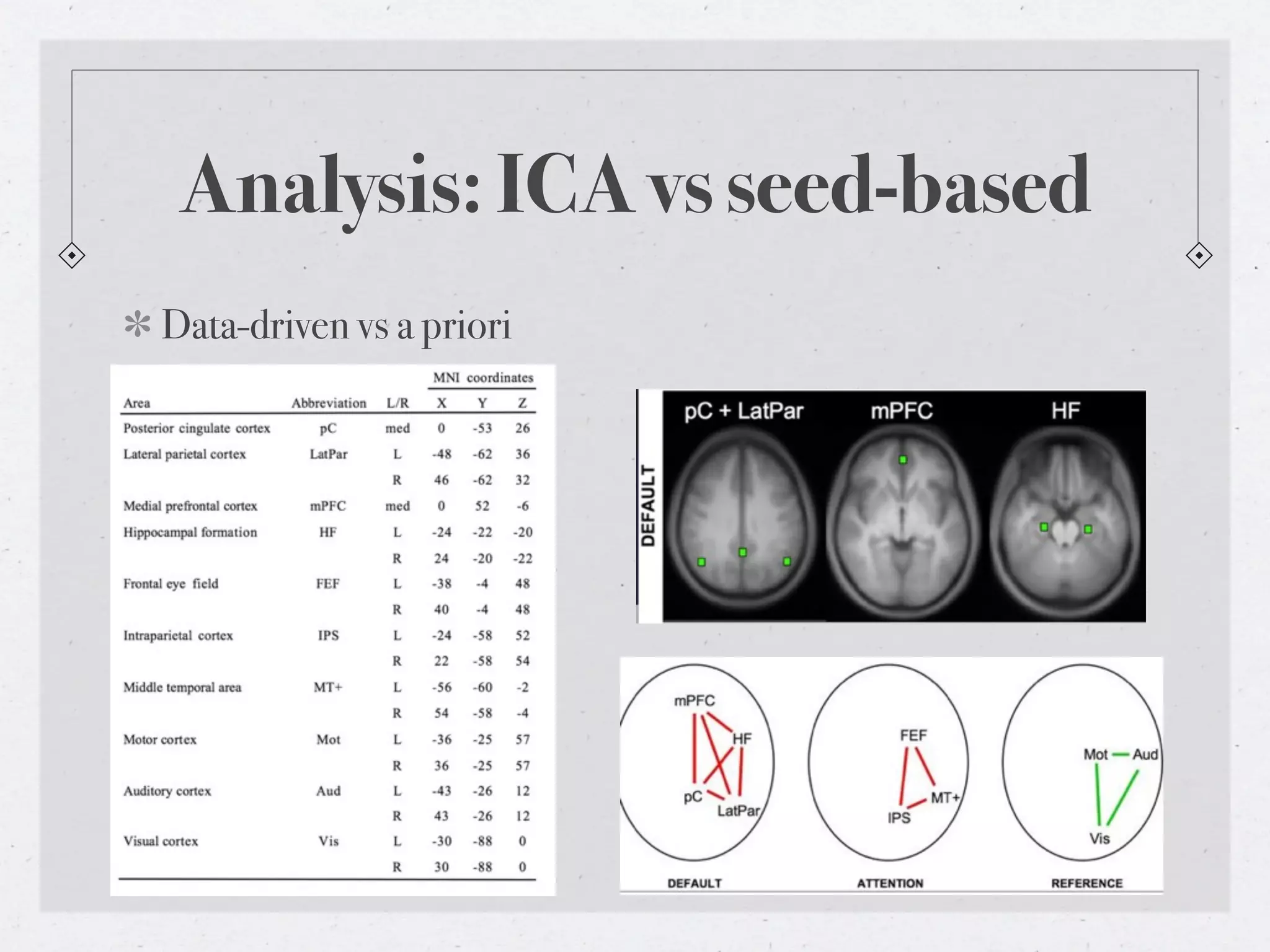
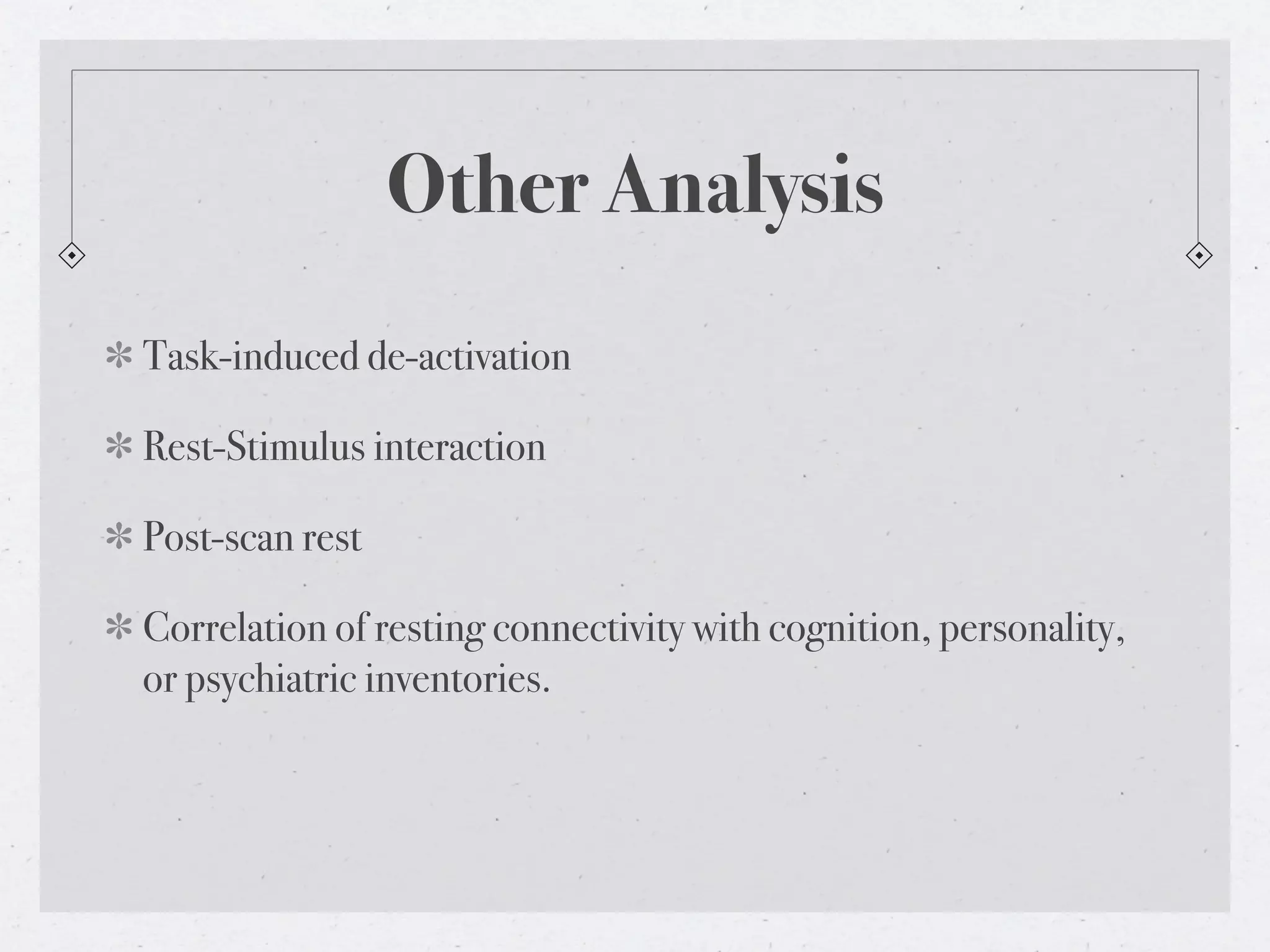

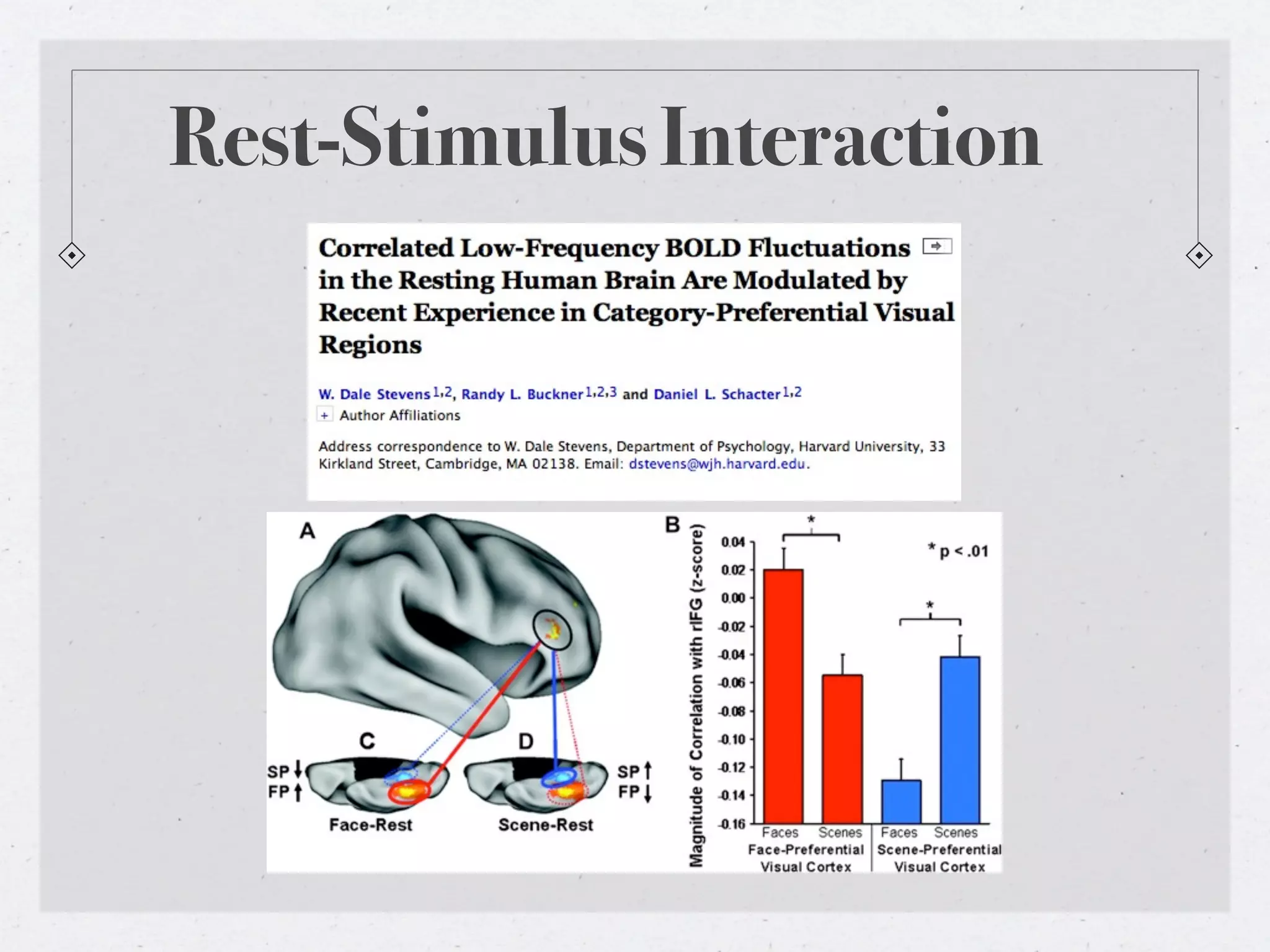
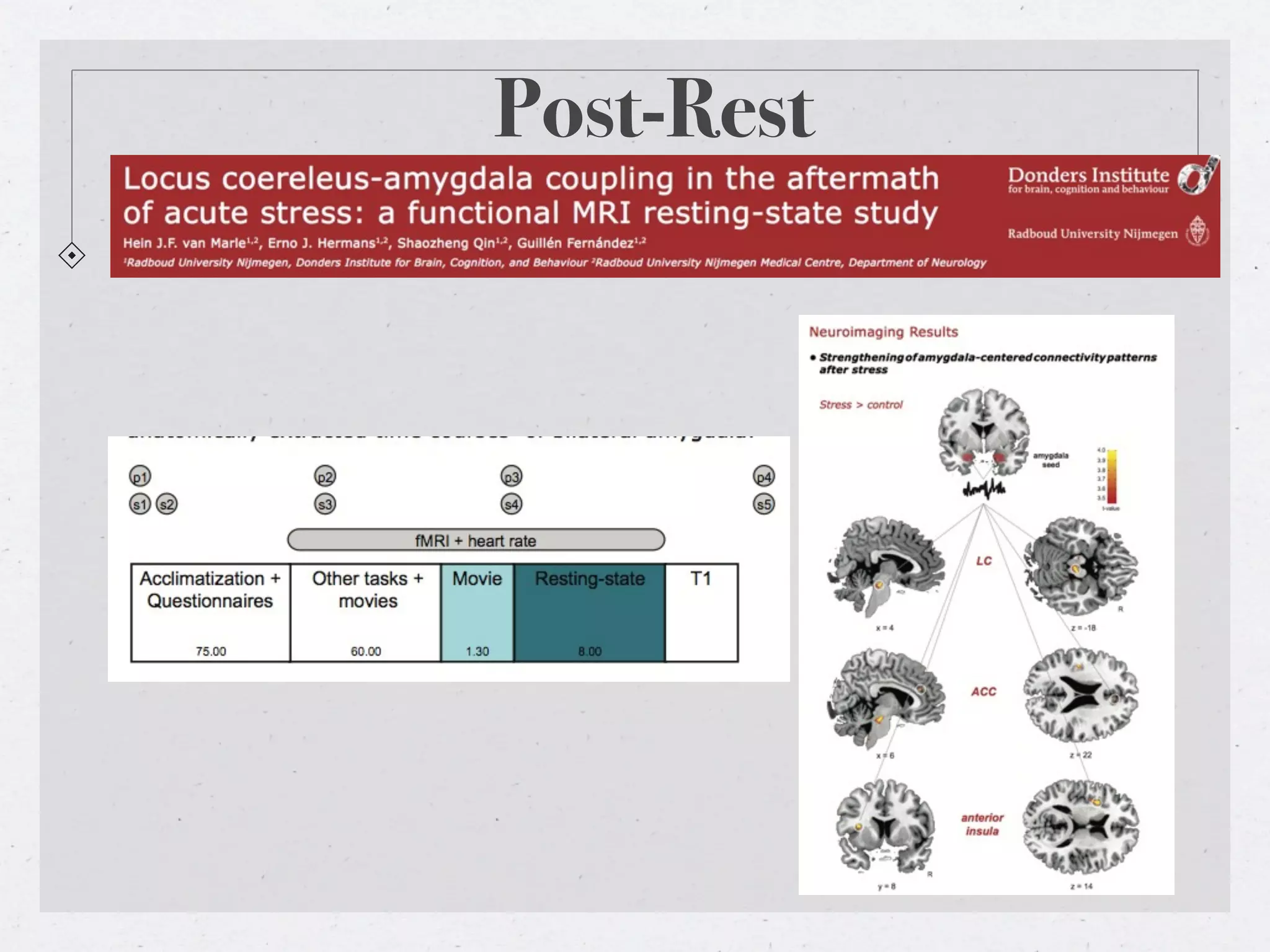








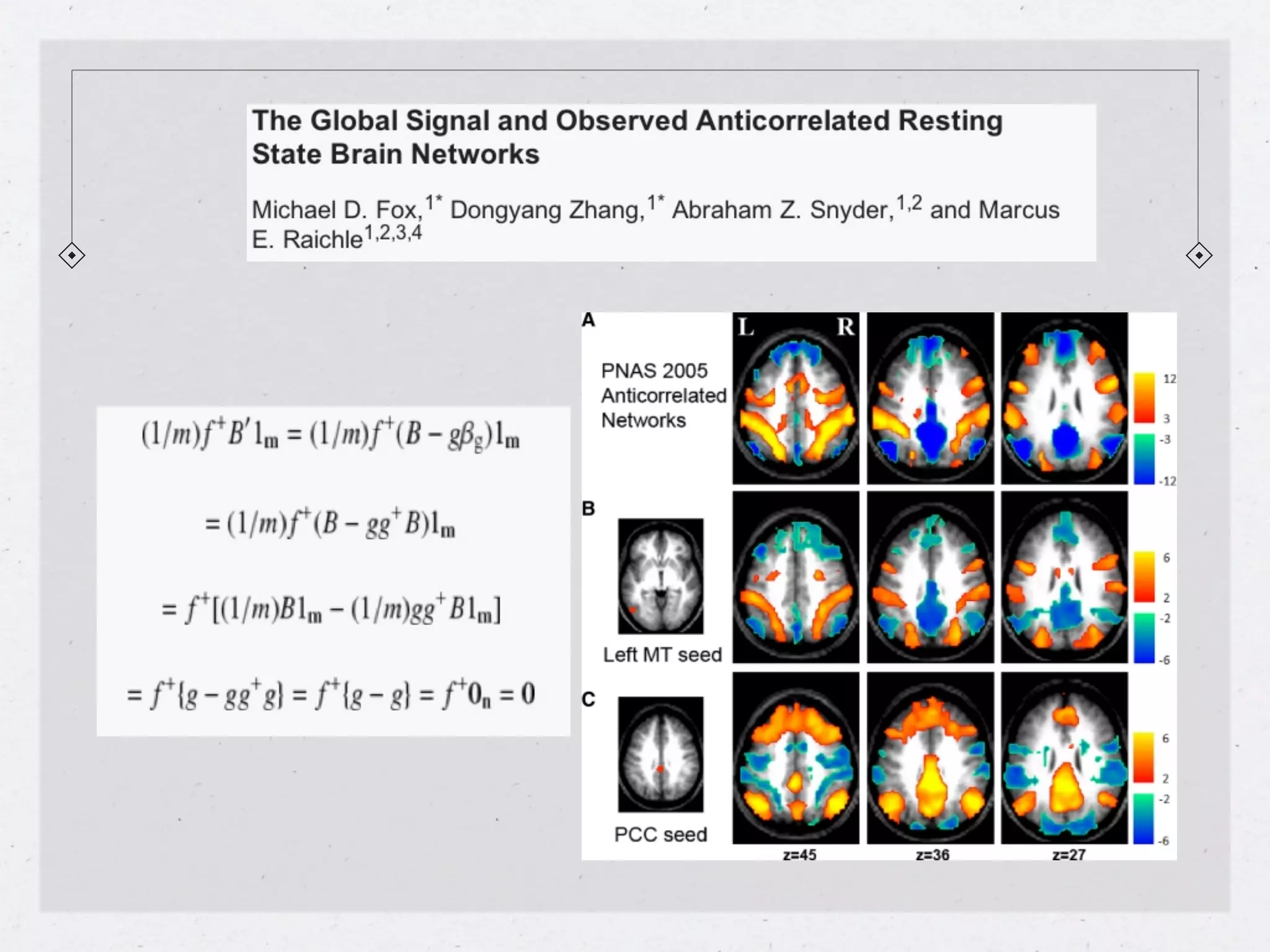
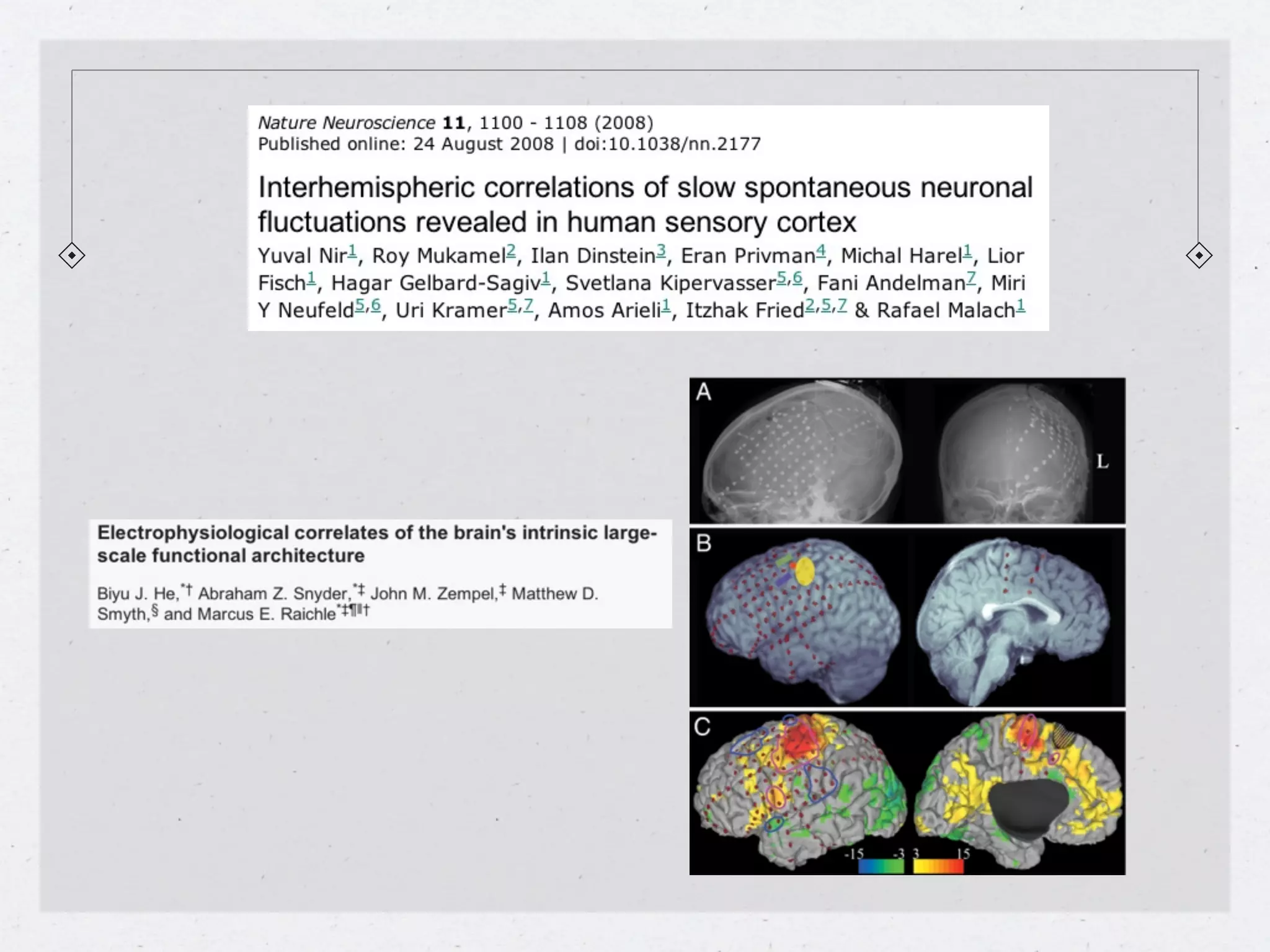


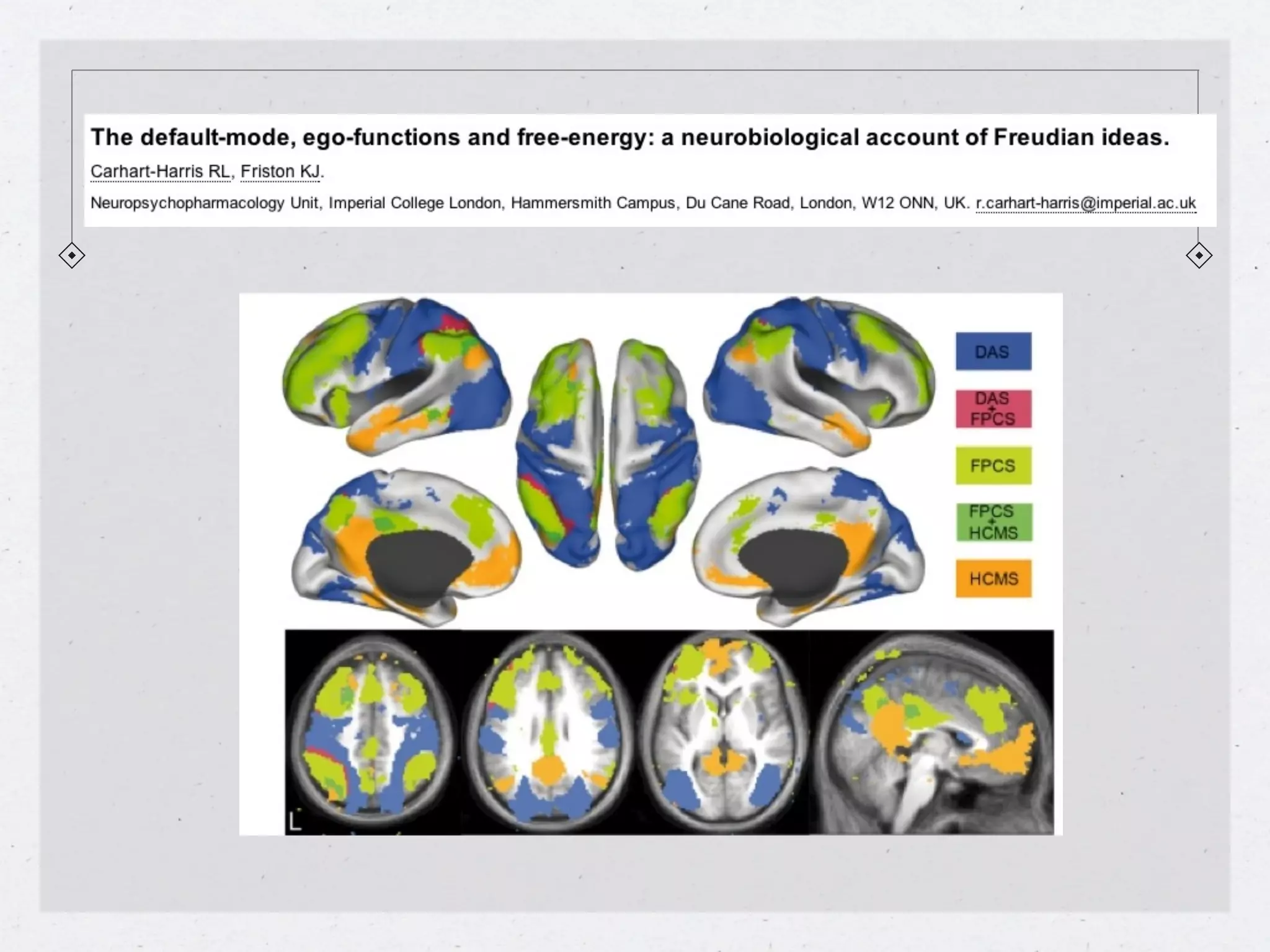
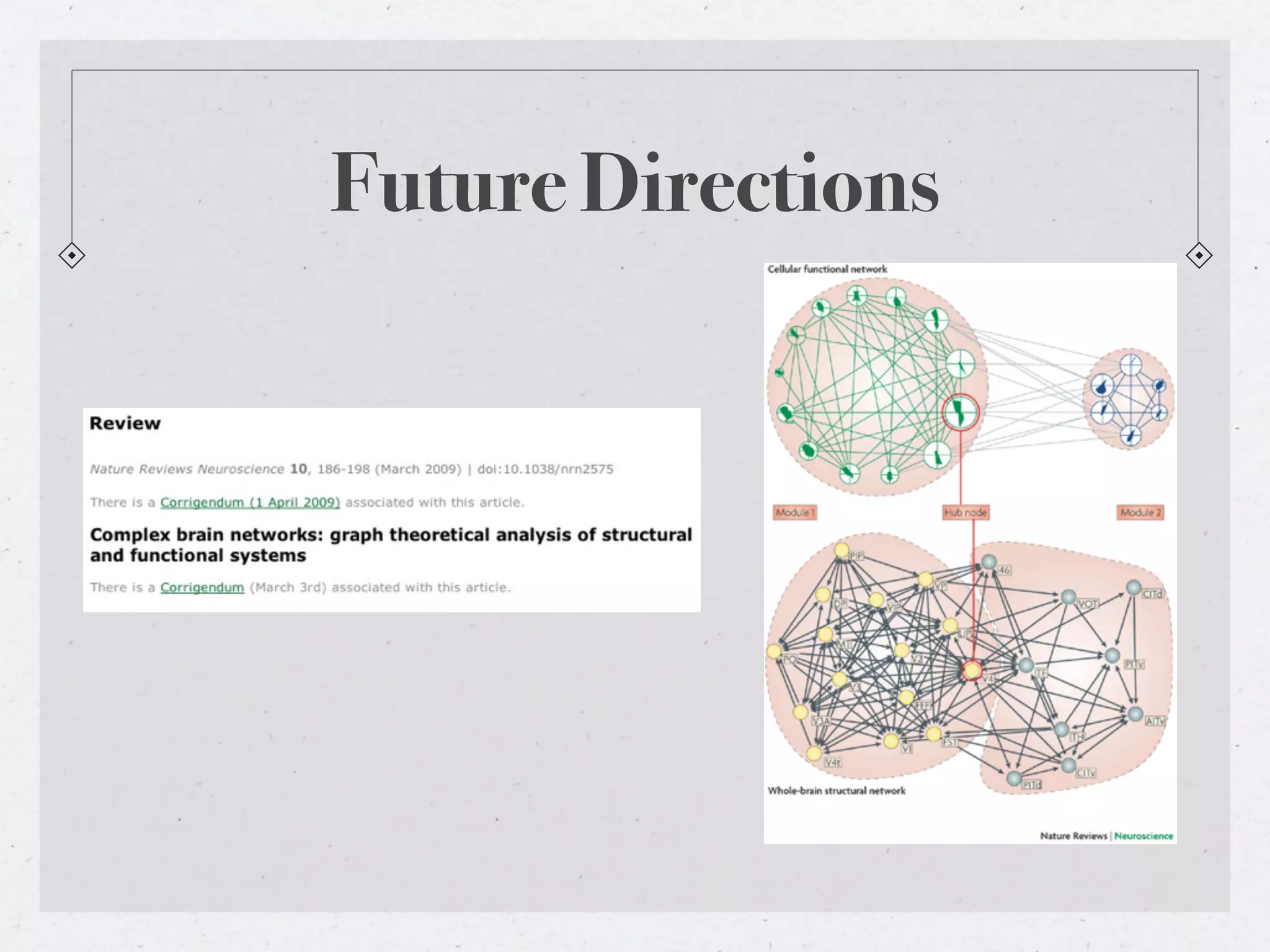
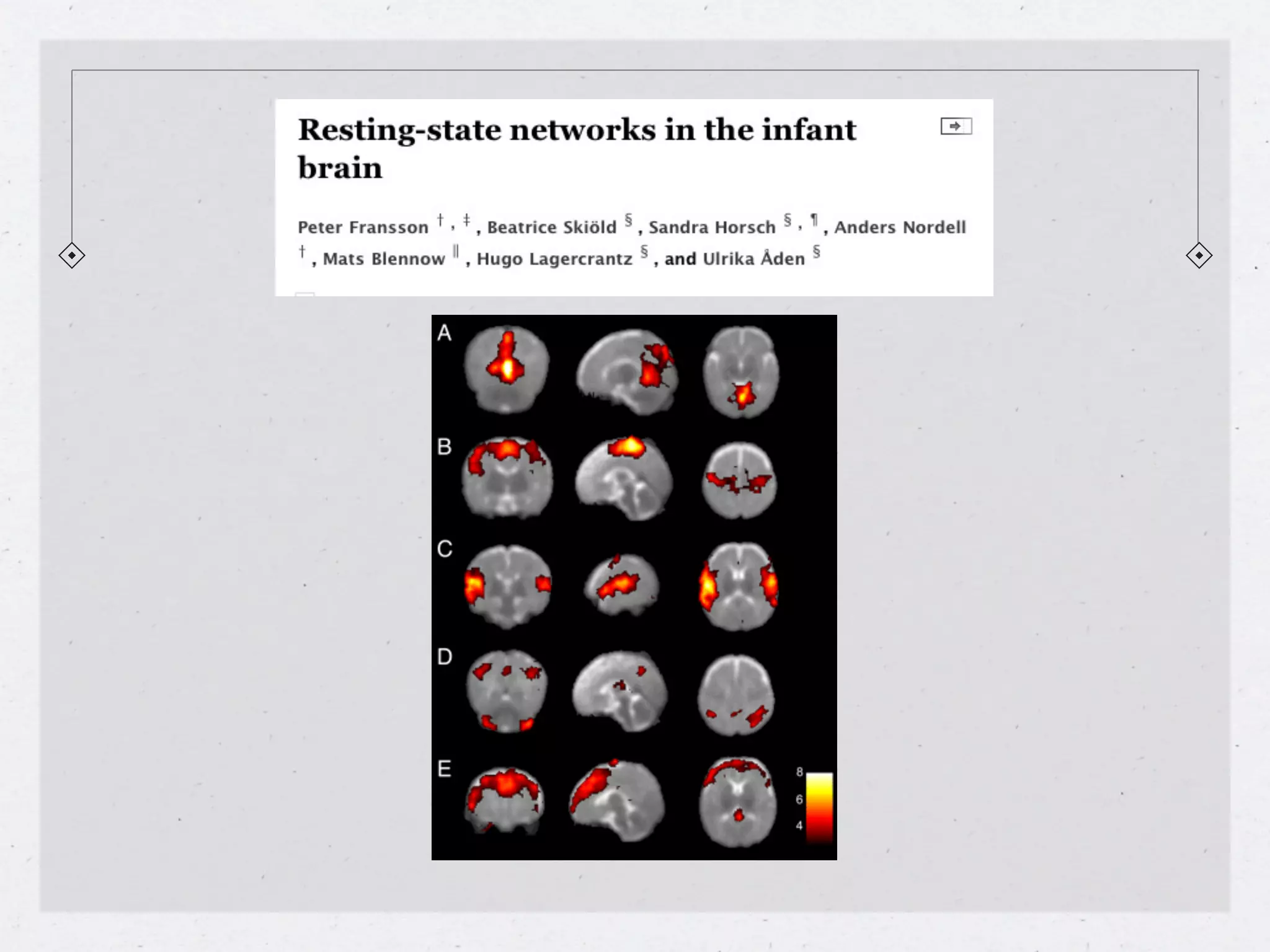


The document discusses resting state networks (RSNs), highlighting their robustness and implications for cognitive functions like memory and emotion, as well as their ease of analysis. It outlines a methodological approach for conducting resting state fMRI studies, including pre-processing techniques and considerations for analyzing resting connectivity. Future directions emphasize the importance of understanding the default mode network's role in various psychological conditions and the need for a nuanced interpretation of data from these studies.


