Respiratory System Main function Transports  GASES  to and from the circulatory system
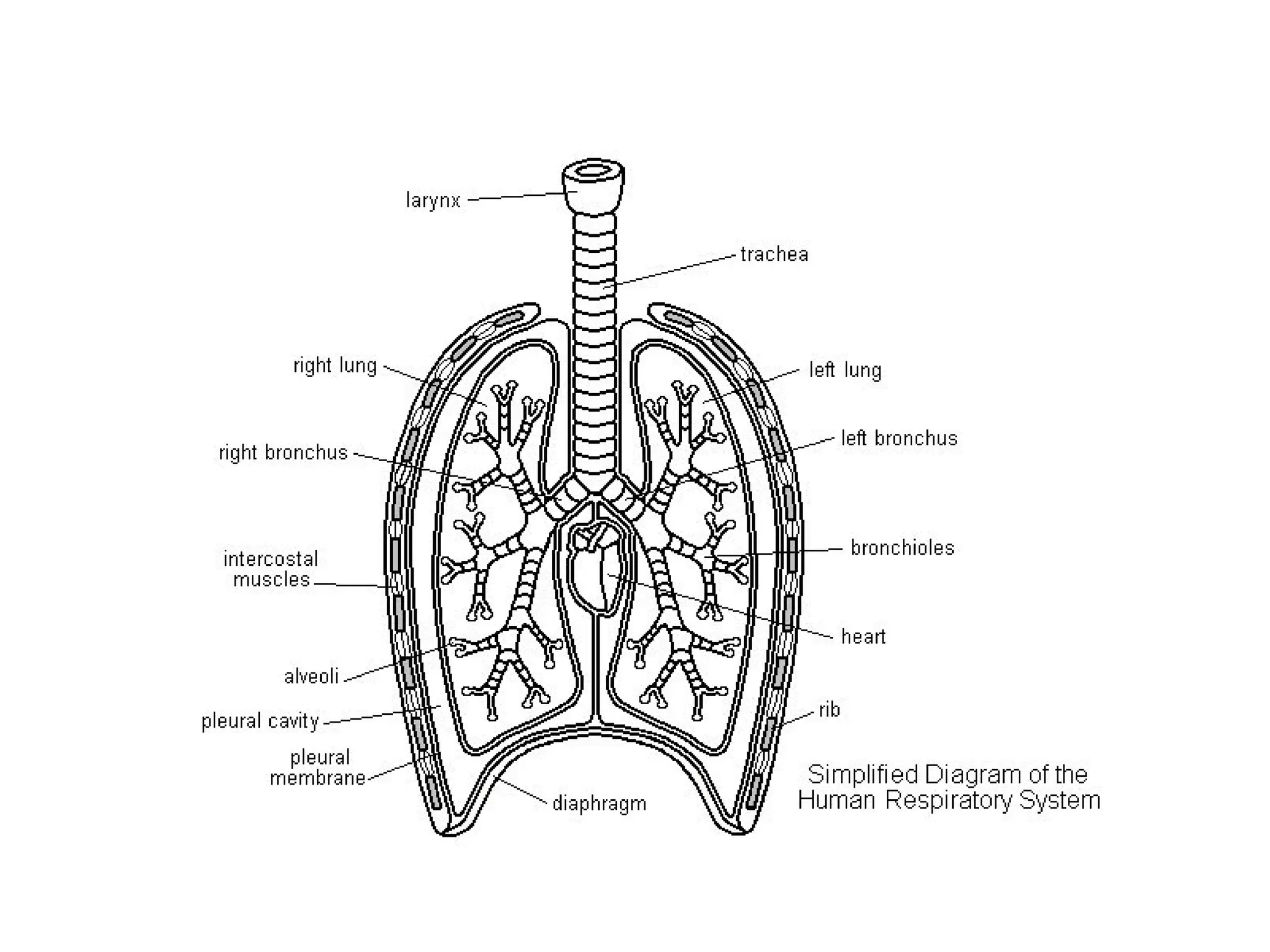
Parts of the Respiratory System
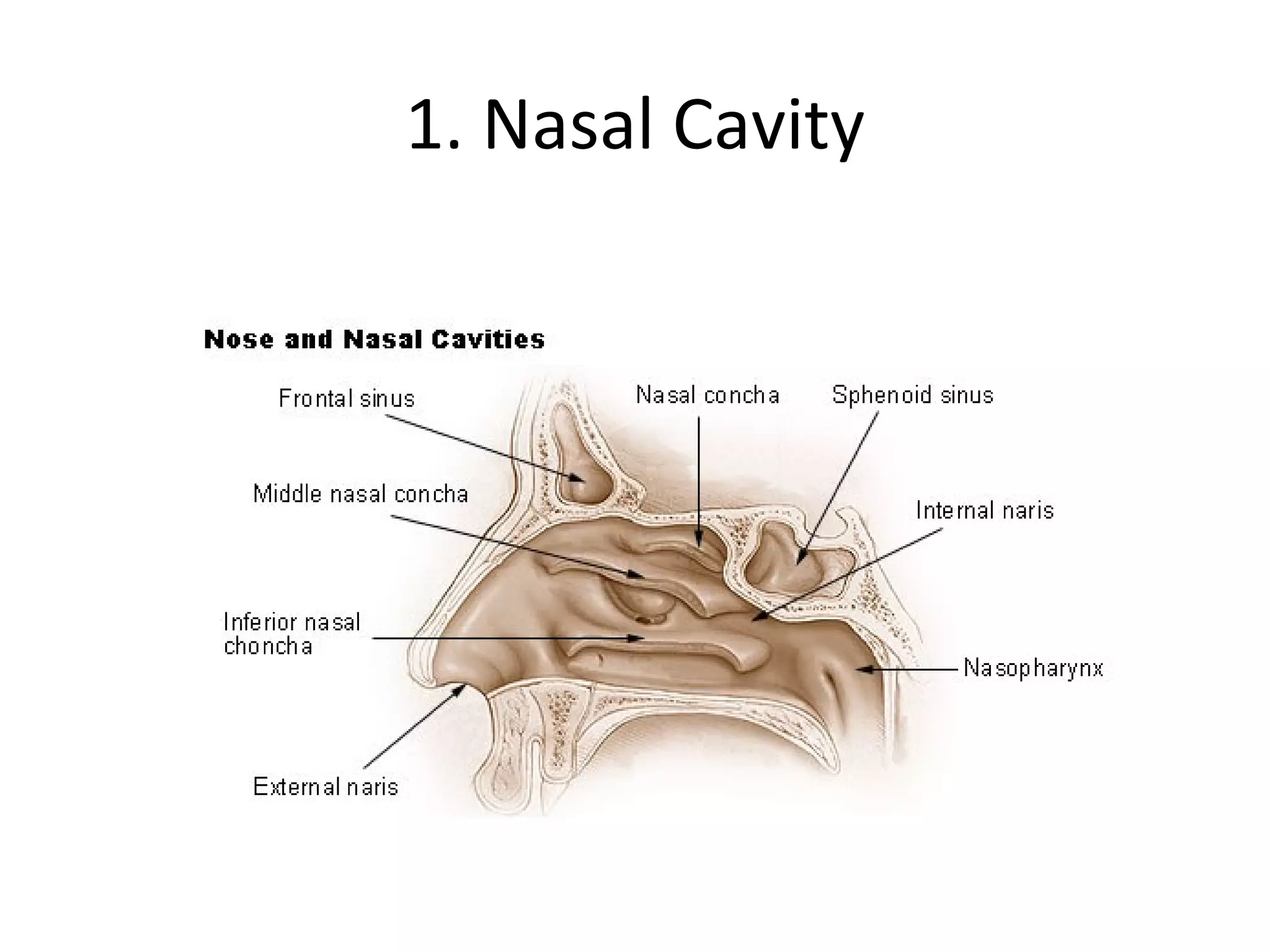
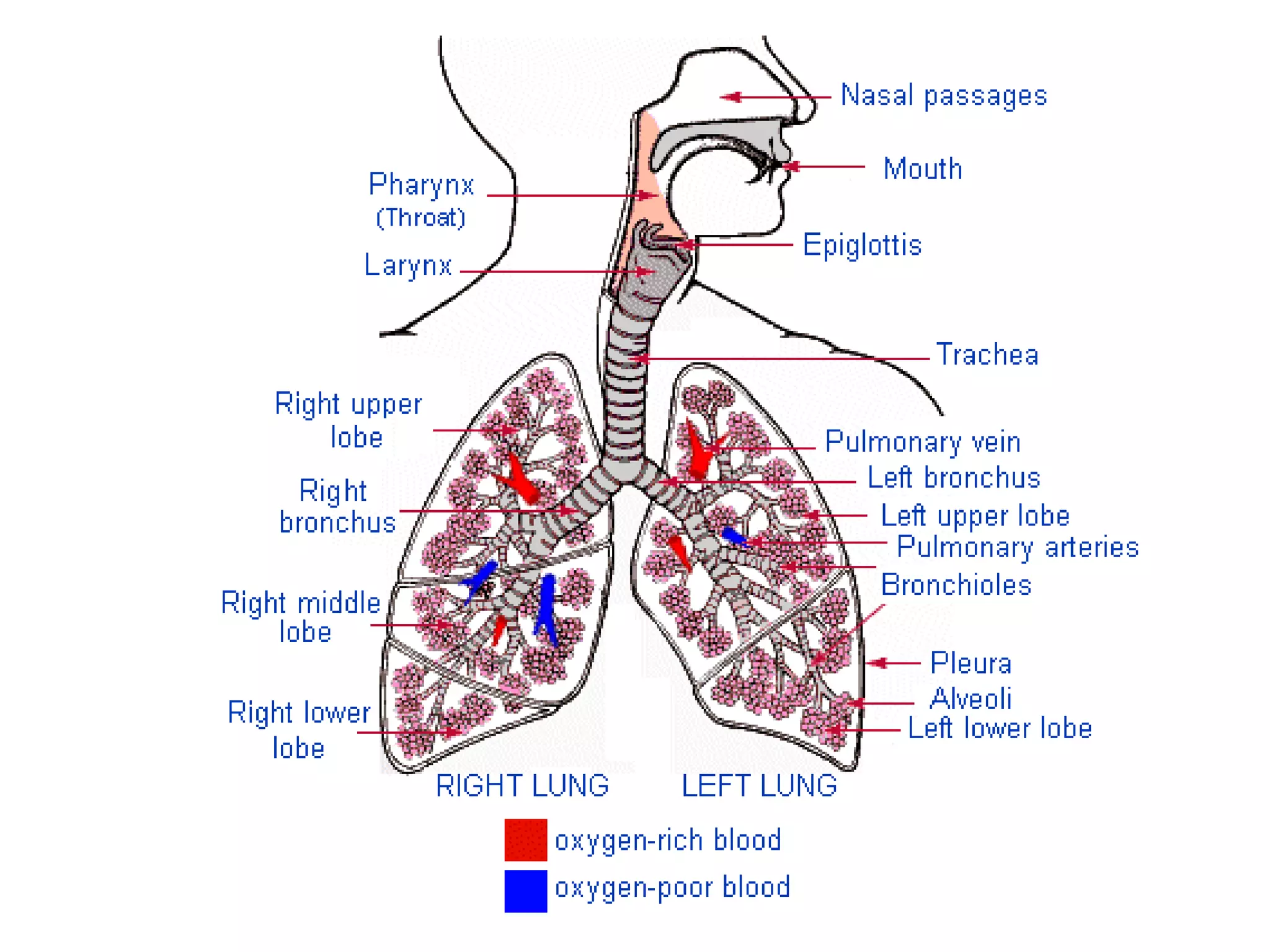
1. Nasal Cavity
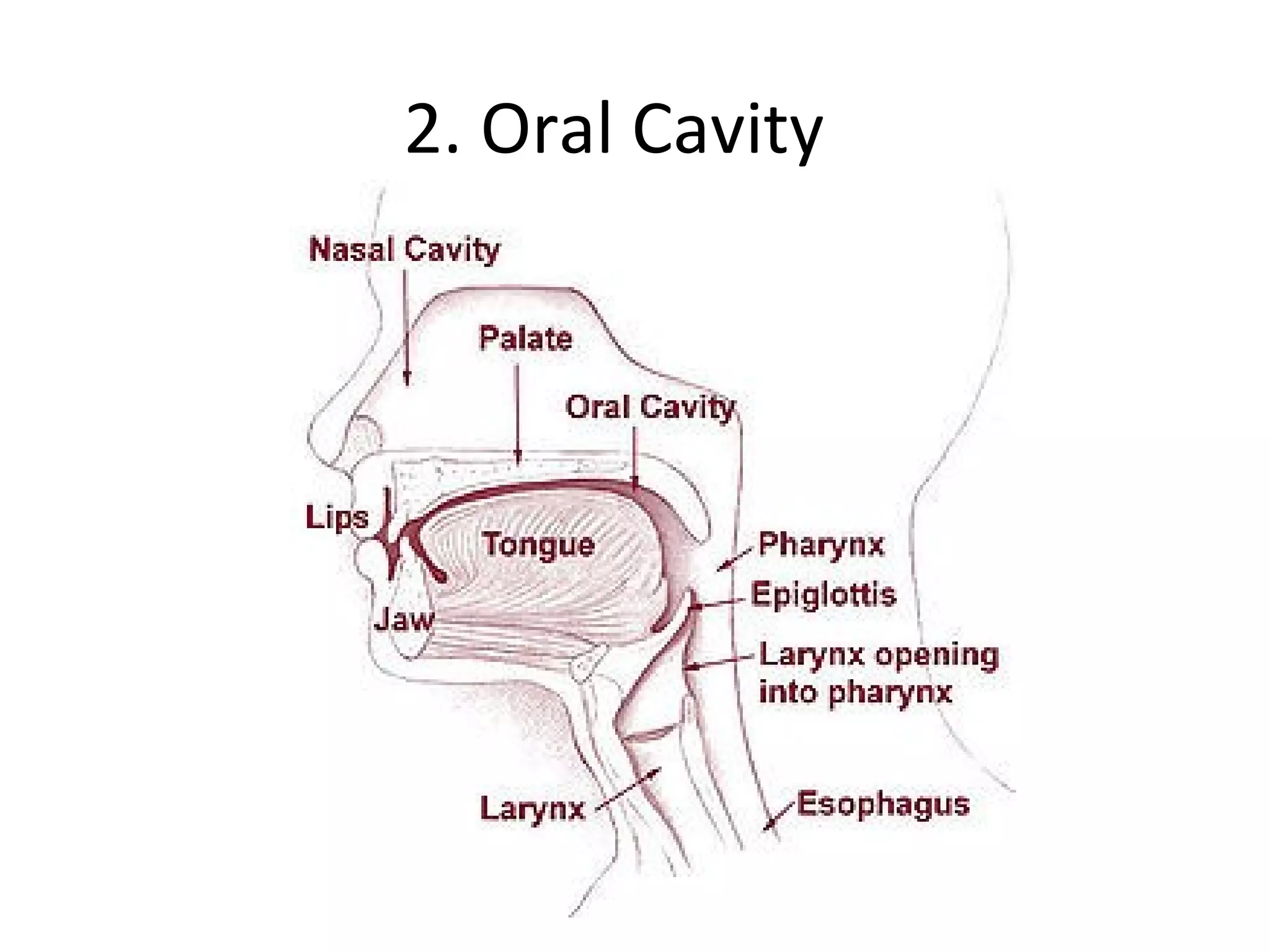
2. Oral Cavity
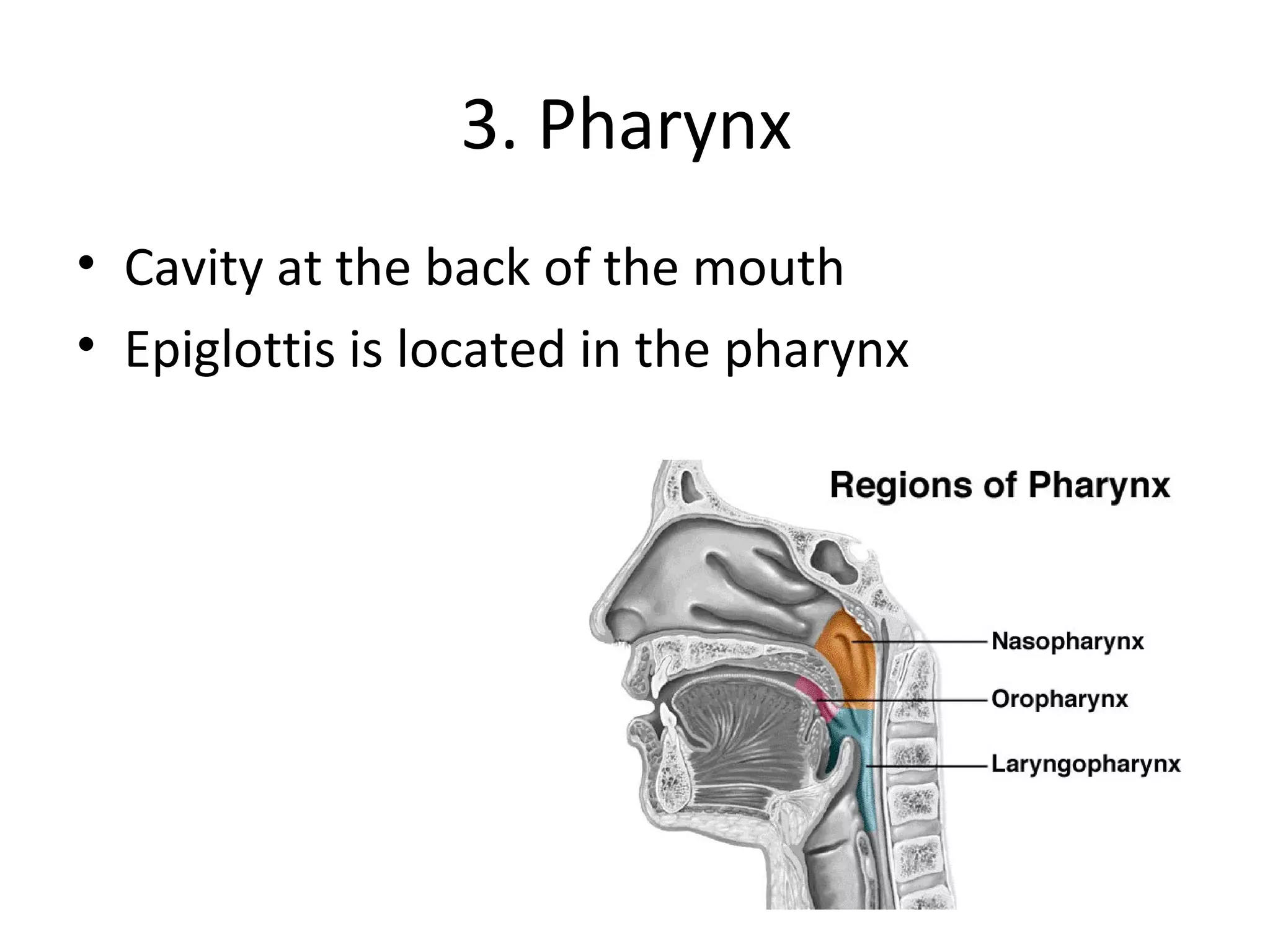
3. Pharynx  Cavity at the back of the mouth Epiglottis is located in the pharynx
4. Epiglottis Thin flexible cartilage structure Guards the entrance to the larynx Prevents food material from entering the trachea during swallowing
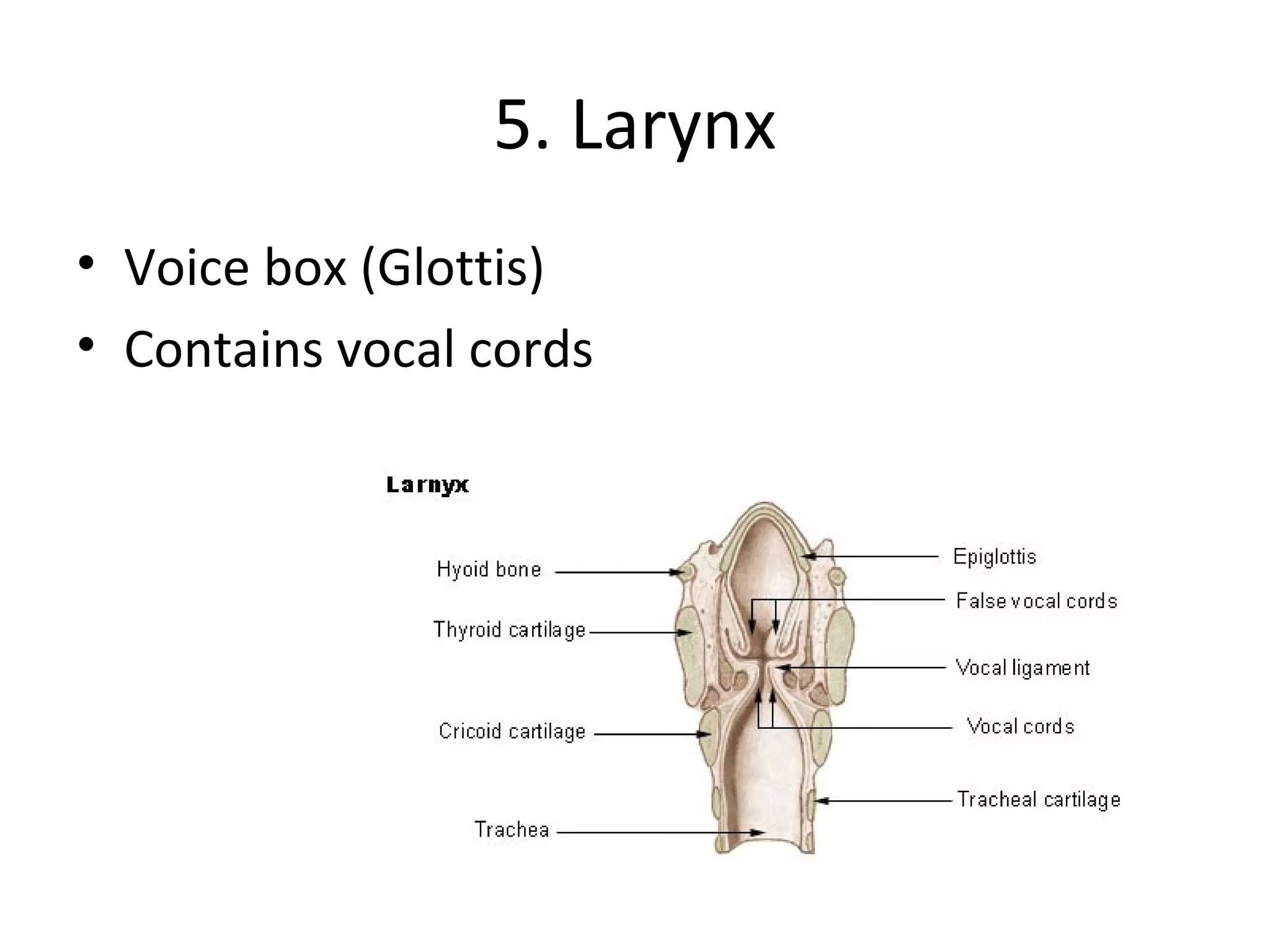
5. Larynx Voice box (Glottis)  Contains vocal cords
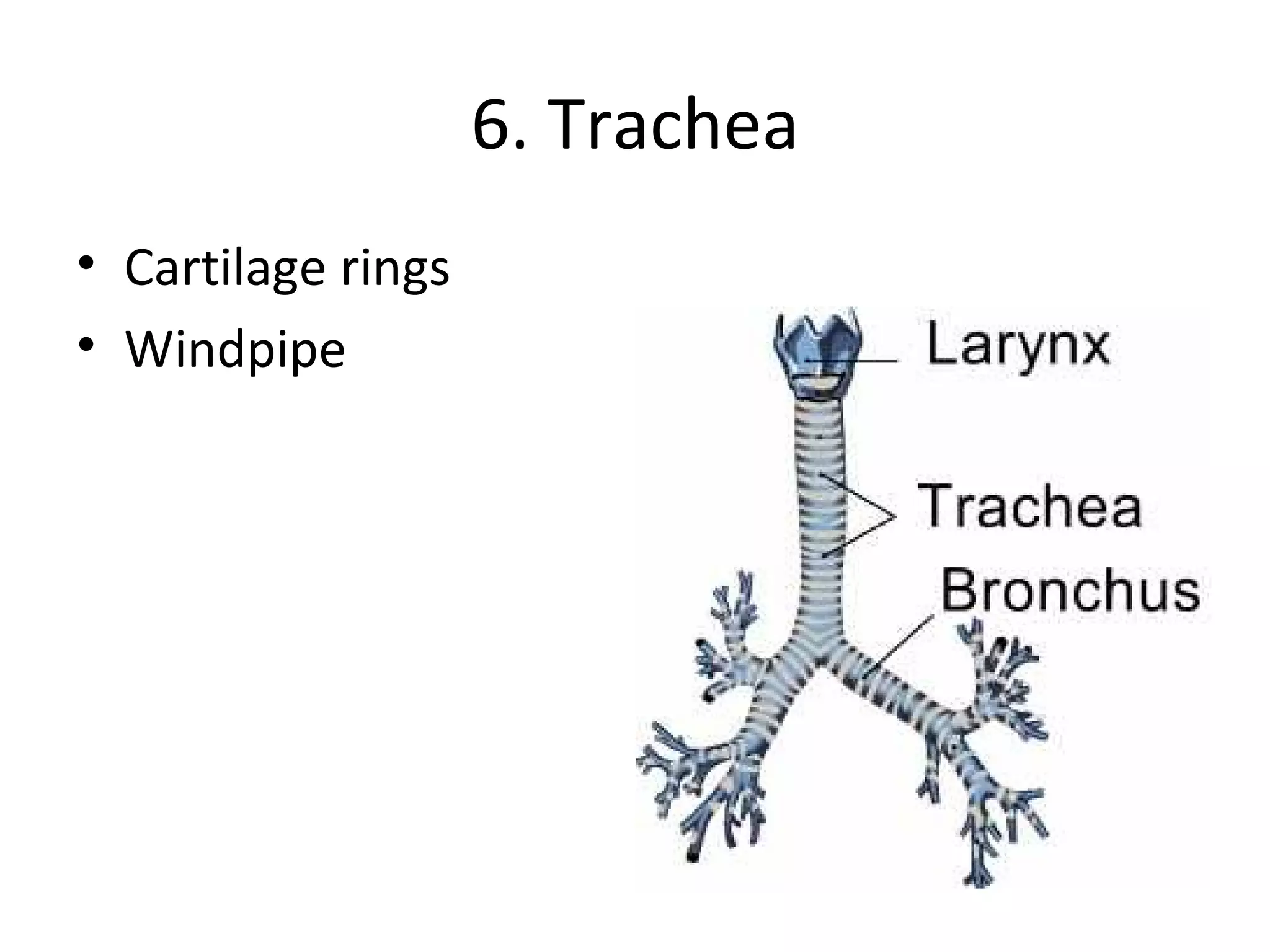
6. Trachea Cartilage rings Windpipe
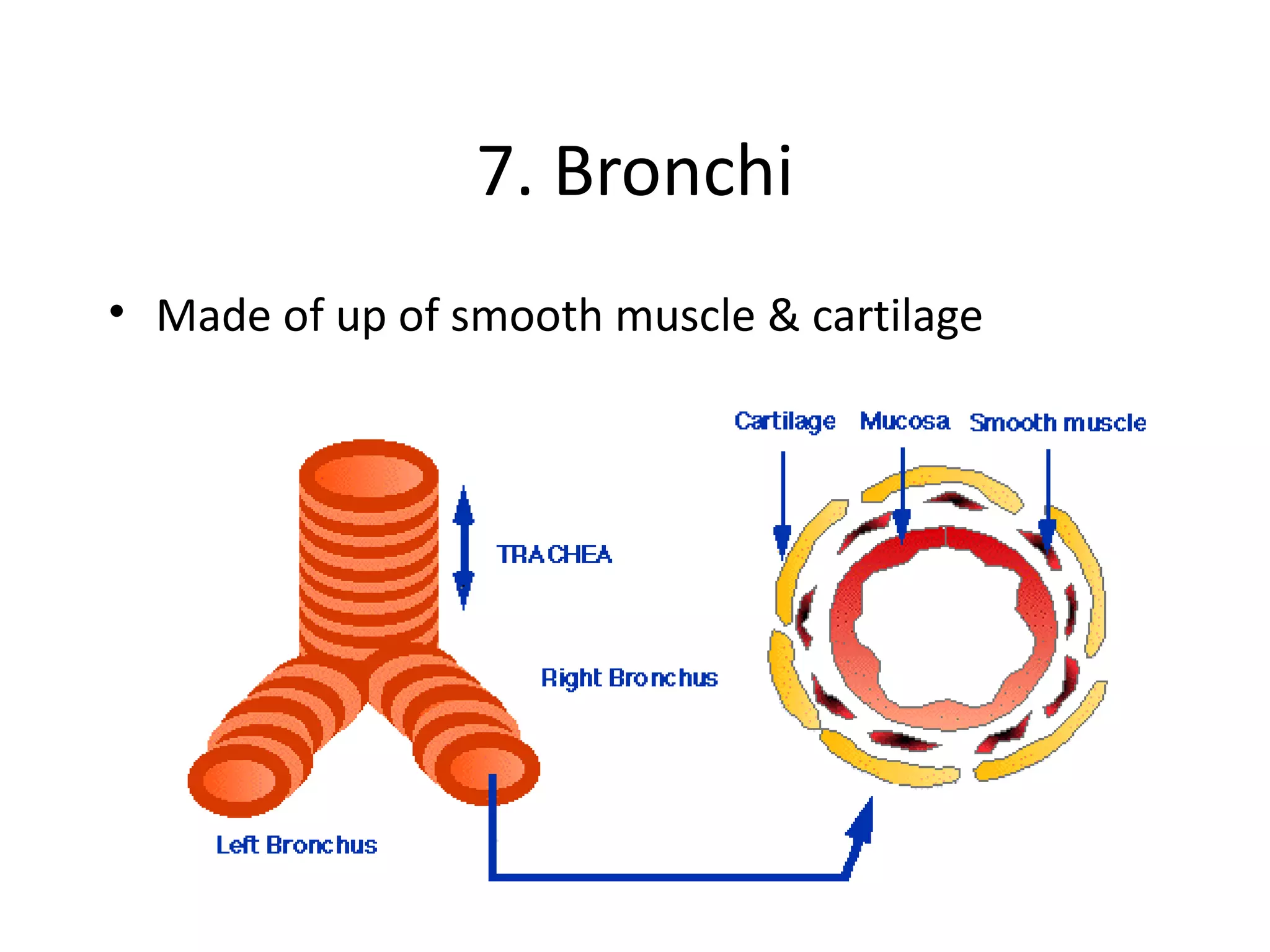
7. Bronchi Made of up of smooth muscle & cartilage
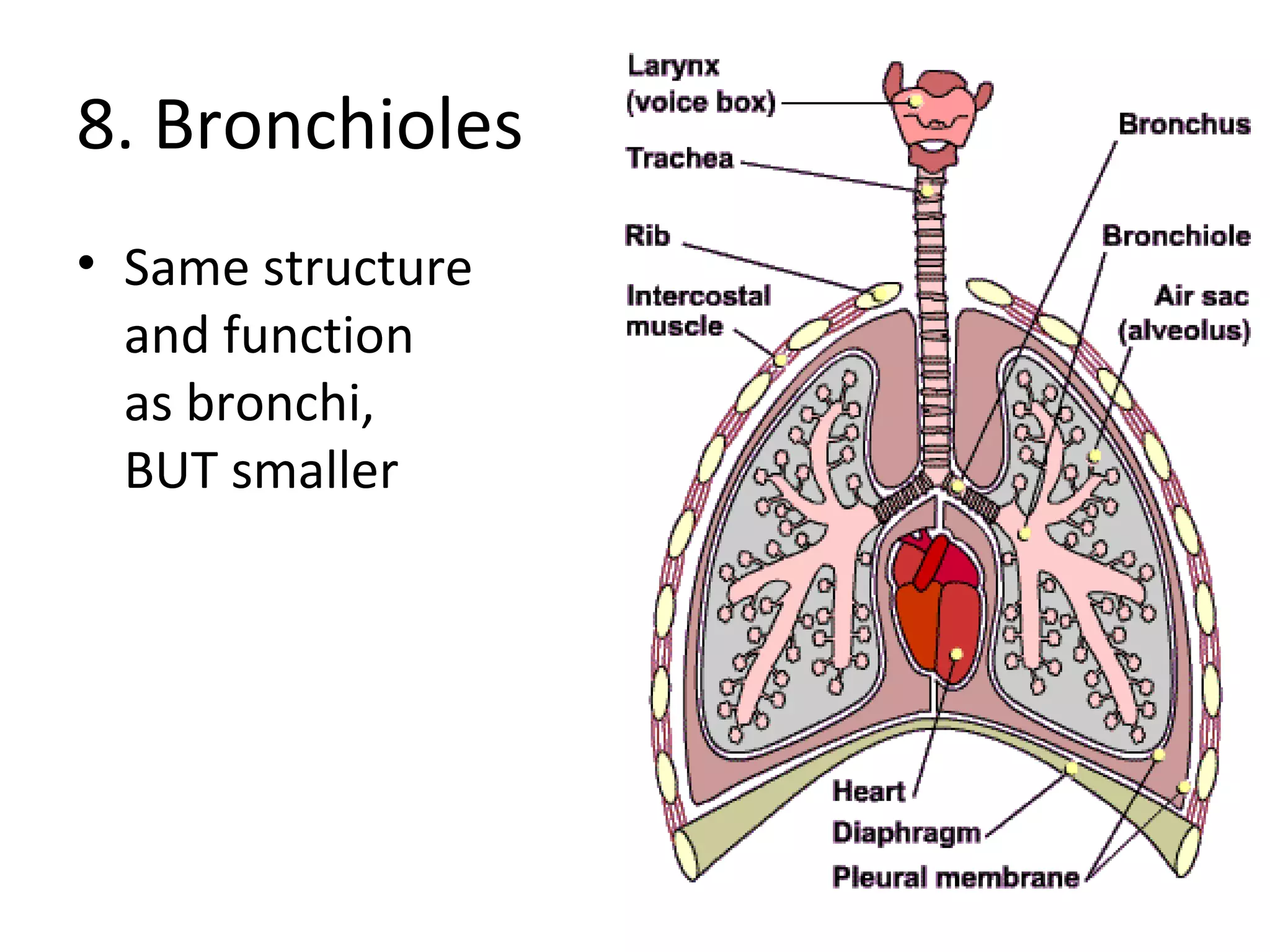
8. Bronchioles Same structure  and function  as bronchi,  BUT smaller
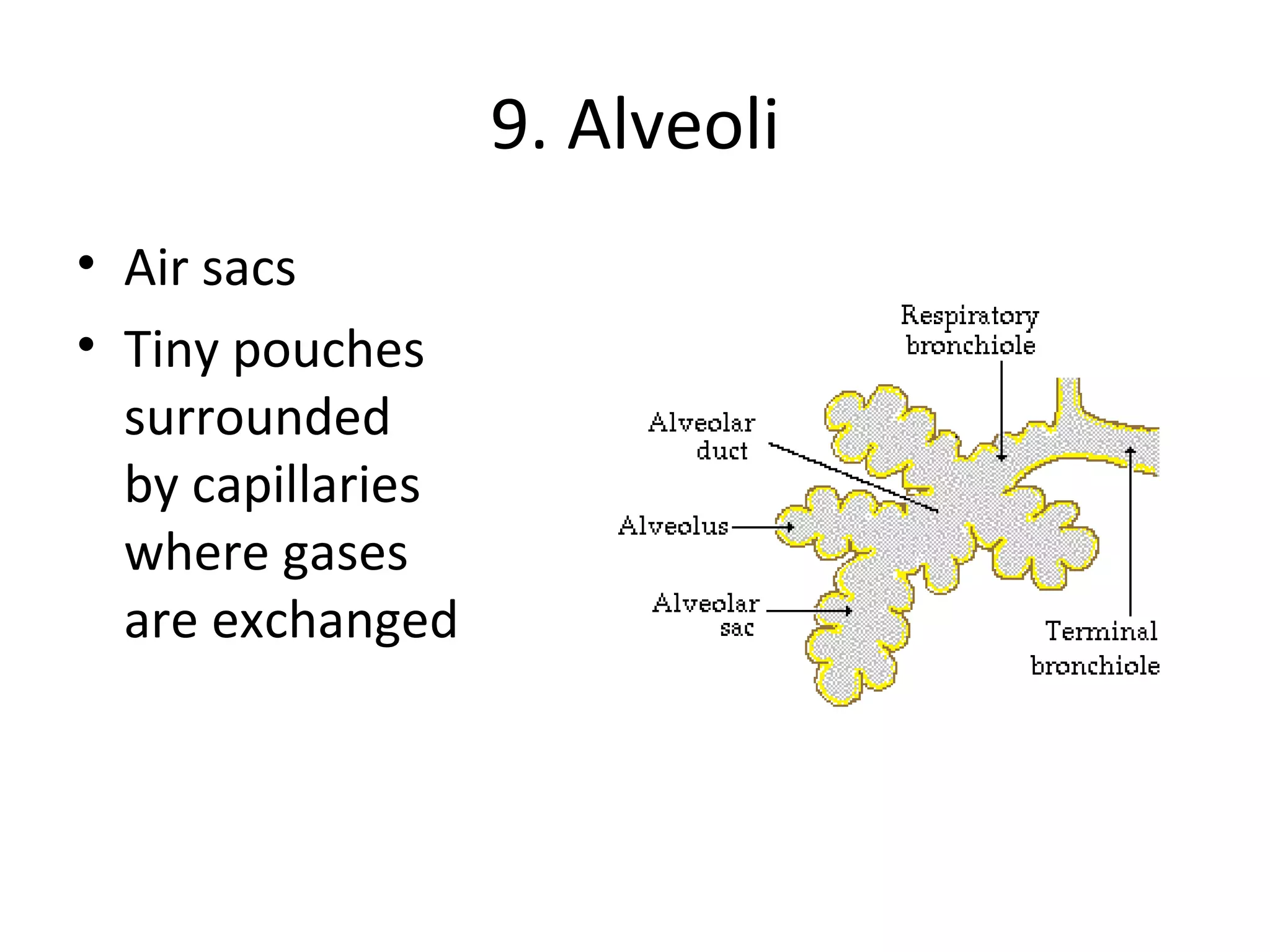
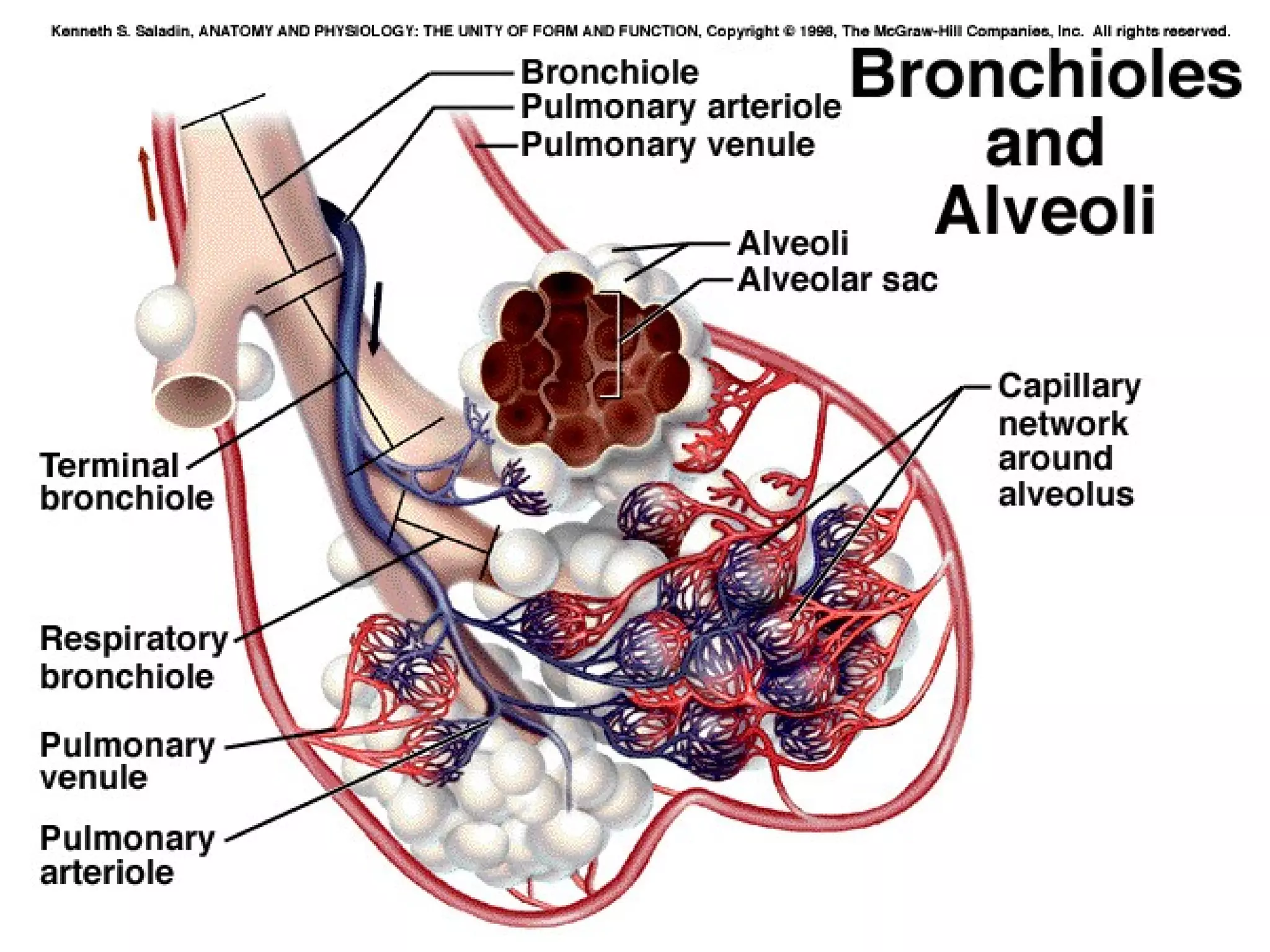
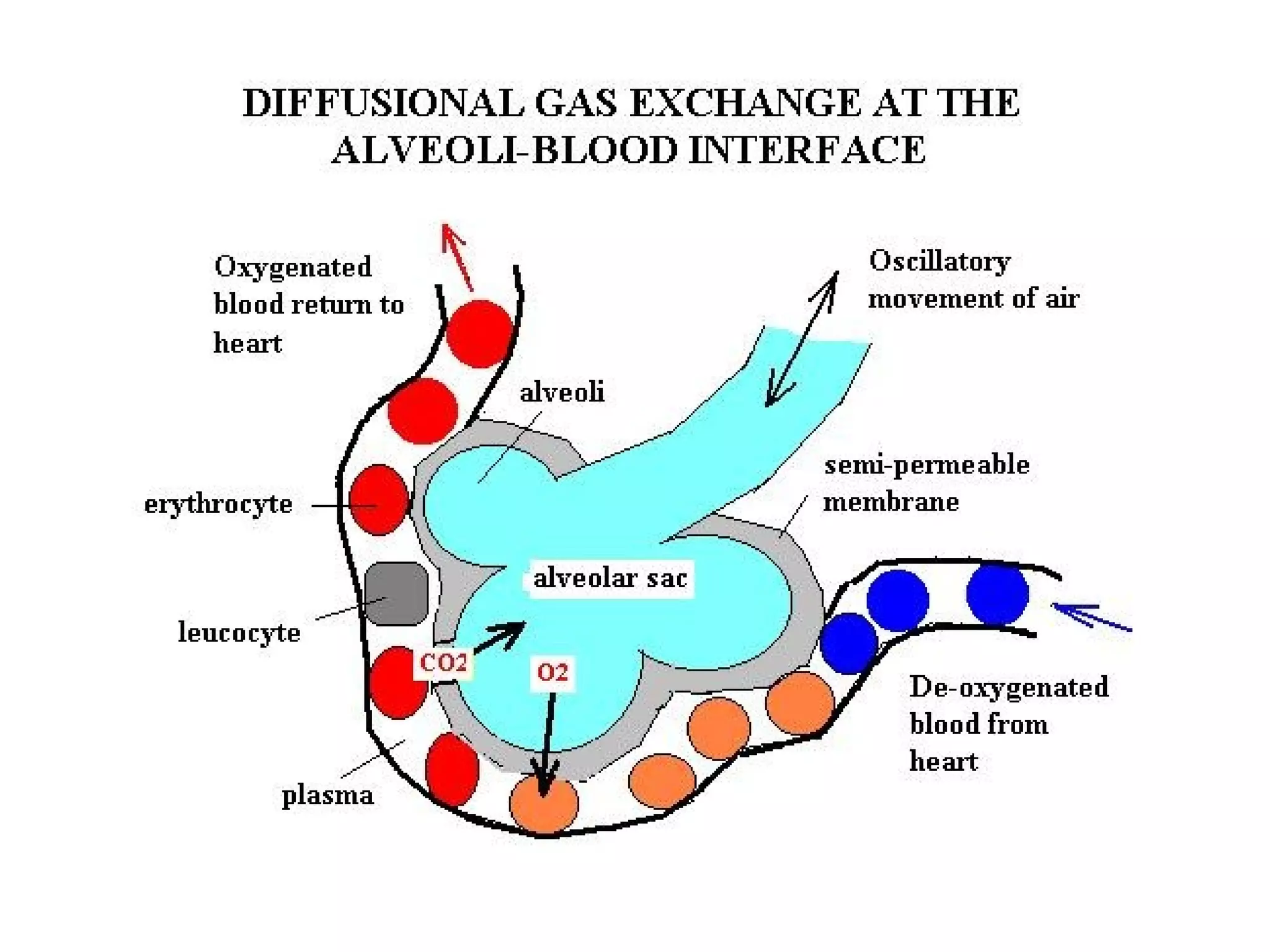
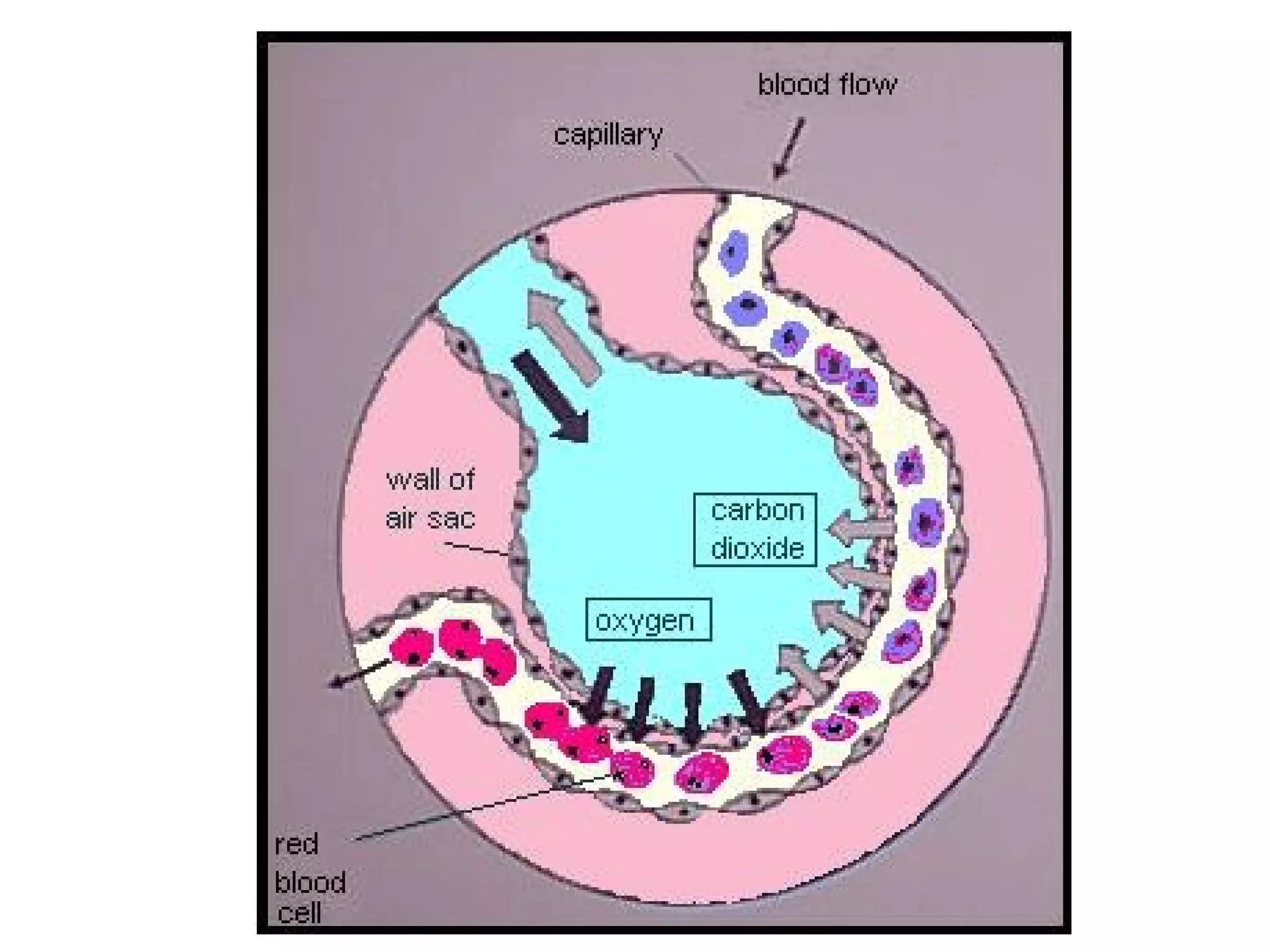
9. Alveoli Air sacs  Tiny pouches  surrounded  by capillaries  where gases  are exchanged
 
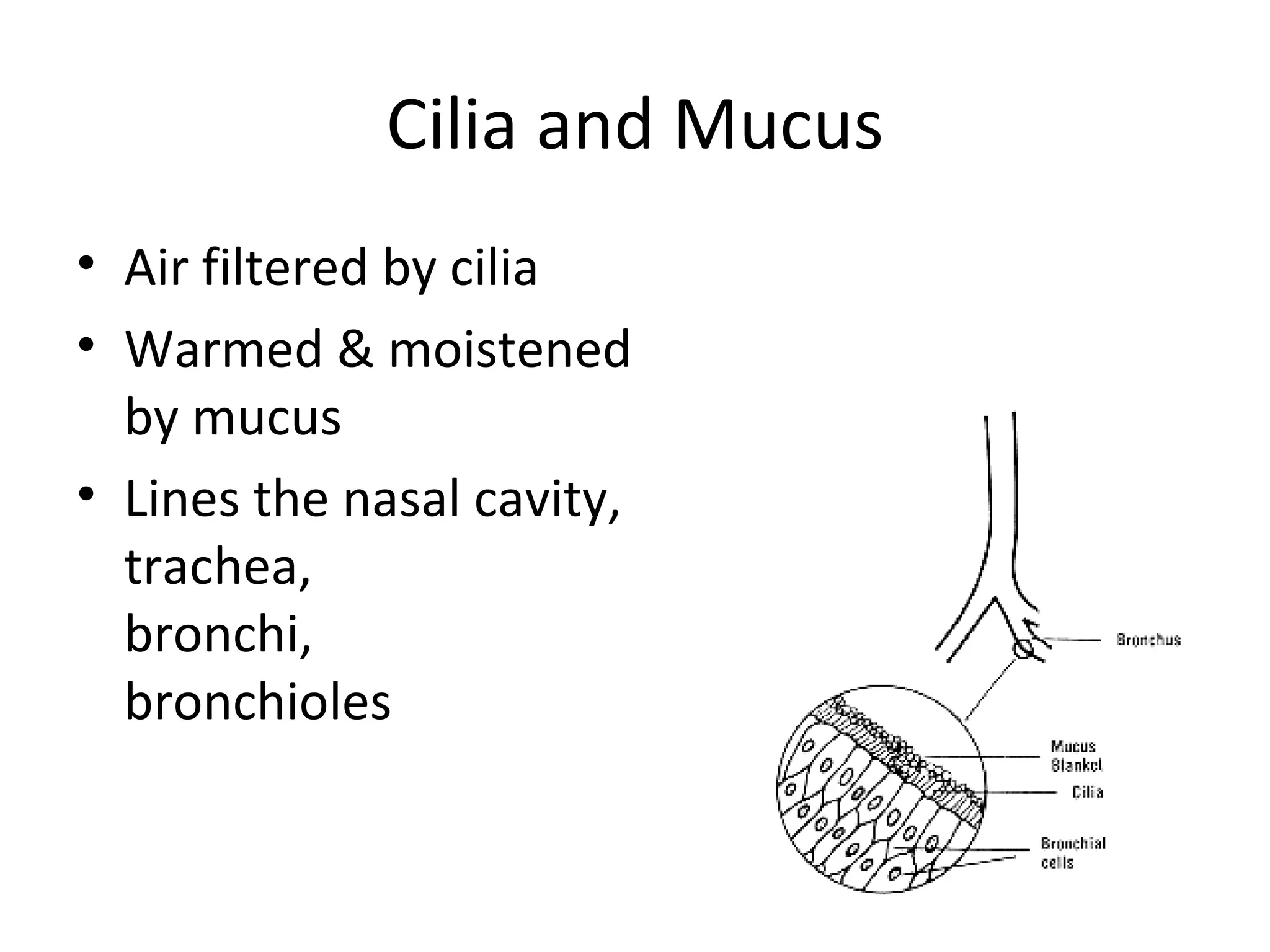
Cilia and Mucus Air filtered by cilia  Warmed & moistened  by mucus Lines the nasal cavity,  trachea,  bronchi,  bronchioles
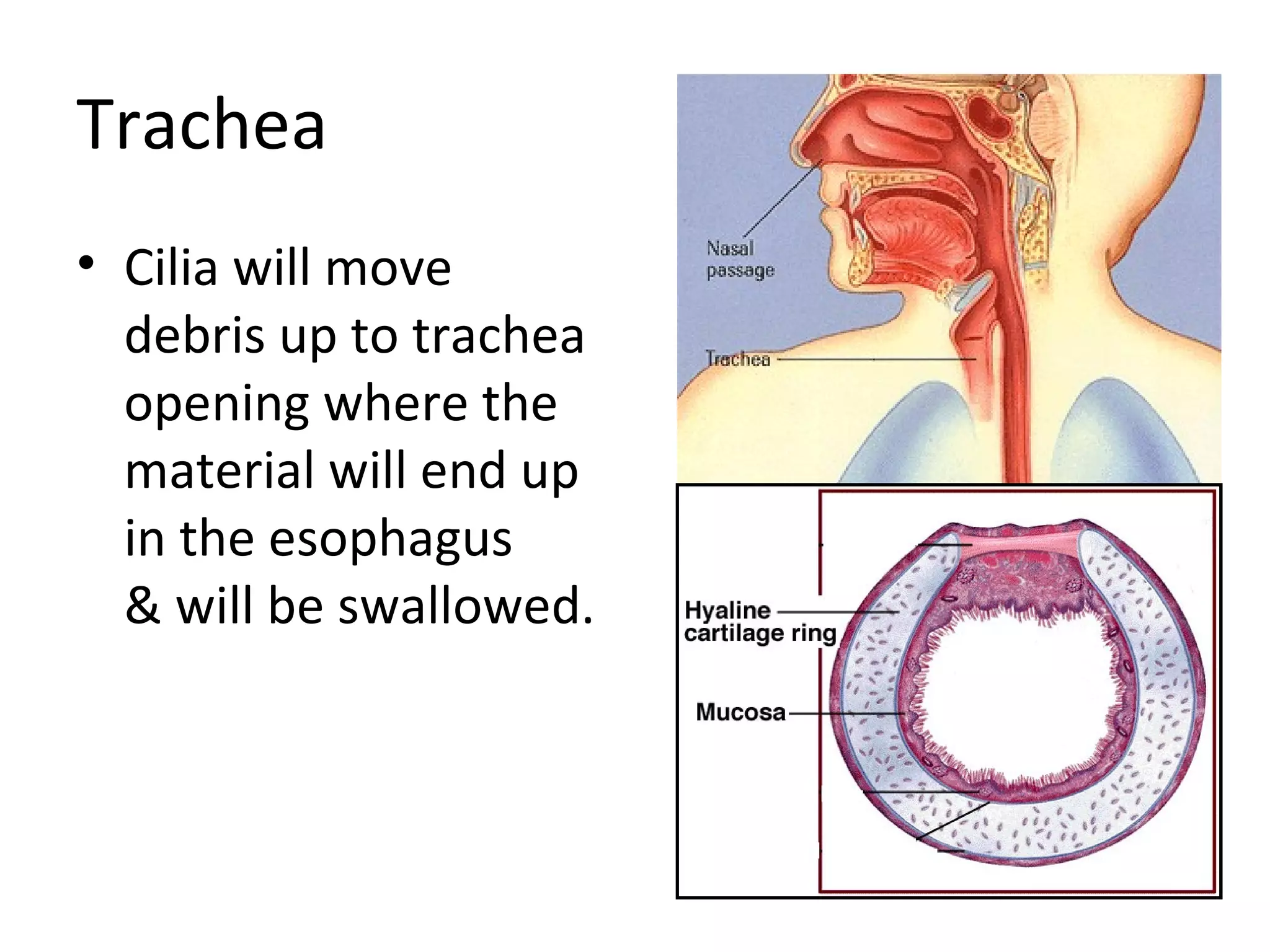
Trachea Cilia will move  debris up to trachea  opening where the  material will end up  in the esophagus  & will be swallowed.
Breathing
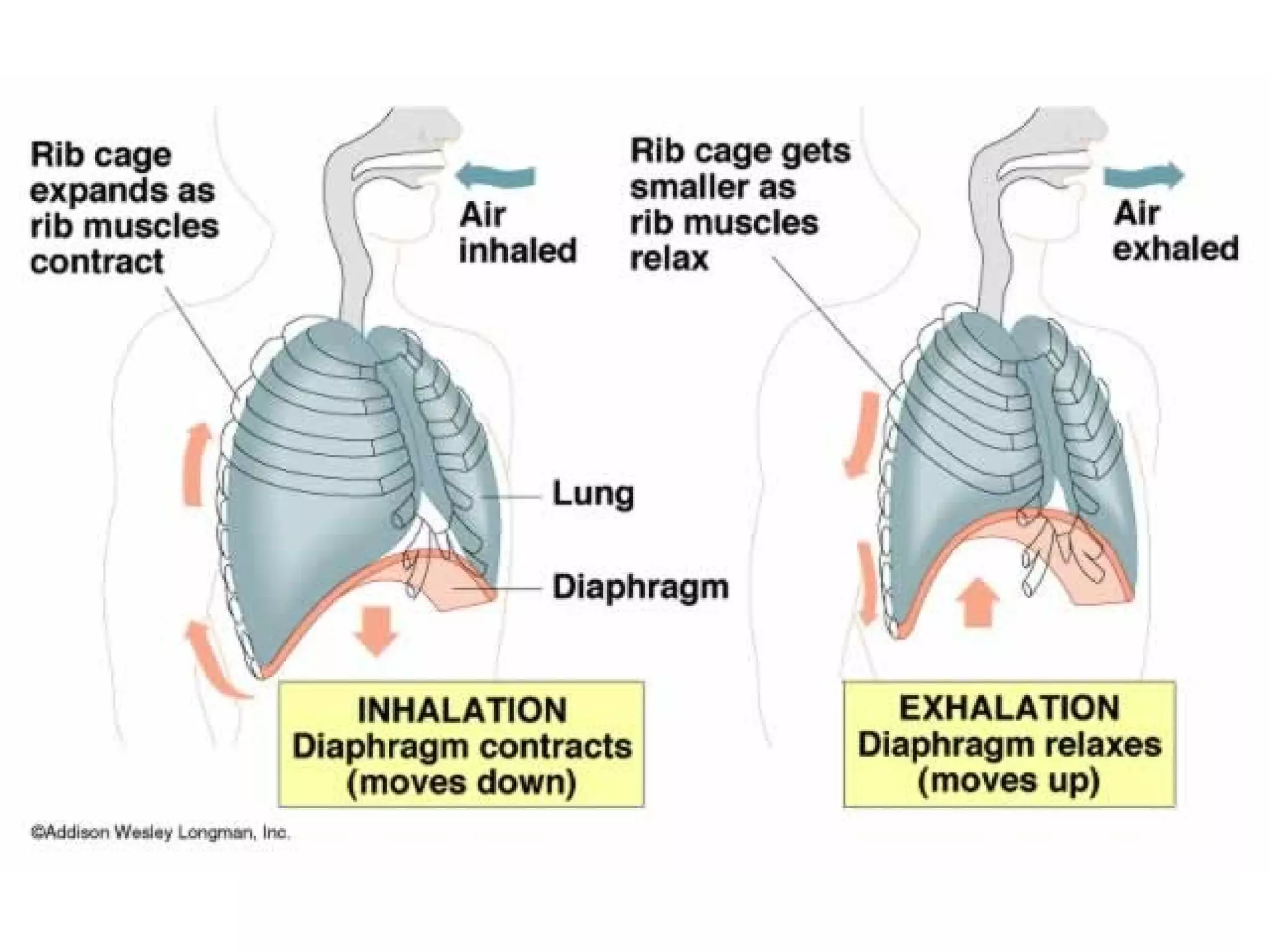
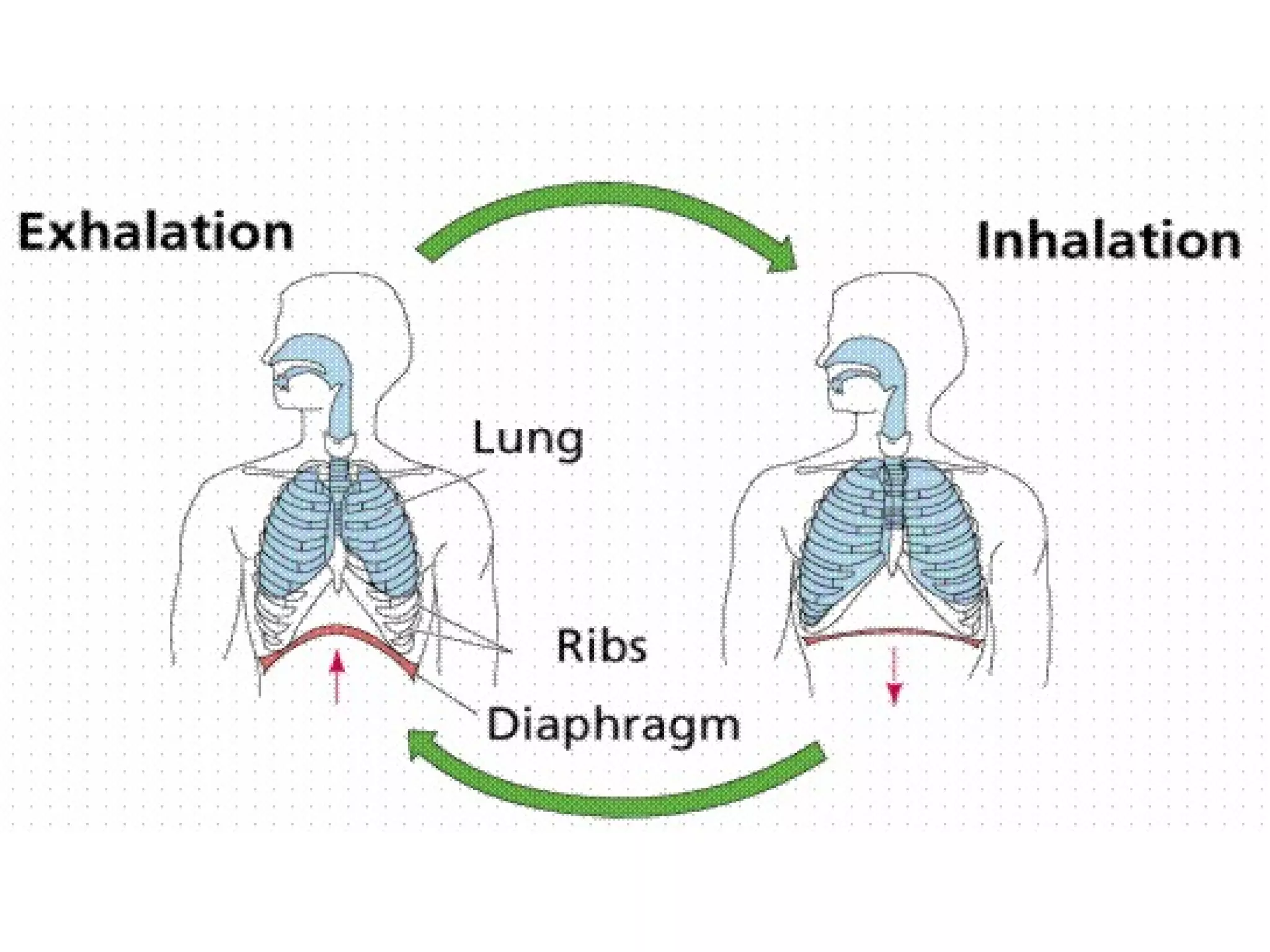
Inspiration/Inhalation Diaphragm  CONTRACTS  – “Down” position Chest expands and enlarges Ribs are  PUSHED UP  and  OUT Thoracic cavity  INCREASES More pressure outside than inside the lungs  Allow air  INTO  the lungs
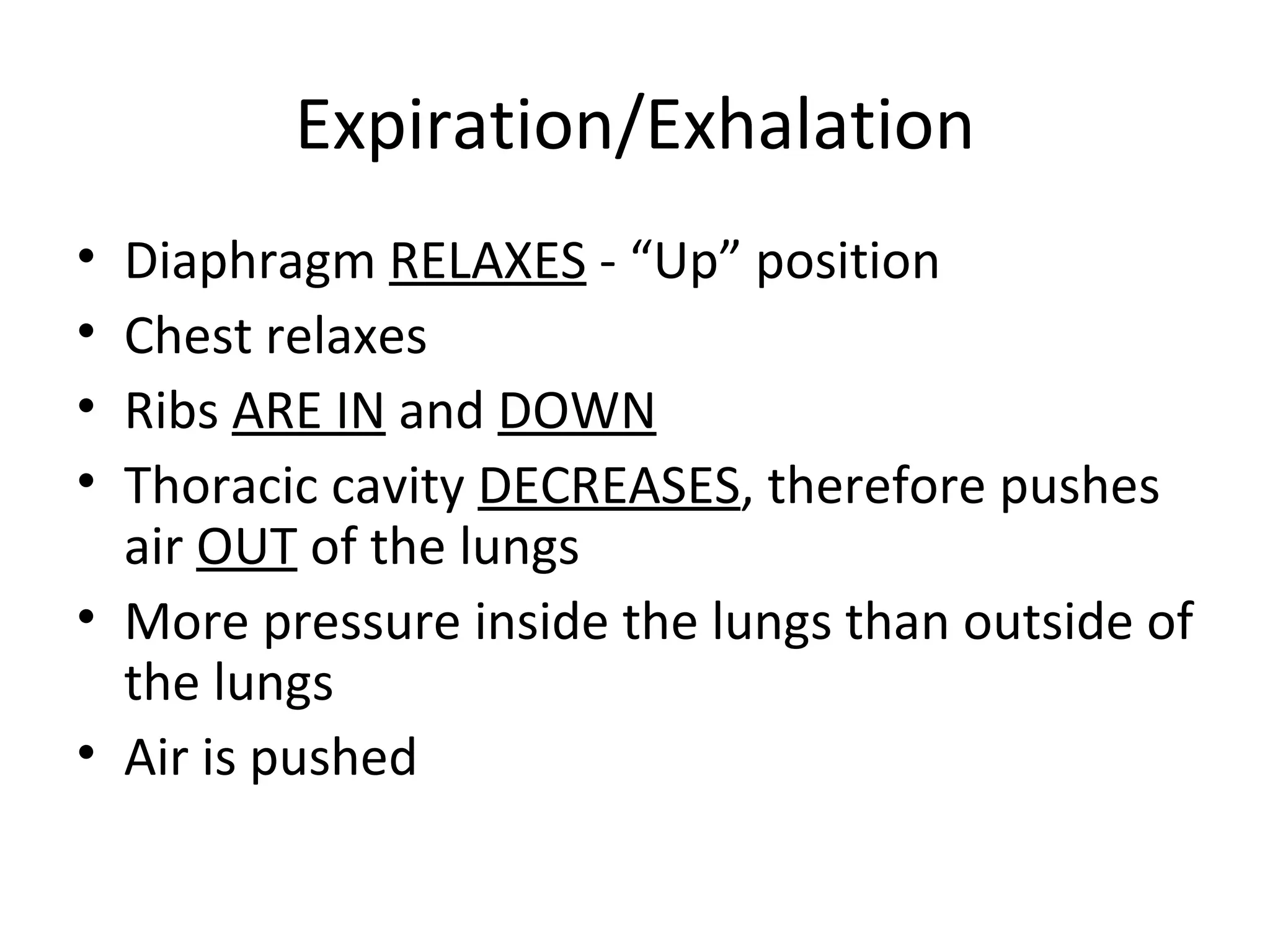
Expiration/Exhalation Diaphragm  RELAXES  - “Up” position  Chest relaxes Ribs  ARE IN  and  DOWN Thoracic cavity  DECREASES , therefore pushes air  OUT  of the lungs More pressure inside the lungs than outside of the lungs Air is pushed
 
 
Animation of Breathing
Respiratory control
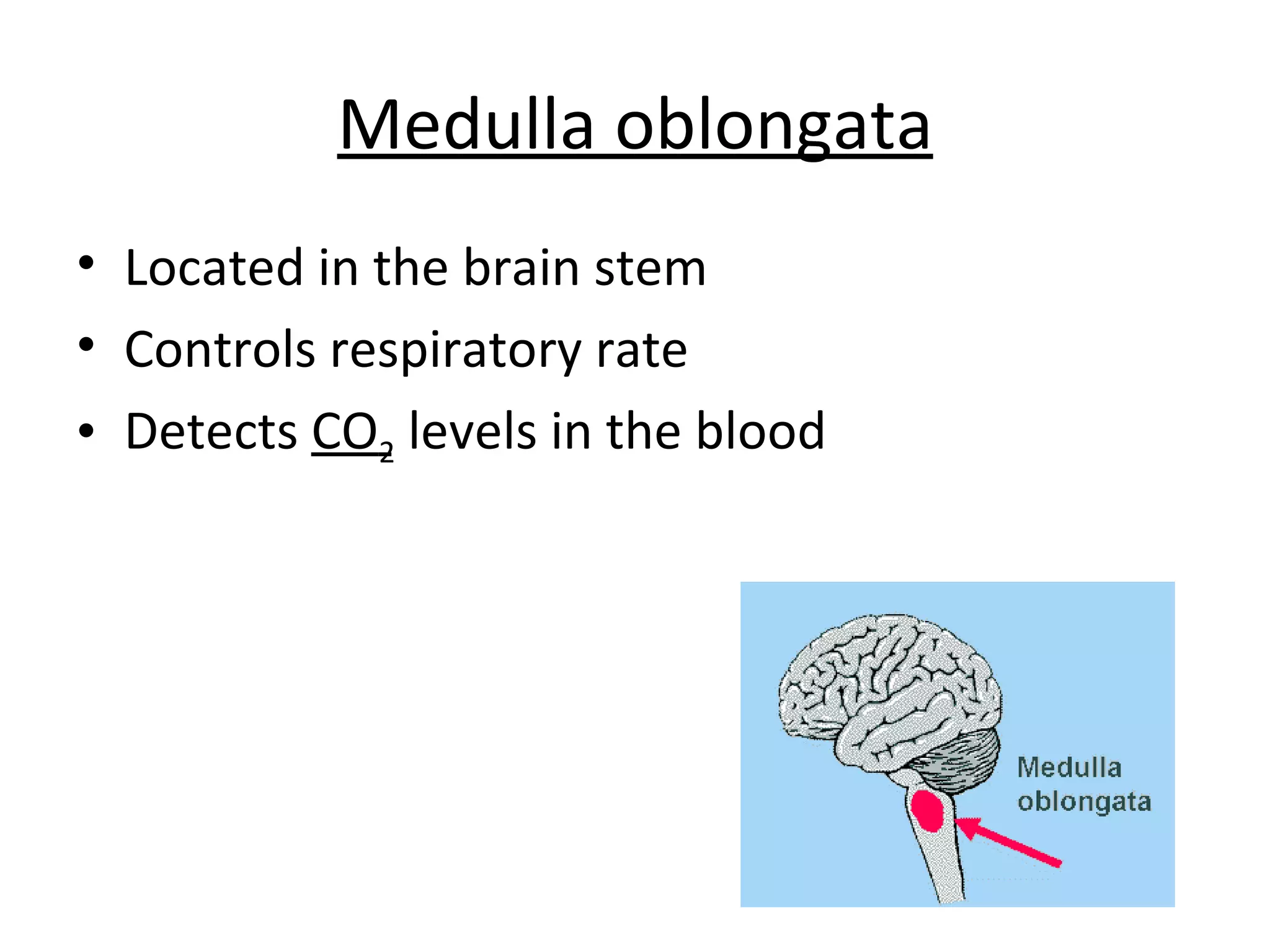
Medulla oblongata Located in the brain stem Controls respiratory rate  Detects  CO 2  levels in the blood
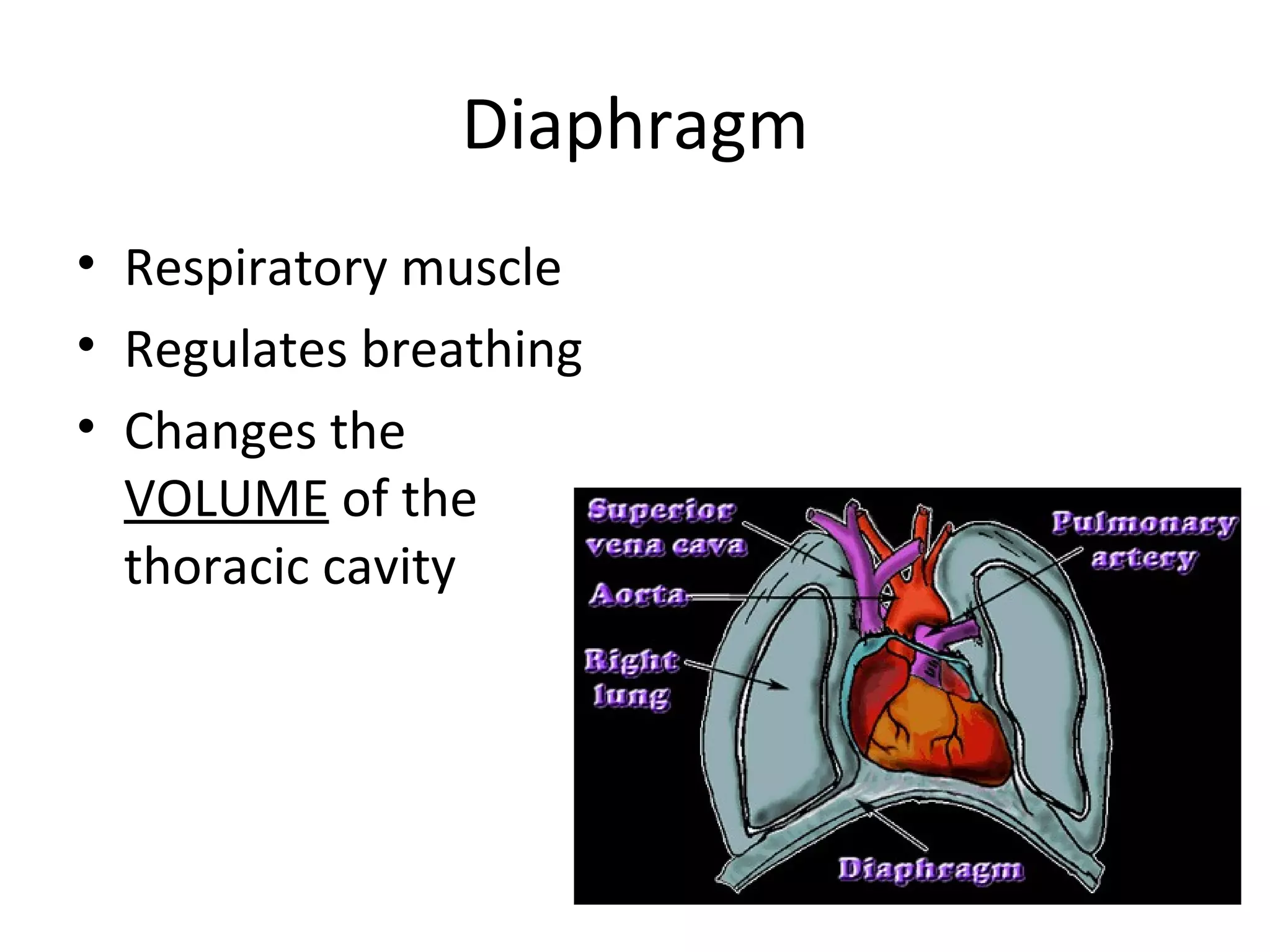
Diaphragm Respiratory muscle Regulates breathing Changes the  VOLUME  of the  thoracic cavity
Gas Exchange
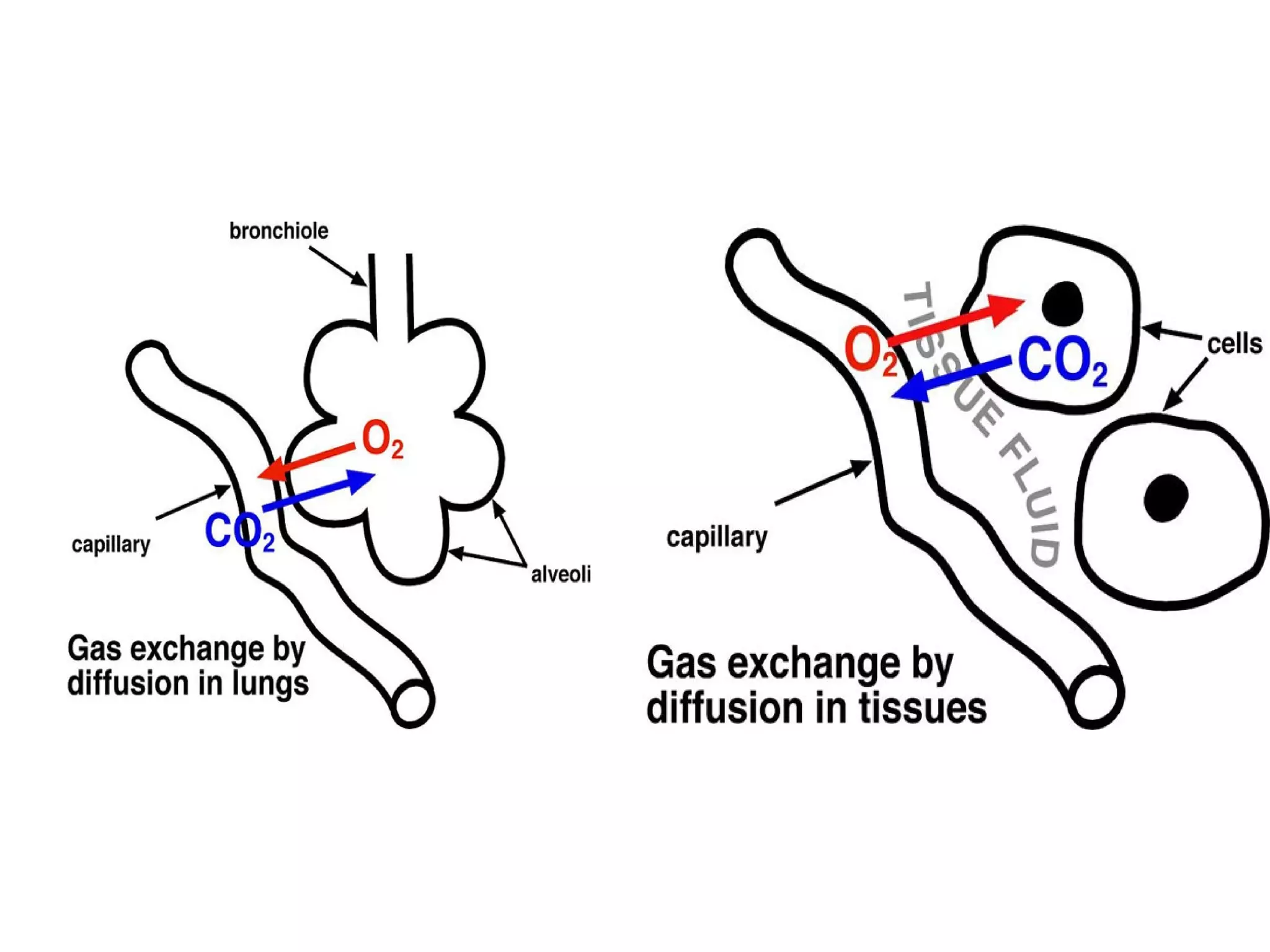
Gas exchange External gas exchange  between the  ATMOSPHERE  and the  BLOOD Internal gas exchange Between the  BLOOD/CAPILLARY  and the  CELLS.
 
General Process of  Gas Exchange
 
 
Gas Transport
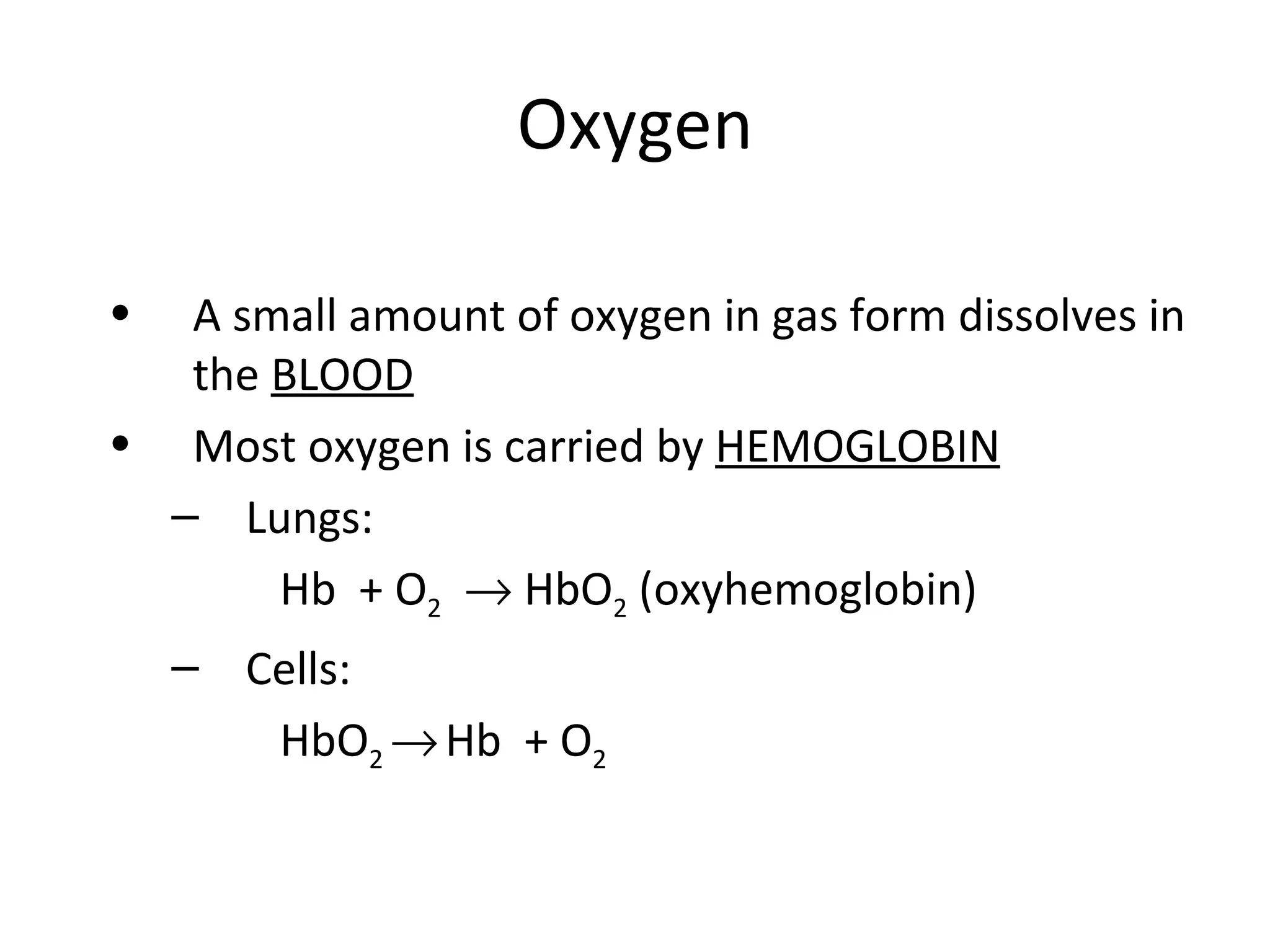
Oxygen A small amount of oxygen in gas form dissolves in the  BLOOD Most oxygen is carried by  HEMOGLOBIN Lungs:  Hemoglobin picks up oxygen   Hb  + O 2     HbO 2  (oxyhemoglobin) Cells:  Hemoglobin drops off oxygen   HbO 2     Hb  + O 2
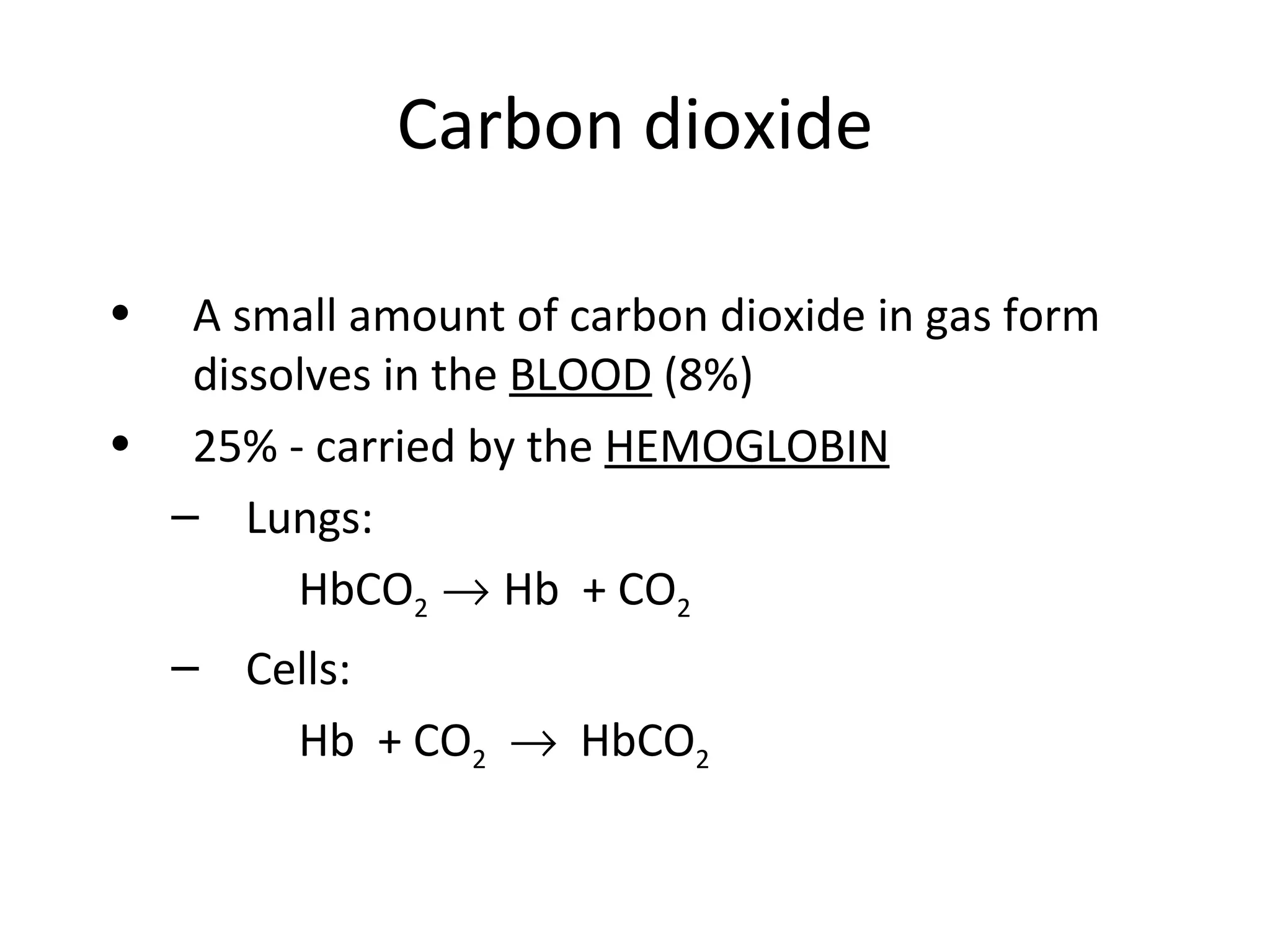
Carbon dioxide A small amount of carbon dioxide in gas form dissolves in the  BLOOD  (8%) 25% - carried by the  HEMOGLOBIN Lungs:  Hemoglobin drops off carbon dioxide HbCO 2     Hb  + CO 2   Cells:  Hemoglobin picks up carbon dioxide  Hb  + CO 2      HbCO 2
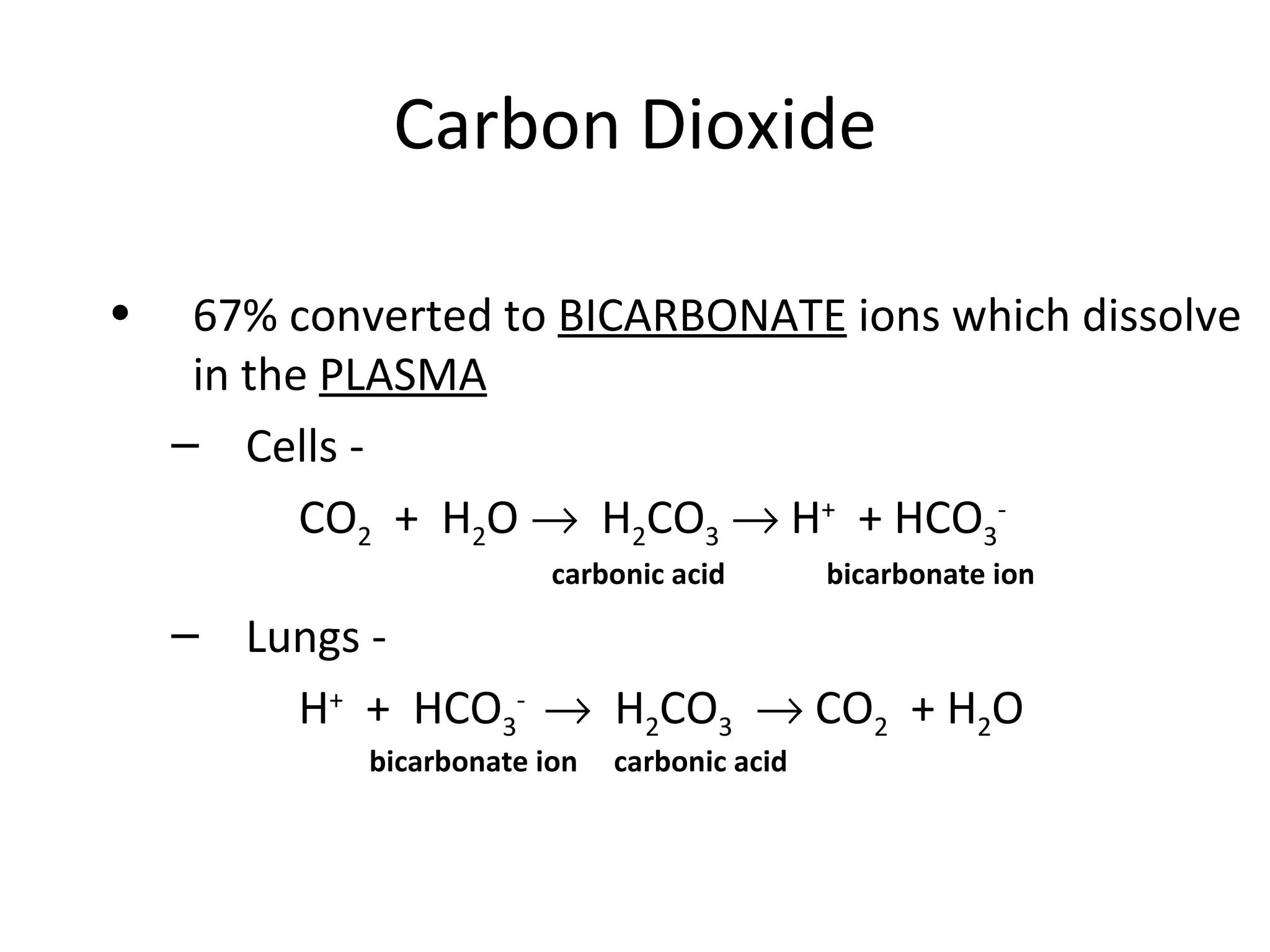
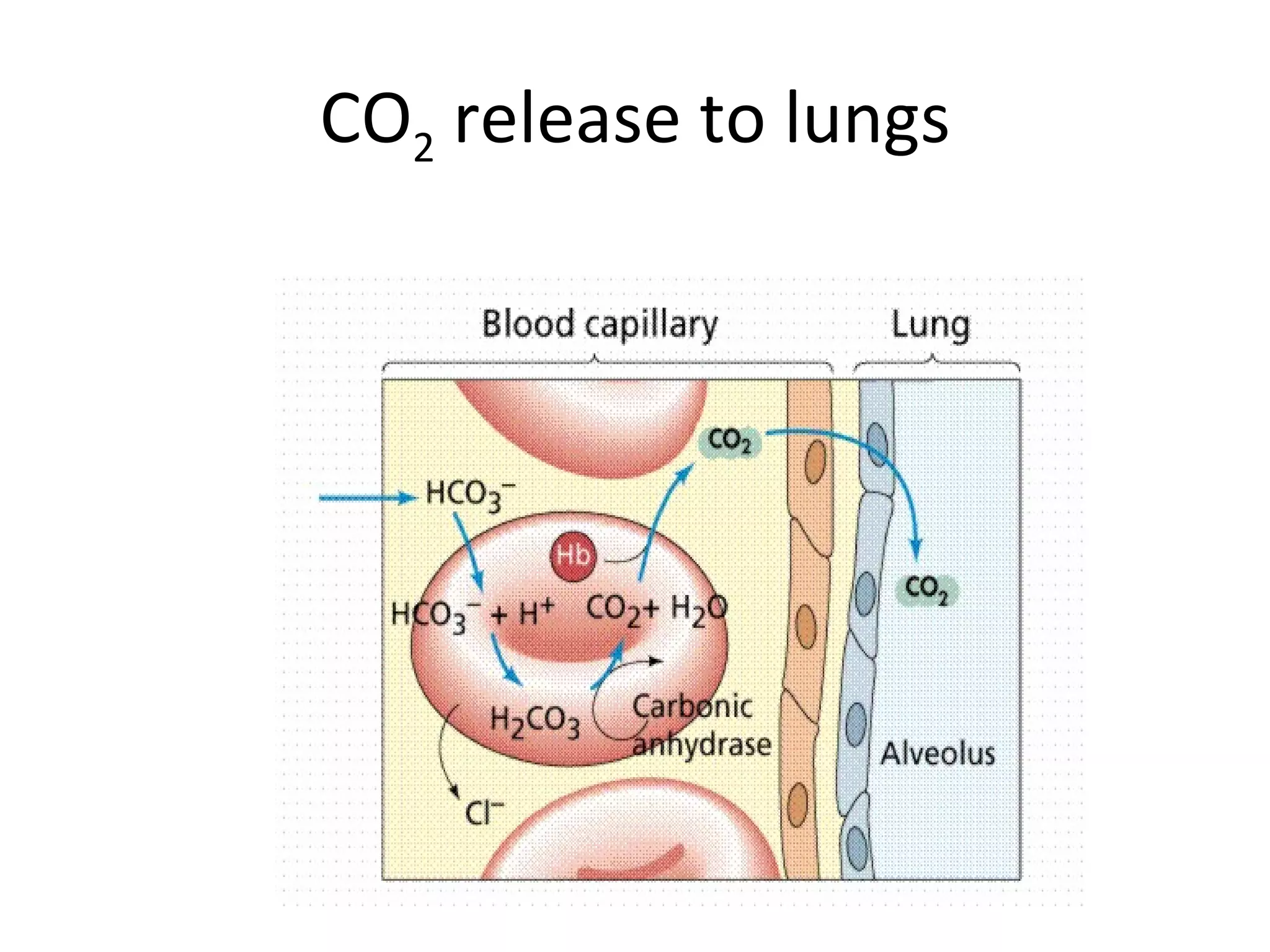
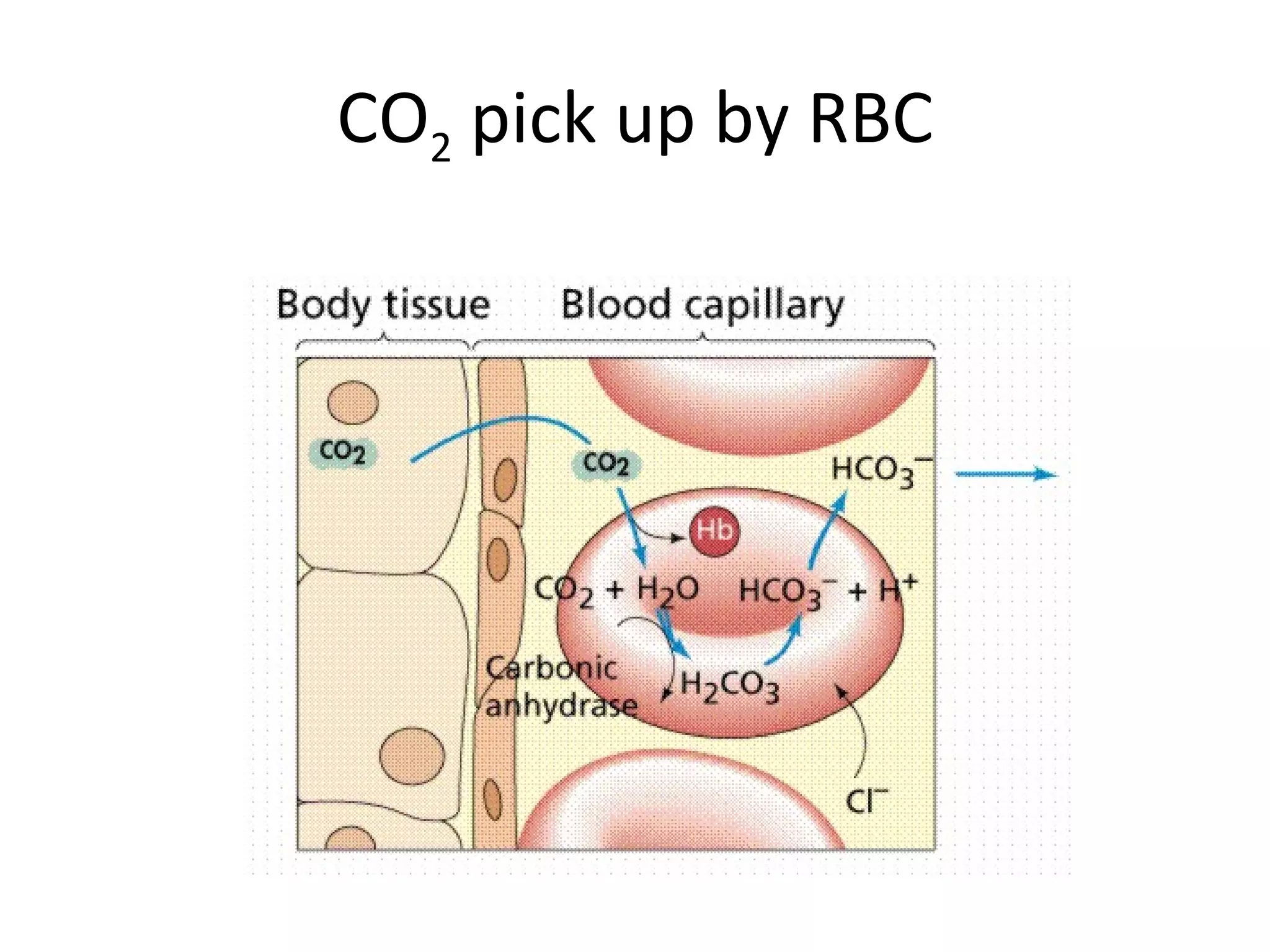
Carbon Dioxide 67% converted to  BICARBONATE  ions which dissolve in the  PLASMA Cells -  Carbon dioxide gets picked up CO 2   +  H 2 O     H 2 CO 3     H +   + HCO 3 - carbonic acid  bicarbonate ion Lungs -  Carbon dioxide gets dropped off   H +   +  HCO 3 -     H 2 CO 3     CO 2   + H 2 O   bicarbonate ion  carbonic acid
CO 2  release to lungs
CO 2  pick up by RBC
Body and Breathing Activity
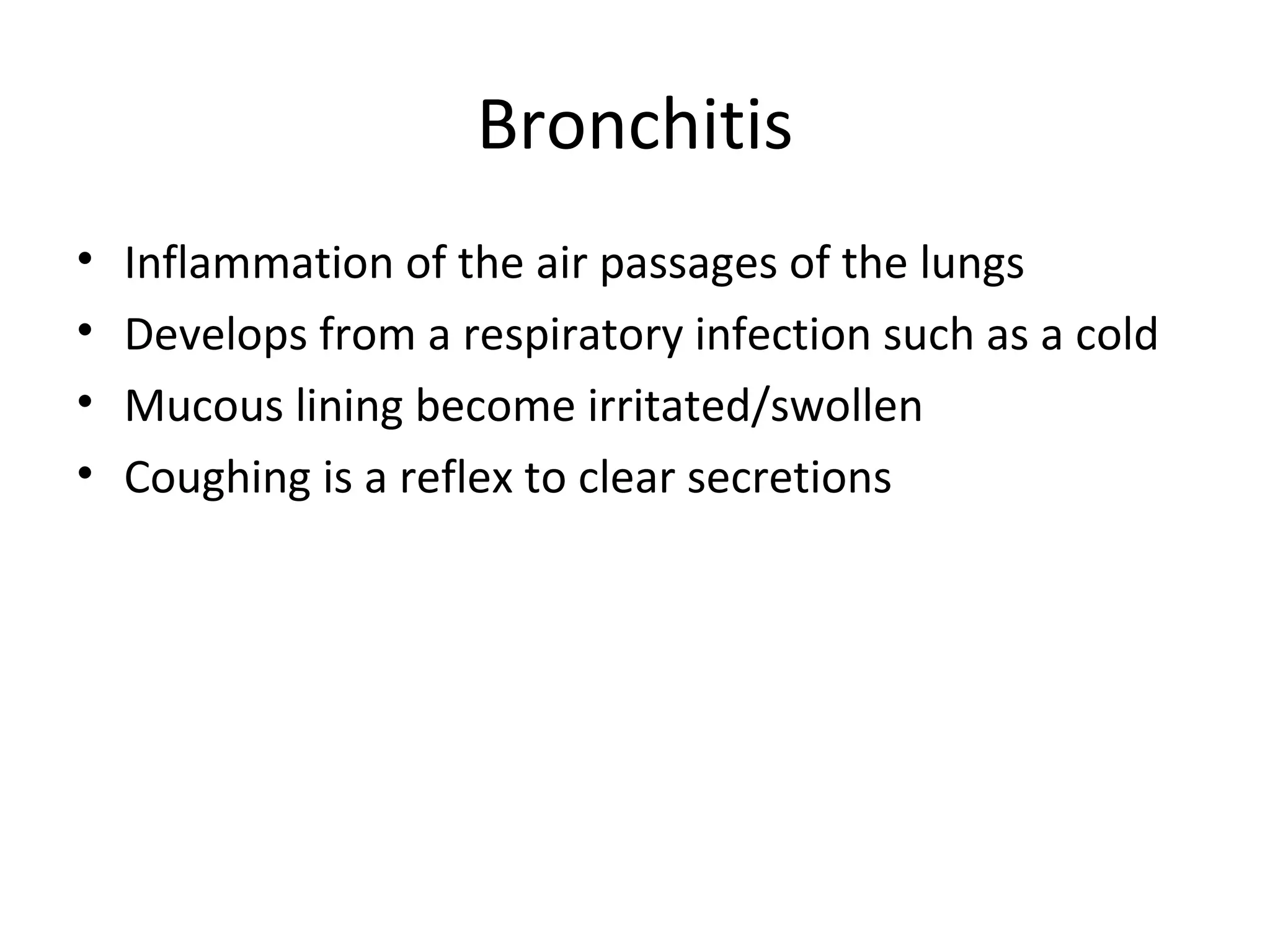
Bronchitis Inflammation of the air passages of the lungs Develops from a respiratory infection such as a cold Mucous lining become irritated/swollen Coughing is a reflex to clear secretions
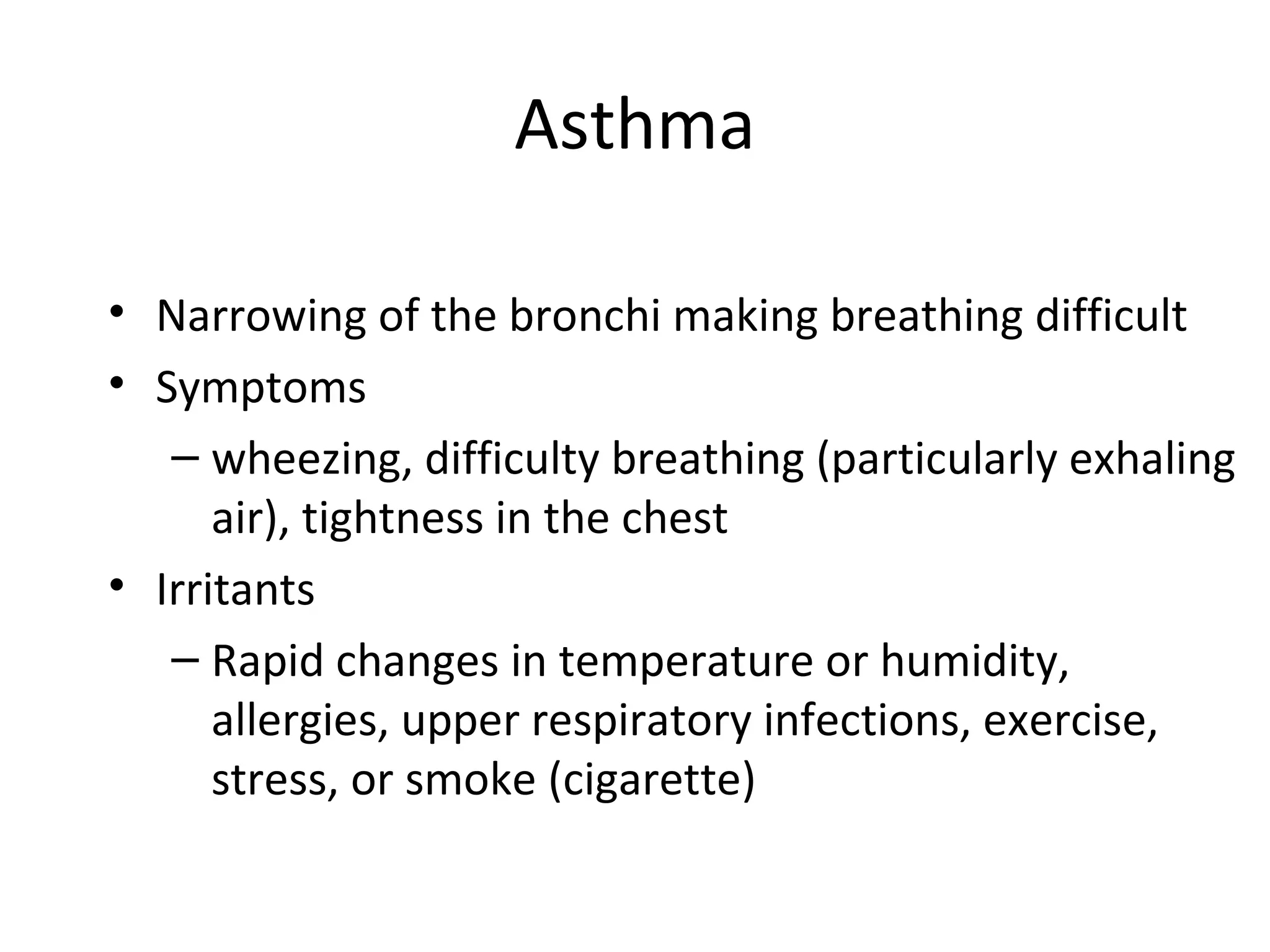
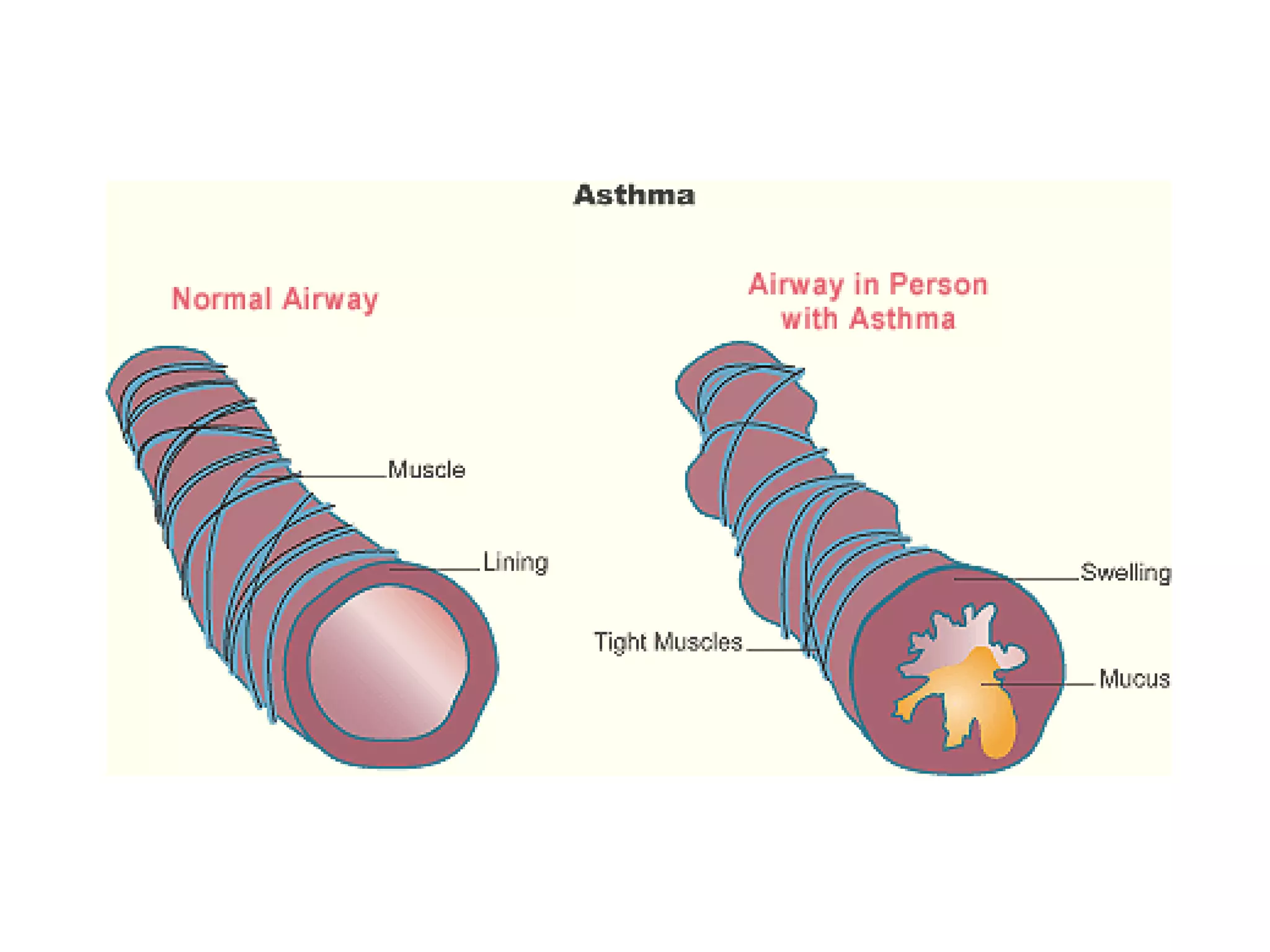
Asthma Narrowing of the bronchi making breathing difficult Symptoms  wheezing, difficulty breathing (particularly exhaling air), tightness in the chest Irritants  Rapid changes in temperature or humidity, allergies, upper respiratory infections, exercise, stress, or smoke (cigarette)
 
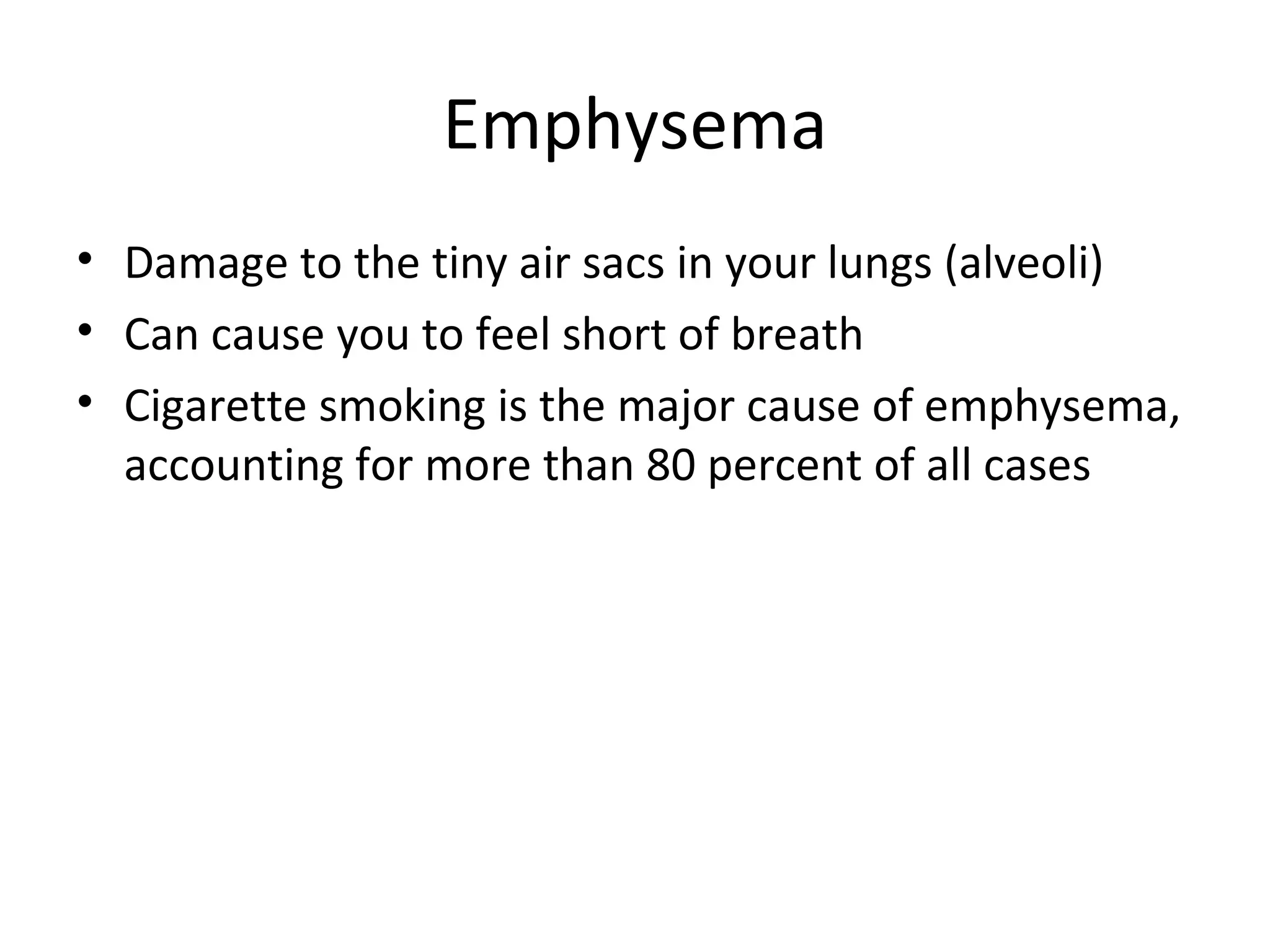
Emphysema Damage to the tiny air sacs in your lungs (alveoli)  Can cause you to feel short of breath Cigarette smoking is the major cause of emphysema, accounting for more than 80 percent of all cases
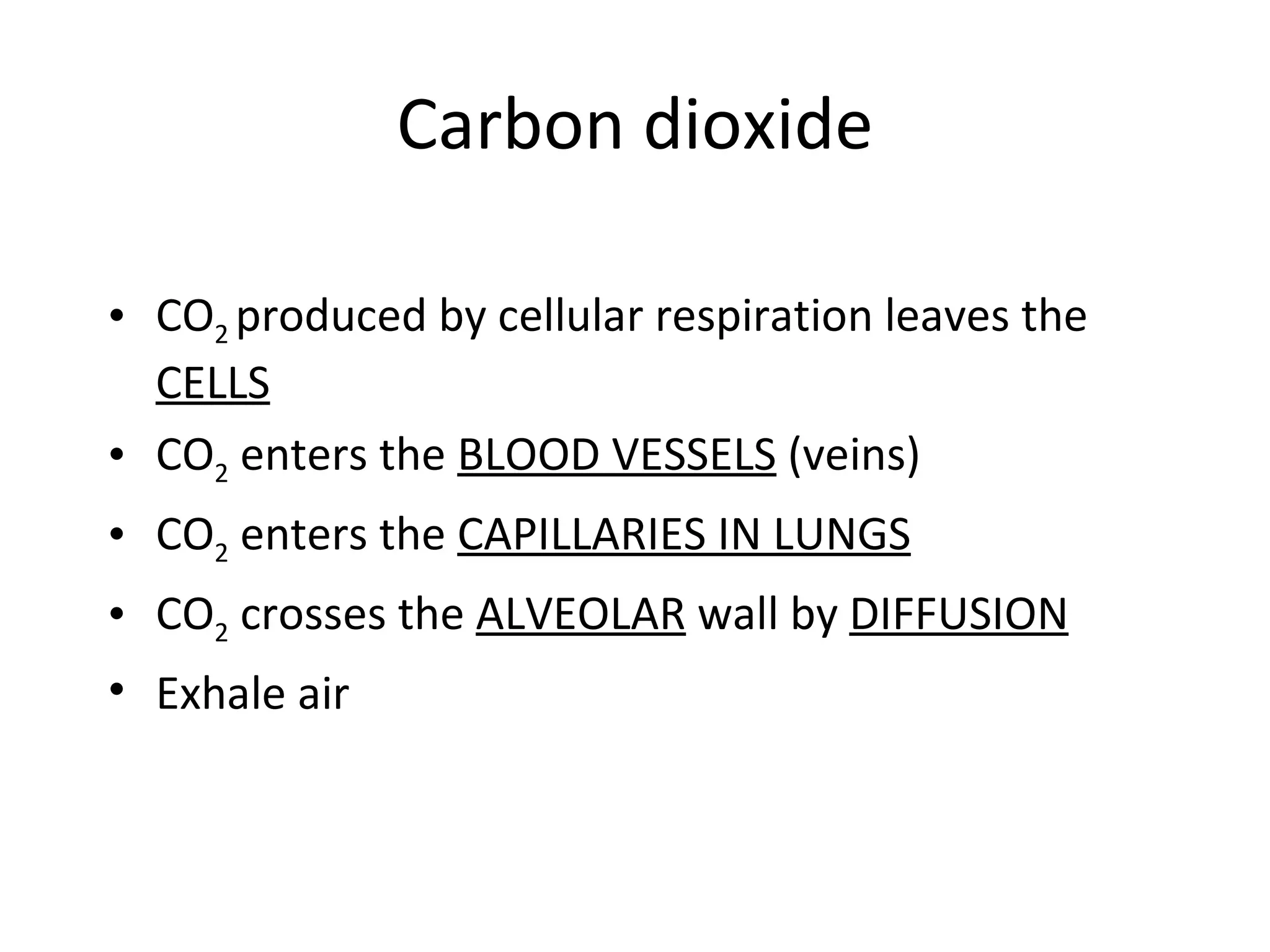
Carbon dioxide CO 2  produced by cellular respiration leaves the  CELLS CO 2  enters the  BLOOD VESSELS  (veins) CO 2  enters the  CAPILLARIES IN LUNGS CO 2  crosses the  ALVEOLAR  wall by  DIFFUSION Exhale air
Oxygen Inhale O 2 O 2  crosses the  ALVEOLAR  wall by  DIFFUSION O 2  enters the  CAPILLARIES IN LUNGS O 2  enters the  BLOOD VESSELS  (arteries) O 2  travels to the  CELLS  to be used in cellular respiration
 
Transport of Gases in Blood Oxygen is mainly transported bound to hemoglobin though a small amount will dissolve in the blood Some carbon dioxide is transported bound to hemoglobin and some dissolves in plasma Most  carbon dioxide molecules  are transported in the form of  bicarbonate ions Once in the lungs, the  bicarbonate ions  are converted back to carbon dioxide
 

Respiratory system moodle

  • 1.
    Respiratory System Mainfunction Transports GASES to and from the circulatory system
  • 2.
    Parts of theRespiratory System
  • 3.
  • 4.
  • 5.
    3. Pharynx Cavity at the back of the mouth Epiglottis is located in the pharynx
  • 6.
    4. Epiglottis Thinflexible cartilage structure Guards the entrance to the larynx Prevents food material from entering the trachea during swallowing
  • 7.
    5. Larynx Voicebox (Glottis) Contains vocal cords
  • 8.
    6. Trachea Cartilagerings Windpipe
  • 9.
    7. Bronchi Madeof up of smooth muscle & cartilage
  • 10.
    8. Bronchioles Samestructure and function as bronchi, BUT smaller
  • 11.
    9. Alveoli Airsacs Tiny pouches surrounded by capillaries where gases are exchanged
  • 12.
  • 13.
    Cilia and MucusAir filtered by cilia Warmed & moistened by mucus Lines the nasal cavity, trachea, bronchi, bronchioles
  • 14.
    Trachea Cilia willmove debris up to trachea opening where the material will end up in the esophagus & will be swallowed.
  • 15.
  • 16.
    Inspiration/Inhalation Diaphragm CONTRACTS – “Down” position Chest expands and enlarges Ribs are PUSHED UP and OUT Thoracic cavity INCREASES More pressure outside than inside the lungs Allow air INTO the lungs
  • 17.
    Expiration/Exhalation Diaphragm RELAXES - “Up” position Chest relaxes Ribs ARE IN and DOWN Thoracic cavity DECREASES , therefore pushes air OUT of the lungs More pressure inside the lungs than outside of the lungs Air is pushed
  • 18.
  • 19.
  • 20.
  • 21.
  • 22.
    Medulla oblongata Locatedin the brain stem Controls respiratory rate Detects CO 2 levels in the blood
  • 23.
    Diaphragm Respiratory muscleRegulates breathing Changes the VOLUME of the thoracic cavity
  • 24.
  • 25.
    Gas exchange Externalgas exchange between the ATMOSPHERE and the BLOOD Internal gas exchange Between the BLOOD/CAPILLARY and the CELLS.
  • 26.
  • 27.
    General Process of Gas Exchange
  • 28.
  • 29.
  • 30.
  • 31.
    Oxygen A smallamount of oxygen in gas form dissolves in the BLOOD Most oxygen is carried by HEMOGLOBIN Lungs: Hemoglobin picks up oxygen Hb + O 2  HbO 2 (oxyhemoglobin) Cells: Hemoglobin drops off oxygen HbO 2  Hb + O 2
  • 32.
    Carbon dioxide Asmall amount of carbon dioxide in gas form dissolves in the BLOOD (8%) 25% - carried by the HEMOGLOBIN Lungs: Hemoglobin drops off carbon dioxide HbCO 2  Hb + CO 2 Cells: Hemoglobin picks up carbon dioxide Hb + CO 2  HbCO 2
  • 33.
    Carbon Dioxide 67%converted to BICARBONATE ions which dissolve in the PLASMA Cells - Carbon dioxide gets picked up CO 2 + H 2 O  H 2 CO 3  H + + HCO 3 - carbonic acid bicarbonate ion Lungs - Carbon dioxide gets dropped off H + + HCO 3 -  H 2 CO 3  CO 2 + H 2 O bicarbonate ion carbonic acid
  • 34.
    CO 2 release to lungs
  • 35.
    CO 2 pick up by RBC
  • 36.
  • 37.
    Bronchitis Inflammation ofthe air passages of the lungs Develops from a respiratory infection such as a cold Mucous lining become irritated/swollen Coughing is a reflex to clear secretions
  • 38.
    Asthma Narrowing ofthe bronchi making breathing difficult Symptoms wheezing, difficulty breathing (particularly exhaling air), tightness in the chest Irritants Rapid changes in temperature or humidity, allergies, upper respiratory infections, exercise, stress, or smoke (cigarette)
  • 39.
  • 40.
    Emphysema Damage tothe tiny air sacs in your lungs (alveoli) Can cause you to feel short of breath Cigarette smoking is the major cause of emphysema, accounting for more than 80 percent of all cases
  • 41.
    Carbon dioxide CO2 produced by cellular respiration leaves the CELLS CO 2 enters the BLOOD VESSELS (veins) CO 2 enters the CAPILLARIES IN LUNGS CO 2 crosses the ALVEOLAR wall by DIFFUSION Exhale air
  • 42.
    Oxygen Inhale O2 O 2 crosses the ALVEOLAR wall by DIFFUSION O 2 enters the CAPILLARIES IN LUNGS O 2 enters the BLOOD VESSELS (arteries) O 2 travels to the CELLS to be used in cellular respiration
  • 43.
  • 44.
    Transport of Gasesin Blood Oxygen is mainly transported bound to hemoglobin though a small amount will dissolve in the blood Some carbon dioxide is transported bound to hemoglobin and some dissolves in plasma Most carbon dioxide molecules are transported in the form of bicarbonate ions Once in the lungs, the bicarbonate ions are converted back to carbon dioxide
  • 45.