The Respiratory Cycle
A respiratory cycle is a single cycle of inhalation and exhalation. The tidal volume is the
amount of air you move into or out of your lungs during a single respiratory cycle.
The Mechanics of Breathing
The Respiratory Muscles
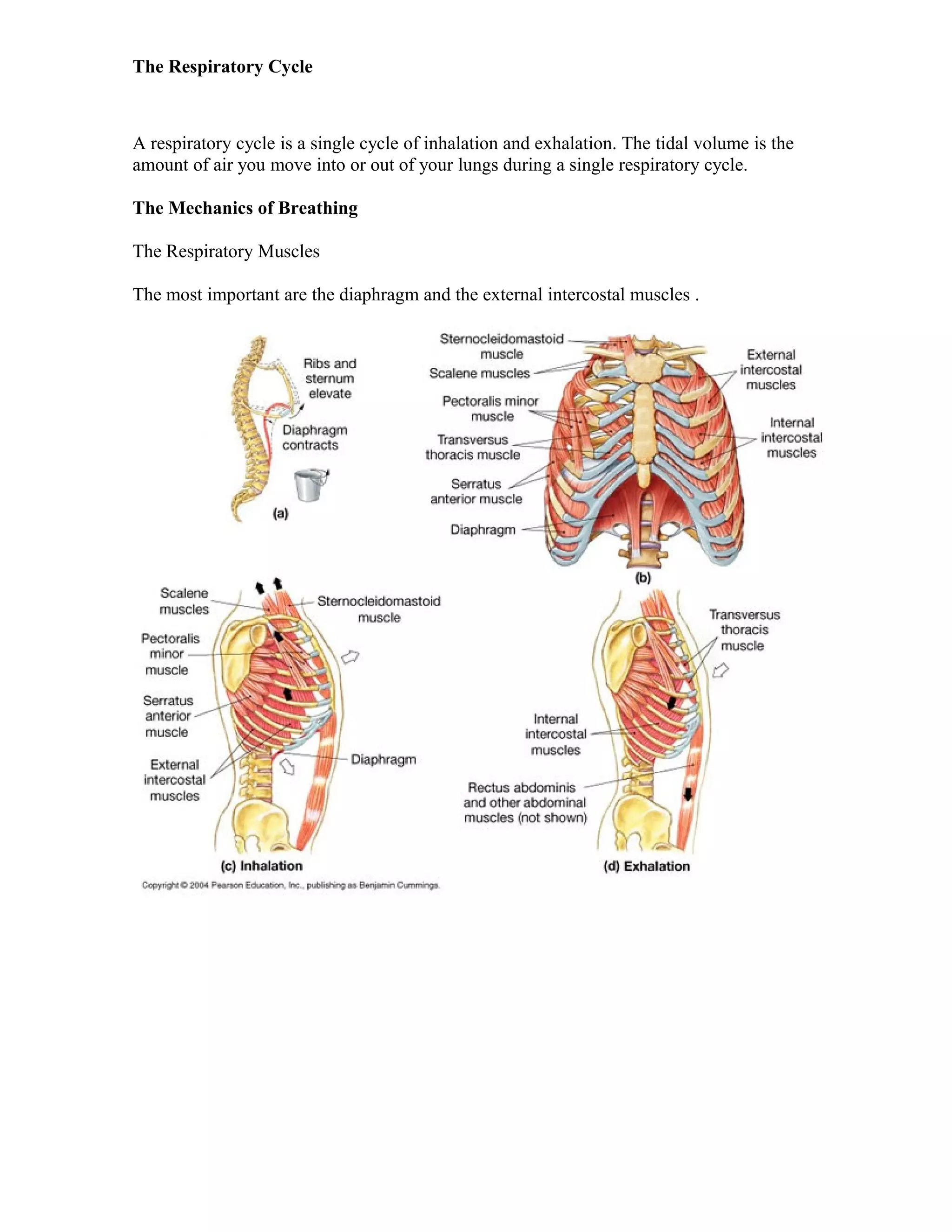
The most important are the diaphragm and the external intercostal muscles .
The Respiratory Cycle
Muscles Used in Inhalation
Inhalation is an active process involving the contraction of one or more of these muscles:
The contraction of the diaphragm increases the volume of the thoracic cavity by tensing and
flattening its floor, and this increase draws air into the lungs. Diaphragmatic contraction is
responsible for roughly 75 percent of the air movement in normal breathing at rest.
The external intercostal muscles assist in inhalation by elevating the ribs. This action
contributes roughly 25 percent to the volume of air in the lungs.
Accessory muscles, including the sternocleidomastoid, serratus anterior, pectoralis minor,
and scalene muscles, can assist the external intercostal muscles in elevating the ribs. These
muscles increase the speed and amount of rib movement.
Muscles Used in Exhalation
Exhalation is either passive or active, depending on the level of respiratory activity. When
exhalation is active, it may involve one or more of the following muscles:
The internal intercostal and transversus thoracis muscles depress the ribs and reduce the
width and depth of the thoracic cavity.
The abdominal muscles, including the external and internal oblique, transversus abdominis,
and rectus abdominis muscles, can assist the internal intercostal muscles in exhalation by
compressing the abdomen and forcing the diaphragm upward.
Respiratory Rates and Volumes
When you are exercising at peak levels, the amount of air moving into and out of the
respiratory tract can be 50 times the amount moved at rest.
Respiratory Rate is the number of breaths you take each minute. The normal respiratory
rate of a resting adult ranges from 12 to 18 breaths each minute, roughly one for every four
heartbeats. Children breathe more rapidly, at rates of about 18–20 breaths per minute.
The Respiratory Minute Volume is the amount of air moved each minute, symbolized by
multiplying the respiratory rate by the tidal volume. This value is called the respiratory
minute volume. The tidal volume at rest varies from individual to individual, but it averages
around 500 ml per breath. Therefore, the respiratory minute volume at rest, 12 breaths per
minute, is approximately 6 liters per minute.
The Respiratory Cycle
Alveolar Ventilation
The volume of air in the conducting passages is known as the anatomic dead space.
Alveolar ventilation is the amount of air reaching the alveoli each minute. The alveolar
ventilation is less than the respiratory minute volume, because some of the air never
reaches the alveoli, but remains in the dead space of the lungs.
At rest, alveolar ventilation rates are approximately 4.2 liters per minute The gas arriving in
the alveoli is different from that of the surrounding atmosphere, because inhaled air always
mixes with "used" air in the conducting passageways (the anatomic dead space) on its way
to the exchange surfaces. The air in alveoli thus contains less oxygen and more carbon
dioxide than atmospheric air.
Now answer:
What is a respiratory Cycle?
Which are the most important muscles during respiration?
Name the Accessory muscles.
Name the abdominal muscles.
How do you obtain the Respiratory Minute Volume?
What is the alveolar respiration?

Respiratory cycle

  • 1.
    The Respiratory Cycle Arespiratory cycle is a single cycle of inhalation and exhalation. The tidal volume is the amount of air you move into or out of your lungs during a single respiratory cycle. The Mechanics of Breathing The Respiratory Muscles The most important are the diaphragm and the external intercostal muscles .
  • 2.
    The Respiratory Cycle MusclesUsed in Inhalation Inhalation is an active process involving the contraction of one or more of these muscles: The contraction of the diaphragm increases the volume of the thoracic cavity by tensing and flattening its floor, and this increase draws air into the lungs. Diaphragmatic contraction is responsible for roughly 75 percent of the air movement in normal breathing at rest. The external intercostal muscles assist in inhalation by elevating the ribs. This action contributes roughly 25 percent to the volume of air in the lungs. Accessory muscles, including the sternocleidomastoid, serratus anterior, pectoralis minor, and scalene muscles, can assist the external intercostal muscles in elevating the ribs. These muscles increase the speed and amount of rib movement. Muscles Used in Exhalation Exhalation is either passive or active, depending on the level of respiratory activity. When exhalation is active, it may involve one or more of the following muscles: The internal intercostal and transversus thoracis muscles depress the ribs and reduce the width and depth of the thoracic cavity. The abdominal muscles, including the external and internal oblique, transversus abdominis, and rectus abdominis muscles, can assist the internal intercostal muscles in exhalation by compressing the abdomen and forcing the diaphragm upward. Respiratory Rates and Volumes When you are exercising at peak levels, the amount of air moving into and out of the respiratory tract can be 50 times the amount moved at rest. Respiratory Rate is the number of breaths you take each minute. The normal respiratory rate of a resting adult ranges from 12 to 18 breaths each minute, roughly one for every four heartbeats. Children breathe more rapidly, at rates of about 18–20 breaths per minute. The Respiratory Minute Volume is the amount of air moved each minute, symbolized by multiplying the respiratory rate by the tidal volume. This value is called the respiratory minute volume. The tidal volume at rest varies from individual to individual, but it averages around 500 ml per breath. Therefore, the respiratory minute volume at rest, 12 breaths per minute, is approximately 6 liters per minute.
  • 3.
    The Respiratory Cycle AlveolarVentilation The volume of air in the conducting passages is known as the anatomic dead space. Alveolar ventilation is the amount of air reaching the alveoli each minute. The alveolar ventilation is less than the respiratory minute volume, because some of the air never reaches the alveoli, but remains in the dead space of the lungs. At rest, alveolar ventilation rates are approximately 4.2 liters per minute The gas arriving in the alveoli is different from that of the surrounding atmosphere, because inhaled air always mixes with "used" air in the conducting passageways (the anatomic dead space) on its way to the exchange surfaces. The air in alveoli thus contains less oxygen and more carbon dioxide than atmospheric air. Now answer: What is a respiratory Cycle? Which are the most important muscles during respiration? Name the Accessory muscles. Name the abdominal muscles. How do you obtain the Respiratory Minute Volume? What is the alveolar respiration?