Copyright © 2003 Pearson Education, Inc. publishing as Benjamin Cummings. PROCESS OF RESPIRATION Submitted By : Ananya Choudhary BSc(Hons) Medical Biotech Sem-6 BMB/08/101
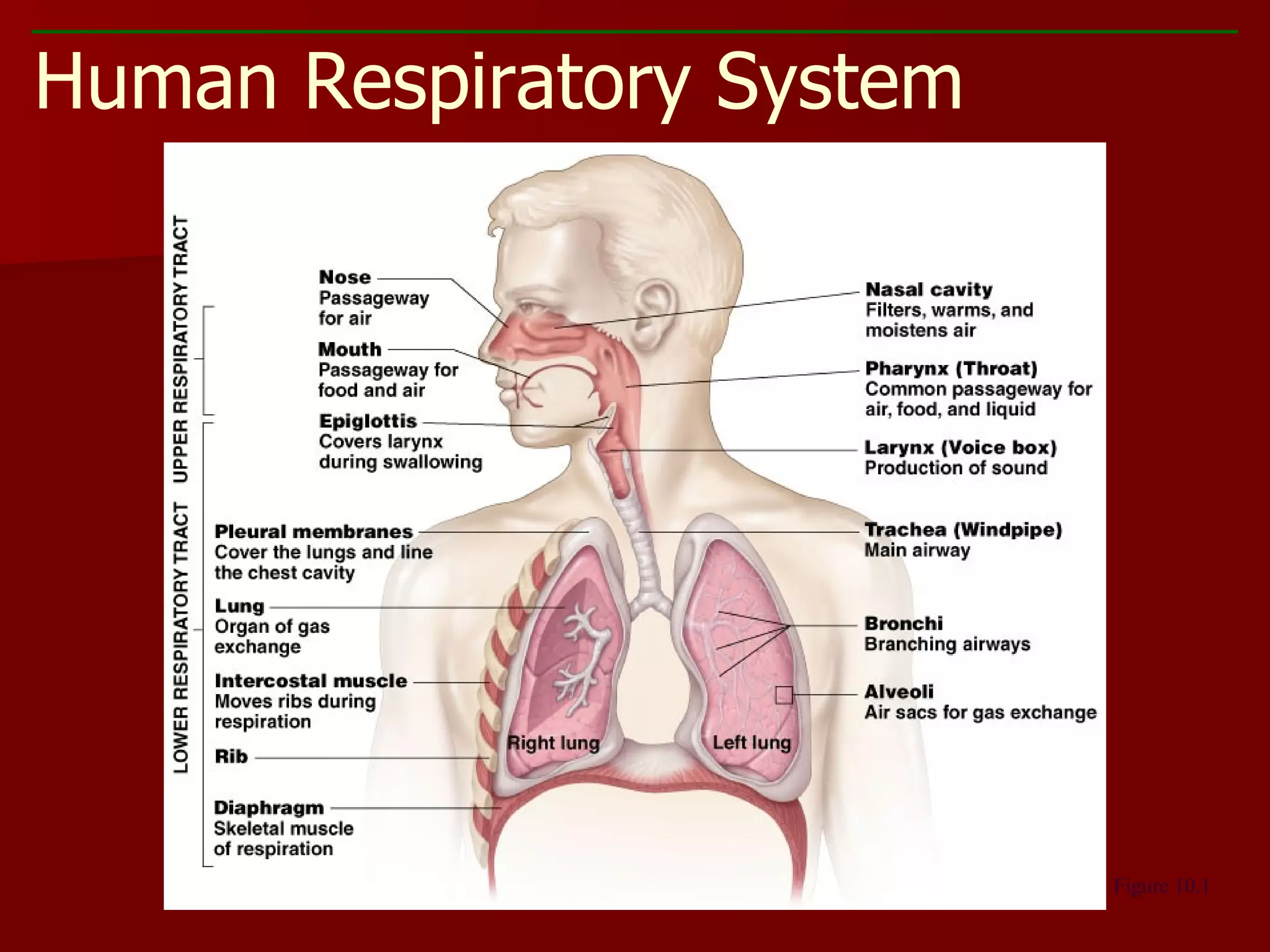
Human Respiratory System Figure 10.1
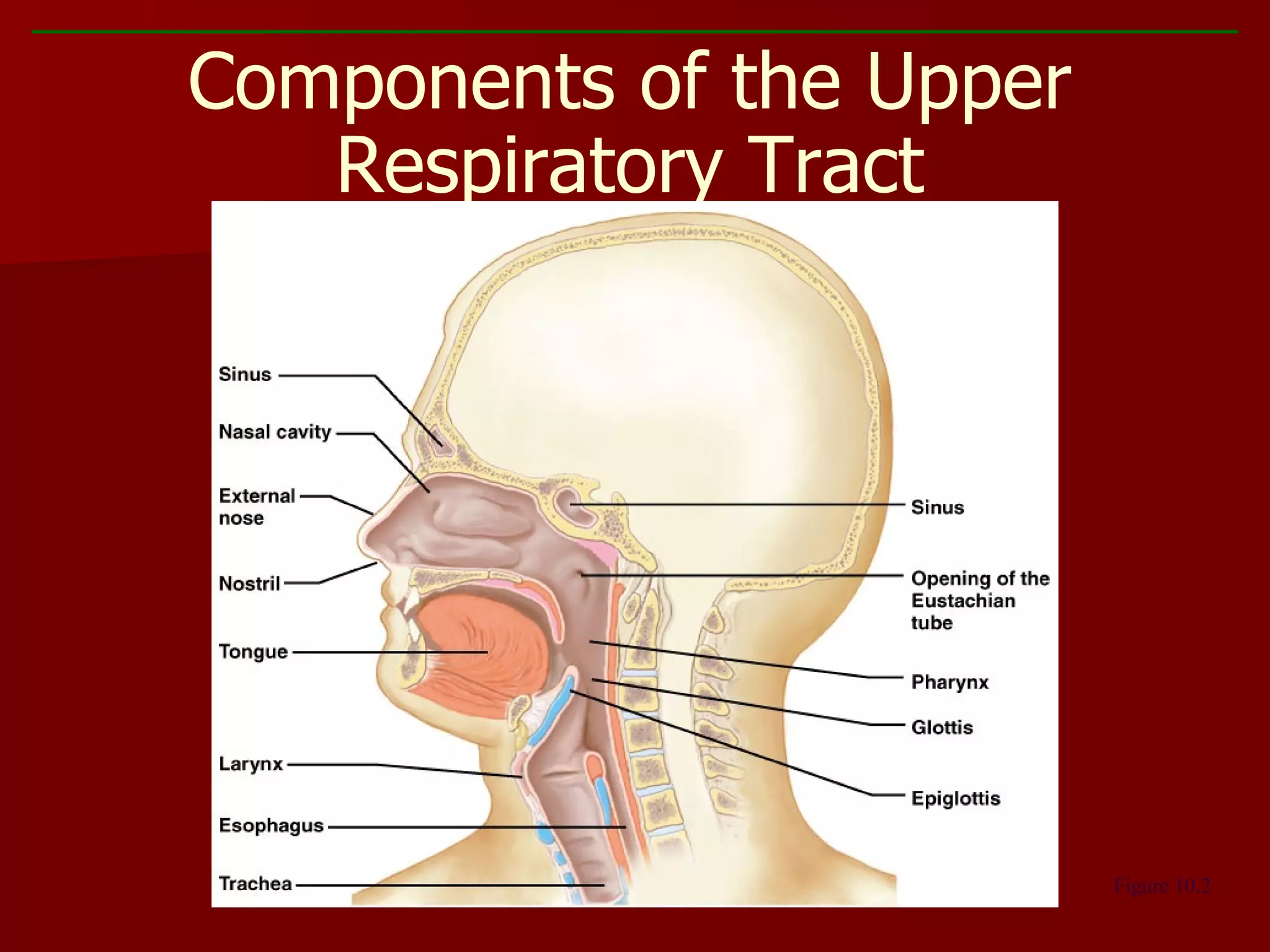
Components of the Upper Respiratory Tract Figure 10.2
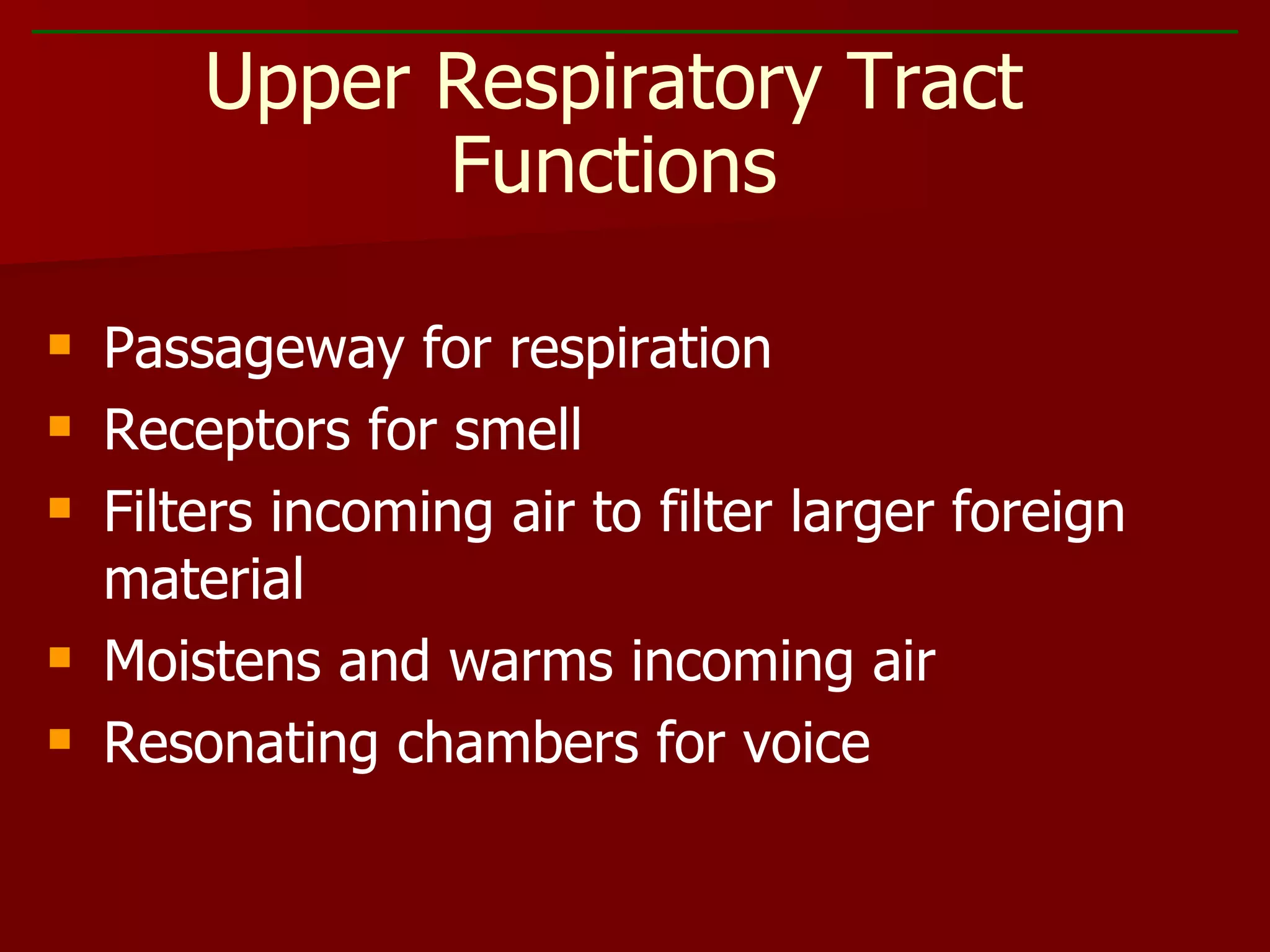
Passageway for respiration Receptors for smell Filters incoming air to filter larger foreign material Moistens and warms incoming air Resonating chambers for voice Upper Respiratory Tract Functions
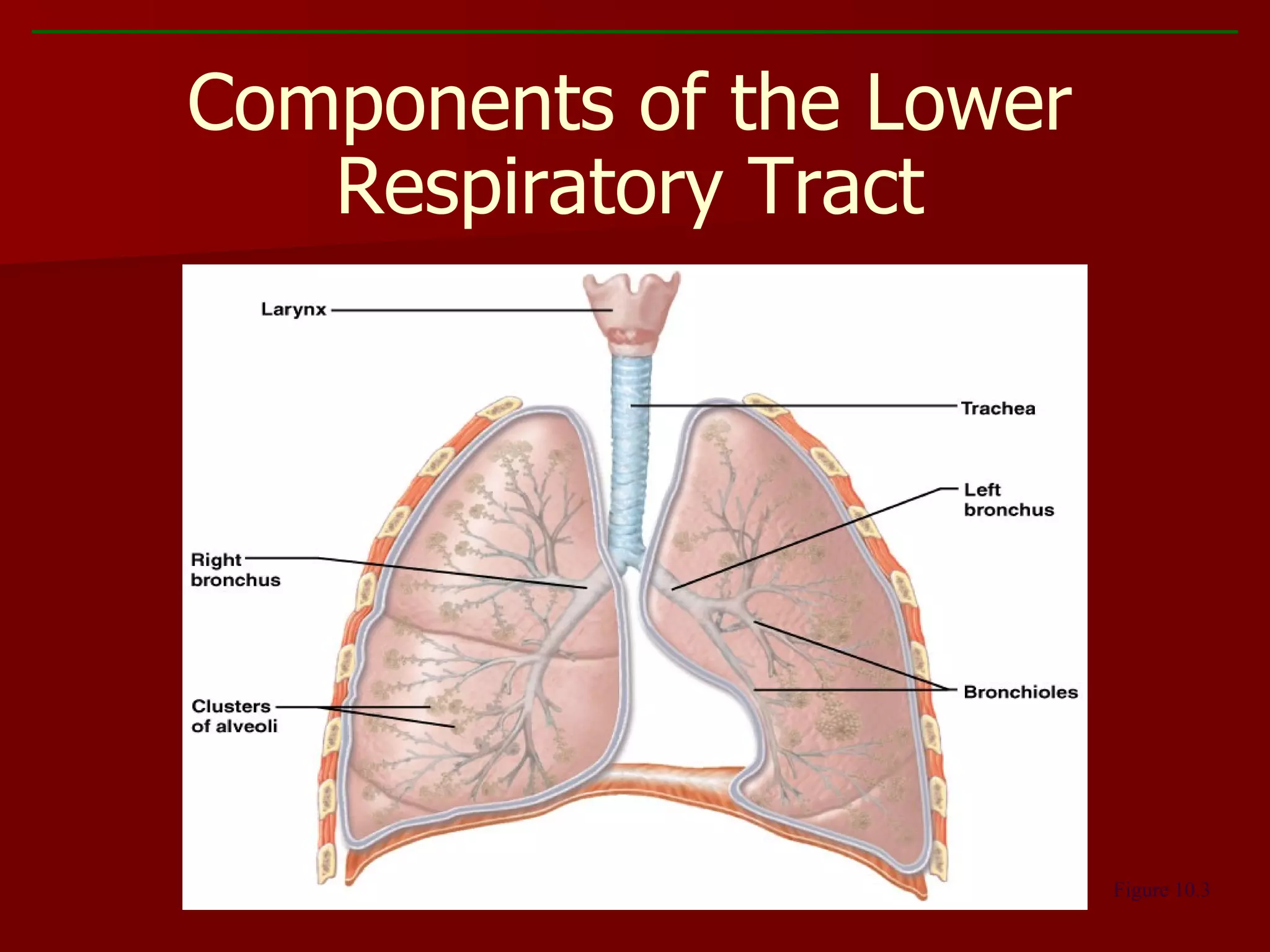
Components of the Lower Respiratory Tract Figure 10.3
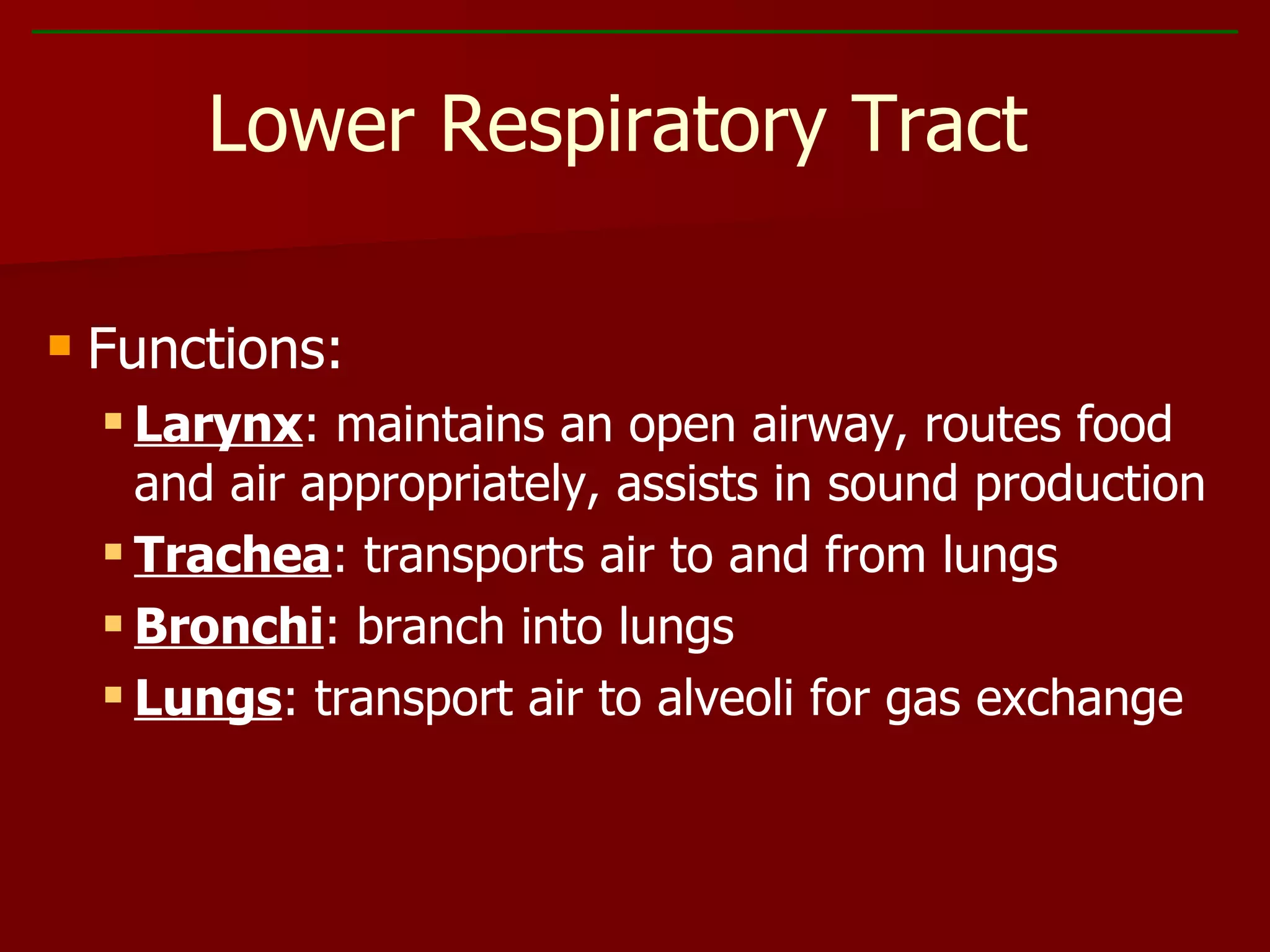
Functions: Larynx : maintains an open airway, routes food and air appropriately, assists in sound production Trachea : transports air to and from lungs Bronchi : branch into lungs Lungs : transport air to alveoli for gas exchange Lower Respiratory Tract
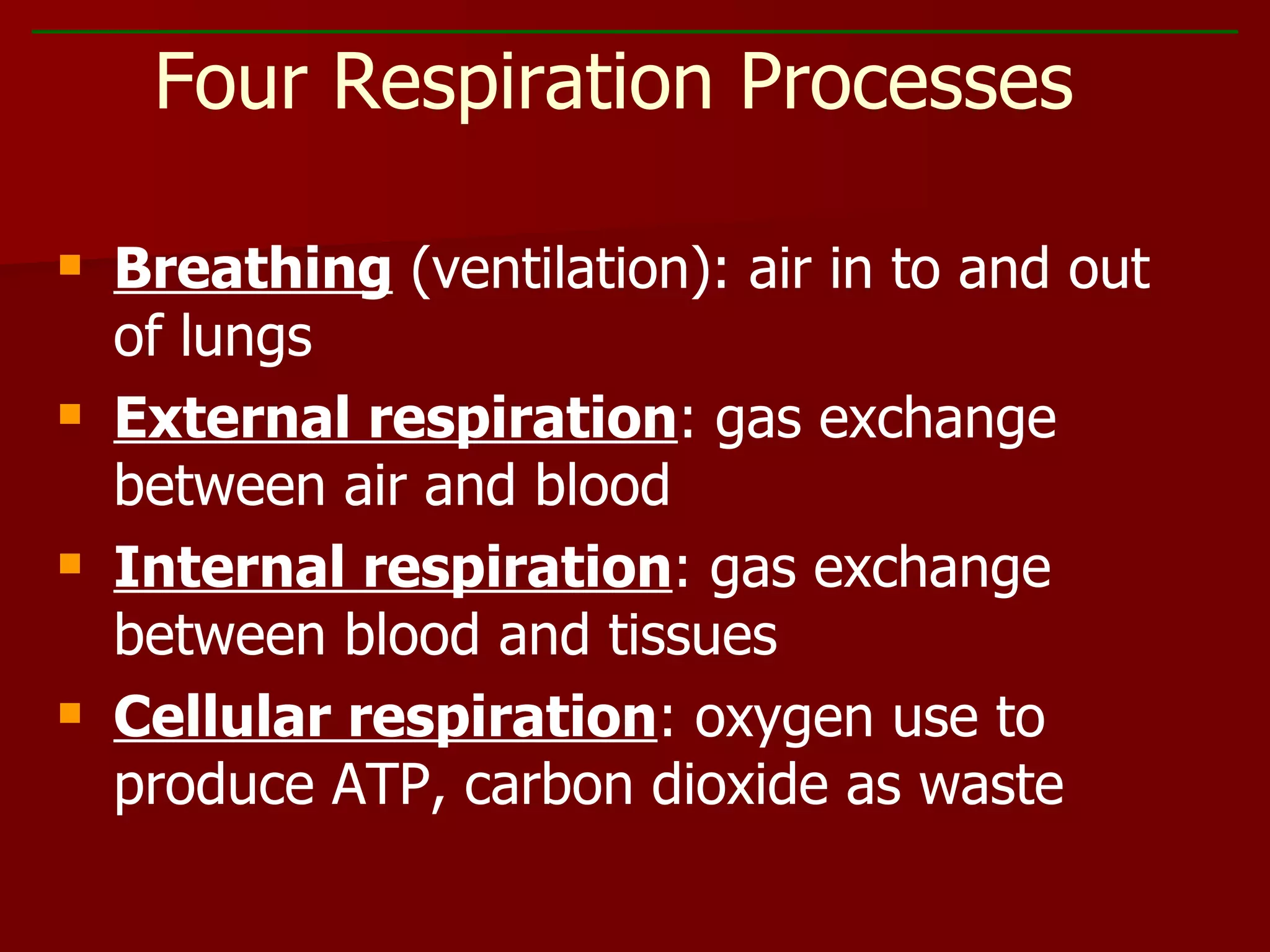
Breathing  (ventilation): air in to and out of lungs External respiration : gas exchange between air and blood Internal respiration : gas exchange between blood and tissues Cellular respiration : oxygen use to produce ATP, carbon dioxide as waste Four Respiration Processes
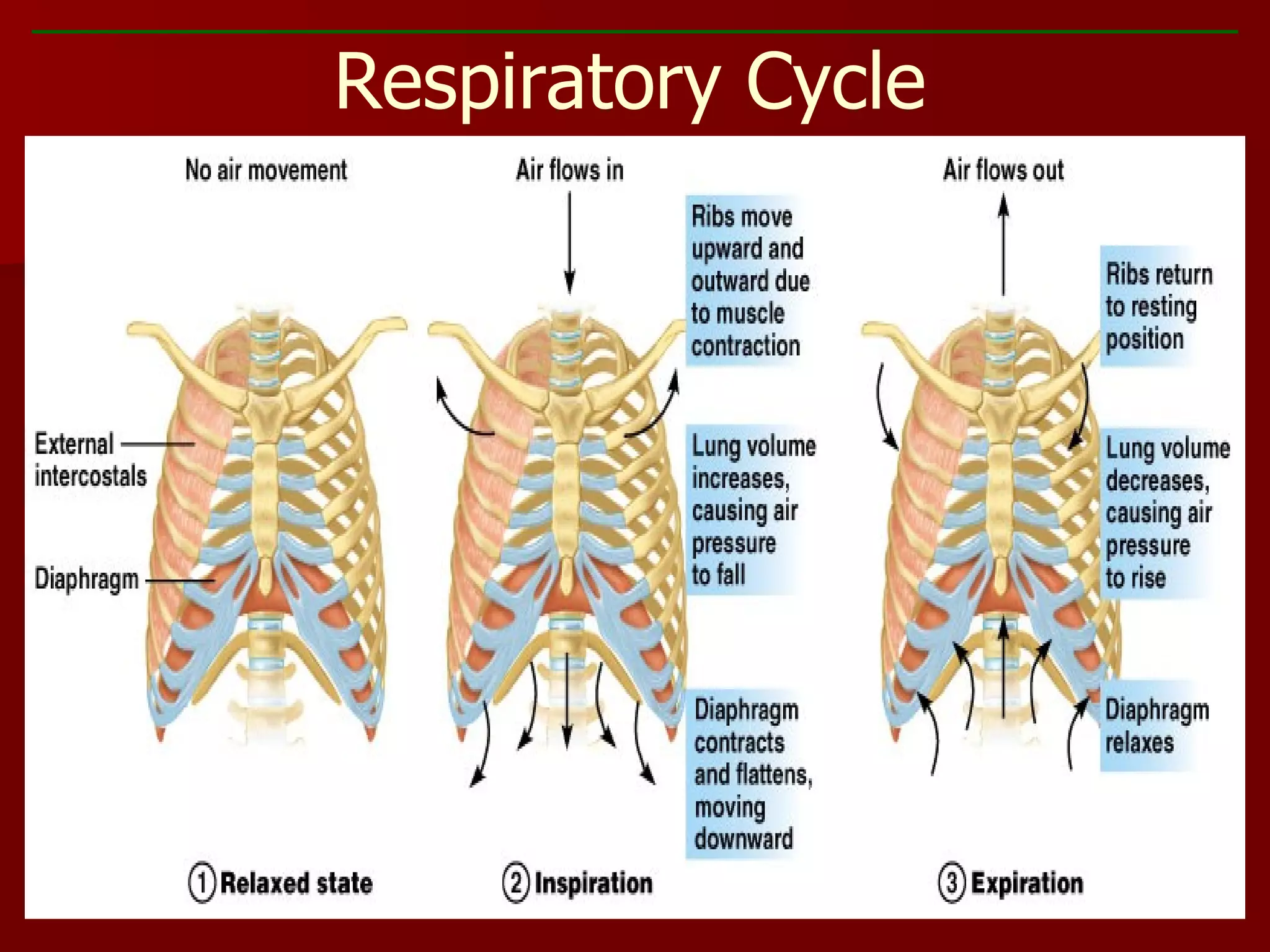
Respiratory Cycle Figure 10.9
Inspiration/Expiration: air in/air out Cycle: Relaxed state : diaphragm and intercostal muscles relaxed Inspiration : diaphragm contracts, pulling muscle down, intercostal muscles contract elevating chest wall and expanding volume of chest, lowering pressure in lungs, pulling in air Expiration : muscles relax, diaphragm resumes dome shape, intercostal muscles allow chest to lower resulting in increase of pressure in chest and expulsion of air Process of Breathing : Pressure Gradient
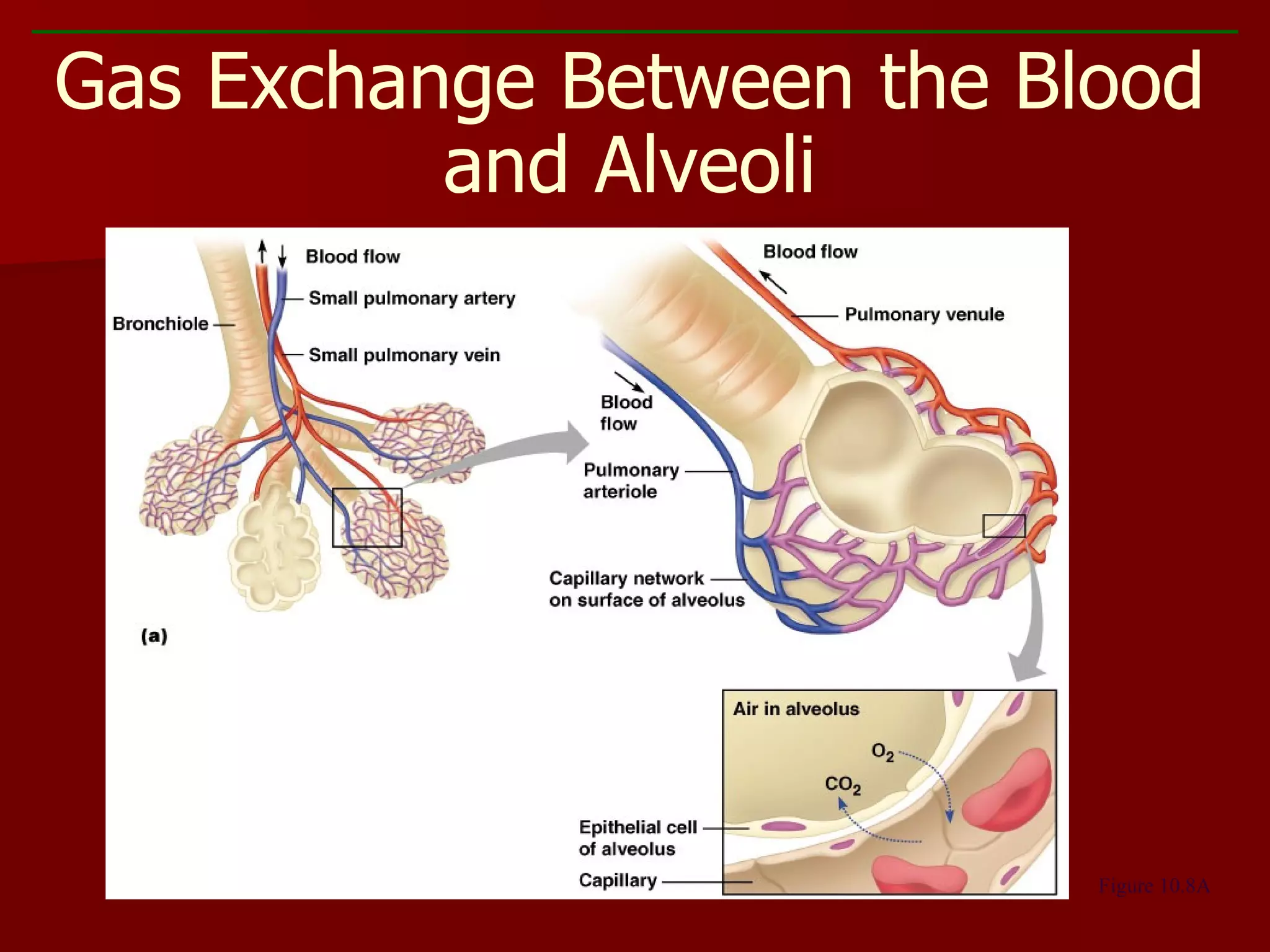
Gas Exchange Between the Blood and Alveoli Figure 10.8A
Gases diffuse according to their partial pressures External respiration : gases exchanged between air and blood Internal respiration : gases exchanged with tissue fluids Oxygen transport : bound to hemoglobin in red blood cells or dissolved in blood plasma Carbon dioxide transport : dissolved in blood plasma, bound to hemoglobin, or in the form of plasma bicarbonate Gas Exchange & Transport:  A Passive Process
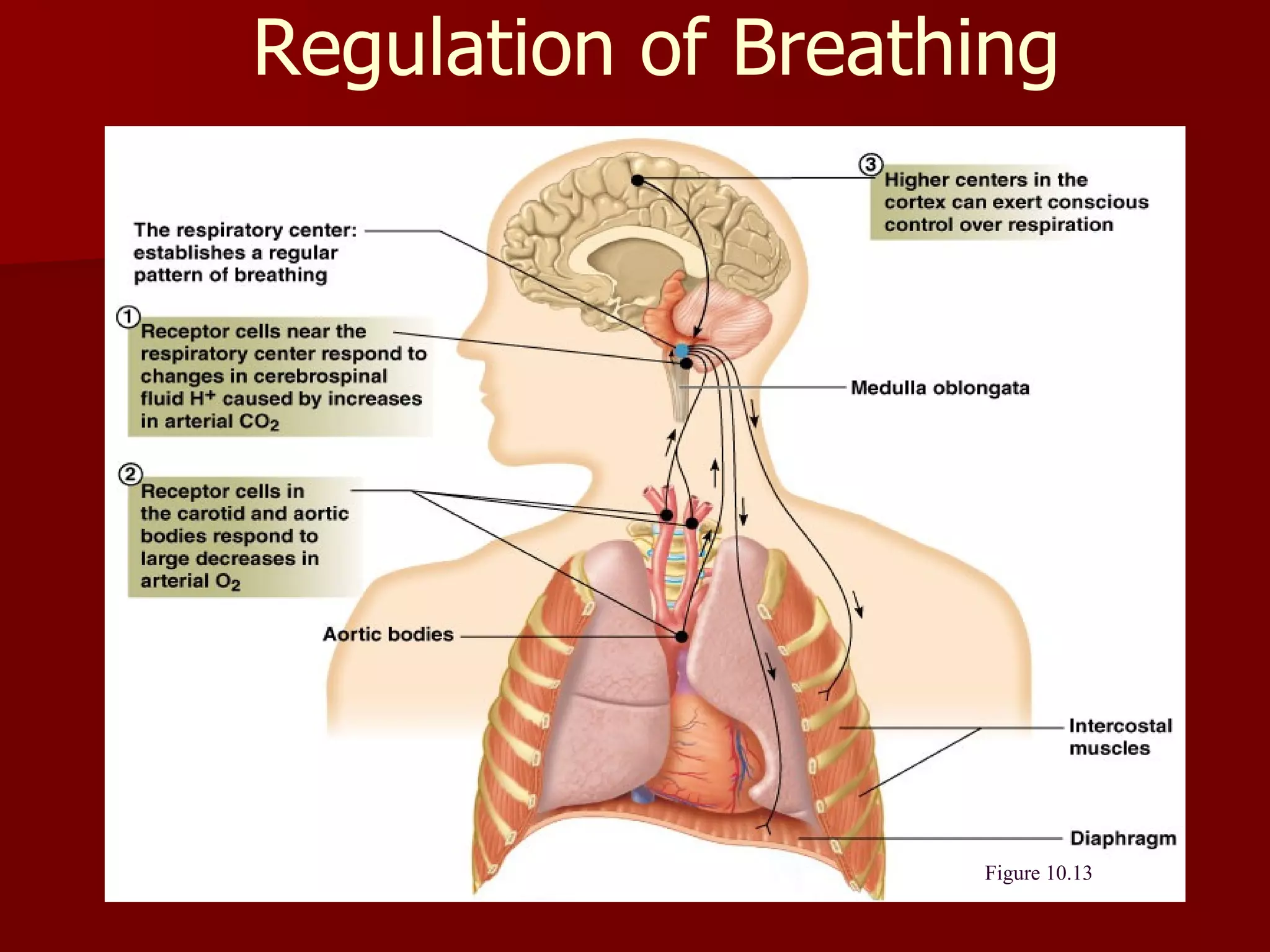
Regulation of Breathing Figure 10.13
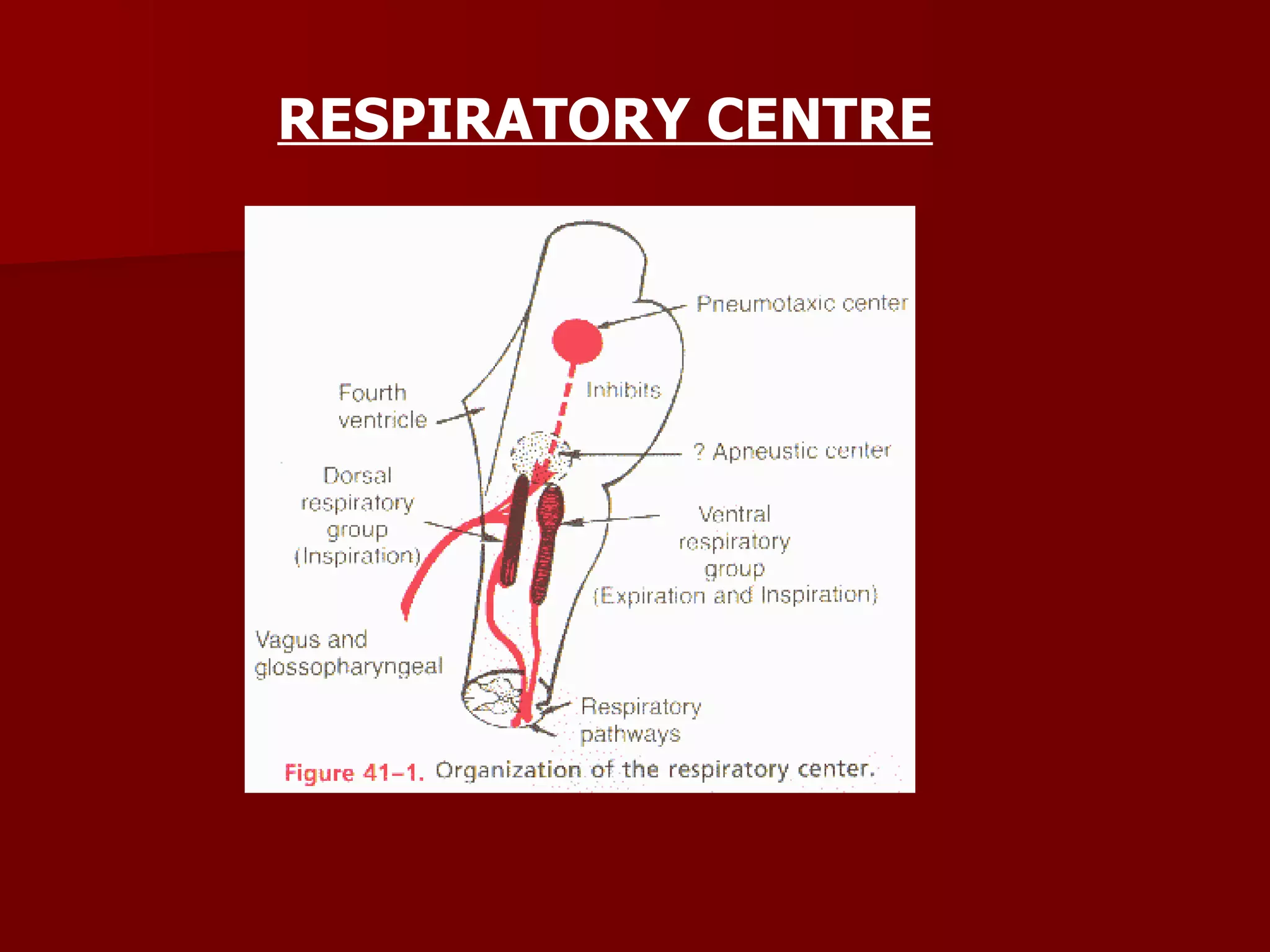
Carotid and aortic bodies : sensitive to carbon dioxide, pH, and oxygen levels Neural control : by 3 Medullary centres-Dorsal respiratory group(DRG), Ventral respiratory group(VRG), Pneumotaxic centre Regulation of Breathing:
RESPIRATORY CENTRE
Respiratory center in the medulla oblongata: establishes basic breathing pattern Chemical receptors: monitor carbon dioxide, hydrogen ions, and oxygen levels Medulla: sensitive to hydrogen ions in cerebrospinal fluid resulting from carbon dioxide in blood Regulation of Breathing:  Nervous System Involvement
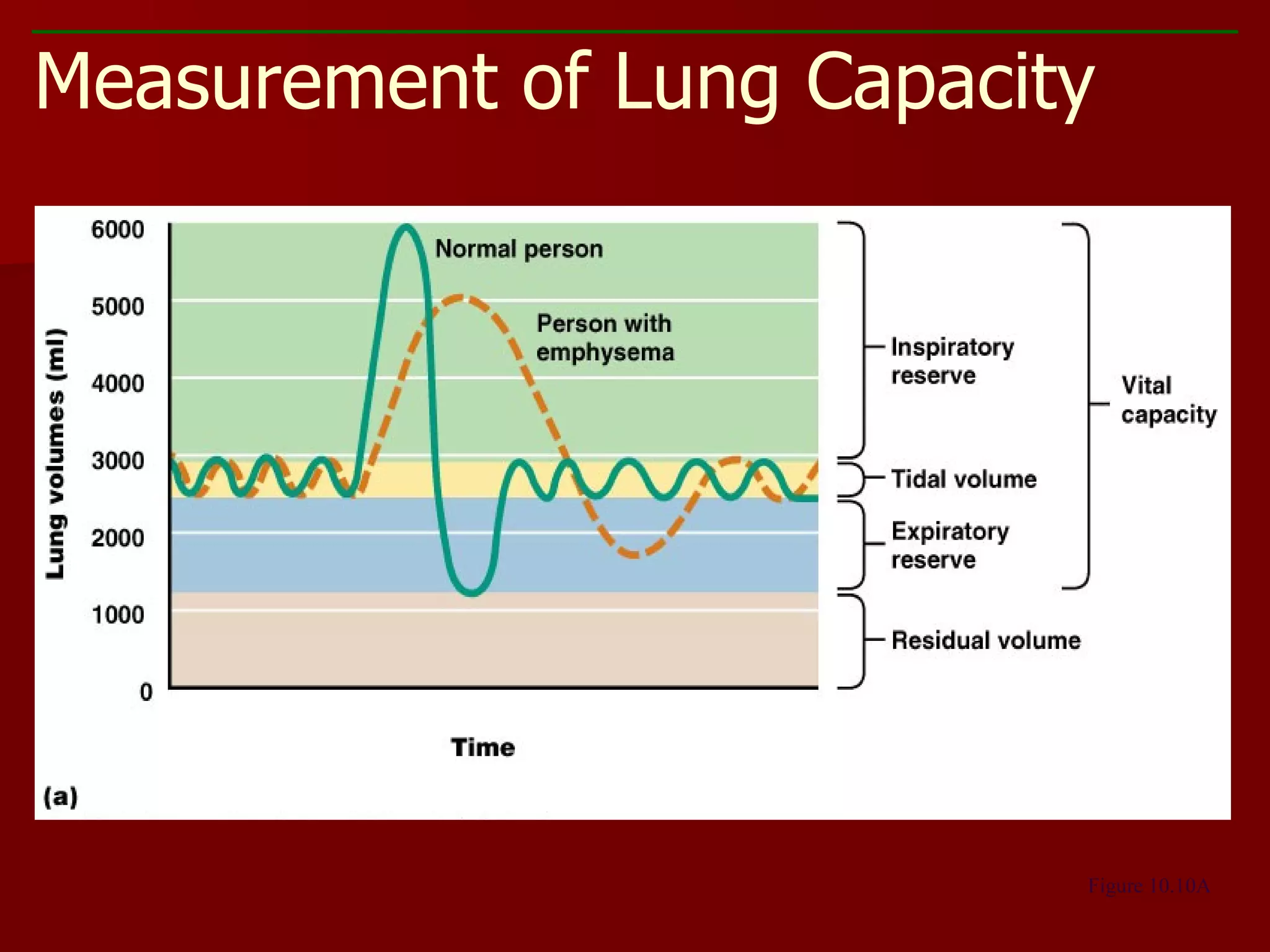
Lung volumes and vital capacity Tidal volume : volume of air inhaled and exhaled in a single breath Dead space volume : the air that remains in the airways and does not participate in gas exchange Vital capacity : the maximal volume that can be exhaled after maximal inhalation Inspiratory reserve volume : the amount of air that can be inhaled beyond the tidal volume Measurement of Lung Function
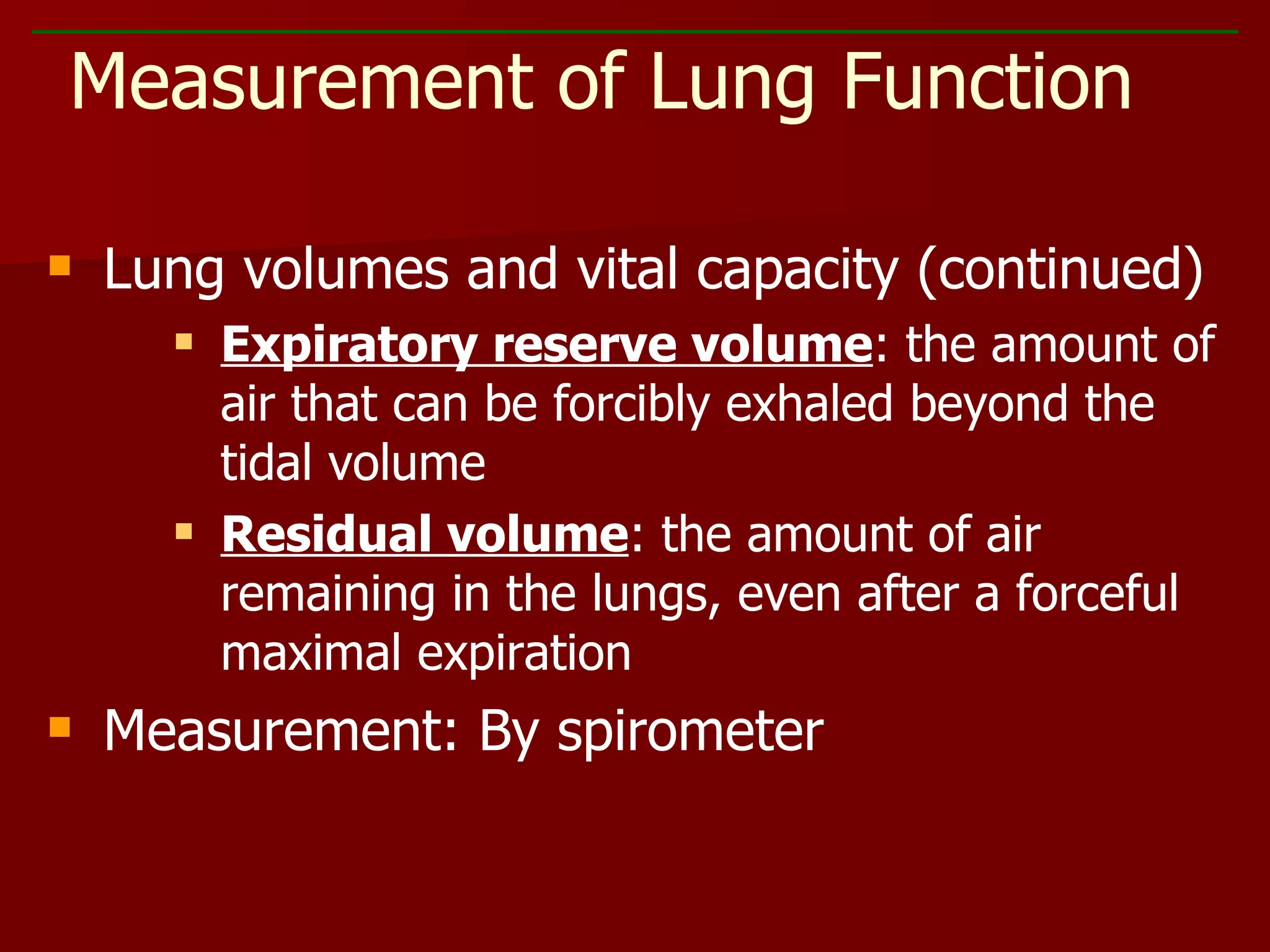
Lung volumes and vital capacity (continued) Expiratory reserve volume : the amount of air that can be forcibly exhaled beyond the tidal volume Residual volume : the amount of air remaining in the lungs, even after a forceful maximal expiration Measurement: By spirometer Measurement of Lung Function
Measurement of Lung Capacity Figure 10.10A
Obstructive conditions  (e.g., emphysema, bronchitis, asthma) Restrictive conditions  (e.g., fibrosis, sarcoidosis, alveolar damage, pleural effusion) Vascular diseases  (e.g., pulmonary edema, pulmonary  embolism, pulmonary hypertension) Infectious, environmental and other "diseases " (e.g., pneumonia, tuberculosis, asbestosis, particulate pollutants): Disorders of Respiratory System
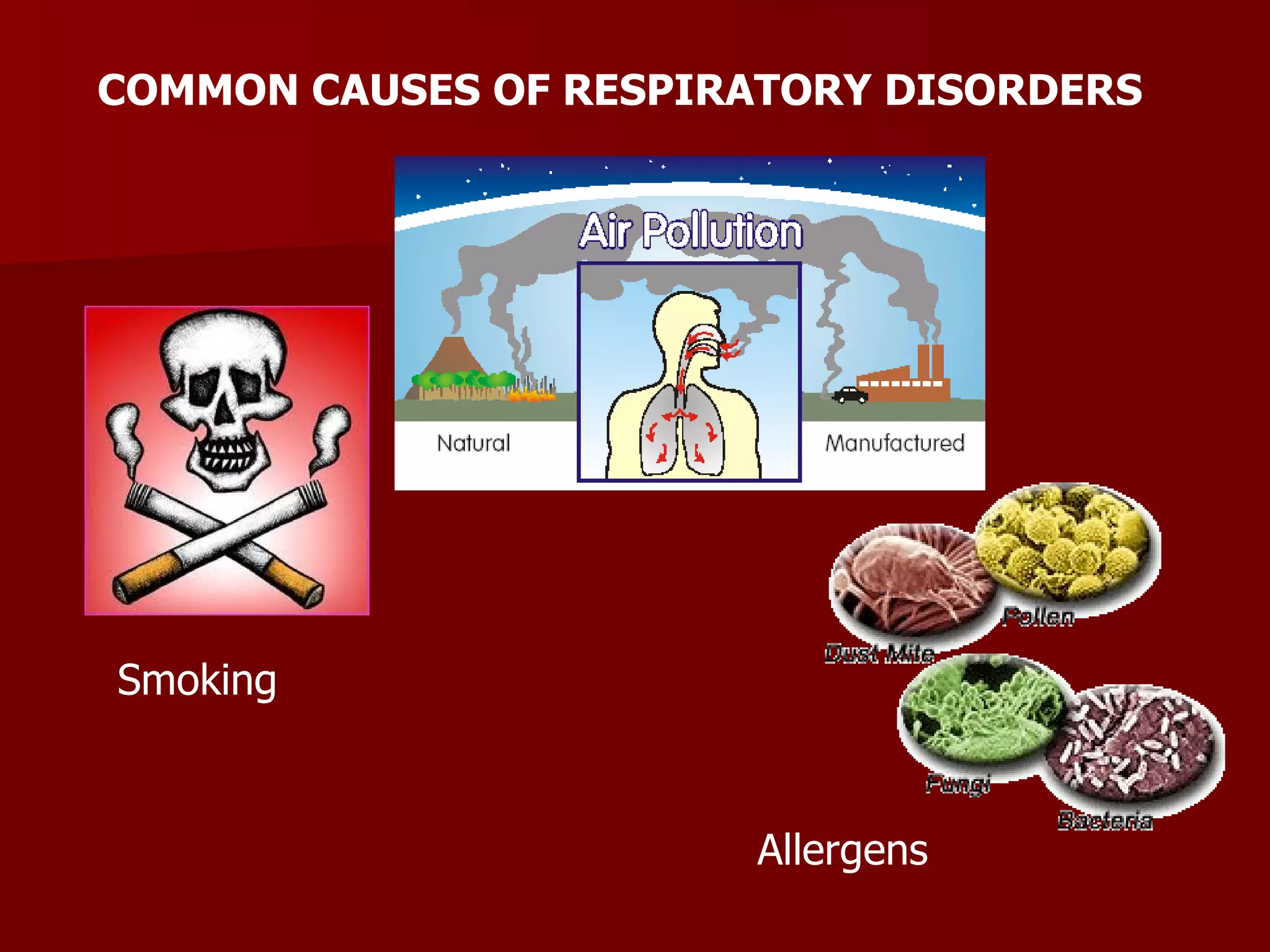
COMMON CAUSES OF RESPIRATORY DISORDERS Smoking Allergens

Respiratory System Ppt

  • 1.
    Copyright © 2003Pearson Education, Inc. publishing as Benjamin Cummings. PROCESS OF RESPIRATION Submitted By : Ananya Choudhary BSc(Hons) Medical Biotech Sem-6 BMB/08/101
  • 2.
  • 3.
    Components of theUpper Respiratory Tract Figure 10.2
  • 4.
    Passageway for respirationReceptors for smell Filters incoming air to filter larger foreign material Moistens and warms incoming air Resonating chambers for voice Upper Respiratory Tract Functions
  • 5.
    Components of theLower Respiratory Tract Figure 10.3
  • 6.
    Functions: Larynx :maintains an open airway, routes food and air appropriately, assists in sound production Trachea : transports air to and from lungs Bronchi : branch into lungs Lungs : transport air to alveoli for gas exchange Lower Respiratory Tract
  • 7.
    Breathing (ventilation):air in to and out of lungs External respiration : gas exchange between air and blood Internal respiration : gas exchange between blood and tissues Cellular respiration : oxygen use to produce ATP, carbon dioxide as waste Four Respiration Processes
  • 8.
  • 9.
    Inspiration/Expiration: air in/airout Cycle: Relaxed state : diaphragm and intercostal muscles relaxed Inspiration : diaphragm contracts, pulling muscle down, intercostal muscles contract elevating chest wall and expanding volume of chest, lowering pressure in lungs, pulling in air Expiration : muscles relax, diaphragm resumes dome shape, intercostal muscles allow chest to lower resulting in increase of pressure in chest and expulsion of air Process of Breathing : Pressure Gradient
  • 10.
    Gas Exchange Betweenthe Blood and Alveoli Figure 10.8A
  • 11.
    Gases diffuse accordingto their partial pressures External respiration : gases exchanged between air and blood Internal respiration : gases exchanged with tissue fluids Oxygen transport : bound to hemoglobin in red blood cells or dissolved in blood plasma Carbon dioxide transport : dissolved in blood plasma, bound to hemoglobin, or in the form of plasma bicarbonate Gas Exchange & Transport: A Passive Process
  • 12.
  • 13.
    Carotid and aorticbodies : sensitive to carbon dioxide, pH, and oxygen levels Neural control : by 3 Medullary centres-Dorsal respiratory group(DRG), Ventral respiratory group(VRG), Pneumotaxic centre Regulation of Breathing:
  • 14.
  • 15.
    Respiratory center inthe medulla oblongata: establishes basic breathing pattern Chemical receptors: monitor carbon dioxide, hydrogen ions, and oxygen levels Medulla: sensitive to hydrogen ions in cerebrospinal fluid resulting from carbon dioxide in blood Regulation of Breathing: Nervous System Involvement
  • 16.
    Lung volumes andvital capacity Tidal volume : volume of air inhaled and exhaled in a single breath Dead space volume : the air that remains in the airways and does not participate in gas exchange Vital capacity : the maximal volume that can be exhaled after maximal inhalation Inspiratory reserve volume : the amount of air that can be inhaled beyond the tidal volume Measurement of Lung Function
  • 17.
    Lung volumes andvital capacity (continued) Expiratory reserve volume : the amount of air that can be forcibly exhaled beyond the tidal volume Residual volume : the amount of air remaining in the lungs, even after a forceful maximal expiration Measurement: By spirometer Measurement of Lung Function
  • 18.
    Measurement of LungCapacity Figure 10.10A
  • 19.
    Obstructive conditions (e.g., emphysema, bronchitis, asthma) Restrictive conditions (e.g., fibrosis, sarcoidosis, alveolar damage, pleural effusion) Vascular diseases (e.g., pulmonary edema, pulmonary embolism, pulmonary hypertension) Infectious, environmental and other "diseases " (e.g., pneumonia, tuberculosis, asbestosis, particulate pollutants): Disorders of Respiratory System
  • 20.
    COMMON CAUSES OFRESPIRATORY DISORDERS Smoking Allergens