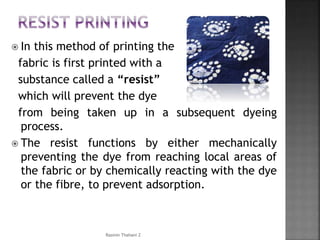
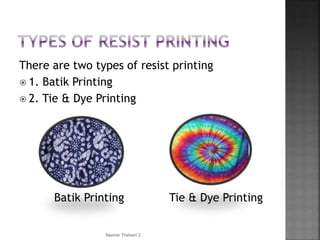
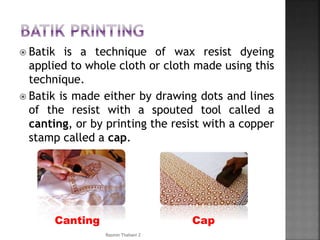
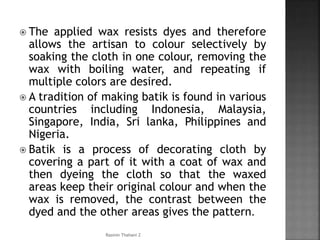
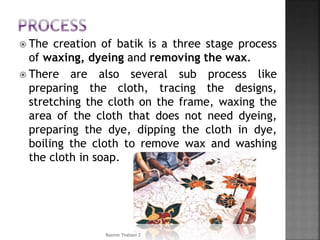
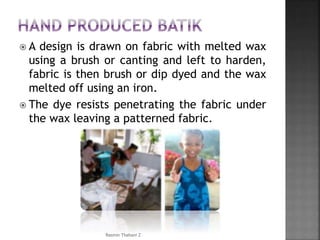
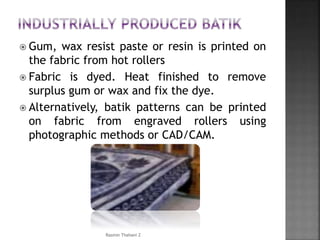
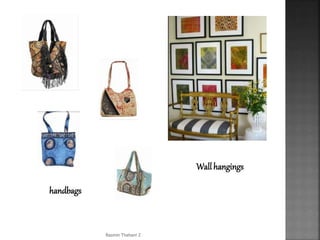
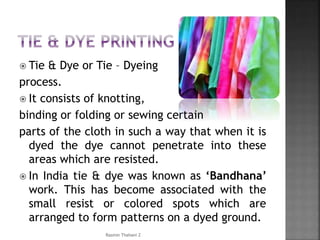
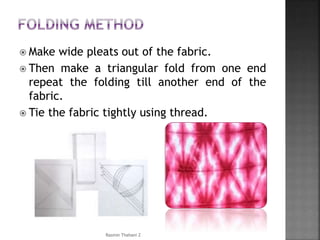
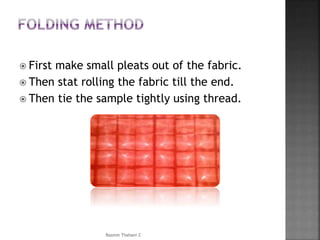
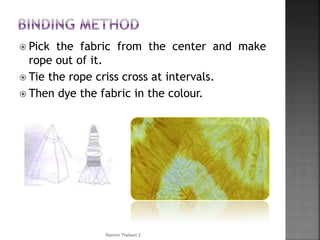
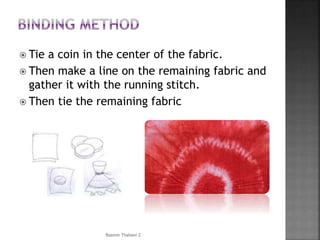
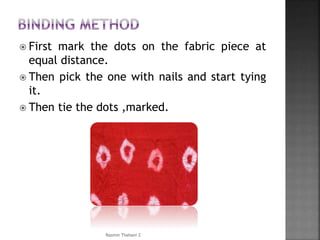
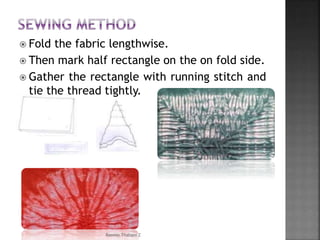
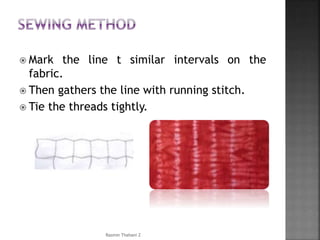
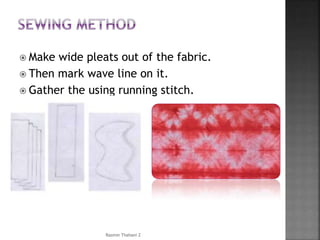
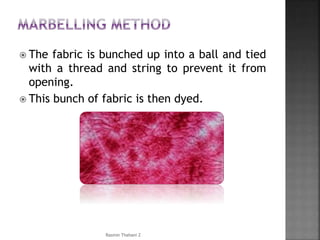
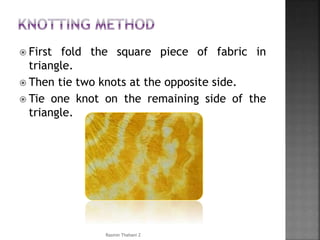
This document discusses resist printing and batik printing techniques. It explains that resist printing involves applying a substance called a "resist" to parts of the fabric to prevent dye absorption. There are two main types of resist printing: batik printing and tie-dye printing. Batik printing involves applying melted wax in desired patterns using tools like brushes or stamps before dyeing. Tie-dye involves binding, folding or knotting parts of the fabric to prevent dye penetration and create patterns. The document provides detailed descriptions and examples of different batik and tie-dye techniques.