AGR502- PRINCIPLES AND PRACTICES OF SOIL FERTILITY AND NUTRIENT
MANAGEMENT
Presented by
M.Jothi (2019502006)
COURSE TEACHERS
Dr.K.Ramamoorthy
Dr.R.Karthikeyan
TOPIC: RESIDUALEFFECTOF FERTILIZERANDFERTILIZERUSE
EFFICIENCY
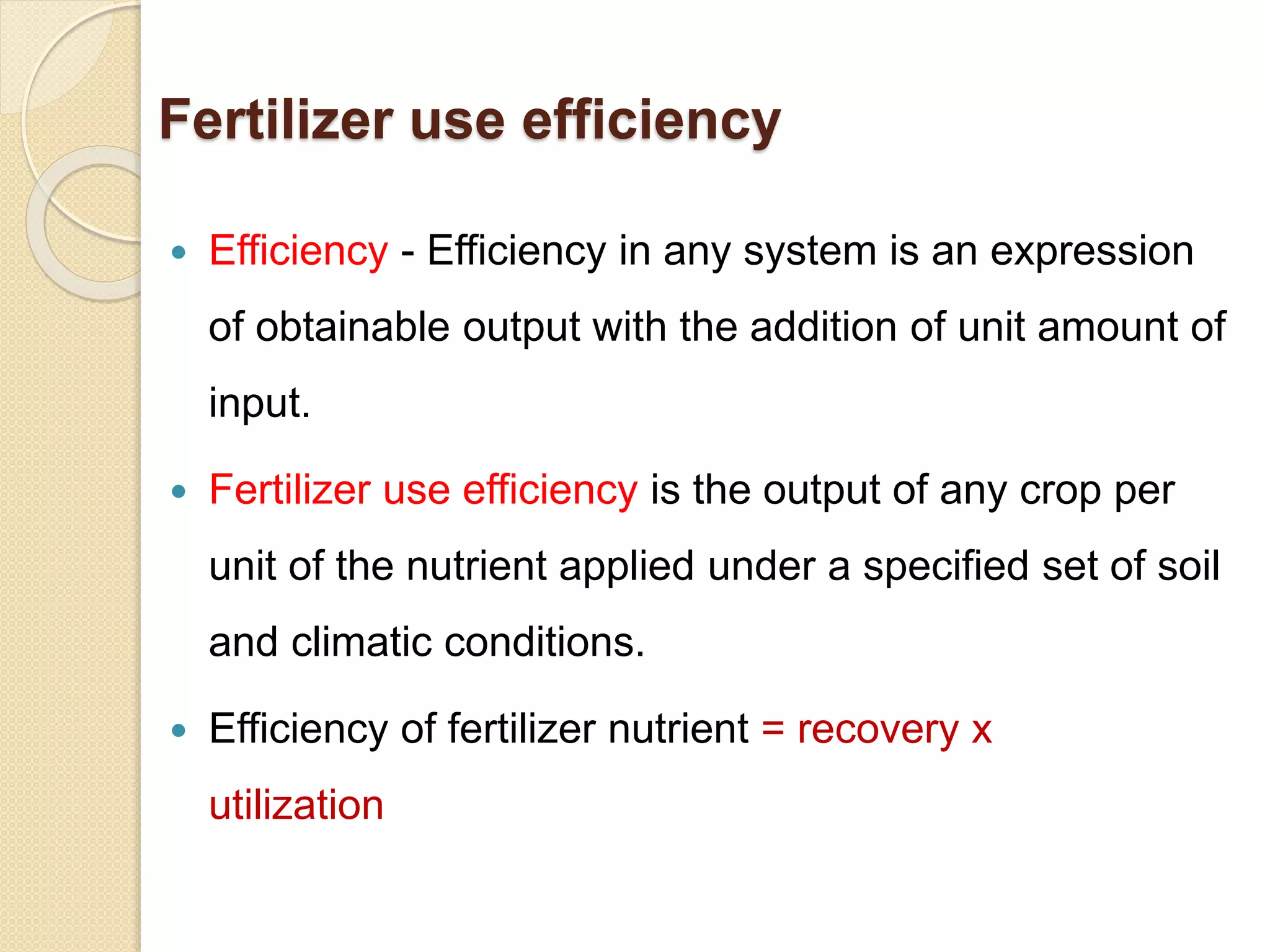
Fertilizer use efficiency
 Efficiency - Efficiency in any system is an expression
of obtainable output with the addition of unit amount of
input.
 Fertilizer use efficiency is the output of any crop per
unit of the nutrient applied under a specified set of soil
and climatic conditions.
 Efficiency of fertilizer nutrient = recovery x
utilization
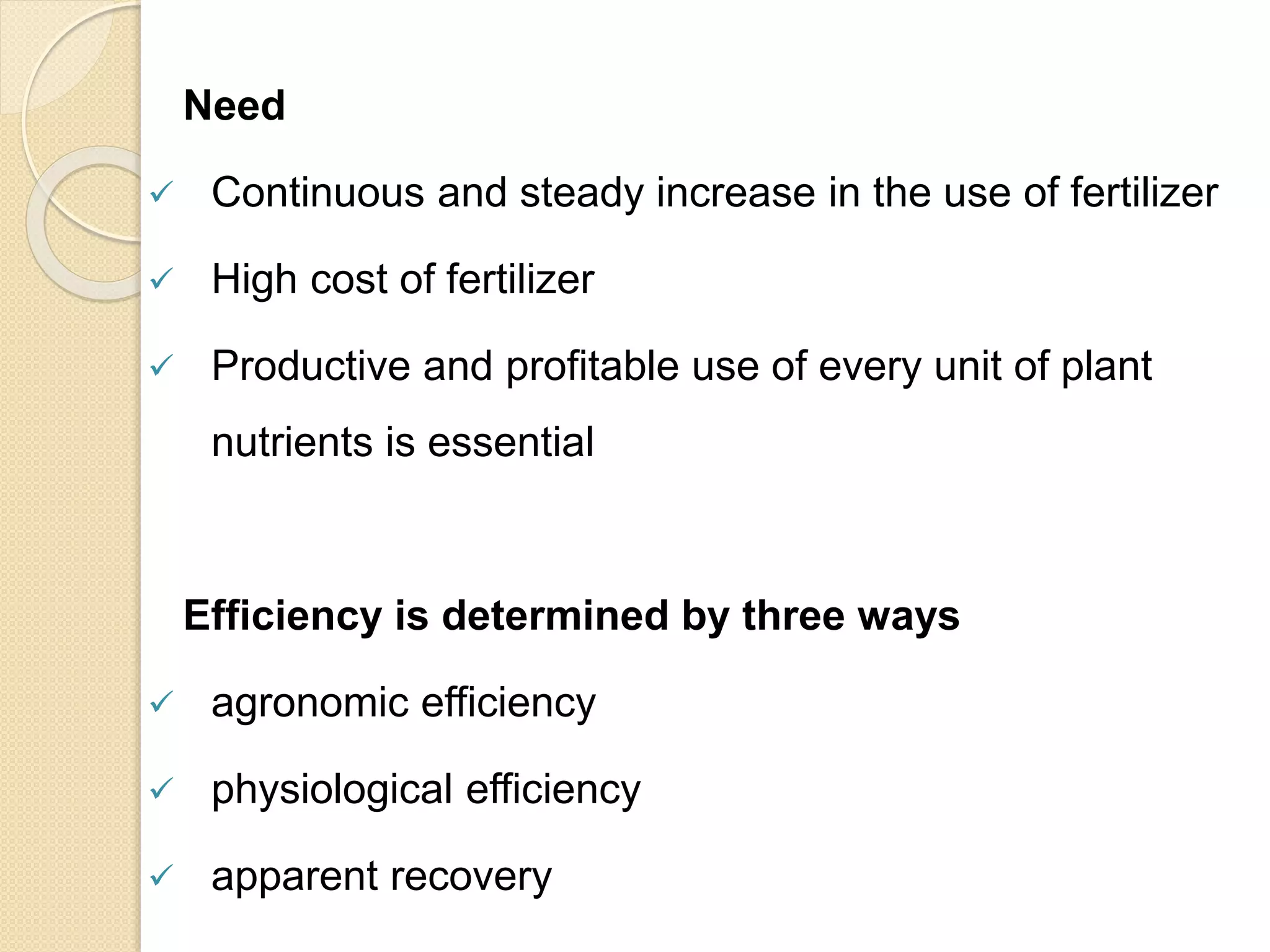
Need
 Continuous and steady increase in the use of fertilizer
 High cost of fertilizer
 Productive and profitable use of every unit of plant
nutrients is essential
Efficiency is determined by three ways
 agronomic efficiency
 physiological efficiency
 apparent recovery
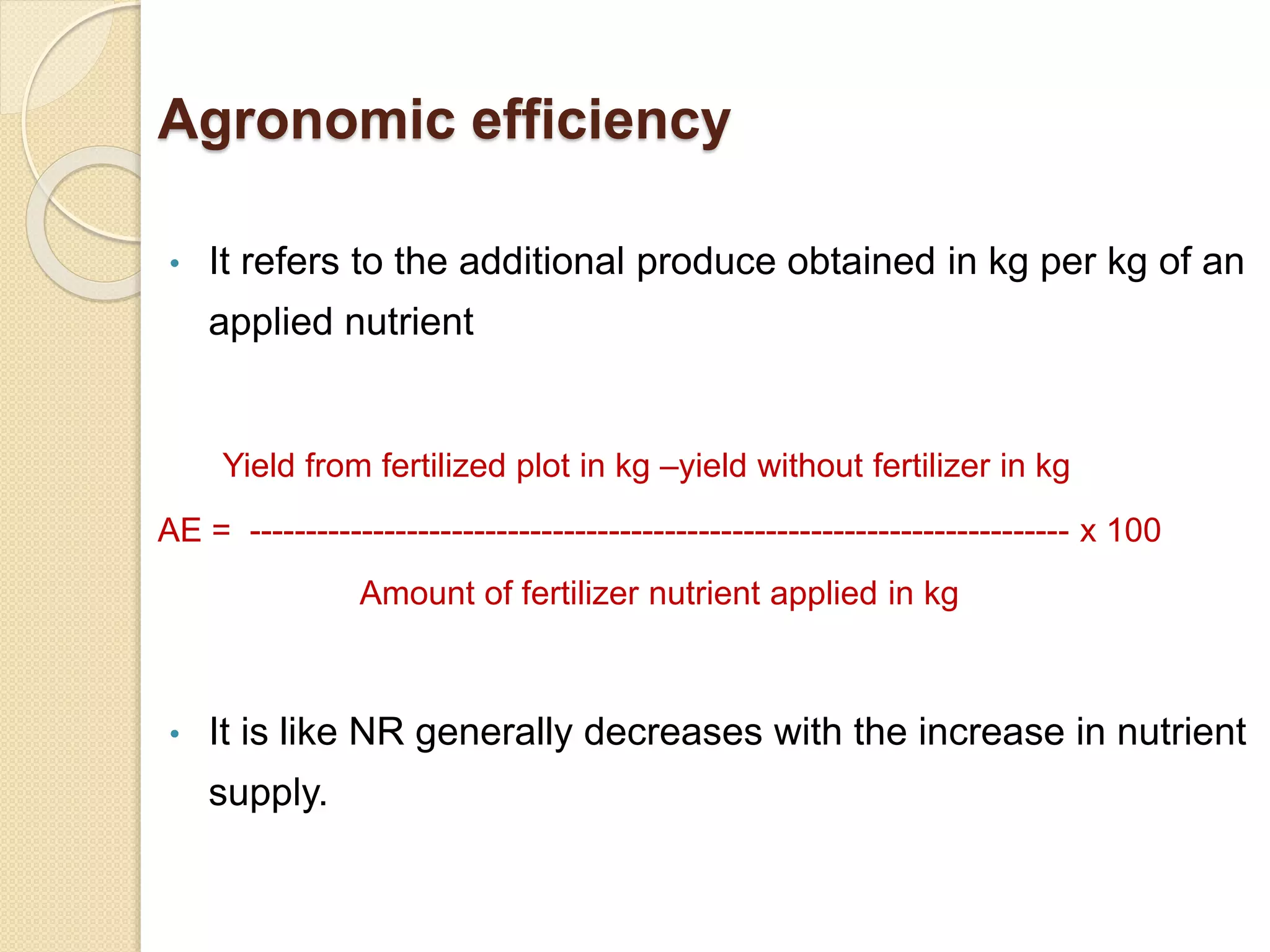
Agronomic efficiency
• It refers to the additional produce obtained in kg per kg of an
applied nutrient
Yield from fertilized plot in kg –yield without fertilizer in kg
AE = ------------------------------------------------------------------------- x 100
Amount of fertilizer nutrient applied in kg
• It is like NR generally decreases with the increase in nutrient
supply.
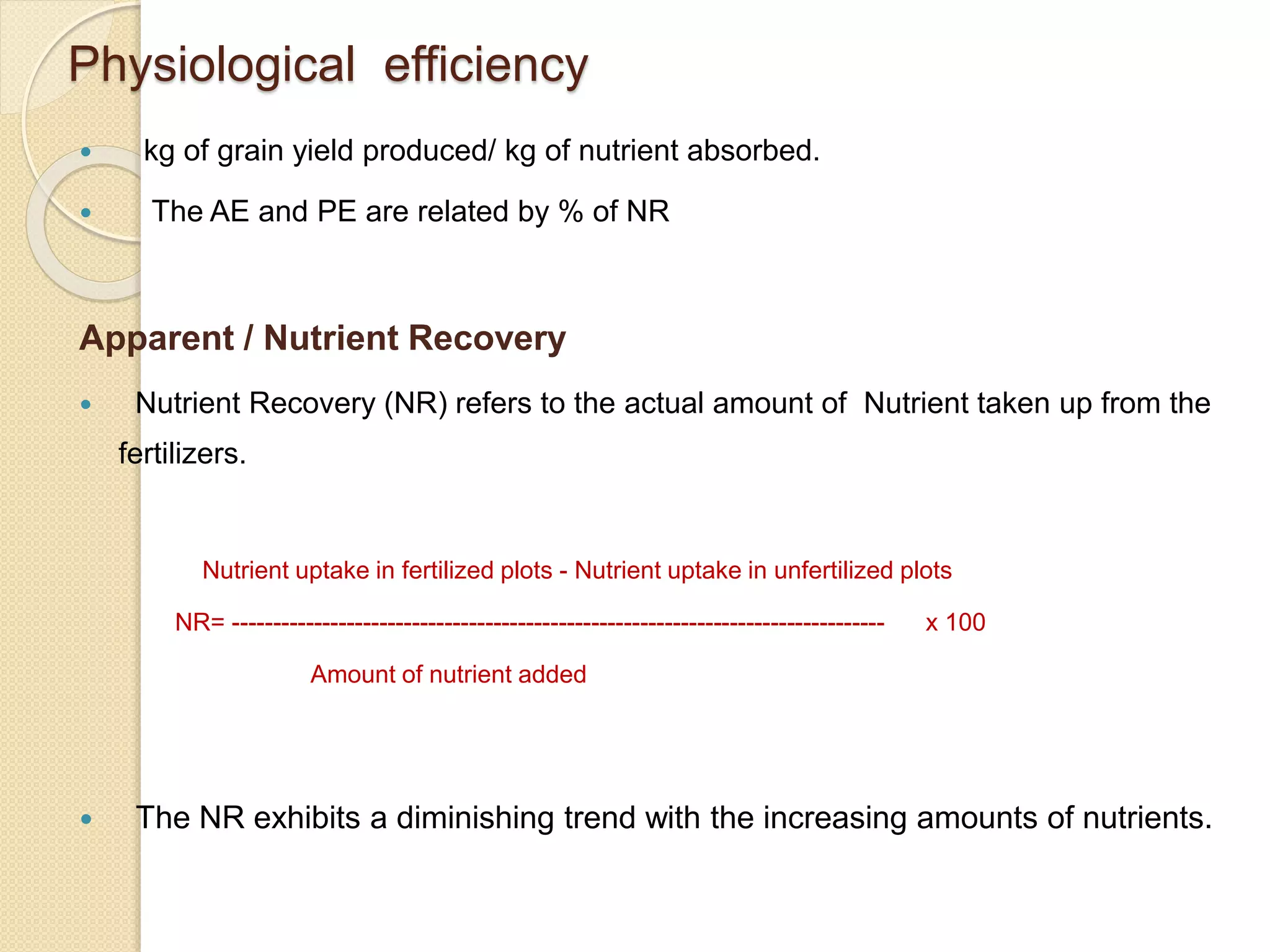
Physiological efficiency
 kg of grain yield produced/ kg of nutrient absorbed.
 The AE and PE are related by % of NR
Apparent / Nutrient Recovery
 Nutrient Recovery (NR) refers to the actual amount of Nutrient taken up from the
fertilizers.
Nutrient uptake in fertilized plots - Nutrient uptake in unfertilized plots
NR= -------------------------------------------------------------------------------- x 100
Amount of nutrient added
 The NR exhibits a diminishing trend with the increasing amounts of nutrients.
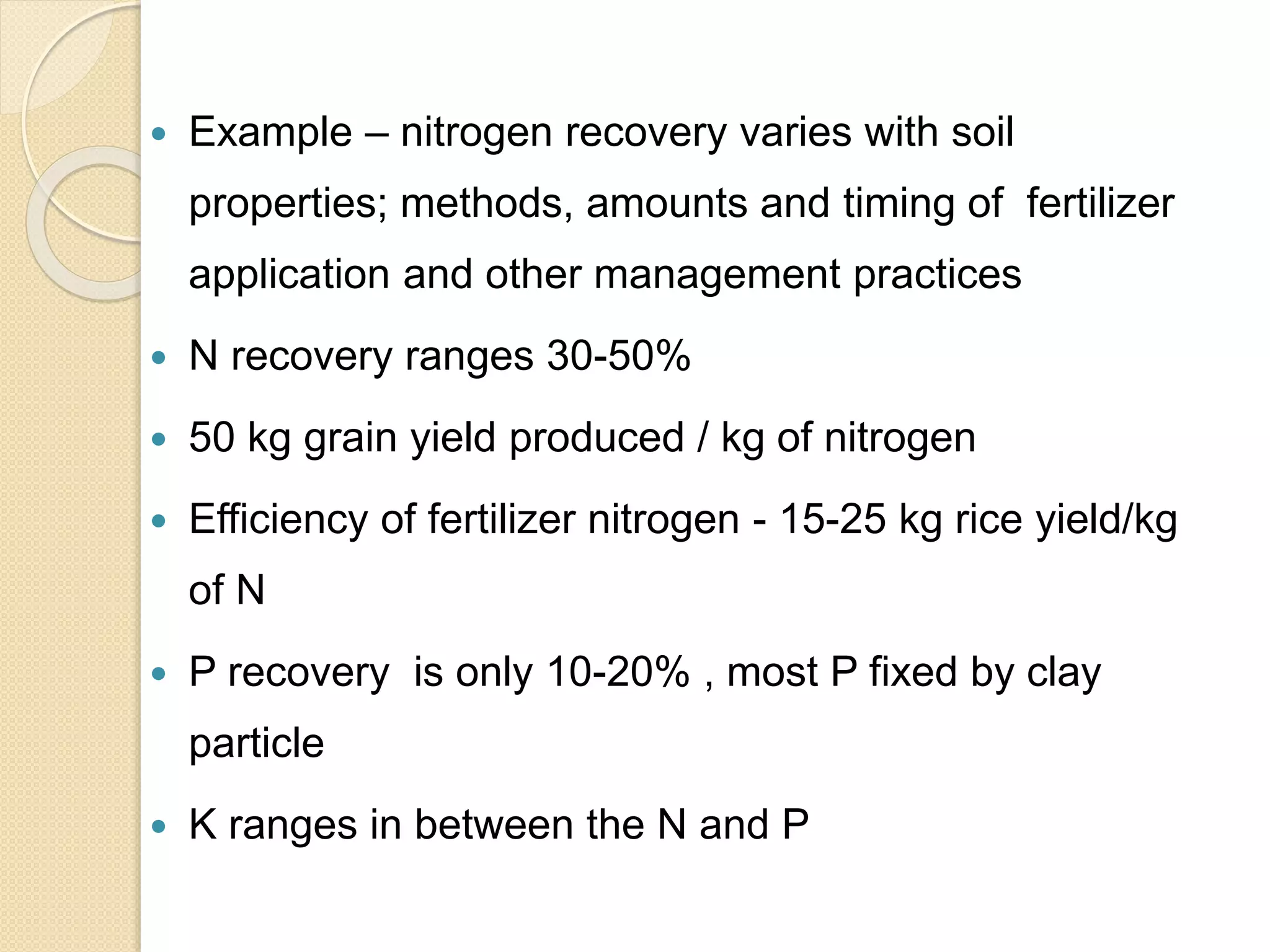
 Example – nitrogen recovery varies with soil
properties; methods, amounts and timing of fertilizer
application and other management practices
 N recovery ranges 30-50%
 50 kg grain yield produced / kg of nitrogen
 Efficiency of fertilizer nitrogen - 15-25 kg rice yield/kg
of N
 P recovery is only 10-20% , most P fixed by clay
particle
 K ranges in between the N and P
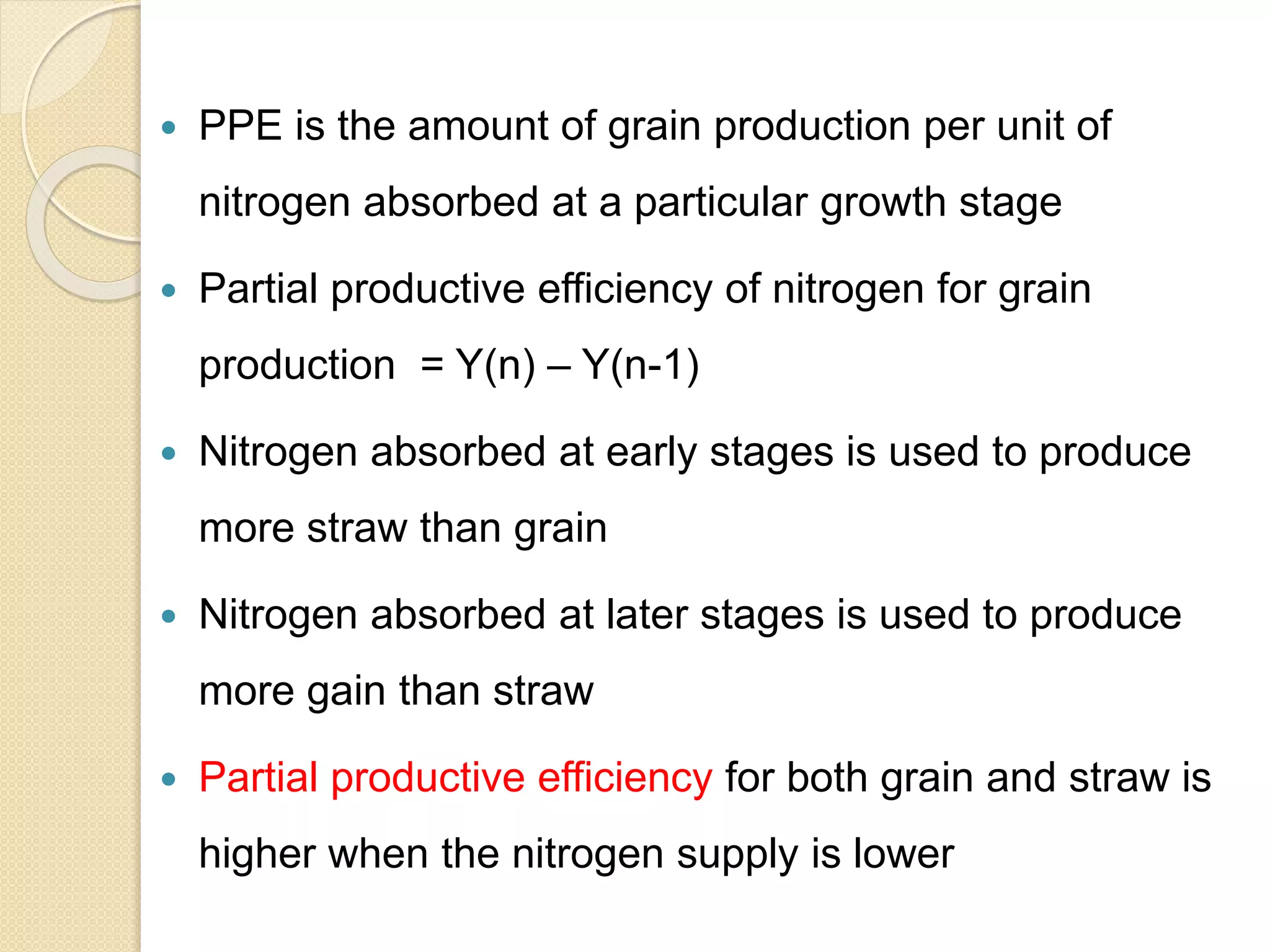
 PPE is the amount of grain production per unit of
nitrogen absorbed at a particular growth stage
 Partial productive efficiency of nitrogen for grain
production = Y(n) – Y(n-1)
 Nitrogen absorbed at early stages is used to produce
more straw than grain
 Nitrogen absorbed at later stages is used to produce
more gain than straw
 Partial productive efficiency for both grain and straw is
higher when the nitrogen supply is lower
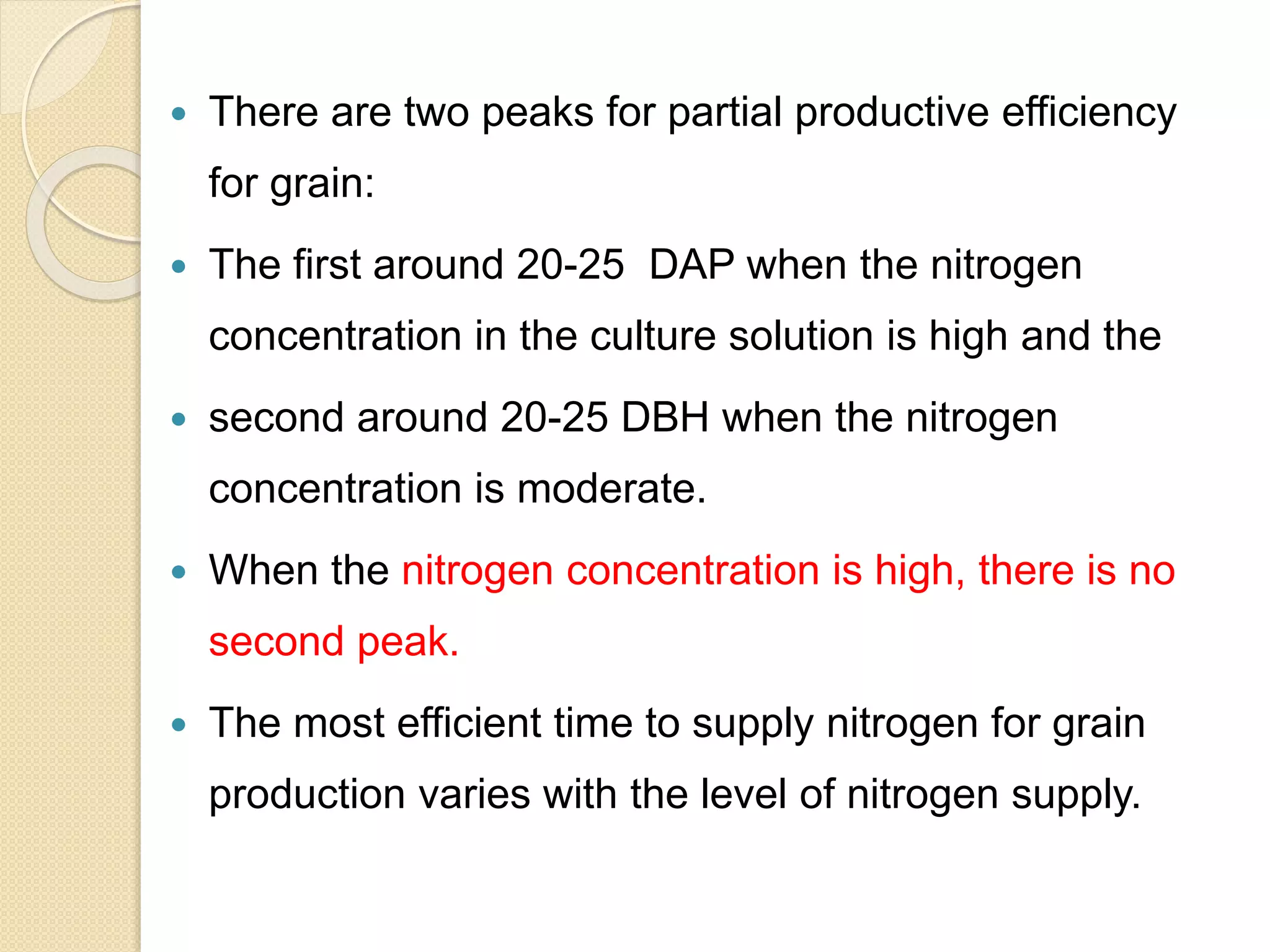
 There are two peaks for partial productive efficiency
for grain:
 The first around 20-25 DAP when the nitrogen
concentration in the culture solution is high and the
 second around 20-25 DBH when the nitrogen
concentration is moderate.
 When the nitrogen concentration is high, there is no
second peak.
 The most efficient time to supply nitrogen for grain
production varies with the level of nitrogen supply.
Losses of nutrient
 inevitable/evitable losses of nutrients that reduce the
efficiency.
 leaching,
 volatilization,
 immobilization,
 Chemical reaction between various components in the
mixture,
 change in capacity to supply nutrients,
 unfavourable effects associated with fertilizer
application.
Techniques of increasing fertilizer use
efficiency
 Amount of the fertilizer to be applied
 Type of fertilizer to be applied
 Time of application
 Method of application
 Placement of fertilizer
 Integrated nutrient management
 other considerations (cost, availability of fertilizer,
labour, ease of application, awareness on benefits of
fertilizer use, etc.)
Amount of fertilizer based on the field experiment
Type of fertilizer
 Choice of fertilizer is location specific and needs to
be found out by field experimentation.
 The choice is more with respect to N and P
fertilizers than for potassic.
 N – subjected to more leaching losses
 P - residual and cumulative effects are more
Time of application
 The objective of time of application is to get maximum
benefit from the fertilizer nutrient.
 Too earlier - lost in different ways or is absorbed more
than required.
 Late - either not absorbed or absorbed not utilized for
the purpose and only gets accumulated in plant parts.
 Some amendments need to be applied before
commencement – beneficial to the crop after
sowing/planting
 Example – application of press mud, other liming
Where to apply (placements)
 The objective of placement of fertilizer is to make the
nutrient available easily to the crop
 It should be near to the roots, surface broadcast, at
furrow bottom, top dressed and foliage
 This depends on type of crop, rooting pattern, feeding
area and ease of application
 The choice of method of application depends on soil-
crop-fertilizer interaction
Other considerations
 Proper control of pests and diseases
 Weeds, if not controlled on early stages (7-21 days) of
crop growth - 25 to 30 % of the applied plant nutrients to
be lossed
 For problem soil : alkali – gypsum,
acid – rock phosphat
 For rice crop - mix urea with available nitrification
inhibitors such as neem cake and karanj cake (1:5)-
reduce N losses from the soil
 Application of FYM and P should preferably be
made in wet and dry season, respectively
 Green manuring with daincha / sunhemp low land
paddy cultivation
 Ensure proper plant spacing
 Plant/sow the crop timely to get maximum benefit
from fertilizers
 Higher yielding varieties should be preferred over
local varieties
Residual Effect of fertilizers
 The application of fertilizer at rates that exceed crop
nutrient requirements can result in nutrient
accumulation in soil
 Residues left over in the soil depends on the type of
fertilizer used because of their mobility and solubility,
 Nitrogenous fertilizers leave no residues after the
crop is harvested. Only(1-2%) of N to following crop.
 Phosphatic fertilizers and farmyard manure leave
considerable residue in the soil which is useful for
subsequent crops.
 FYM applied to the previous crops: used only 50 % of
its nutrients and rest was available for subsequent
crops.
 The residues left by potassium fertilizers are
marginal.
REFFERENCE
 A Handbook of soil, fertilizer and manures by
P.k.Gupta – Fertilizer use efficiency (265-268).
 Residual effect of compost and fertilizer application on
nutrients in runoff by J.E Gilly, B.Eghball
THANK YOU

RESIDUAL EFFECT OF FERTILIZER AND FERTILIZER USE EFFICIENCY.pptx

  • 1.
    AGR502- PRINCIPLES ANDPRACTICES OF SOIL FERTILITY AND NUTRIENT MANAGEMENT Presented by M.Jothi (2019502006) COURSE TEACHERS Dr.K.Ramamoorthy Dr.R.Karthikeyan TOPIC: RESIDUALEFFECTOF FERTILIZERANDFERTILIZERUSE EFFICIENCY
  • 2.
    Fertilizer use efficiency Efficiency - Efficiency in any system is an expression of obtainable output with the addition of unit amount of input.  Fertilizer use efficiency is the output of any crop per unit of the nutrient applied under a specified set of soil and climatic conditions.  Efficiency of fertilizer nutrient = recovery x utilization
  • 3.
    Need  Continuous andsteady increase in the use of fertilizer  High cost of fertilizer  Productive and profitable use of every unit of plant nutrients is essential Efficiency is determined by three ways  agronomic efficiency  physiological efficiency  apparent recovery
  • 4.
    Agronomic efficiency • Itrefers to the additional produce obtained in kg per kg of an applied nutrient Yield from fertilized plot in kg –yield without fertilizer in kg AE = ------------------------------------------------------------------------- x 100 Amount of fertilizer nutrient applied in kg • It is like NR generally decreases with the increase in nutrient supply.
  • 5.
    Physiological efficiency  kgof grain yield produced/ kg of nutrient absorbed.  The AE and PE are related by % of NR Apparent / Nutrient Recovery  Nutrient Recovery (NR) refers to the actual amount of Nutrient taken up from the fertilizers. Nutrient uptake in fertilized plots - Nutrient uptake in unfertilized plots NR= -------------------------------------------------------------------------------- x 100 Amount of nutrient added  The NR exhibits a diminishing trend with the increasing amounts of nutrients.
  • 6.
     Example –nitrogen recovery varies with soil properties; methods, amounts and timing of fertilizer application and other management practices  N recovery ranges 30-50%  50 kg grain yield produced / kg of nitrogen  Efficiency of fertilizer nitrogen - 15-25 kg rice yield/kg of N  P recovery is only 10-20% , most P fixed by clay particle  K ranges in between the N and P
  • 7.
     PPE isthe amount of grain production per unit of nitrogen absorbed at a particular growth stage  Partial productive efficiency of nitrogen for grain production = Y(n) – Y(n-1)  Nitrogen absorbed at early stages is used to produce more straw than grain  Nitrogen absorbed at later stages is used to produce more gain than straw  Partial productive efficiency for both grain and straw is higher when the nitrogen supply is lower
  • 8.
     There aretwo peaks for partial productive efficiency for grain:  The first around 20-25 DAP when the nitrogen concentration in the culture solution is high and the  second around 20-25 DBH when the nitrogen concentration is moderate.  When the nitrogen concentration is high, there is no second peak.  The most efficient time to supply nitrogen for grain production varies with the level of nitrogen supply.
  • 9.
    Losses of nutrient inevitable/evitable losses of nutrients that reduce the efficiency.  leaching,  volatilization,  immobilization,  Chemical reaction between various components in the mixture,  change in capacity to supply nutrients,  unfavourable effects associated with fertilizer application.
  • 10.
    Techniques of increasingfertilizer use efficiency  Amount of the fertilizer to be applied  Type of fertilizer to be applied  Time of application  Method of application  Placement of fertilizer  Integrated nutrient management  other considerations (cost, availability of fertilizer, labour, ease of application, awareness on benefits of fertilizer use, etc.)
  • 11.
    Amount of fertilizerbased on the field experiment Type of fertilizer  Choice of fertilizer is location specific and needs to be found out by field experimentation.  The choice is more with respect to N and P fertilizers than for potassic.  N – subjected to more leaching losses  P - residual and cumulative effects are more
  • 12.
    Time of application The objective of time of application is to get maximum benefit from the fertilizer nutrient.  Too earlier - lost in different ways or is absorbed more than required.  Late - either not absorbed or absorbed not utilized for the purpose and only gets accumulated in plant parts.  Some amendments need to be applied before commencement – beneficial to the crop after sowing/planting  Example – application of press mud, other liming
  • 13.
    Where to apply(placements)  The objective of placement of fertilizer is to make the nutrient available easily to the crop  It should be near to the roots, surface broadcast, at furrow bottom, top dressed and foliage  This depends on type of crop, rooting pattern, feeding area and ease of application  The choice of method of application depends on soil- crop-fertilizer interaction
  • 14.
    Other considerations  Propercontrol of pests and diseases  Weeds, if not controlled on early stages (7-21 days) of crop growth - 25 to 30 % of the applied plant nutrients to be lossed  For problem soil : alkali – gypsum, acid – rock phosphat  For rice crop - mix urea with available nitrification inhibitors such as neem cake and karanj cake (1:5)- reduce N losses from the soil
  • 15.
     Application ofFYM and P should preferably be made in wet and dry season, respectively  Green manuring with daincha / sunhemp low land paddy cultivation  Ensure proper plant spacing  Plant/sow the crop timely to get maximum benefit from fertilizers  Higher yielding varieties should be preferred over local varieties
  • 16.
    Residual Effect offertilizers  The application of fertilizer at rates that exceed crop nutrient requirements can result in nutrient accumulation in soil  Residues left over in the soil depends on the type of fertilizer used because of their mobility and solubility,
  • 17.
     Nitrogenous fertilizersleave no residues after the crop is harvested. Only(1-2%) of N to following crop.  Phosphatic fertilizers and farmyard manure leave considerable residue in the soil which is useful for subsequent crops.  FYM applied to the previous crops: used only 50 % of its nutrients and rest was available for subsequent crops.  The residues left by potassium fertilizers are marginal.
  • 18.
    REFFERENCE  A Handbookof soil, fertilizer and manures by P.k.Gupta – Fertilizer use efficiency (265-268).  Residual effect of compost and fertilizer application on nutrients in runoff by J.E Gilly, B.Eghball
  • 19.