RESEARCH TO
POLICY Integrating
 communications in research
        planning
Research
Why this conversation

             for
          WHAT?
Move from problem-
 based research to
  solution-based
     research
Not too much driven by
researchers, scientists and
  academics but creating
  space for development
 actors like policy makers
Research evaluated by
development impacts and
not by the contribution to
 the body of knowledge
       (publishing)
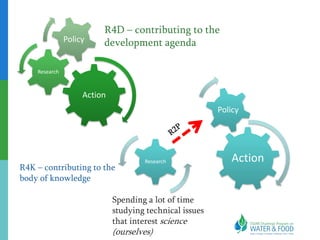
R4D – contributing to the
               Policy    development agenda

    Research


                    Action
                                                         Policy


                                     Research               Action
R4K – contributing to the
body of knowledge

                             Spending a lot of time
                             studying technical issues
                             that interest science
                             (ourselves)
R2P - How
You can have brilliant
ideas, but if you can't get
 them across, your ideas
won't get you anywhere.
      ~ Lee Iacocca
Don’t be such a scientist
    ‘Don’t be such a scientist: talking substance in an
        age of style’(Island Press 2009), Randy Olsen,
              marine biologist and film maker :
    Scientists should pay more attention to how they
      communicate their work. They should focus not
     only on substance or content, but much more on
     the style of communication: “….communication is
        not just one element in the struggle to make
          science relevant. It is the central element.
       Because if you gather scientific knowledge but
      are unable to convey it to others in a correct and
     compelling form, you might as well not even have
             bothered to gather the information”
Conventional research communications vs
Communications for R4D
Area          Conventional Research Comms Comms for R4d
Objectives    Contribute to bodies of        Change perceptions and behavior, contribute
              knowledge                      to development processes
              Inform and provide information
Targets       Researchers, scientists,       Multiple actors (farmers, planner, policy
              academics                      makers, private sector, NGOs, etc)
Methodology   One way, mechanistic           Two way, iterative process – multiple actors
              Passive                        involved, participatory
                                             Engaged and active
Strategies    Publish in journals            Strategic communication linked to changes in
              Attend scientific meetings     KAS of targets
              Message focused                Seen as part of the social sciences
              Hand over information to       Use multiple channels, products
              media/Public Information       Focused on use rather than production
When          At end of research process     Continuous process where communication is
                                             seen as a process for deriving shared meaning
In research it is either you
  publish the knowledge or
    perish. In research for
 development, it is either you
apply the knowledge or perish
  ~ Hastings Chikoko, 2001
…..integrat
ed
                     RESEARCH PROGRAMME                                          COMMUNICATION
                     CYCLE                                                       PROGRAM CYCLE
National/Basin
development agenda           Planning (OLM)
                             Reflection                                                 Identify information needs and targets
Policies

Strategies               1                                                      1                             CPWF Global Info
                                                                                                              Communication
                                                                                                              Strategy
                           Monitor and
                         evaluate (with
                               Comms
                                              6           Monitor and
                                                          evaluate (comms
                                                          indicators)
                                                                                                              SADC Awareness
                                                                                                              and Comms Strategy
                                                                                                              for the Water Sector
                            indicators)


             2            Implementation           5          Produce and disseminate
                                                                                                  2         Develop strategy


                                                 4
                                              Integrate
                     3                        communication
                                              activities into LBDC
                                                                               3        Create implementation plan and budget


                                              MILESTONRE PLAN
Linking theories of change to what actors need to know
    1         to effect the change


        Milestone                Outcome                        Target                            Change

  3 or 4 Milestones most    Outcome Target         Target audience (actors) for       Expected change in actors
   likely to bear fruit &                          each milestone.
          succeed                                                                     (column 2 from OLM)
  (from Milestone Plan)     (from OTIB)            (from Actors in OLM)
Identify 2 or 3 of your     Outcome from OTIB.     Identify key actors for each       What do you expect the actor to
project milestones that     Please provide the     milestone, be as specific or       change with regards to practice
are most likely to have     outcome to be          detailed as possible. If you do    and behavior?
impact. Try to identify     associated with each   not give names, please give as
milestones across the       milestone. What is     much detail (Province, District,
project timeline, not all   this milestone         Institution) as possible
at the end. Pick the        supposed to
milestones that you         contribute to or
consider to be low          accomplish.
hanging fruit, those
milestones or outputs
that your feel have the
greatest potential for
impact.
Linking theories of change to what actors need to know
    1        to effect the change


             What                               How                                       Who
What information is needed to     How will you send out this         Who will do it?
bring about the expected          message to the identified actor?
change?                           (from column 5 OLM)
(column 4 of OLM)
What issues/message do you        Means of communication. This is    Responsible partner. Indicate who on your
want to target to actors? This    based loosely on the Process       project team will take the lead in delivery of
should be loosely based upon      Outputs column of the OLM, but     this milestone to actors; and with whom they
the Project Strategy column of    massaged and synthesized           need to partner.
the OLM, which you refine here    according to what you now know
and now. This is where you        about your output and audience.
combine the original intentions
of the OLM with the specific
findings or implications of the
milestone.
Don’t be such a scientist
    ‘Don’t be such a scientist: talking substance in an
        age of style’(Island Press 2009), Randy Olsen,
              marine biologist and film maker :
    Scientists should pay more attention to how they
      communicate their work. They should focus not
     only on substance or content, but much more on
     the style of communication: “….communication is
        not just one element in the struggle to make
          science relevant. It is the central element.
       Because if you gather scientific knowledge but
      are unable to convey it to others in a correct and
     compelling form, you might as well not even have
             bothered to gather the information”
POLICY
  integrating
communications
  in research
    planning

Research to policy

  • 1.
    RESEARCH TO POLICY Integrating communications in research planning
  • 2.
  • 3.
    Move from problem- based research to solution-based research
  • 4.
    Not too muchdriven by researchers, scientists and academics but creating space for development actors like policy makers
  • 5.
    Research evaluated by developmentimpacts and not by the contribution to the body of knowledge (publishing)
  • 6.
    R4D – contributingto the Policy development agenda Research Action Policy Research Action R4K – contributing to the body of knowledge Spending a lot of time studying technical issues that interest science (ourselves)
  • 7.
  • 9.
    You can havebrilliant ideas, but if you can't get them across, your ideas won't get you anywhere. ~ Lee Iacocca
  • 10.
    Don’t be sucha scientist ‘Don’t be such a scientist: talking substance in an age of style’(Island Press 2009), Randy Olsen, marine biologist and film maker : Scientists should pay more attention to how they communicate their work. They should focus not only on substance or content, but much more on the style of communication: “….communication is not just one element in the struggle to make science relevant. It is the central element. Because if you gather scientific knowledge but are unable to convey it to others in a correct and compelling form, you might as well not even have bothered to gather the information”
  • 11.
    Conventional research communicationsvs Communications for R4D Area Conventional Research Comms Comms for R4d Objectives Contribute to bodies of Change perceptions and behavior, contribute knowledge to development processes Inform and provide information Targets Researchers, scientists, Multiple actors (farmers, planner, policy academics makers, private sector, NGOs, etc) Methodology One way, mechanistic Two way, iterative process – multiple actors Passive involved, participatory Engaged and active Strategies Publish in journals Strategic communication linked to changes in Attend scientific meetings KAS of targets Message focused Seen as part of the social sciences Hand over information to Use multiple channels, products media/Public Information Focused on use rather than production When At end of research process Continuous process where communication is seen as a process for deriving shared meaning
  • 12.
    In research itis either you publish the knowledge or perish. In research for development, it is either you apply the knowledge or perish ~ Hastings Chikoko, 2001
  • 13.
    …..integrat ed RESEARCH PROGRAMME COMMUNICATION CYCLE PROGRAM CYCLE National/Basin development agenda Planning (OLM) Reflection Identify information needs and targets Policies Strategies 1 1 CPWF Global Info Communication Strategy Monitor and evaluate (with Comms 6 Monitor and evaluate (comms indicators) SADC Awareness and Comms Strategy for the Water Sector indicators) 2 Implementation 5 Produce and disseminate 2 Develop strategy 4 Integrate 3 communication activities into LBDC 3 Create implementation plan and budget MILESTONRE PLAN
  • 14.
    Linking theories ofchange to what actors need to know 1 to effect the change Milestone Outcome Target Change 3 or 4 Milestones most Outcome Target Target audience (actors) for Expected change in actors likely to bear fruit & each milestone. succeed (column 2 from OLM) (from Milestone Plan) (from OTIB) (from Actors in OLM) Identify 2 or 3 of your Outcome from OTIB. Identify key actors for each What do you expect the actor to project milestones that Please provide the milestone, be as specific or change with regards to practice are most likely to have outcome to be detailed as possible. If you do and behavior? impact. Try to identify associated with each not give names, please give as milestones across the milestone. What is much detail (Province, District, project timeline, not all this milestone Institution) as possible at the end. Pick the supposed to milestones that you contribute to or consider to be low accomplish. hanging fruit, those milestones or outputs that your feel have the greatest potential for impact.
  • 15.
    Linking theories ofchange to what actors need to know 1 to effect the change What How Who What information is needed to How will you send out this Who will do it? bring about the expected message to the identified actor? change? (from column 5 OLM) (column 4 of OLM) What issues/message do you Means of communication. This is Responsible partner. Indicate who on your want to target to actors? This based loosely on the Process project team will take the lead in delivery of should be loosely based upon Outputs column of the OLM, but this milestone to actors; and with whom they the Project Strategy column of massaged and synthesized need to partner. the OLM, which you refine here according to what you now know and now. This is where you about your output and audience. combine the original intentions of the OLM with the specific findings or implications of the milestone.
  • 16.
    Don’t be sucha scientist ‘Don’t be such a scientist: talking substance in an age of style’(Island Press 2009), Randy Olsen, marine biologist and film maker : Scientists should pay more attention to how they communicate their work. They should focus not only on substance or content, but much more on the style of communication: “….communication is not just one element in the struggle to make science relevant. It is the central element. Because if you gather scientific knowledge but are unable to convey it to others in a correct and compelling form, you might as well not even have bothered to gather the information”
  • 17.