The Imposition of Participation? 
The case of participatory water 
management in Coastal 
Bangladesh 
G3: 
Water 
Governance 
and 
Community-­‐based 
Organiza:ons 
Camelia 
Dewan 
Marie-­‐Charlo0e 
Buisson 
Adi6 
Mukherji
Participation in Water Policy 
From 
Top-­‐down 
poli.cized 
to 
depoli.cized 
par.cipa.on 
• 
1950s: 
Floods 
and 
Krug 
Mission 
Report 
recommending 
embankments 
• 1960s: 
BWDB 
created 
4000 
km 
of 
embankments: 
Top-­‐down 
• 1970s-­‐1980s: 
Poli.cized 
par.cipa.on 
• Donors 
also 
funding 
social 
empowerment 
NGOs 
• Water 
projects 
with 
local 
decision-­‐making 
and 
involvement 
• Early 
Implementa:on 
Project 
(1972-­‐1995), 
Land 
Reclama:on 
Project 
(1978-­‐1991), 
Delta 
Development 
Project 
(1981-­‐1999) 
• Focus 
on 
marginalized 
groups: 
‘Target 
groups’, 
Landless 
• 1990s-­‐2000s: 
A 
depoli.cized 
shiM: 
Par.cipa.on 
as 
Maintenance 
• Wider 
shiV 
towards 
decentraliza:on 
to 
non-­‐state 
bodies 
• Reduc:on 
of 
BWDB 
from 
24000 
to 
8000 
staff 
• Community-­‐Based 
Natural 
Resource 
Management 
(CBNRM) 
• Effec:veness, 
equitability 
and 
sustainability 
• Guidelines 
for 
Par:cipatory 
Water 
Management 
(GPWM) 
• ‘Stakeholder 
consulta:on’, 
Labor 
Contrac:ng 
Socie:es 
and 
Water 
Management 
Organiza:ons
Participation in Practice 
Lack 
of 
Efficacy: 
Inability 
to 
address 
top-­‐down 
engineering 
• CBNRM 
for 
effec.ve 
water 
management 
through 
involving 
communi.es 
• GPWM 
seeks 
to 
place 
the 
decision-­‐making 
power 
in 
the 
hands 
of 
stakeholders 
through 
Water 
Management 
Organiza:ons 
(WMOs) 
• Integrated 
into: 
• BWDB’s 
Integrated 
Planning 
for 
Sustainable 
Water 
Management 
(IPSWAM) 
• LGED’s 
Small-­‐Scale 
Water 
resources 
Development 
Sector 
Project 
(SSWRDSP) 
• Constraints 
• BWDB: 
50 
year 
delay 
in 
the 
consulta:on 
of 
WMOs 
• Project 
dependence 
• Several 
examples 
of 
inadequate 
technical 
solu:ons 
• Unsa:sfactory 
number 
of 
regulators, 
too 
low 
or 
weakly 
constructed 
embankments, 
flawed 
sluice 
gate 
shubers, 
and 
superficial 
canal 
re-­‐excava:on. 
• (waterlogging, 
canal 
silta:on 
and 
river 
erosion) 
• 
Par.cipa.on 
as 
a 
‘tool’ 
to 
give 
a 
'human 
face' 
to 
depoli:cized 
and 
technocra:c 
projects 
(Palmer-­‐Jones 
et 
al., 
2010). 
• WMO 
equated 
with 
community
Participation in Practice 
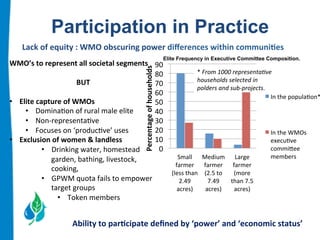
Lack 
of 
equity 
: 
WMO 
obscuring 
power 
differences 
within 
communi.es 
WMO’s 
to 
represent 
all 
societal 
segments 
BUT 
• Elite 
capture 
of 
WMOs 
• Domina:on 
of 
rural 
male 
elite 
• Non-­‐representa:ve 
• Focuses 
on 
‘produc:ve’ 
uses 
• Exclusion 
of 
women 
& 
landless 
• Drinking 
water, 
homestead 
garden, 
bathing, 
livestock, 
cooking, 
• GPWM 
Percentage 
of 
households 
quota 
fails 
to 
empower 
target 
groups 
• Token 
members 
90 
80 
70 
60 
50 
40 
30 
20 
10 
0 
Elite Frequency in Executive Committee Composition. 
* 
From 
1000 
representa.ve 
households 
selected 
in 
polders 
and 
sub-­‐projects. 
Small 
farmer 
(less 
than 
2.49 
acres) 
Medium 
farmer 
(2.5 
to 
7.49 
acres) 
Large 
farmer 
(more 
than 
7.5 
acres) 
In 
the 
popula:on* 
In 
the 
WMOs 
execu:ve 
commibee 
members 
Ability 
to 
par.cipate 
defined 
by 
‘power’ 
and 
‘economic 
status’
Lack of Equity 
Rural 
Inequali.es 
and 
Conflict: 
Opera.on 
for 
compe.ng 
water 
uses 
• Sluice 
gate 
commiaees 
created 
regardless 
of 
the 
presence 
of 
a 
WMO 
• Local 
operators 
paid 
through 
rice 
or 
fishing 
rights 
• Land 
and 
canal 
grabbing 
make 
WMOs 
redundant 
• A 
minority 
of 
gates 
is 
operated 
through 
WMOs 
(land 
grabs, 
private 
gates/pipes, 
• Canals 
are 
drying 
up 
• Par:cular 
problems 
with 
salinity 
intrusion 
in 
brackish 
gher 
areas 
• Respondents 
did 
not 
equate 
par.cipa.on 
with 
a 
WMO 
• WMO 
as 
an 
external 
idea 
that 
prompts 
polder 
popula:ons 
to 
create 
commibees 
in 
order 
to 
receive 
funding 
for 
maintenance 
à 
Prevent 
benefits 
of 
water 
management 
for 
‘all 
the 
stakeholders’
Lack of sustainability 
The 
panacea 
of 
financial 
cost-­‐sharing 
• 1990s 
and 
‘par.cipa.on’ 
as 
financial 
cost-­‐sharing 
• GPWM 
encouraged 
communi:es 
to 
contribute 
to 
maintenance 
costs. 
• Poor 
condi.on 
of 
canals, 
gates 
and 
embankment: 
• Canal 
excava:on 
and 
re-­‐excava:on 
are 
the 
top 
two 
issues 
in 
survey 
• 
No 
evidence 
that 
WMO 
micro-­‐credit 
ac:vi:es 
gives 
incen:ves 
to 
maintain 
the 
polder 
infrastructure. 
• Funding 
gap 
in 
maintenance 
• Both 
communi:es 
and 
implemen:ng 
agencies 
struggle 
to 
meet 
maintenance 
demand; 
Oversubscrip:on 
to: 
• LGED’s 
Emergency 
Fund 
• BWDB’s 
Non-­‐Revenue 
Development 
Budget 
No 
coherence 
between 
the 
considerable 
hydrological 
challenges 
and 
the 
means 
by 
which 
the 
WMOs 
can 
generate 
funds.
Conclusion – Permanent Funds 
The Role of Existing Institutions 
Acknowledge 
coordina.on 
role 
Union 
Parishad 
and 
NGOs 
already 
playing: 
• Implica:on 
in 
gate 
opera:on 
(UP), 
• Implica:on 
in 
conflicts 
resolu:on 
(UP), 
• Role 
in 
case 
of 
disaster 
(UP, 
NGO) 
• Rural 
employment 
schemes 
(UP, 
NGO, 
LGED) 
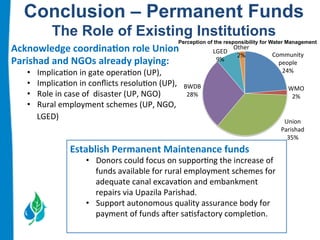
Perception of the responsibility for Water Management 
Establish 
Permanent 
Maintenance 
funds 
• Donors 
could 
focus 
on 
suppor:ng 
the 
increase 
of 
funds 
available 
for 
rural 
employment 
schemes 
for 
adequate 
canal 
excava:on 
and 
embankment 
repairs 
via 
Upazila 
Parishad. 
• Support 
autonomous 
quality 
assurance 
body 
for 
payment 
of 
funds 
aVer 
sa:sfactory 
comple:on. 
Community 
people 
24% 
WMO 
2% 
Union 
Parishad 
35% 
BWDB 
28% 
LGED 
9% 
Other 
2%

The Imposition of Participation? The Case of Participatory Water Management in Coastal Bangladesh

  • 1.
    The Imposition ofParticipation? The case of participatory water management in Coastal Bangladesh G3: Water Governance and Community-­‐based Organiza:ons Camelia Dewan Marie-­‐Charlo0e Buisson Adi6 Mukherji
  • 2.
    Participation in WaterPolicy From Top-­‐down poli.cized to depoli.cized par.cipa.on • 1950s: Floods and Krug Mission Report recommending embankments • 1960s: BWDB created 4000 km of embankments: Top-­‐down • 1970s-­‐1980s: Poli.cized par.cipa.on • Donors also funding social empowerment NGOs • Water projects with local decision-­‐making and involvement • Early Implementa:on Project (1972-­‐1995), Land Reclama:on Project (1978-­‐1991), Delta Development Project (1981-­‐1999) • Focus on marginalized groups: ‘Target groups’, Landless • 1990s-­‐2000s: A depoli.cized shiM: Par.cipa.on as Maintenance • Wider shiV towards decentraliza:on to non-­‐state bodies • Reduc:on of BWDB from 24000 to 8000 staff • Community-­‐Based Natural Resource Management (CBNRM) • Effec:veness, equitability and sustainability • Guidelines for Par:cipatory Water Management (GPWM) • ‘Stakeholder consulta:on’, Labor Contrac:ng Socie:es and Water Management Organiza:ons
  • 3.
    Participation in Practice Lack of Efficacy: Inability to address top-­‐down engineering • CBNRM for effec.ve water management through involving communi.es • GPWM seeks to place the decision-­‐making power in the hands of stakeholders through Water Management Organiza:ons (WMOs) • Integrated into: • BWDB’s Integrated Planning for Sustainable Water Management (IPSWAM) • LGED’s Small-­‐Scale Water resources Development Sector Project (SSWRDSP) • Constraints • BWDB: 50 year delay in the consulta:on of WMOs • Project dependence • Several examples of inadequate technical solu:ons • Unsa:sfactory number of regulators, too low or weakly constructed embankments, flawed sluice gate shubers, and superficial canal re-­‐excava:on. • (waterlogging, canal silta:on and river erosion) • Par.cipa.on as a ‘tool’ to give a 'human face' to depoli:cized and technocra:c projects (Palmer-­‐Jones et al., 2010). • WMO equated with community
  • 4.
    Participation in Practice Lack of equity : WMO obscuring power differences within communi.es WMO’s to represent all societal segments BUT • Elite capture of WMOs • Domina:on of rural male elite • Non-­‐representa:ve • Focuses on ‘produc:ve’ uses • Exclusion of women & landless • Drinking water, homestead garden, bathing, livestock, cooking, • GPWM Percentage of households quota fails to empower target groups • Token members 90 80 70 60 50 40 30 20 10 0 Elite Frequency in Executive Committee Composition. * From 1000 representa.ve households selected in polders and sub-­‐projects. Small farmer (less than 2.49 acres) Medium farmer (2.5 to 7.49 acres) Large farmer (more than 7.5 acres) In the popula:on* In the WMOs execu:ve commibee members Ability to par.cipate defined by ‘power’ and ‘economic status’
  • 5.
    Lack of Equity Rural Inequali.es and Conflict: Opera.on for compe.ng water uses • Sluice gate commiaees created regardless of the presence of a WMO • Local operators paid through rice or fishing rights • Land and canal grabbing make WMOs redundant • A minority of gates is operated through WMOs (land grabs, private gates/pipes, • Canals are drying up • Par:cular problems with salinity intrusion in brackish gher areas • Respondents did not equate par.cipa.on with a WMO • WMO as an external idea that prompts polder popula:ons to create commibees in order to receive funding for maintenance à Prevent benefits of water management for ‘all the stakeholders’
  • 6.
    Lack of sustainability The panacea of financial cost-­‐sharing • 1990s and ‘par.cipa.on’ as financial cost-­‐sharing • GPWM encouraged communi:es to contribute to maintenance costs. • Poor condi.on of canals, gates and embankment: • Canal excava:on and re-­‐excava:on are the top two issues in survey • No evidence that WMO micro-­‐credit ac:vi:es gives incen:ves to maintain the polder infrastructure. • Funding gap in maintenance • Both communi:es and implemen:ng agencies struggle to meet maintenance demand; Oversubscrip:on to: • LGED’s Emergency Fund • BWDB’s Non-­‐Revenue Development Budget No coherence between the considerable hydrological challenges and the means by which the WMOs can generate funds.
  • 7.
    Conclusion – PermanentFunds The Role of Existing Institutions Acknowledge coordina.on role Union Parishad and NGOs already playing: • Implica:on in gate opera:on (UP), • Implica:on in conflicts resolu:on (UP), • Role in case of disaster (UP, NGO) • Rural employment schemes (UP, NGO, LGED) Perception of the responsibility for Water Management Establish Permanent Maintenance funds • Donors could focus on suppor:ng the increase of funds available for rural employment schemes for adequate canal excava:on and embankment repairs via Upazila Parishad. • Support autonomous quality assurance body for payment of funds aVer sa:sfactory comple:on. Community people 24% WMO 2% Union Parishad 35% BWDB 28% LGED 9% Other 2%