



Wendy Stephens
Library Research Models
MCLA
September 11, 2009
Some Library Research Models

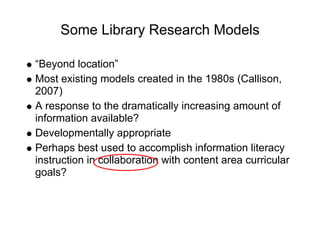
“Beyond location”
Most existing models created in the 1980s (Callison,
2007)
A response to the dramatically increasing amount of
information available?
Developmentally appropriate
Perhaps best used to accomplish information literacy
instruction in collaboration with content area curricular
goals?
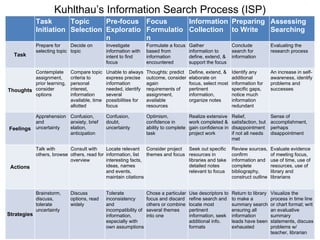
Kuhlthau’s Information Search Process (ISP)
             Task       Topic     Pre-focus Focus       Information Preparing Assessing
             Initiation Selection Exploratio Formulatio Collection to Write   Searching
                                  n          n
             Prepare for     Decide on        Investigate          Formulate a focus     Gather               Conclude            Evaluating the
             selecting topic topic            information with     based from            information to       search for          research process
  Task                                        intent to find       information           define, extend, &    information
                                              focus                encountered           support the focus

         Contemplate        Compare topic     Unable to always     Thoughts: predict     Define, extend, &    Identify any        An increase in self-
         assignment,        criteria to       express precise      outcome, consider     elaborate on         additional          awareness, identify
         prior learning,    personal          information          again                 focus, select most   information for     problems and
Thoughts consider           interest,         needed, identify     requirements of       pertinent            specific gaps,      successes
         options            information       several              assignment,           information,         notice much
                            available, time   possibilities for    available             organize notes       information
                            allotted          focus                resources                                  redundant

             Apprehension Confusion,          Confusion,           Optimism,             Realize extensive    Relief,             Sense of
             and          anxiety, brief      doubt,               confidence in         work completed &     satisfaction, but   accomplishment,
Feelings     uncertainty  elation,            uncertainty          ability to complete   gain confidence in   disappointment      perhaps
                          anticipation                             task                  project work         if not all needs    disappointment
                                                                                                              met

             Talk with      Consult with     Locate relevant Consider project            Seek out specific    Review sources,     Evaluate evidence
             others, browse others, read for information, list  themes and focus         resources in         confirm             of meeting focus,
                            overview         interesting facts,                          libraries and take   information and     use of time, use of
 Actions                                     ideas, names                                detailed notes       complete            resources, use of
                                             and events,                                 relevant to focus    bibliography,       library and
                                             maintain citations                                               construct outline   librarians


             Brainstorm,    Discuss           Tolerate             Chose a particular    Use descriptors to   Return to library   Visualize the
             discuss,       options, read     inconsistency        focus and discard     refine search and    to make a           process in time line
             tolerate       widely            and                  others or combine     locate most          summary search      or chart format; writ
             uncertainty                      incompatibility of   several themes        pertinent            ensuring all        an evaluative
Strategies                                    information,         into one              information, seek    information         summary
                                              especially with                            additional info.     leads have been     statements, discuss
                                              own assumptions                            formats              exhausted           problems w/
                                                                                                                                  teacher, librarian
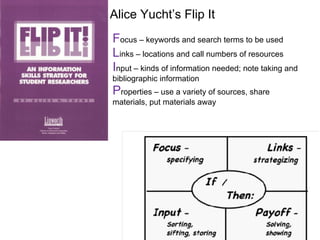
Alice Yucht’s Flip It
Focus – keywords and search terms to be used
Links – locations and call numbers of resources
Input – kinds of information needed; note taking and
bibliographic information
Properties – use a variety of sources, share
materials, put materials away
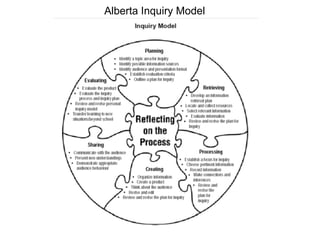
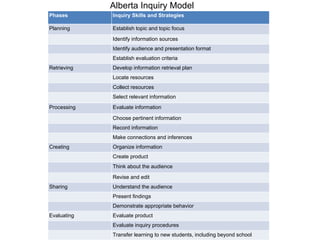
Alberta Inquiry Model
Phases       Inquiry Skills and Strategies

Planning     Establish topic and topic focus

             Identify information sources
             Identify audience and presentation format
             Establish evaluation criteria
Retrieving   Develop information retrieval plan
             Locate resources
             Collect resources
             Select relevant information
Processing   Evaluate information

             Choose pertinent information
             Record information
             Make connections and inferences
Creating     Organize information
             Create product
             Think about the audience

             Revise and edit
Sharing      Understand the audience
             Present findings
             Demonstrate appropriate behavior
Evaluating   Evaluate product
             Evaluate inquiry procedures
             Transfer learning to new students, including beyond school
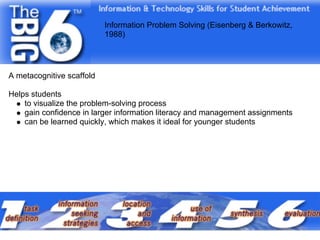
Information Problem Solving (Eisenberg & Berkowitz,
                           1988)


A metacognitive scaffold

Helps students
    to visualize the problem-solving process
    gain confidence in larger information literacy and management assignments
    can be learned quickly, which makes it ideal for younger students
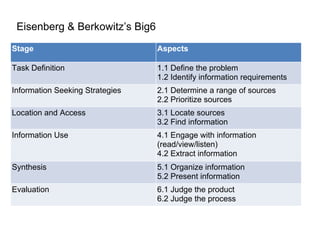
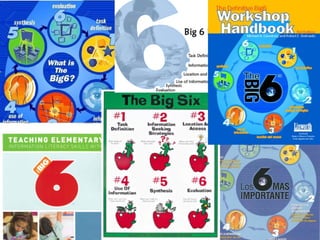
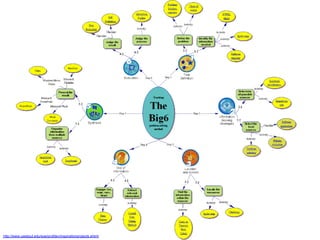
Eisenberg & Berkowitz’s Big6
Stage                            Aspects

Task Definition                  1.1 Define the problem
                                 1.2 Identify information requirements
Information Seeking Strategies   2.1 Determine a range of sources
                                 2.2 Prioritize sources
Location and Access              3.1 Locate sources
                                 3.2 Find information
Information Use                  4.1 Engage with information
                                 (read/view/listen)
                                 4.2 Extract information
Synthesis                        5.1 Organize information
                                 5.2 Present information
Evaluation                       6.1 Judge the product
                                 6.2 Judge the process
http://www.uwstout.edu/soe/profdev/inspirationprojects.shtml
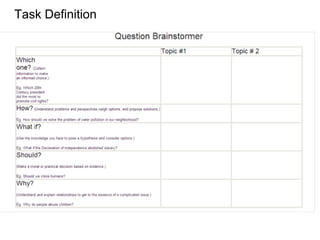
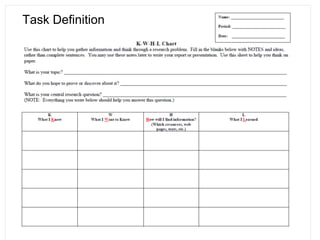
Task Definition
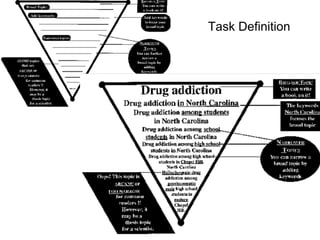
Task Definition
Task Definition
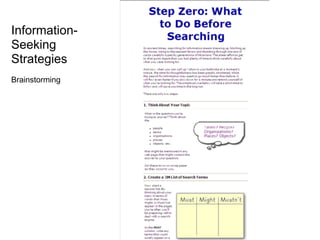
Information-
Seeking
Strategies
Brainstorming
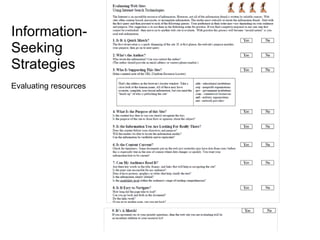
Information-
Seeking
Strategies
Evaluating resources
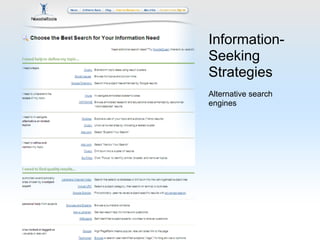
Information-
Seeking
Strategies
Alternative search
engines
Information-
Seeking
Strategies
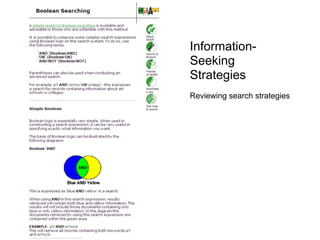
Reviewing search strategies
Location and Access

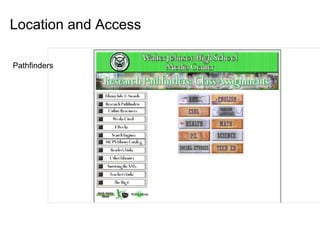
Pathfinders
Location and Access
Location and Access
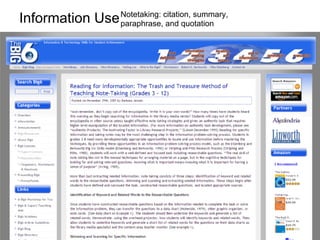
Notetaking: citation, summary,
Information Use   paraphrase, and quotation
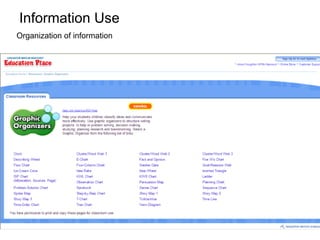
Information Use
Organization of information
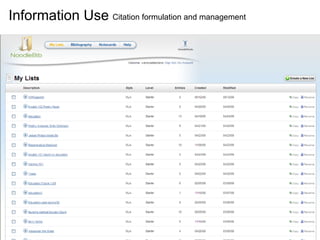
Information Use Citation formulation and management
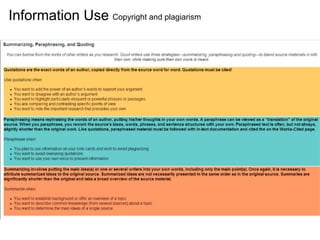
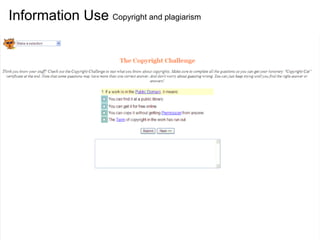
Information Use Copyright and plagiarism
http://www.odt.co.nz/files/story/2008/06/en4library.jpg
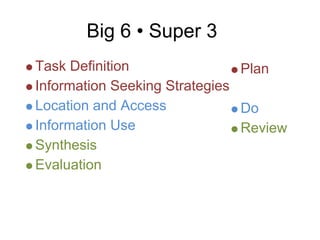
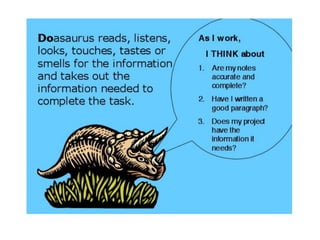
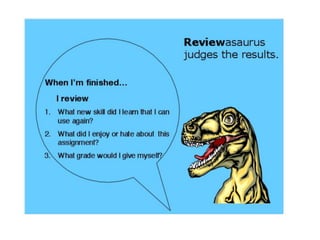
Big 6 • Super 3
Task Definition                Plan
Information Seeking Strategies
Location and Access            Do
Information Use                Review
Synthesis
Evaluation
Research Models
Research Models
Research Models
Research Models

Research Models

  • 1.
    Wendy Stephens Library ResearchModels MCLA September 11, 2009
  • 2.
    Some Library ResearchModels “Beyond location” Most existing models created in the 1980s (Callison, 2007) A response to the dramatically increasing amount of information available? Developmentally appropriate Perhaps best used to accomplish information literacy instruction in collaboration with content area curricular goals?
  • 3.
    Kuhlthau’s Information SearchProcess (ISP) Task Topic Pre-focus Focus Information Preparing Assessing Initiation Selection Exploratio Formulatio Collection to Write Searching n n Prepare for Decide on Investigate Formulate a focus Gather Conclude Evaluating the selecting topic topic information with based from information to search for research process Task intent to find information define, extend, & information focus encountered support the focus Contemplate Compare topic Unable to always Thoughts: predict Define, extend, & Identify any An increase in self- assignment, criteria to express precise outcome, consider elaborate on additional awareness, identify prior learning, personal information again focus, select most information for problems and Thoughts consider interest, needed, identify requirements of pertinent specific gaps, successes options information several assignment, information, notice much available, time possibilities for available organize notes information allotted focus resources redundant Apprehension Confusion, Confusion, Optimism, Realize extensive Relief, Sense of and anxiety, brief doubt, confidence in work completed & satisfaction, but accomplishment, Feelings uncertainty elation, uncertainty ability to complete gain confidence in disappointment perhaps anticipation task project work if not all needs disappointment met Talk with Consult with Locate relevant Consider project Seek out specific Review sources, Evaluate evidence others, browse others, read for information, list themes and focus resources in confirm of meeting focus, overview interesting facts, libraries and take information and use of time, use of Actions ideas, names detailed notes complete resources, use of and events, relevant to focus bibliography, library and maintain citations construct outline librarians Brainstorm, Discuss Tolerate Chose a particular Use descriptors to Return to library Visualize the discuss, options, read inconsistency focus and discard refine search and to make a process in time line tolerate widely and others or combine locate most summary search or chart format; writ uncertainty incompatibility of several themes pertinent ensuring all an evaluative Strategies information, into one information, seek information summary especially with additional info. leads have been statements, discuss own assumptions formats exhausted problems w/ teacher, librarian
  • 4.
    Alice Yucht’s FlipIt Focus – keywords and search terms to be used Links – locations and call numbers of resources Input – kinds of information needed; note taking and bibliographic information Properties – use a variety of sources, share materials, put materials away
  • 5.
  • 6.
    Alberta Inquiry Model Phases Inquiry Skills and Strategies Planning Establish topic and topic focus Identify information sources Identify audience and presentation format Establish evaluation criteria Retrieving Develop information retrieval plan Locate resources Collect resources Select relevant information Processing Evaluate information Choose pertinent information Record information Make connections and inferences Creating Organize information Create product Think about the audience Revise and edit Sharing Understand the audience Present findings Demonstrate appropriate behavior Evaluating Evaluate product Evaluate inquiry procedures Transfer learning to new students, including beyond school
  • 8.
    Information Problem Solving(Eisenberg & Berkowitz, 1988) A metacognitive scaffold Helps students to visualize the problem-solving process gain confidence in larger information literacy and management assignments can be learned quickly, which makes it ideal for younger students
  • 9.
    Eisenberg & Berkowitz’sBig6 Stage Aspects Task Definition 1.1 Define the problem 1.2 Identify information requirements Information Seeking Strategies 2.1 Determine a range of sources 2.2 Prioritize sources Location and Access 3.1 Locate sources 3.2 Find information Information Use 4.1 Engage with information (read/view/listen) 4.2 Extract information Synthesis 5.1 Organize information 5.2 Present information Evaluation 6.1 Judge the product 6.2 Judge the process
  • 12.
  • 13.
  • 15.
  • 16.
  • 17.
  • 18.
  • 19.
  • 20.
  • 21.
  • 22.
  • 23.
  • 24.
    Notetaking: citation, summary, InformationUse paraphrase, and quotation
  • 25.
  • 26.
    Information Use Citationformulation and management
  • 27.
  • 28.
  • 29.
  • 30.
    Big 6 •Super 3 Task Definition Plan Information Seeking Strategies Location and Access Do Information Use Review Synthesis Evaluation