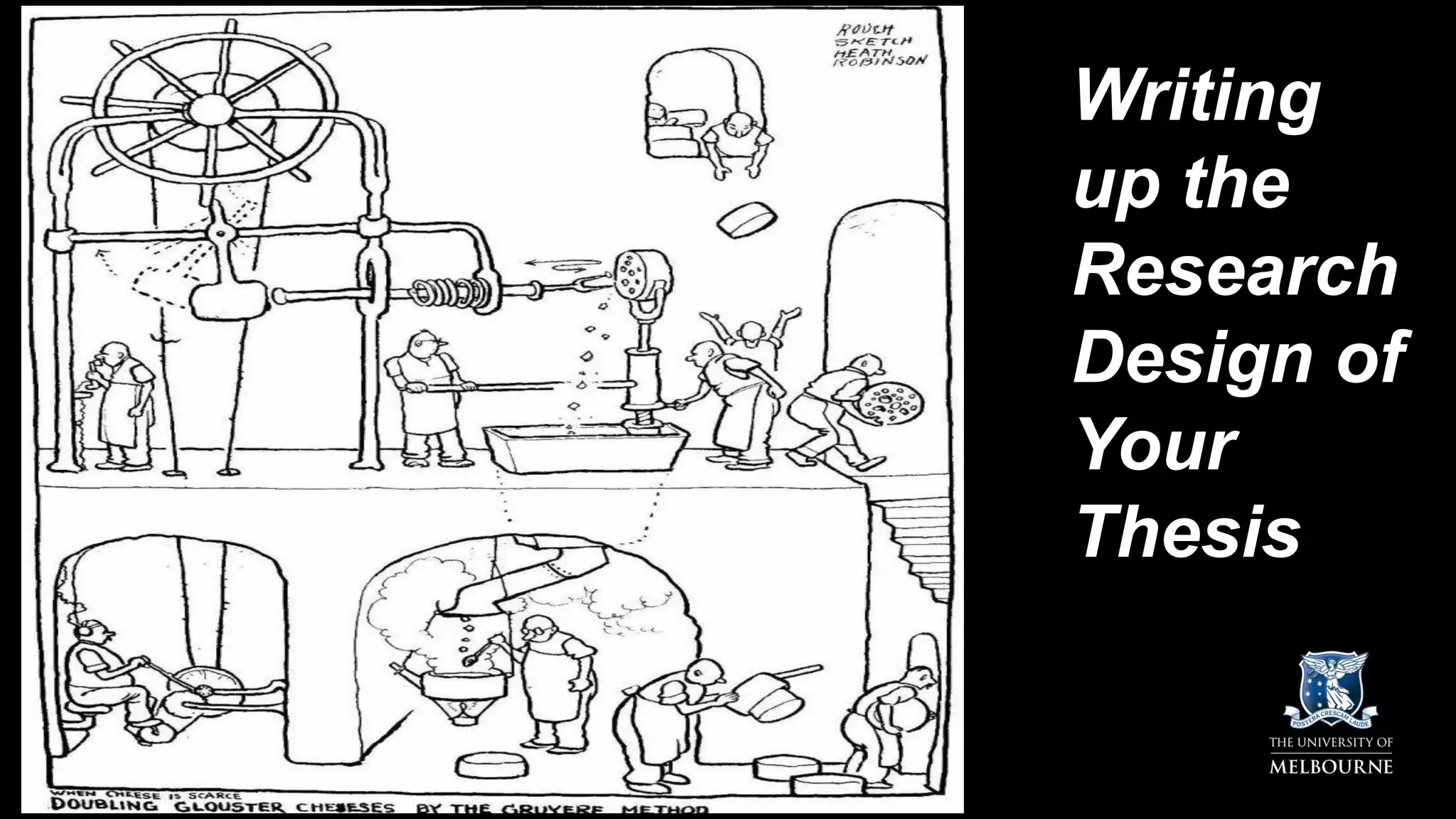
Writing
up the
Research
Design of
Your
Thesis
Research Design
Is about the structure and reasoning behind
the investigations you did.
Not just what you did – but how you arrived at
this set of investigations: the journey from
initial problem to data collection.
Two useful, but different terms for this part of
your thesis are METHODS and
METHODOLOGY.
Methodology Methods
Explains the reasoning and
thinking behind your choice
of methods.
Why have you chosen this
approach?
What did the literature say
about solving such problems
and how did it influence you?
Methods is part of your
methodology.
It details what you did,
your procedures, but like
Methodology, your many
choices must also be
justified.
Methodology
Justify your decisions:
Explain the thinking and decision-making
process that went behind your choice of an
experimental method
Defend your decisions:
Anticipate likely criticisms of your choices and
address them either in the literature review or in
your methods.
Aim
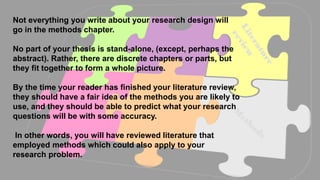
Not everything you write about your research design will
go in the methods chapter.
No part of your thesis is stand-alone, (except, perhaps the
abstract). Rather, there are discrete chapters or parts, but
they fit together to form a whole picture.
By the time your reader has finished your literature review,
they should have a fair idea of the methods you are likely to
use, and they should be able to predict what your research
questions will be with some accuracy.
In other words, you will have reviewed literature that
employed methods which could also apply to your
research problem.
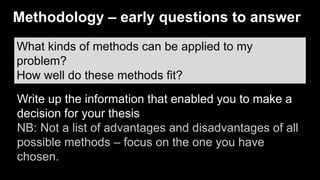
What kinds of methods can be applied to my
problem?
How well do these methods fit?
Write up the information that enabled you to make a
decision for your thesis
NB: Not a list of advantages and disadvantages of all
possible methods – focus on the one you have
chosen.
Methodology – early questions to answer
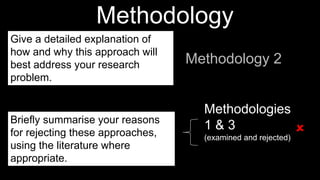
Methodologies
1 & 3
(examined and rejected)
Briefly summarise your reasons
for rejecting these approaches,
using the literature where
appropriate.
Give a detailed explanation of
how and why this approach will
best address your research
problem.
Methodology 2
Methodology

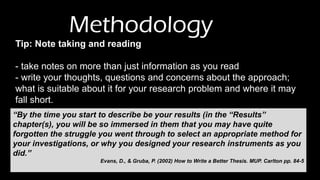
Methodology
“By the time you start to describe be your results (in the “Results”
chapter(s), you will be so immersed in them that you may have quite
forgotten the struggle you went through to select an appropriate method for
your investigations, or why you designed your research instruments as you
did.”
Evans, D., & Gruba, P. (2002) How to Write a Better Thesis. MUP. Carlton pp. 84-5
Tip: Note taking and reading
- take notes on more than just information as you read
- write your thoughts, questions and concerns about the approach;
what is suitable about it for your research problem and where it may
fall short.
Methodology
Through what theoretical
lens(es) are you viewing your
research problem?
What is the impact of this /
these on how you investigate
the problem?
What are your hypotheses?
Look at published theses in your discipline; find how and where they
have justified the choices they made in the design of their research.
?
Method
s
‘So is it just a list of procedures, like a
recipe?
Well not really, although this will form
part of your methods.
You will also need to explain the
decisions behind your research
design
‘write your methods with enough
detail to allow another researcher to
replicate what you have done’
Explain your Research decisions:
How did you determine the size of your
sample?
Methods
Why are you using interviews and not surveys, or surveys and not
interviews?
How did you decide how many trials to do?
Cite appropriate literature.
Argue your case with reasons.
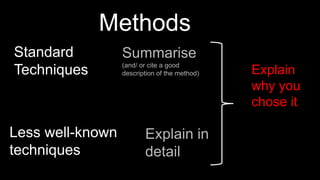
Standard
Techniques
Less well-known
techniques
Explain
why you
chose it
Summarise
(and/ or cite a good
description of the method)
Explain in
detail
Methods
Equipment and Procedures
Give details of:
- Any equipment, programmes or
software not widely used in your
discipline
- The specifications of any standard
equipment or programmes where
these may vary.
Methods
In summary:
Methodology explains the concepts behind your research
design.
Methods explain what you did in enough detail to enable your
reader to reproduce your results.
For both methodology and methods, you need to defend and
justify decisions you have made.
Methodology inevitably proceeds methods, but you should
organise your methods chapter(s) logically, in a way that most
clearly explains your research.

Research design slide show kd2

  • 1.
  • 2.
    Research Design Is aboutthe structure and reasoning behind the investigations you did. Not just what you did – but how you arrived at this set of investigations: the journey from initial problem to data collection. Two useful, but different terms for this part of your thesis are METHODS and METHODOLOGY.
  • 3.
    Methodology Methods Explains thereasoning and thinking behind your choice of methods. Why have you chosen this approach? What did the literature say about solving such problems and how did it influence you? Methods is part of your methodology. It details what you did, your procedures, but like Methodology, your many choices must also be justified.
  • 4.
    Methodology Justify your decisions: Explainthe thinking and decision-making process that went behind your choice of an experimental method Defend your decisions: Anticipate likely criticisms of your choices and address them either in the literature review or in your methods.
  • 5.
    Aim Not everything youwrite about your research design will go in the methods chapter. No part of your thesis is stand-alone, (except, perhaps the abstract). Rather, there are discrete chapters or parts, but they fit together to form a whole picture. By the time your reader has finished your literature review, they should have a fair idea of the methods you are likely to use, and they should be able to predict what your research questions will be with some accuracy. In other words, you will have reviewed literature that employed methods which could also apply to your research problem.
  • 6.
    What kinds ofmethods can be applied to my problem? How well do these methods fit? Write up the information that enabled you to make a decision for your thesis NB: Not a list of advantages and disadvantages of all possible methods – focus on the one you have chosen. Methodology – early questions to answer
  • 7.
    Methodologies 1 & 3 (examinedand rejected) Briefly summarise your reasons for rejecting these approaches, using the literature where appropriate. Give a detailed explanation of how and why this approach will best address your research problem. Methodology 2 Methodology 
  • 8.
    Methodology “By the timeyou start to describe be your results (in the “Results” chapter(s), you will be so immersed in them that you may have quite forgotten the struggle you went through to select an appropriate method for your investigations, or why you designed your research instruments as you did.” Evans, D., & Gruba, P. (2002) How to Write a Better Thesis. MUP. Carlton pp. 84-5 Tip: Note taking and reading - take notes on more than just information as you read - write your thoughts, questions and concerns about the approach; what is suitable about it for your research problem and where it may fall short.
  • 9.
    Methodology Through what theoretical lens(es)are you viewing your research problem? What is the impact of this / these on how you investigate the problem? What are your hypotheses? Look at published theses in your discipline; find how and where they have justified the choices they made in the design of their research.
  • 10.
    ? Method s ‘So is itjust a list of procedures, like a recipe? Well not really, although this will form part of your methods. You will also need to explain the decisions behind your research design ‘write your methods with enough detail to allow another researcher to replicate what you have done’
  • 11.
    Explain your Researchdecisions: How did you determine the size of your sample? Methods Why are you using interviews and not surveys, or surveys and not interviews? How did you decide how many trials to do? Cite appropriate literature. Argue your case with reasons.
  • 12.
    Standard Techniques Less well-known techniques Explain why you choseit Summarise (and/ or cite a good description of the method) Explain in detail Methods
  • 13.
    Equipment and Procedures Givedetails of: - Any equipment, programmes or software not widely used in your discipline - The specifications of any standard equipment or programmes where these may vary. Methods
  • 14.
    In summary: Methodology explainsthe concepts behind your research design. Methods explain what you did in enough detail to enable your reader to reproduce your results. For both methodology and methods, you need to defend and justify decisions you have made. Methodology inevitably proceeds methods, but you should organise your methods chapter(s) logically, in a way that most clearly explains your research.