MONOGRAPH
63
RESEARCH METHODOLOGY
Research
Methodolog
y
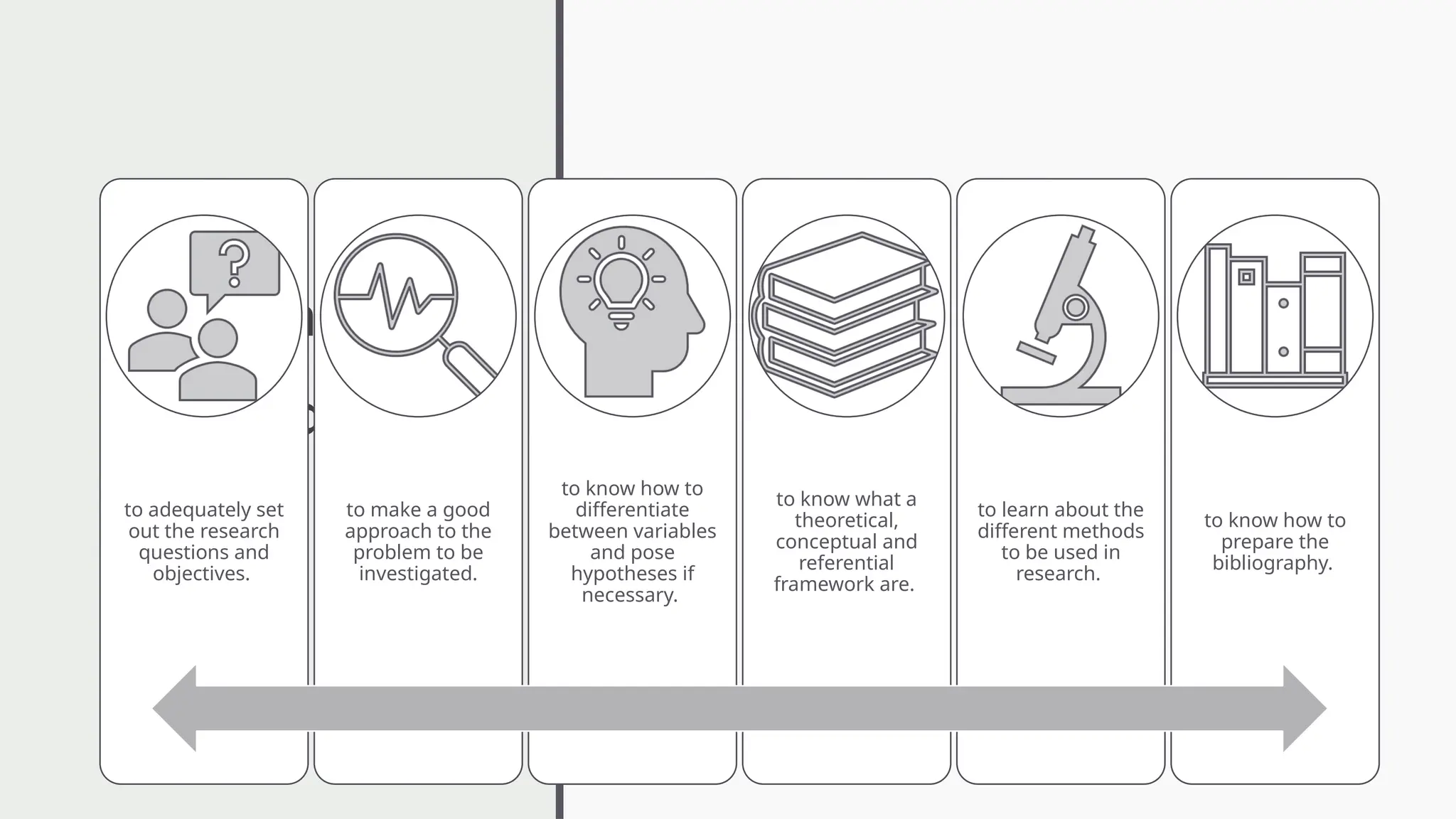
to adequately set
out the research
questions and
objectives.
to make a good
approach to the
problem to be
investigated.
to know how to
differentiate
between variables
and pose
hypotheses if
necessary.
to know what a
theoretical,
conceptual and
referential
framework are.
to learn about the
different methods
to be used in
research.
to know how to
prepare the
bibliography.
Research
Areas
The four major English language skills: Speaking, Listening, Reading, and Writing.
The linguistic subsystems of the English language: Sound (pronunciation), Grammar,
Vocabulary and Culture.
Methodology of Teaching English as a foreign language.
English Language Teaching/Learning Processes.
The acquisition of English as a second or foreign language.
Tics and/in the teaching of English as a foreign language.
20 hours
Meetings
Sunday,
March 2,
2025
Sunday,
March 9,
2025
Sunday,
March 15,
2025
Sunday,
March 22,
2025
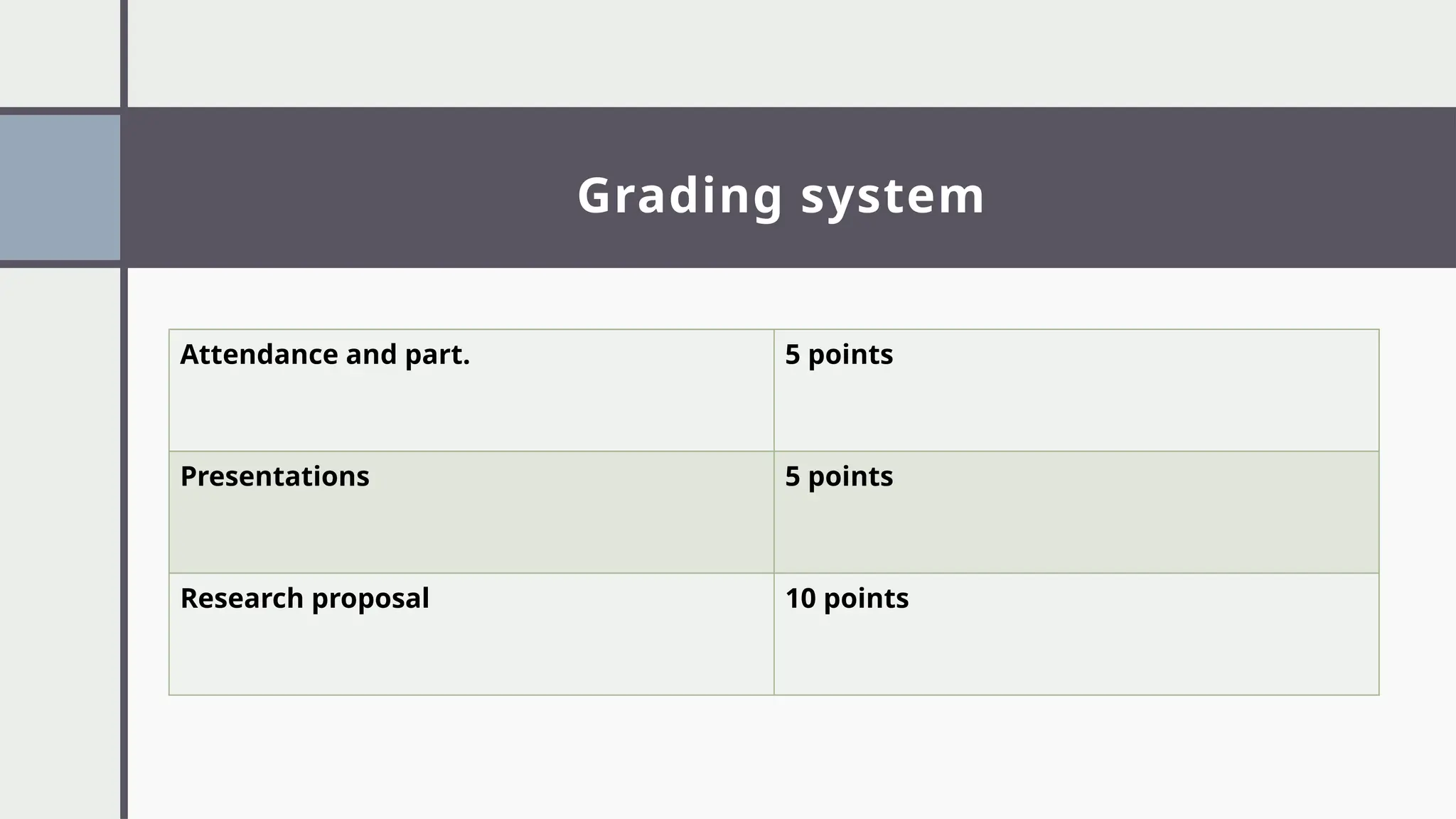
Attendance and part. 5 points
Presentations 5 points
Research proposal 10 points
Grading system
GOOGLE
CLASSROOM
kh42q
LET’S TEAM UP!
Research
topic
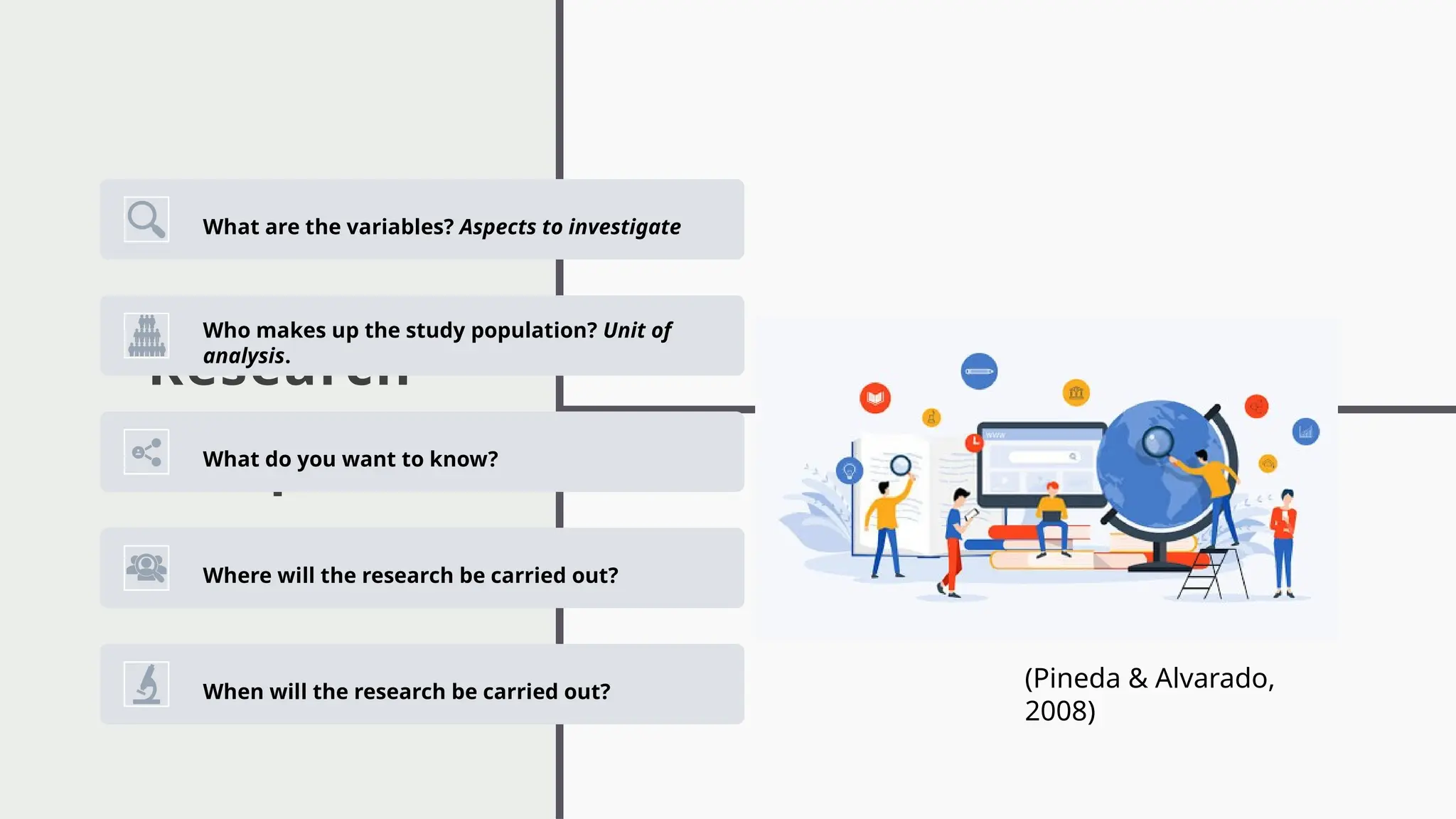
What are the variables? Aspects to investigate
Who makes up the study population? Unit of
analysis.
What do you want to know?
Where will the research be carried out?
When will the research be carried out?
(Pineda & Alvarado,
2008)
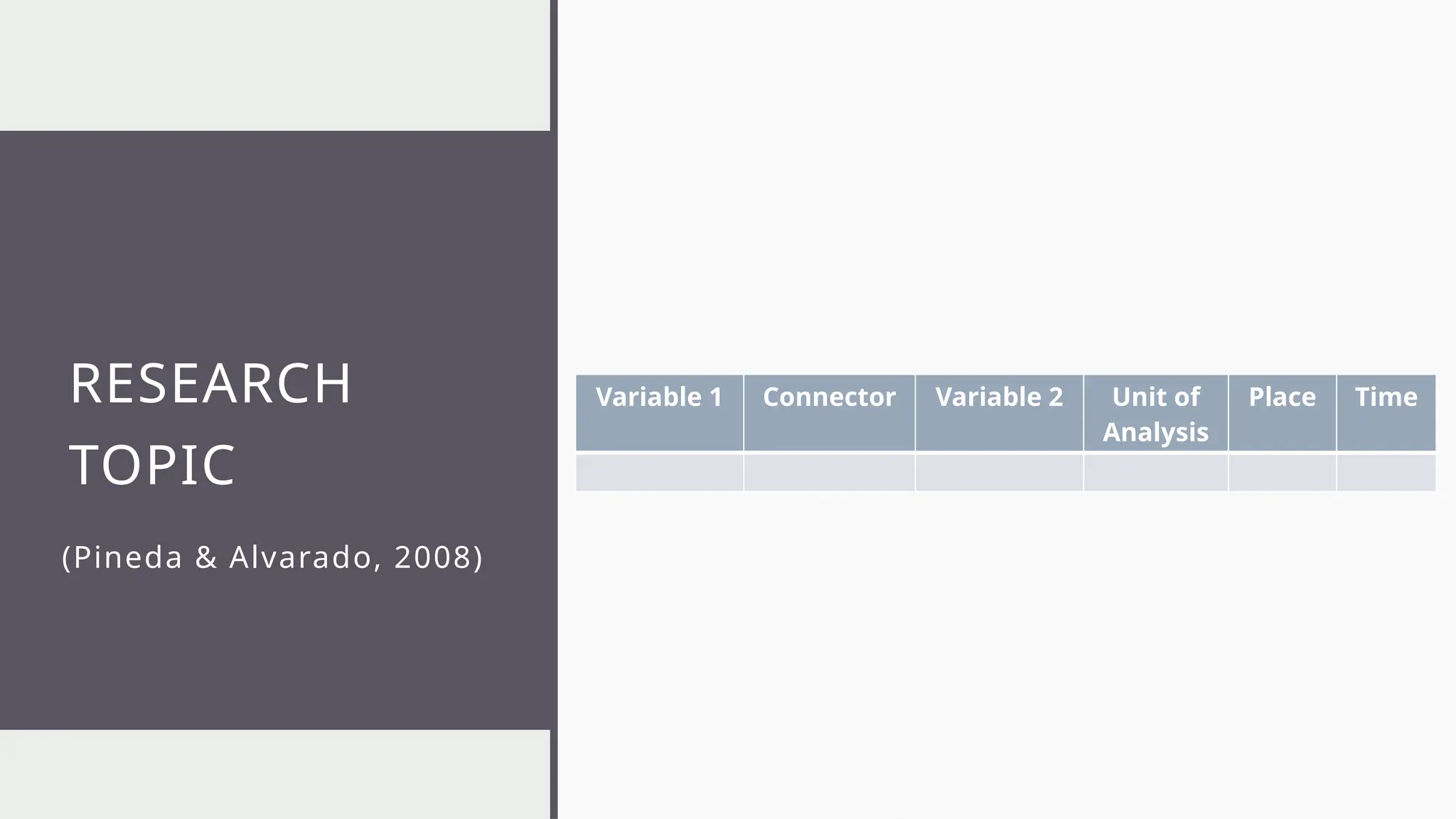
RESEARCH
TOPIC
(Pineda & Alvarado, 2008)
Variable 1 Connector Variable 2 Unit of
Analysis
Place Time
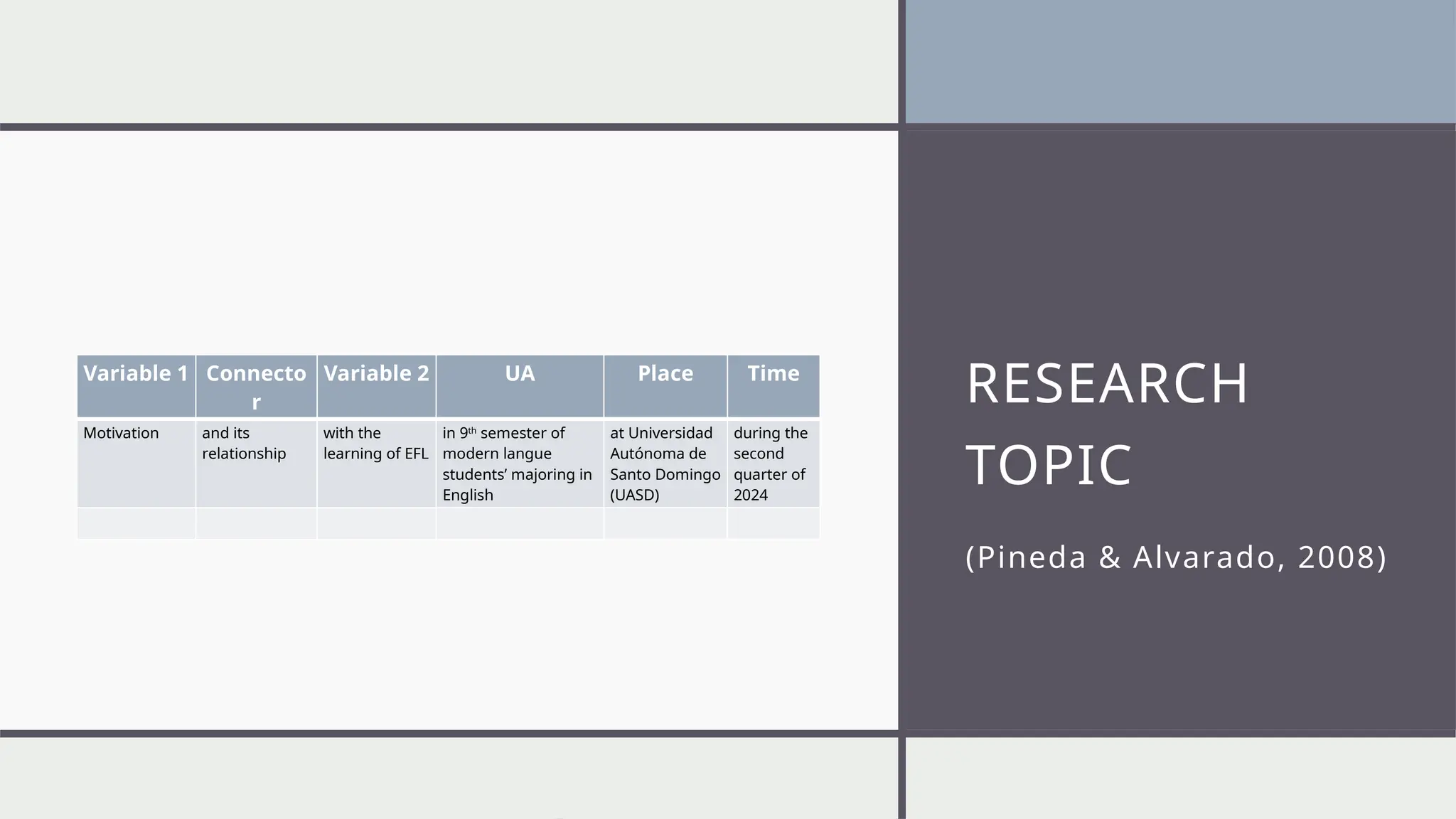
RESEARCH
TOPIC
(Pineda & Alvarado, 2008)
Variable 1 Connecto
r
Variable 2 UA Place Time
Motivation and its
relationship
with the
learning of EFL
in 9th
semester of
modern langue
students’ majoring in
English
at Universidad
Autónoma de
Santo Domingo
(UASD)
during the
second
quarter of
2024
MONOGRAPH
OUTLINE
Research proposal
 TABLE OF CONTENT
 ACKNOWLEDGMENTS
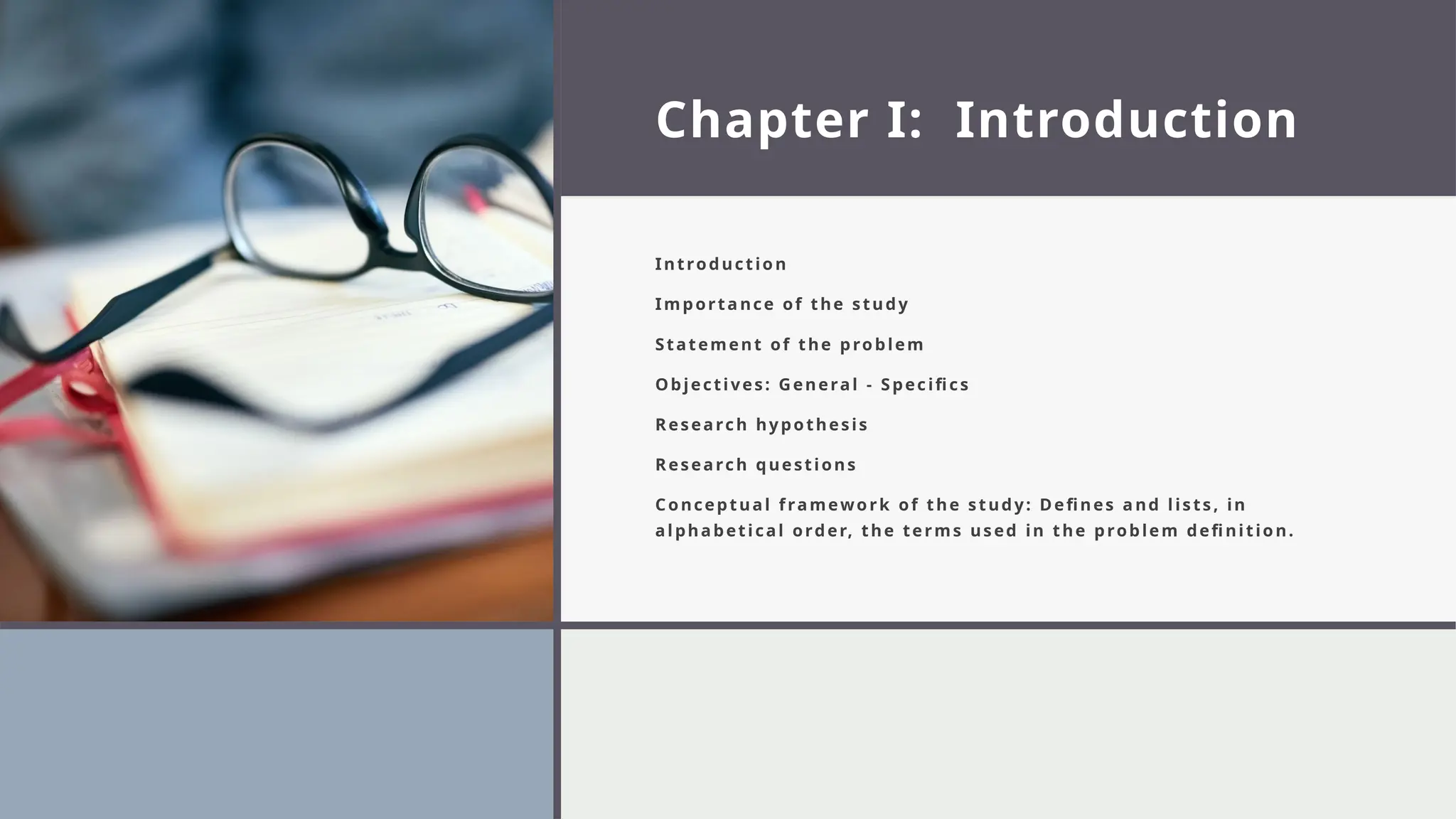
Chapter I: Introduction
Introduction
Importance of the study
Statement of the problem
Objectives: General - Specifics
Research hypothesis
Research questions
Conceptual framework of the study: Defines and lists, in
alphabetical order, the terms used in the problem definition.
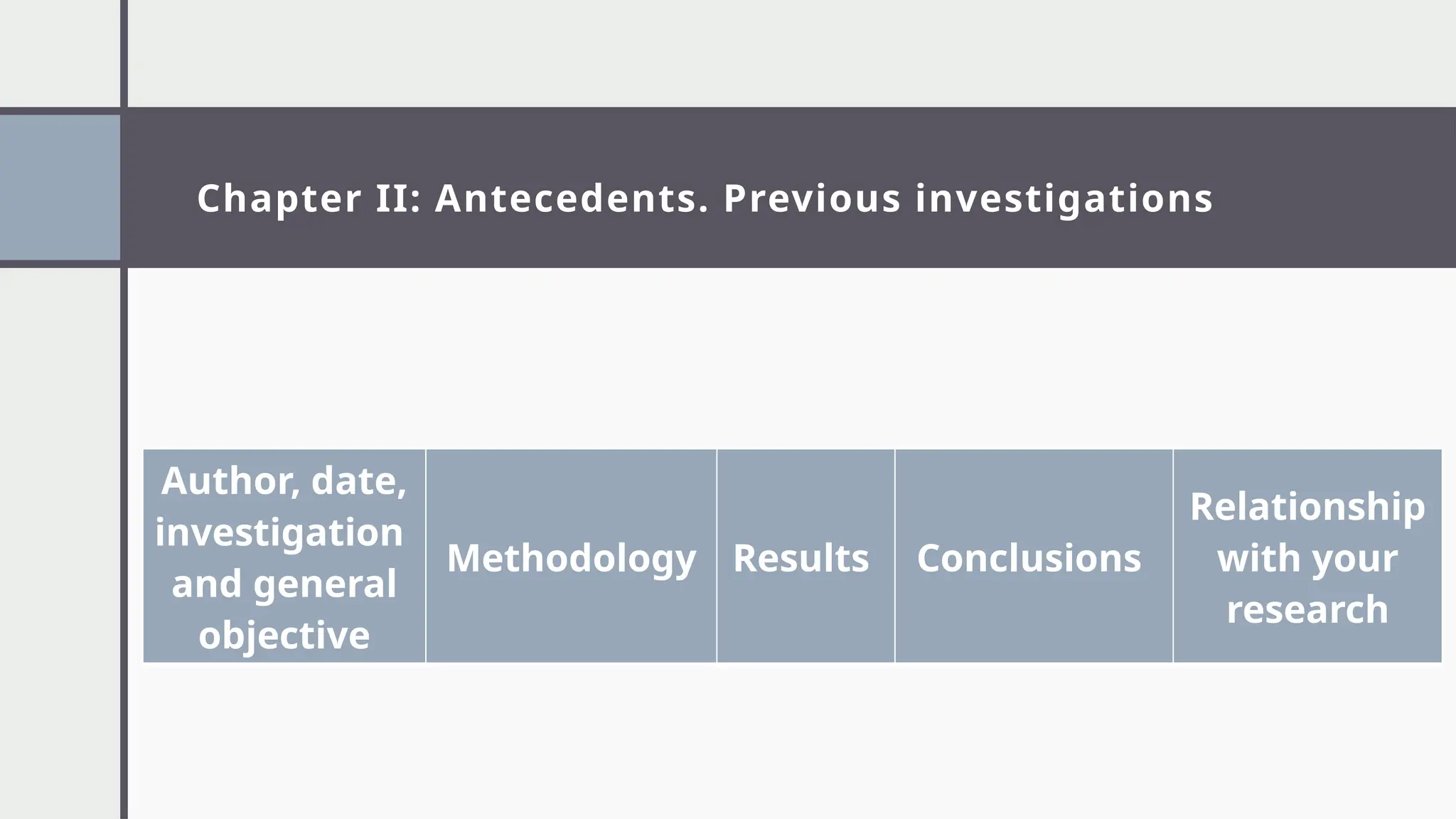
Chapter II: Antecedents. Previous investigations
Author, date,
investigation
and general
objective
Methodology Results Conclusions
Relationship
with your
research
CHAPTER III: REVIEW
OF RELATED
LITERATURE:
It is the organized support in theoretical and
referential arguments given to the research
problem.
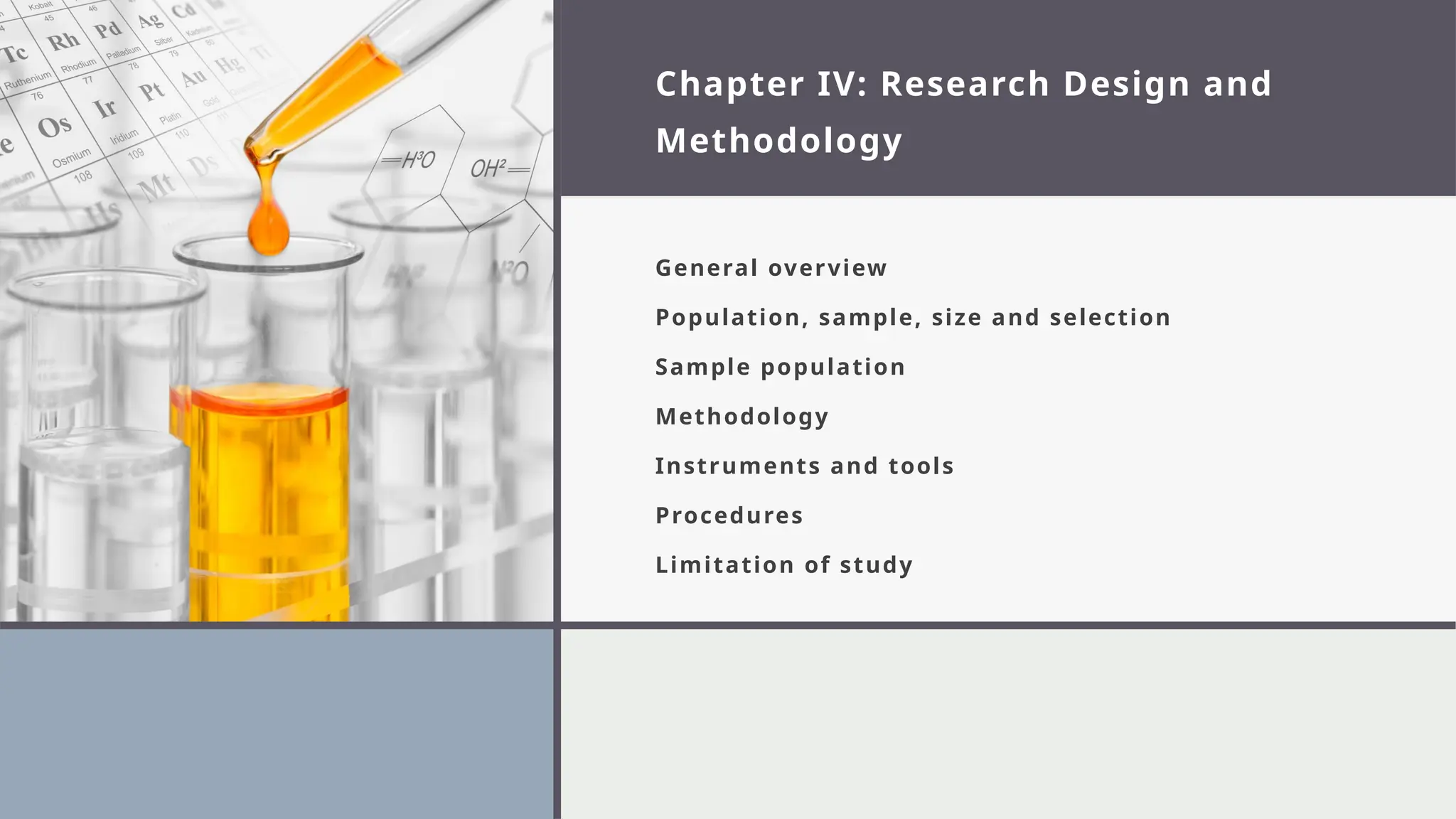
Chapter IV: Research Design and
Methodology
General overview
Population, sample, size and selection
Sample population
Methodology
Instruments and tools
Procedures
Limitation of study
Chapter V: Topic of the investigation, presentation and analysis of
the findings
Conclusions: The conclusions
should answer the question: What
results were found and what are
their benefits?
Recommendations: It is the logical
and well-founded argumentation,
proving or disproving the
hypothesis, and disclosing the
benefits or scope of the research.
Bibliography / References
It is listed in alphabetical order. It must comply
with the APA norms. It should be carefully
selected and written with precision, including
only those bibliographic citations that have
been consulted personally.
Appendixes
Important documents that were used,
research instruments, tables, laws, graphs,
etc
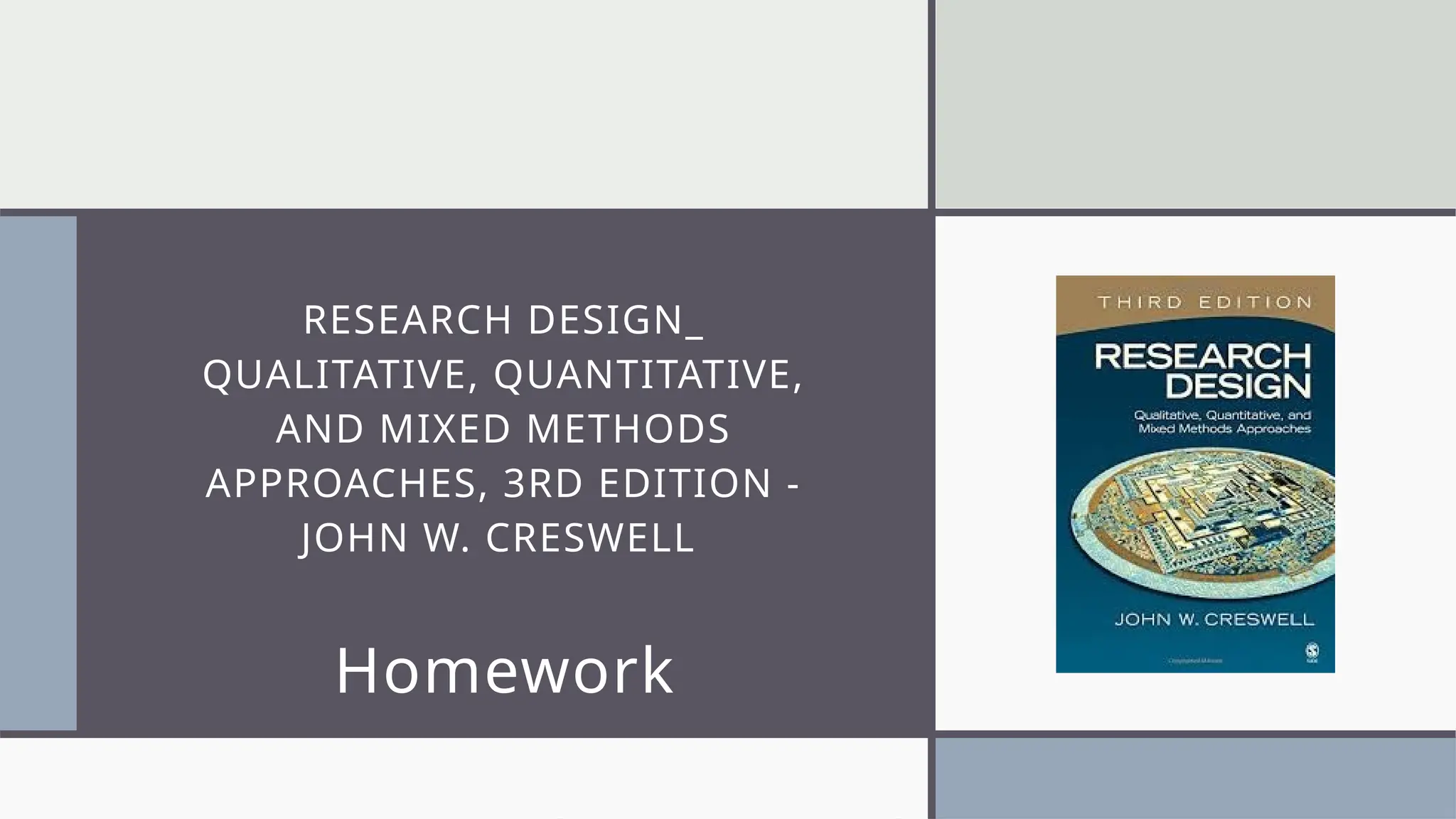
RESEARCH DESIGN_
QUALITATIVE, QUANTITATIVE,
AND MIXED METHODS
APPROACHES, 3RD EDITION -
JOHN W. CRESWELL
Homework
Homework
Presentations
CHAPTER TWO-Review of the Literature –
Group 1
CHAPTER THREE- The Use of Theory – Group 2
CHAPTER FOUR- Writing Strategies and Ethical
Considerations - Group 3
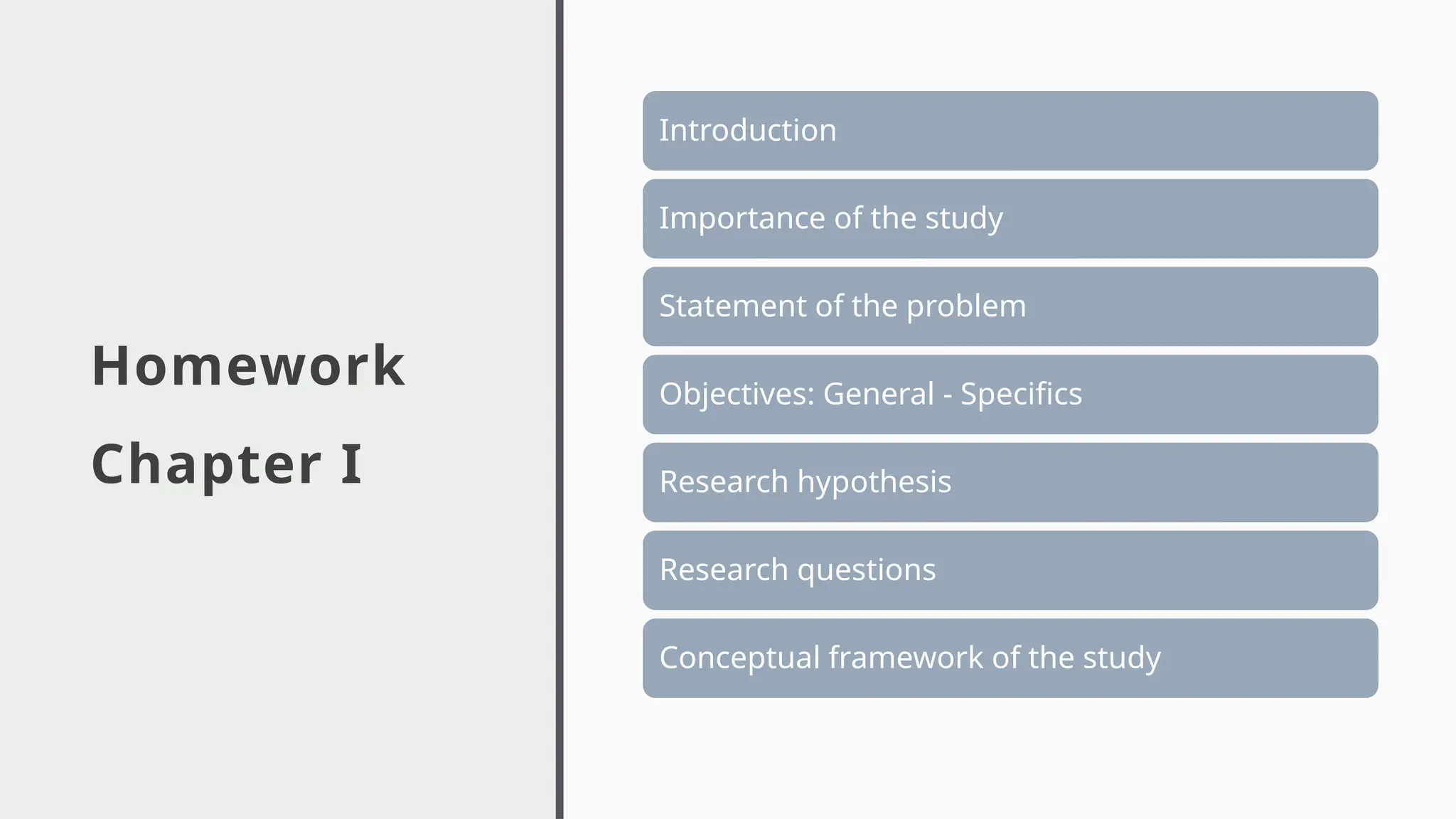
Homework
Chapter I
Introduction
Importance of the study
Statement of the problem
Objectives: General - Specifics
Research hypothesis
Research questions
Conceptual framework of the study


Research Methodology, Research topic, Presentation Questions

  • 1.
  • 2.
  • 3.
    Research Methodolog y to adequately set outthe research questions and objectives. to make a good approach to the problem to be investigated. to know how to differentiate between variables and pose hypotheses if necessary. to know what a theoretical, conceptual and referential framework are. to learn about the different methods to be used in research. to know how to prepare the bibliography.
  • 4.
    Research Areas The four majorEnglish language skills: Speaking, Listening, Reading, and Writing. The linguistic subsystems of the English language: Sound (pronunciation), Grammar, Vocabulary and Culture. Methodology of Teaching English as a foreign language. English Language Teaching/Learning Processes. The acquisition of English as a second or foreign language. Tics and/in the teaching of English as a foreign language.
  • 5.
  • 6.
  • 7.
    Attendance and part.5 points Presentations 5 points Research proposal 10 points Grading system
  • 8.
  • 9.
  • 10.
    Research topic What are thevariables? Aspects to investigate Who makes up the study population? Unit of analysis. What do you want to know? Where will the research be carried out? When will the research be carried out? (Pineda & Alvarado, 2008)
  • 11.
    RESEARCH TOPIC (Pineda & Alvarado,2008) Variable 1 Connector Variable 2 Unit of Analysis Place Time
  • 12.
    RESEARCH TOPIC (Pineda & Alvarado,2008) Variable 1 Connecto r Variable 2 UA Place Time Motivation and its relationship with the learning of EFL in 9th semester of modern langue students’ majoring in English at Universidad Autónoma de Santo Domingo (UASD) during the second quarter of 2024
  • 13.
  • 14.
     TABLE OFCONTENT  ACKNOWLEDGMENTS
  • 15.
    Chapter I: Introduction Introduction Importanceof the study Statement of the problem Objectives: General - Specifics Research hypothesis Research questions Conceptual framework of the study: Defines and lists, in alphabetical order, the terms used in the problem definition.
  • 16.
    Chapter II: Antecedents.Previous investigations Author, date, investigation and general objective Methodology Results Conclusions Relationship with your research
  • 17.
    CHAPTER III: REVIEW OFRELATED LITERATURE: It is the organized support in theoretical and referential arguments given to the research problem.
  • 18.
    Chapter IV: ResearchDesign and Methodology General overview Population, sample, size and selection Sample population Methodology Instruments and tools Procedures Limitation of study
  • 19.
    Chapter V: Topicof the investigation, presentation and analysis of the findings Conclusions: The conclusions should answer the question: What results were found and what are their benefits? Recommendations: It is the logical and well-founded argumentation, proving or disproving the hypothesis, and disclosing the benefits or scope of the research.
  • 20.
    Bibliography / References Itis listed in alphabetical order. It must comply with the APA norms. It should be carefully selected and written with precision, including only those bibliographic citations that have been consulted personally.
  • 21.
    Appendixes Important documents thatwere used, research instruments, tables, laws, graphs, etc
  • 22.
    RESEARCH DESIGN_ QUALITATIVE, QUANTITATIVE, ANDMIXED METHODS APPROACHES, 3RD EDITION - JOHN W. CRESWELL Homework
  • 23.
    Homework Presentations CHAPTER TWO-Review ofthe Literature – Group 1 CHAPTER THREE- The Use of Theory – Group 2 CHAPTER FOUR- Writing Strategies and Ethical Considerations - Group 3
  • 24.
    Homework Chapter I Introduction Importance ofthe study Statement of the problem Objectives: General - Specifics Research hypothesis Research questions Conceptual framework of the study