Publishing research

   MARTA ELLIOTT, PHD
    21, NOVEMBER 2012
SOCIAL RESEARCH INSTITUTE
  CHIANG MAI UNIVERSITY
Types of articles

 Literature Review


 Development of a theory


 Presentation of research results
   I only write this third type of paper so this is what I am going
    to discuss
Presenting research results

 Components of the paper
    Introduction (2-3 paragraphs)

    Overview of the literature and development of the research question
     or hypothesis

    Data and Methods

    Results

    Discussion

    Conclusion
Introduction and Literature Review

   Introduction (2-3 paragraphs)
       What is purpose of the paper? Why is it important?


   Overview of the literature and development of the research
    question or hypothesis
     What is already known about this topic?
     What remains to be learned?
     What will this study do to address the gap in the literature?
     What theory will this study apply to this research problem?
     What specific hypothesis will the study test?
Data and Methods

 Data
   What kind of data does this paper use to test its research
    questions? For instance:
     Surveys were distributed and collected
     An experiment was conducted

 Methods
   How were the data analyzed?
     How were important concepts be measured?
     What are the variables?
     How does the analysis test the hypothesis?
     How will you know whether or not you have supported the
      hypothesis?
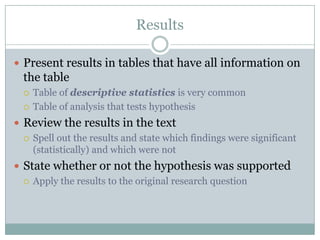
Results

 Present results in tables that have all information on
  the table
     Table of descriptive statistics is very common
     Table of analysis that tests hypothesis
 Review the results in the text
   Spell out the results and state which findings were significant
    (statistically) and which were not
 State whether or not the hypothesis was supported
   Apply the results to the original research question
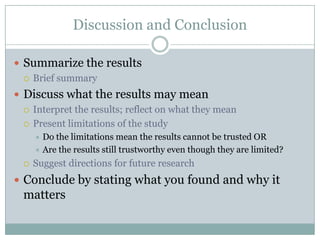
Discussion and Conclusion

 Summarize the results
   Brief summary

 Discuss what the results may mean
   Interpret the results; reflect on what they mean

   Present limitations of the study
       Do the limitations mean the results cannot be trusted OR
       Are the results still trustworthy even though they are limited?

     Suggest directions for future research
 Conclude by stating what you found and why it
  matters
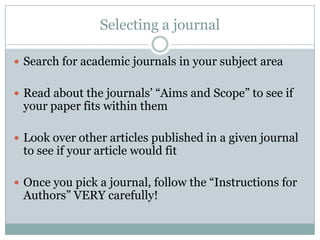
Selecting a journal

 Search for academic journals in your subject area


 Read about the journals’ “Aims and Scope” to see if
 your paper fits within them

 Look over other articles published in a given journal
 to see if your article would fit

 Once you pick a journal, follow the “Instructions for
 Authors” VERY carefully!
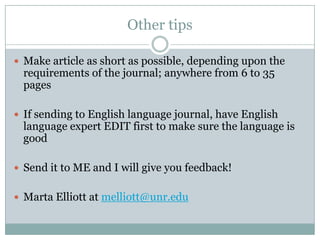
Other tips

 Make article as short as possible, depending upon the
 requirements of the journal; anywhere from 6 to 35
 pages

 If sending to English language journal, have English
 language expert EDIT first to make sure the language is
 good

 Send it to ME and I will give you feedback!


 Marta Elliott at melliott@unr.edu
Any Questions?


Thank you very much for
attending this lecture!

Publishing Research by Dr.Marta Elliot

  • 1.
    Publishing research MARTA ELLIOTT, PHD 21, NOVEMBER 2012 SOCIAL RESEARCH INSTITUTE CHIANG MAI UNIVERSITY
  • 2.
    Types of articles Literature Review  Development of a theory  Presentation of research results  I only write this third type of paper so this is what I am going to discuss
  • 3.
    Presenting research results Components of the paper  Introduction (2-3 paragraphs)  Overview of the literature and development of the research question or hypothesis  Data and Methods  Results  Discussion  Conclusion
  • 4.
    Introduction and LiteratureReview  Introduction (2-3 paragraphs)  What is purpose of the paper? Why is it important?  Overview of the literature and development of the research question or hypothesis  What is already known about this topic?  What remains to be learned?  What will this study do to address the gap in the literature?  What theory will this study apply to this research problem?  What specific hypothesis will the study test?
  • 5.
    Data and Methods Data  What kind of data does this paper use to test its research questions? For instance:  Surveys were distributed and collected  An experiment was conducted  Methods  How were the data analyzed?  How were important concepts be measured?  What are the variables?  How does the analysis test the hypothesis?  How will you know whether or not you have supported the hypothesis?
  • 6.
    Results  Present resultsin tables that have all information on the table  Table of descriptive statistics is very common  Table of analysis that tests hypothesis  Review the results in the text  Spell out the results and state which findings were significant (statistically) and which were not  State whether or not the hypothesis was supported  Apply the results to the original research question
  • 7.
    Discussion and Conclusion Summarize the results  Brief summary  Discuss what the results may mean  Interpret the results; reflect on what they mean  Present limitations of the study  Do the limitations mean the results cannot be trusted OR  Are the results still trustworthy even though they are limited?  Suggest directions for future research  Conclude by stating what you found and why it matters
  • 8.
    Selecting a journal Search for academic journals in your subject area  Read about the journals’ “Aims and Scope” to see if your paper fits within them  Look over other articles published in a given journal to see if your article would fit  Once you pick a journal, follow the “Instructions for Authors” VERY carefully!
  • 9.
    Other tips  Makearticle as short as possible, depending upon the requirements of the journal; anywhere from 6 to 35 pages  If sending to English language journal, have English language expert EDIT first to make sure the language is good  Send it to ME and I will give you feedback!  Marta Elliott at melliott@unr.edu
  • 10.
    Any Questions? Thank youvery much for attending this lecture!