




An Overview of Research Methods
and Research Design
• Concept on research design
• Different types of study designs in health research
• Concept on qualitative and quantitative research methods
Ashok Pandey
Nepal Health Research Council
Quiz 1: The process not needed in experimental
research is
a. Observational
b. Content analysis
c. Manipulation and replication
d. Controlling
Q. Which type of research provides the strongest
evidence about the existence of cause-and-effect
relationships?
a. Cross sectional descriptive
b. Cross sectional analytical
c. Non-interventional longitudinal study
d. Interventional study
What are research methods ?
(Concept on qualitative, quantitative and Mixed
Methods Research)
• Research methods are the strategies, processes or techniques utilized
in the collection of data or evidence for analysis in order to uncover
new information or create better understanding of a topic.
• There are different types of research methods which use different tools
for data collection.
Contd…
Qualitative Research gathers data about lived experiences, emotions or behaviours,
and the meanings individuals attach to them. It assists in enabling researchers to
gain a better understanding of complex concepts, social interactions or cultural
phenomena. This type of research is useful in the exploration of how or why things
have occurred, interpreting events and describing actions.
Quantitative Research gathers numerical data which can be ranked, measured or
categorised through statistical analysis. It assists with uncovering patterns or
relationships, and for making generalisations. This type of research is useful for
finding out how many, how much, how often, or to what extent.
Mixed Methods Research integrates both Qualitative and Quantitative Research.
It provides a holistic approach combining and analysing the statistical data with
deeper contextualised insights. Using Mixed Methods also
enables Triangulation, or verification, of the data from two or more sources.
Under the section of methodology, There are
1. Study methods
2. Study Design
3. Study sites
4. Data sources
4.1 Primary data sources
4.2 Secondary data
5. Sampling and sample size determination
6. Data collection tools (Primary: Questionnaires, guidelines, checklist, etc. Secondary: record
review, checklist, etc.)
7. Data collection techniques: observation, Interview, experts opinion
8. Data collection tool pretest
9. Methods of data analysis
9.1 Quantitative data analysis
9.2 Qualitative data analysis
10 Data analysis software
11. The reliability and validity analysis of the quantitative data
12. Inclusion criteria
13. Ethical consideration
14. Dissemination and utilization of the result
•Concept on research design
•Different types of study designs in health
research
Factors influencing research design
There is no best type of research design. It depends on:
• Purpose/area of the study
• Strength of evidence desirable
• Time and resource available
• Ethics
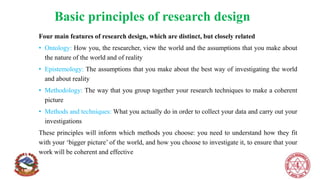
Basic principles of research design
Four main features of research design, which are distinct, but closely related
• Ontology: How you, the researcher, view the world and the assumptions that you make about
the nature of the world and of reality
• Epistemology: The assumptions that you make about the best way of investigating the world
and about reality
• Methodology: The way that you group together your research techniques to make a coherent
picture
• Methods and techniques: What you actually do in order to collect your data and carry out your
investigations
These principles will inform which methods you choose: you need to understand how they fit
with your ‘bigger picture’ of the world, and how you choose to investigate it, to ensure that your
work will be coherent and effective
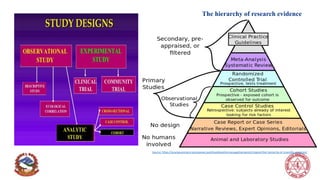
The hierarchy of research evidence
Source: https://ecampusontario.pressbooks.pub/handbookformassagetherapists/chapter/the-hierarchy-of-scientific-evidence/
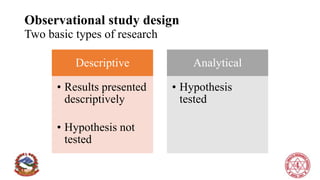
Observational study design
Two basic types of research
Descriptive
• Results presented
descriptively
• Hypothesis not
tested
Analytical
• Hypothesis
tested
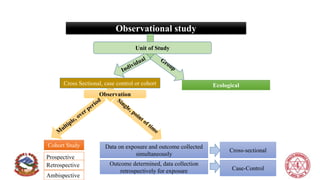
Observational study
EcologicalCross Sectional, case control or cohort
Unit of Study
Cohort Study
Observation
Data on exposure and outcome collected
simultaneously
Outcome determined, data collection
retrospectively for exposure
Cross-sectional
Case-Control
Prospective
Retrospective
Ambispective
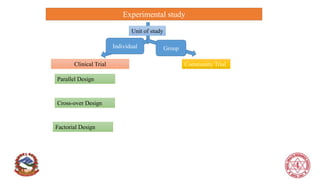
Experimental study
Investigators intervene in the
natural history by actively
altering one of the variables and
then making inference on the
relationship between variables
based on the outcomes.
8/1/2020 4:36 PM
Experimental study can evaluate
• New drugs and new treatment of diseases
• New medical and health care technology
• New methods of primary prevention
• New program for screening
• New ways of organizing and delivering health
services
• New community health programs
• New behavioral intervention programs
8/1/2020 4:36 PM
Experimental study
Unit of study
Community TrialClinical Trial
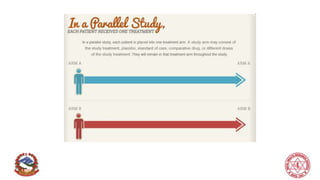
Parallel Design
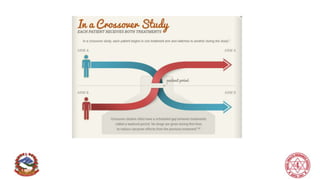
Cross-over Design
Factorial Design
GroupIndividual
• Factorial experiments involve simultaneously more than
one factor and each factor is at two or more levels.
• Several factors affect simultaneously the characteristic
under study in factorial experiments and the experimenter is
interested in the main effects and the interaction effects
among different factors.
Factorial Design
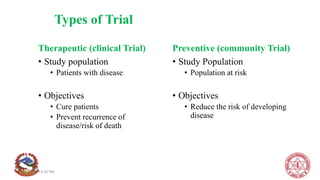
Types of Trial
Therapeutic (clinical Trial)
• Study population
• Patients with disease
• Objectives
• Cure patients
• Prevent recurrence of
disease/risk of death
Preventive (community Trial)
• Study Population
• Population at risk
• Objectives
• Reduce the risk of developing
disease
8/1/2020 4:36 PM
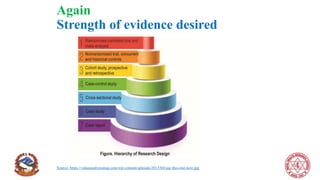
Again
Strength of evidence desired
Source: https://valueanalysismag.com/wp-content/uploads/2013/04/use-this-one-now.jpg
Time and resource available
Framingham Heart Study
-The study began in 1948 with 5,209 adult subjects
-Study had been intended to last 20 years, the study continued, and in 1971, it
enrolled a second generation of participants
-April 2002, a third generation was enrolled in the core study
-Over 1000 medical papers have been published related to the Framingham Heart
Study.
Other: British Doctors study(1951), Nurses’ Health Study(1976)
Harvard’s longest study of adult life reveals how you
can be happier and more successful
In the past 80 years, the researchers tracked the lives of 724 men,
following up with each one on an annual basis to ask about their work,
home lives and
The study revealed:
• “how happy we are in our relationships has a powerful influence on
our health”
• “embracing community helps us live longer, and be happier health.”
• “Close relationships, more than money or fame, are what keep people
happy throughout their lives”
"The people who were the most satisfied in their relationships at age 50
were the healthiest at age 80,” said Robert Waldinger
For more details
8/1/2020 4:36 PM
Thank You

Research design andmethods

  • 1.
    An Overview ofResearch Methods and Research Design • Concept on research design • Different types of study designs in health research • Concept on qualitative and quantitative research methods Ashok Pandey Nepal Health Research Council
  • 2.
    Quiz 1: Theprocess not needed in experimental research is a. Observational b. Content analysis c. Manipulation and replication d. Controlling
  • 3.
    Q. Which typeof research provides the strongest evidence about the existence of cause-and-effect relationships? a. Cross sectional descriptive b. Cross sectional analytical c. Non-interventional longitudinal study d. Interventional study
  • 4.
    What are researchmethods ? (Concept on qualitative, quantitative and Mixed Methods Research) • Research methods are the strategies, processes or techniques utilized in the collection of data or evidence for analysis in order to uncover new information or create better understanding of a topic. • There are different types of research methods which use different tools for data collection.
  • 5.
    Contd… Qualitative Research gathersdata about lived experiences, emotions or behaviours, and the meanings individuals attach to them. It assists in enabling researchers to gain a better understanding of complex concepts, social interactions or cultural phenomena. This type of research is useful in the exploration of how or why things have occurred, interpreting events and describing actions. Quantitative Research gathers numerical data which can be ranked, measured or categorised through statistical analysis. It assists with uncovering patterns or relationships, and for making generalisations. This type of research is useful for finding out how many, how much, how often, or to what extent. Mixed Methods Research integrates both Qualitative and Quantitative Research. It provides a holistic approach combining and analysing the statistical data with deeper contextualised insights. Using Mixed Methods also enables Triangulation, or verification, of the data from two or more sources.
  • 6.
    Under the sectionof methodology, There are 1. Study methods 2. Study Design 3. Study sites 4. Data sources 4.1 Primary data sources 4.2 Secondary data 5. Sampling and sample size determination 6. Data collection tools (Primary: Questionnaires, guidelines, checklist, etc. Secondary: record review, checklist, etc.)
  • 7.
    7. Data collectiontechniques: observation, Interview, experts opinion 8. Data collection tool pretest 9. Methods of data analysis 9.1 Quantitative data analysis 9.2 Qualitative data analysis 10 Data analysis software 11. The reliability and validity analysis of the quantitative data 12. Inclusion criteria 13. Ethical consideration 14. Dissemination and utilization of the result
  • 8.
    •Concept on researchdesign •Different types of study designs in health research
  • 9.
    Factors influencing researchdesign There is no best type of research design. It depends on: • Purpose/area of the study • Strength of evidence desirable • Time and resource available • Ethics
  • 10.
    Basic principles ofresearch design Four main features of research design, which are distinct, but closely related • Ontology: How you, the researcher, view the world and the assumptions that you make about the nature of the world and of reality • Epistemology: The assumptions that you make about the best way of investigating the world and about reality • Methodology: The way that you group together your research techniques to make a coherent picture • Methods and techniques: What you actually do in order to collect your data and carry out your investigations These principles will inform which methods you choose: you need to understand how they fit with your ‘bigger picture’ of the world, and how you choose to investigate it, to ensure that your work will be coherent and effective
  • 11.
    The hierarchy ofresearch evidence Source: https://ecampusontario.pressbooks.pub/handbookformassagetherapists/chapter/the-hierarchy-of-scientific-evidence/
  • 12.
    Observational study design Twobasic types of research Descriptive • Results presented descriptively • Hypothesis not tested Analytical • Hypothesis tested
  • 13.
    Observational study EcologicalCross Sectional,case control or cohort Unit of Study Cohort Study Observation Data on exposure and outcome collected simultaneously Outcome determined, data collection retrospectively for exposure Cross-sectional Case-Control Prospective Retrospective Ambispective
  • 14.
    Experimental study Investigators intervenein the natural history by actively altering one of the variables and then making inference on the relationship between variables based on the outcomes. 8/1/2020 4:36 PM
  • 15.
    Experimental study canevaluate • New drugs and new treatment of diseases • New medical and health care technology • New methods of primary prevention • New program for screening • New ways of organizing and delivering health services • New community health programs • New behavioral intervention programs 8/1/2020 4:36 PM
  • 16.
    Experimental study Unit ofstudy Community TrialClinical Trial Parallel Design Cross-over Design Factorial Design GroupIndividual
  • 19.
    • Factorial experimentsinvolve simultaneously more than one factor and each factor is at two or more levels. • Several factors affect simultaneously the characteristic under study in factorial experiments and the experimenter is interested in the main effects and the interaction effects among different factors. Factorial Design
  • 20.
    Types of Trial Therapeutic(clinical Trial) • Study population • Patients with disease • Objectives • Cure patients • Prevent recurrence of disease/risk of death Preventive (community Trial) • Study Population • Population at risk • Objectives • Reduce the risk of developing disease 8/1/2020 4:36 PM
  • 21.
    Again Strength of evidencedesired Source: https://valueanalysismag.com/wp-content/uploads/2013/04/use-this-one-now.jpg
  • 22.
    Time and resourceavailable Framingham Heart Study -The study began in 1948 with 5,209 adult subjects -Study had been intended to last 20 years, the study continued, and in 1971, it enrolled a second generation of participants -April 2002, a third generation was enrolled in the core study -Over 1000 medical papers have been published related to the Framingham Heart Study. Other: British Doctors study(1951), Nurses’ Health Study(1976)
  • 23.
    Harvard’s longest studyof adult life reveals how you can be happier and more successful In the past 80 years, the researchers tracked the lives of 724 men, following up with each one on an annual basis to ask about their work, home lives and The study revealed: • “how happy we are in our relationships has a powerful influence on our health” • “embracing community helps us live longer, and be happier health.” • “Close relationships, more than money or fame, are what keep people happy throughout their lives” "The people who were the most satisfied in their relationships at age 50 were the healthiest at age 80,” said Robert Waldinger
  • 24.
  • 25.