COPD CHRONIC OBSTRUCTIVE PULMONARY DISEASE
According to  American Thoracic Society, COPD is defined as A disorder characterized by abnormal test of expiratory flow (structural or functional) that do not change markedly over periods of several months of obstruction. It is a  progressive  disease that makes it hard to breath.  Progressive  means this gets worse over time
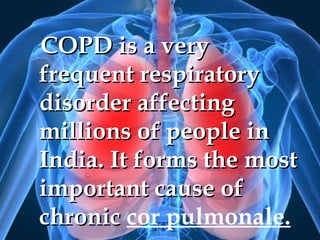
COPD is a very frequent respiratory disorder affecting millions of people in India. It forms the most important cause of chronic  cor pulmonale.
 
SYNONYMS Chronic obstructive lung disease (COLD) Chronic obstructive airways disease (COAD) Chronic airflow obstruction (CAO)
COPD is a common term applied to CHRONIC BRONCHITIS EMPHYSEMA Small airways disease ASTHMA  NOT included in COPD
CHRONIC BRONCHITIS
Chronic bronchitis  is defined on the basis of the history as Cough productive of sputum on most days for at least three months of the year for more than one year.
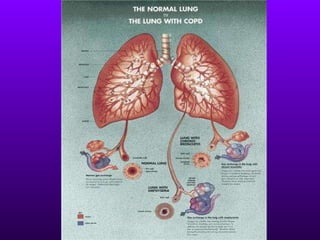
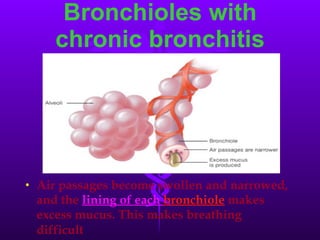
Air passages become swollen and narrowed, and the   lining of each  bronchiole   makes excess mucus. This makes breathing difficult   Bronchioles with chronic bronchitis
EMPHYSEMA
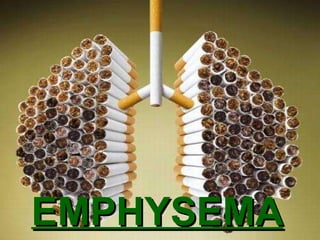
. • Emphysema   is defined pathologically as Dilatation and destruction of the lung tissue distal to the terminal bronchioles
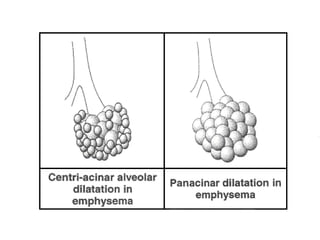
Emphysema classified according to site of damage :   • Centri-acinar emphysema :Distension and damage of lung tissue is concentrated around the respiratory bronchioles,whilst the more distal alveolar ducts and alveoli tend to be well preserved.This form of emphysema is extremely common;when of modest extent,it is not necessarily associated with disability.   
• Pan-acinar emphysema :. This is less common.Here,distension and destruction appear to involve the whole of the acinus,and in the extreme form the lung becomes a mass of bullae. Severe airflow limitation and VA/Q mismatch occur.  • Occurs in  alpha1-antitrypsin deficiency
Irregular emphysema :There is  scarring and damage affecting the lung parenchyma patchily without particular regard for acinar structure.  
 
Clinical observations  led to suggestions that there were two distinct type of patients TYPE-A   fighter is   pink and puffing. Although the person is breathless,arterial tensions of oxygen and carbon dioxide are normal and there is   no cor pulmonale .These individuals were thought to be suffering predominantly from  emphysema with   little   emphysema.
TYPE-B  non-fighter,on the other   hand,is   blue and bloated  . The person does not appear to be breathless but has marked arterial hypoxemia,carbon dioxide retention,secondary polycythemia and cor pulmonale.these patients were thought to be suffering predominantly from  chronic bronchitis.
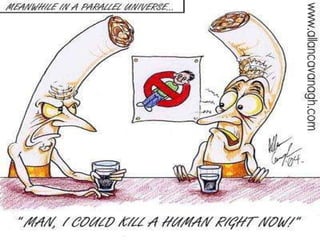
WHAT CAUSES COPD? COPD is usually related to a history of  tobacco smoking,cigarette smoking,pipe&cigar smoke . Breathing in  air pollution  and  chemical fumes or dust from the environment  or workplace also can contribute to COPD. In rare cases a genetic condition called  alpha1-antitrypsin deficiency  may play a role in causing COPD
 
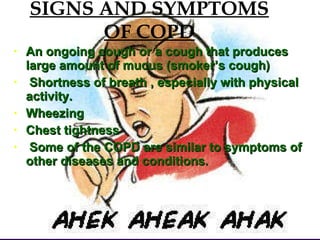
SIGNS AND SYMPTOMS OF COPD An ongoing cough or a cough that produces large amount of mucus (smoker’s cough) Shortness of breath , especially with physical activity. Wheezing Chest tightness Some of the COPD are similar to symptoms of other diseases and conditions.
 
INVESTIGATIONS LUNG FNCTION TESTS :  show evidence of airflow limitation. The ratio of FEV 1  to FVC is reduced and PEFR is low. Lung volumes may be normal or increased, and the gas transfer coefficient of CO is low when significant emphysema is present.
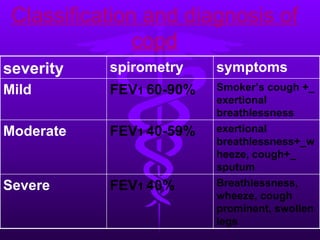
Classification and diagnosis of copd Breathlessness, wheeze, cough prominent, swollen legs FEV 1  40% Severe exertional  breathlessness+_wheeze, cough+_ sputum FEV 1  40-59% Moderate Smoker’s cough +_ exertional  breathlessness FEV 1  60-90% Mild symptoms spirometry severity
CHEST X-RAY   is often normal, even when the disease is advanced. Classic features are presence of bullae, severe overinflation of lungs with low, flattened diaphragms, a large retrosternal airspace on the lateral film. Hb-LEVEL AND PCV   can be elevated as a result of persistent hypoxemia. BLOOD GASES   are often normal. In the advanced case there is evidence of hypoxemia and hypercapnia .  SPUTUM  examination unnecessary in ordinary cases. ECG:   In corpulmonale the P-wave is taller (P-pulmonale) ECHOCARDIOGRAM:   to assess cardiac function ALPHA1-ANTITRYPSIN : normal range is 2-4 g/L
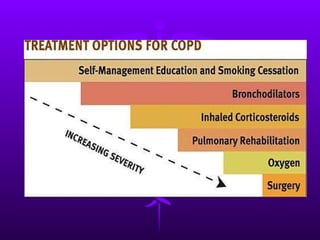
The single most important aspect in management of COPD is to persuade the patient to stop smoking. TREATMENT
 
DRUG THERAPY This is used both for the short-term management of exacerbations and for long term relief of symptoms.
PREVENTION
 
 
IF NOT PREVENTED
 
PRESENTED BY: RENU SHARDA 2008 BATCH

COPD

  • 1.
    COPD CHRONIC OBSTRUCTIVEPULMONARY DISEASE
  • 2.
    According to American Thoracic Society, COPD is defined as A disorder characterized by abnormal test of expiratory flow (structural or functional) that do not change markedly over periods of several months of obstruction. It is a progressive disease that makes it hard to breath. Progressive means this gets worse over time
  • 3.
    COPD is avery frequent respiratory disorder affecting millions of people in India. It forms the most important cause of chronic cor pulmonale.
  • 4.
  • 5.
    SYNONYMS Chronic obstructivelung disease (COLD) Chronic obstructive airways disease (COAD) Chronic airflow obstruction (CAO)
  • 6.
    COPD is acommon term applied to CHRONIC BRONCHITIS EMPHYSEMA Small airways disease ASTHMA NOT included in COPD
  • 7.
  • 8.
    Chronic bronchitis is defined on the basis of the history as Cough productive of sputum on most days for at least three months of the year for more than one year.
  • 9.
    Air passages becomeswollen and narrowed, and the lining of each bronchiole makes excess mucus. This makes breathing difficult Bronchioles with chronic bronchitis
  • 10.
  • 11.
    . • Emphysema is defined pathologically as Dilatation and destruction of the lung tissue distal to the terminal bronchioles
  • 12.
    Emphysema classified accordingto site of damage : • Centri-acinar emphysema :Distension and damage of lung tissue is concentrated around the respiratory bronchioles,whilst the more distal alveolar ducts and alveoli tend to be well preserved.This form of emphysema is extremely common;when of modest extent,it is not necessarily associated with disability.  
  • 13.
    • Pan-acinar emphysema:. This is less common.Here,distension and destruction appear to involve the whole of the acinus,and in the extreme form the lung becomes a mass of bullae. Severe airflow limitation and VA/Q mismatch occur. • Occurs in alpha1-antitrypsin deficiency
  • 14.
    Irregular emphysema :Thereis scarring and damage affecting the lung parenchyma patchily without particular regard for acinar structure.  
  • 15.
  • 16.
    Clinical observations led to suggestions that there were two distinct type of patients TYPE-A fighter is pink and puffing. Although the person is breathless,arterial tensions of oxygen and carbon dioxide are normal and there is no cor pulmonale .These individuals were thought to be suffering predominantly from emphysema with little emphysema.
  • 17.
    TYPE-B non-fighter,onthe other hand,is blue and bloated . The person does not appear to be breathless but has marked arterial hypoxemia,carbon dioxide retention,secondary polycythemia and cor pulmonale.these patients were thought to be suffering predominantly from chronic bronchitis.
  • 18.
    WHAT CAUSES COPD?COPD is usually related to a history of tobacco smoking,cigarette smoking,pipe&cigar smoke . Breathing in air pollution and chemical fumes or dust from the environment or workplace also can contribute to COPD. In rare cases a genetic condition called alpha1-antitrypsin deficiency may play a role in causing COPD
  • 19.
  • 20.
    SIGNS AND SYMPTOMSOF COPD An ongoing cough or a cough that produces large amount of mucus (smoker’s cough) Shortness of breath , especially with physical activity. Wheezing Chest tightness Some of the COPD are similar to symptoms of other diseases and conditions.
  • 21.
  • 22.
    INVESTIGATIONS LUNG FNCTIONTESTS : show evidence of airflow limitation. The ratio of FEV 1 to FVC is reduced and PEFR is low. Lung volumes may be normal or increased, and the gas transfer coefficient of CO is low when significant emphysema is present.
  • 23.
    Classification and diagnosisof copd Breathlessness, wheeze, cough prominent, swollen legs FEV 1 40% Severe exertional breathlessness+_wheeze, cough+_ sputum FEV 1 40-59% Moderate Smoker’s cough +_ exertional breathlessness FEV 1 60-90% Mild symptoms spirometry severity
  • 24.
    CHEST X-RAY is often normal, even when the disease is advanced. Classic features are presence of bullae, severe overinflation of lungs with low, flattened diaphragms, a large retrosternal airspace on the lateral film. Hb-LEVEL AND PCV can be elevated as a result of persistent hypoxemia. BLOOD GASES are often normal. In the advanced case there is evidence of hypoxemia and hypercapnia . SPUTUM examination unnecessary in ordinary cases. ECG: In corpulmonale the P-wave is taller (P-pulmonale) ECHOCARDIOGRAM: to assess cardiac function ALPHA1-ANTITRYPSIN : normal range is 2-4 g/L
  • 25.
    The single mostimportant aspect in management of COPD is to persuade the patient to stop smoking. TREATMENT
  • 26.
  • 27.
    DRUG THERAPY Thisis used both for the short-term management of exacerbations and for long term relief of symptoms.
  • 28.
  • 29.
  • 30.
  • 31.
  • 32.
  • 33.
    PRESENTED BY: RENUSHARDA 2008 BATCH