What is energy?


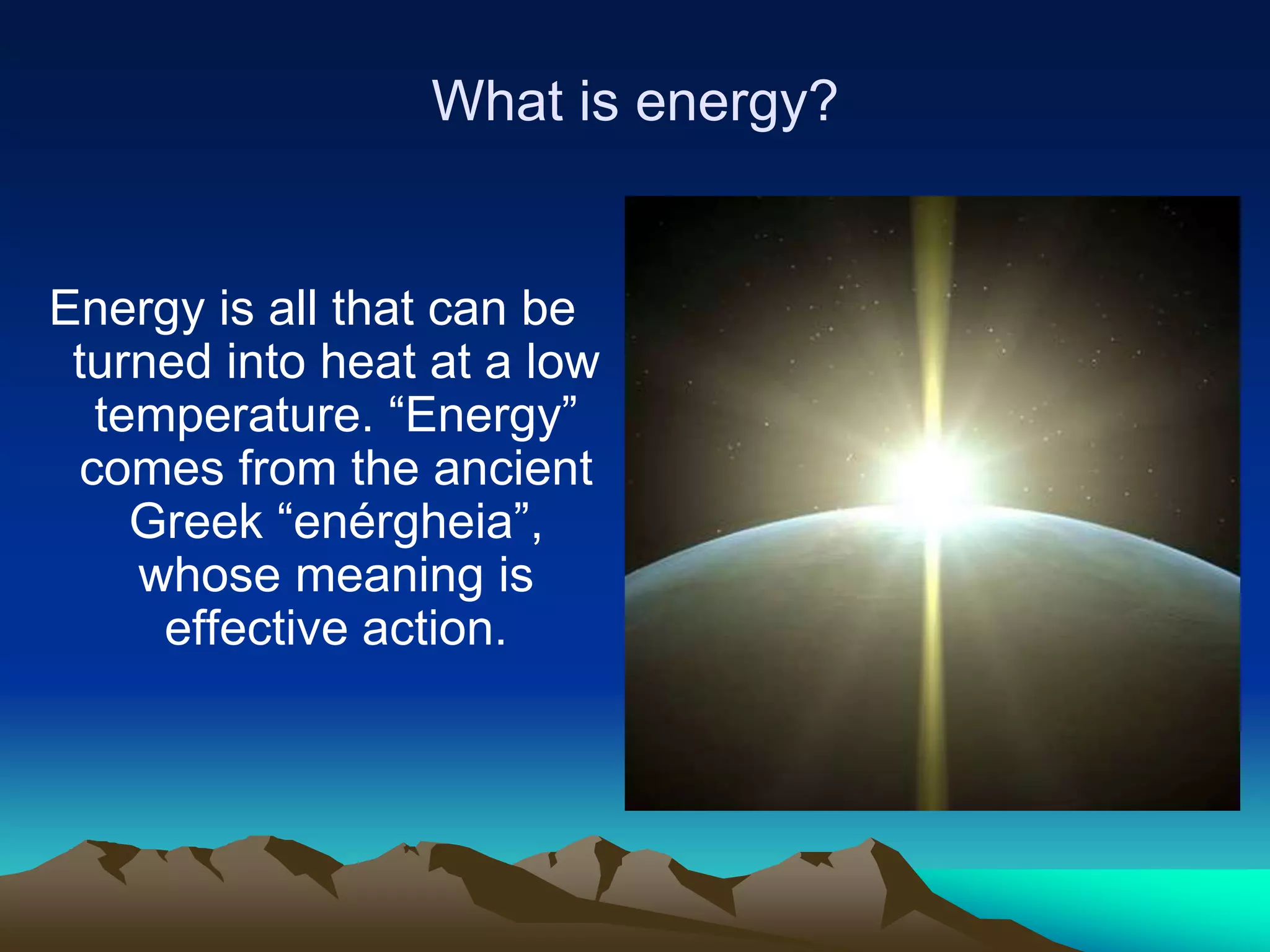
Energy is all that can be
 turned into heat at a low
  temperature. “Energy”
 comes from the ancient
    Greek “enérgheia”,
    whose meaning is
     effective action.
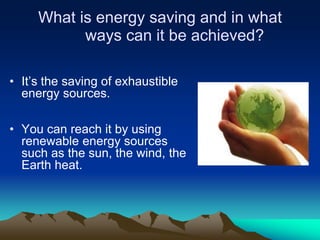
What is energy saving and in what
           ways can it be achieved?

• It’s the saving of exhaustible
  energy sources.

• You can reach it by using
  renewable energy sources
  such as the sun, the wind, the
  Earth heat.
What are the reasons that led to the use of
        renewable energy sources?


• They are instrumental in
  developing an alternative
  energy system.
• They contribute to the
  preservation of territory.
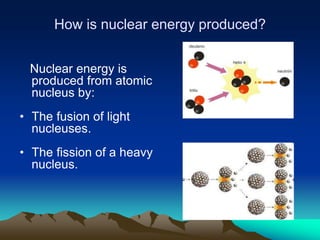
How is nuclear energy produced?


 Nuclear energy is
 produced from atomic
 nucleus by:
• The fusion of light
  nucleuses.
• The fission of a heavy
  nucleus.
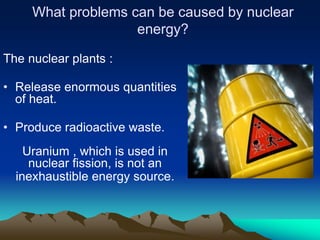
What problems can be caused by nuclear
                    energy?

The nuclear plants :

• Release enormous quantities
  of heat.

• Produce radioactive waste.
    Uranium , which is used in
     nuclear fission, is not an
  inexhaustible energy source.
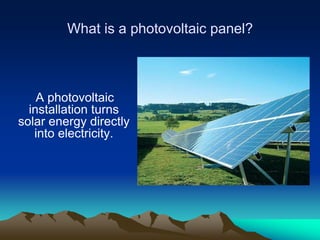
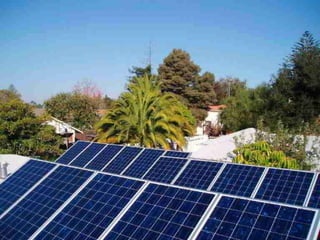
What is a photovoltaic panel?


    A photovoltaic
  installation turns
solar energy directly
   into electricity.
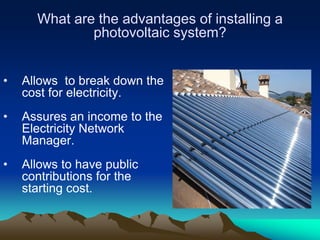
What are the advantages of installing a
              photovoltaic system?


•   Allows to break down the
    cost for electricity.
•   Assures an income to the
    Electricity Network
    Manager.
•   Allows to have public
    contributions for the
    starting cost.
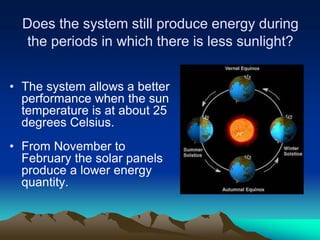
Does the system still produce energy during
  the periods in which there is less sunlight?


• The system allows a better
  performance when the sun
  temperature is at about 25
  degrees Celsius.
• From November to
  February the solar panels
  produce a lower energy
  quantity.
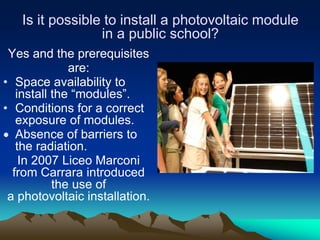
Is it possible to install a photovoltaic module
                 in a public school?
 Yes and the prerequisites
              are:
• Space availability to
   install the “modules”.
• Conditions for a correct
   exposure of modules.
   Absence of barriers to
   the radiation.
    In 2007 Liceo Marconi
  from Carrara introduced
           the use of
 a photovoltaic installation.
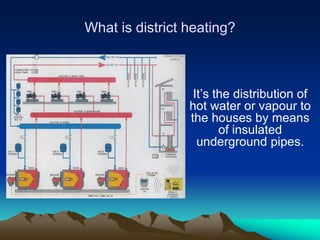
What is district heating?


                  It’s the distribution of
                 hot water or vapour to
                 the houses by means
                        of insulated
                   underground pipes.
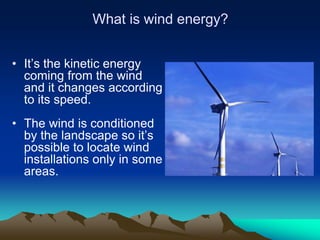
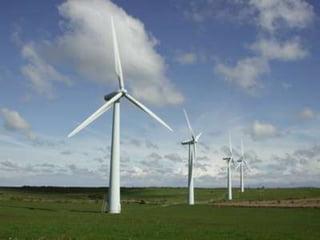
What is wind energy?


• It’s the kinetic energy
  coming from the wind
  and it changes according
  to its speed.
• The wind is conditioned
  by the landscape so it’s
  possible to locate wind
  installations only in some
  areas.
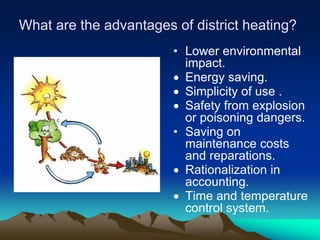
What are the advantages of district heating?
                        • Lower environmental
                          impact.
                          Energy saving.
                          Simplicity of use .
                          Safety from explosion
                          or poisoning dangers.
                        • Saving on
                          maintenance costs
                          and reparations.
                          Rationalization in
                          accounting.
                          Time and temperature
                          control system.
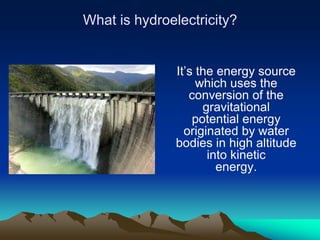
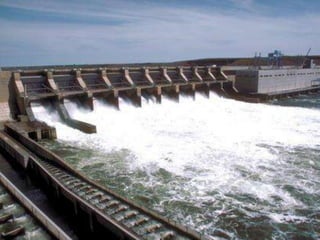
What is hydroelectricity?


               It’s the energy source
                    which uses the
                  conversion of the
                     gravitational
                   potential energy
                 originated by water
               bodies in high altitude
                      into kinetic
                        energy.
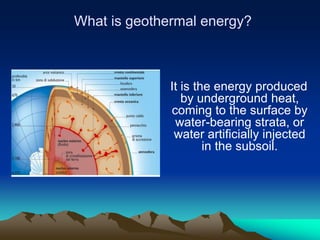
What is geothermal energy?


              It is the energy produced
                 by underground heat,
              coming to the surface by
               water-bearing strata, or
               water artificially injected
                      in the subsoil.
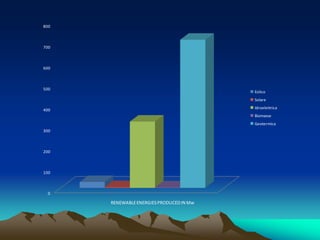
800


700


600


500
                                          Eolico
                                          Solare

400                                       Idroelettrica
                                          Biomasse
                                          Geotermica
300


200


100


  0

      RENEWABLE ENERGIES PRODUCED IN Mw
•   Ferdani Matteo
•   Marrazzini Gioia
•   Panesi Eleonora
•   Simonelli Tommaso
•   Vannucci Iacopo

Renewable energies

  • 1.
    What is energy? Energyis all that can be turned into heat at a low temperature. “Energy” comes from the ancient Greek “enérgheia”, whose meaning is effective action.
  • 2.
    What is energysaving and in what ways can it be achieved? • It’s the saving of exhaustible energy sources. • You can reach it by using renewable energy sources such as the sun, the wind, the Earth heat.
  • 3.
    What are thereasons that led to the use of renewable energy sources? • They are instrumental in developing an alternative energy system. • They contribute to the preservation of territory.
  • 4.
    How is nuclearenergy produced? Nuclear energy is produced from atomic nucleus by: • The fusion of light nucleuses. • The fission of a heavy nucleus.
  • 5.
    What problems canbe caused by nuclear energy? The nuclear plants : • Release enormous quantities of heat. • Produce radioactive waste. Uranium , which is used in nuclear fission, is not an inexhaustible energy source.
  • 6.
    What is aphotovoltaic panel? A photovoltaic installation turns solar energy directly into electricity.
  • 7.
    What are theadvantages of installing a photovoltaic system? • Allows to break down the cost for electricity. • Assures an income to the Electricity Network Manager. • Allows to have public contributions for the starting cost.
  • 8.
    Does the systemstill produce energy during the periods in which there is less sunlight? • The system allows a better performance when the sun temperature is at about 25 degrees Celsius. • From November to February the solar panels produce a lower energy quantity.
  • 9.
    Is it possibleto install a photovoltaic module in a public school? Yes and the prerequisites are: • Space availability to install the “modules”. • Conditions for a correct exposure of modules. Absence of barriers to the radiation. In 2007 Liceo Marconi from Carrara introduced the use of a photovoltaic installation.
  • 10.
    What is districtheating? It’s the distribution of hot water or vapour to the houses by means of insulated underground pipes.
  • 11.
    What is windenergy? • It’s the kinetic energy coming from the wind and it changes according to its speed. • The wind is conditioned by the landscape so it’s possible to locate wind installations only in some areas.
  • 12.
    What are theadvantages of district heating? • Lower environmental impact. Energy saving. Simplicity of use . Safety from explosion or poisoning dangers. • Saving on maintenance costs and reparations. Rationalization in accounting. Time and temperature control system.
  • 13.
    What is hydroelectricity? It’s the energy source which uses the conversion of the gravitational potential energy originated by water bodies in high altitude into kinetic energy.
  • 14.
    What is geothermalenergy? It is the energy produced by underground heat, coming to the surface by water-bearing strata, or water artificially injected in the subsoil.
  • 22.
    800 700 600 500 Eolico Solare 400 Idroelettrica Biomasse Geotermica 300 200 100 0 RENEWABLE ENERGIES PRODUCED IN Mw
  • 23.
    Ferdani Matteo • Marrazzini Gioia • Panesi Eleonora • Simonelli Tommaso • Vannucci Iacopo