“ Making Energy Work”   Renewable Energy Portfolio  & Reliability Panel North Carolina Sustainable Energy Association February 3, 2009 Julia A. Souder
About NERC: Mission Develop & enforce reliability standards Assess current and future reliability Analyze system events & recommend improved practices Encourage active participation by all stakeholders Pursue mandatory standards across North America To ensure the reliability of the North American bulk power system
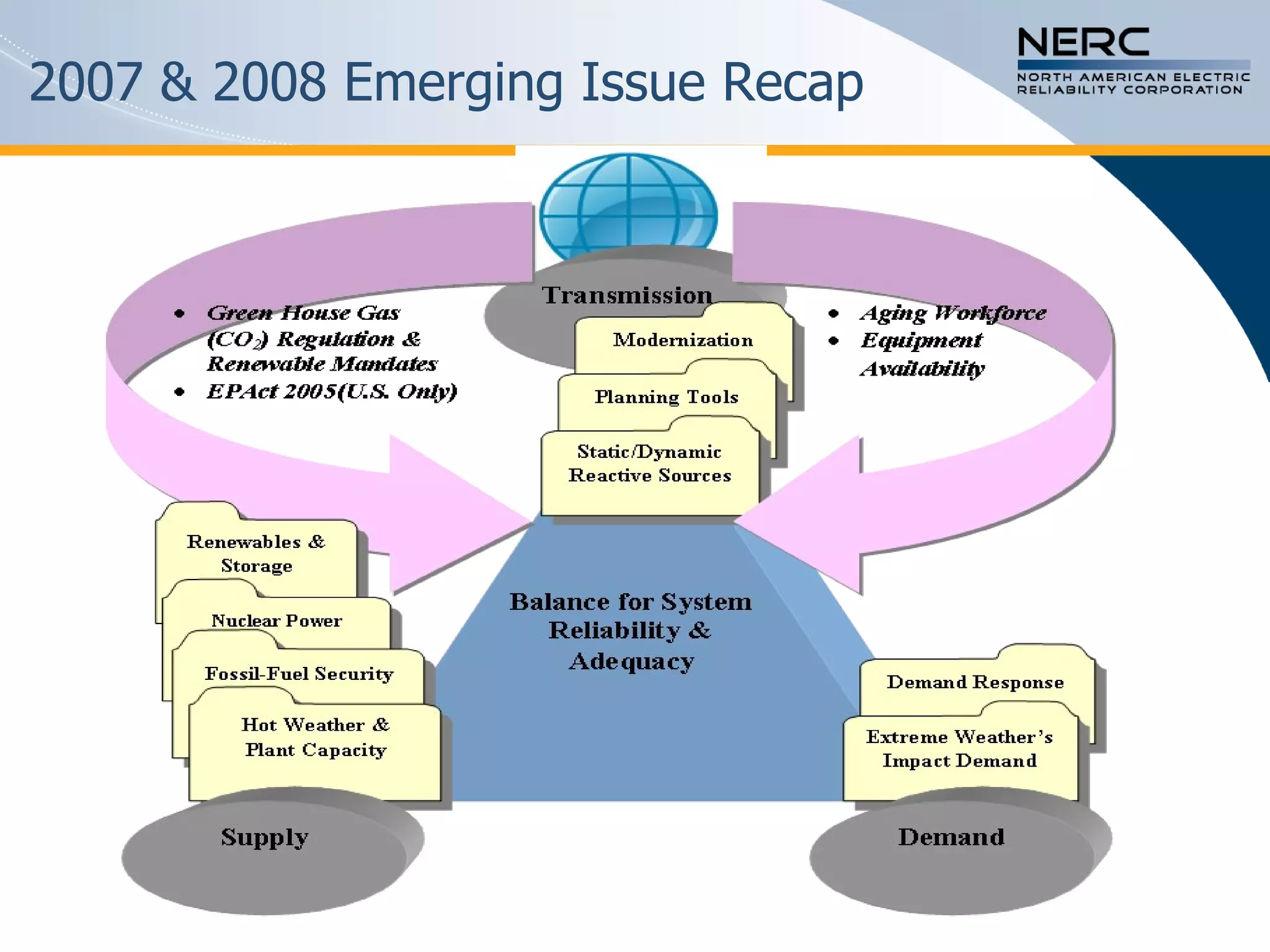
2007 & 2008 Emerging Issue Recap
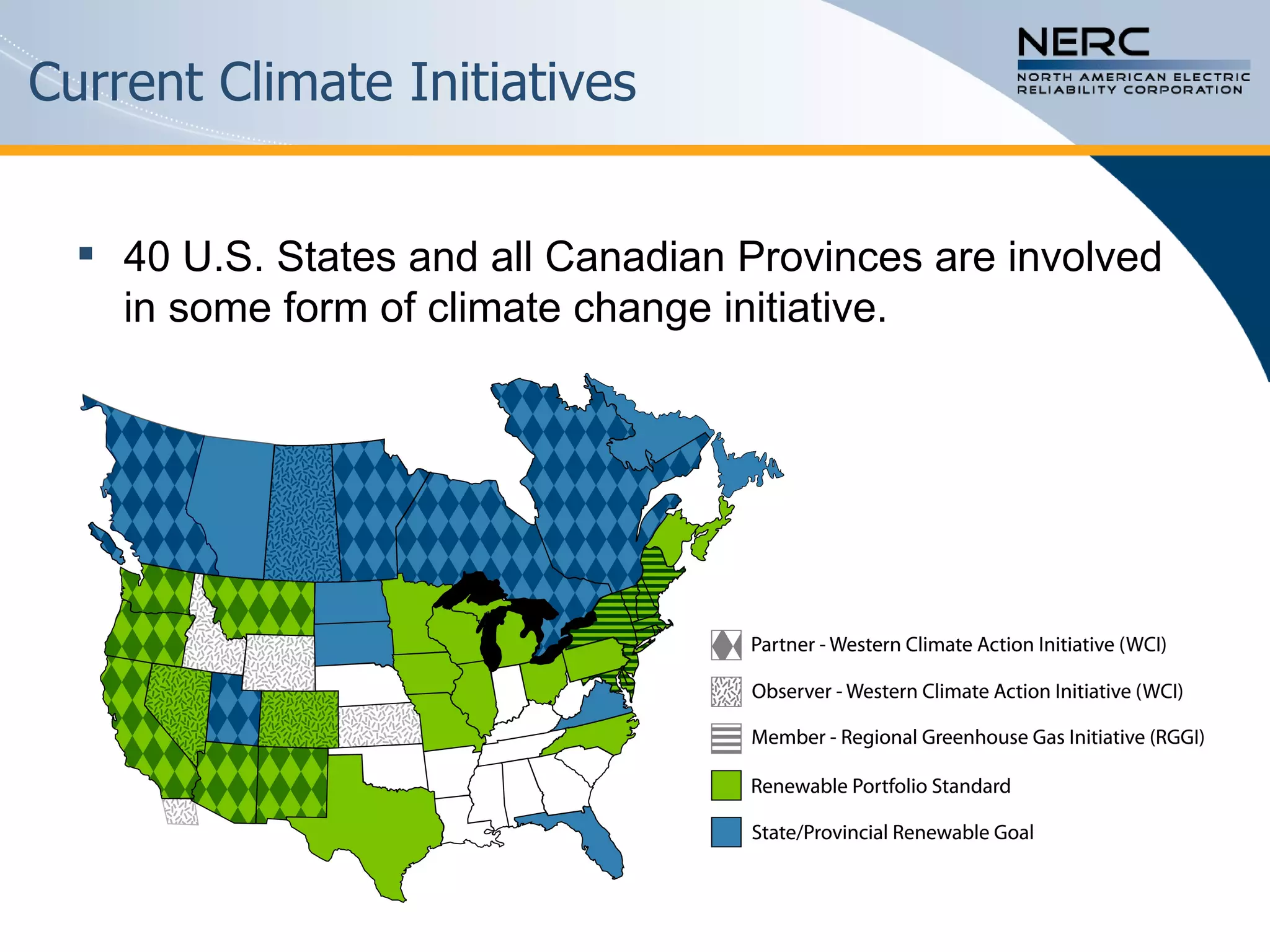
Current Climate Initiatives 40 U.S. States and all Canadian Provinces are involved in some form of climate change initiative.
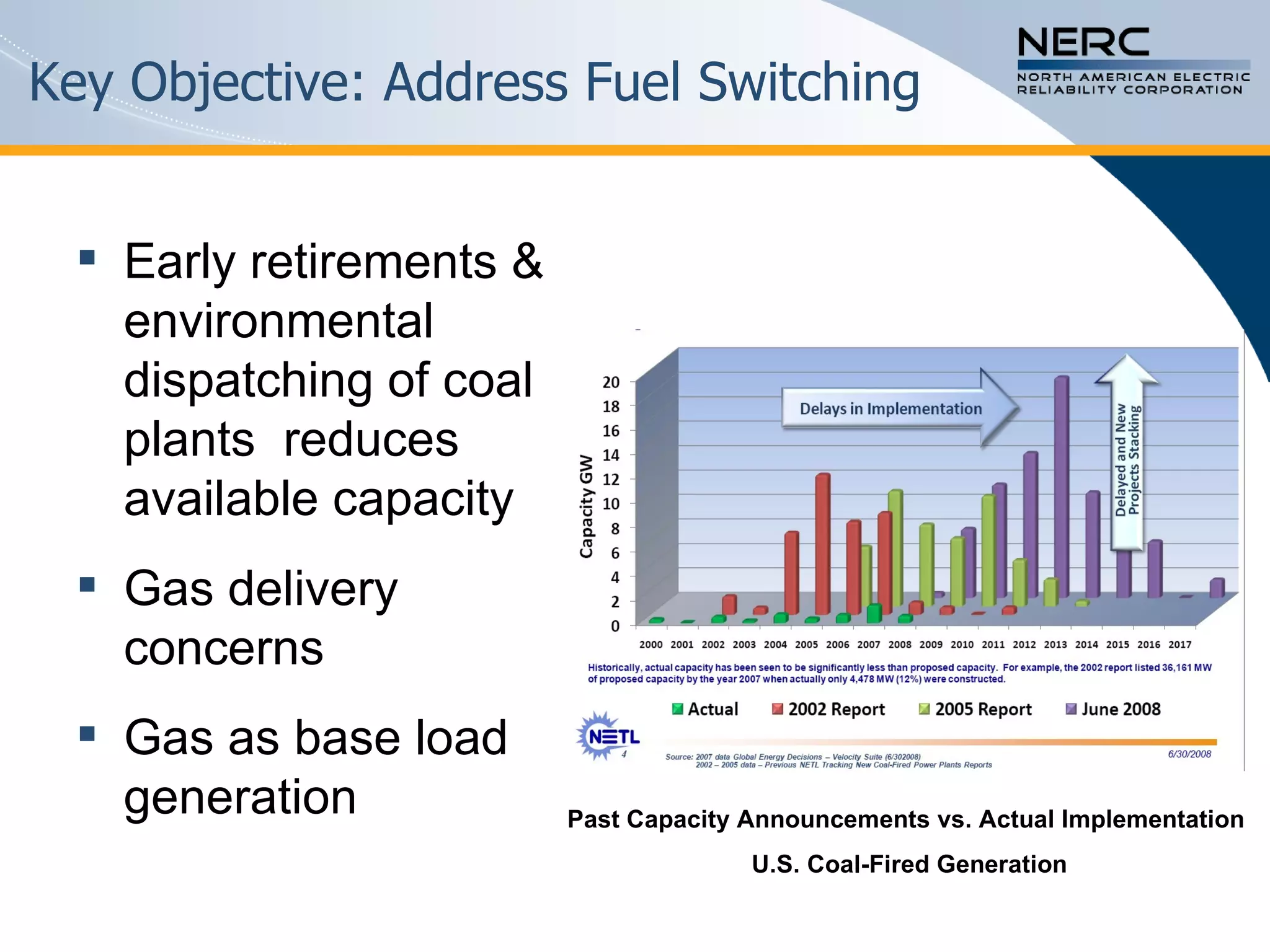
Key Objective: Address Fuel Switching Early retirements & environmental dispatching of coal plants  reduces available capacity Gas delivery concerns Gas as base load generation Past Capacity Announcements vs. Actual Implementation  U.S. Coal-Fired Generation
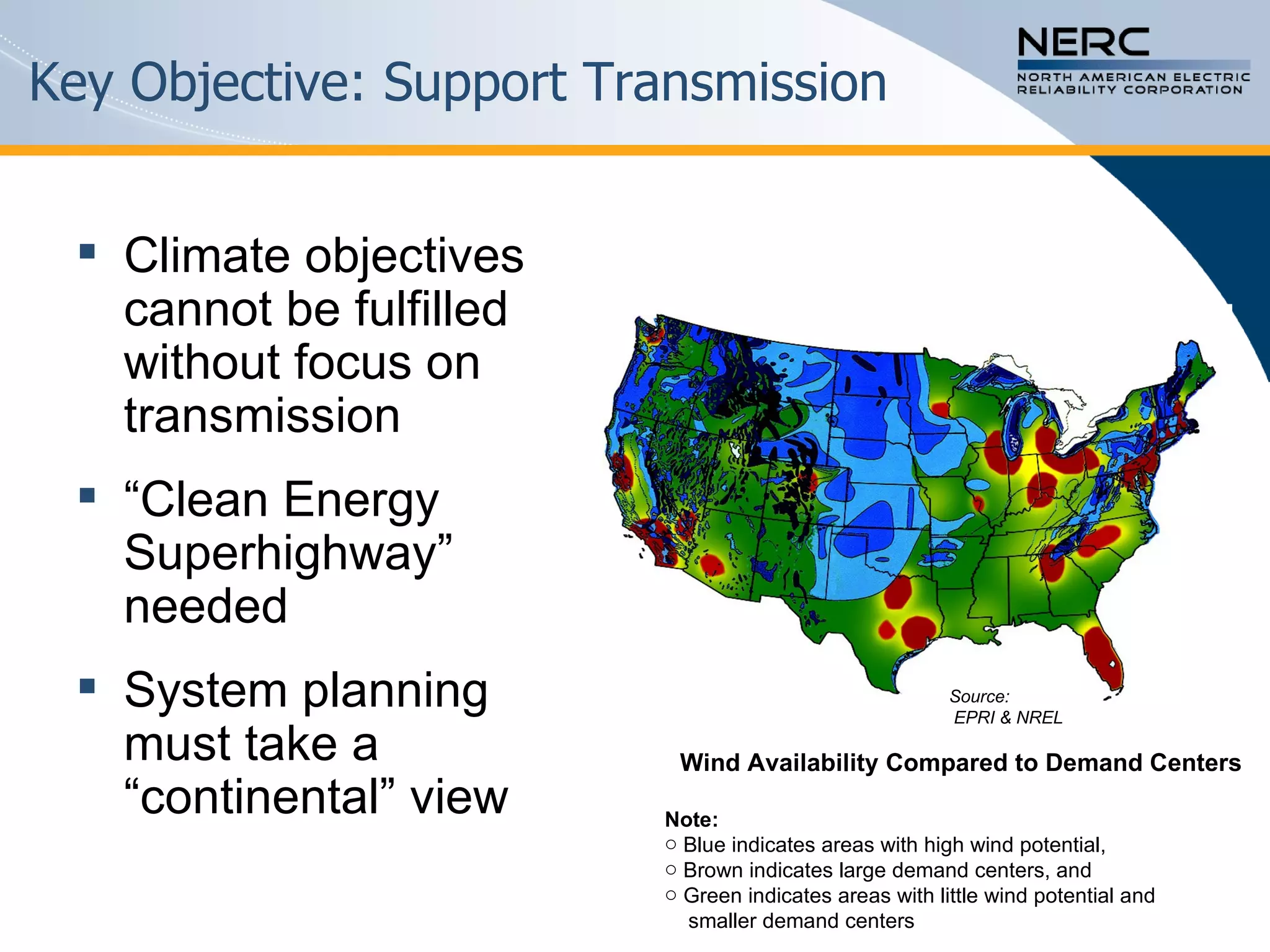
Key Objective: Support Transmission Climate objectives cannot be fulfilled without focus on transmission “Clean Energy Superhighway” needed System planning must take a “continental” view Source: EPRI & NREL Wind Availability Compared to Demand Centers Note: Blue indicates areas with high wind potential,  Brown indicates large demand centers, and  Green indicates areas with little wind potential and  smaller demand centers
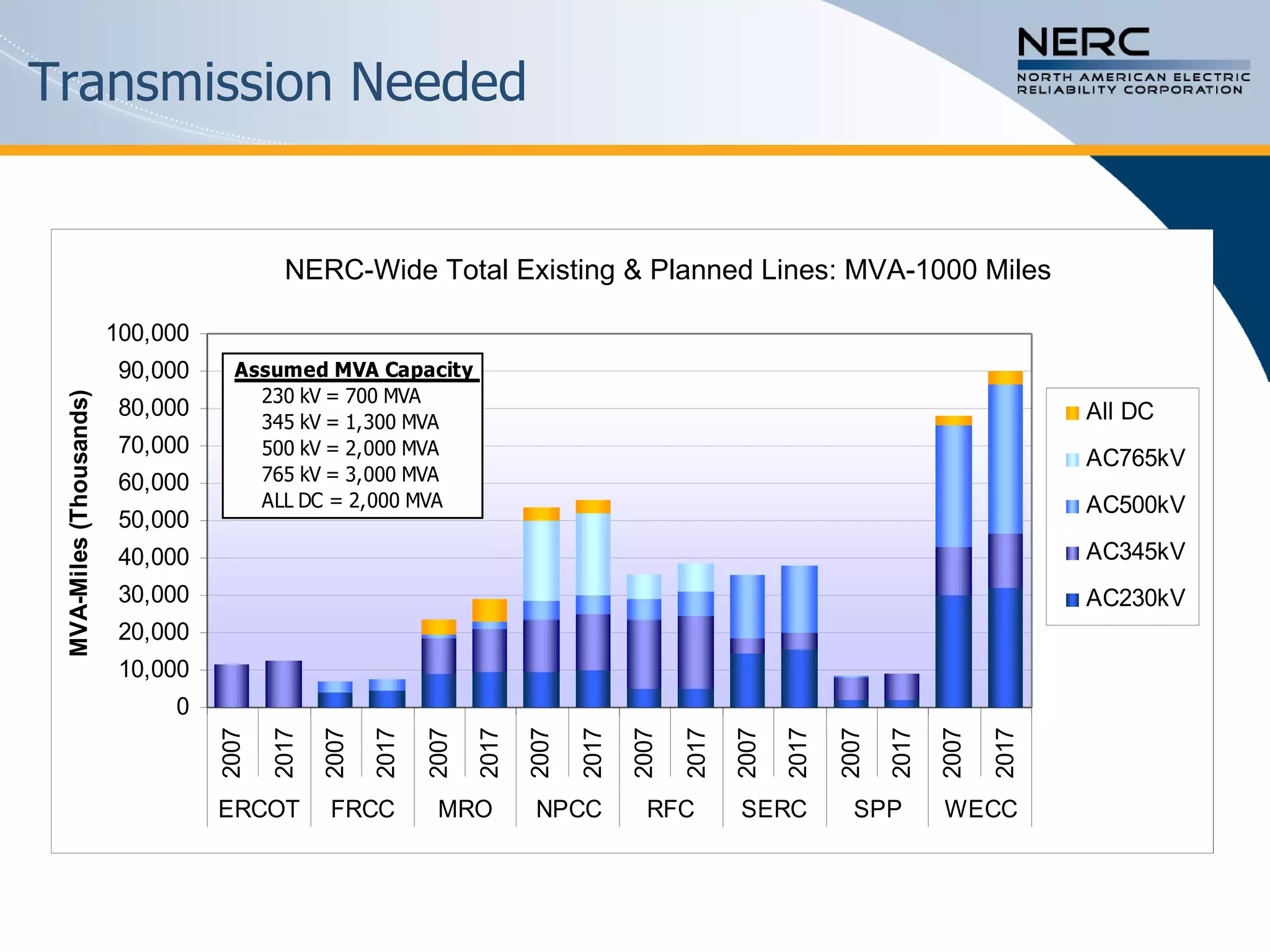
Transmission Needed NERC-Wide Total Existing & Planned Lines: MVA-1000 Miles
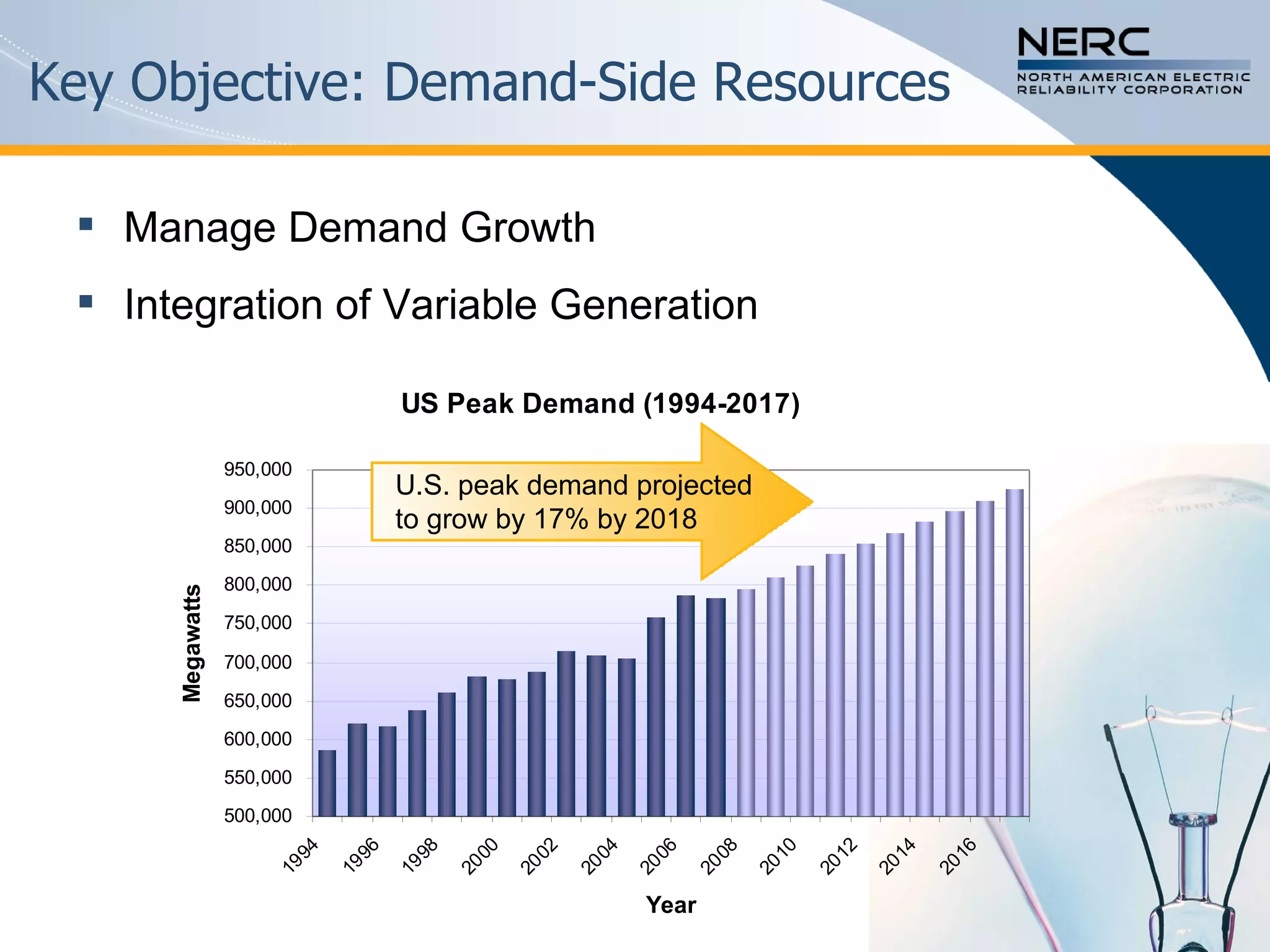
Key Objective: Demand-Side Resources Manage Demand Growth Integration of Variable Generation U.S. peak demand projected to grow by 17% by 2018
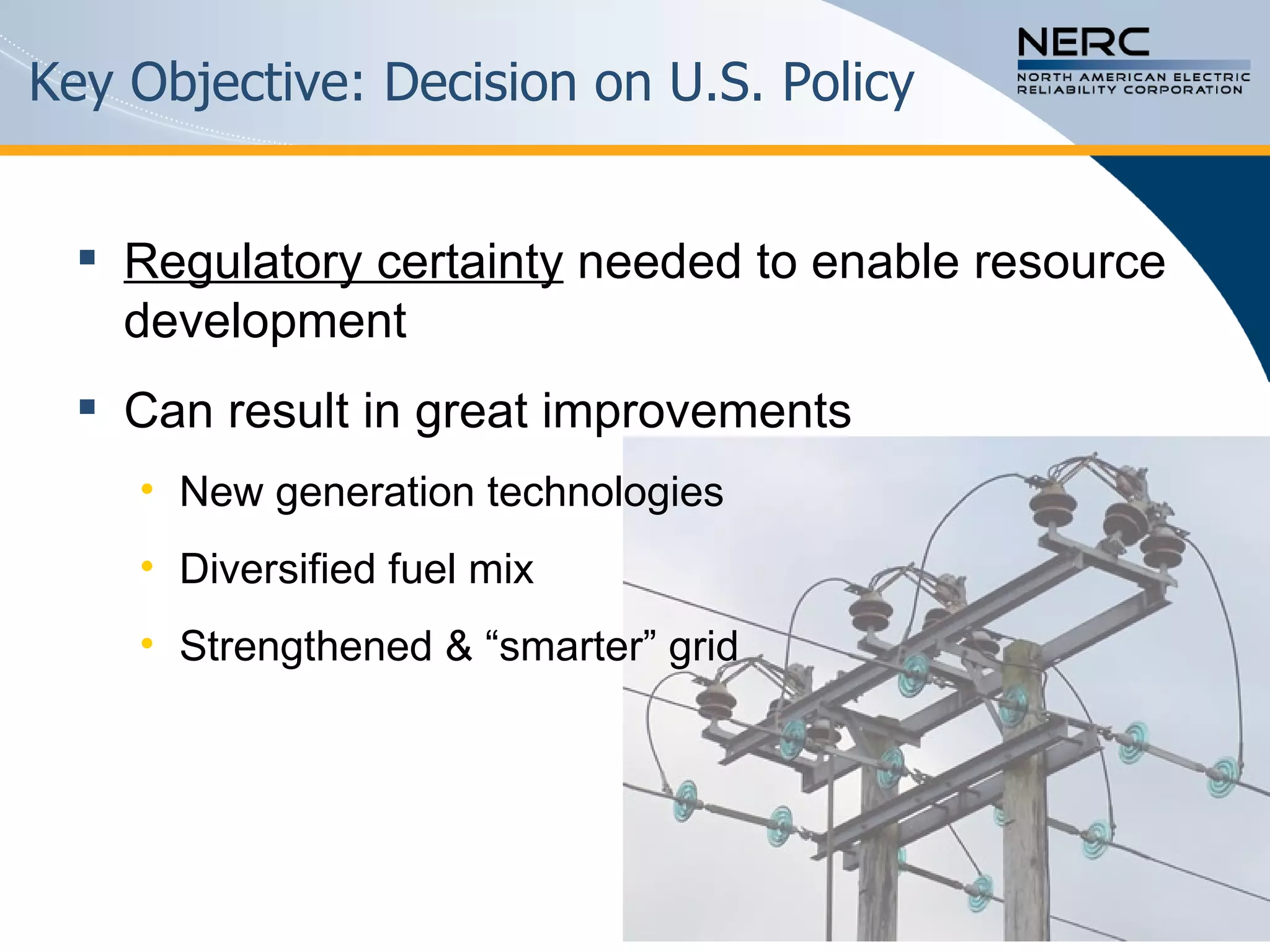
Key Objective: Decision on U.S. Policy Regulatory certainty  needed to enable resource development Can result in great improvements New generation technologies Diversified fuel mix Strengthened & “smarter” grid
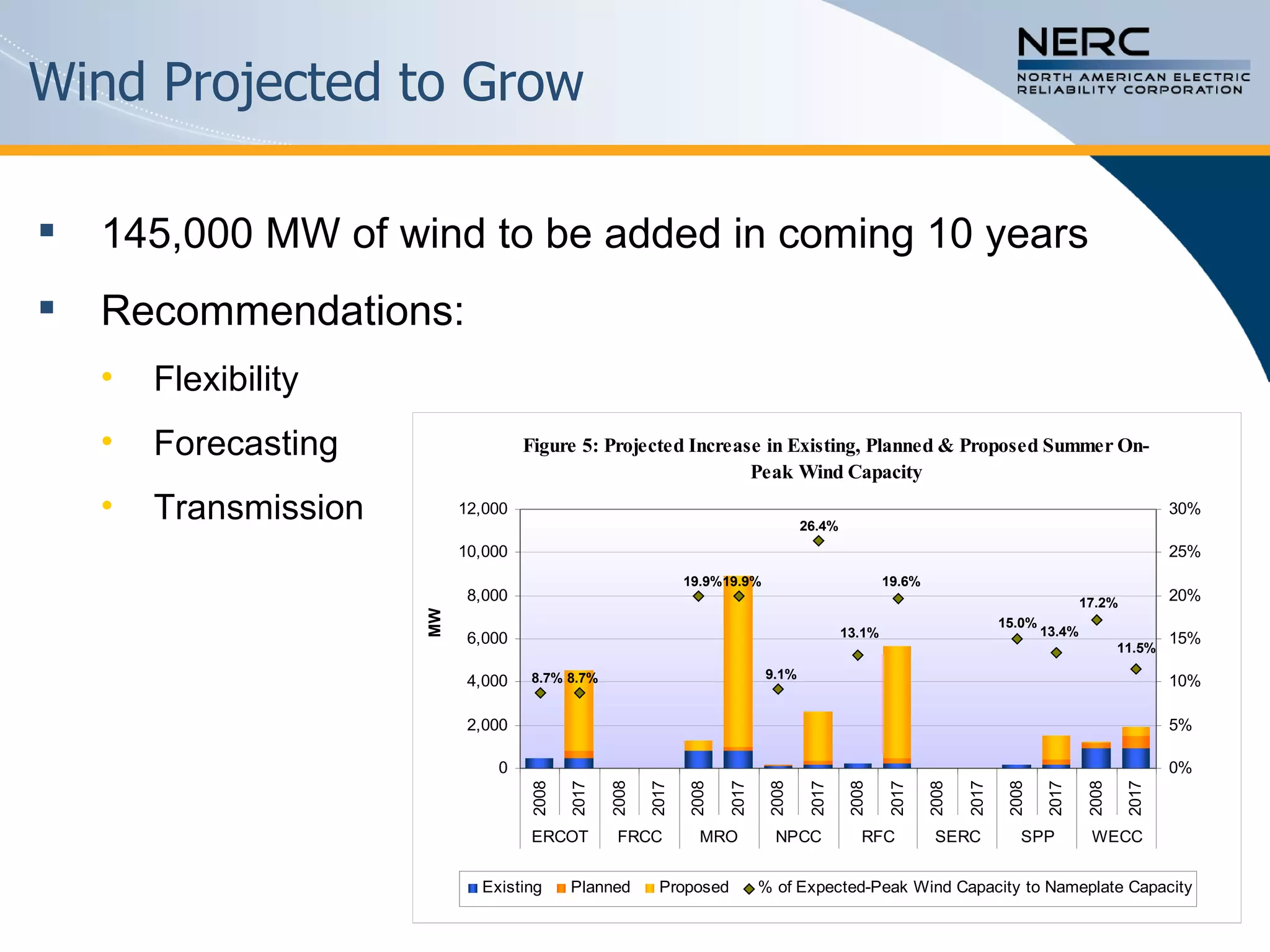
Wind Projected to Grow 145,000 MW of wind to be added in coming 10 years Recommendations: Flexibility Forecasting  Transmission
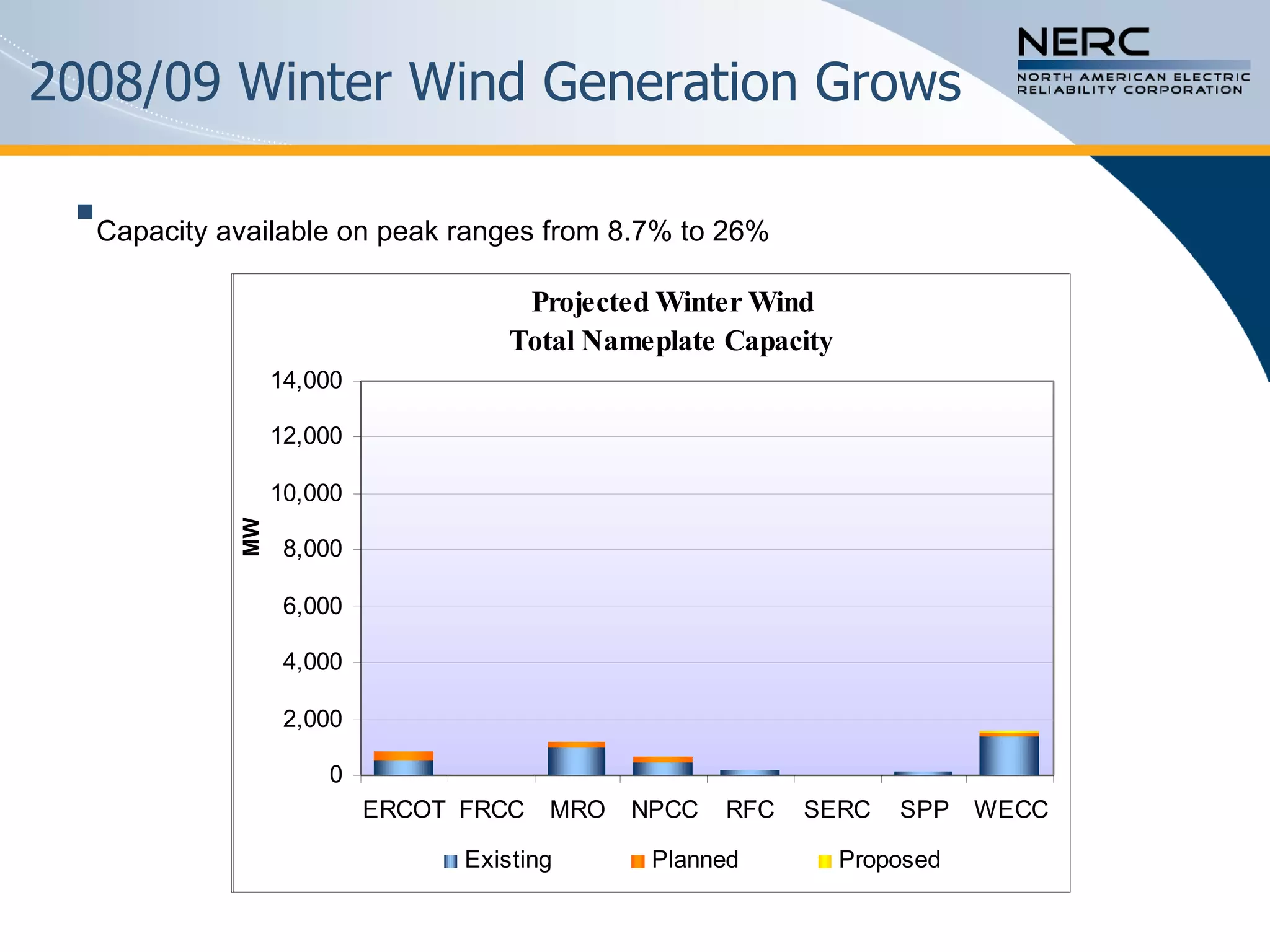
2008/09 Winter Wind Generation Grows   Capacity available on peak ranges from 8.7% to 26%
Modernized Grid – Integration Key “ Smart Grids” can support reliability  Variable Resources Demand response Large deployment of sensor & automation technologies Innovative applications of electricity Flexibility Cyber-Security vital
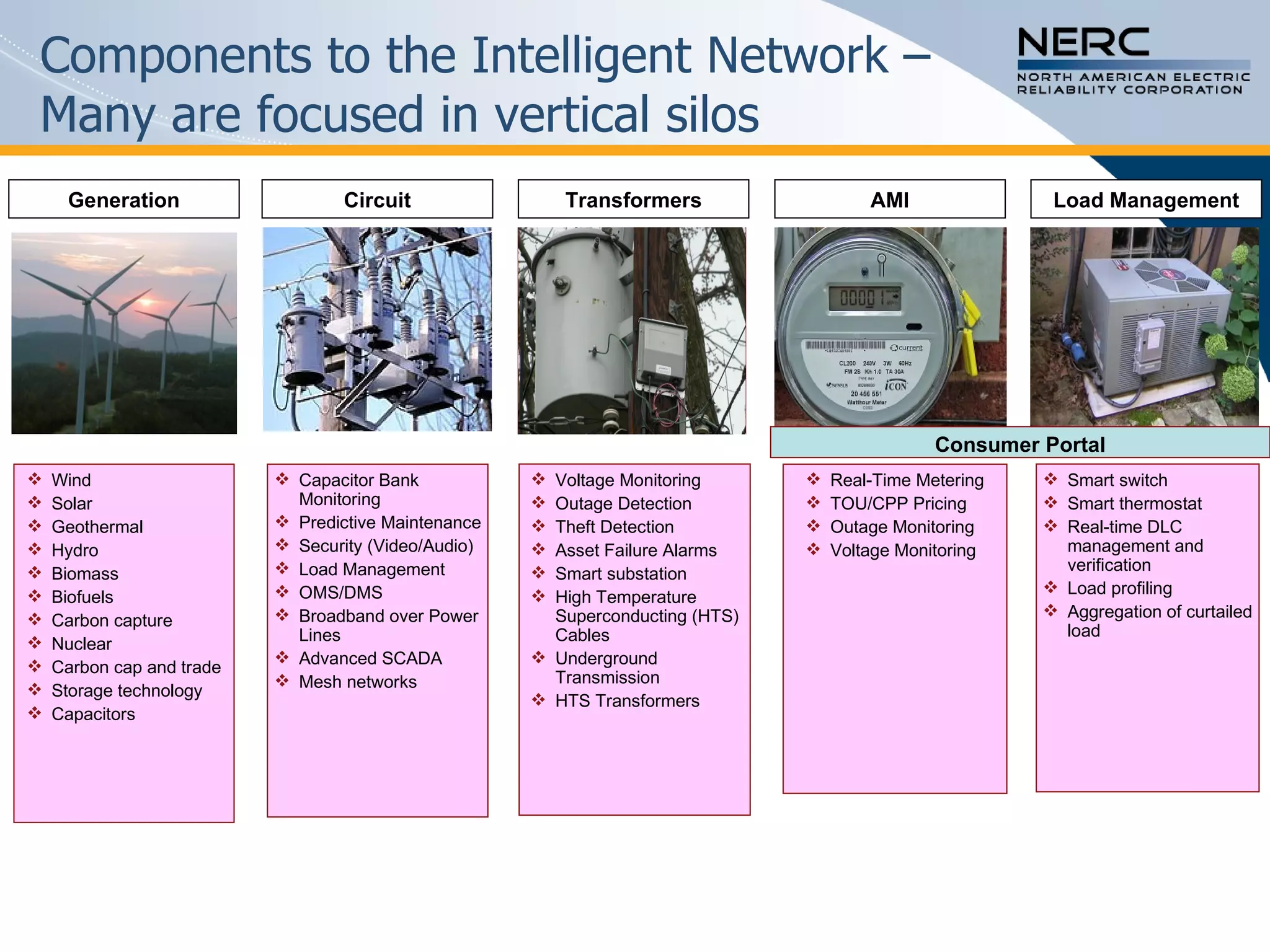
Components to the Intelligent Network –  Many are focused in vertical silos Circuit Transformers AMI Load Management Capacitor Bank Monitoring Predictive Maintenance Security (Video/Audio) Load Management OMS/DMS Broadband over Power Lines Advanced SCADA Mesh networks Voltage Monitoring  Outage Detection Theft Detection Asset Failure Alarms Smart substation High Temperature Superconducting (HTS) Cables Underground Transmission HTS Transformers Real-Time Metering TOU/CPP Pricing Outage Monitoring Voltage Monitoring Smart switch Smart thermostat Real-time DLC management and verification Load profiling Aggregation of curtailed load Generation Wind Solar Geothermal Hydro Biomass Biofuels Carbon capture Nuclear Carbon cap and trade Storage technology Capacitors Consumer Portal
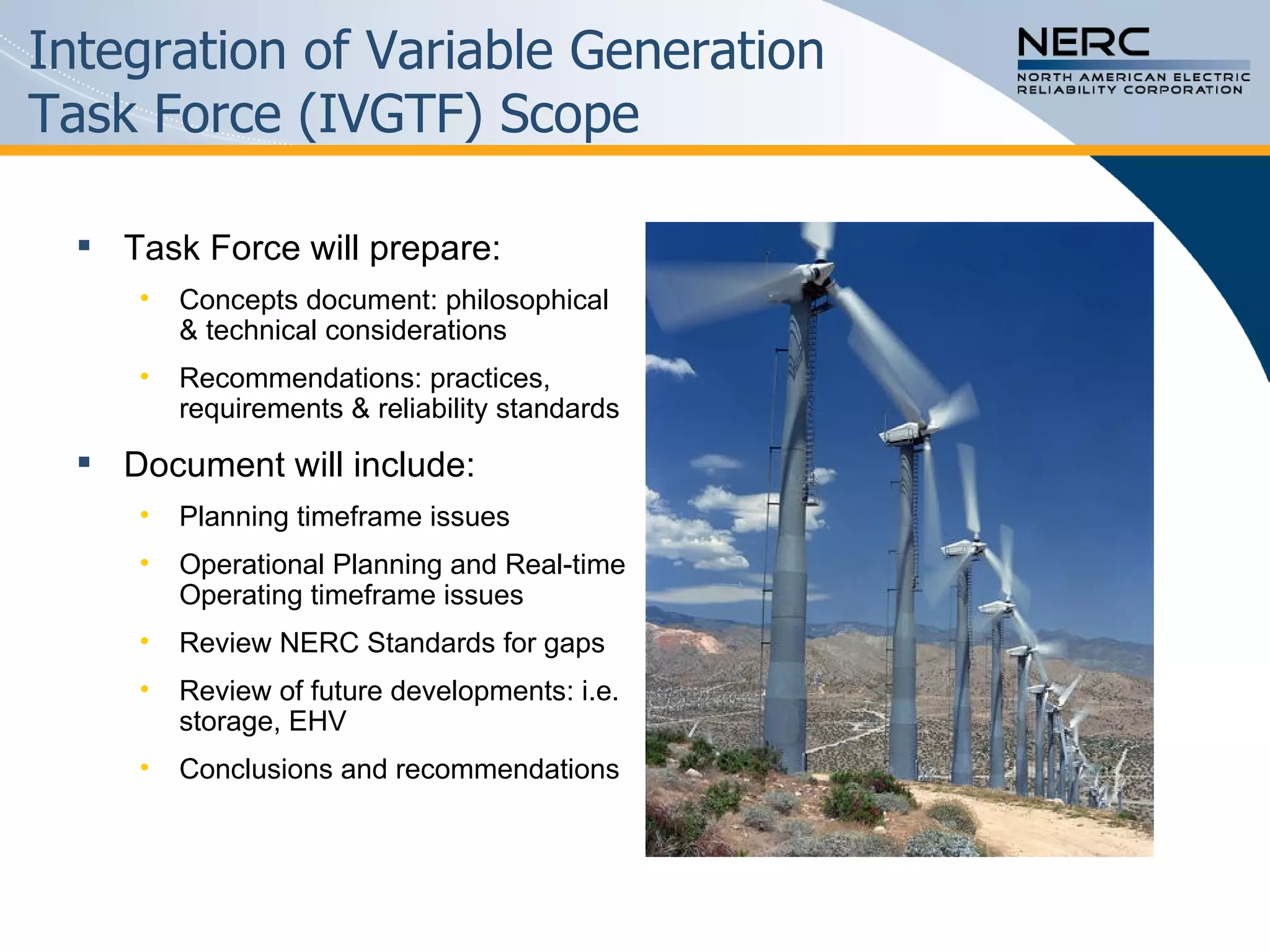
Integration of Variable Generation  Task Force (IVGTF) Scope Task Force will prepare:  Concepts document: philosophical & technical considerations Recommendations: practices, requirements & reliability standards Document will include: Planning timeframe issues Operational Planning and Real-time Operating timeframe issues Review NERC Standards for gaps Review of future developments: i.e. storage, EHV  Conclusions and recommendations
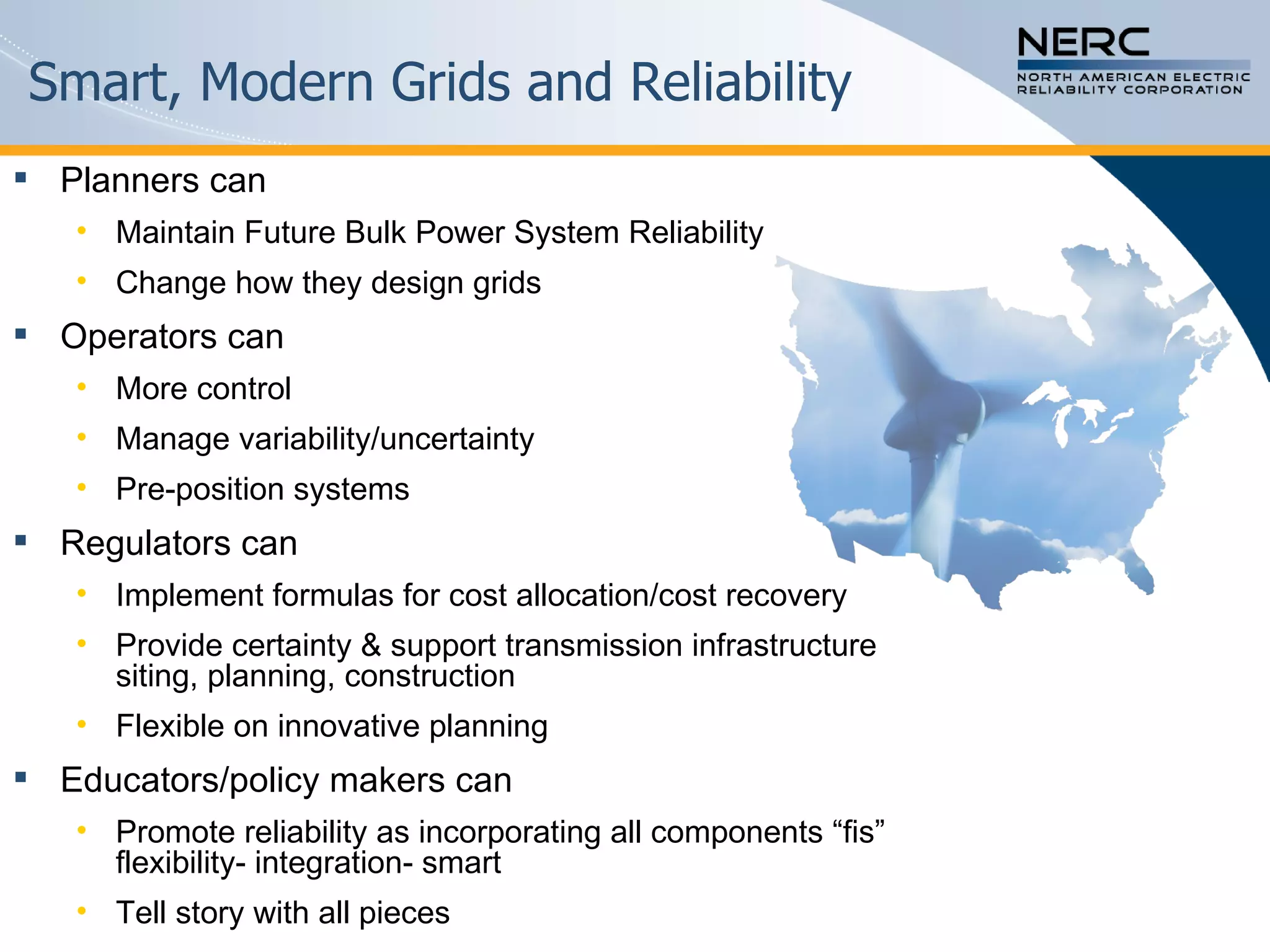
Smart, Modern Grids and Reliability Planners can Maintain Future Bulk Power System Reliability Change how they design grids Operators can More control Manage variability/uncertainty Pre-position systems Regulators can Implement formulas for cost allocation/cost recovery Provide certainty & support transmission infrastructure siting, planning, construction Flexible on innovative planning  Educators/policy makers can Promote reliability as incorporating all components “fis” flexibility- integration- smart Tell story with all pieces
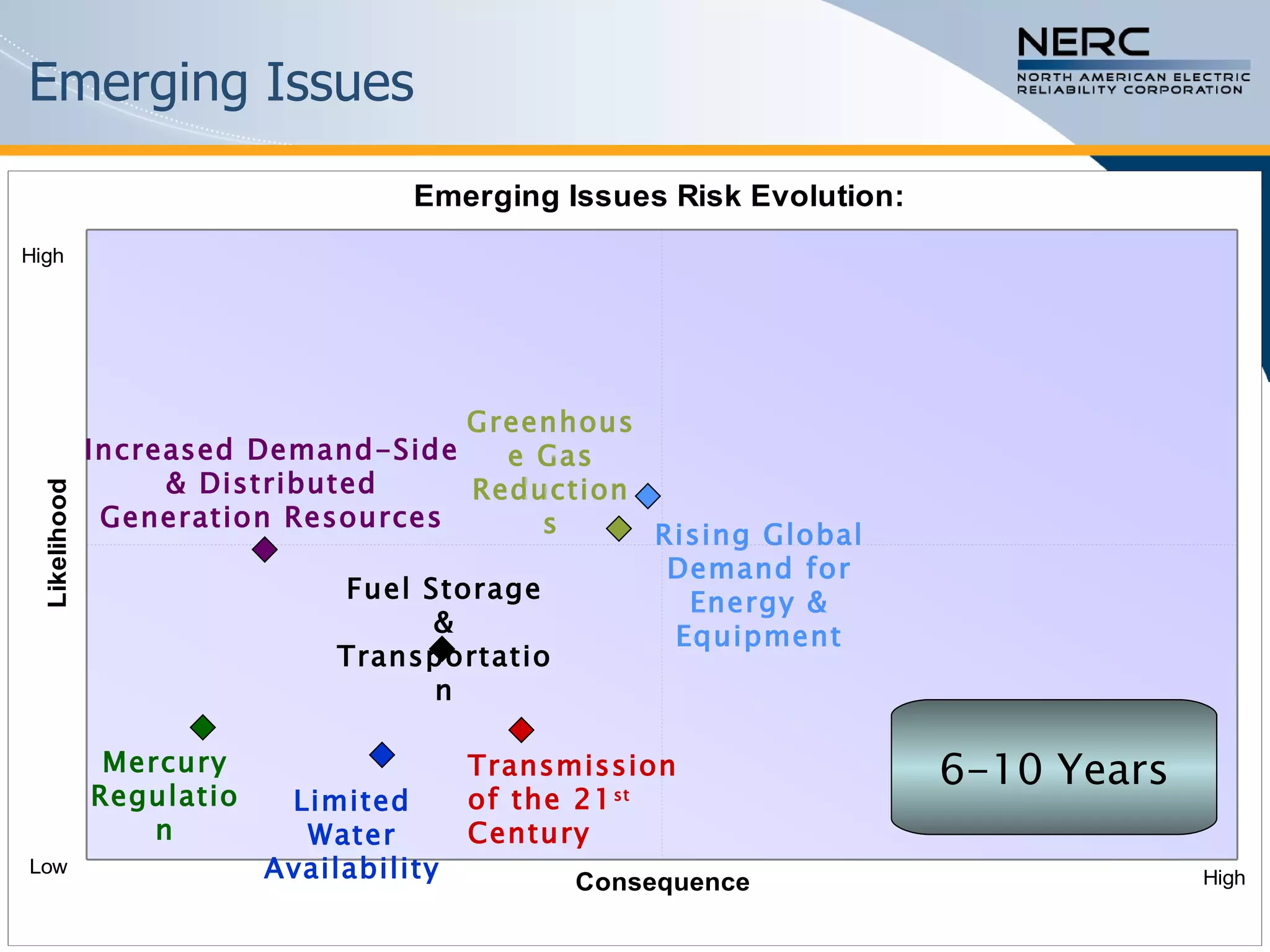
Emerging Issues Greenhouse Gas Reductions Fuel Storage & Transportation Rising Global Demand for Energy & Equipment Increased Demand-Side & Distributed Generation Resources Transmission of the 21 st  Century Limited Water Availability Mercury Regulation 1-5 Years 6-10 Years
Reliability Themes Interoperability Smart and Flexible Regulatory Certainty  Diverse Fuel Supply Demand Side Resources Interconnectivity Renewables and Transmission
Thank you [email_address] North American Electric Reliability Coordination  Director, Inter-Governmental Relations,  202-393-3998

Renewable Nc

  • 1.
    “ Making EnergyWork” Renewable Energy Portfolio & Reliability Panel North Carolina Sustainable Energy Association February 3, 2009 Julia A. Souder
  • 2.
    About NERC: MissionDevelop & enforce reliability standards Assess current and future reliability Analyze system events & recommend improved practices Encourage active participation by all stakeholders Pursue mandatory standards across North America To ensure the reliability of the North American bulk power system
  • 3.
    2007 & 2008Emerging Issue Recap
  • 4.
    Current Climate Initiatives40 U.S. States and all Canadian Provinces are involved in some form of climate change initiative.
  • 5.
    Key Objective: AddressFuel Switching Early retirements & environmental dispatching of coal plants reduces available capacity Gas delivery concerns Gas as base load generation Past Capacity Announcements vs. Actual Implementation U.S. Coal-Fired Generation
  • 6.
    Key Objective: SupportTransmission Climate objectives cannot be fulfilled without focus on transmission “Clean Energy Superhighway” needed System planning must take a “continental” view Source: EPRI & NREL Wind Availability Compared to Demand Centers Note: Blue indicates areas with high wind potential, Brown indicates large demand centers, and Green indicates areas with little wind potential and smaller demand centers
  • 7.
    Transmission Needed NERC-WideTotal Existing & Planned Lines: MVA-1000 Miles
  • 8.
    Key Objective: Demand-SideResources Manage Demand Growth Integration of Variable Generation U.S. peak demand projected to grow by 17% by 2018
  • 9.
    Key Objective: Decisionon U.S. Policy Regulatory certainty needed to enable resource development Can result in great improvements New generation technologies Diversified fuel mix Strengthened & “smarter” grid
  • 10.
    Wind Projected toGrow 145,000 MW of wind to be added in coming 10 years Recommendations: Flexibility Forecasting Transmission
  • 11.
    2008/09 Winter WindGeneration Grows Capacity available on peak ranges from 8.7% to 26%
  • 12.
    Modernized Grid –Integration Key “ Smart Grids” can support reliability Variable Resources Demand response Large deployment of sensor & automation technologies Innovative applications of electricity Flexibility Cyber-Security vital
  • 13.
    Components to theIntelligent Network – Many are focused in vertical silos Circuit Transformers AMI Load Management Capacitor Bank Monitoring Predictive Maintenance Security (Video/Audio) Load Management OMS/DMS Broadband over Power Lines Advanced SCADA Mesh networks Voltage Monitoring Outage Detection Theft Detection Asset Failure Alarms Smart substation High Temperature Superconducting (HTS) Cables Underground Transmission HTS Transformers Real-Time Metering TOU/CPP Pricing Outage Monitoring Voltage Monitoring Smart switch Smart thermostat Real-time DLC management and verification Load profiling Aggregation of curtailed load Generation Wind Solar Geothermal Hydro Biomass Biofuels Carbon capture Nuclear Carbon cap and trade Storage technology Capacitors Consumer Portal
  • 14.
    Integration of VariableGeneration Task Force (IVGTF) Scope Task Force will prepare: Concepts document: philosophical & technical considerations Recommendations: practices, requirements & reliability standards Document will include: Planning timeframe issues Operational Planning and Real-time Operating timeframe issues Review NERC Standards for gaps Review of future developments: i.e. storage, EHV Conclusions and recommendations
  • 15.
    Smart, Modern Gridsand Reliability Planners can Maintain Future Bulk Power System Reliability Change how they design grids Operators can More control Manage variability/uncertainty Pre-position systems Regulators can Implement formulas for cost allocation/cost recovery Provide certainty & support transmission infrastructure siting, planning, construction Flexible on innovative planning Educators/policy makers can Promote reliability as incorporating all components “fis” flexibility- integration- smart Tell story with all pieces
  • 16.
    Emerging Issues GreenhouseGas Reductions Fuel Storage & Transportation Rising Global Demand for Energy & Equipment Increased Demand-Side & Distributed Generation Resources Transmission of the 21 st Century Limited Water Availability Mercury Regulation 1-5 Years 6-10 Years
  • 17.
    Reliability Themes InteroperabilitySmart and Flexible Regulatory Certainty Diverse Fuel Supply Demand Side Resources Interconnectivity Renewables and Transmission
  • 18.
    Thank you [email_address]North American Electric Reliability Coordination Director, Inter-Governmental Relations, 202-393-3998