A Smarter Grid: Building GRID 3.0Marine Energy and Smart Grid Technology WorkshopMay 10-11, 2010Steve HauserVP,  Grid Integration[President Emeritus,  The GridWise Alliance]
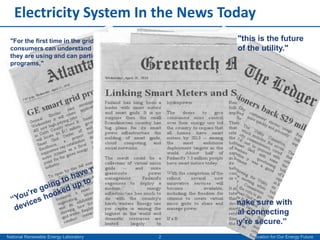
2Electricity System In the News Today"this is the future of the utility.""For the first time in the grid's 100-year history, consumers can understand exactly how much energy they are using and can participate in cost-saving programs,"“You’re going to have more devices hooked up to the grid,” “You have to make sure with these additional connecting points that they’re secure.”
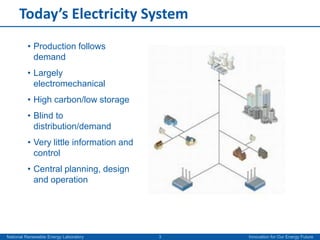
Today’s Electricity System3Production follows demand
Largely electromechanical
High carbon/low storage
Blind to distribution/demand
Very little information and control
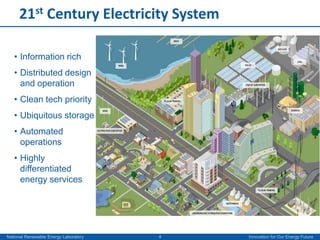
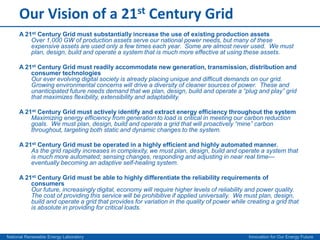
Central planning, design and operation421st Century Electricity SystemInformation rich
Distributed design and operation
Clean tech priority
Ubiquitous storage
Automated operations
Highly differentiated energy services 5The Grid is Smart when…	… your teenage daughter, who snuck out last night with the PHEV, plugged it in to recharge this morning and pressed “override” on your “smart charger” – paying $1.00 per kWh for daytime electricity.  	…luckily, your rooftop PV is providing most of the energy to recharge, and the extra battery in your garage is working overtime to provide regulation services to the utility at a premium rate…resulting in an overall net-zero cost to you....providing value to the local utility…providing value to the consumer…providing value to the local economy…providing value to the environment
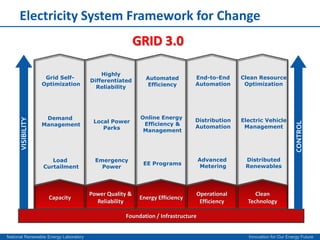
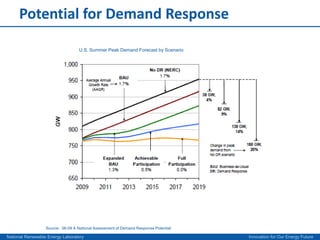
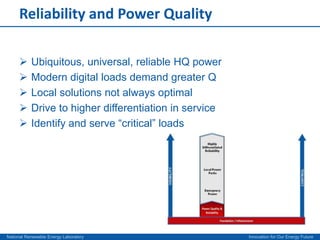
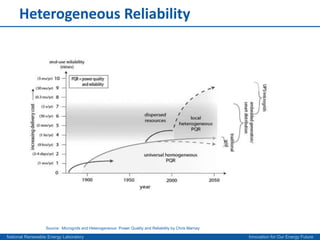
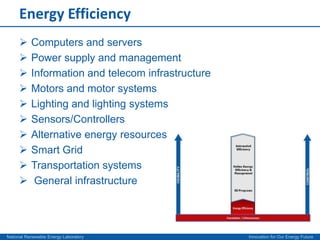
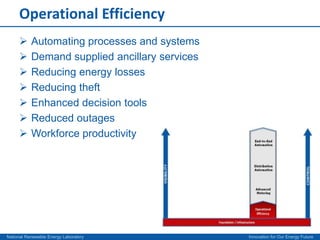
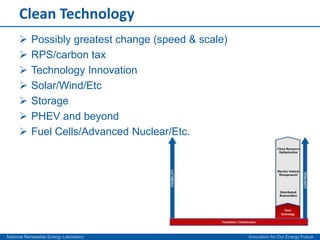
Electricity System Framework for ChangeGRID 3.0Highly Differentiated ReliabilityGrid Self- OptimizationEnd-to-EndAutomationClean ResourceOptimizationAutomatedEfficiencyDemand ManagementvisibilityDistributionAutomationElectric VehicleManagementOnline Energy Efficiency &ManagementLocal Power ParkscontrolAdvanced MeteringDistributedRenewablesLoad CurtailmentEmergencyPowerEE ProgramsCapacityPower Quality & ReliabilityEnergy EfficiencyOperational EfficiencyClean TechnologyFoundation / Infrastructure
System of Systems Approach7Integrating Generation, Transmission, Distribution, and End-Use Applications
Conceptual Paradigm ShiftMore innovation
More information, more real time (visibility)
More connectivity
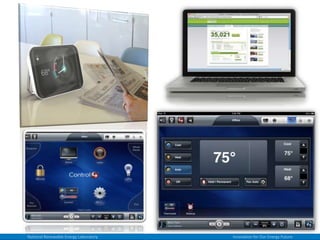
More consumer participation (control)
More automation (control)
More indigenous solutions

Steven hauser presentation

Editor's Notes

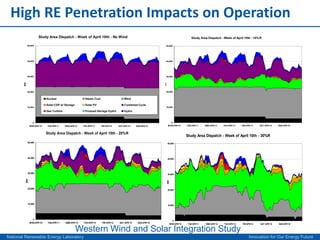
  • #32 A recent study done by NREL in cooperation with both utilities and vendors shows the impact that a higher penetration on wind generation can have on the operation of the gridThe upper left is a typical dispatch curve with no windThe other charts show 10%, 20% and 30% wind penetrationYou can see the huge impact this can have on the operation of base load resources such as coal shown by the grey area.