SUBJECT
Renewable Energy and
Green Technology
by
Dr. Sanjay Singh Chouhan
Assistant Professor
College of Agriculture, JNKVV,
Powarkheda, Hoshangabad
1
2 JNKVV- College of Agriculture, Powarkheda
Energy
• Energy has been defined as the capacity to do work or
capability to produce an effort.
• It is expressed in N-m or Joules.
• The energy density is expressed as Jkg.
• Before the industrial revolution of the 18th century, most
energy used relied on two important sources i.e., human
and animal muscles, and the energy of wind and water
available in nature.
• The chemical energy in firewood was the main source of
heat and light.
• Different forms of energy Broadly speaking two main types of energy are heat and work.
• However, other forms of energy are
1) Electrical energy,
2) Mechanical energy,
3) Chemical energy,
4) Heat energy and
5) Nuclear energy.
• Electrical energy is the most convenient form of energy because it can be easily transported, easily
controlled and easily converted into other forms of energy at about 100% efficiency. The only short
coming of electrical energy is that it can‟t be stored in large quantities.
JNKVV- College of Agriculture, Powarkheda 3
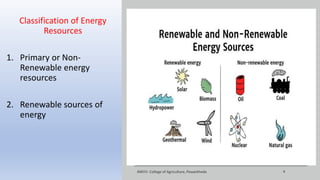
Classification of Energy
Resources
1. Primary or Non-
Renewable energy
resources
2. Renewable sources of
energy
JNKVV- College of Agriculture, Powarkheda 4
Commercial primary energy
resources
Non-renewable sources of
energy or conventional sources
of energy are being accumulated
in nature for a very long time
and can't be replaced if
exhausted.
JNKVV- College of Agriculture, Powarkheda 5
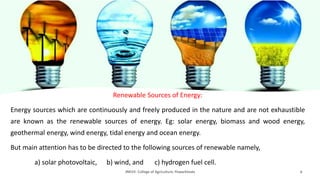
Renewable Sources of Energy:
Energy sources which are continuously and freely produced in the nature and are not exhaustible
are known as the renewable sources of energy. Eg: solar energy, biomass and wood energy,
geothermal energy, wind energy, tidal energy and ocean energy.
But main attention has to be directed to the following sources of renewable namely,
a) solar photovoltaic, b) wind, and c) hydrogen fuel cell.
JNKVV- College of Agriculture, Powarkheda 6
1. These sources of energy are renewable and there is no danger of depletion. These
recur in nature and are in-exhaustible.
2. The power plants based on renewable sources of energy don‟t have any fuel cost and
hence negligible running cost.
3. Renewable are more site specific and are used for local processing and application.
There is no need for transmission and distribution of power.
4. Renewables have low energy density and more or less there is no pollution or
ecological balance problem.
JNKVV- College of Agriculture, Powarkheda 7
5. Most of the devices and plants used with the renewables are simple in design and
construction which are made from local materials, local skills and by local people.
6. The use of renewable energy can help to save foreign exchange and generate local
employment.
7. The rural areas and remote villages can be better served with locally available
renewable sources of energy.
8. There will be huge savings from transporting fuels or transmitting electricity from
long distances.
JNKVV- College of Agriculture, Powarkheda 8
1. Low energy density of renewable sources of energy need large sizes of plant resulting in increased cost of
delivered energy.
2. Intermittency and lack of dependability are the main disadvantages of renewable energy sources.
3. Low energy density also results in lower operating temperatures and hence low efficiencies.
4. Although renewables are essentially free, there is definite cost effectiveness associated with its
conversion and utilization.
5. Much of the construction materials used for renewable energy devices are themselves very energy
intensive.
6. The low efficiency of these plants can result in large heat rejections and hence thermal pollution.
7. The renewable energy plants use larger land masses.
JNKVV- College of Agriculture, Powarkheda 9
Thanks for listening…..
JNKVV- College of Agriculture, Powarkheda 10

Renewable energy introduction

  • 1.
    SUBJECT Renewable Energy and GreenTechnology by Dr. Sanjay Singh Chouhan Assistant Professor College of Agriculture, JNKVV, Powarkheda, Hoshangabad 1
  • 2.
    2 JNKVV- Collegeof Agriculture, Powarkheda Energy • Energy has been defined as the capacity to do work or capability to produce an effort. • It is expressed in N-m or Joules. • The energy density is expressed as Jkg. • Before the industrial revolution of the 18th century, most energy used relied on two important sources i.e., human and animal muscles, and the energy of wind and water available in nature. • The chemical energy in firewood was the main source of heat and light.
  • 3.
    • Different formsof energy Broadly speaking two main types of energy are heat and work. • However, other forms of energy are 1) Electrical energy, 2) Mechanical energy, 3) Chemical energy, 4) Heat energy and 5) Nuclear energy. • Electrical energy is the most convenient form of energy because it can be easily transported, easily controlled and easily converted into other forms of energy at about 100% efficiency. The only short coming of electrical energy is that it can‟t be stored in large quantities. JNKVV- College of Agriculture, Powarkheda 3
  • 4.
    Classification of Energy Resources 1.Primary or Non- Renewable energy resources 2. Renewable sources of energy JNKVV- College of Agriculture, Powarkheda 4
  • 5.
    Commercial primary energy resources Non-renewablesources of energy or conventional sources of energy are being accumulated in nature for a very long time and can't be replaced if exhausted. JNKVV- College of Agriculture, Powarkheda 5
  • 6.
    Renewable Sources ofEnergy: Energy sources which are continuously and freely produced in the nature and are not exhaustible are known as the renewable sources of energy. Eg: solar energy, biomass and wood energy, geothermal energy, wind energy, tidal energy and ocean energy. But main attention has to be directed to the following sources of renewable namely, a) solar photovoltaic, b) wind, and c) hydrogen fuel cell. JNKVV- College of Agriculture, Powarkheda 6
  • 7.
    1. These sourcesof energy are renewable and there is no danger of depletion. These recur in nature and are in-exhaustible. 2. The power plants based on renewable sources of energy don‟t have any fuel cost and hence negligible running cost. 3. Renewable are more site specific and are used for local processing and application. There is no need for transmission and distribution of power. 4. Renewables have low energy density and more or less there is no pollution or ecological balance problem. JNKVV- College of Agriculture, Powarkheda 7
  • 8.
    5. Most ofthe devices and plants used with the renewables are simple in design and construction which are made from local materials, local skills and by local people. 6. The use of renewable energy can help to save foreign exchange and generate local employment. 7. The rural areas and remote villages can be better served with locally available renewable sources of energy. 8. There will be huge savings from transporting fuels or transmitting electricity from long distances. JNKVV- College of Agriculture, Powarkheda 8
  • 9.
    1. Low energydensity of renewable sources of energy need large sizes of plant resulting in increased cost of delivered energy. 2. Intermittency and lack of dependability are the main disadvantages of renewable energy sources. 3. Low energy density also results in lower operating temperatures and hence low efficiencies. 4. Although renewables are essentially free, there is definite cost effectiveness associated with its conversion and utilization. 5. Much of the construction materials used for renewable energy devices are themselves very energy intensive. 6. The low efficiency of these plants can result in large heat rejections and hence thermal pollution. 7. The renewable energy plants use larger land masses. JNKVV- College of Agriculture, Powarkheda 9
  • 10.
    Thanks for listening….. JNKVV-College of Agriculture, Powarkheda 10