


Renaissance
 Sculpture
Tiny Summary of Renaissance
            Sculpture

Early Renaissance     High Renaissance   Late Renaissance
  ca. 1400-1500          ca. 1500-25       ca. 1525-1600


Ghiberti, Donatello     Michelangelo       Giambologna
Renaissance Sculpture
• Renaissance can be divided into three
  periods. The Early Renaissance, during which
  artistic skill in physical realism and classical
  composition was developed. These efforts
  culminated in the High Renaissance, during
  which artists reached the apex of classical
  balance, harmony, and restraint. Then came
  the Late Renaissance, during which severe
  classicism was relaxed in order to allow for a
  measure of complexity and dynamism.
Renaissance Sculpture
• A distinct sub-movement of Late Renaissance
  art was mannerism: the deliberate pursuit of
  novelty and complexity. In sculpture, the
  mannerist approach resulted in distorted
  anatomy (e.g. elongated limbs) and complex
  postures. Many Late Renaissance artists
  worked in a full-blown mannerist style; those
  who did not were often influenced by
  Mannerism, to varying degrees.
Early
Renaissance
Early Renaissance
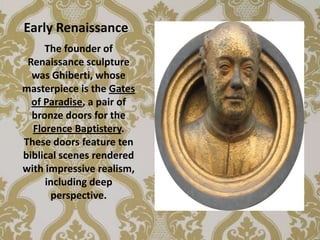
     The founder of
 Renaissance sculpture
  was Ghiberti, whose
masterpiece is the Gates
  of Paradise, a pair of
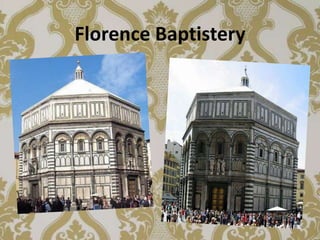
  bronze doors for the
  Florence Baptistery.
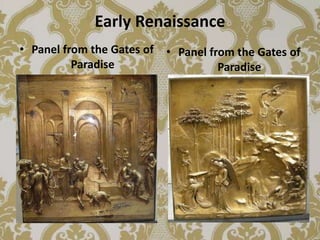
These doors feature ten
biblical scenes rendered
with impressive realism,
     including deep
      perspective.
Florence Baptistery
Early Renaissance
• Panel from the Gates of   • Panel from the Gates of
          Paradise                    Paradise
Early Renaissance
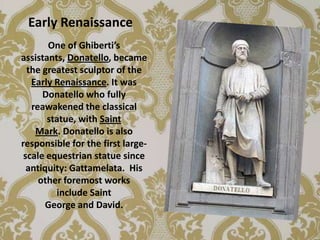
       One of Ghiberti’s
assistants, Donatello, became
  the greatest sculptor of the
   Early Renaissance. It was
      Donatello who fully
   reawakened the classical
       statue, with Saint
    Mark. Donatello is also
responsible for the first large-
 scale equestrian statue since
  antiquity: Gattamelata. His
     other foremost works
         include Saint
       George and David.
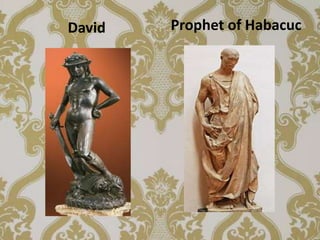
David   Prophet of Habacuc
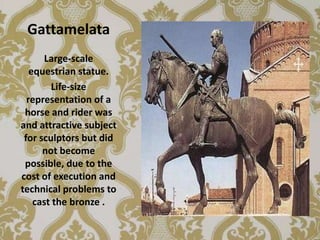
Gattamelata
      Large-scale
   equestrian statue.
        Life-size
  representation of a
 horse and rider was
and attractive subject
 for sculptors but did
      not become
 possible, due to the
cost of execution and
technical problems to
    cast the bronze .
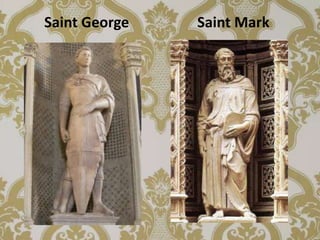
Saint George   Saint Mark
High
Renaissance
High Renaissance
The uncontested master of
High Renaissance sculpture
    is Michelangelo, who
divided his career between
 Florence (his hometown)
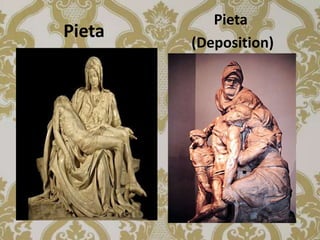
   and Rome. Pieta is the
    foremost of his early
       works, while his
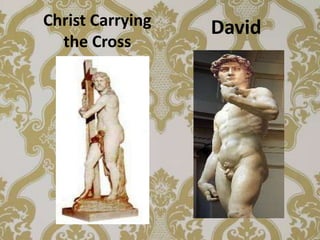
   masterpiece, David, is
    often considered the
  greatest sculpture of all
  time. His foremost late
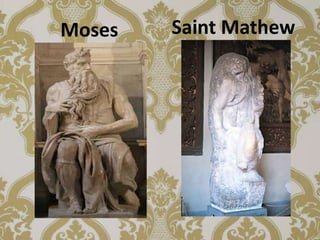
    work may be Moses.
Pieta
Pieta
        (Deposition)
Christ Carrying   David
  the Cross
Moses   Saint Mathew
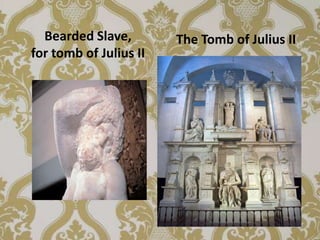
Bearded Slave,        The Tomb of Julius II
for tomb of Julius II
Late
Renaissance
Late
  Renaissance

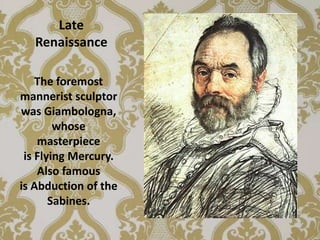
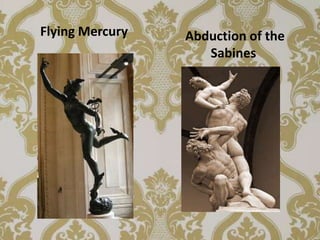
    The foremost
mannerist sculptor
was Giambologna,
        whose
    masterpiece
 is Flying Mercury.
    Also famous
is Abduction of the
       Sabines.
Flying Mercury   Abduction of the
                    Sabines
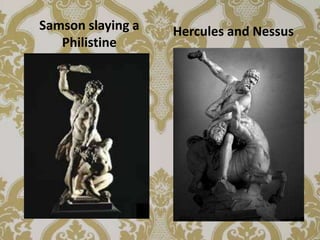
Samson slaying a   Hercules and Nessus
   Philistine
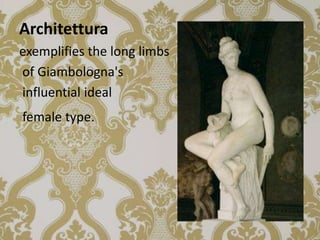
Architettura
exemplifies the long limbs
of Giambologna's
influential ideal
female type.

Renaissance sculpture

  • 1.
  • 2.
    Tiny Summary ofRenaissance Sculpture Early Renaissance High Renaissance Late Renaissance ca. 1400-1500 ca. 1500-25 ca. 1525-1600 Ghiberti, Donatello Michelangelo Giambologna
  • 3.
    Renaissance Sculpture • Renaissancecan be divided into three periods. The Early Renaissance, during which artistic skill in physical realism and classical composition was developed. These efforts culminated in the High Renaissance, during which artists reached the apex of classical balance, harmony, and restraint. Then came the Late Renaissance, during which severe classicism was relaxed in order to allow for a measure of complexity and dynamism.
  • 4.
    Renaissance Sculpture • Adistinct sub-movement of Late Renaissance art was mannerism: the deliberate pursuit of novelty and complexity. In sculpture, the mannerist approach resulted in distorted anatomy (e.g. elongated limbs) and complex postures. Many Late Renaissance artists worked in a full-blown mannerist style; those who did not were often influenced by Mannerism, to varying degrees.
  • 5.
  • 6.
    Early Renaissance The founder of Renaissance sculpture was Ghiberti, whose masterpiece is the Gates of Paradise, a pair of bronze doors for the Florence Baptistery. These doors feature ten biblical scenes rendered with impressive realism, including deep perspective.
  • 7.
  • 8.
    Early Renaissance • Panelfrom the Gates of • Panel from the Gates of Paradise Paradise
  • 9.
    Early Renaissance One of Ghiberti’s assistants, Donatello, became the greatest sculptor of the Early Renaissance. It was Donatello who fully reawakened the classical statue, with Saint Mark. Donatello is also responsible for the first large- scale equestrian statue since antiquity: Gattamelata. His other foremost works include Saint George and David.
  • 10.
    David Prophet of Habacuc
  • 11.
    Gattamelata Large-scale equestrian statue. Life-size representation of a horse and rider was and attractive subject for sculptors but did not become possible, due to the cost of execution and technical problems to cast the bronze .
  • 12.
    Saint George Saint Mark
  • 13.
  • 14.
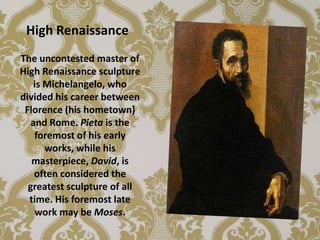
    High Renaissance The uncontestedmaster of High Renaissance sculpture is Michelangelo, who divided his career between Florence (his hometown) and Rome. Pieta is the foremost of his early works, while his masterpiece, David, is often considered the greatest sculpture of all time. His foremost late work may be Moses.
  • 15.
    Pieta Pieta (Deposition)
  • 16.
    Christ Carrying David the Cross
  • 17.
    Moses Saint Mathew
  • 18.
    Bearded Slave, The Tomb of Julius II for tomb of Julius II
  • 19.
  • 20.
    Late Renaissance The foremost mannerist sculptor was Giambologna, whose masterpiece is Flying Mercury. Also famous is Abduction of the Sabines.
  • 21.
    Flying Mercury Abduction of the Sabines
  • 22.
    Samson slaying a Hercules and Nessus Philistine
  • 23.
    Architettura exemplifies the longlimbs of Giambologna's influential ideal female type.