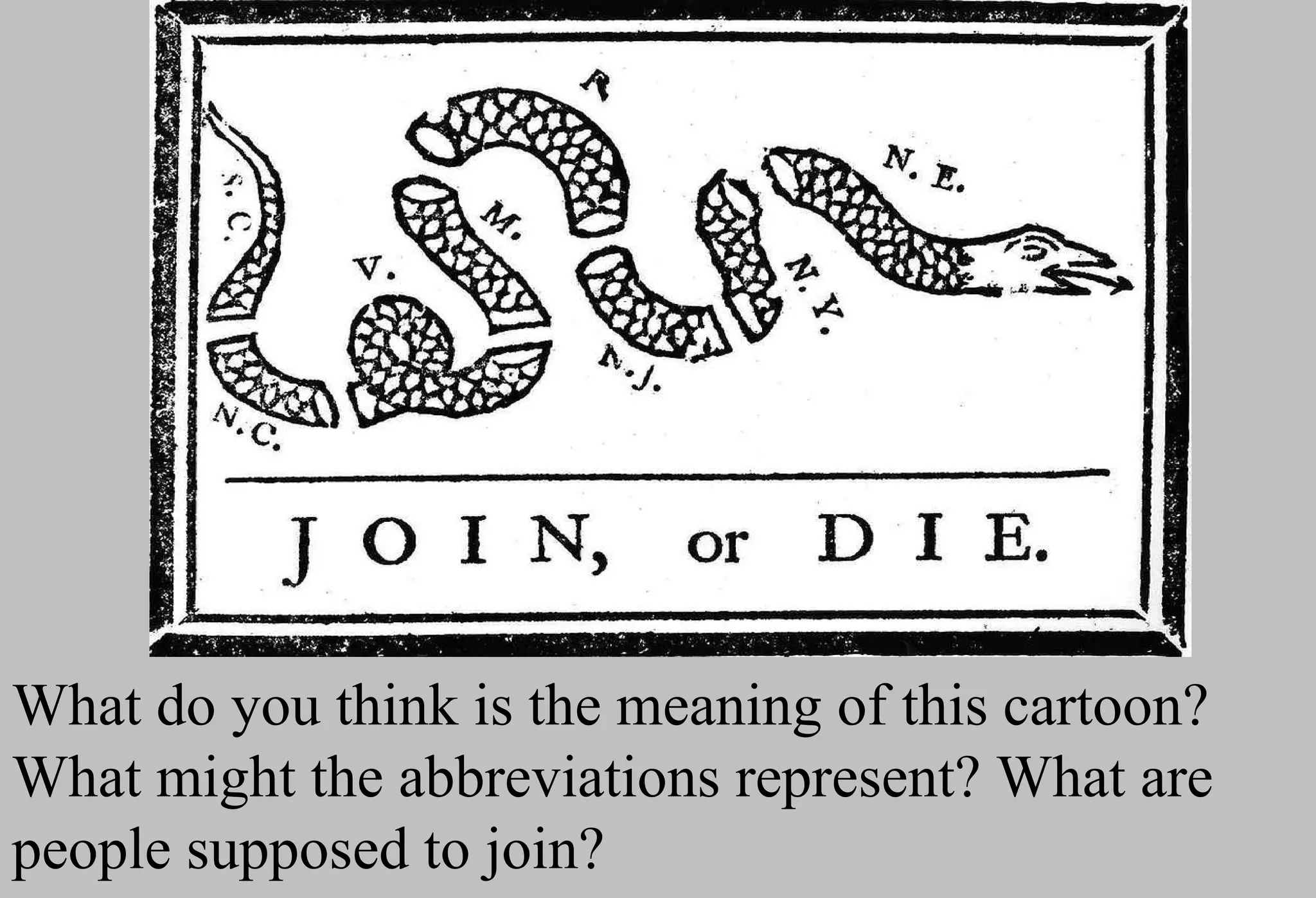
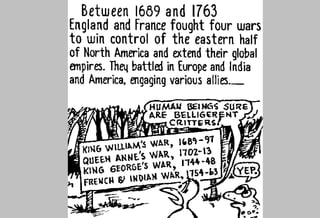
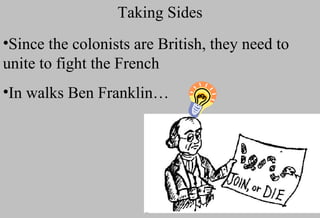
What do you think is the meaning of this cartoon?  What might the abbreviations represent? What are people supposed to join?
The French & Indian War (1756 – 1763) “The Great War for Empire”
Prompt In what ways did the French & Indian War alter the political, economic, and ideological relationship between England and its American colonies?
 
 
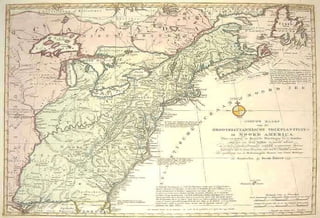
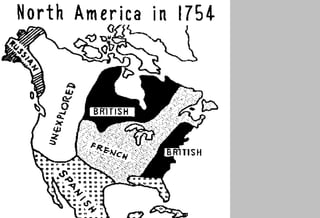
What might the English and French who lived in North America fight about? Each wanted control of more land British frontier towns were getting raided by Native Americans ( allies  of French) Boundaries in North America?  In Europe? They had a history of bad blood Hmm
 
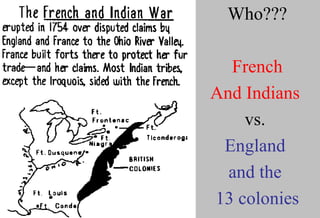
Who??? French And Indians   vs.   England  and the  13 colonies
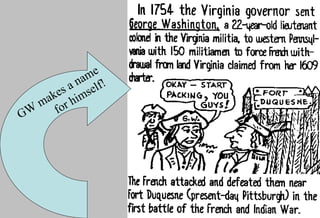
GW makes a name for himself!
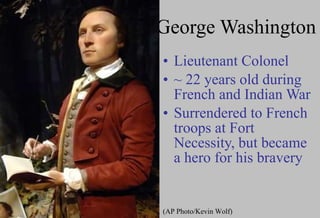
George Washington Lieutenant Colonel  ~ 22 years old during French and Indian War Surrendered to French troops at Fort Necessity, but became a hero for his bravery (AP Photo/Kevin Wolf)
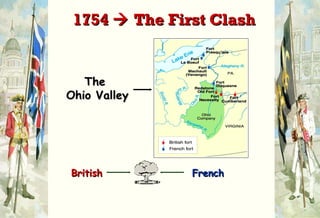
British French The  Ohio Valley 1754    The First Clash
Taking Sides Since the colonists are British, they need to unite to fight the French In walks Ben Franklin…
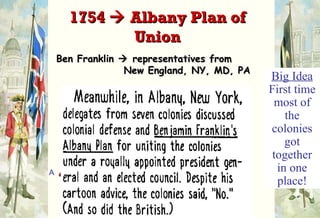
Ben Franklin    representatives from   New England, NY, MD, PA Albany Congress     failed Iroquois   broke off relations with    Britain & threatened to   trade with the French. 1754    Albany Plan of Union Big Idea  First time most of the colonies got together in one place!
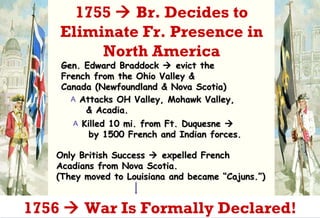
Gen. Edward Braddock    evict the  French from the Ohio Valley &  Canada (Newfoundland & Nova Scotia) Attacks OH Valley, Mohawk Valley,   & Acadia. Killed 10 mi. from Ft. Duquesne     by 1500 French and Indian forces. Only British Success    expelled French Acadians from Nova Scotia.  (They moved to Louisiana and became “Cajuns.”)  1755    Br. Decides to Eliminate Fr. Presence in North America 1756    War Is Formally Declared!
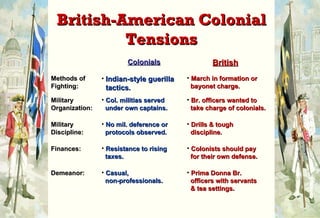
March in formation or    bayonet charge. Br. officers wanted to   take charge of colonials. Prima Donna Br.    officers with servants   & tea settings. Drills & tough   discipline. Colonists should pay   for their own defense. Indian-style guerilla   tactics. Col. militias served   under own captains. No mil. deference or   protocols observed. Resistance to rising   taxes. Casual,    non-professionals. Methods of Fighting: Military Organization: Military Discipline: Finances: Demeanor: British-American Colonial Tensions British Colonials
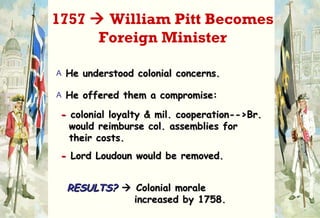
He understood colonial concerns. He offered them a compromise: -  colonial loyalty & mil. cooperation-->Br.    would reimburse col. assemblies for   their costs. -   Lord Loudoun would be removed. RESULTS?     Colonial morale   increased by 1758. 1757    William Pitt Becomes Foreign Minister
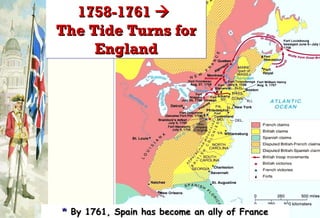
1758-1761     The Tide Turns for England *   By 1761, Spain has become an ally of France
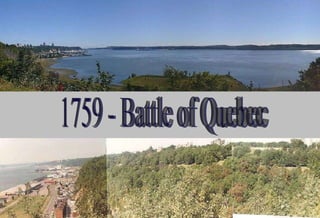
1759 - Battle of Quebec
 
 
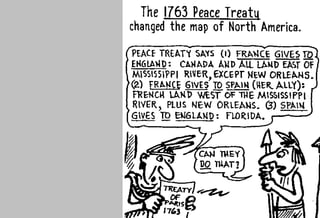
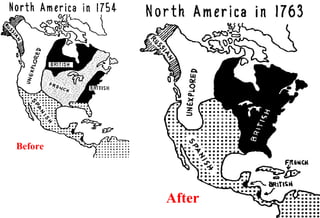
Before After
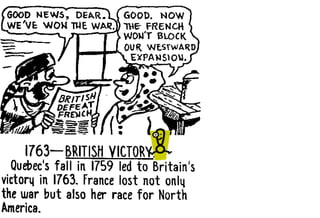
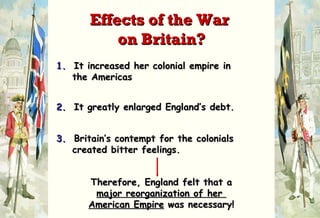
1.   It increased her colonial empire in    the Americas 2.   It greatly enlarged England’s debt. 3.   Britain’s contempt for the colonials    created bitter feelings. Therefore, England felt that a major reorganization of her  American Empire  was necessary! Effects of the War  on Britain?
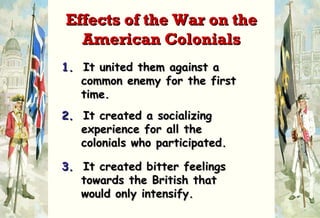
1.   It united them against a   common enemy for the first   time. 2.   It created a socializing   experience for all the    colonials who participated. 3.   It created bitter feelings    towards the British that   would only intensify. Effects of the War on the American Colonials
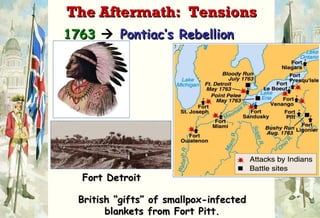
1763      Pontiac’s Rebellion Fort Detroit British “gifts” of smallpox-infected blankets from Fort Pitt. The Aftermath:  Tensions
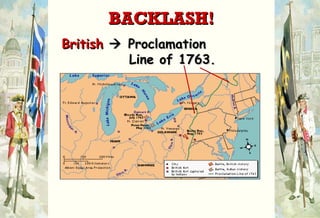
British     Proclamation   Line of 1763. BACKLASH!

French and Indian War

  • 1.
    What do youthink is the meaning of this cartoon? What might the abbreviations represent? What are people supposed to join?
  • 2.
    The French &Indian War (1756 – 1763) “The Great War for Empire”
  • 3.
    Prompt In whatways did the French & Indian War alter the political, economic, and ideological relationship between England and its American colonies?
  • 4.
  • 5.
  • 6.
    What might theEnglish and French who lived in North America fight about? Each wanted control of more land British frontier towns were getting raided by Native Americans ( allies of French) Boundaries in North America? In Europe? They had a history of bad blood Hmm
  • 7.
  • 8.
    Who??? French AndIndians vs. England and the 13 colonies
  • 9.
    GW makes aname for himself!
  • 10.
    George Washington LieutenantColonel ~ 22 years old during French and Indian War Surrendered to French troops at Fort Necessity, but became a hero for his bravery (AP Photo/Kevin Wolf)
  • 11.
    British French The Ohio Valley 1754  The First Clash
  • 12.
    Taking Sides Sincethe colonists are British, they need to unite to fight the French In walks Ben Franklin…
  • 13.
    Ben Franklin  representatives from New England, NY, MD, PA Albany Congress  failed Iroquois broke off relations with Britain & threatened to trade with the French. 1754  Albany Plan of Union Big Idea First time most of the colonies got together in one place!
  • 14.
    Gen. Edward Braddock  evict the French from the Ohio Valley & Canada (Newfoundland & Nova Scotia) Attacks OH Valley, Mohawk Valley, & Acadia. Killed 10 mi. from Ft. Duquesne  by 1500 French and Indian forces. Only British Success  expelled French Acadians from Nova Scotia. (They moved to Louisiana and became “Cajuns.”) 1755  Br. Decides to Eliminate Fr. Presence in North America 1756  War Is Formally Declared!
  • 15.
    March in formationor bayonet charge. Br. officers wanted to take charge of colonials. Prima Donna Br. officers with servants & tea settings. Drills & tough discipline. Colonists should pay for their own defense. Indian-style guerilla tactics. Col. militias served under own captains. No mil. deference or protocols observed. Resistance to rising taxes. Casual, non-professionals. Methods of Fighting: Military Organization: Military Discipline: Finances: Demeanor: British-American Colonial Tensions British Colonials
  • 16.
    He understood colonialconcerns. He offered them a compromise: - colonial loyalty & mil. cooperation-->Br. would reimburse col. assemblies for their costs. - Lord Loudoun would be removed. RESULTS?  Colonial morale increased by 1758. 1757  William Pitt Becomes Foreign Minister
  • 17.
    1758-1761  The Tide Turns for England * By 1761, Spain has become an ally of France
  • 18.
    1759 - Battleof Quebec
  • 19.
  • 20.
  • 21.
  • 22.
    1. It increased her colonial empire in the Americas 2. It greatly enlarged England’s debt. 3. Britain’s contempt for the colonials created bitter feelings. Therefore, England felt that a major reorganization of her American Empire was necessary! Effects of the War on Britain?
  • 23.
    1. It united them against a common enemy for the first time. 2. It created a socializing experience for all the colonials who participated. 3. It created bitter feelings towards the British that would only intensify. Effects of the War on the American Colonials
  • 24.
    1763  Pontiac’s Rebellion Fort Detroit British “gifts” of smallpox-infected blankets from Fort Pitt. The Aftermath: Tensions
  • 25.
    British  Proclamation Line of 1763. BACKLASH!