• An introduction to reflective
learning.
• Maslow’s Hierarchy of Needs
for trainers
© 𝐶𝐺 𝑝ℎ𝑜𝑡𝑜𝑔𝑟𝑎𝑝ℎ𝑦
Outline for this mentoring session
• What is reflection & why reflective learning and reflective practice is key to
effective training
• Introduction to Maslow’s Hierarchy and application to the training room.
• Aim - to enable learners to thrive, to achieve what they set out to at the
start of the workshop or course(Self-actualisation)
• Use of Group Agreement (Safety/Security)
• Promote good behaviour (Safety)
• Promote respect (Recognition)
• Promote equality and value diversity (Safety/Security, Recognition)
• The importance of identifying and meeting learners needs (Self-esteem)
"Follow effective action with quiet
reflection.
From the quiet reflection will come
even more effective action."
Peter F. Drucker
Within West Berkshire
Wellbeing, reflective learning
involves:
• students thinking about
what they have read, done,
seen or learnt in a session
• relating that lesson at hand
to their own lives
• and making meaning out of
the material both personally
and for their organisations.
It is an important part of the
learning journey for teachers,
trainers and leaners.
”reflection cannot be avoided. It
is part of the process of how
humans learn, therefore it makes
sense to do it well. The teacher,
as a role model, is the most
significant influence on (a
student) developing effective
reflective practice”.
Dr Tristian Stobie, Director of Education at
Cambridge University.
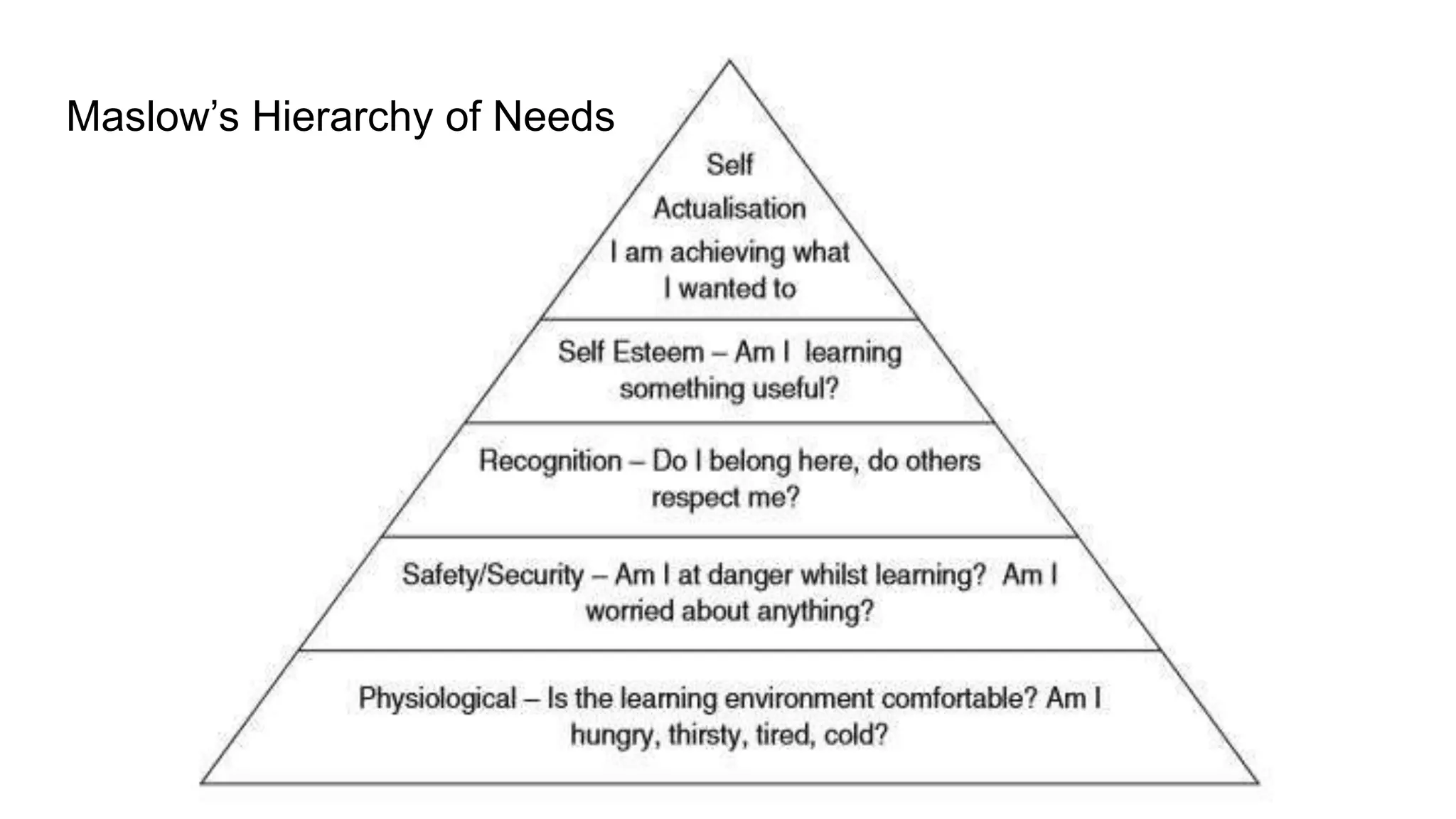
Maslow’s Hierarchy of Needs
Group Agreements
• A key application of Maslow’s
Hierarchy of Needs in the
training room.
• Applies to all needs especially
Safety/Security, Recognition &
Self-Esteem.
• Create these with your learners
at the start of every workshop or
course.
What is meant by Appropriate Behaviour?
• In the context of the adult training room it is about how the trainer
and the students interact with each other.
• Appropriate means behaviour (both the Trainer’s and the students),
that enables learning to take place for all students – Self
Actualisation.
How can trainers ensure appropriate
behaviour in the training room?
• First of all trainers must model
appropriate behaviour themselves
at all times.
• Setting behaviour boundaries is
key – what is acceptable and not
acceptable
• Facilitate the discussions to ensure
Group Guidelines include what is
appropriate behaviour
• and referring to the ground rules
is an effective way of doing this.
Dealing with difficult behaviour or “prickly
people” in the training room
• Remain calm and have a plan
• Respect personal space
• Be aware of your body language
• Pay attention to your own
paraverbals
• Recognize that your effective
response can influence a
positive outcome
Treating people with respect
• Respect is a key feature of Maslow’s Hierarchy of human needs.
• Mutual respect in the classroom encompasses more than the
interaction between learners and the trainer .
• An atmosphere of mutual respect means that leaners also treat each
other properly.
• The result is a classroom where more learning takes place as
students feel safe, motivated and, of course, respected.

Reflective learning

  • 1.
    • An introductionto reflective learning. • Maslow’s Hierarchy of Needs for trainers © 𝐶𝐺 𝑝ℎ𝑜𝑡𝑜𝑔𝑟𝑎𝑝ℎ𝑦
  • 2.
    Outline for thismentoring session • What is reflection & why reflective learning and reflective practice is key to effective training • Introduction to Maslow’s Hierarchy and application to the training room. • Aim - to enable learners to thrive, to achieve what they set out to at the start of the workshop or course(Self-actualisation) • Use of Group Agreement (Safety/Security) • Promote good behaviour (Safety) • Promote respect (Recognition) • Promote equality and value diversity (Safety/Security, Recognition) • The importance of identifying and meeting learners needs (Self-esteem)
  • 3.
    "Follow effective actionwith quiet reflection. From the quiet reflection will come even more effective action." Peter F. Drucker
  • 4.
    Within West Berkshire Wellbeing,reflective learning involves: • students thinking about what they have read, done, seen or learnt in a session • relating that lesson at hand to their own lives • and making meaning out of the material both personally and for their organisations.
  • 5.
    It is animportant part of the learning journey for teachers, trainers and leaners. ”reflection cannot be avoided. It is part of the process of how humans learn, therefore it makes sense to do it well. The teacher, as a role model, is the most significant influence on (a student) developing effective reflective practice”. Dr Tristian Stobie, Director of Education at Cambridge University.
  • 6.
  • 7.
    Group Agreements • Akey application of Maslow’s Hierarchy of Needs in the training room. • Applies to all needs especially Safety/Security, Recognition & Self-Esteem. • Create these with your learners at the start of every workshop or course.
  • 8.
    What is meantby Appropriate Behaviour? • In the context of the adult training room it is about how the trainer and the students interact with each other. • Appropriate means behaviour (both the Trainer’s and the students), that enables learning to take place for all students – Self Actualisation.
  • 9.
    How can trainersensure appropriate behaviour in the training room? • First of all trainers must model appropriate behaviour themselves at all times. • Setting behaviour boundaries is key – what is acceptable and not acceptable • Facilitate the discussions to ensure Group Guidelines include what is appropriate behaviour • and referring to the ground rules is an effective way of doing this.
  • 10.
    Dealing with difficultbehaviour or “prickly people” in the training room • Remain calm and have a plan • Respect personal space • Be aware of your body language • Pay attention to your own paraverbals • Recognize that your effective response can influence a positive outcome
  • 11.
    Treating people withrespect • Respect is a key feature of Maslow’s Hierarchy of human needs. • Mutual respect in the classroom encompasses more than the interaction between learners and the trainer . • An atmosphere of mutual respect means that leaners also treat each other properly. • The result is a classroom where more learning takes place as students feel safe, motivated and, of course, respected.