Presented to:
69th SWCS International Annual Conference
July 27-30, 2014
Westin Lombard Hotel, Lombard, Illinois 60148, USA
Soil and Water Conservation Society
Reducing nutrients, fecal coliform, and
sediment concentrations in the Lower
Mississippi River Sub-Basin
Presented by:
D.D. Poudel, Ph.D.
Professor and Coordinator, Environmental Science Program
School of Geosciences
University of Louisiana at Lafayette, Louisiana, USA
 Coulee Baton Microwatershed
 Project design
 Water quality monitoring locations
and field installation
 Water quality monitoring
 Results and discussion
 Conclusions
 Acknowledgement
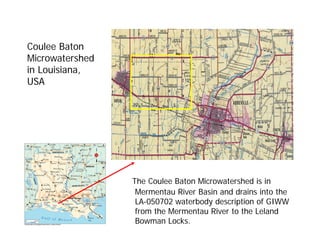
Coulee Baton
Microwatershed
in Louisiana,
USA
The Coulee Baton Microwatershed is in
Mermentau River Basin and drains into the
LA-050702 waterbody description of GIWW
from the Mermentau River to the Leland
Bowman Locks.
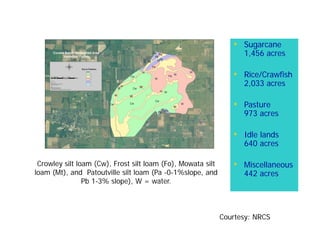
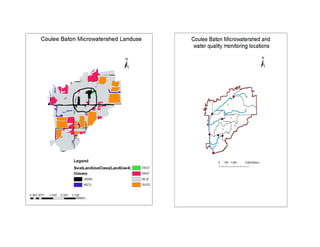
Crowley silt loam (Cw), Frost silt loam (Fo), Mowata silt
loam (Mt), and Patoutville silt loam (Pa -0-1%slope, and
Pb 1-3% slope), W = water.
• Sugarcane
1,456 acres
• Rice/Crawfish
2,033 acres
• Pasture
973 acres
• Idle lands
640 acres
• Miscellaneous
442 acres
Courtesy: NRCS
Planned Intervention Microwatershed Approach
(PIMA)
Scaling-up of the field-plot BMP results to a watershed level
Texas Institute for Applied Environmental Research (TiAER) at
Tarleton State University, Texas developed the PIMA
Microwatershed is defined as anywhere between 3,000 – 20,000
acres with identifiable hydrologic boundaries
Landuse variables can be reduced and sources of pollutant loads
can be easily identified
Promotes local ownerships of the program
Community-friendly approach
Cost-effective, collaborative, and stakeholders involvement
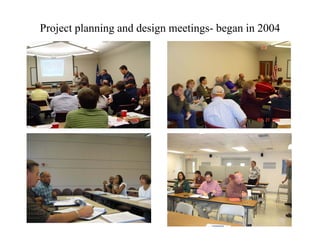
Project planning and design meetings- began in 2004
Cooperating Partners
Louisiana Department of Agriculture and Forestry
USDA-NRCS
Acadiana RC&D
Louisiana Department of Environmental Quality
LSU AgCenter
Louisiana Cooperative Extension Service
Texas Institute for Applied Environmental Research (TiAER)
University of Louisiana at Lafayette, Louisiana
USDA Farm Service Agency
Coulee Baton Gravity Drainage District
Vermilion Parish Police Jury
Gulf of Mexico Program
Local agricultural enterprises and businesses
Louisiana Department of Natural Resources
Vermilion Soil and Water Conservation District
Implementation of BMPs in the microwatershed
Vermilion Soil and Water Conservation Districts and USDA-NRCS
developed a plan for voluntary implementation of BMPs
4 contracts under EQIP covering 229 acres signed in 2006-2007 and
BMPs installed included:
Irrigation Land Leveling
Grade Stabilization Structures
Irrigation Water Conveyance
Fencing
Heavy Use Protection, and
Water well
Septic systems replacement cost-share
program
VSWCD together with Acadiana RC&D Council and LDEQ
through cost-share program
Repair or replacement of failing or aging home septic systems
(80 systems installed out of 230 homes) in the
microwatershed
Homeowner education, field day, and demonstration of three
ER systems:
Spray Irrigation System
Rock Plant Filter System, and
Gravel Field line
“This project could be replicated in any small watershed
that is predominately residential.
The challenge of such replication lies not in technology
transfer or information transfer, but in motivating
homeowners to participate. Reaching and convincing
individual homeowners was the most difficult and least
predictable task of this project. Some understand their role
in water protection and readily accepted the opportunity to
bring their systems into compliance with DHH regulations.
Others were unconvinced that their systems were
problematic and seemed suspicious and wary of the
process. Proper education is necessary in order to motivate
individuals to action, but vary rarely will education and
outreach garner a voluntary response of 100%.”
http://www.acadianarcd.com/cms-assets/documents/29044-
170831.final-report-rev1.pdf
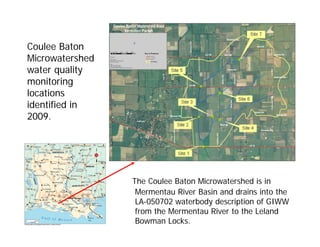
Coulee Baton
Microwatershed
water quality
monitoring
locations
identified in
2009.
The Coulee Baton Microwatershed is in
Mermentau River Basin and drains into the
LA-050702 waterbody description of GIWW
from the Mermentau River to the Leland
Bowman Locks.
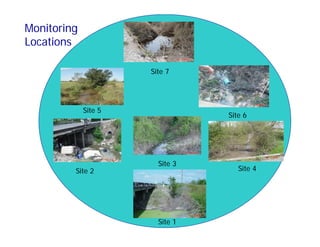
Site 7
Site 6
Site 5
Site 4
Site 1
Site 3
Site 2
Monitoring
Locations
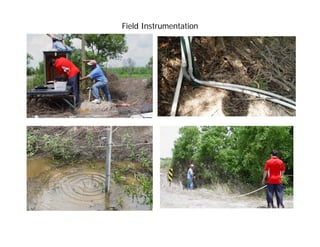
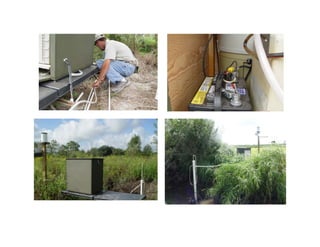
Field Instrumentation
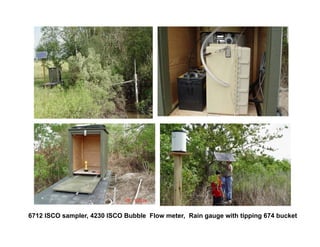
6712 ISCO sampler, 4230 ISCO Bubble Flow meter, Rain gauge with tipping 674 bucket
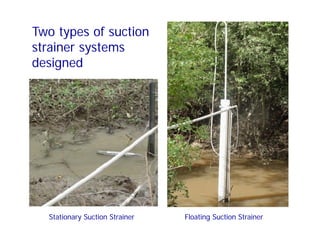
Floating Suction StrainerStationary Suction Strainer
Two types of suction
strainer systems
designed
Water Quality Sampling and analysis
Field parameters – YSI Sonde
Laboratory determination
Sampling began on September 24, 2009 and
ended on August 9, 2011
Water quality monitoring
ResultsResults and discussion
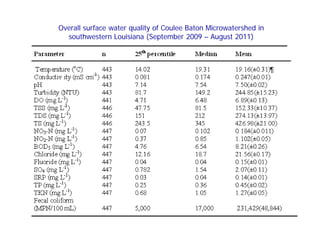
Overall surface water quality of Coulee Baton Microwatershed in
southwestern Louisiana (September 2009 – August 2011)
0
100
200
300
400
500
600
700
Site 1Site 2Site 3Site 4Site 5Site 6Site 7
mgL-1
Average TS, TDS, and TSS for
seven sites
TS
TDS
TSS
0
0.5
1
1.5
2
2.5
Site
1
Site
2
Site
3
Site
4
Site
5
Site
6
Site
7
mgL-1
Average TKN, nitrite, and nitrate
for seven sites
TKN
Nitrite
Nitrate
0
0.1
0.2
0.3
0.4
0.5
0.6
Site 1 Site 2 Site 3 Site 4 Site 5 Site 6 Site 7
mgL-1
Average TP and SRP for seven
sites
TP
SRP
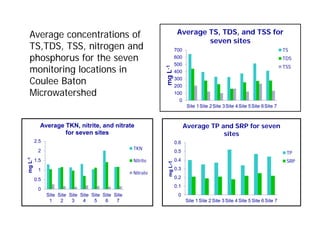
Average concentrations of
TS,TDS, TSS, nitrogen and
phosphorus for the seven
monitoring locations in
Coulee Baton
Microwatershed
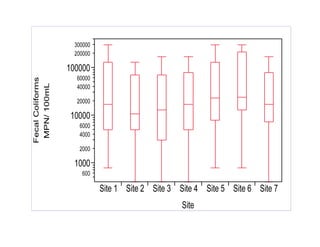
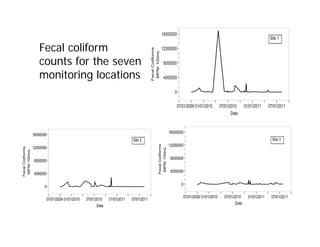
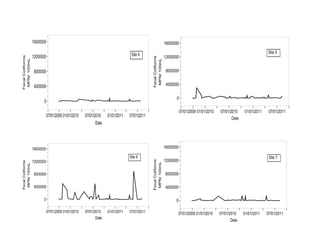
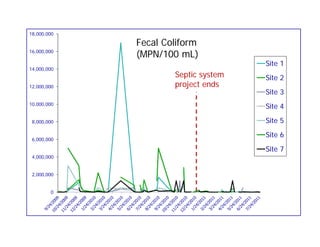
Fecal coliform
counts for the seven
monitoring locations
0
2,000,000
4,000,000
6,000,000
8,000,000
10,000,000
12,000,000
14,000,000
16,000,000
18,000,000
Site 1
Site 2
Site 3
Site 4
Site 5
Site 6
Site 7
Fecal Coliform
(MPN/100 mL)
Septic system
project ends
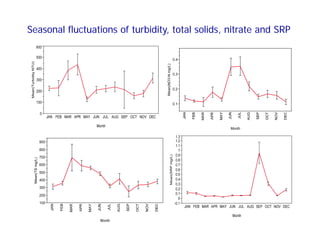
Seasonal fluctuations of turbidity, total solids, nitrate and SRP
Conclusions
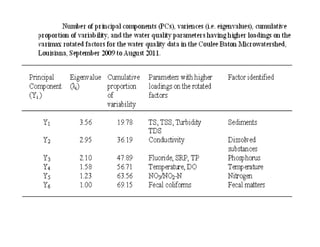
 Sediments, nutrients, temperature, and fecal matters are the major
cause of nonpoint source pollution in Coulee Baton microwatershed.
Fecal coliform concentration has declined recently following the repair or
replacement of home septic systems, but still very high.
Low level of implementation of BMPs and difficulties in motivating
homeowners in repair or replacement of old septic systems.
Seasonal fluctuations of nonpoint source pollutants especially suspended
solids and nutrients relate to agricultural activities.
 The PIMA promise more focused, coordinated, and effective approach for
nonpoint source pollution control.
I would like to acknowledge the LDEQ and EPA Region VI for funding
this project through the 319 grant program. Thanks to LDEQ staff Mr.
Cortez Rankin, Mr. Reggie Coleman, Mr. Max Forbes, Ms. Christy Rando,
and Ms. Stephine Morrel for their support in this project. Also, many
thanks to UL faculty, staff, and students, including Mr. Brian Kibbe, Mr.
Will Bernard, and Ms. Colette Anzalone for field work, field
instrumentation, and other help. The support from LSU Ag Center by
lending ISCO samplers and flowmeters is much appreciated.
Special thanks to the Vermilion Soil and Water Conservation District
(VSWCD) for leading this initiative for building a collaborative
partnerships for the Coulee Baton Microwatershed. Similarly, special
thanks to Dr. Ernest Girouard, Vermilion SWCD and LSU Ag Center, Mr.
Sheryll, Vermillion SWCD, Ms. Mitzie Dohrman and Mr. Justin Meaux at
Vermilion SWCD, and Mr. Dexter Sapp, NRCS, and Acadiana RC&D staff
for their help and participation in various meetings. Active participations
of local communities, governmental agencies, and other stakeholders in
the project planning meetings is highly appreciated.
Acknowledgements
Thank you for your attention!

Reducing nutrients

  • 1.
    Presented to: 69th SWCSInternational Annual Conference July 27-30, 2014 Westin Lombard Hotel, Lombard, Illinois 60148, USA Soil and Water Conservation Society Reducing nutrients, fecal coliform, and sediment concentrations in the Lower Mississippi River Sub-Basin Presented by: D.D. Poudel, Ph.D. Professor and Coordinator, Environmental Science Program School of Geosciences University of Louisiana at Lafayette, Louisiana, USA
  • 2.
     Coulee BatonMicrowatershed  Project design  Water quality monitoring locations and field installation  Water quality monitoring  Results and discussion  Conclusions  Acknowledgement
  • 3.
    Coulee Baton Microwatershed in Louisiana, USA TheCoulee Baton Microwatershed is in Mermentau River Basin and drains into the LA-050702 waterbody description of GIWW from the Mermentau River to the Leland Bowman Locks.
  • 4.
    Crowley silt loam(Cw), Frost silt loam (Fo), Mowata silt loam (Mt), and Patoutville silt loam (Pa -0-1%slope, and Pb 1-3% slope), W = water. • Sugarcane 1,456 acres • Rice/Crawfish 2,033 acres • Pasture 973 acres • Idle lands 640 acres • Miscellaneous 442 acres Courtesy: NRCS
  • 5.
    Planned Intervention MicrowatershedApproach (PIMA) Scaling-up of the field-plot BMP results to a watershed level Texas Institute for Applied Environmental Research (TiAER) at Tarleton State University, Texas developed the PIMA Microwatershed is defined as anywhere between 3,000 – 20,000 acres with identifiable hydrologic boundaries Landuse variables can be reduced and sources of pollutant loads can be easily identified Promotes local ownerships of the program Community-friendly approach Cost-effective, collaborative, and stakeholders involvement
  • 6.
    Project planning anddesign meetings- began in 2004
  • 7.
    Cooperating Partners Louisiana Departmentof Agriculture and Forestry USDA-NRCS Acadiana RC&D Louisiana Department of Environmental Quality LSU AgCenter Louisiana Cooperative Extension Service Texas Institute for Applied Environmental Research (TiAER) University of Louisiana at Lafayette, Louisiana USDA Farm Service Agency Coulee Baton Gravity Drainage District Vermilion Parish Police Jury Gulf of Mexico Program Local agricultural enterprises and businesses Louisiana Department of Natural Resources Vermilion Soil and Water Conservation District
  • 8.
    Implementation of BMPsin the microwatershed Vermilion Soil and Water Conservation Districts and USDA-NRCS developed a plan for voluntary implementation of BMPs 4 contracts under EQIP covering 229 acres signed in 2006-2007 and BMPs installed included: Irrigation Land Leveling Grade Stabilization Structures Irrigation Water Conveyance Fencing Heavy Use Protection, and Water well
  • 9.
    Septic systems replacementcost-share program VSWCD together with Acadiana RC&D Council and LDEQ through cost-share program Repair or replacement of failing or aging home septic systems (80 systems installed out of 230 homes) in the microwatershed Homeowner education, field day, and demonstration of three ER systems: Spray Irrigation System Rock Plant Filter System, and Gravel Field line
  • 10.
    “This project couldbe replicated in any small watershed that is predominately residential. The challenge of such replication lies not in technology transfer or information transfer, but in motivating homeowners to participate. Reaching and convincing individual homeowners was the most difficult and least predictable task of this project. Some understand their role in water protection and readily accepted the opportunity to bring their systems into compliance with DHH regulations. Others were unconvinced that their systems were problematic and seemed suspicious and wary of the process. Proper education is necessary in order to motivate individuals to action, but vary rarely will education and outreach garner a voluntary response of 100%.” http://www.acadianarcd.com/cms-assets/documents/29044- 170831.final-report-rev1.pdf
  • 11.
    Coulee Baton Microwatershed water quality monitoring locations identifiedin 2009. The Coulee Baton Microwatershed is in Mermentau River Basin and drains into the LA-050702 waterbody description of GIWW from the Mermentau River to the Leland Bowman Locks.
  • 12.
    Site 7 Site 6 Site5 Site 4 Site 1 Site 3 Site 2 Monitoring Locations
  • 13.
  • 15.
    6712 ISCO sampler,4230 ISCO Bubble Flow meter, Rain gauge with tipping 674 bucket
  • 16.
    Floating Suction StrainerStationarySuction Strainer Two types of suction strainer systems designed
  • 17.
    Water Quality Samplingand analysis Field parameters – YSI Sonde Laboratory determination Sampling began on September 24, 2009 and ended on August 9, 2011 Water quality monitoring
  • 21.
  • 22.
    Overall surface waterquality of Coulee Baton Microwatershed in southwestern Louisiana (September 2009 – August 2011)
  • 23.
    0 100 200 300 400 500 600 700 Site 1Site 2Site3Site 4Site 5Site 6Site 7 mgL-1 Average TS, TDS, and TSS for seven sites TS TDS TSS 0 0.5 1 1.5 2 2.5 Site 1 Site 2 Site 3 Site 4 Site 5 Site 6 Site 7 mgL-1 Average TKN, nitrite, and nitrate for seven sites TKN Nitrite Nitrate 0 0.1 0.2 0.3 0.4 0.5 0.6 Site 1 Site 2 Site 3 Site 4 Site 5 Site 6 Site 7 mgL-1 Average TP and SRP for seven sites TP SRP Average concentrations of TS,TDS, TSS, nitrogen and phosphorus for the seven monitoring locations in Coulee Baton Microwatershed
  • 25.
    Fecal coliform counts forthe seven monitoring locations
  • 27.
    0 2,000,000 4,000,000 6,000,000 8,000,000 10,000,000 12,000,000 14,000,000 16,000,000 18,000,000 Site 1 Site 2 Site3 Site 4 Site 5 Site 6 Site 7 Fecal Coliform (MPN/100 mL) Septic system project ends
  • 28.
    Seasonal fluctuations ofturbidity, total solids, nitrate and SRP
  • 30.
    Conclusions  Sediments, nutrients,temperature, and fecal matters are the major cause of nonpoint source pollution in Coulee Baton microwatershed. Fecal coliform concentration has declined recently following the repair or replacement of home septic systems, but still very high. Low level of implementation of BMPs and difficulties in motivating homeowners in repair or replacement of old septic systems. Seasonal fluctuations of nonpoint source pollutants especially suspended solids and nutrients relate to agricultural activities.  The PIMA promise more focused, coordinated, and effective approach for nonpoint source pollution control.
  • 31.
    I would liketo acknowledge the LDEQ and EPA Region VI for funding this project through the 319 grant program. Thanks to LDEQ staff Mr. Cortez Rankin, Mr. Reggie Coleman, Mr. Max Forbes, Ms. Christy Rando, and Ms. Stephine Morrel for their support in this project. Also, many thanks to UL faculty, staff, and students, including Mr. Brian Kibbe, Mr. Will Bernard, and Ms. Colette Anzalone for field work, field instrumentation, and other help. The support from LSU Ag Center by lending ISCO samplers and flowmeters is much appreciated. Special thanks to the Vermilion Soil and Water Conservation District (VSWCD) for leading this initiative for building a collaborative partnerships for the Coulee Baton Microwatershed. Similarly, special thanks to Dr. Ernest Girouard, Vermilion SWCD and LSU Ag Center, Mr. Sheryll, Vermillion SWCD, Ms. Mitzie Dohrman and Mr. Justin Meaux at Vermilion SWCD, and Mr. Dexter Sapp, NRCS, and Acadiana RC&D staff for their help and participation in various meetings. Active participations of local communities, governmental agencies, and other stakeholders in the project planning meetings is highly appreciated. Acknowledgements
  • 32.
    Thank you foryour attention!