Recruitment and Retention
President Parker, Treasurer Barnier
What will you get from this
presentation?
1. A list of opportunities for recruiting and possible
themes for those opportunities
2. Basic instruction in some different “Asks and Wraps”
3. A framework for follow up actions and communications
These tools will provide a cornerstone for recruiting
and retaining contacts, officers and volunteers.
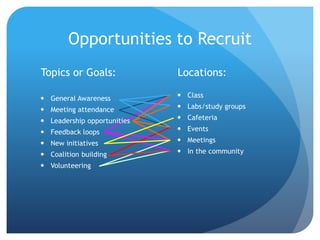
Opportunities to Recruit
Topics or Goals:
 General Awareness
 Meeting attendance
 Leadership opportunities
 Feedback loops
 New initiatives
 Coalition building
 Volunteering
Locations:
 Class
 Labs/study groups
 Cafeteria
 Events
 Meetings
 In the community
The “elevator pitch”
“The purpose of the pitch isn’t necessarily to move others to adopt your
idea, it’s to offer something so compelling it begins a conversation,”
Author, Daniel H. Pink.
el·e·va·tor pitch
Noun US informal
1. A succinct and persuasive sales pitch
2. A slang term used to describe a brief speech that outlines an idea for a
product, service or project. The name comes from the notion that the
speech should be delivered in the short time period of an elevator ride,
usually 20-60 seconds.

Read more: Elevator Pitch Definition | Investopedia http://www.investopedia.com/terms/e/elevatorpitch.asp#ixzz3khq2em9A
Follow us: Investopedia on Facebook
Other Pitches and Wraps
 The One Word Pitch
 The Question Pitch
 The Rhyming Pitch
 Subject Line Pitches
 The Pixar Pitch
 The Twitter Pitch
Read More @
http://www.forbes.com/sites/carminegallo/2013/03/
26/six-simple-and-irresistible-alternatives-to-the-
elevator-pitch/
 Class Wraps
 Table Wraps
 Event Wraps
 Meeting Wraps
 Business Wraps
(the ask)
Collecting Information
Know: What information you need to collect, when to
collect information and which tools to use.
Names, Telephone, Email, Addresses or feedback will be the
most common items collected.
Be purposeful in these activities.
Practice and plan until you have the information you need!
So I’ve got recruits, now what?
Easy!!!
Retention boils down to two main activities:
1. Follow up Communication
2. Follow up Action
The MSCSA would like to disclose that this is easier said than done.
Follow Up Communication
Individuals
 Initial follow ups.
 Project outlines.
 Updates.
Groups
 Have teams been organized
and provided guidance?
 Is there support in place for
individual assignments?
 Are deadlines and goals
clearly stated?
Use a variety of methods like phone, email, Twitter &
Facebook or on campus marketing to communicate.
Target and organize communication for different
types of groups and individuals.
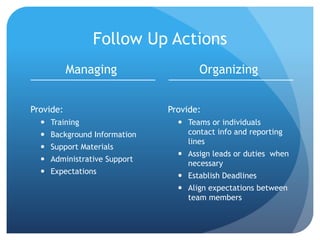
Follow Up Actions
Managing
Provide:
 Training
 Background Information
 Support Materials
 Administrative Support
 Expectations
Organizing
Provide:
 Teams or individuals
contact info and reporting
lines
 Assign leads or duties when
necessary
 Establish Deadlines
 Align expectations between
team members
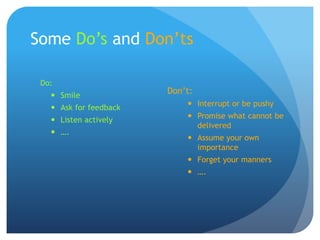
Some Do’s and Don’ts
Do:
 Smile
 Ask for feedback
 Listen actively
 ….
Don’t:
 Interrupt or be pushy
 Promise what cannot be
delivered
 Assume your own
importance
 Forget your manners
 ….
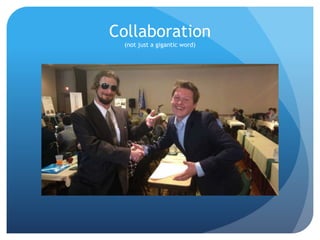
Collaboration
(not just a gigantic word)
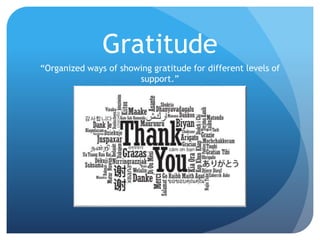
Gratitude
“Organized ways of showing gratitude for different levels of
support.”
To Summarize…
1. Develop the skills for recruitment.
2. Identify and leverage opportunities.
3. Take information and commitments from recruiting
opportunities and follow up.
4. Organize and manage recruits as teams or individuals.
5. Continue to follow up.
6. Collaborate whenever possible.
7. Show gratitude for the support you receive.

Recruitment and Retention

  • 1.
    Recruitment and Retention PresidentParker, Treasurer Barnier
  • 2.
    What will youget from this presentation? 1. A list of opportunities for recruiting and possible themes for those opportunities 2. Basic instruction in some different “Asks and Wraps” 3. A framework for follow up actions and communications These tools will provide a cornerstone for recruiting and retaining contacts, officers and volunteers.
  • 3.
    Opportunities to Recruit Topicsor Goals:  General Awareness  Meeting attendance  Leadership opportunities  Feedback loops  New initiatives  Coalition building  Volunteering Locations:  Class  Labs/study groups  Cafeteria  Events  Meetings  In the community
  • 4.
    The “elevator pitch” “Thepurpose of the pitch isn’t necessarily to move others to adopt your idea, it’s to offer something so compelling it begins a conversation,” Author, Daniel H. Pink. el·e·va·tor pitch Noun US informal 1. A succinct and persuasive sales pitch 2. A slang term used to describe a brief speech that outlines an idea for a product, service or project. The name comes from the notion that the speech should be delivered in the short time period of an elevator ride, usually 20-60 seconds.  Read more: Elevator Pitch Definition | Investopedia http://www.investopedia.com/terms/e/elevatorpitch.asp#ixzz3khq2em9A Follow us: Investopedia on Facebook
  • 5.
    Other Pitches andWraps  The One Word Pitch  The Question Pitch  The Rhyming Pitch  Subject Line Pitches  The Pixar Pitch  The Twitter Pitch Read More @ http://www.forbes.com/sites/carminegallo/2013/03/ 26/six-simple-and-irresistible-alternatives-to-the- elevator-pitch/  Class Wraps  Table Wraps  Event Wraps  Meeting Wraps  Business Wraps
  • 6.
  • 7.
    Collecting Information Know: Whatinformation you need to collect, when to collect information and which tools to use. Names, Telephone, Email, Addresses or feedback will be the most common items collected. Be purposeful in these activities. Practice and plan until you have the information you need!
  • 8.
    So I’ve gotrecruits, now what? Easy!!! Retention boils down to two main activities: 1. Follow up Communication 2. Follow up Action The MSCSA would like to disclose that this is easier said than done.
  • 9.
    Follow Up Communication Individuals Initial follow ups.  Project outlines.  Updates. Groups  Have teams been organized and provided guidance?  Is there support in place for individual assignments?  Are deadlines and goals clearly stated? Use a variety of methods like phone, email, Twitter & Facebook or on campus marketing to communicate. Target and organize communication for different types of groups and individuals.
  • 10.
    Follow Up Actions Managing Provide: Training  Background Information  Support Materials  Administrative Support  Expectations Organizing Provide:  Teams or individuals contact info and reporting lines  Assign leads or duties when necessary  Establish Deadlines  Align expectations between team members
  • 11.
    Some Do’s andDon’ts Do:  Smile  Ask for feedback  Listen actively  …. Don’t:  Interrupt or be pushy  Promise what cannot be delivered  Assume your own importance  Forget your manners  ….
  • 12.
  • 13.
    Gratitude “Organized ways ofshowing gratitude for different levels of support.”
  • 14.
    To Summarize… 1. Developthe skills for recruitment. 2. Identify and leverage opportunities. 3. Take information and commitments from recruiting opportunities and follow up. 4. Organize and manage recruits as teams or individuals. 5. Continue to follow up. 6. Collaborate whenever possible. 7. Show gratitude for the support you receive.

Editor's Notes

  • #2 Add introduction on why R&R is important, maybe use example here. Speech Text: Kevin “Thank you all for joining us, my name is Kevin and this is Richard. This topic is crucial to the success of your csg….(Kevin tells story) at completion, Richard begins outline. Richard: “our goal is to outline the skills of recruitment and provide information on how to retain information and people after recruiting activities. “ slide change
  • #4 Activity: Describe some events in your daily campus/school life. We will make the list and show how different examples could be recruiting opportunities. Explain that each opportunity likely has a topic or location suited to guide recruiting. Questions???
  • #5 Kevin reads definitions
  • #6 Explanations for the left column are in the article. Richard handles left hand column, Kevin right hand. Speech: Richard – “these are some ways to identify and plan pitches, are there any questions?”
  • #7 Each pitch or wrap should have a call for action. It can be a long term commitment or as small as “please provide your contact information” Activity: Pair up with a partner and give them a pitch or wrap. Have 4 people summarize the wrap and the ask.
  • #8 Tools for collection of information can be: A pencil or pen (always have something to write with and on…) A form or electronic collection device. An organized way to store the information. An organized method of using the information. Disposing of or archiving information at project completion. The Smart Phone – Photos, #’s, GPS coordinates it’s all there if you have a plan to use it.
  • #11 Questions??
  • #13 Recruitment and awareness is a two way street. Sometimes, your efforts will be served best by carrying other messages and information than your own. Become known for being involved in what is important to others as well as your own priorities. Make deposits – everyone eventually needs a withdrawal
  • #14 The importance of thank you should be stressed. Be prepared to provide examples if time allows.
  • #15  ----- Meeting Notes (9/2/15 09:29) ----- Add CSG Example of success or ask for example of success