Networking and Career 
Development 
Linda Allaway 
Career Management Consultant 
October 2005
Objectives 
By the end of this session you will want to remember 
these 4 things: 
1. Networking is about building and maintaining effective relationships 
to open doors 
2. Giver’s, not taker’s, gain the most benefits from networking 
3. Strong skills, knowledge, attitudes and hard work will ensure career 
doors stay open 
4. On average, you can expect 3-5 career changes in your working 
life, so maintaining employability = career success
Networking and Career Development 
• We are networking whenever we associate with another 
person, although we don’t generally realise it 
• Because we often don’t consciously network, we often don’t do 
it well 
Therefore, in order to be effective in our networking 
strategy, we need to be clear in our purpose and actions. 
So what is the purpose of networking?
Networking and Career Development 
What is Networking? 
• Effective networking is all about building effective relationships 
with people, from which will hopefully flow business 
opportunities and referrals 
• It is about developing yourself as a centre of excellence or 
expertise and building relationships with like-minded people, 
bartering your experience for that of others 
• It’s a two way street – a reciprocal relationship 
• It is a technique to identify & open doors on potential 
opportunities
Networking and Career Development 
Integrity in Networking 
Are you a “taker” or a “giver” in your networking 
relationships?
Networking and Career Development 
“Takers” tend to: 
• Talk mostly about themselves and what they do 
• Ferret out information from people without giving useful 
information back (ie., quizmaster or interrogator) 
• Erode the relationships till they crumble 
“Givers” 
• Seek out opportunities to supply other people with information 
and referrals that may be of use to them 
• Are remembered positively by others 
• Strengthen relationships
Networking and Career Development 
• To gain the most from your networks be a “giver”, therefore 
create an impression about you that will: 
• Foster trust in you, liking and a willingness to refer you to 
others 
• Therefore, check that your “packaging” is right 
• Consider the impression you are making, both in terms of your 
physical presentation and your behaviour
Networking and Career Development 
Impressive networkers: 
• Remember names 
• Provide openers so it is easy for others to find things to talk about with 
you 
• Are good listeners and show genuine interest in what the person has to 
say and in what they can do for them 
• Look for territory of mutual interest 
• Use humour appropriately as an ice-breaker 
• Make a point of following up 
• Actively seek to pass on things of interest (eg., information, useful 
contacts, referrals, guidance, encouragement and other forms of simple 
support)
Networking and Career Development 
Who makes up your network? 
Potentially everyone we make a connection with: 
• Family 
• Friends 
• Business associates 
• Industry association members 
• Customers 
• Fellow club/sporting group members 
• Community/neighbourhood members 
• and so on
Networking and Career Development 
What’s happening in the employment 
market? 
• Today’s employees will change careers 3-5 times and 
may have many jobs in their lifetime! 
• Experience has shown that around 50% of our 
candidates (those who have been retrenched) get their 
next role through networking.
Networking and Career Development 
For your career development, this means you will: 
• Build upon your existing relationships and develop new ones with 
people in your target organisations and industries to gather 
knowledge and make yourself known to potential employers 
• Select target organisations on a specific criteria: 
eg., industry, size ($, staff), types of jobs, location, market 
performance, growth potential, leadership, corporate culture 
and 
it should match your specific career interests, values, career 
motivators, and competencies
Networking and Career Development 
So is networking alone enough? 
• Networking is one strategy to help you move between careers 
and jobs – the door opener. 
• It takes skills, knowledge, personal attributes and effort to be 
successful in the role! 
• This brings us to the concept of ‘employability’
Networking and Career Development 
The concept ‘employability’ implies lifelong learning 
to: 
• refine existing skills 
• develop new skills 
• acquire new knowledge 
•maintain an open and flexible attitude 
• take personal responsibility for career management
Networking and Career Development 
Learning can take on many different forms 
• Formal education – TAFE, Uni and private colleges 
• Offered in flexible formats to meet busy lifestyles 
(eg classroom, work-based, correspondence and online options) 
•Work experiences - different roles, companies and 
locations 
• Life experiences 
• Coaching and mentoring support
Networking and Career Development 
So prepare, plan and act now for your next career move. 
The key questions to consider are: 
Where am I now? 
Where do I want to be? 
What do I have to do to get there? 
Who can help me?
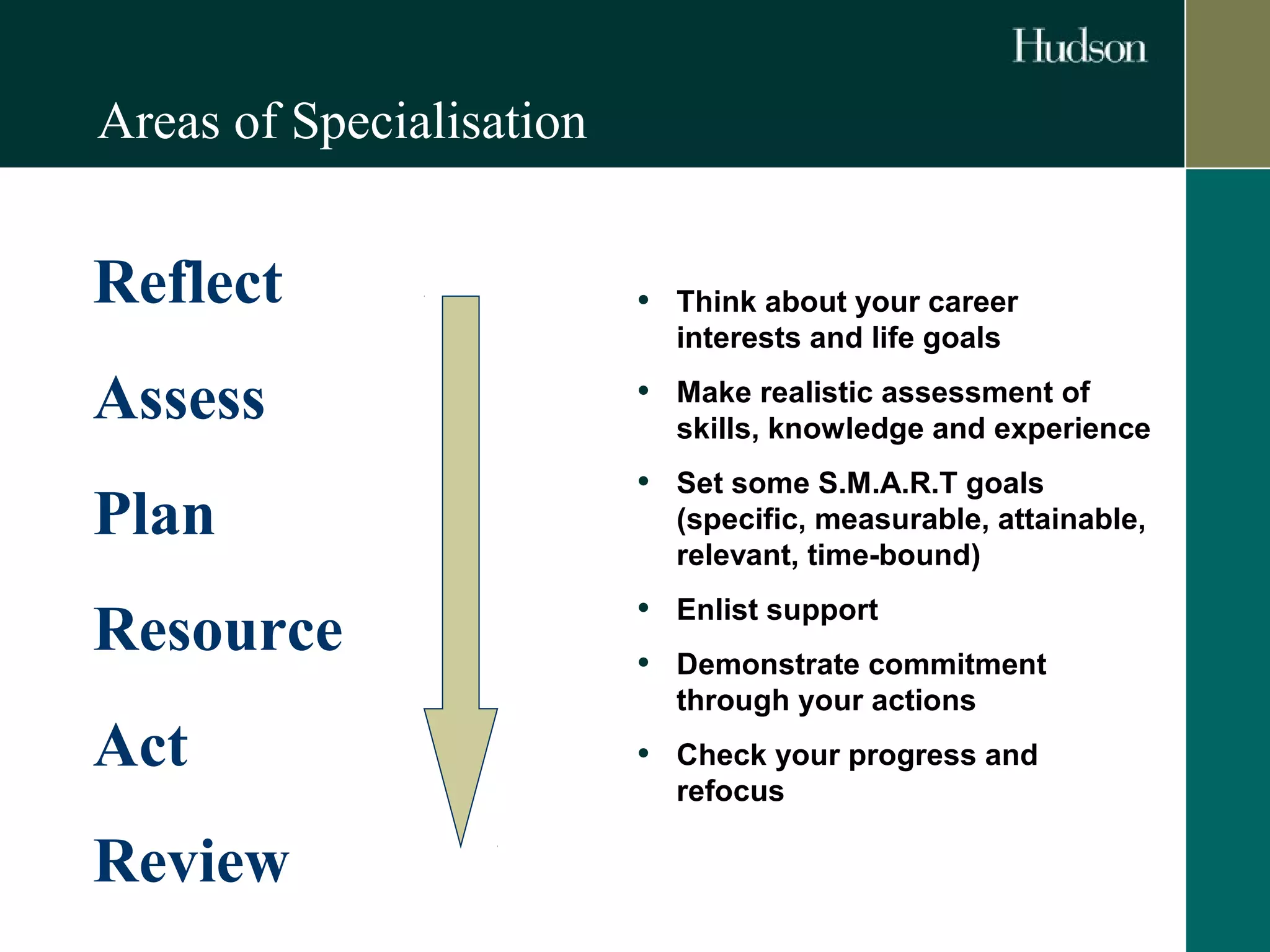
Areas of Specialisation 
• Think about your career 
interests and life goals 
• Make realistic assessment of 
skills, knowledge and experience 
• Set some S.M.A.R.T goals 
(specific, measurable, attainable, 
relevant, time-bound) 
• Enlist support 
• Demonstrate commitment 
through your actions 
• Check your progress and 
refocus 
Reflect 
Assess 
Plan 
Resource 
Act 
Review
Networking and Career Development 
Therefore 
• You need to be prepared to move to next job or next career choice at 
short notice. The timing may or may not be of your choosing. 
• Maintaining your employability will give you greater flexibility and 
confidence when you are forced to or choose to make career 
change. 
• Remember skills and knowledge take time to develop so be realistic 
with your plans
Networking and Career Development 
Let’s recap – I promised you at least 4 things from today: 
• Networking is about building and maintaining effective relationships to 
open doors 
• Giver’s, not taker’s, gain the most benefits from networking 
• Strong skills, knowledge, attitudes and hard work will ensure career doors 
stay open 
• On average, you can expect 3-5 career changes in your working life, so 
maintaining employability = career success 
And as a bonus, today is an opportunity to meet some great people and to have fun with 
networking.
Networking and Career Development

Networking and Career Development

  • 1.
    Networking and Career Development Linda Allaway Career Management Consultant October 2005
  • 2.
    Objectives By theend of this session you will want to remember these 4 things: 1. Networking is about building and maintaining effective relationships to open doors 2. Giver’s, not taker’s, gain the most benefits from networking 3. Strong skills, knowledge, attitudes and hard work will ensure career doors stay open 4. On average, you can expect 3-5 career changes in your working life, so maintaining employability = career success
  • 3.
    Networking and CareerDevelopment • We are networking whenever we associate with another person, although we don’t generally realise it • Because we often don’t consciously network, we often don’t do it well Therefore, in order to be effective in our networking strategy, we need to be clear in our purpose and actions. So what is the purpose of networking?
  • 4.
    Networking and CareerDevelopment What is Networking? • Effective networking is all about building effective relationships with people, from which will hopefully flow business opportunities and referrals • It is about developing yourself as a centre of excellence or expertise and building relationships with like-minded people, bartering your experience for that of others • It’s a two way street – a reciprocal relationship • It is a technique to identify & open doors on potential opportunities
  • 5.
    Networking and CareerDevelopment Integrity in Networking Are you a “taker” or a “giver” in your networking relationships?
  • 6.
    Networking and CareerDevelopment “Takers” tend to: • Talk mostly about themselves and what they do • Ferret out information from people without giving useful information back (ie., quizmaster or interrogator) • Erode the relationships till they crumble “Givers” • Seek out opportunities to supply other people with information and referrals that may be of use to them • Are remembered positively by others • Strengthen relationships
  • 7.
    Networking and CareerDevelopment • To gain the most from your networks be a “giver”, therefore create an impression about you that will: • Foster trust in you, liking and a willingness to refer you to others • Therefore, check that your “packaging” is right • Consider the impression you are making, both in terms of your physical presentation and your behaviour
  • 8.
    Networking and CareerDevelopment Impressive networkers: • Remember names • Provide openers so it is easy for others to find things to talk about with you • Are good listeners and show genuine interest in what the person has to say and in what they can do for them • Look for territory of mutual interest • Use humour appropriately as an ice-breaker • Make a point of following up • Actively seek to pass on things of interest (eg., information, useful contacts, referrals, guidance, encouragement and other forms of simple support)
  • 9.
    Networking and CareerDevelopment Who makes up your network? Potentially everyone we make a connection with: • Family • Friends • Business associates • Industry association members • Customers • Fellow club/sporting group members • Community/neighbourhood members • and so on
  • 10.
    Networking and CareerDevelopment What’s happening in the employment market? • Today’s employees will change careers 3-5 times and may have many jobs in their lifetime! • Experience has shown that around 50% of our candidates (those who have been retrenched) get their next role through networking.
  • 11.
    Networking and CareerDevelopment For your career development, this means you will: • Build upon your existing relationships and develop new ones with people in your target organisations and industries to gather knowledge and make yourself known to potential employers • Select target organisations on a specific criteria: eg., industry, size ($, staff), types of jobs, location, market performance, growth potential, leadership, corporate culture and it should match your specific career interests, values, career motivators, and competencies
  • 12.
    Networking and CareerDevelopment So is networking alone enough? • Networking is one strategy to help you move between careers and jobs – the door opener. • It takes skills, knowledge, personal attributes and effort to be successful in the role! • This brings us to the concept of ‘employability’
  • 13.
    Networking and CareerDevelopment The concept ‘employability’ implies lifelong learning to: • refine existing skills • develop new skills • acquire new knowledge •maintain an open and flexible attitude • take personal responsibility for career management
  • 14.
    Networking and CareerDevelopment Learning can take on many different forms • Formal education – TAFE, Uni and private colleges • Offered in flexible formats to meet busy lifestyles (eg classroom, work-based, correspondence and online options) •Work experiences - different roles, companies and locations • Life experiences • Coaching and mentoring support
  • 15.
    Networking and CareerDevelopment So prepare, plan and act now for your next career move. The key questions to consider are: Where am I now? Where do I want to be? What do I have to do to get there? Who can help me?
  • 16.
    Areas of Specialisation • Think about your career interests and life goals • Make realistic assessment of skills, knowledge and experience • Set some S.M.A.R.T goals (specific, measurable, attainable, relevant, time-bound) • Enlist support • Demonstrate commitment through your actions • Check your progress and refocus Reflect Assess Plan Resource Act Review
  • 17.
    Networking and CareerDevelopment Therefore • You need to be prepared to move to next job or next career choice at short notice. The timing may or may not be of your choosing. • Maintaining your employability will give you greater flexibility and confidence when you are forced to or choose to make career change. • Remember skills and knowledge take time to develop so be realistic with your plans
  • 18.
    Networking and CareerDevelopment Let’s recap – I promised you at least 4 things from today: • Networking is about building and maintaining effective relationships to open doors • Giver’s, not taker’s, gain the most benefits from networking • Strong skills, knowledge, attitudes and hard work will ensure career doors stay open • On average, you can expect 3-5 career changes in your working life, so maintaining employability = career success And as a bonus, today is an opportunity to meet some great people and to have fun with networking.